



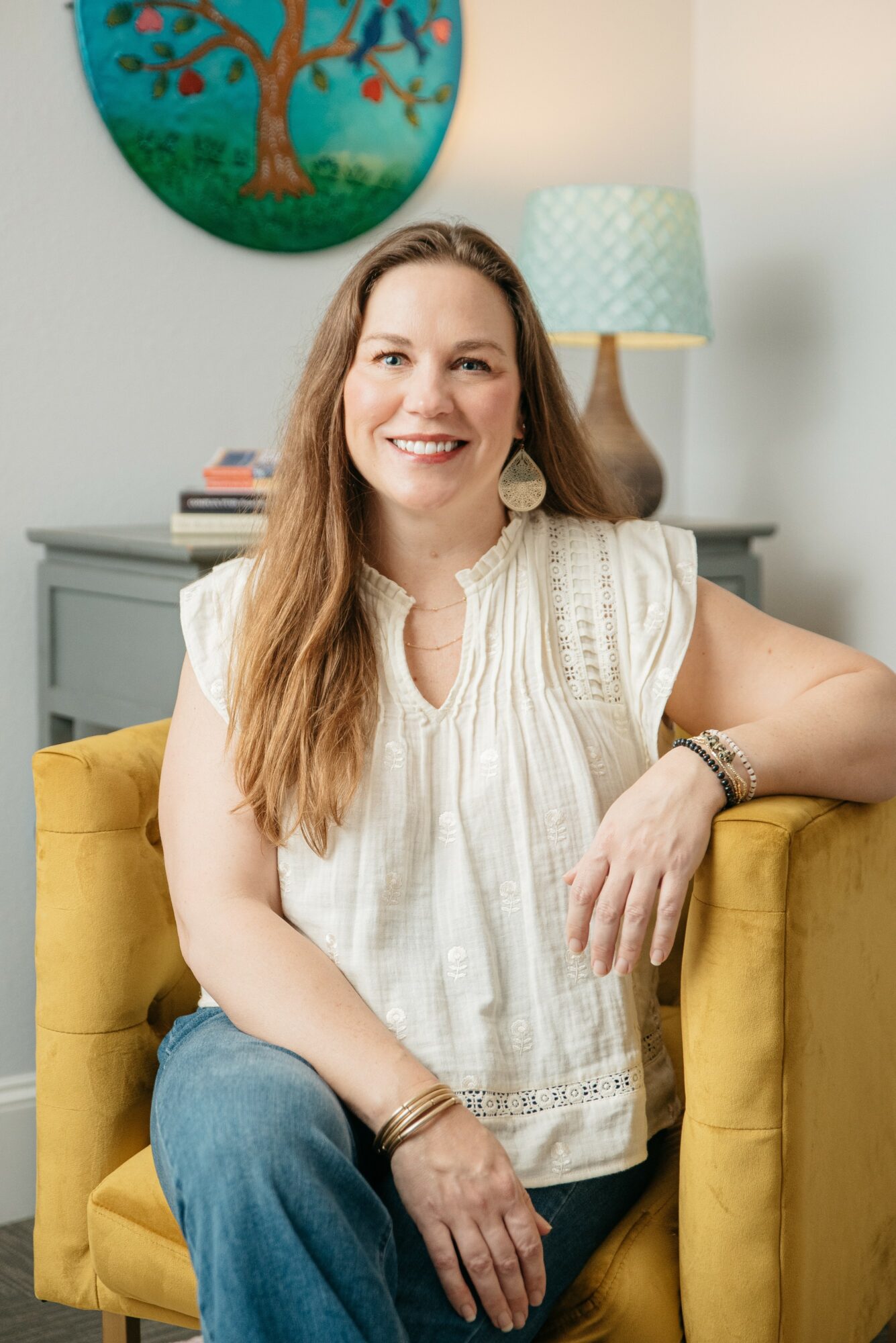
Today we’d like to introduce you to Kristin Shanahan
Hi Kristin, thanks for joining us today. We’d love for you to start by introducing yourself.
As with many therapists, I got into the field to “help people”. I’d always felt drawn to deeper conversation and connection. I struggled with conformity and trends growing up. I always felt like an outlier or I’d call it fringe now. I still struggle with large groups. Prefer quieter spaces and nature. And struggle with small talk.
I grew up in a conservative family in Texas. My parents divorced when I was 4. My half siblings (though I’ve never considered them half) and I lived with my mom. My dad lived an hour away. They both remarried within a year or two of their divorce. We moved 10 times before I graduated from high school. Excluding my mom, all of my family members struggled with addiction issues. We were a part of a religious cult for a few years where I was sexually abused. The chaos in my life was consistent. I had constant stomachaches; Struggled paying attention in school even though I made good grades. I was a perfectionist, hypervigilant, sometimes volatile, angry and sad. I also loved to laugh. My sarcasm and irreverence to anything “cool” made me and others laugh. I had amazing friends…some that have stuck around for decades (thank you, I love you).
The day before my 18th birthday, one of my closest friends was killed in a tragic car accident. It was my senior year of high school. After everything I’d experienced prior to his death, I didn’t know if I’d survive the grief I felt. My anxiety skyrocketed. I struggled functioning. I only went to classes that I knew I needed to graduate. I started writing. I wrote and wrote and wrote. I sat outside all the time – one of the only places that gave me any comfort. I was able to graduate…barely.
I couldn’t wait to leave Houston. Nervous I wouldn’t survive a four year college, I went to a junior college where I got my basics out of the way and then transferred to Texas A&M. I was still the fish out of water.
I didn’t consider psychology at all during undergrad. I was (still am) fascinated with health. I graduated with a degree in community health. I struggled after graduating with finding a career or a job that I enjoyed. So, I started looking into graduate programs. I stayed within healthcare but continued to feel drawn to counseling. Some people, based on me being a little rough around the edges, were skeptical of me joining a field where the reputation is generally one of gentleness, compassion and empathy.
I was a typical graduate student. I absorbed what was being taught. The medical model of psychotherapy (still taught today) and pathologizing “abnormal human behavior”. During graduate school, I was drawn to work with trauma and landed an internship at a foster home for teenage girls. I then worked with mothers who struggled with addiction issues who had children under the age of 3 with open CPS cases. It was during these experiences I began to truly understand how systems perpetuate mental health issues. When you’re face to face, knee deep in trying to help people get out, you truly see how many barriers there are to freedom.
I started my private practice in May of 2014. I’d joined a modern psychoanalytic training group the year prior and was just getting my feet wet, unsure if I’d be successful.
Fast forward 10 years, I’ve had the privilege of being extensively trained in modern psychoanalysis. I’ve had the privilege of working with therapists of color who bring a far more dynamic view of psychotherapy and of the “person” which has distanced me from the medical model of psychotherapy. Through my own experiences and others, it is my understanding that psychotherapy is neuroscience in action. We are social creatures and need contact with others. When we can witness another persons struggle and pain and provide consistency, we see shifts in their ability to regulate their emotions. Emotion regulation leads to a calmer nervous system. And a calmer nervous system leads to less inflammation in the body, reducing physical systems of disease. Our environment and the relationships we have with others have a direct impact on our mental health. The two are not separate. However, the medical model of psychotherapy will say that pathology is all within the individual. It is not. When we address our environments and relationships as a whole instead of asking the question “what’s wrong with you?” and we ask the question “what happened to you?” people make sense.
With the rise of pop psychology and self help via social media, I often seen complex ideas deduced into memes. I’ve seen therapists begin to monotonize off of peoples struggles – claiming they have the answers to a painless life. So, once again, I find myself on the fringe; questioning the process by which capitalism within psychotherapy dehumanizes people and assumes superiority over others when in reality, therapists are still humans who struggle. I view my work as normalizing how a person began to struggle. I view my work as a process of redoing neurological patterns through relationship by providing a space where people are free to express themselves as they are – not as society, culture, systems – tell them to. This includes allowing the expression of rage. Allowing the expression of terror. And helping people processing these intense emotions. But I can only do that if I understand mine and can feel my own. So I consistently work on myself via my own therapy and training. Continually trying to expand my ability to tolerate discomfort so that I can witness others. I often tell people I work with that I am not an “easy” therapist. I will challenge a persons belief system if it self destructive – especially if it is due to familial, cultural or societal conditioning. This often leaves people feeling in limbo until we work through unlearning what they were taught to who they want to be. And who a person wants to be is not actually my business. So I encourage autonomy, agency and individuality which means leaving systems behind or at least choosing which ones they want to be a part of. It’s an absolute honor to see people become. And though much of my history is unknown to the people I work with, I attempt to let them know that I too, am becoming in order to humanize struggles.
Alright, so let’s dig a little deeper into the story – has it been an easy path overall and if not, what were the challenges you’ve had to overcome?
I left the non-profit world in 2012, and joined an agency that was supposed to teach me how to run a private practice. I struggled with client retention and holding people’s uncomfortable feelings. I was almost fired as a result which is when I joined a training group for therapists which saved my professional career. I began my private practice when my youngest daughter was 3 months old. And slowly built my practice.
Great, so let’s talk business. Can you tell our readers more about what you do and what you think sets you apart from others?
I am a psychotherapist and work with people who grew up in dysfunctional family systems and as a result struggle with relationships. I work in a way to normalize and humanize people. I run groups as a way to help people understand themselves and their relational patterns so that they know themselves in the “outside” world. I will soon be running divorce process groups as there is a high need for these in Austin.
Do you have recommendations for books, apps, blogs, etc?
If the Buddha Dated
Decolozing Therapy
Psychoanalytic Diagnosis
Pricing:
- $200/individual and couples sessions
- $55 group therapy
Contact Info:
- Website: https://www.mindfulpathaustin.com
- Instagram: kristin_shanahan_therapy
Image Credits
St. Laurent Photography