




Today we’d like to introduce you to Samar Poorlakani.
Hi Samar, please kick things off for us with an introduction to yourself and your story.
I’ve always been the person asking the questions other people were too nervous to say out loud. Growing up in Austin, Texas, the sex education I got in school was minimal at best, and flat-out harmful at worst. I realized pretty young that if we were going to have honest, safer conversations about sex, consent, and relationships, someone would have to start them. At sixteen, I asked a friend to drive me to Planned Parenthood after school (under the cover of a made-up group project), and from there, I became the go-to person for my peers who needed support navigating their own sexual health decisions.
That curiosity only grew. I took a community college Psychology class while in high school and was immediately hooked. By the time I took a Human Sexuality course my first year of college, I knew I wanted to be a sex therapist at eighteen years old. What started as a drive to fix what wasn’t working for my generation turned into a full-blown career built around advocacy, education, and creating safe, affirming spaces for people to explore their desires and identities.
I stayed in Austin for my undergrad and graduate degrees in Psychology and Counseling. Along the way, my own experiences with chronic illness shaped how I approached therapy and relationships – teaching me firsthand about the importance of consent, care, and community outside of traditional frameworks.
These days, I run a private practice and curate digital content to help queer, kinky, polyamorous, disabled, and neurodivergent folx feel seen and supported. In recent years, I’ve had the privilege of speaking at events and collaborating on conversations around consent, boundaries, pleasure advocacy, and the intersections of sexuality, health, and identity. I’m excited to continue creating spaces – both online and off – where these dialogues can thrive.
Back in 2021, I created Your Radical Being, a podcast I co-hosted with my best friend and professional actor, Fiona Rene. Over the course of the show, we explored personal growth, interpersonal relationships, and shared our journeys toward embracing our RADICAL BEING, drawing from our 20+ years of friendship and shared experiences. It’s a project that’s very dear to me, and I’m proud of what we created.
One of my current focuses is Can We Just?, a project I just launched with my dear friend, Scout. We are healers, storytellers, and educators creating spaces for deep connection, radical self-trust, and unapologetic authenticity. Through resource-rich content, raw storytelling, and intentional dialogue, we aim to guide others toward self-acceptance and holistic liberation. Rooted in social justice, intersectionality, kink, and sacred transitions, we center those often pushed to the margins, working to make wellness, pleasure, and belonging more accessible to all. For those interested in joining us as we grow this work, we share more on our Patreon.
Can you talk to us a bit about the challenges and lessons you’ve learned along the way. Looking back would you say it’s been easy or smooth in retrospect?
Definitely not a smooth road, and honestly, I wouldn’t trust anyone in this work who says otherwise. There have been moments of burnout, frustration, and having to fight for legitimacy in spaces that didn’t take sex therapy seriously or where marginalized voices, especially queer, disabled, or BBIPOC perspectives, were treated as an afterthought. On top of that, the financial realities of being in this profession are tough. Many therapists face the pressure to justify their fees or feel guilty about charging for their work, despite the significant emotional labor we provide. Add to that the burden of student loans – often over $100K – which feels never-ending, especially when you factor in ongoing trainings, continuing education, and certifications that are necessary to keep up in this ever-changing landscape.
The reality is that not everyone has the luxury of a dual-income household or other financial support. Juggling a private practice as a self-employed professional is hard, and no one teaches you how to navigate this in grad school. It’s not just about offering care, but also about the day-to-day struggle of running a business and ensuring that your work is sustainable.
On top of the usual challenges, none of us were trained to be therapists through such unprecedented times: a global pandemic, multiple wars and genocides, the erosion of basic human rights like Roe being overturned, and the ongoing violence against Black and trans folx. We are living in a capitalist hellscape, and all of this while we’re fighting for the right to simply exist. Many of us are doing this work while struggling to make ends meet, and that can feel isolating and overwhelming at times.
On a personal level, navigating chronic illness has made me learn when to slow down, advocate for my own care, and embrace that I won’t always be able to show up in the same way. The therapist I was at 26 isn’t the same person I am now… and frankly, that’s a good thing. These struggles have made me more grounded, more empathetic, and deeply committed to making this work accessible for those often left out of the conversation. Through it all, I’ve learned the importance of resilience and self-care, and I try to share those lessons with others in my work. It hasn’t been easy, but it’s shaped me into the therapist and advocate I am today.
Thanks for sharing that. So, maybe next you can tell us a bit more about your business?
I’m a psychotherapist specializing in sex therapy, BDSM/kink, and consensual non-monogamy. As a disabled, queer woman of color, I’m deeply committed to creating affirming, accessible spaces for 2SLGBTQIA+, neurodivergent, disabled, and BBIPOC individuals. What makes my work unique is the way I blend clinical expertise with lived experience — meeting people not just as a therapist, but as someone who shares a stake in the liberation and well-being of marginalized communities.
I believe healing is both personal and political, and I approach therapy through a lens of intersectionality, social justice, and embodied care. My practice fosters vulnerability, authenticity, and radical self-compassion, empowering clients to explore their identities, desires, and relationships with courage and curiosity.
I offer therapy, coaching, consulting, and speaking engagements, all rooted in the belief that everyone deserves spaces where they feel truly seen, supported, and free to be themselves. Brand-wise, I’m most proud of cultivating a practice where people who are often excluded from traditional mental health care can access support that reflects their realities, values, and communities.
Is there any advice you’d like to share with our readers who might just be starting out?
Start before you feel ready. You’re probably never going to feel fully “qualified” to take up space, especially if you’re coming from a marginalized identity, but your perspective is needed. Trust the value of your lived experience alongside your education – it’s what makes your voice unique. The field of therapy was largely started by old white guys, so know that your voice, especially if it’s different from the traditional norm, has immense value. Don’t let imposter syndrome hold you back – it’s something everyone experiences, no matter where they are in their career. When it gets overwhelming, reach out to your peers for a pep talk and reassurance.
One of the biggest lessons I’ve learned is that it’s okay to take your time. There’s often pressure to rush and “make it” quickly, but the more I’ve let go of that urgency, the more fulfilling my work has become. It’s not about the destination; it’s about being present in your work and your evolution as both a person and a professional.
Building a strong community around you is crucial. Surround yourself with people who inspire, challenge, and support you. It’s easy to feel isolated in this work, but mentors, collaborators, and peers are vital for staying grounded and inspired. Don’t be afraid to ask for help – whether it’s therapy, peer consultations, or simply taking a break when you need to recharge. Burnout is real, and taking care of yourself allows you to show up better for others.
Also, remember: You don’t have to follow a linear path to success. Trust yourself and carve your own way, because there’s room for your unique perspective. It’s your authenticity that makes the most difference. And always be okay with saying “I don’t know, but I’ll find out.”
Contact Info:
- Website: https://www.austinintimatematters.com
- Instagram: https://www.instagram.com/intimatematters
- Facebook: https://www.facebook.com/austinintimatematters
- LinkedIn: https://www.linkedin.com/in/samarpoorlakani
- Youtube: https://www.youtube.com/@intimatematters
- Other: https://linktr.ee/intimatematters
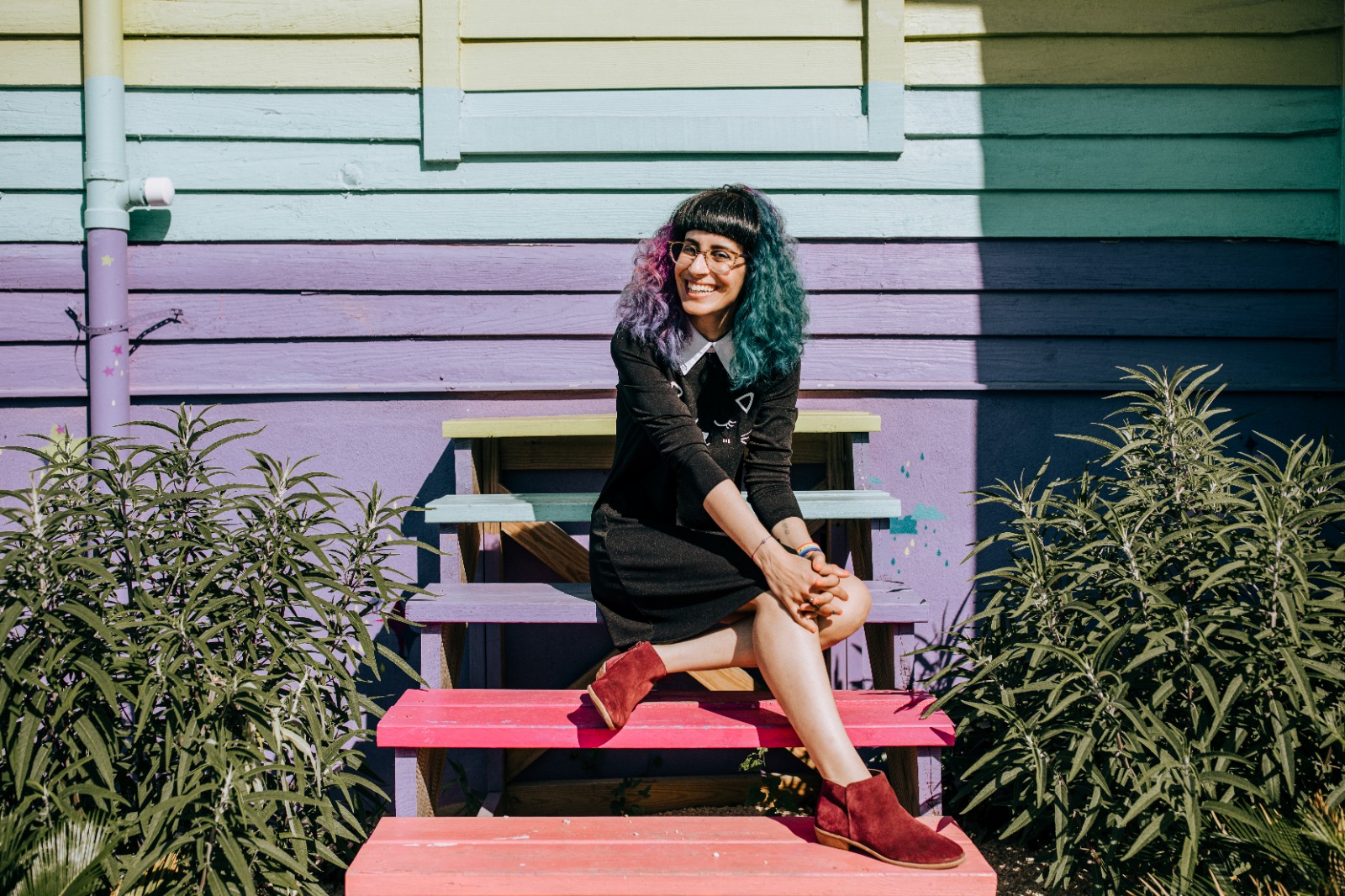
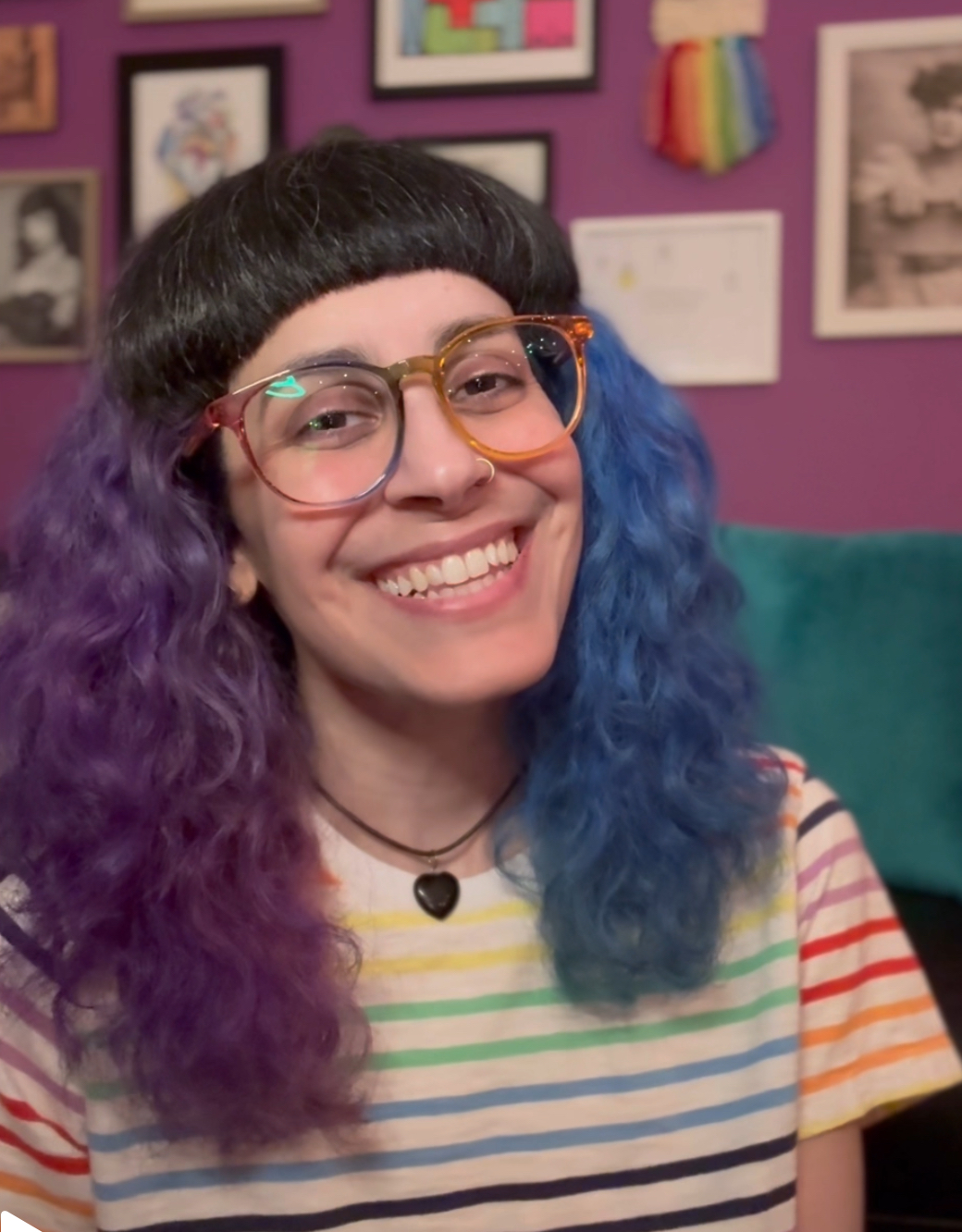
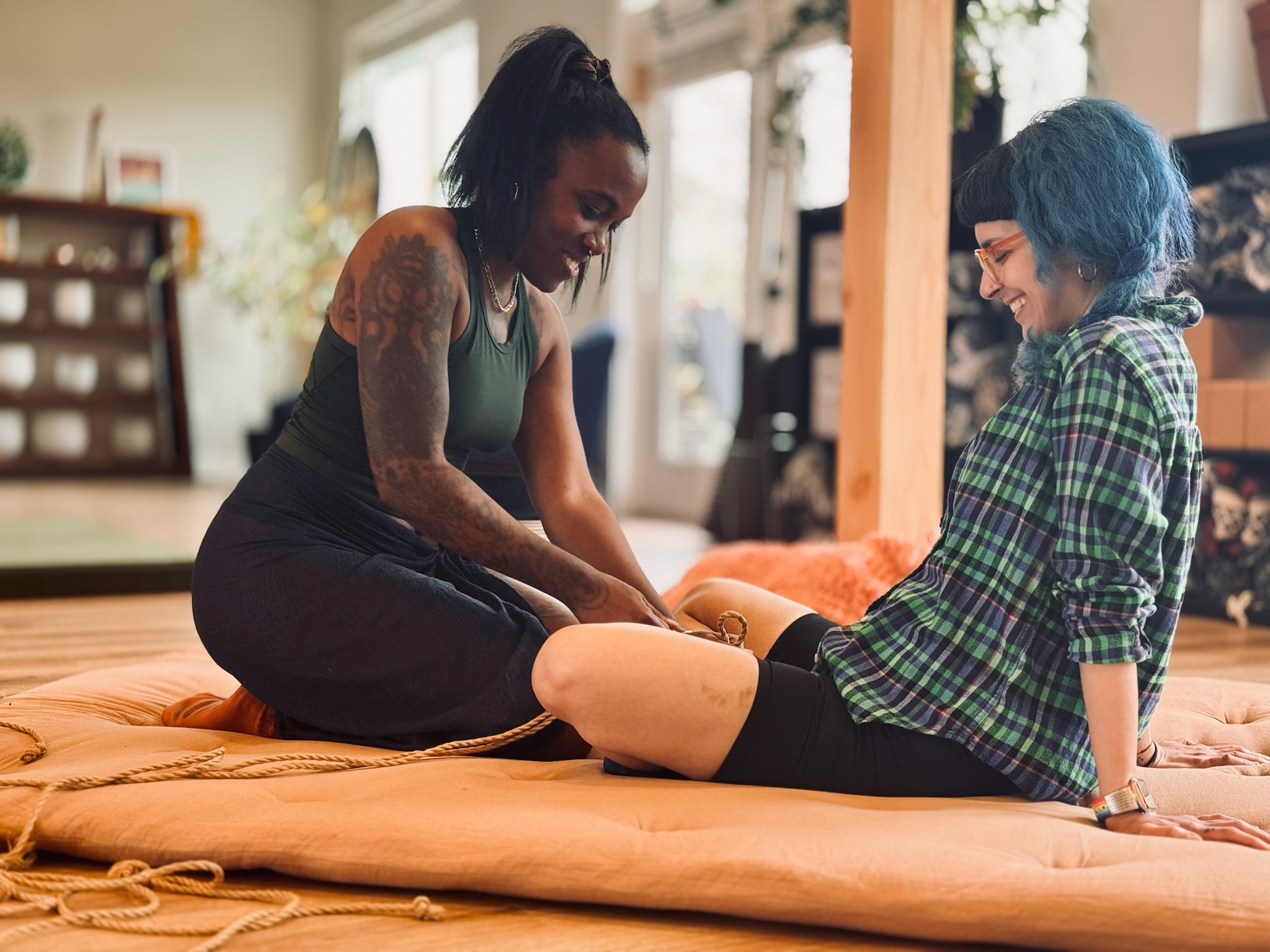
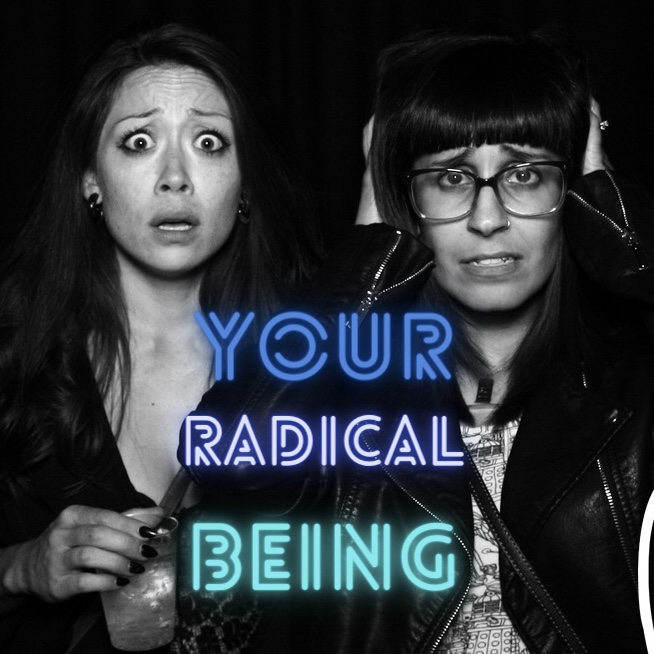
Image Credits
The first two images (in the black and white cat dress, in front of the rainbow building) are by Leah Muse Photography (@leahmusephotography)
The photo of Scout and I sitting on the floor was taken by Kamaria Imani (@kitten.eye.view on Instagram)