




Today we’d like to introduce you to Carla Birnberg.
Hi Carla, it’s an honor to have you on the platform. Thanks for taking the time to share your story with us – to start maybe you can share some of your backstory with our readers?
We live in a culture that rewards urgency, streaks, and optimization. Do it every day. Don’t miss. Start over if you do. Over time, I kept noticing how often that model quietly failed people. Not because they didn’t care or weren’t disciplined enough, but because life is unpredictable and most systems don’t account for that.
Long before I had language for it, I was learning that consistency isn’t about doing the same thing every day. It’s about staying in relationship with what matters when circumstances change. That understanding emerged slowly, across decades of lived experience, coaching, and global work.
I live in Austin, but one of the chapters that sharpened this definition most clearly unfolded in East Africa. Working there made it impossible to rely on rigid systems. Meetings rarely started on time. Electricity went out. Timelines shifted. The only constant was unpredictability. I remember sitting in a meeting in Nairobi when the power went out mid conversation. The lights shut off, and everyone simply continued. I was the only one momentarily thrown. Of course they noticed. They were just accustomed to adapting.
That moment captured something essential. Consistency there could never rely on sameness. If I had insisted on doing things the same way every day, especially as an American bringing expectations shaped by predictability and control, trust and momentum would have broken down immediately. Instead, I learned to pivot, respond, and stay present. Over time, adaptability became the foundation of consistency.
I carried that lesson into my coaching work across leadership and health, where I began noticing the same pattern again and again. People didn’t quit because they didn’t care. They quit because they believed they had ruined it. One missed day or misstep became permission to abandon the effort entirely. That insight became the backbone of Everyday Consistency: The Hidden Power of Showing Up, the foundational book in my Consistency series.
Today, my work sits at the intersection of coaching, speaking, and writing. I help people and organizations build consistency that actually survives real life. Not through willpower or streaks, but through structure that allows for adaptation. That idea, consistency as a relationship rather than a rule, is what connects everything I do.
Would you say it’s been a smooth road, and if not what are some of the biggest challenges you’ve faced along the way?
It hasn’t been smooth, but it has been clarifying. One of the biggest challenges has been unlearning the idea that progress should look linear, predictable, or immediately visible. A lot of people, myself included, grew up believing that if consistency didn’t feel like progress, then it wasn’t enough.
Most systems treat consistency as a checklist or a habit loop, but what I’ve learned is that real consistency is a relationship with time, not a series of perfect days. When progress isn’t obvious, people assume something is wrong and abandon the effort entirely.
The hardest part wasn’t unpredictability itself. It was resisting the urge to interpret disruption as failure. Missed plans, delayed momentum, and changing circumstances often look like problems when we’re operating from a rigid definition of consistency. In reality, they’re simply part of being human.
What I learned over time is that insisting on sameness is often what breaks momentum. Adaptability is what sustains it. Once I stopped treating deviation as something to correct and started treating it as information, the work moved forward with far more integrity and durability.
Those struggles didn’t derail the work. They shaped it. They’re the reason my approach to consistency is grounded in real life rather than ideals, and why it continues to resonate with people who are tired of feeling like they’ve failed just because life didn’t cooperate.
As you know, we’re big fans of you and your work. For our readers who might not be as familiar what can you tell them about what you do?
At the center of my work is consistency. Not consistency as discipline, streaks, or willpower, but consistency as the underlying structure that allows people and organizations to function well over time. I often say that consistency is the wheelbarrow that carries productivity. Without it, everything feels heavier than it needs to be.
What I’m known for is reframing consistency as adaptability. It’s not about doing the same thing every day. It’s about staying in relationship with what matters when capacity, context, or circumstances change. Most people don’t quit because they don’t care. They quit because their definition of consistency doesn’t survive real life.
For a long time, I assumed I would be known primarily for my work in East Africa, because that work is so directly tied to mental health, dignity, and changing lives. When impact is visible and immediate, it feels like the kind of work people remember. What surprised me was realizing how easily we overlook the power of everyday impact. Today, people don’t stop me to ask about programs or credentials. They stop me in the grocery store or on my morning walks and say, “Thank you for how you write about consistency.”
I’m also known for how I show up in the work itself. I’m not polished, and I’m not trying to be. I don’t perform consistency or present myself as an aspirational version of anything. I show up as a real person who has been practicing this for a long time. Tattoos visible. Dr. Seuss leg sleeve and all. Thirty five plus years of learning consistency the unglamorous way, in the gym, one ordinary workout at a time.
I show up honestly, with my own edges and imperfections intact, because that’s what creates connection. I have the Hebrew word for connection tattooed on my wrist, placed where I can see it while I’m working. It’s a daily reminder that connection, not performance, is the foundation of everything. I don’t clean myself up to do this work. I show up as I am, and that makes it easier for other people to stay with themselves too.
My role isn’t to push people toward some idealized version of themselves. That’s the promise streaking culture makes, and it’s where so many people end up abandoning themselves. Instead, I help people stay in relationship with what matters when their capacity changes. If someone only has ten percent to give on a given day and they give it, that counts as one hundred percent. Consistency lives there, not in perfection.
My work shows up through writing, speaking, coaching, and consistency focused employee engagement offerings. While it’s often described as an employee engagement perk, the deeper truth is that the way we do one thing is the way we do everything. When someone learns how to operate consistently with their health, their money, their parenting, or their personal goals, that steadiness inevitably shows up at work. Follow through improves. Trust builds. Progress stops relying on urgency.
What sets me apart is that this isn’t a framework I adopted later or a system I teach from a distance. It’s a way of living I’ve practiced for decades. Consistency isn’t something I help people add to their lives. It’s something I help them reclaim, so they can build lives and organizations that don’t collapse under perfectionism, pressure, or unrealistic expectations.
Any big plans?
What excites me most is seeing these ideas applied where life actually happens. In teams. In households. In money decisions. In relationships. In the moments when someone would normally quit and instead chooses to return. I’m focused on creating spaces where people stop abandoning themselves after a misstep and stay in relationship with what matters.
The next chapter of my work is about bringing this way of thinking to more people who are ready for something that actually holds. Not a system to follow, but a shift in how they see effort, progress, and return. I’m the woman who helps people stop starting over and start staying. That’s what I’m building, and that’s the work I’m here to do.
Carla Birnberg is a writer, speaker, and coach whose work explores consistency as a relationship rather than a rule. She is the author of Everyday Consistency: The Hidden Power of Showing Up and the founder of The Consistency Advantage. Based in Austin, she helps people build lives that don’t collapse under perfectionism, and she writes regularly on Substack about the power of showing up.
Contact Info:
- Website: https://carlabirnberg.substack.com/
- Instagram: https://www.instagram.com/the_consistency_advantage?
- X: twitter.com/carla_birnberg
- LinkedIn: https://www.linkedin.com/in/carlabirnberg
- Youtube: https://youtube.com/@theconsistencyadvantage

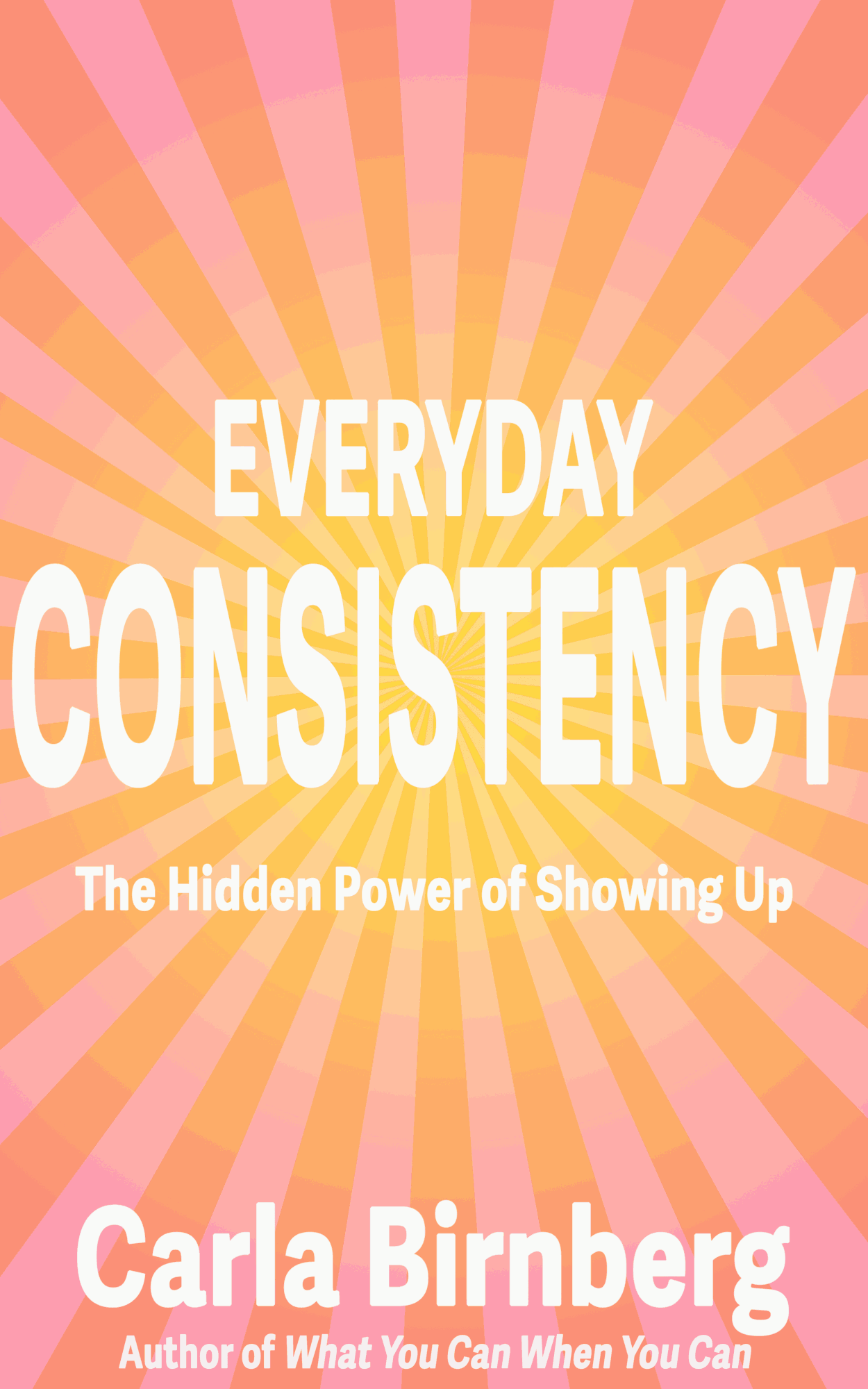

Image Credits
Additional photos image one and three Peggy Keelan