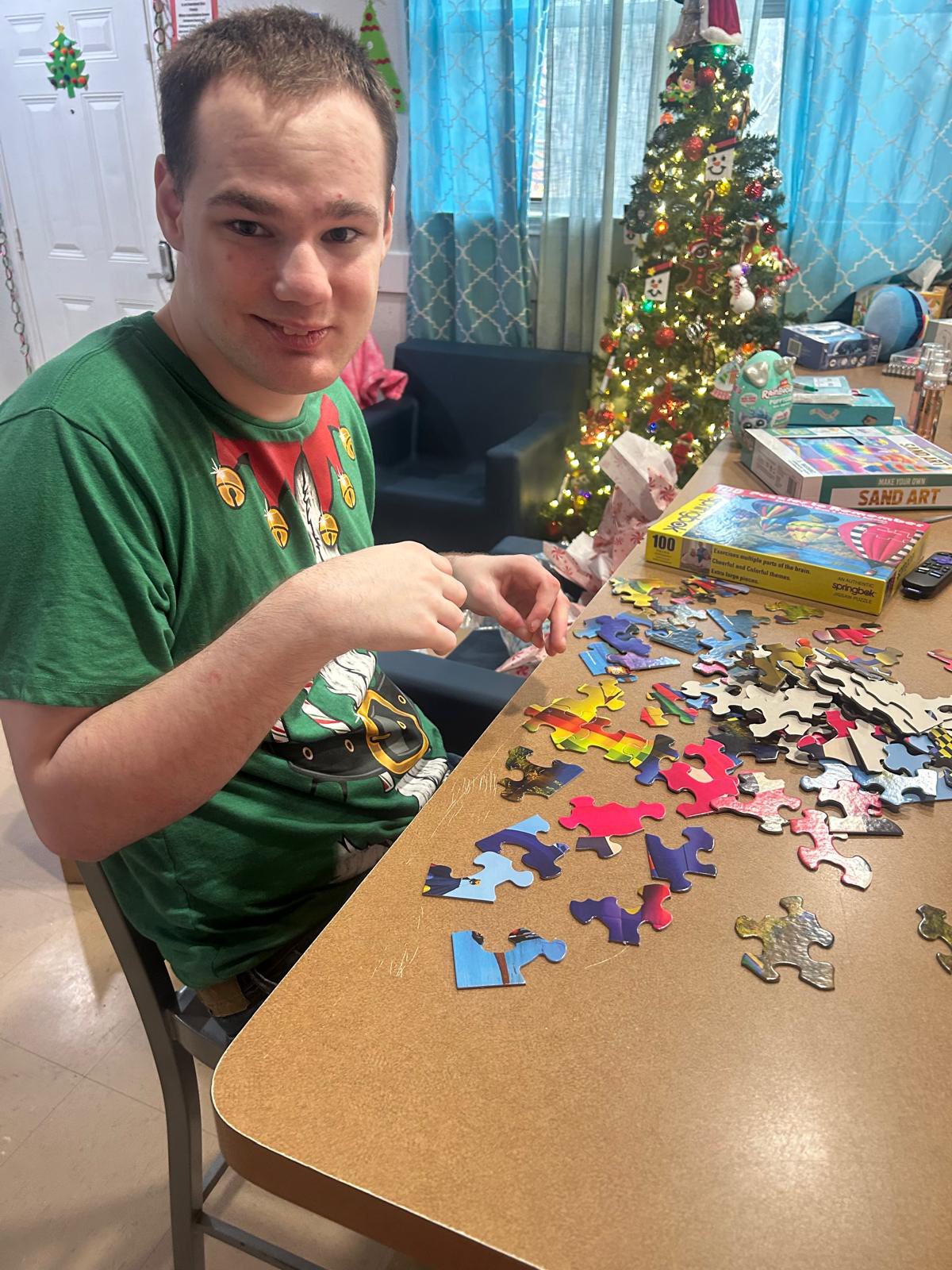




Today we’d like to introduce you to Erland Schulze.
Hi Erland, it’s an honor to have you on the platform. Thanks for taking the time to share your story with us – to start maybe you can share some of your backstory with our readers?
Hope House began 60 years ago when our founder, Rose, opened her home to children with profound intellectual and developmental disabilities in an Austin garage apartment. These were profoundly disabled children who had nowhere else to go or who had parents who could no longer care for their child. Rose was soon overwhlemed so friends and neighbors worked with a Liberty Hill couple who owned a ranch just outside of town. They donated 11 ac. where the first home was built in 1976. That home served as a group home for our younger children ages 5 to teenagers. Today we have five homes with 50 residents. Sadly, we have to turn away 6-10 applications a month. There are few places this high level of disability can turn to. Their guardians face a wait time that can be as long as 10 years.
What started as one woman’s act of compassion grew into a lifelong mission to give as many of these children as possible a forever home with safety, dignity, and a true sense of family.
Over time, Rose’s vision became a specialized residential community where children with complex medical and developmental needs receive 24/7 care, education support, and unconditional love. Several of our current reidents where children in 1966 and they are still living with us today.
Hope House continues to carry forward Rose’s legacy—meeting the needs of the most vulnerable children in Central Texas with the same spirit of compassion, faith, and steadfast commitment that started it all.
We all face challenges, but looking back would you describe it as a relatively smooth road?
Hope House has never been a “smooth road,” but it has always been a meaningful one. Caring for children with profound intellectual and developmental disabilities brings extraordinary joy, but it also comes with complex medical needs, staffing challenges, and financial pressures that most charities have to face.
In the early years, our founder Rose carried the weight almost entirely on her own—stretching limited resources, navigating regulations, and building a home‑like environment for children who required round‑the‑clock care. As we grew, we faced new challenges: rising medical costs, the need for specialized staff, and the constant work of maintaining facilities that serve medically fragile children.
More recently, natural disasters like the July 2025 flood tested us in ways we never expected. Our children’s home was flooded and 16 were evacuated by helicopter in the early morning hours of July 5th. Hundreds of volunteers came out to help us clean and rebuild. while we still provided uninterrupted care for our children. It was one of the hardest seasons in our history. But each challenge has strengthened our resolve and reminded us why this work matters.
Through every setback, the community has shown up for us—volunteers, donors, churches, and partners who believe in Rose’s vision. Their support, combined with the resilience of our staff and the courage of our children, is what keeps Hope House moving forward.
Our budget depends on the support of the people in Travis and Williamson counties. It has been hard to meet some of our obligations but we have survived for 60 years with their help. And we are looking forward to the next 60 by planning ways to build more homes so we can help more children.
Thanks – so what else should our readers know about your work and what you’re currently focused on?
A huge part of what sets Hope House apart is the leadership and heart of our Executive Director, Dave Gould. Dave didn’t step into this work because it was easy—he stepped into it because he felt called to it. Years ago, he walked through our doors as a volunteer and found himself profoundly moved by the children and by Rose’s legacy. What began as a willingness to help quickly became a life’s mission.
Dave leads with a rare combination of compassion, steadiness, and grit. He is the kind of leader who will spend the morning navigating state regulations and the afternoon sitting beside a child’s bed during a medical crisis. When the July 2025 flood devastated our campus, Dave was the one wading through water with staff, making sure the children were safely evacuated, and then turning around to rebuild—physically, emotionally, and organizationally. His leadership is not performative; it is lived, daily, in the quiet, unseen moments.
Under Dave’s guidance, Hope House has strengthened its clinical care, expanded its community partnerships, and deepened its commitment to the children who depend on us. But more than anything, he has protected the heart of this place—the belief that every child, no matter their disability, deserves dignity, joy, and a home where they are cherished.
Any advice for finding a mentor or networking in general?
Finding the right mentor or staff, in our case, is less about chasing titles and more about recognizing people whose character you want to grow toward. In our experience, the best mentors or staff are the ones who show up consistently, listen deeply, and challenge you to stay grounded in your purpose. That’s certainly been true for us at Hope House. Much of our leadership culture was shaped by watching people like Rose and Dave—leaders who didn’t just talk about compassion, but lived it in the quiet, unglamorous moments.
When it comes to networking, what has worked best is building relationships through service rather than strategy. The most meaningful connections we’ve made didn’t come from formal events or business cards; they came from people who volunteered, visited our campus, or simply asked how they could help. When you lead with authenticity and mission, the right people tend to find you.
My advice is simple:
– Seek out people who embody the values you admire.
– Don’t be afraid to ask for guidance—most people are honored to be asked.
– And build relationships the same way you build trust with the children we serve: slowly, sincerely, and with genuine care.
The mentors who have shaped us weren’t chosen because they were influential; they were chosen because they were steady, compassionate, and willing to walk alongside us. That’s the kind of mentorship that lasts.
Contact Info:
- Website: https://www.hopehousekids.org
- Facebook: https://www.facebook.com/hopehouseaustin