


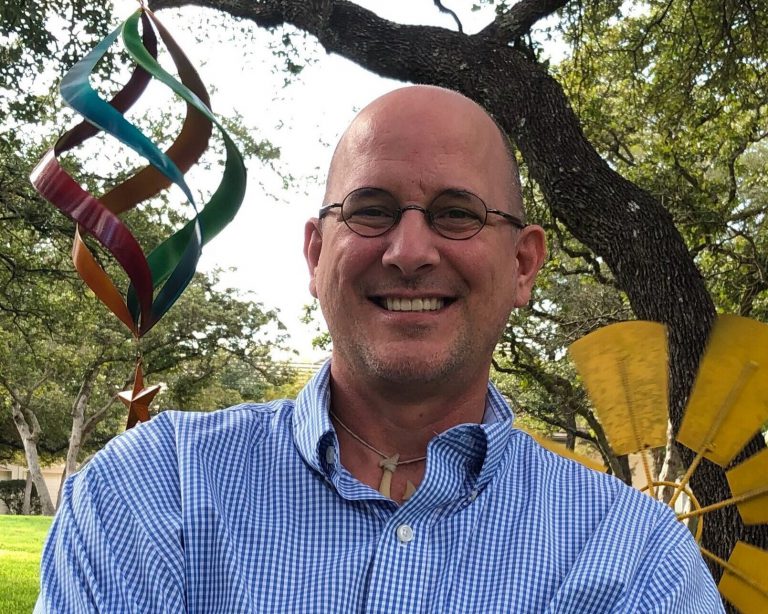
Today we’d like to introduce you to Doc Davis
Doc, we appreciate you taking the time to share your story with us today. Where does your story begin?
I started in the world of addiction recovery back in 1990 and began to explore every aspect of the mental health field thereafter. In that time, I have worked several aspects of the crisis stabilization field, worked crisis hotlines, spent time in Covid working with families in the parking lot as their loved one was in the hospital (since no contact was allowed in the 2020’s), created a private practice that is focused on gamers, nerds, dorks, geeks, cosplayers, and other social misfits like myself, and have also been working at Capital Area Counseling (CAC) as everything from a volunteer intern, therapist, supervisor, peer group facilitator, director of operations, clinical director, and director of supervision and training.
Would you say it’s been a smooth road, and if not what are some of the biggest challenges you’ve faced along the way?
I feel thankful that the road to where I am today was not an easy one. Every part of the journey that included some sort of complexity has made me better, more patient, and expanded my view of myself, and the people I supervise, counsel, and work with.
Working at CAC has put me in the spot of navigating a massive non-profit community mental health center with anywhere from 60 to 90 therapist volunteers with the tiniest staff you can imagine. When I started, you had to be at the building to access our client’s files as there was no remote access. (If the 9 computers we had were all being used, which was a very common occurrence, you would just have to sit and wait for your turn). We updated all of that while utilizing every single “free for a non-profit” IT resource available and now feel like we are at least in the 2010’s. We’ve faced a misogynistic director who tried to derail our mission, who both failed at that and accidentally brought all of us closer together via the support we gave each other in that tough time. We dealt with a building that had toxic mold at a level that required us to move into new offices, with almost all new furniture due making sure we were leaving the mold behind, in the span of 5 days. We navigated Covid turning everything from in person to TeleHealth and as so many other facilities shutdown temporarily or closed for good, we did it all in two days. There are several other instances of a bumpy road, but the point of all of it is; all of these things forced all of us, myself included, to grow, develop, and find the inner strength to make it happen.
As you know, we’re big fans of you and your work. For our readers who might not be as familiar what can you tell them about what you do?
Since I have two distinctly different jobs, I will have to briefly describe both. As a director at CAC, my primary job is to coordinate all things supervision, both for the student counselors who are completing their master’s degree and the supervision training program which provides opportunities for fully licensed therapists to learn how to become supervisors. My other job is my private practice where I work with a wide variety of clients, including other therapists, sex workers/sex performers/and content creators, and the aforementioned gamers.
As a supervisor of student counselors at CAC, I focus on making sure that they are learning the basics of counseling, but far more importantly (at least to me), is helping them to explore their blind spots, finding their own professional identity while navigating how much of their personal identity should come along with that, and learning to sit in a room with another human being and be completely present and engaged. That last part…that is the hardest part. I try very hard to make this very difficult work a little easier by keeping the rules simple. Rule #1: You be you. Don’t try to be a therapist right away, you don’t know what that looks like yet, or worse, you’ve been watching some horrible examples of what being a therapist is on Tic Toc, Netflix, or God forbid, the Dr. Phil level of idiocy. The clients who connect to you because you are genuine, trying to eliminate your biases, being excepting and present, and constantly reinforcing the reality of the safe space you and your client work in…that is a client who will be able handle some confrontation, some push back, and/or some challenge, which is the place of growth. Rule#2: We are not THAT important! Your client has 18,080 minutes in a week and you get 50 of them. That leaves them with 18,030 minutes that they are navigating just fine without you! No need to feel like you have make a huge impact, you just need to be completely present and engaged for 50 minutes once a week, as everything that comes from that space, will have real value and meaning to both of you.
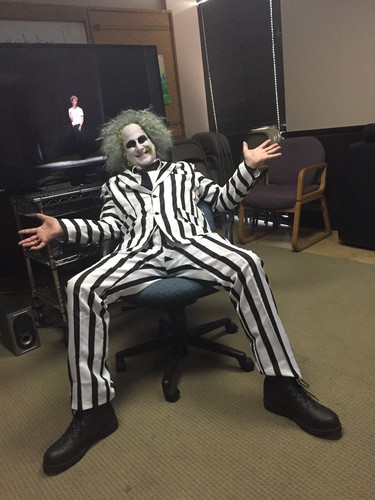
I used to say that I am a therapist who happens to be a gamer too, but nowadays, I simply say that I am a gamer who does therapy. At Side Quest Therapy I understand that sometimes the main quest of life needs a little help with some healthy side quests. Every gamer who sees my practice’s name gets it immediately and are often being referred from some other gamer. I simply do not understand why healthy game play had to stop once we became “adults”. Play therapy is a thing that can be applied to adults just as easily as it is to kiddos, and I have several clients who can attest to that. Playing the game is not a distraction from intentional conversation, but rather, the door that opens up access to more of the self than we can access when just sitting there staring at our therapist. Our muscle memory runs the game, and another gamer, who happens to be a therapist, can help you explore stuff in an environment that has always been your safe space.
Do you any memories from childhood that you can share with us?
This may seem an odd favorite childhood memory, as it was traumatic, but I think it also helped forge one my favorite passions within the realm of self-care, which is horror movies. To be fair, I love all movies and do consider my geek level of knowledge regarding this topic to make me a full fledged cinephile, but horror is my jam.
Keeping the story short, as very young child of about 5, I had a bad a dream. Big deal? Who didn’t? For whatever reason though, I repeated the dream that very same night, and have had the exact same dream ever since. I have the dream about 3 to 5 times per year and it still scares the crap out of me every time! It is a violent, scary, and menacing dream; and yet, it makes me feel comfortable somehow. (I should probably see a therapist about it). 🙂
Pricing:
- $15 to $60 sessions at CAC
- $5 groups at CAC
Contact Info:
- Website: https://www.cacaustin.org
- Other: https://www.sidequesttherapy.com