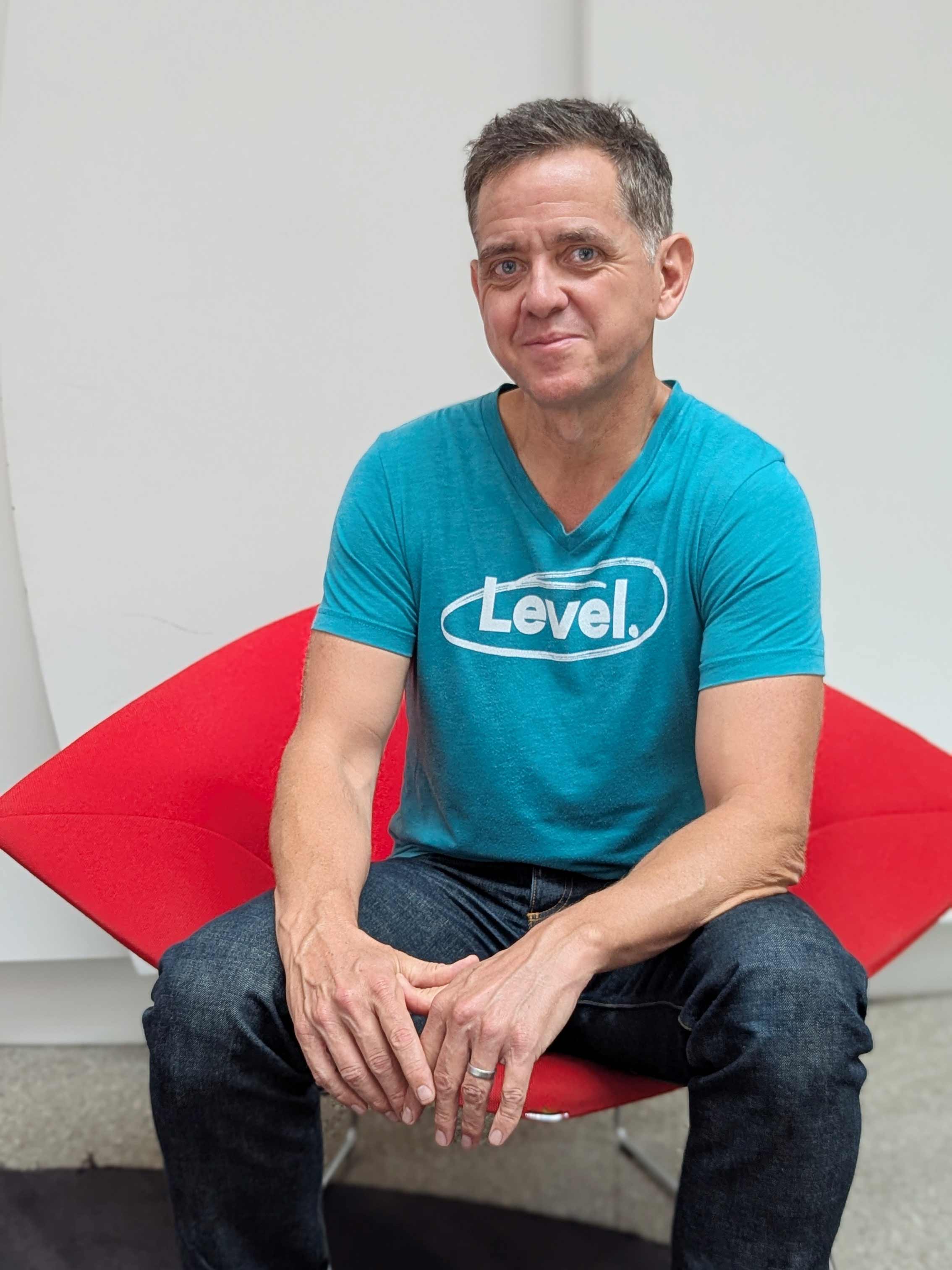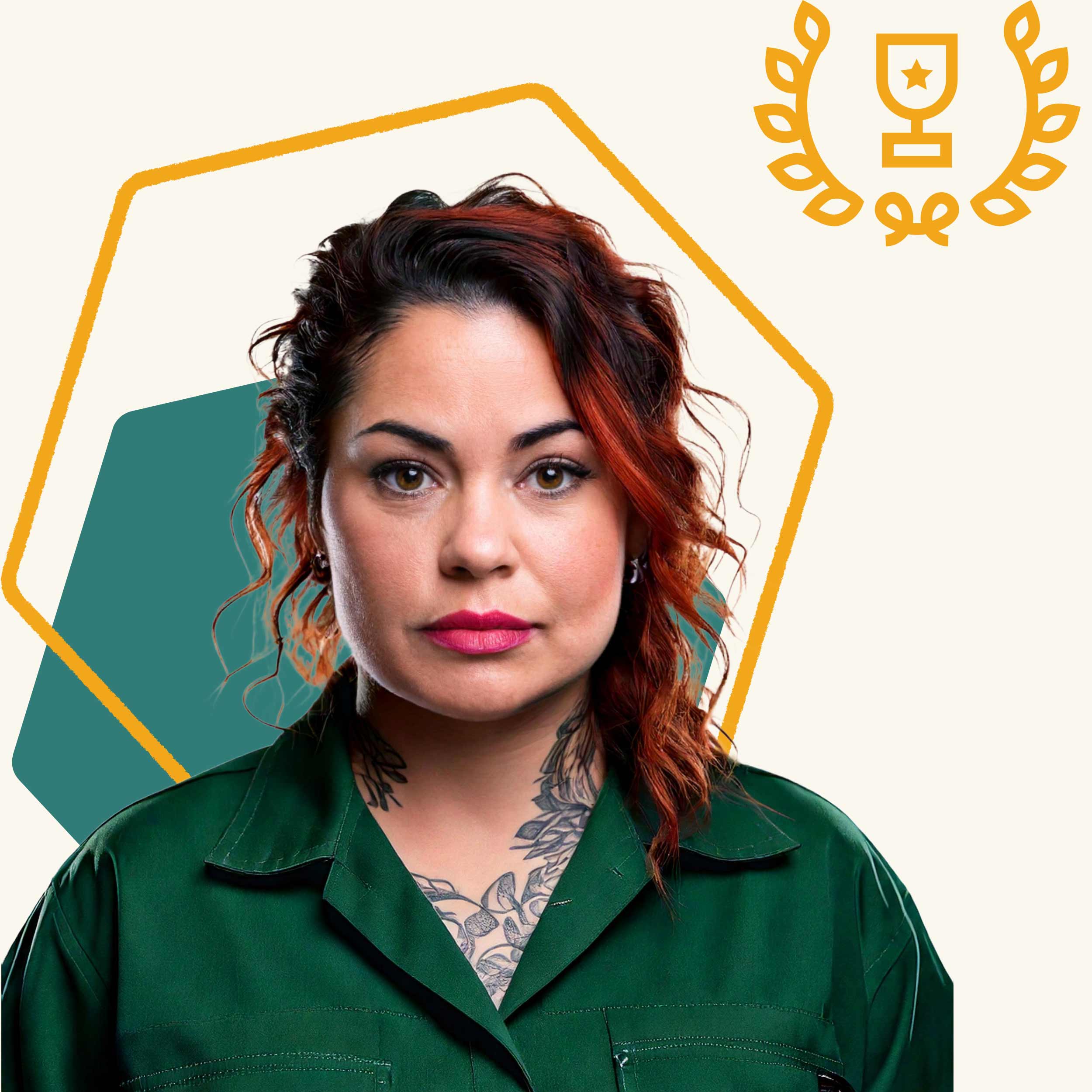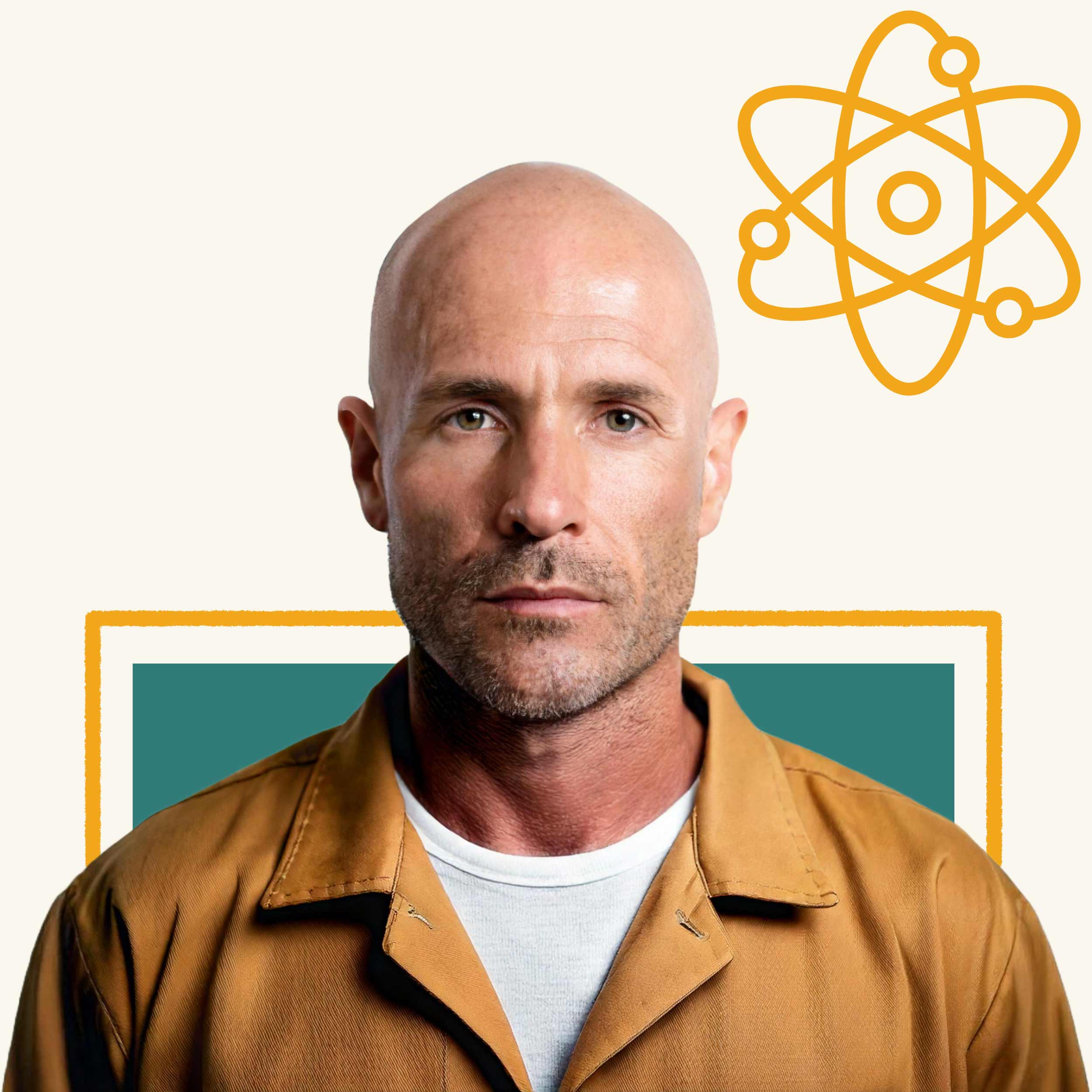



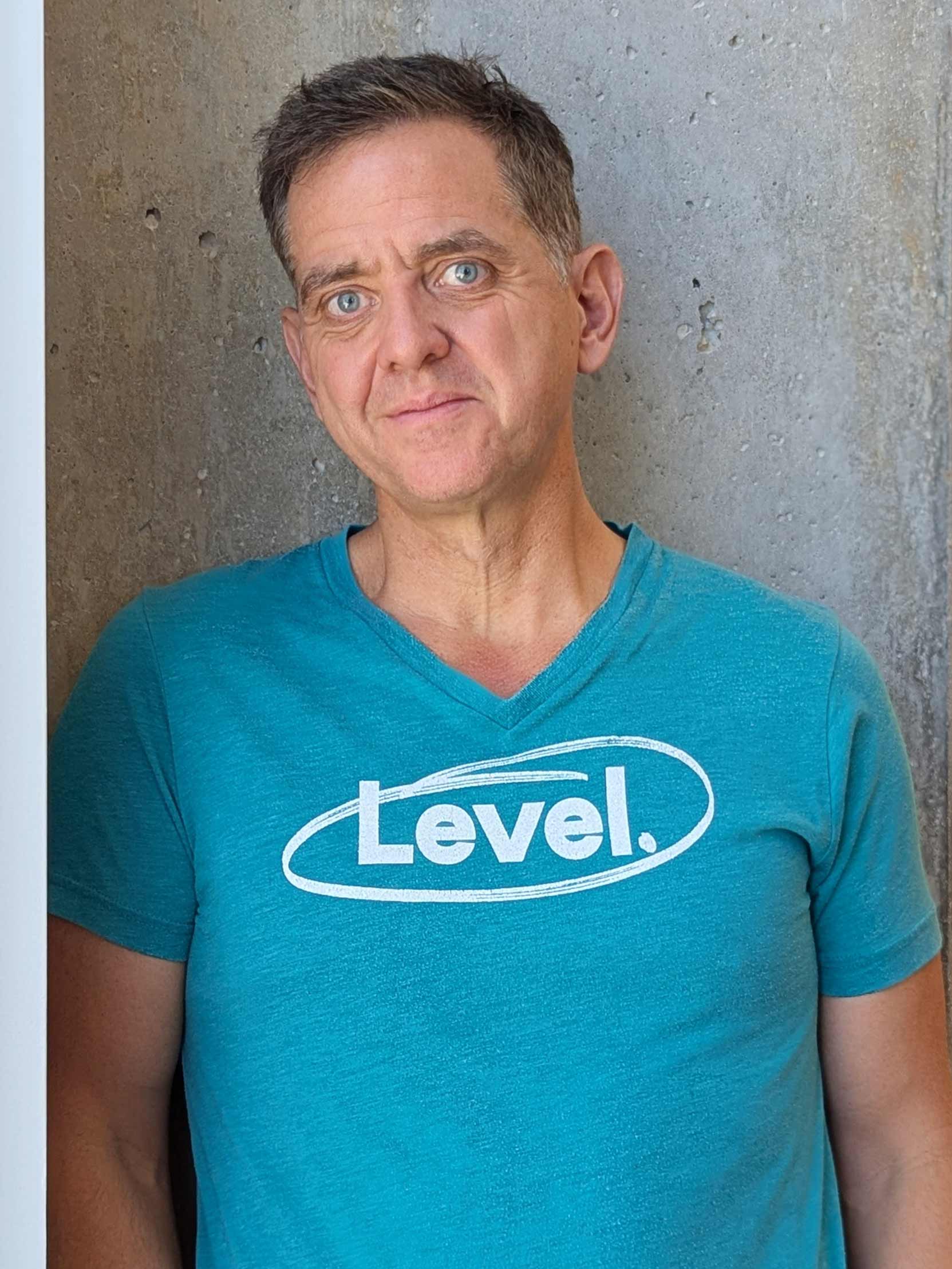
Today we’d like to introduce you to Alex Wright.
Hi Alex, so excited to have you on the platform. So before we get into questions about your work-life, maybe you can bring our readers up to speed on your story and how you got to where you are today?
I’m a co-founder and Executive Director of Level. We create and distribute educational content to people in prison in Texas and across the country. My work in this space started right here in Austin.
When I first moved to Austin fifteen years ago in 2010, I didn’t know a lot of people. I moved from New York and was looking to connect with people here. I walked into a community center called Space 12 on East 12th at Airport Blvd. I was early for an event and started looking around in the back of the community center. There was a curious library covering three walls. There were handwritten notes taped to the shelves that said “all sets of books must weigh between one pound ten ounces and one pound 14 ounces.” What was that about? Why were the books being weighed? There were no prices. I took a photo of one of the notes taped to a shelf so I could figure out what went on there.
It turns out that space in the back of the community center was used twice a week by a local Austin nonprofit called Inside Books Project. They collect used donated books from the community and send them to people in prison in Texas. The books were weighed because they had to go into specific media mail packages. I started volunteering there. The experience was fantastic. All the correspondence with people in prison was through the mail. Volunteers would read requests, pick out a set of books to send back (and get the right weight!) and send back a letter noting what was sent and a snippet or two about why the books were chosen. I can still remember the feel of the imprint of the pen through to the back of the paper when reading letters written by people in prison. Through volunteering there, I learned that the people writing those letters asking for books were not so different from me. They wanted a brighter future. They wanted connection with others. They felt isolated. They loved books and wanted to learn more about the world through reading. They found joy in difficult places.
During the time I volunteered there, I read and responded to thousands of people in prison. In addition to literature, I saw that many were looking for more. They were looking for job training and specific education to prepare them for a more successful life after prison. Inside Books Project wasn’t totally set up for that. For one thing, there are not a lot of educational resources created specifically for the kinds of job training and education that this population was asking for, written in a format that speaks to them. And if those were written, few were donated by the community in Austin. And if they were donated, we could only send one resource to one person, but not the other hundreds or more also asking for the same thing.
After a few years of looking at this issue, I came to see a possible solution. What if we created this content – job training and educational content made specifically for incarcerated people to prepare them for a more successful life after prison? And what if we did it at scale so that we could serve the many many thousands of people in prison across Texas? Texas has one of the highest incarceration rates in the country. In fact, if Texas were its own country, it would have one of the highest incarceration rates in the world!
After speaking with more people in other communities across the country, I saw that this wasn’t just a Texas problem but a problem the whole country faced. I co-founded Level to meet this need along with another volunteer from Inside Books Project. In our first year, Level was welcomed into an accelerator program in Austin along with some heavyweight community organizations like The Other Ones Foundation and Austin Justice Coalition. We began distributing content in the fall of 2020 to a few facilities in Texas. Word spread through grassroots recommendations among people in prison and now our program has been distributed to more than 1,000 prisons in all 50 states.
Our whole organization, its reason for existence and its explosive growth, is based on listening to the community. We listened to people saying, in their own words, what they need to thrive, not just survive. The people closest to the problem have great insights about what’s needed to solve it. That all started here in Austin with a community approach to social services.
Can you talk to us a bit about the challenges and lessons you’ve learned along the way. Looking back would you say it’s been easy or smooth in retrospect?
The old saying “if you build it, they will come” does not apply to fundraising! I had to learn a lot about how to grow and sustain a nationally facing organization started on a tiny budget. What I learned is that I couldn’t just obsess over the problem and our solution. Those things are hugely important but they’re not enough. I learned that I had to obsess over the business model even more than the problem and our solution. How is the organization going to support itself as it grows? That turned out to be a tough question that I’m still grappling with, though I’ve gotten closer to some answers. There were and still are so many headwinds!
One headwind is that not a lot of people want to pay for resources for people in prison. It’s understandable why. We’ve designed our prison industrial complex to remove these people from being seen. Few people know the scale of the issue. 600,000 people are released from prison every year. That’s a population the size of Baltimore or Las Vegas. Every year! People coming out of prison become our neighbors. They live in our communities. And they are not set up for success. But there’s not much appetite for helping set them up for success while they’re still behind bars, removed from visibility. The problem (and the opportunity) is intentionally hidden from view.
Another headwind is that a lot of philanthropy is locally based. People want to help others in their communities. People in Austin have a lot of great reasons to give to people in need in Austin. But the prison system is the opposite of local. By design of the system, people are imprisoned far from their home communities. So it’s hard to raise money when those in need are intentionally placed hundreds of miles away.
I had to find new ways of looking at those headwinds. We’re certainly not in the clear but we’ve started to chart different paths around the obstacles. My team and I have gotten pretty good at going around obstacles!
Appreciate you sharing that. What should we know about Level?
Level is a community powered prison education program that’s based here in Austin and serves people in prison across the country. Many people don’t know a lot about education in prison. And it’s understandable why! The system is set up to be hidden from view. The thing is, two million Americans are currently incarcerated. That’s a lot of people. They’re often at remote facilities and there aren’t a lot of services offered. Some facilities here and there have some educational programming, but the majority of people can’t get access to any kind of education. And, there’s no internet in prison! The name of the game there is control. People are controlled, but not given resources to improve.
And many, I’d even say most, people in prison want to improve. They have families, relationships and communities that are hurting. During incarceration, many see an opportunity to move towards a brighter future. A life that isn’t defined by the worst mistakes of the past. But the system isn’t set up to support that inherent motivation. The system is set up to punish and control.
And a lot of people on the outside think it should be that way – that people in prison should just be controlled and punished. Here’s the thing about that – it doesn’t work out well in the end for anyone. Tens of thousands of people leave prison every year and their chances of success are horrible. Incomes are low, unemployment is high and two thirds go right back to prison in a few years. All of us suffer from that. It’s hugely expensive on other social services and so many people are suffering. It doesn’t have to be that way!
Imagine a changed criminal justice system in which people being released from prison have better chances of success than when they first went in. Imagine a different system that encourages the inherent motivations for self improvement among incarcerated people instead of breaking them down and isolating them without resources. Imagine a system that activates incarcerated people’s dreams for a different tomorrow, a system that promotes tools to strengthen people, their families and the communities they come home to.
At Level, we imagine this changed system every day. What’s more, we are implementing an accomplishable, scalable, low-cost, effective, in-demand, nationally distributed prison education program to achieve this vision for a changed criminal justice system.
Who else deserves credit in your story?
I’m fortunate to have a number of mentors and supporters who have believed in me and this project from the beginning. Level’s board president and my friend Suzi Sosa is an icon of the social entrepreneurship movement in Austin. Her leadership and commitment to Level have been astonishing. Mary Ellen Petro was the Executive Director of the Sooch Foundation in Austin, and she believed in me and Level and supported us from the very beginning. Her successor at the foundation, Susan McDowell, has continued their incredible support. Melisa Abel at the Tingari-Silverton Foundation in Austin was another critical early believer in me and Level’s vision.
My friend and co-founder Kate Mullan has worked on this project with me since before Level even existed. She’s no longer in Austin but is still very involved in the project. Level’s Program Manager Sarah Pollock is such a breath of life for me. She oversees our distribution team and manages the day-to-day of the project. She lives and breathes our vision and puts into daily practice the concepts that drive the whole organization. My friend Terrence Moline of African American Graphic Designers has collaborated on the illustration and art direction of our educational content and inspires me with his principled and human approach to design.
Pricing:
- Donations can be made on our website at https://learnlevel.org/
Contact Info:
- Website: https://learnlevel.org/
- Instagram: https://www.instagram.com/learnlevel/
- Facebook: https://www.facebook.com/levelprisoneducation
- LinkedIn: https://www.linkedin.com/company/learnlevel/