


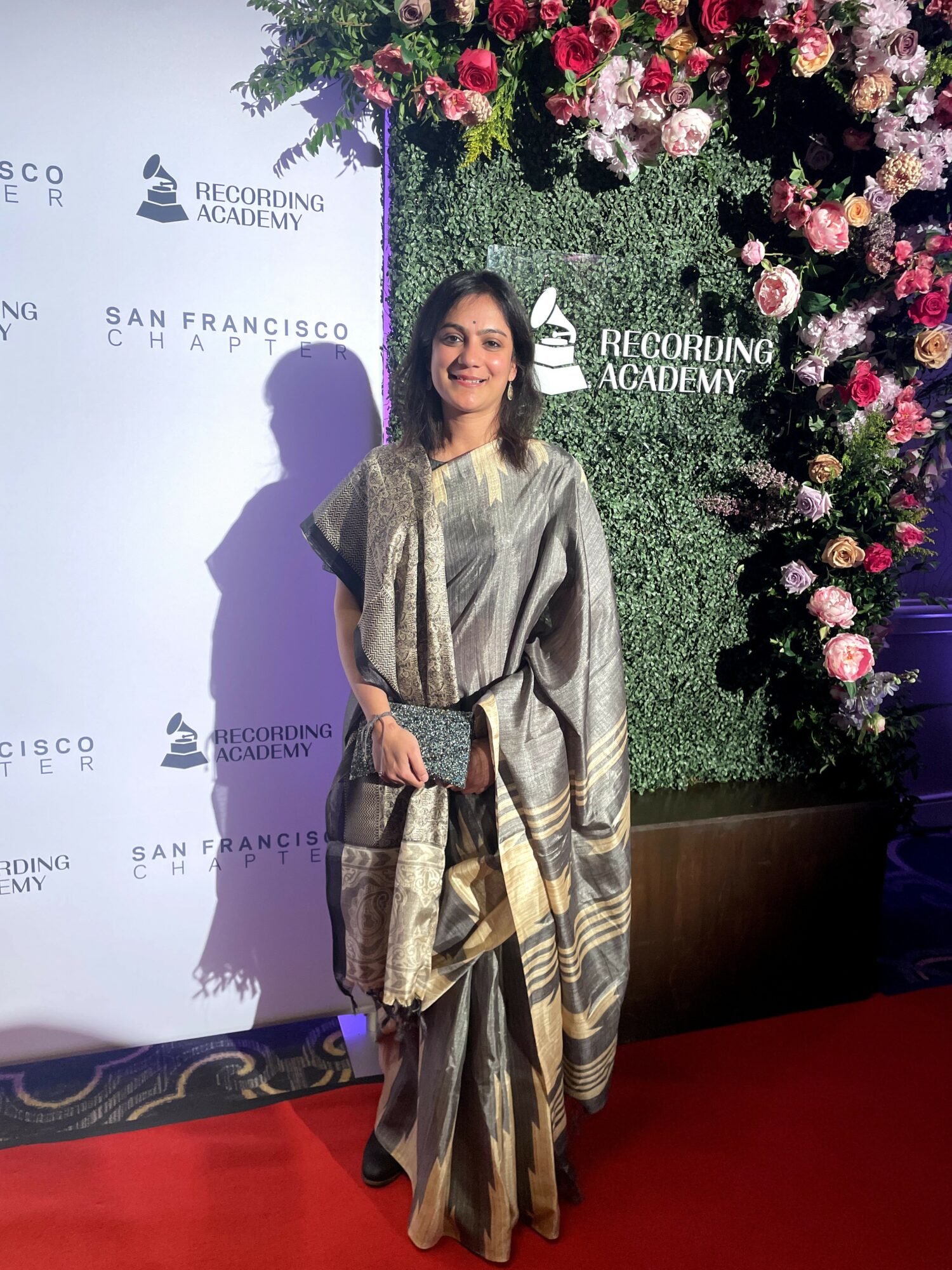
Today we’d like to introduce you to Ramya Shankar.
Hi Ramya, it’s an honor to have you on the platform. Thanks for taking the time to share your story with us – to start maybe you can share some of your backstory with our readers?
I had musical training from the age of four, growing up in Bangalore, India, in a south indian but a cosmopolitan, open-minded household. Music was never separate from life—it was part of how I understood emotion, culture, and expression from an early age.
At the same time, I was also drawn to science and structure, which led me to the United States for a Master’s / PhD in Biomedical Engineering. But even as I moved through that academic path, music remained my inner compass—something that never left, and quietly guided every phase of my life.
I pursued my Masters program and then, I was part of a Pharma Tech startup from its early days through to its IPO journey, an intense and formative experience. After that chapter, I made a conscious decision to step away from the corporate world and pursue being a full-time music educator. It was a shift away from building in tech to building directly through music, learning, and human connection.
Later, after stepping away from a more conventional career path and spending years focused on family, my relationship with music deepened in a different way. I began to think more intentionally about what music means beyond performance—how it shapes emotion, identity, and connection.
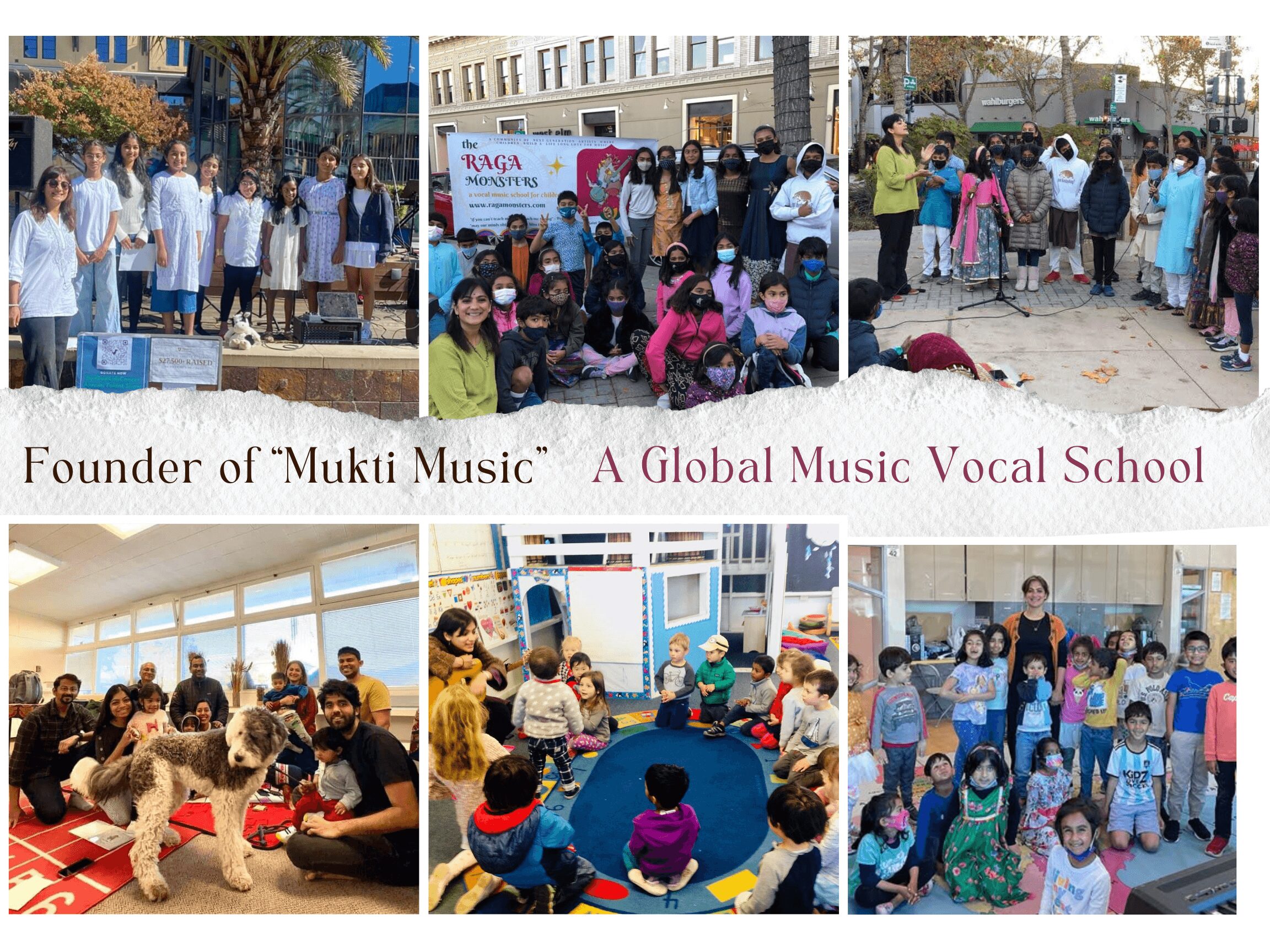
As I began teaching, I created early musical concepts like Raga Monsters and Raga Bubbles—ways to make Indian classical music playful, imaginative, and accessible to young minds. Those projects became my first real experiments in blending tradition with storytelling and creativity.
That evolution eventually led me to found Mukti Music, which became a larger creative home for teaching, ensemble work, and interdisciplinary exploration. From there, the Mukti Music Girls Choir emerged, bringing together young voices in a space that blends Indian classical, jazz, and storytelling.
More recently, as I teach, I’ve been developing my own ensemble and creative work around “The Human Experience”—an exploration of emotion, memory, connection, and what it means to feel deeply in a rapidly changing world. This work sits in parallel with teaching, where both spaces inform each other continuously.
Looking back, the path doesn’t feel linear. It feels like a slow integration of all the parts of me—engineer, musician, educator, and observer of human behavior—coming together through music.
We all face challenges, but looking back would you describe it as a relatively smooth road?
It hasn’t been a completely smooth road. It was a very conscious decision to step away from a high-paying, comfortable corporate career and start something entirely new—a music school for the Indian diaspora in the Bay Area that didn’t really exist in that form before. That shift came with uncertainty, financial instability at times, and the challenge of building without a template or external validation. I had to move from a structured, predictable environment into one where I was constantly learning how to trust intuition and create my own path.
More recently, as I work on The Human Experience, I’ve also been navigating how to present work in spaces where I don’t necessarily have established music industry connections or the typical network through which artists operate and are recognized. Because the work is also not specifically one genre, it doesn’t always fit into familiar categories or industry pathways. That naturally raises the question of how you showcase something interdisciplinary and emotionally driven, and still be taken seriously. For me, it has meant focusing on clarity of intent, consistency of practice, and creating immersive experiences where people can feel the work directly, rather than rely on existing structures to validate it.
Thanks for sharing that. So, maybe next you can tell us a bit more about your work?
I work as a music educator, vocalist, and creative director, with a practice that sits at the intersection of Indian classical music, jazz, and contemporary storytelling. My work spans teaching, ensemble building, and creating immersive performance concepts that explore emotion and narrative—often through a lens I call The Human Experience.
At the core of what I do is building musical spaces where tradition and improvisation meet in a way that feels accessible, especially for younger generations growing up in multicultural environments. This includes founding Mukti Music in the Bay Area, where I work with students across ages, and creating ensembles like the Mukti Music Girls Choir, which brings together young voices in a structured yet expressive environment.
Earlier on, I also developed playful educational concepts like Raga Monsters and Raga Bubbles (ages 0-5 yrs), designed to introduce Indian classical music & World Music to children in imaginative, non-intimidating ways. That spirit of making complex traditions feel alive and relatable continues to shape my work today. It also buids community where children and families have a sense of belonging. That makes it very special.
What I am most proud of is building something from scratch that didn’t have a clear template—especially a space for Indian diaspora children to engage with music in a way that is both rooted and contemporary. I’m also proud of staying committed to work that prioritizes emotional depth over categorization, even when it doesn’t always fit neatly into established industry structures.
What sets my creative work in ” The Human Experience” apart is this blending of disciplines and perspectives—engineering thinking, musical rigor, and a deep focus on human emotion. I’m not only interested in performance, but in how music can hold memory, identity, and connection. A large part of my current work with The Human Experience is about creating immersive, cross-genre experiences that allow audiences to feel rather than just observe, even if the form is still evolving outside traditional definitions.
Are there any apps, books, podcasts, blogs or other resources you think our readers should check out?
Yes—there are a few resources and influences I return to, though not always in a structured way. I tend to draw from anything that helps me understand creativity, human emotion, and behavior more deeply.
Books like The Creative Act by Rick Rubin have been meaningful in reinforcing the idea that creativity is less about control and more about listening, presence, and allowing space for ideas to emerge. That perspective resonates strongly with how I approach both teaching and creating. I also love watching interviews of artists in the film space to understand their process and approach to work.
Beyond formal resources, a large part of what informs my work is simply observing human behavior and emotion—how people react, connect, withdraw, and express themselves in everyday life. That constant observation often becomes a kind of informal study that feeds directly into my music and creative work, especially in projects like The Human Experience. Spending time in Nature walking my girl pup “Laya”, my two amazing boys (ages 15 and 12 who are both musicians and play a variety of instruments) enhances the way I think about what really matters. As a family of four, we jam on a variety of tunes which brings unparalleled joy.
I’m also interested in understanding patterns through vedic astrology—not in a rigid or predictive sense, but as a language of reflection. I find it useful in thinking about personality, emotional tendencies, and cycles of behavior, and how those patterns can show up in creative expression and interpersonal dynamics.
Ultimately, what supports me most are inputs that help me stay curious and open—whether that’s reading, observing people, or exploring different systems of understanding human nature. Over time, all of it feeds into how I teach, create, and build musical experiences.
Contact Info:
- Website: https://www.ramyashankarmusic.com
- Instagram: https://www.instagram.com/ramyashankarmusic/
- Facebook: https://www.facebook.com/RamyaShankarMusic/
- LinkedIn: https://www.linkedin.com/in/ramyashankar/
- Youtube: https://www.youtube.com/@TheNadashakti
- Soundcloud: https://soundcloud.com/ramyashankar