


Today we’d like to introduce you to Paul Schlesinger.
Alright, so thank you so much for sharing your story and insight with our readers. To kick things off, can you tell us a bit about how you got started?
Early Beginnings
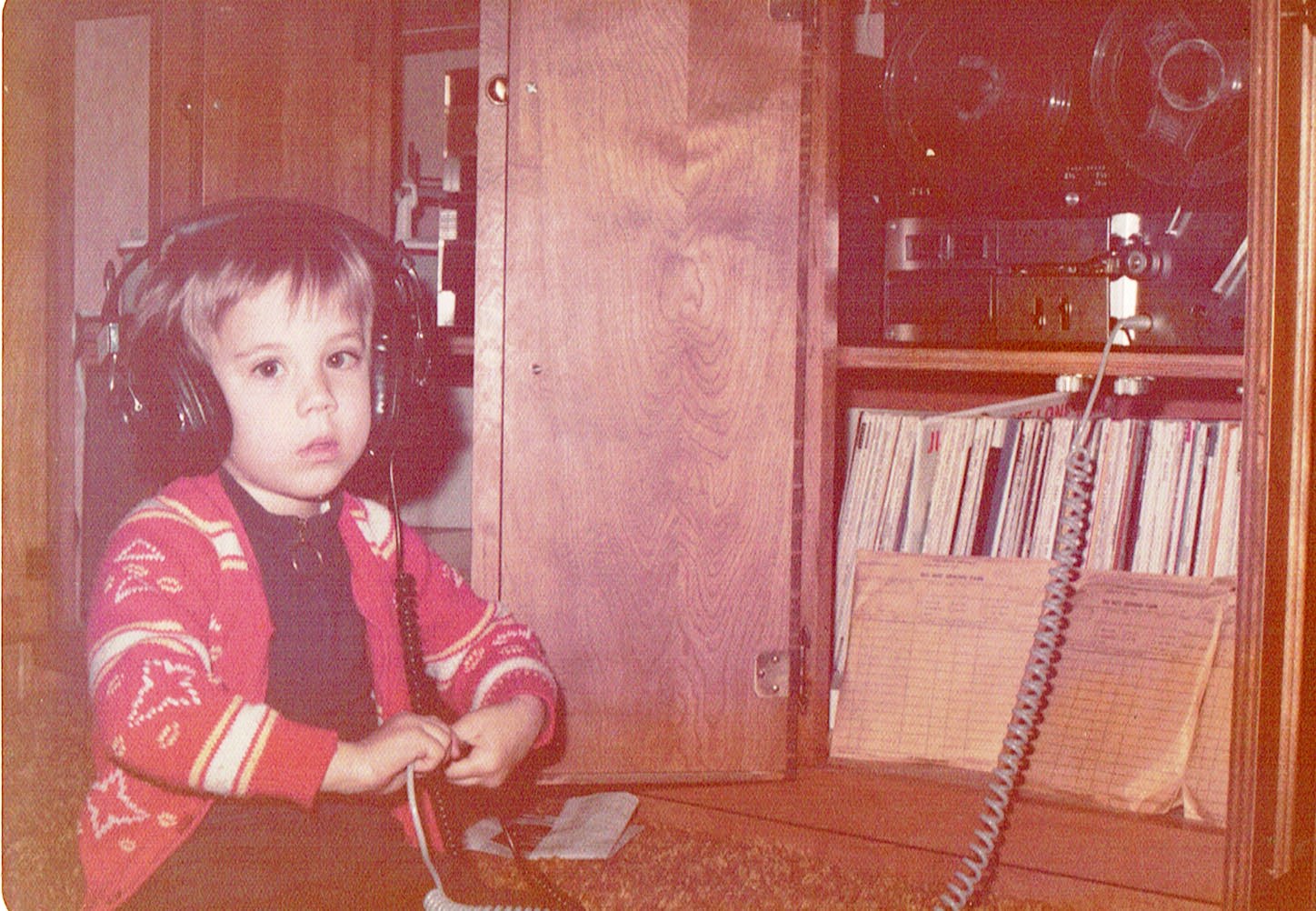
I was born in 1970, and grew up in Taylor, Texas. As a young boy, my mother signed me up for piano lessons, where I learned music. I later played the euphonium in the high school band. I never had any journalism classes, though I liked to write and draw stories, and take pictures with my dad’s Pentax Spotmatic 35 mm cameras that he brought back from Vietnam.
My parents had an extensive record collection, and I was exposed to a wide variety of music. As a teen I was never “in step” with my classmates, preferring older music. I became a record collector, and searching for old Sons of the Pioneers records later became a stepping stone for my future.
At age 16, I became engrossed in a card game called “Tarock,” which is enjoyed by many people of Czech and German descent who settled in Texas. Many of my dad’s family played the game. I eventually became the state champion in 2005.
When I graduated high school in 1989, I had no idea of what I wanted or should do. One weekend during my freshman year at UT Austin, I played in a Tarock card tournament in Fort Worth. One of the players, Joe Vivijala, who was the owner of the Schulenburg newspaper, mentioned that his son was also at UT, and had taken a slide photography course that culminated in a documentary about the Painted Churches of South Texas.
That sounded like something I could do, since I had been shooting with those old Pentax 35mm cameras. I interviewed with the slide course instructor, Julie Newton. The very next semester I transferred into UT’s College of Communications. My journalism course work required me to write stories for local newspapers, as well as find subjects for photo documentaries.
Threads Combine
I was working part-time at a mom and pop grocery store in my hometown of Taylor called Quick-Way Grocery, owned by Lydia and IA Burow. One of my coworkers was Jerry Jo Heap, the widow of Jimmy Heap, who once led a band called the Melody Masters. His group was active from 1946 to 1976 and helped set the tone for the Texas music scene.
During their career, the Melody Masters hosted a local radio program over KTAE, and had guests such as Tex Ritter, Slim Whitman, and a very young Elvis Presley. They recorded for Imperial and Capitol Records, giving country music two of its most iconic songs – “Wild Side of Life” and “Release Me,” the latter which became a top 5 Billboard hit in 1954. They later landed a recurring gig at the Golden Nugget in Vegas, and were one of the first Texas dance hall bands to mix country swing and rock and roll to please all audiences.
In 1992, while collecting Sons of the Pioneers records, a dealer named Jurgen Koop, who represented Bear Family Records of Germany, mentioned the company was releasing a retrospective CD on Jimmy Heap’s Capitol recordings. He gave me some of the CDs to take to Mrs. Heap. It was my first time to hear their music.
I was captivated by the band’s story and music. Ms. Heap welcomed me into her home and introduced me to the world of her late husband, which was a treasure trove of country music history. In addition, she gave me the addresses of all the living original band members.
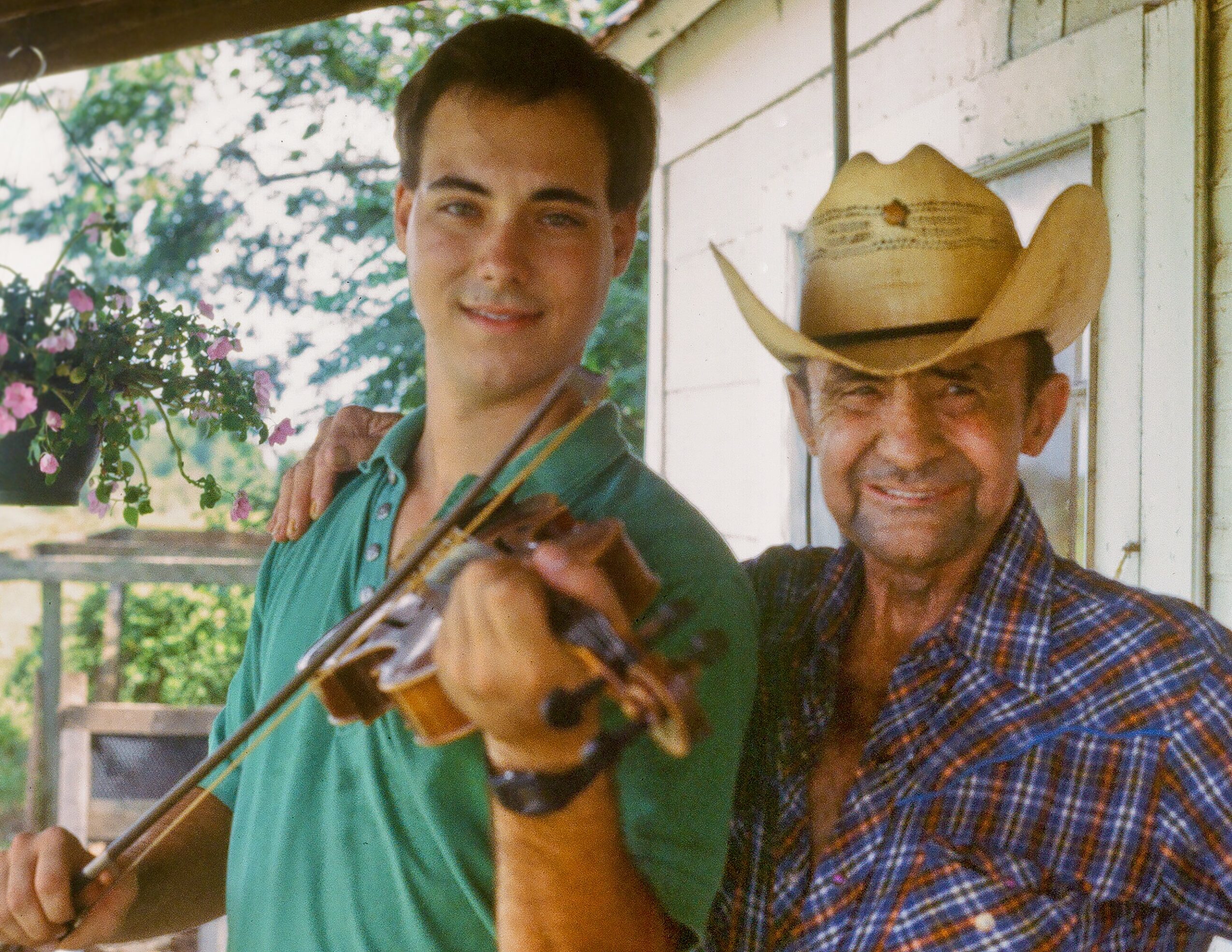
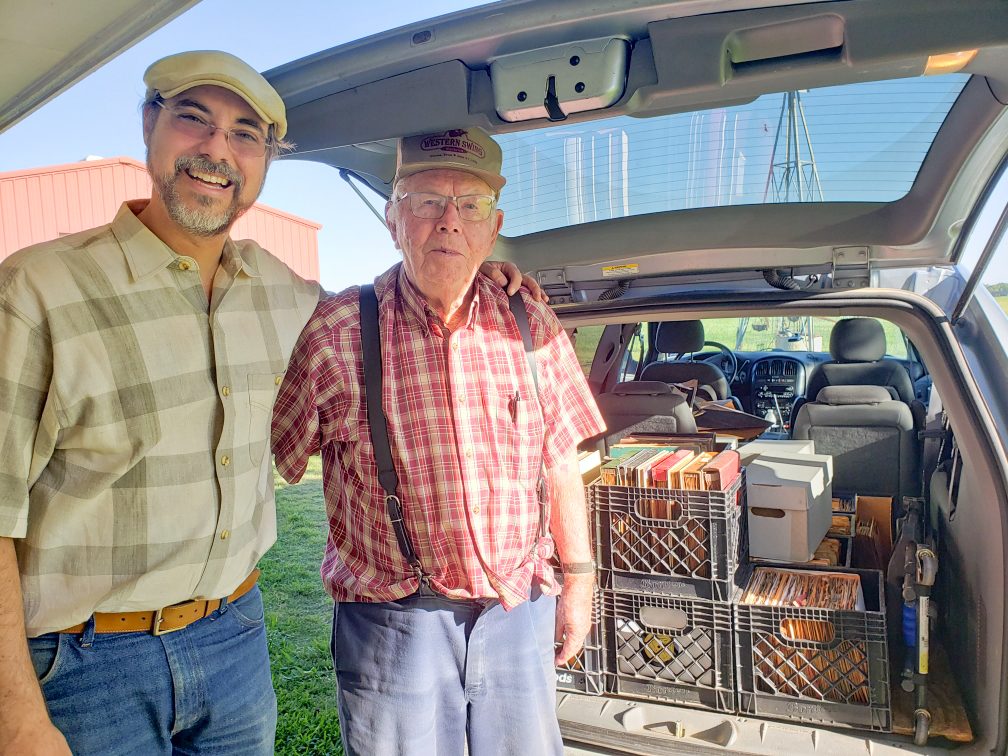
I met Houston “Perk” Williams first, who was the fiddler and vocalist on most of the Melody Master records. At age 66, he lived in 3-room shack in Chriesman, Texas, and was dying of cancer. He became a great friend, and I visited him regularly.
Fiddle Lessons
That Christmas, my mother gave me a ¾ size fiddle that she got from a fellow named Leroy Holloway. She and my dad knew that Perk and I had become friends, and they thought it would be neat if I had a fiddle.
I had no idea how to play or let alone hold the fiddle. Regardless, I asked Perk to show me how to play his hit song, “Release Me.”
“I’ve got to show you a few other things first,” he said. Over the course of the several months in 1993, he taught me around six songs, starting with “Faded Love.” He eventually became weak and passed away in January 1994.
Also in 1993, I met Arlie Carter, who was the Melody Master’s pianist and co-author of “Wild Side of Life.” Though he lived in Victoria, once a month he played at a senior citizen’s jam session in Lexington, Texas. All of the musicians in that group, the Down Home Country Band, knew of Perk Williams, and they let me play some of the songs he taught me on occasion.
Arlie Carter, who was born in 1911, grew up playing the fiddle in the era of country house and porch dances around Lexington. He became another fiddle mentor, expanding my repertoire of songs. We also traveled to many western swing music festivals in his RV before he passed in 1997.
Texas Playboys
Along the same time, I was trying to collect all of the Melody Masters’ records, which were 78s and 45s. Through my quest I met collectors Maurice and Joan Northen who lived between Belton and Little River. They were western swing aficionados and personal friends of many of the living Texas Playboys.
When they found out I was taking photojournalism courses, they introduced me to world of western sawing and the Texas Playboys, including vocalist Leon Rausch. Most of my college photojournalism classwork became documentaries of the Texas Playboys and the surviving Melody Master band members.
The next thing I knew, I was being asked by many of the Playboys, including Rausch and producer Tommy Allsup, to do their professional headshots, band shots, CD jackets, and photographically document their recording sessions. I even found myself riding on the Texas Playboy parade float alongside them in the Bob Wills parade in Turkey, Texas.
In 1997 Sims records of Nashville released a 3-CD box set of new Texas Playboy recordings, and my work was featured on the cover and accompanying book.
Dental Journalism
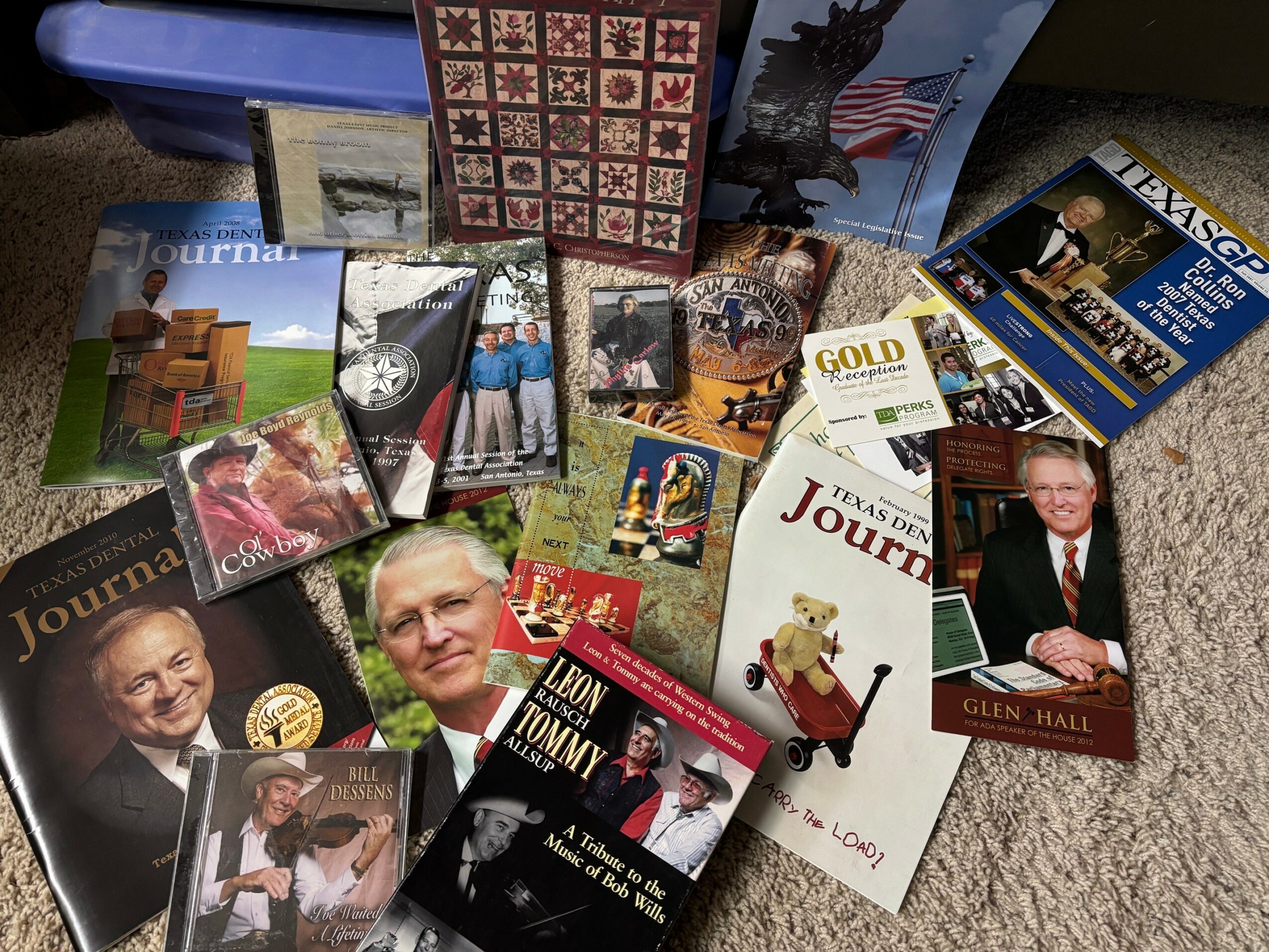
In 1994, a year before college graduation, I started working for a statewide membership association of dentists in Austin. I helped produce their monthly magazine, the Texas Dental Journal, the second-oldest continuously published dental magazine in the world.
I was shooting covers for the magazine, and traveling to different areas of the state covering events in the dental association world. Over the next 13 years my photos, writing, and design work appeared on every magazine, brochure, tabloid, and flier produced by that organization and other dental societies. I also wrote many human interest stories about the dentists and their families, including the very first dental office built in Texas.
In 2001, the Dental Journal’s editor at the time, Dr. Art Jeske, nominated me for the International College of Dentists’ Literary Award. At the time, I was the first non-dentist to ever receive the award.
Turning Pro
All through that time, I continued to learn to play the fiddle. When Arlie Carter passed away in 1997, I acquired his fiddle, which had been used on records made in the 1950s, and his Peavey amplifier. I now had the necessary equipment to play professionally.
That’s when Bill Dowdy, another Lexington musician I met at the senior citizens jam, stepped in and became another life-long mentor and friend. Dowdy was a master rhythm guitarist who cut his teeth in WWII playing with a branch of Charlie Spivak’s Orchestra while he was stationed at Pearl Harbor.
After the war, Dowdy recorded on 4-Star Records in 1950, and by the 1990s was a house band member of the Country Music Monday opry show in Giddings, Texas. Not only did Dowdy teach me the fundamentals of barre-chords and western swing rhythm patterns, he and I also became a traveling music duo.
With Dowdy’s encouragement, Country Music Monday became my first public performance outside of the senior center. I sang Ray Price’s “My Shoes Keep Walking Back to You” to a standing ovation of over 500 people. Also with Dowdy’s help, I got my first paid music job playing fiddle with the Jimmy Siegeler Orchestra of Giddings, Texas. I got paid $100 when I joined the group for a jaunt in San Angelo in 1998.
For the next several years, nearly every weekend found us playing with a group or just as the two of us, all around Central Texas. In 2005, Dowdy and I released our first CD. Entitled “Our Way,” it featured fiddle and guitar instrumentals based on Dowdy’s swing style chord patterns. We covered songs that ranged from Bob Wills to Frank Sinatra. I quickly sold out of the first pressing of 500 copies, and ordered 750 more.
Forming Bands
In late 2000, I was asked to start working with the King of Swing, a popular country/western swing dance band from the 1980s who needed a twin fiddler to accompany fiddler/guitarist Ray Tesmer. I had heard the band at music festivals and secretly hoped to play with them some day. Their drummer was George Harrison, who had been a Melody Master, and also worked with the Jim Siegeler Orchestra.
In 2001, Dowdy and I helped form a band called the Texas Pioneers that included a blend of other musicians my age, and older “veterans” of the Texas swing scene. One was steel guitarist Jimmy Grabowske of Austin who recorded with 4-Star in the 1950s, and Tony Sepolio, a showman fiddler who recorded with RCA Bluebird and MGM records in the 1940s and 50s.
A large part of the Texas Pioneer repertoire was old Melody Master tunes, which helped us kick off years of annual Melody Master tribute dances at the Taylor SPJST Hall, and Perk Williams tribute shows in Chriesman, Texas. I being able to fiddle like Perk Williams and sing his songs was an integral part of making these shows a success.
The King of Swing faded out around 2003, and I had already moved on from the Siegeler Orchestra. Ray Tesmer then joined with me and we worked in many bands together, including the Texas Pioneers, developing a very polished twin fiddle show.
From 2003 to 2005 I ran my own group, the Little River Playboys that included me, Dowdy, Tesmer, and oftentimes Grabowske, Harrison, guitarist Sonny Olney, and another steel player, Bud Harger, who in his younger years worked with Marty Robbins and other recording artists. We had a regular show at a steakhouse in Little River, Texas, and played area dances.
Tesmer then asked me to join the Austin dance hall circuit playing for dances at the city-owned senior recreation facilities. From about 2004 to 2017 I worked with these groups that included Jody Meredith and the Stardusters, and Roger Beck and the 29th Street Swing Band.
Knights of Texas Swing
I had also started to market myself as a solo artist, and secured membership as the house band fiddle player on monthly country oprys in Thorndale, Cameron, and New Braunfels. I also began appearing with many different groups for Friday and Saturday dances. One such group was Lexington’s Joe Boyd Reynolds and his Just a Bunch of Rednecks, who wrote some of his own material, and played a grittier style of country music.
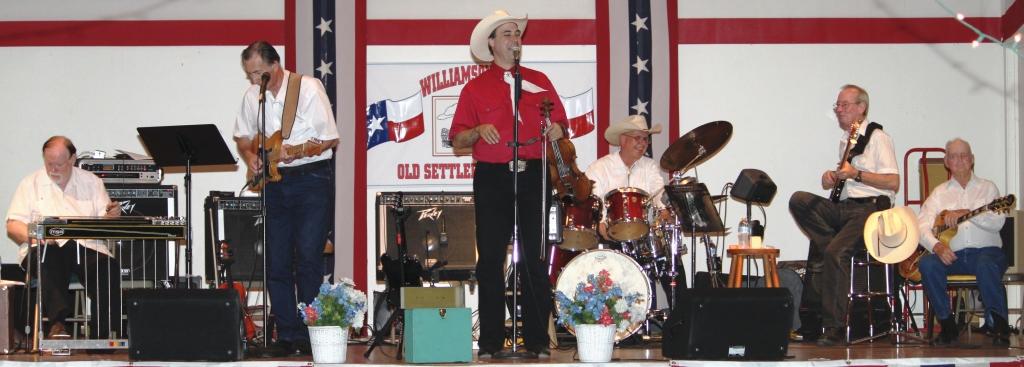
In 2006 I rebranded my Little River Playboys band as the Knights of Texas Swing, featuring the twin fiddles of Tesmer and me. Over the years we held residencies at Artz Rib House in Austin, Patsy’s Café in Austin, the Williamson County Old Settler’s Association annual reunion, and numerous other festivals and church picnics.
Other highlights for the Knights included TV shows for the cable TV station in Caldwell, and performing for Subaru of America. For several years we also represented Texas music for a Danish student cultural exchange program through Austin Community College.
We also locked in several dates at the Walburg Mercantile Restaurant, appearing when the restaurant’s Bavarian/Alpine band – called the Walburg Boys — was away on the Oktoberfest circuit.
The year 2007 saw my job with the dentists change from publications work to running the office’s computer network – a move that bumped my salary significantly, and gave me more off-hours to pursue music.
Stage Show
In November 2007 I was asked by the Walburg restaurant owner, accordionist/yodeler Ronnie Tippelt, to join the Walburg Boys to add a fiddle in the mix. I said goodbye to the Cameron show, and through February of 2010, nearly every Friday and Saturday saw me trading my cowboy hat and silk neck ties for lederhosen.
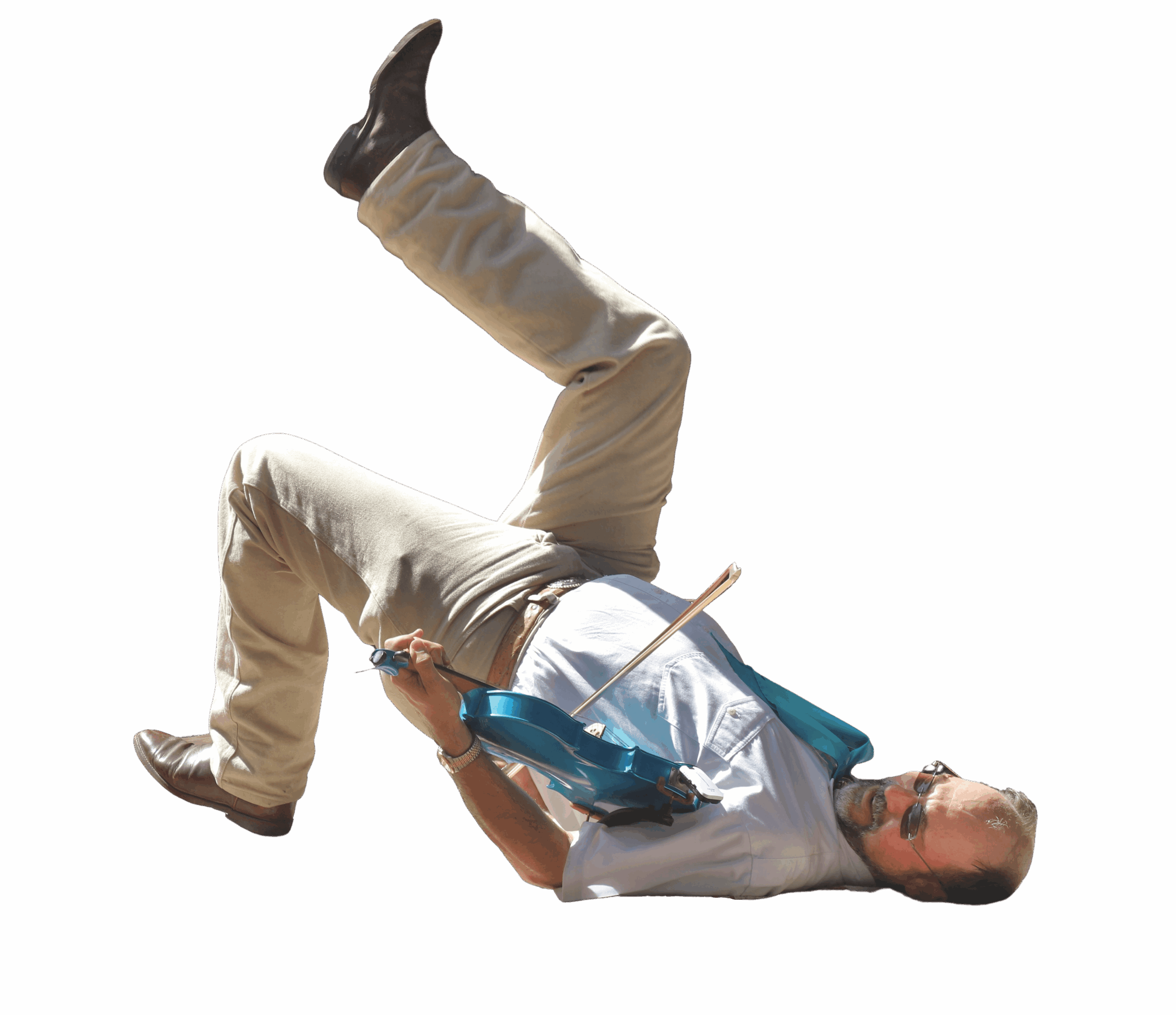
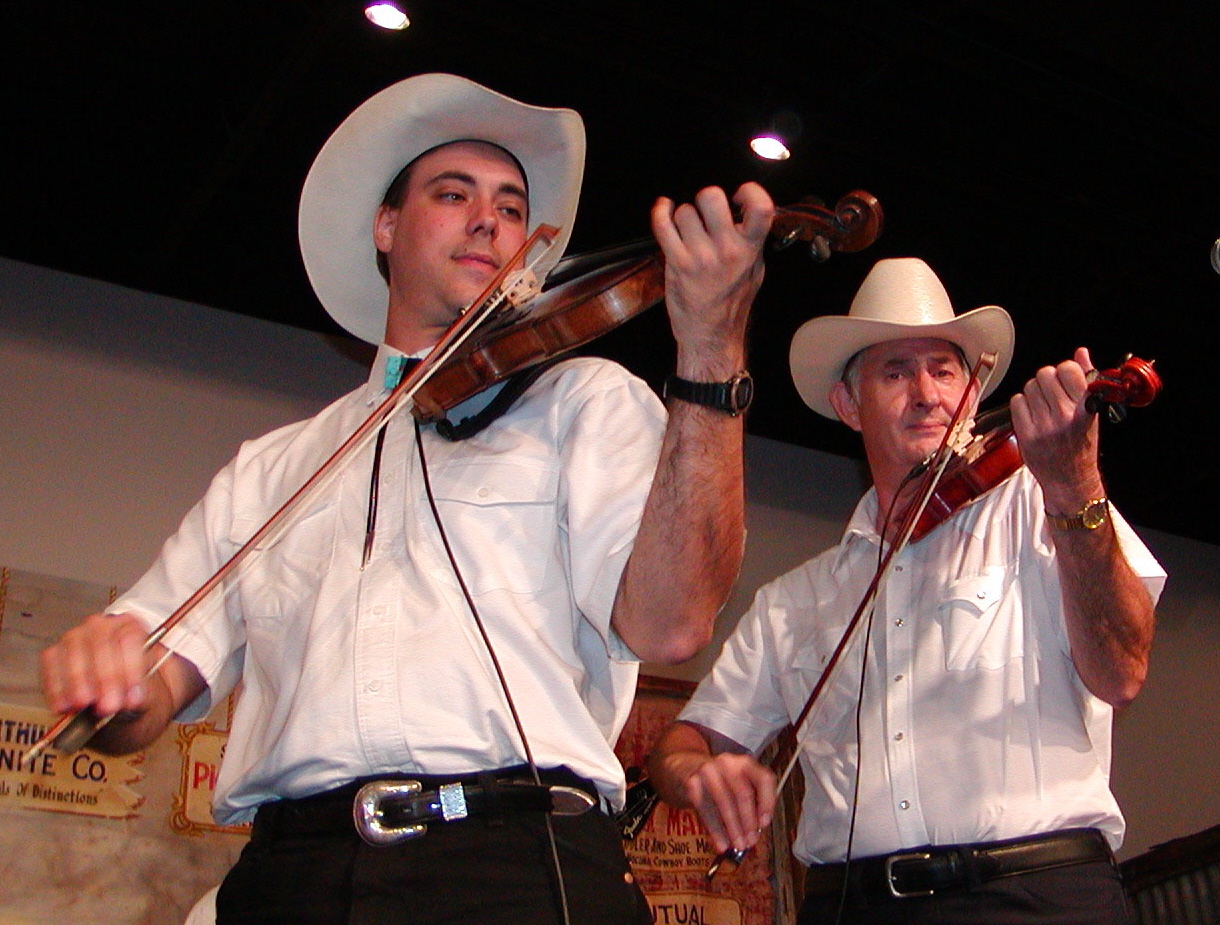
During this experience, I began to develop my stage presence with the fiddle, inspired by the aforementioned Tony Sepolio. I discovered that audiences responded very enthusiastically – especially with tips — when I danced around and kicked out my legs when I played the fiddle.
I began recording another CD that became Paul Schlesinger and his Knights of Texas Swing. The songs were a blend of western swing favorites and old Melody Master tunes that had become my “staple songs.” I even asked Cecil “Butterball” Harris, the Melody Master who penned a lot of their songs in the 40s, 50s, and 60s, to update some of the lyrics.
I included many of my musician friends, including Dowdy, Tesmer, Harrison (who had been on the original recordings 50 years earlier), Grabowske, Harger, Jimmy Heap Jr (who worked with Ernest Tubb), and Houston western swing veterans Bill Dessens and Clyde Brewer. It took a couple of years to recording everything at a studio in Rockdale, Texas.
Cowboy Church
In 2009, bass player Glenn Schneider of Thorndale asked me to play with the Milam County Cowboy Church band, which was in Rockdale. Never having developed a church home, I agreed to give it a shot.
Suddenly, a whole new world was open to me. With the cowboy church, I finally found a “church home,” and the music style allowed me to play for the Lord – returning thanks to the musical gifts he had given me. I became a member of the Milam County Cowboy Church (MC3) band, led by drummer Chip Dunsmoor.
Also in 2009, Joe Boyd Reynolds, who had fallen into bad health and had been accused of cattle rustling, became a born again Christian and the music leader for the brand-new Cowboy Church of Lee County in Giddings. He asked me to join his new band, Second Chance. So for the next several years I found myself playing every other Sunday at one of the two cowboy churches.
The Alibis
In February of 2010, things went sour with the Walburg Boys and I left. Two weeks later I got a phone call from Glen Collins of Austin, asking me to join his old-school country dance band. Glen’s grandfather, Cotton Collins, was the fiddler famous for the Westphalia Waltz. Glen knew all of the same Austin musicians that I did.
Glen’s band rebranded themselves as the “Alibis,” and we were soon playing every dance hall and venue between Austin and San Antonio, every week and weekend. A highlight was shooting a TV show at the Broken Spoke, featuring Glen Collins’ tune, “Back to Austin.”
As band members retired or passed away, the Stardusters, 29th Street Band, Knights of Texas Swing, and the Alibis became almost the same band, using many of the same musicians. The band name changed based on who booked the job, or who was the featured singer.
Band members eat well, and by 2010 I had grown to over 220 pounds, and felt miserable. A friend, Marie Williams, got me on the Medifast diet. Within 6 months I slimmed down to 140 pounds. With my new-found weightless state, I taught myself how to do fiddle tricks, such as playing behind my back, upside down, over my head, and on the floor. Over the years this has become an integral part of my stage show.
Transitions
2011 saw several significant events – it was the last time I did a professional photography job. I had already decided that music was a more prolific and rewarding side hustle than photography. Musicians had fans and followers. Photographers did not.
Also, on the Alibis’ New Years Eve dance at Decker Lake Sons of Hermann, my dad collapsed during my fiddle trick show. He died 10 days later. I lost my adventure traveling companion, as we loved to hike and ride racing bikes in West Texas.
In August 2013, while representing the Cowboy Church of Lee County on a parade float in La Grange, the pastor’s daughter of the Colorado Bend Cowboy Church in Smithville road up to me on her horse. She had heard me warming up on the “Orange Blossom Special.”
It turns out that Tara Fowler was an accomplished piano player. We were soon playing music together, and she became the first female member of the Knights of Texas Swing. Tara also became a member of the two cowboy church bands with which I was involved.
We married in June 2015 at Old Settler’s Park near Round Rock. Also in 2015, my Knights of Texas Swing CD was finally released to rave reviews by western swing music reviewers and DJs.
National Recognition
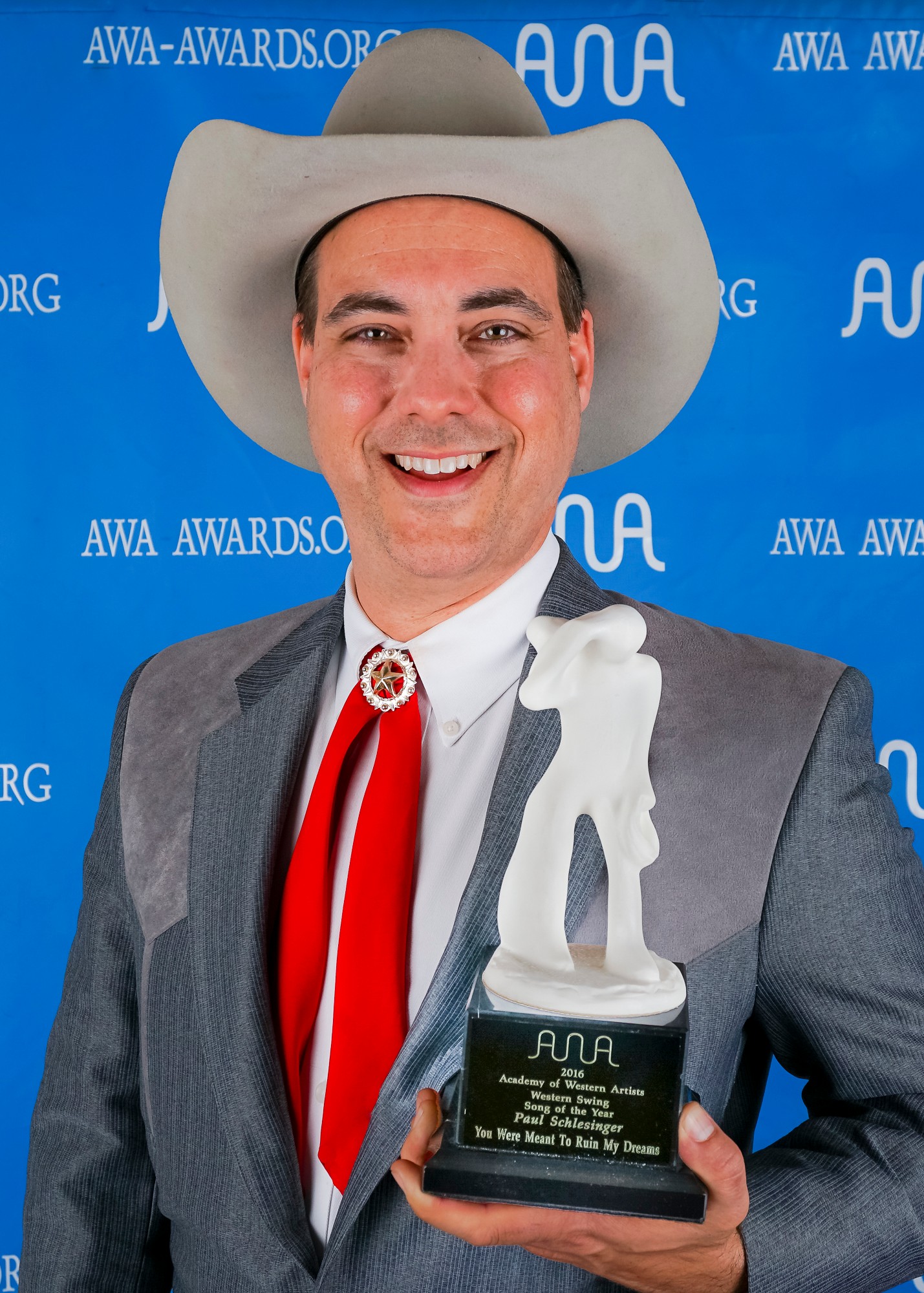
In 2016 the Academy of Western Artists, which was associated with the Will Rogers Cowboy Awards, awarded me with the Western Swing Song of the Year for my rendition of “You Were Meant to Ruin My Dreams,” a Melody Master song from 1949 that I had included on the CD.
2016 was a transitionary year. Many of my music companions passed away – Bill Dowdy, Roger Beck, Jim Grabowske, Joe Boyd Reynolds. Ray Tesmer’s health declined, and the year became his last to share the stage with me.
After Joe Boyd Reynolds’ death, I was asked to step in the role of the music leader for the Cowboy Church of Lee County.
At the end of 2016, the Milam County Cowboy Church had a new music leader. My wife and I were told we were no longer wanted at the church! This actually was a blessing, as it allowed me to concentrate fully on the Lee County church.
My star continued to rise. I was inducted into the Country Music Hall of Fame in Gatesville, Texas. Over the next 3 years, I received several awards from that organization. I was interviewed by a magazine from the UK, Country Music People. I was being asked to help contribute to books about Texas music history.
In 2017, I was named one of the top western swing vocalists by the Academy of Western Artists. In June of that year, I was baptized by choice at the Lee County cowboy church. As the church’s music leader, I continued to promote the church through parades and an annual Country Gospel Jamboree held in Giddings.
The next 2 years saw my music career flourish with the Knights of Texas swing, Alibis, and country-gospel shows with my wife. She and I even participated in mission trips to New Mexico, bringing our cowboy church music to the Mescalero Apache Indian Reservation.
The music jobs kept coming, and as did the accolades. Life couldn’t have been better.
Can you talk to us a bit about the challenges and lessons you’ve learned along the way. Looking back would you say it’s been easy or smooth in retrospect?
What took 49 years to build all came crumbling down in 2019. My marriage fell upon hard times in October, and our music together ended as well.
On November 12, I returned from my lunch break at the dental organization to be escorted out of the building by a Pinkerton Security Agent! After 25 years, my position had been “eliminated.” They did give a few months’ severance pay.
In January of 2020, the Cowboy Church of Lee County accused its pastor of scandal and fired him. As a team leader, I was asked to vote on whether he not he got one month’s severance pay. I voted ‘yes.’ Two days later the head elder told me to step down from the music team.
In February, my vehicle broke down, leaving me without transportation. Fortunately I was able to buy a used van with some cash that I had saved. I wasn’t too worried; my severance pay was coming, and my music jobs through April would more than pay the mortgage on my house. I had found another cowboy church band to worship services, and it was closer to home.
Enter Covid
The world changed on March 17 when Texas shut down due to Covid. All of my music jobs immediately disappeared. That day I had assembled a trio to play a St. Patrick’s Day party at retirement home in Round Rock. They literally closed the doors and locked them in my face as I stood there holding my instruments.
Every job opportunity I pursued – IT, insurance sales, and real estate appraisals – were all on lock-down. One friend even said that he prayed, and God told him not to help me with work!
I watched in silence as nearly every restaurant the Knights of Texas Swing played went out of business. Every festival we played folded, or eliminated live music.
Some of my musician friends attempted to stream online music out of our garages. We did a lot of cowboy gospel tunes. A few people tuned in, but not many.
Spark of Light
Since the world was falling apart and nobody was hiring, I decided the best use of my time was to produce a third CD. This one, the Broken Violin, was all cowboy gospel, and featured several original tunes penned by the late Joe Boyd Reynolds. The title song was a re-telling of the poem, “Touch of the Master’s Hand,” written by a fellow named Edmund Matthis whom I found on YouTube. My adaption of his song had been well-received at the cowboy churches.
The songs were recorded in my home studio. But with everything shut down, there was no release party. Save for a couple of local radio stations, none of my music contacts in the cowboy Christian world would touch it. The CD went largely unnoticed, and remains so until this day.
The only luck I had was with my guitarist friend Roy Sanders, the editor of the Burleson County Tribune in Caldwell. We made videos of some cowboy songs he wrote as well as some traditional hymns. His posts got thousands of views.
I also began working with guitarist/vocalist Tim Hill at the 1832 Farmer’s Market in Bastrop, which is an outdoor venue. We perform together to this day.
A Window Opens
That summer I had taken my mother to the hospital in Temple for an annual eye exam. On the way back, we stopped at the Red & White grocery store in her hometown of Bartlett. I happened to pick up the newspaper, the Tribune Progress. It contained big advertisement, stating that the paper was for sale. I flipped through it, and instantly knew producing the paper would be right up my alley. After all, my degree was in photojournalism, and I knew layout and design from my dental magazine days, as well as mailing Periodicals through the post office.
I called the newspaper owner, Gayle Bielss. I got no response.
One Sunday in September, I was playing Tarock with my cousins in Schwertner, Texas, near Bartlett. I was talking about my ideas on buying that newspaper. Little did I know the newspaper owner’s son was dating my cousin’s daughter. He overheard what I was saying, and recommended that his mom, Gayle, call me right away.
One of the few outdoor venues that was allowing music during Covid was Dale’s Essenhaus in Walburg. Ed Kopecky and his Fun Time Czech Band had asked me to join them. One night as we played, the newspaper owner came out to meet me. We agreed that I would start a “trial run” at running the newspaper at the start of 2021.
Curtain of Darkness
What started as a dark year then got even darker. My wife and I separated, and she moved out for good. (Our divorce was final in the summer of 2022). On Christmas Eve 2020, my mother was near death, undergoing emergency surgery to remove necrotic intestines – a gift from scar tissue due to a 1970s-era hysterectomy.
Less than a week later I came down with Covid. Physically, it was like a bad flu. Mentally I plummeted into the deepest bouts of depression and anxiety I had ever experienced. Every day became living panic – something I knew I should control, but couldn’t. I felt totally alone for the first time in my life.
The only thing that saved me was hearing my mother’s voice on the telephone. She survived her ordeal. Other music friends talked to me on the phone – sometimes until 3 in the morning, helping me surf though surges of anxiety.
Then Winter Storm Uri hit, and I had no gas, water, or electricity. It was damn hard getting over the mental depression.
Tribune Progress
In mid-February 2021, I finally began working with the Tribune Progress. It became my life for the next year. There was no income, other than some petty cash from newsstand sales. Gayle Bielss still retained ownership and took care of the business end while I went out and got the stories, took the pictures, and tried to promote the paper in the communities of Bartlett, Granger, and Holland.
It was the toughest year of my life, most stressful, and oddly enough, one of the most rewarding. I met hundreds of people during that time period, and grew in ways I never thought possible. However, I still had no income, other than unemployment benefits.
There were some good times, though. I was invited to perform my cowboy church music at a revival in Louisiana. I was also installed into the Western Swing Society of the Southwest Hall of Fame in Lawton, Oklahoma, thanks to western swing guitarist Terry Barnett, who helped me record my Broken Violin CD.
Major Setback
Unfortunately, the dental association people weren’t through with me. They had hired attorneys who were apparently tracking my whereabouts. One day that fall, I got a ream of legal documents from them. From what I could determine, they thought I was employed by the Tribune Progress, or at least deriving income from it. I was not. At any rate, they claimed they were no longer my employer of record for my unemployment benefits.
One Tuesday in September, my mother and her friend were severely injured in a car accident just a few blocks from home. The next day, as my mother struggled in intensive care just to stay alive, the dental association people and the state unemployment office had me on the phone for a hearing. Since I had worked 9 hours at an election office in the March Primaries to help a friend, the arbiter decided the election office classified as “employment” and sided in favor of the dental people, thereby ending my unemployment benefits.
By February of 2022, I was done. I realized that if I owned the Tribune Progress, there was no way I could prosper with what revenue it could generate. I put my head down on my desk and prayed for another door to open.
Giddings Times & News
Two days later, my newspaper/musician friend Roy Sanders called, asking if I would consider working for the Giddings Times & News. The owner, Buddy Preuss, had health issues and they needed an experienced person on the team. I agreed to meet with the Preuss family that Thursday.
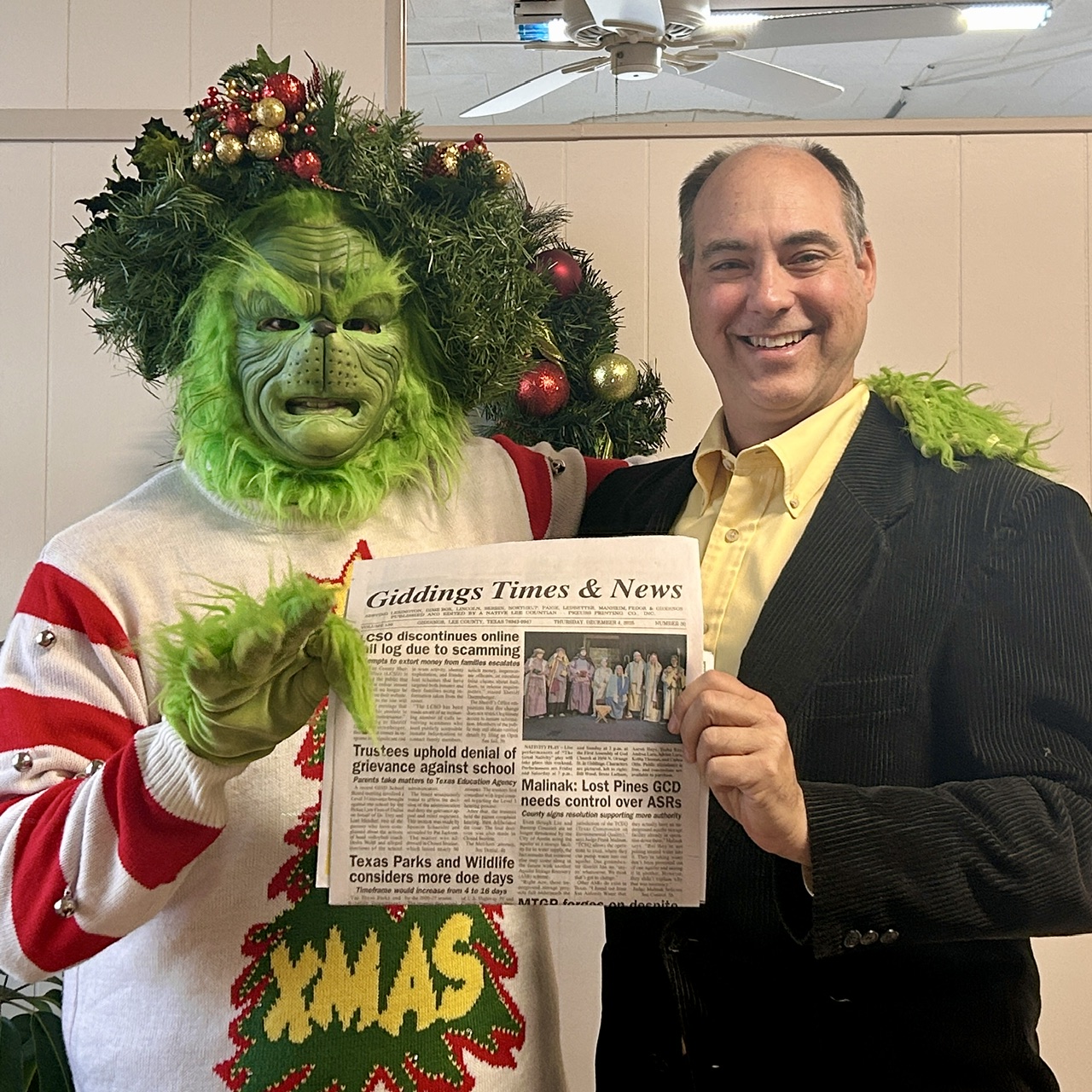
When the interview was done, I had a job. I transitioned out of the Tribune Progress, and by March 2022 I became a reporter/writer/photographer for the Giddings Times & News – coming full-circle with my photojournalism degree.
I later learned that Buddy had called Ollie Siegeler, the widow of Jimmy Siegeler, who was the first bandleader that had hired me back in 1998 for a character reference. My music had come full circle with my journalism career, and I owe it all to the people of Giddings and Lee County, Texas.
The job with the paper is indeed a treasure, as Giddings is no ordinary small town. I arrived right on the cusp of its next stage of development, covering stories on every topic imaginable from church schools to homicides, and courthouse restorations to natural gas plants. The Pruess family has treated me incredibly well.
The Times & News has also introduced me to many fascinating situations and people in all walks of life. One is Annie Bolognino, whom I met covering a story about a commercial compost operation threatening her equine facility in Lee County, and who recommended me for this feature in Voyage Austin.
New Horizons
As my professional life is being rebuilt, my music career is also once again picking up steam. I still play with the Alibis, and I have been hired to play the fiddle regularly with other groups, including Bobby Dean and the Timeless Country Band, the Gabriel River Band from Georgetown, Ed Kopecky’s Fun Time Czech Band, and alongside Tim Hill and as the Town & Country Boys. I also revive the Knights of Texas Swing from time to time.
I have also been part of the 3C Cowboy Fellowship worship band in Salado for 5 years, continuing cowboy church-style music. I also regularly perform for retirement homes in Round Rock.
In the past year or so, my solo career is also getting back on its feet again, too. I am getting more and more calls to return to the country opry circuit, and I’ve been tapped to do things such as perform at the Fayette County Fair and sing the National Anthem.
It’s my goal next year to release another CD, played in the style of my Texas Swing mentors. This one will be called “My Way.”
There are also new horizons with my personal life as well.
Can you tell our readers more about what you do and what you think sets you apart from others?
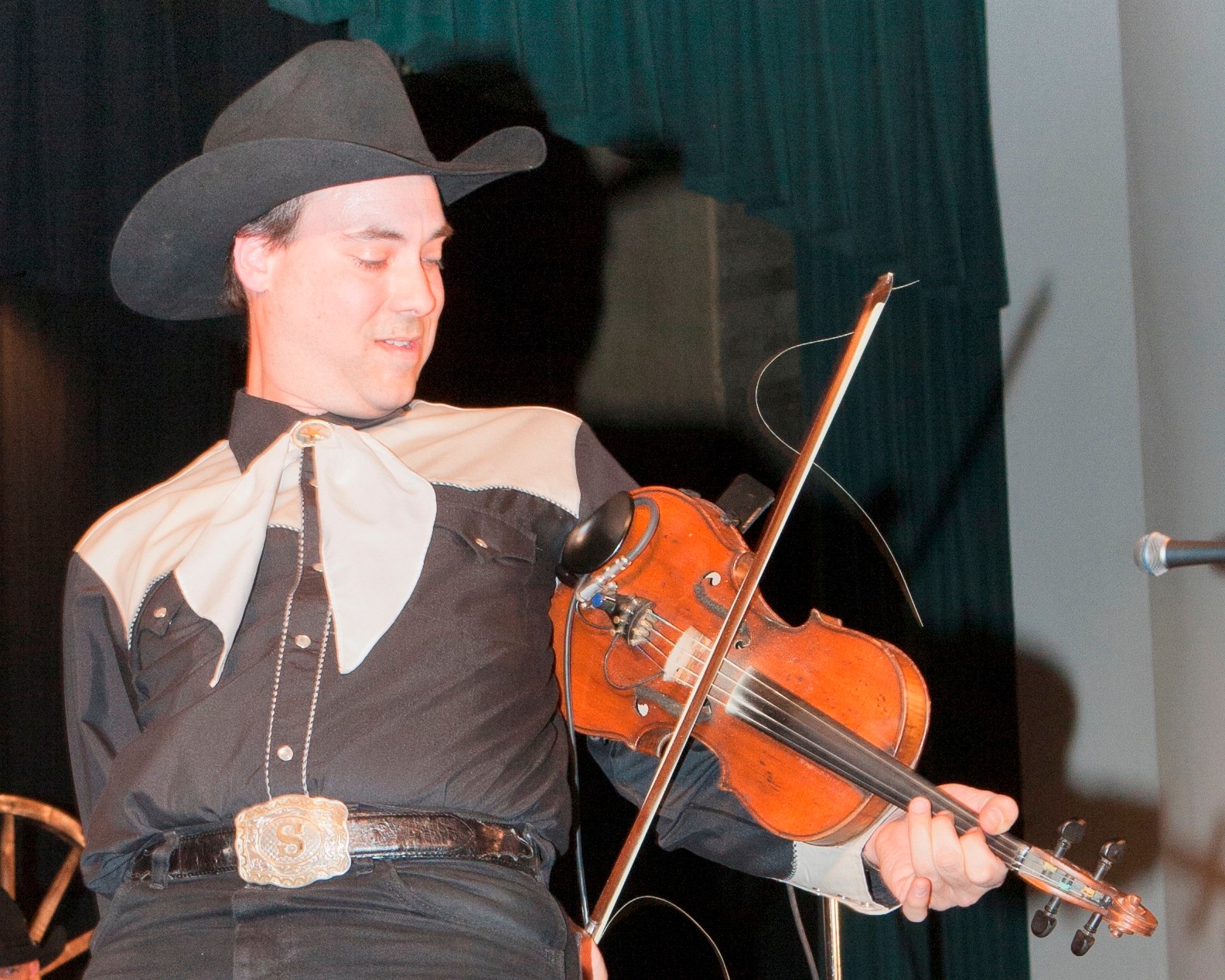
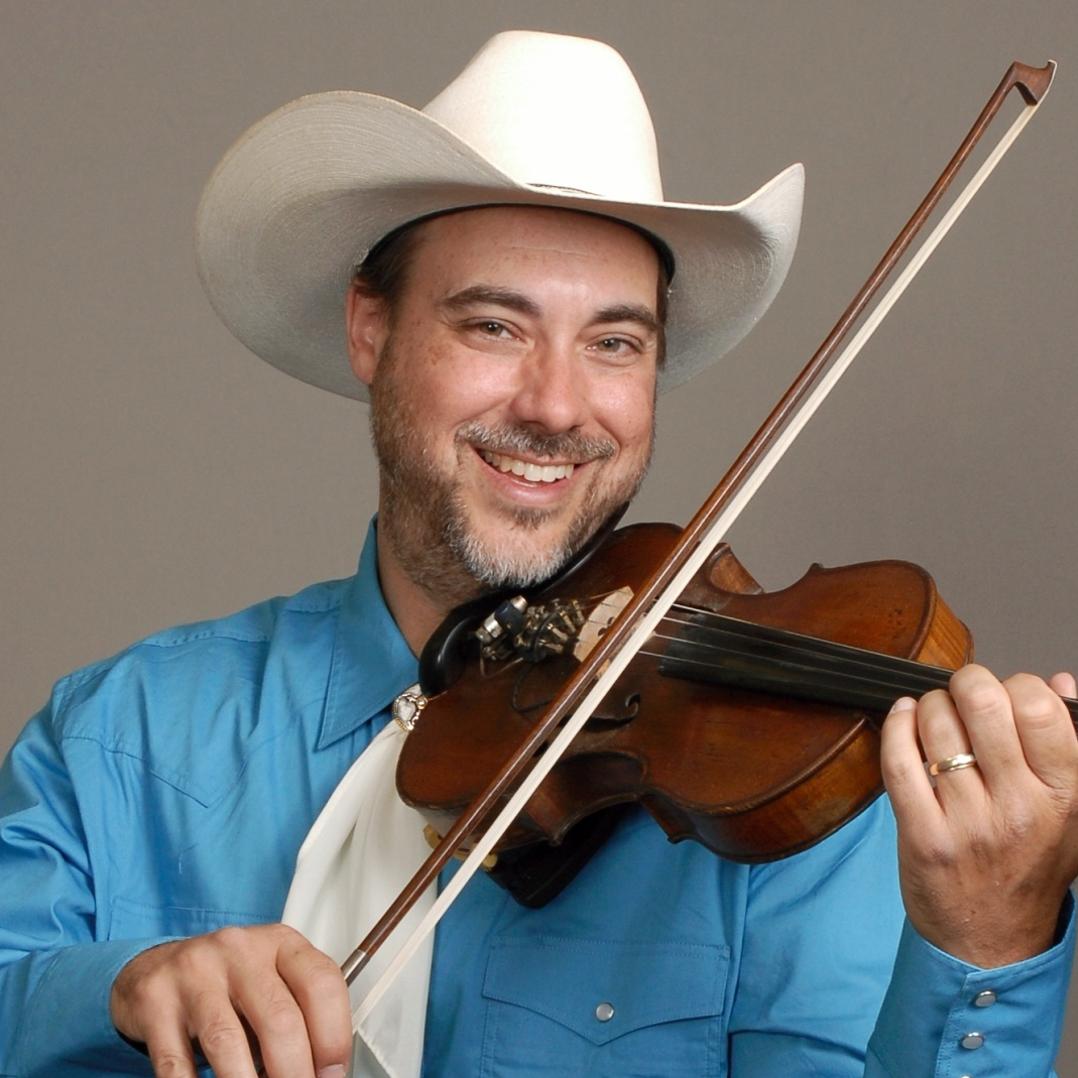
I’m Paul Schlesinger – a newspaper reporter by day, and a Texas Swing fiddle player by night.
My recording of the song “You Were Meant to Ruin My Dreams” was named the Western Swing Song of the Year by the Academy of Western Artists. The same group named me as one of the Top 5 vocalists of Western Swing music.
I’ve won international recognition with my writing. My photography work has appeared on magazine and book covers seen around the globe, and on music box sets and CDs were nationally released.
My story is somewhat unique, as I never intended to be a fiddle player, or a star of the stage. Nor did I set out to be newspaper journalist. However, the Lord put so many incredible people in my path who helped me become who I am today.
Are there any important lessons you’ve learned that you can share with us?
Trust the Lord to guide your life. Allow things to happen through Him. Keep a positive attitude, and don’t be afraid to take advantage of opportunities, especially if they are staring you in the face. Find friends who share the same beliefs and attitudes. They will be your friends for life.
Pricing:
- Knights of Texas Swing performance starting at $1,000.
- Paul Schlesinger, solo artist, starting at $250 per hour
- Paul Schlesinger, writer/editor, starting at $125 per hour
Contact Info:
- Website: https://www.paulschlesinger.com
- Facebook: https://www.facebook.com/paul.schlesinger.712/
- Youtube: https://www.youtube.com/@paulschlesinger