



Today we’d like to introduce you to Jeremy Porter.
Hi Jeremy, thanks for joining us today. We’d love for you to start by introducing yourself.
I’ve been chasing the same thing for about thirty years: making a pair of speakers disappear so all that’s left is the music.
It started young. I was the kid taking things apart to see how they worked, and somewhere along the way sound became the thing I couldn’t put down. I studied electrical engineering at UT Austin, focused on transducers and semiconductor work, and that gave me the technical foundation, but the truth is I would have been building speakers in my garage either way. The degree just let me understand the technical side of designing and building the best ones, and let me know what rules I can and can’t break.
My career took me into the industrial and technology world. I spent years in oil and gas and then in enterprise software, running operations and building out businesses for companies serving some of the largest operators in the world. It taught me discipline, how to ship something real on a deadline, and how to sweat the details that customers actually feel. But nights and weekends, I was still designing drivers, cutting cabinets, and measuring in the results. Speakers were the constant.
Eventually I was ready to share my results with the world and I founded JPORTER Studios as a company so I could build the loudspeakers I’d always wanted to hear, for people who care about sound the way I do. Everything is designed and built here in Austin. I’m the founder and, for now, the whole operation, which means every pair that leaves the shop has my hands on it.
The last couple of years have been a turn I didn’t fully expect. We showed at AXPONA and a few other shows, earned Best of Show honors two years running, and got a glowing review in The Absolute Sound. Hearing people react in the room, watching a speaker genuinely impressive strangers and audio reviewers I have always looked up to that never gets old.
Where I am today is still building, still measuring, still refining, and grateful that this quietly turned into something people want to invest in, and enjoy.
Alright, so let’s dig a little deeper into the story – has it been an easy path overall and if not, what were the challenges you’ve had to overcome?
If anyone tells you high-end audio is a smooth road, they’re selling something.
The hardest part is that this is an unforgiving product to build alone. A loudspeaker is the combination of art and science, where physics, electronics, woodworking, and taste all have to agree at once, and any one of them can wreck the other three. I’ve built prototypes that measured beautifully and sounded lifeless, and others that broke every rule, but sounded amazing. Learning to trust my ears and the measurements, and knowing when they disagree, took years and a lot of expensive mistakes sitting in a corner of the shop.
Being a one-person operation is its own challenge. I’m the designer, the builder, the shipping department, and the guy answering emails at midnight. There’s no team to absorb a bad week. When a driver goes on backorder for months or a cabinet finish doesn’t come out right, that’s on me and it stops everything. The flip side is total control over quality, but the cost is speed.
Then there’s the reality of being small in a market full of legacy names and big marketing budgets. Nobody is handing a boutique Austin builder shelf space or press coverage. Every show costs real money to attend, every review has to be earned, and you’re competing for attention against companies a hundred times your size. For a long time the work was good and almost nobody knew it existed. Getting people to simply listen, to sit down and give an unknown brand a fair chance, was harder than building the speakers.
I’ve also been doing this alongside a demanding full-time career the whole way. Nights and weekends, vacation days spent at trade shows, family time borrowed against the shop. My family has carried a lot of that with me. Balancing a serious profession with a serious craft means something is always getting less of me than it deserves, and making peace with that is an ongoing struggle, not a solved problem.
Thanks for sharing that. So, maybe next you can tell us a bit more about your business?
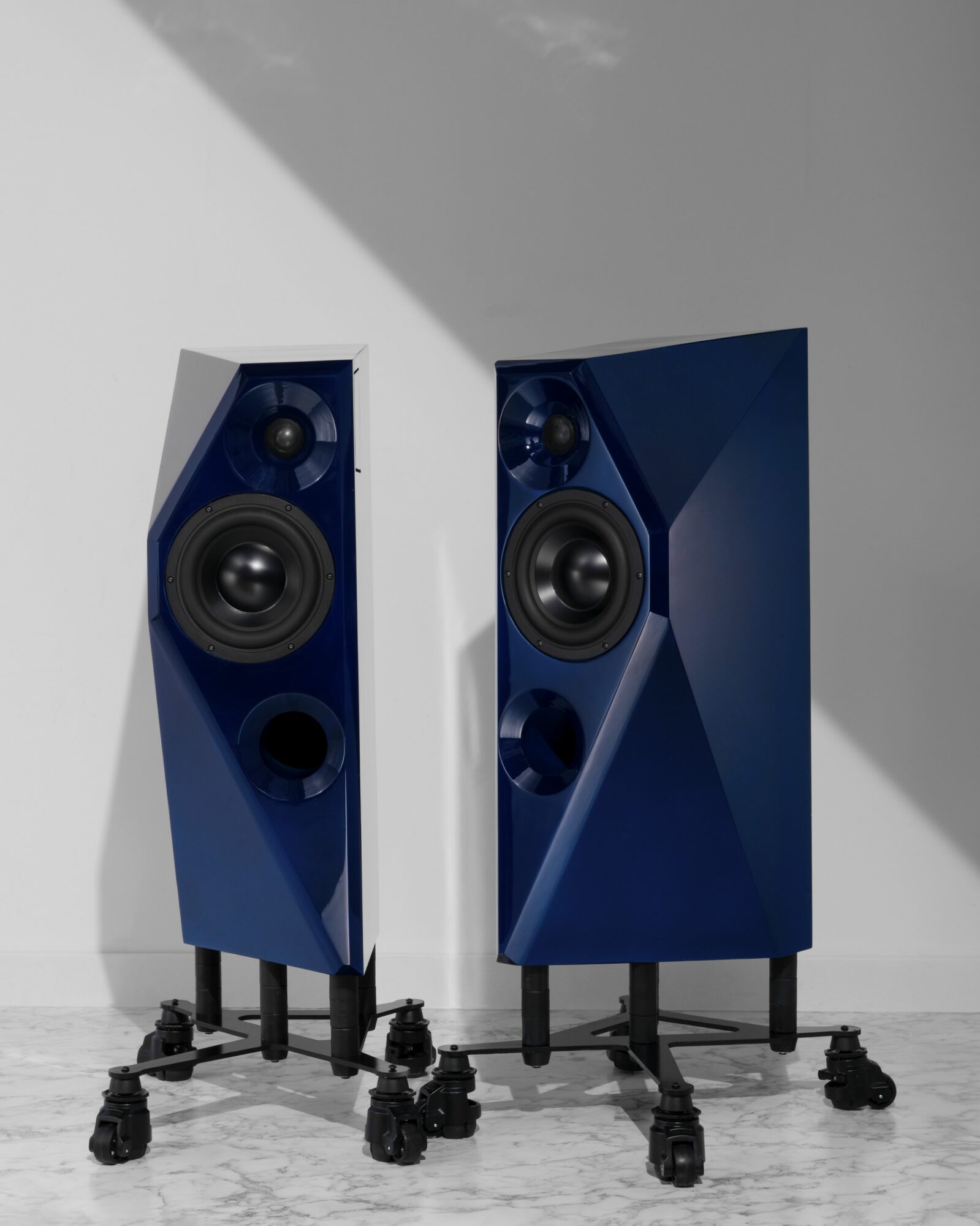
JPORTER Studios is a boutique high-end loudspeaker company based in Austin, where we design and build every pair by hand. We’re not a factory and we don’t pretend to be. What we make is a small number of very serious loudspeakers for people who want to hear a recording the way it was actually meant to sound.
What I specialize in is imaging and disappearance: getting a pair of speakers to stop being two boxes in a room and instead throw a realistic, three-dimensional stage in front of you, where you can point at where each instrument and voice is sitting. That’s the thing people react to first when they hear our rooms at shows, and it’s what I’ve spent my life chasing. Under the hood it comes from a lot of measurement, careful driver matching, and custom work I developed to solve problems I wasn’t happy with off the shelf.
What sets us apart is our unique approach to design and engineering, the scale. Being small and building everything myself isn’t a weakness in this category, it’s the whole advantage. There’s no committee, no cost-down engineering, no compromise to hit a price point set by marketing. Every pair gets the attention it would get if it were going in my own room, because that’s the only standard I know how to work to. When you buy one of our speakers you’re getting something an actual person obsessed over, not a spec sheet a factory assembled.
Brand-wise, what I’m most proud of is that the recognition came the hard way and it came from listening. We’ve earned Best of Show honors two years running and a full review in The Absolute Sound, which for a one-person Austin shop competing against legacy names is not nothing. But the moments I care about most are quieter: a stranger sitting down in our room, skeptical, and then going still because the speakers vanished and the music was just there. That reaction is the entire point of the company.
What I’d want your readers to know is that world-class audio is being designed and built right here in Austin, by hand, by someone who cares more about the sound than the sale. If you love music and you’ve never heard what a properly voiced pair of speakers can do to a room, come find us at a show and sit down for a few songs. That’s all I ask. The speakers do the rest.
What sort of changes are you expecting over the next 5-10 years?
I’m optimistic, which for high-end audio is practically bullish.
The honest challenge is demographics and habits. A generation grew up on compressed streaming through earbuds, and a lot of people have never once heard what a real system in a real room can do. That’s the headwind everyone in this industry talks about. But I don’t think the appetite for great sound went anywhere; I think it went dormant because nobody sat these listeners down in front of the real thing.
Every time I do, at a show, in the shop, the reaction is the same regardless of age. People don’t need to be taught to love music. They just need to hear it done right once.
A few things really stand out. Vinyl came back and stayed back, which told everyone the desire for a physical, intentional way to listen is still there. Streaming quality has quietly gotten excellent, so the source is no longer the excuse it used to be. And the tools available to a small builder today, measurement, active DSP, modern drivers and amplification, mean a boutique shop can now compete on sound with companies a hundred times its size. That levels a field that used to belong entirely to the big names.
Where I get uneasy is the drift toward convenience over quality, and toward gear as a status object rather than a tool for listening. Plenty of expensive audio is bought to be looked at, not heard. I’d rather the industry win people back through the experience itself, sitting down, being surprised, falling in love with a recording again, than through price tags and marketing. The brands that survive the next decade will be the ones that make listening feel worth the trouble.
For a builder like me, that’s actually the opportunity. The future of this industry isn’t only in the biggest rooms and the biggest budgets. It’s in the person who hears a properly voiced pair of speakers for the first time and realizes what they’ve been missing. My whole bet is that there are a lot more of those people out there than the industry assumes.
Pricing:
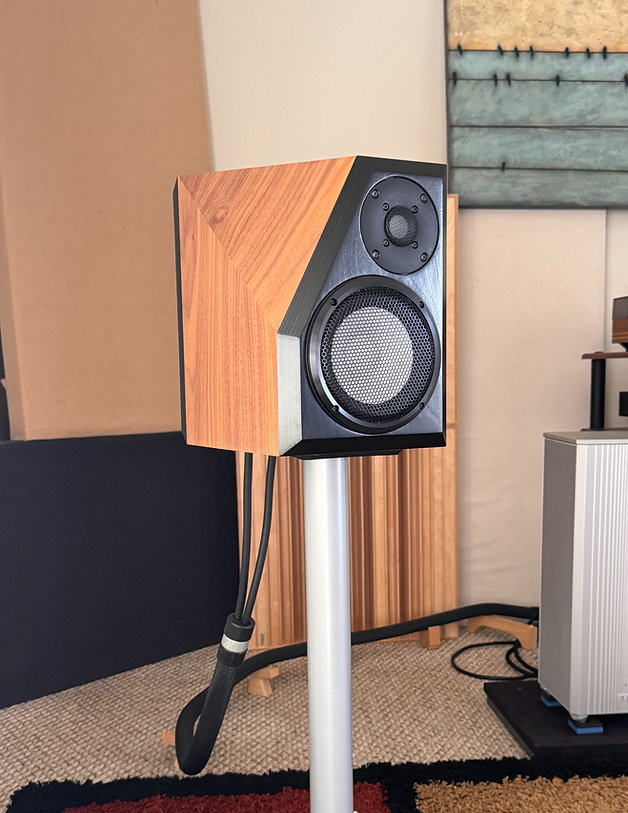
- Waterloo Micro Bookshelf Speaker $5,995/pr
- Waterloo Floor Standing Speaker $14,995/pr
- Wellington Floor Standing Speaker $19,995/pr
Contact Info:
- Website: https://www.jporterstudios.com
- Instagram: https://www.instagram.com/jporterstudios/
- Youtube: https://www.youtube.com/@jporterstudios