


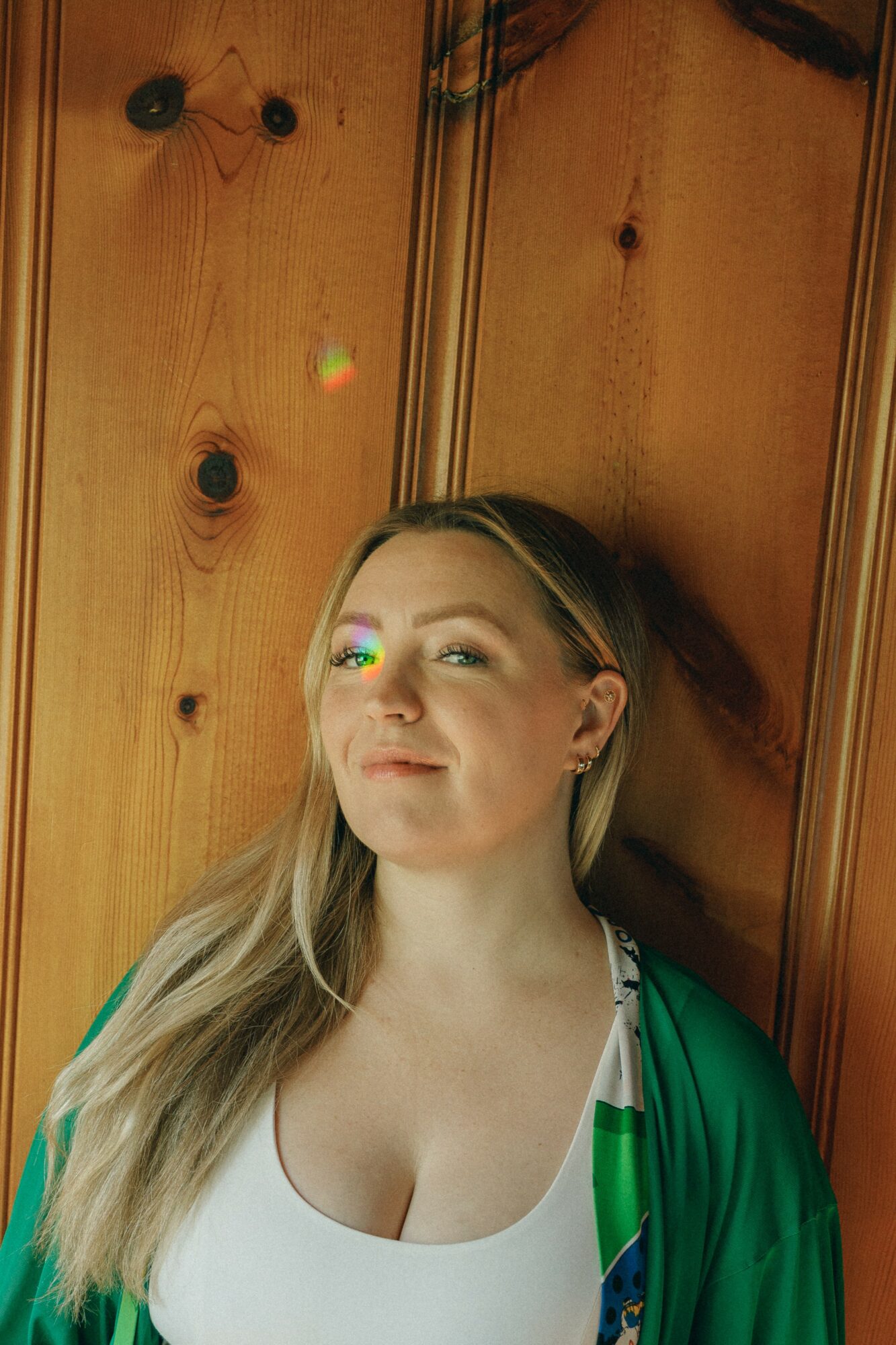
Today we’d like to introduce you to Caroline Lee.
Alright, so thank you so much for sharing your story and insight with our readers. To kick things off, can you tell us a bit about how you got started?
I started as an artist and photographer. That’s still the foundation, even if it doesn’t look like it from the outside. Photography taught me how to read a room: the tension underneath the surface, the truth in someone’s posture, what a person is actually feeling versus what they’re presenting. That kind of attention never left me. It just migrated.
Over time I got pulled toward threshold moments. Birth, death, grief, the decision to become a parent or not, the moment someone realizes the life they’re living was built for someone else. I was drawn to these places because they seemed like where the real things happen.
I volunteered in hospice and trained as a death doula, and that changed me. End-of-life work has a way of clarifying what actually matters. I watched families avoid the hard conversations until they had no choice but to have them. I watched people die with regrets that had more to do with how they’d lived than how they were dying. I started to understand that death literacy is really a life skill. The question underneath all of it is: are you living the life you actually want, while you still can?
I went back to graduate school for somatic psychology, got my master’s from CIIS, and became a therapist. My clinical work is body-based and existential. A lot of what I do is help people move from overthinking into actually knowing, learning to trust the body as a source of information rather than something to manage or override.
A major thread in my work is the decision to have children or not. I created a coaching offering called “To Babe or Not to Babe” for people stuck in ambivalence who can’t seem to move. The goal is helping people get out of limbo, tell the truth about what they want and what they’re afraid of, and sit with the reality that every choice involves grief. Choosing one life means letting go of others. That’s not a flaw in the decision. That’s just what choosing is.
I’m an oldest sibling, one of six, which means I understand family systems from the inside. I know what it means to be the responsible one, the one who picks up the phone, the one who becomes the de facto caregiver before anyone said that was your job. That’s another thread I return to again and again in my writing: eldest daughters, assigned care, and the difference between caretaking that comes from love and caretaking that comes from fear.
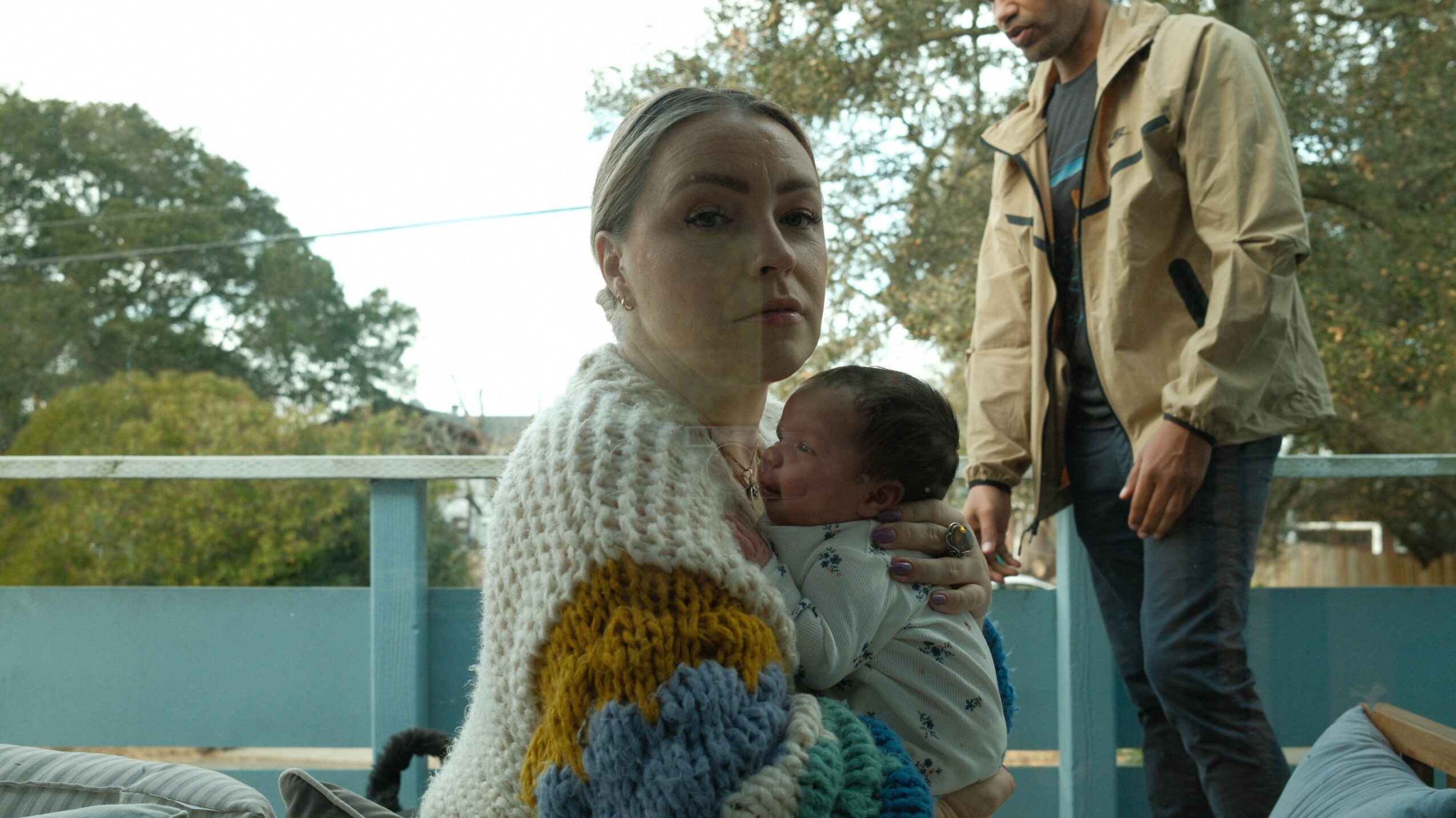
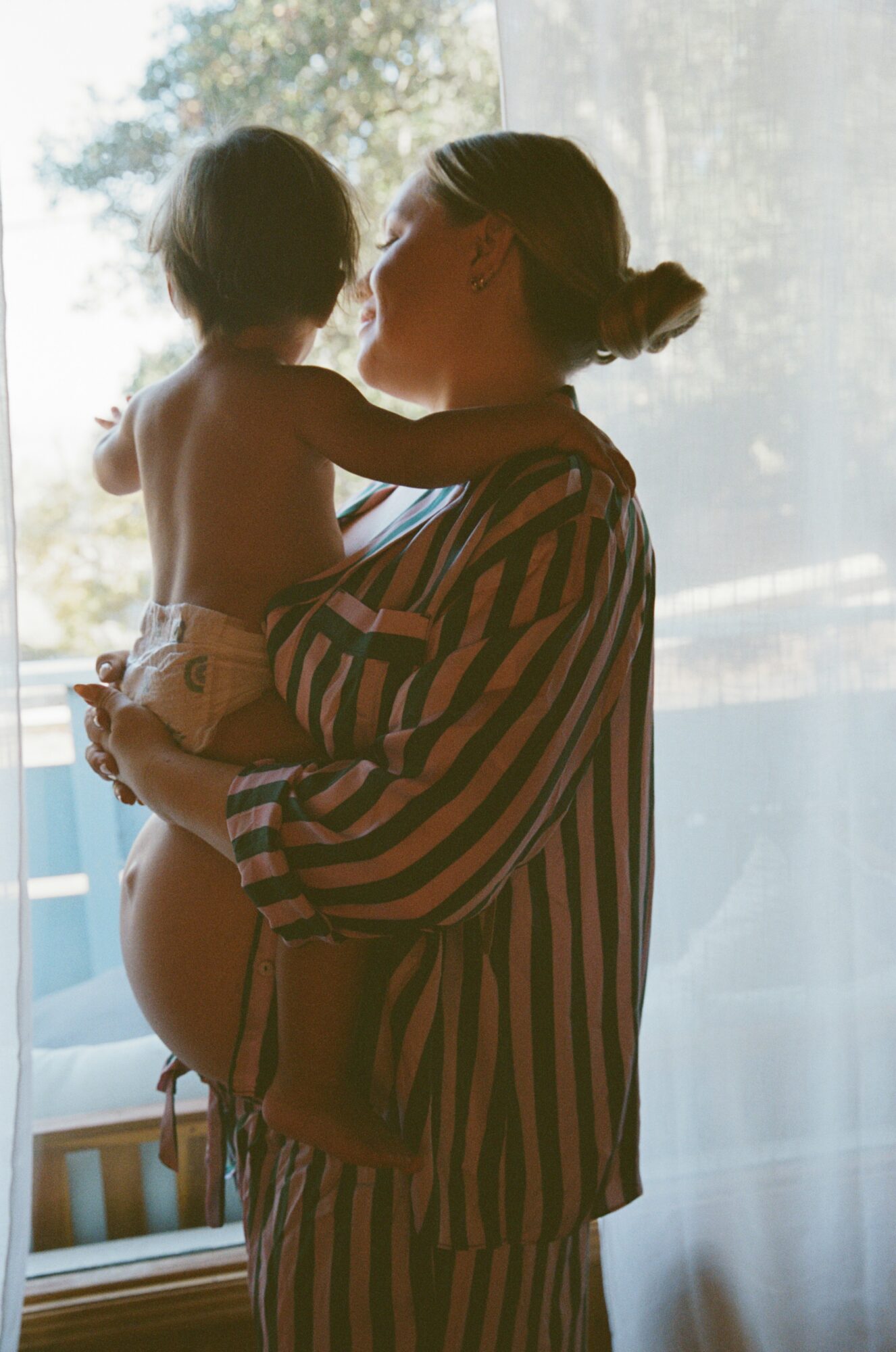
I became a mother in 2023, and again in January 2026. Motherhood didn’t resolve my complexity around it. It deepened it, which I think makes me more useful to people who are ambivalent, afraid, longing, or unsure. I don’t romanticize parenthood. I’m interested in the real thing.
Right now I’m building out a larger body of public work through Substack, writing, courses, and a book for Millennials and Gen Xers, particularly firstborn daughters, who are starting to realize that their parents are aging and that someone is going to have to have the hard conversations, prepare for decline, figure out what their parents actually want before they can no longer say. I want that book to be part guide, part permission slip, part reality check.
The thread running through all of it, the photography, the hospice work, the therapy, the writing, the motherhood, is this: I’m interested in helping people face the life they are actually living, and the lives they will never live, before it’s too late to choose consciously. That’s the work.
We all face challenges, but looking back would you describe it as a relatively smooth road?
Getting divorced from my husband of 14 years who was also my business partner of 4 businesses was the real initiation that brought me into my own identity death and rebirth. That happened in 2019, which was obviously right before the pandemic started, so it was both excruciating and also the real one-two punch that I needed to force me into a completely new direction.
As you know, we’re big fans of With Caroline Lee. For our readers who might not be as familiar what can you tell them about the brand?
My work lives at the intersection of mortality, grief, choice, and family. I’m a death doula, somatic therapist, writer, and the creator of a few specific offerings that don’t fit neatly into one category. That’s by design.
The through line is thresholds. I work with people who are standing at the edge of something: a major decision, a loss, a caregiving situation they didn’t sign up for, a life that no longer fits. The moments when the ordinary rules don’t apply and something real is being asked of you.
Specifically, I specialize in three areas.
The first is the decision to have children or not. My coaching offering, “To Babe or Not to Babe,” is for people who are stuck in ambivalence about whether to become parents. This tends to be people in their 30s who have been circling the question for years and are exhausted by their own indecision. The work is about getting honest: about desire, about fear, about what you’re actually grieving, about what you actually want. People come in stuck and leave with more clarity than they expected, not because I point them in a direction, but because they finally stop avoiding the real question.
The second is death and end-of-life. As a death doula, I help individuals and families think about what they want, complete advance directives, and prepare for the deaths that are coming, including their own. A lot of this work is about conversations families have been putting off for years. I also teach a course called Death Curious, which is for people who want to become more literate about death, dying, and grief without training to be doulas themselves.
The third is aging parents and family caregiving. I’m developing a book for Millennials and Gen Xers, especially firstborn daughters, who are starting to realize that their parents are aging and that someone is going to have to step up. This work pulls from my clinical background, my death doula training, and my own experience as the oldest of six. I write about advance directives, hard conversations, the emotional labor of family care, and how to show up for aging parents without disappearing into the role.
My clinical work as a therapist runs through all of this. I’m a licensed therapist practicing in California, and my approach is somatic and relational. The body is central to what I do. A lot of people come to therapy having already thought extensively about their problem. What they need is to feel it, move it, and understand it from somewhere other than their head.
What sets me apart is probably that I bring these worlds together. Death work and motherhood. Therapy and creativity. Aging parents and existential choice. Family systems and public storytelling. Most people who do one of these things don’t do the others. The combination gives me a kind of range that I find genuinely useful, both for the people I work with and for the writing.
What I’m most proud of is the voice. I write a Substack and create public content, and I’ve worked hard to build something that sounds like a person, not a brand. I don’t use the language of wellness marketing. I’m not trying to inspire anyone. I’m trying to say true things about hard experiences in a way that makes people feel less alone in them. I hear from readers regularly that my writing named something they’d been carrying for years but hadn’t been able to put into words. That’s the thing I care most about.
If you’re in a waiting room and you just got a diagnosis. If your mom fell and you suddenly realized you have no idea what she wants. If you’ve been on the fence about having kids for four years and you’re tired. If you’re grieving something that doesn’t have a name yet. That’s who I’m for.
How do you think about happiness?
Seeing people brave enough to tell themselves the truth. You are the hardest person to be honest with.
Contact Info:
- Website: www.tobabeornottobabe.com / www.withcarolinelee.com
- Instagram: https://www.instagram.com/howcarolinecarolines
- LinkedIn: https://www.linkedin.com/in/caroline-ingraham-lee/