


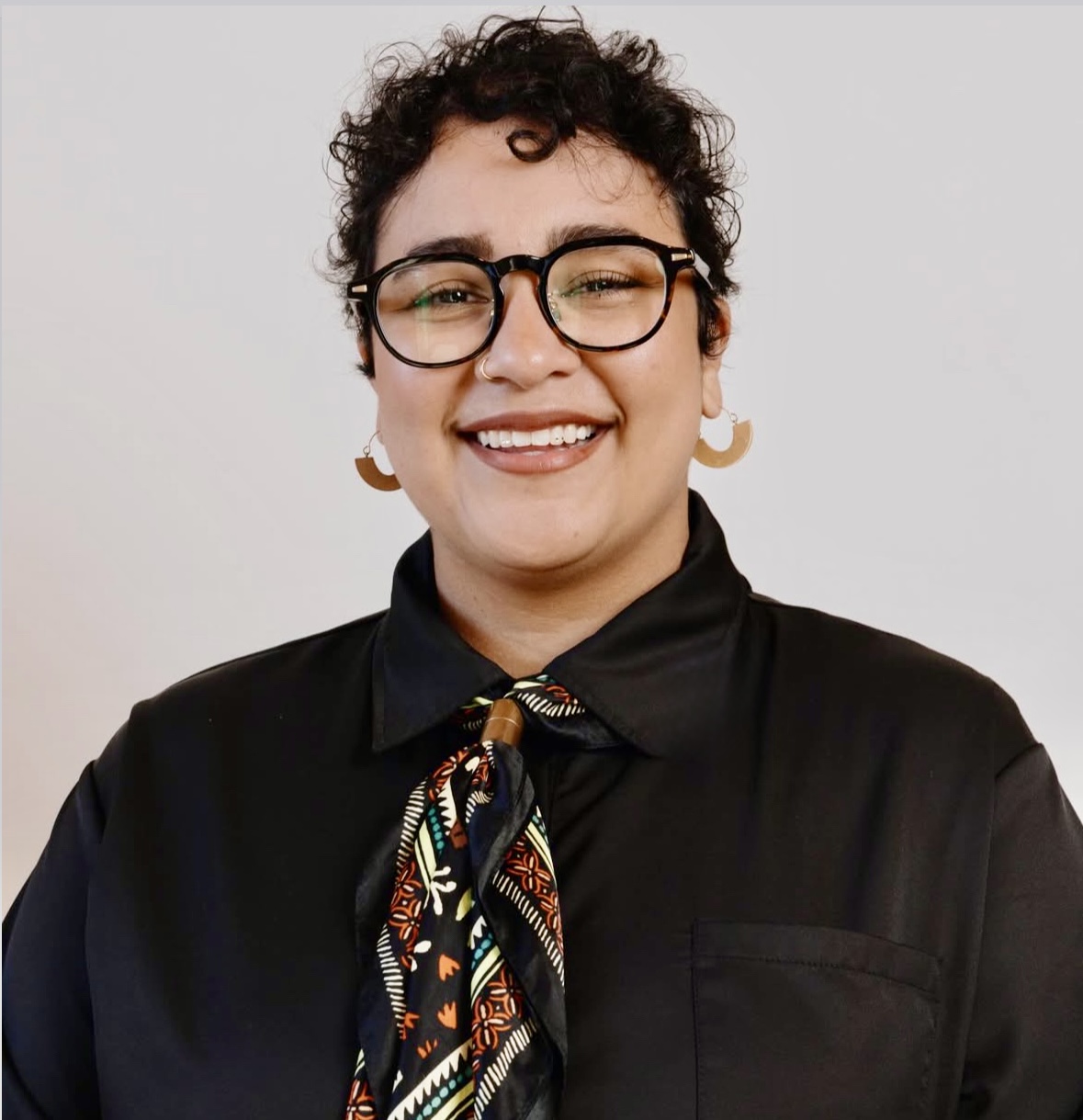
Today we’d like to introduce you to Angela Montijo.
Hi Angela, so excited to have you with us today. What can you tell us about your story?
I’m Angela Montijo, LCSW, a relational facilitator, educator, and founder of With Care Collective.
My work has always lived at the intersection of education, care, identity, and systems. I’m a first-generation Latine from Inglewood, California, raised by a single immigrant mother and shaped by public schools, immigration, incarceration, and the many informal networks of care that help people survive when institutions fall short.
I started my career in social work because I wanted to understand people in context. Not just what they were going through, but what shaped them, what constrained them, what sustained them, and what helped them imagine something different. Over the years, I’ve worked across education, youth development, juvenile justice, higher education, facilitation, and community-based programming. A major throughline in my work has been helping people make meaning, build self-trust, and practice alignment in their real lives; not in some abstract, inspirational way, but in the everyday choices, relationships, boundaries, conflicts, and commitments that make up a life.
With Care Collective grew out of that throughline. It’s my response to a culture that moves fast, extracts constantly, and often asks us to override ourselves in the name of productivity, professionalism, or survival. Through With Care, I design and facilitate reflective learning spaces, workshops, and group experiences that help people reconnect with their values, practice relational accountability, and make small, meaningful shifts toward lives and communities that feel more honest, humane, and aligned.
Right now, With Care is home to offerings like The Values Lab, a reflective cohort experience for people who want to live closer to what they say matters, and group facilitation rooted in emergent strategy, accessibility, relational repair, and liberatory practice. My work is not about quick fixes or self-improvement for the sake of performance. It’s about slowing down enough to notice what is true, what is no longer working, and what care requires next.
I’m sure it wasn’t obstacle-free, but would you say the journey has been fairly smooth so far?
It has absolutely not been a smooth road!
One of the biggest challenges has been learning how to build a life and body of work that doesn’t require me to abandon myself. Like many first-generation professionals, I learned how to be resourceful, adaptable, and high-performing very early; I had to grow up fast. Those skills helped me access opportunities, but they also forced me to tolerate environments that were misaligned, extractive, or unsustainable.
I spent a lot of my professional life trying to make myself fit inside systems that were not built for the way I think, work, question, or lead. I have often struggled with rigid hierarchies, arbitrary professionalism, and workplaces that say they value equity, creativity, or care but punish people for practicing those values in real time.
That said, a more recent part of my story is being late-diagnosed as autistic, which gave me a new lens for understanding my experiences in workplaces, relationships, and leadership spaces. It helped me see that so many of the things I had been told were “too much” – such as asking clarifying questions, noticing contradictions, naming what others avoided, needing direct communication, resisting hierarchy – were not character flaws but rather part of how I process the world.
I’ve also navigated chronic illness, burnout, financial uncertainty, and the vulnerability of leaving more traditional employment to build something of my own. Starting With Care Collective has required a lot of unlearning. I’ve had to practice trusting my own pace, valuing my own perspective, and letting my work be specific instead of trying to be palatable to everyone.
So no, the road hasn’t been smooth, but it’s been clarifying; every obstacle has sharpened my understanding of why care cannot just be a feeling or a value we name. It has to be a practice, a structure, and a way of relating to ourselves and each other.
Appreciate you sharing that. What else should we know about what you do?
I’m the founder of With Care Collective, a facilitation and education practice rooted in relational care, values alignment, emergent strategy, and liberatory learning.
Through With Care, I create spaces for people who are tired of living on autopilot and want to reconnect with what actually matters to them. My work is especially for reflective, values-driven people who are navigating transition, burnout, identity shifts, relational tension, or the quiet realization that the life they built no longer fits.
One of my core offerings is The Values Lab, a cohort-based learning experience that helps participants explore the difference between inherited values and chosen values, identify where their lives feel aligned or misaligned, and make small, practical shifts toward greater congruence. The Values Lab is not therapy, but it is deeply reflective. It blends guided exercises, storytelling, group dialogue, and practical tools for decision-making and self-trust.
I also facilitate workshops, groups, and custom learning experiences for organizations, community spaces, and educational settings. My facilitation style is relational; I care about making spaces where people do not just consume information, but actually encounter themselves, each other, and the questions they may have been avoiding. A lot of my work is shaped by the belief that “small is all.” The big systems we want to change are reflected in the small ways we relate, communicate, make decisions, handle conflict, share power, and practice care. With Care Collective exists to help people notice those small places and begin there.
Any advice for finding a mentor or networking in general?
My advice is to stop thinking of networking as trying to impress people and start thinking of it as building relationships around genuine resonance, curiosity, and shared values. The best connections in my life have not come from perfectly polished elevator pitches; they’ve come from being in rooms where I was paying attention, asking honest questions, following up with care, and being clear about what I am building or learning.
I also think it helps to expand our idea of mentorship. A mentor does not always have to be one official person who takes you under their wing. Sometimes mentorship looks like a conversation that gives you language. Sometimes it’s a peer who reflects your own wisdom back to you. Sometimes it’s someone a few steps ahead who helps you see what is possible. Sometimes it’s an elder, a collaborator, a friend, a book, or a community. Sometimes it’s our younger self pointing us to what feels most true.
What’s worked well for me is being specific when I reach out. Instead of saying, “Can I pick your brain?” I try to name what I admire, what I am working through, and what kind of insight I am hoping for. I also try to be relational, not transactional. People can feel when you are only approaching them for access. They can also feel when you are approaching them with respect, curiosity, and care.
My biggest advice is to follow the relationships that feel energizing, honest, and mutually respectful. Not every connection needs to become something immediately. Some of the most meaningful opportunities come from staying in right relationship over time.
Contact Info:
- Website: https://withcarecollective.org
- Instagram: @angelaalchemy
- LinkedIn: https://www.linkedin.com/in/angelamontijo/
- Other: https://angelamontijo.substack.com/