



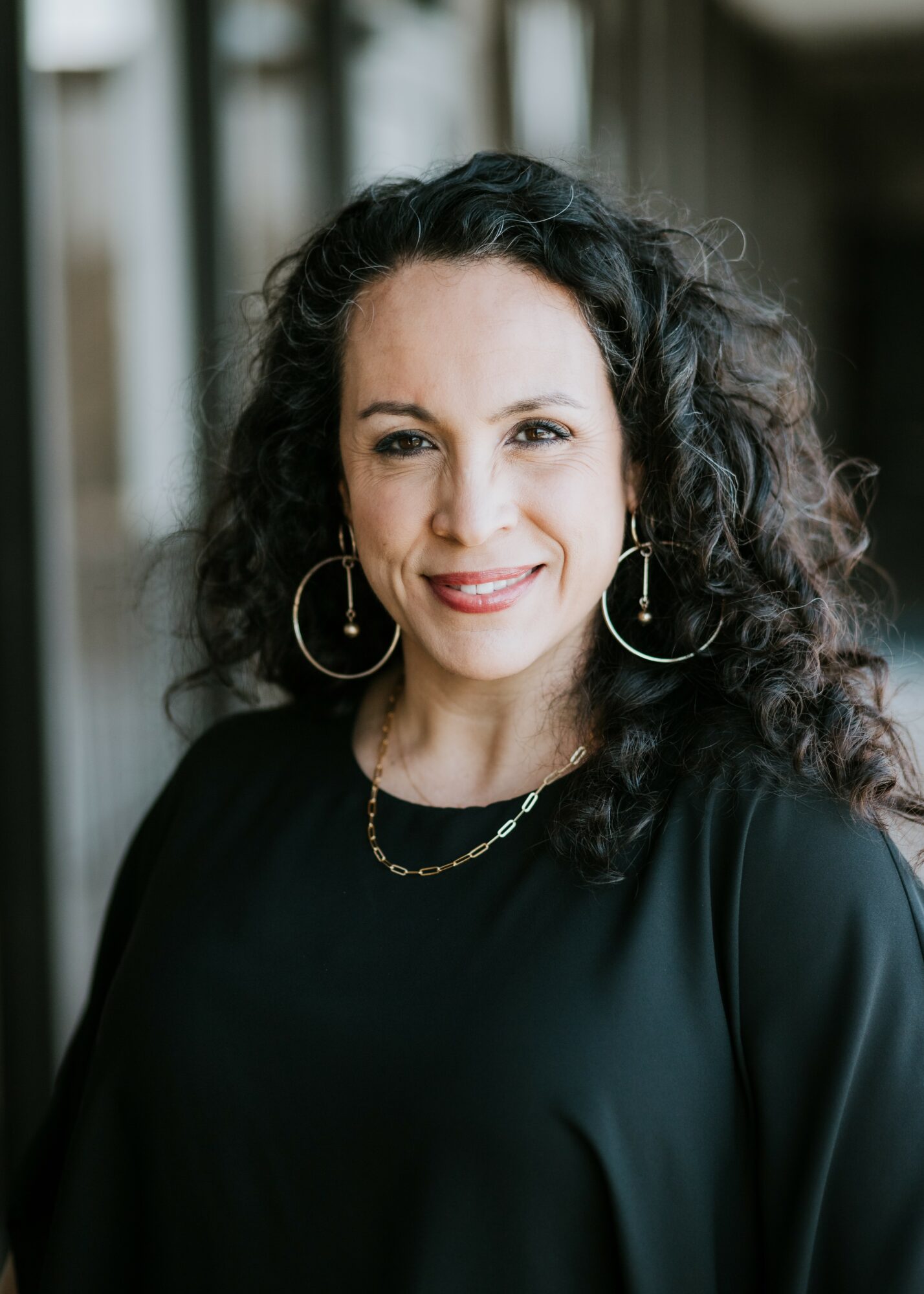
Today we’d like to introduce you to Erica Thomas.
Hi Erica, we’re thrilled to have a chance to learn your story today. So, before we get into specifics, maybe you can briefly walk us through how you got to where you are today?
My work with mothers and daughters grew out of both my professional life and my own story.
I spent more than 20 years as a psychotherapist, helping women and families understand patterns, heal old wounds, and build healthier relationships. But over time, I became especially drawn to the mother-daughter relationship because I understood its complexity not only as a clinician, but personally.
My mother and grandmother each created generational change in their own way. I have continued to build on what they began through years of my own inner work and by making intentional choices about what I wanted to carry forward and what I wanted to do differently. That has meant choosing a different path not only for my daughter, but for myself as well. Because of that, I have been able to build a close relationship with my own mother and be more intentional about what I pass on to my daughter.
That experience changed the way I saw this work. I began to understand that when a mother and daughter change the way they relate to one another, the impact can reach far beyond the two of them.
That is what eventually led me to create Vita Nova Mother-Daughter Coaching and step more fully into my work as a Certified Mother-Daughter Coach. Today, I work with mothers and teen or adult daughters who love each other but may feel stuck in conflict, distance, hurt, or patterns they do not know how to change.
My goal is not to create a “perfect” mother-daughter relationship. It is to help women build a relationship where there is more emotional safety, honest communication, trust, and room for both women to be fully themselves.
For me, this work is also about legacy. When mothers and daughters learn a healthier way of being in relationship with one another, they have the chance to change what gets carried forward to the next generation. That is the part of this work that means the most to me.
Would you say it’s been a smooth road, and if not what are some of the biggest challenges you’ve faced along the way?
No, it definitely has not been a smooth road.
After more than 20 years as a psychotherapist, I reached a point where I was burned out and knew I could not keep doing things the same way. That was hard to admit. I had spent much of my adult life building that career, and stepping away from something I knew so well brought up a lot of fear and self-doubt. I had to ask myself some difficult questions about what I wanted the next part of my life and work to look like.
I also had to face my own perfectionism. For a long time, I believed I needed to have everything figured out before I moved forward. Building Vita Nova has challenged that in just about every way. Starting a business, learning how to market myself, putting my work and my story out publicly, and making decisions without knowing exactly how everything would turn out have all pushed me outside of what felt comfortable.
There have been moments when I questioned whether I was making the right choice. There have been things I tried that did not work, things I had to learn as I went, and times when I wanted the path to be much clearer than it was.
But I think that has also been one of the most important parts of this chapter for me. I have had to practice what I believe so deeply in my work: we can honor where we have been without allowing it to decide where we have to go next.
Creating Vita Nova has required me to trust myself in a different way. I am still learning, still growing, and still building. But I am much more willing now to choose what feels aligned with who I am becoming, even when that choice requires courage and there are no guarantees.
Appreciate you sharing that. What should we know about Vita Nova Mother-Daughter Coaching?
Vita Nova Mother-Daughter Coaching is a relationship coaching practice devoted specifically to mothers and daughters. I work with mothers and teen daughters, as well as mothers and adult daughters, who love one another but may feel stuck in conflict, distance, hurt, or patterns they have not been able to change on their own.
I specialize in helping mothers and daughters create more emotional safety, rebuild trust, communicate more honestly, understand one another more clearly, and recognize the generational patterns that may be affecting their relationship.
What sets my work apart is that I do not look at the mother or daughter as “the problem.” I look at the relationship between them. Both women bring their own history, needs, fears, expectations, and ways of protecting themselves into that relationship. Sometimes one person reaches for connection while the other pulls away. Sometimes a mother believes she is helping while her daughter experiences it as criticism. Sometimes a daughter is trying to create space for herself, while her mother experiences that space as rejection. When we can understand what is happening underneath those moments, we can begin to change the pattern rather than continuing to blame one another.
My background as a psychotherapist for more than 20 years also shapes how I approach this work. I bring a deep understanding of relationships, family patterns, emotional safety, boundaries, and human behavior, while coaching allows us to focus very intentionally on where the mother-daughter relationship is now and what they want to build together moving forward.
My primary offering is The Brave Path: Mother-Daughter Journey, a 12-week coaching experience where I work with both women together and individually. That matters to me because a healthy relationship requires both connection and a strong sense of self. The goal is not for mothers and daughters to agree on everything or become inseparable. It is for each woman to have a voice, be able to be herself, and still have a relationship where there is respect, honesty, and connection.
What I am most proud of about Vita Nova is what the name and the work represent. Vita Nova means “new life,” and my belief is that new ways of relating often begin with brave choices and brave conversations. I want women to know that the patterns in their families do not have to end with blame or continue simply because “this is how our family has always been.” Mothers and daughters can choose what they want to carry forward and what they want to change.
Ultimately, I want Vita Nova to stand for something bigger than repairing one relationship. When two women learn how to relate to one another in a healthier way, that change can reach daughters, granddaughters, and generations that have not even been born yet. That possibility is at the heart of why I do this work.
Do you have any memories from childhood that you can share with us?
One of my favorite childhood memories is going across the border to Juárez, Mexico, with my family. Growing up in El Paso, Juárez was just a hop and a skip away, so we would often go there to eat, shop for groceries and household items, and spend time connected to a culture that has always been an important part of who I am.
What stays with me most, though, is watching my parents buy food in bulk and take it to lower-income families in the communities where they had grown up. My parents worked very hard to build a good life for our family, and we were fortunate that we rarely had to go without. But they never forgot where they came from.
Watching them taught me that doing better in life does not mean leaving your past behind. In fact, it can give you an even greater opportunity to look back, remember what shaped you, and offer something to someone who may still be finding their way forward. My parents showed me that generosity can also be a way of giving people hope—that where you begin does not have to determine where you end up.
Those experiences taught me humility, gratitude, and the importance of appreciating both the big things and the small moments that are easy to overlook. They also taught me that success means more when we remain connected to our roots and remember to reach back when we can.
Looking back, I can see how much those experiences shaped me. Culture is more than tradition or where our families come from. It influences how we see people, how we care for others, what we value, and how we move through the world. Those trips helped keep me grounded in my Hispanic roots and gave me values that I still carry with me today.
Contact Info:
- Website: https://vitanovamotherdaughtercoaching.com
- Instagram: https://www.instagram.com/themotherdaughterexpert/
- Facebook: https://www.facebook.com/profile.php?id=61567955365851
- LinkedIn: https://www.linkedin.com/in/ericagthomas
- Other: https://linktr.ee/vitanovamotherdaughtercoaching