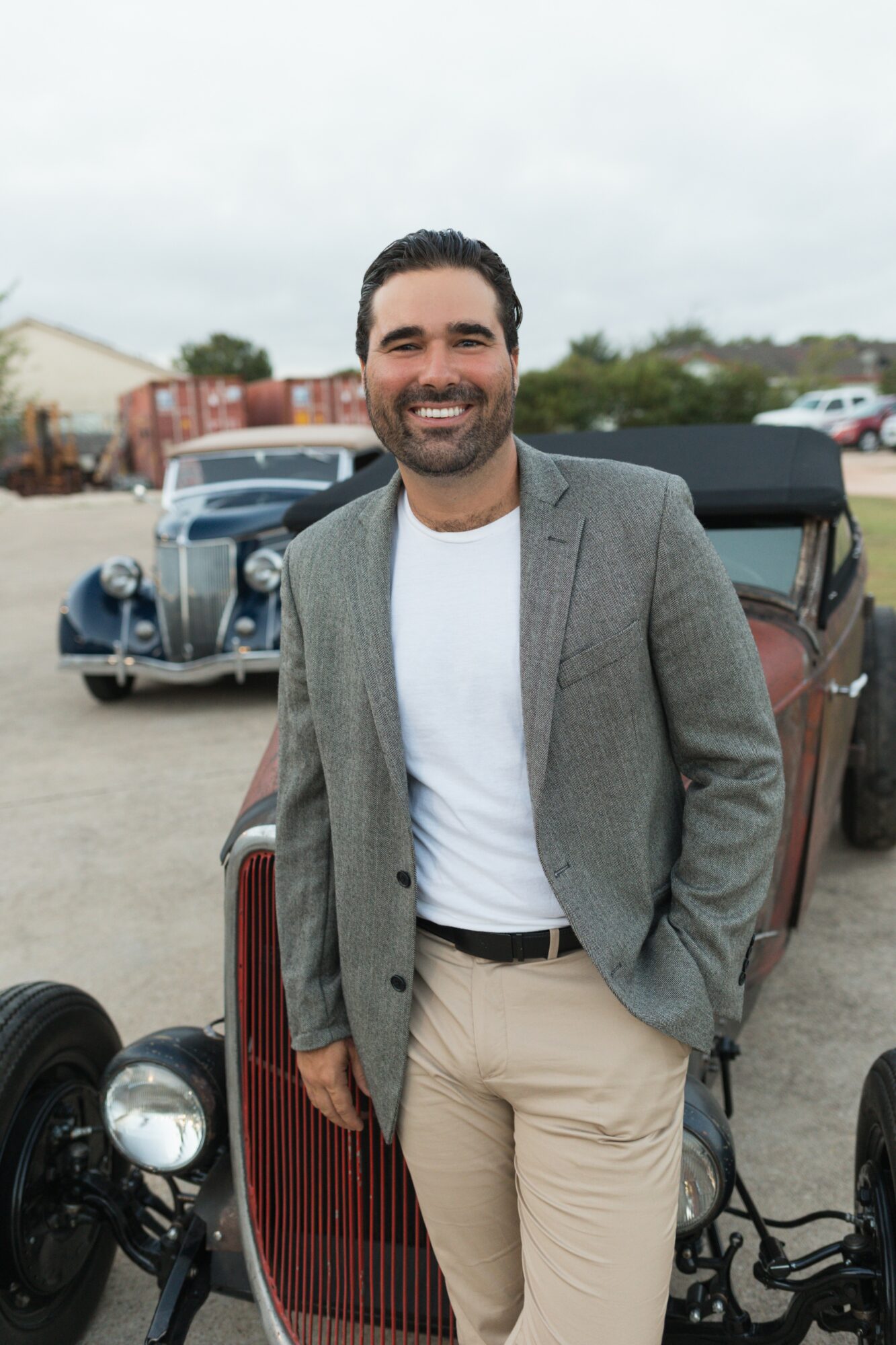




Today we’d like to introduce you to Matthew Teifke.
Hi Matthew, it’s an honor to have you on the platform. Thanks for taking the time to share your story with us – to start maybe you can share some of your backstory with our readers?
I got into real estate at 18. Just a stubborn idea that if I put myself in front of enough people, eventually one of them would give me a shot.
That’s been the entire strategy for seventeen years.
I’m 35 now and I own four companies. Tejas PM manages single-family homes. Teifke Real Estate is our brokerage. Our Deal Partner is our mentorship group. TR3 Capital is where we buy and hold. On paper that’s four separate businesses. In practice it’s one thing: a way to turn relationships into opportunities, and opportunities into ownership.
None of them started with a business plan. Every one of them started with a person.
Here’s the clearest example I can give you. A guy named Darrien drove across the country to come work with me. He’s building I systems for my companies. What I am doing is introducing him to every single person I know who could change his life. Most people wouldn’t take either side of that deal. We did, because we actually believe in each other, and because trust like that is worth more than a salary to both of us.
That’s not a tactic. It’s just how I’m built, and it’s how nearly everything good in my career happened. Someone took a chance on me before I’d earned it, so I try to be that person now as often as I can.
I’m a man of faith, and the longer I do this the more I think that’s the honest answer to how I got here. I’m not smart enough to have planned any of it. I’ve been wrong plenty of times and I’ve lost money learning things I could have asked somebody about. What I’ve tried to do is stay faithful in the small stuff. Answer the phone. Keep the promise. Show up for the person nobody else is showing up for. Doors opened that I had no business opening.
So when people ask what I’m building, the answer isn’t a portfolio. Doors and deals are how we keep score, but they aren’t the point. I want to look up in twenty years and see a whole group of people doing better than I ever did, and know I had some small hand in it. That’s it. That’s the whole thing.
The advice I give the guys in our mentorship group is the same thing I’d tell an 18-year-old walking in cold today: you probably aren’t going to out-work everybody, and you’re definitely not going to out-smart everybody. But you can out-care them. You can be the one who does what he said he was going to do, every time, when it’s inconvenient. That compounds faster than money ever will.
I bet on people. Most of the time, they bet back.
I’m sure it wasn’t obstacle-free, but would you say the journey has been fairly smooth so far?
No. And I don’t think I’d be much use to anybody if I pretended otherwise.
The one I’d point to first is the one I’d rather not talk about. I lost four million dollars on a publicly traded stock called Acreage Holdings.
Here’s how that happens. You get good at one thing. In my case it was real estate, and I’d been at it long enough that it had started to work. And somewhere in there you quietly start believing that the reason it worked was you, and that you’d be just as good at whatever you pointed yourself at next. That’s the moment to be careful, and I wasn’t.
In real estate, I can go stand on the property. I can read the rent roll, walk the units, pull the comps, look the seller in the eye. I know what I’m buying because I can put my hands on it. With that stock, I owned an opinion. I’d bought a story about where the whole industry was headed, and I had no way to check it and no ability to change the outcome. When it went the other way, all I could do was watch.
I’m not going to dress that up. It was a real number and it cost real years. There were nights I didn’t sleep and conversations at home I didn’t want to have. And the worst part wasn’t the money. It was knowing I’d done it to myself, in an area where I had no business having that much confidence.
What I took from it is the thing I’d want anybody reading this to take from it. Get clear on where you actually have an edge, and then stay there long enough for it to compound. I’m very dialed in on real estate. It’s genuinely all I’ve focused on. That’s not a limitation, that’s the whole advantage, and I had to lose a lot to stop being embarrassed about it.
The other thing I’d say is that a loss like that is survivable, and I want to be loud about that part. I’m still here. The companies are still here. My family is still here. Money is one of the only things you lose that you can go back out and earn again. Your name, your word, how you treat people when it’s going badly for you, those are the ones you don’t get back. I’ve watched people take a hit like mine and let it turn them bitter or dishonest, and that costs them far more than the original number ever did.
So no, it hasn’t been smooth. I’ve paid for my own confidence, more than once. But every hard stretch I’ve been through has handed me something I’m now able to hand to somebody else, which is most of what I do these days anyway.
If you’re in the middle of one of those stretches right now, I’d just tell you this: the loss is real, and it isn’t final. Keep your word, stay in your lane, and give it time.
Can you tell our readers more about what you do and what you think sets you apart from others?
I own four companies WITH partners, and they’re really one business looked at from four angles.
Teifke Real Estate is our brokerage, so that’s helping people buy and sell. Tejas PM manages single-family homes, so once somebody owns a rental, we run it for them. TR3 Capital is the investment side, where we buy and hold assets ourselves. Our Deal Partner is our mentorship group, where we teach people to do what we do.
What do I specialize in? Real estate. That’s the entire list, and I mean it literally. It’s all I’ve focused on since I was 18.
As for what I’m most proud of, it isn’t a deal and it isn’t a number.
My wife and I have been married thirteen years, and in that time we have moved twenty-two times. Twenty-two. Most of those moves were the strategy you buy it, you live in it, you fix it, you make it worth more, you do it again. That is not a slide in a presentation. That’s thirteen years of boxes, and a wife who said yes to it twenty-two times.
So when somebody in our mentorship group asks me whether any of this actually works, I’m not handing them a spreadsheet. I lived in the spreadsheet. I think that’s the thing I’d most want on my tombstone as far as work goes: he didn’t sell anything he hadn’t done himself and he never gave up on anyone.
What sets me apart is a harder question to answer without sounding like I think I’m better than the people I compete with, and I don’t. A lot of them are sharper than me.
What I’d say instead is that I’m still here. Same business, same market, same name on the door literally my name, on purpose. If I do something wrong, nobody has to go dig through an LLC to find out who’s responsible. I already told you.
And I bet on people, which is the kind of thing everybody claims. The real test is whether you’ll back someone before they can do a single thing for you. I try to, every time I can. It doesn’t always work out. But almost everything I have today traces back to somebody doing that for me first, back when I was eighteen and had nothing to offer them, and I don’t know how you receive that and then not pass it on.
Is there any advice you’d like to share with our readers who might just be starting out?
I’m careful with advice. What worked for me was pretty specific to me, and I’ve watched people take somebody else’s playbook and get hurt with it. So I’d rather just tell you what I wish somebody had told me at eighteen, and you can do whatever you want with that.
The main one is that I thought my problem was money. I was eighteen, I had none, and I genuinely believed that was the thing standing between me and a career. I spent a long stretch trying to solve for money.
It was never money. It was people. And people were free.
The deals I got early didn’t come because I finally scraped together a down payment. They came because somebody who had money and experience decided they liked me and wanted to see me make it. I didn’t understand that at the time. I thought I was doing the networking as a way to eventually get to the real work. The networking was the real work. Everything I own today came out of a room I was in, not a spreadsheet I built.
The second thing is that I had nothing to offer those people and I let that embarrass me for way too long. I was young, I didn’t know anything, I couldn’t write anybody a check. What I could do was show up early, do the unglamorous piece nobody wanted, and be honest when I didn’t know something. That turns out to be worth a lot more than I thought it was at the time. People remember the kid who did what he said he’d do.
Third, and this is the one I’d most want to go back and tell myself: it takes longer than you think, and that’s not a sign that you’re doing it wrong. I’m thirty-five. I started at eighteen. That’s seventeen years, and there were stretches in there that looked like nothing was happening. My wife and I have moved twenty-two times in thirteen years. Nobody watching from the outside would have called most of those years impressive. They were just the years where the thing was quietly getting built.
I wasted a lot of energy in my twenties comparing my timeline to people who looked further along. Some of them were. Some of them were about to find out they weren’t. Either way it didn’t help me.
The last thing I’ll say is that I got here on other people’s belief before I ever had any results to justify it. Somebody backed me when there was no reason to. I don’t think I’d have made it without that, and I know I didn’t earn it.
That’s most of why I do the mentorship side now, and why I say yes to coffee with people who can’t do a thing for me. I’m not being generous. I’m paying something back that I can’t actually pay back to the person who gave it to me.
That’s all I’ve got. It’s not a system. It’s just what happened.
Contact Info:
- Website: https://TR3capital.com
- Instagram: https://www.instagram.com/matthewteifke/
- Facebook: https://www.facebook.com/matthew.teifke
- LinkedIn: https://www.linkedin.com/in/matthew-teifke-90672438/
- Youtube: https://www.youtube.com/@MattTeifke