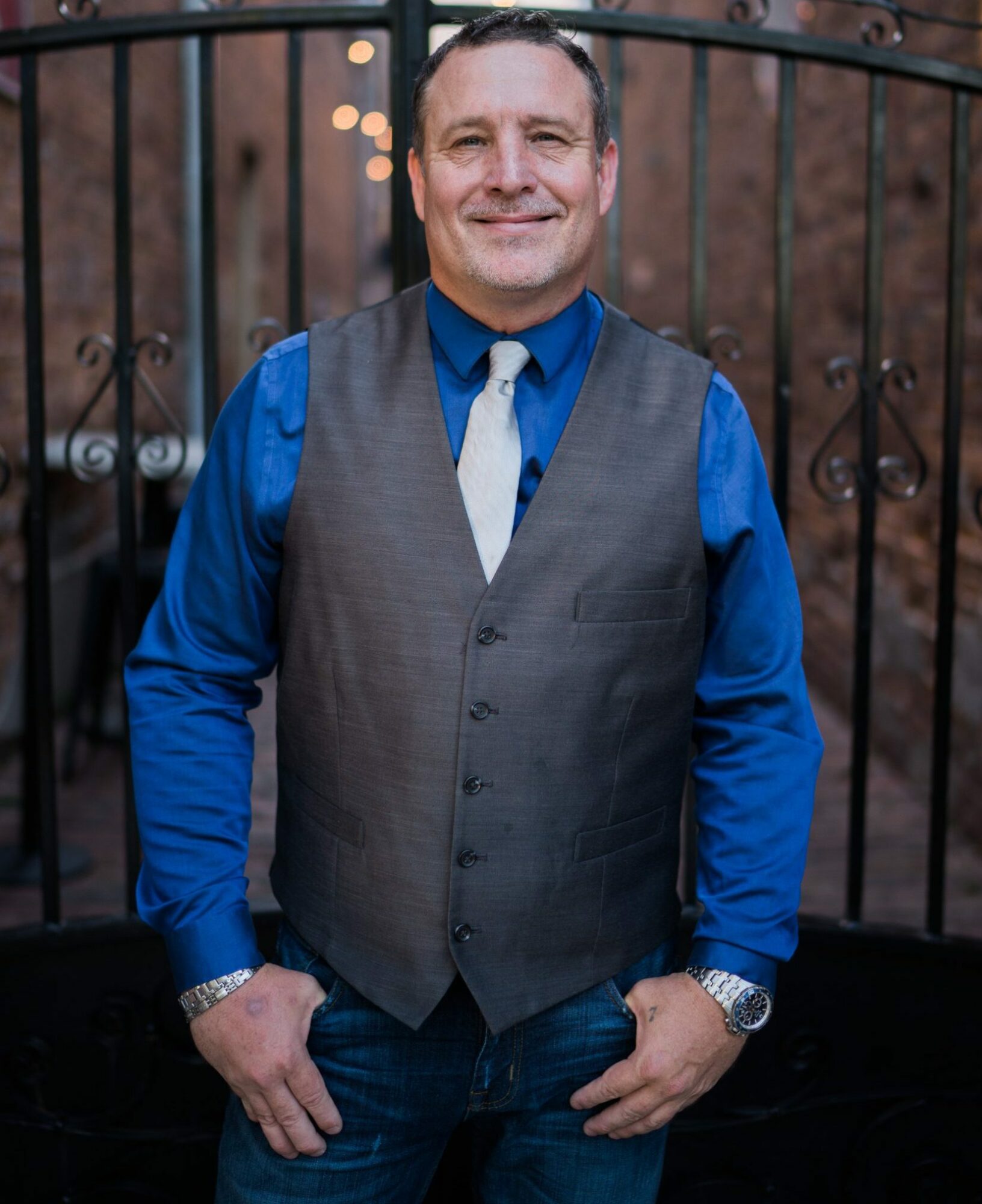



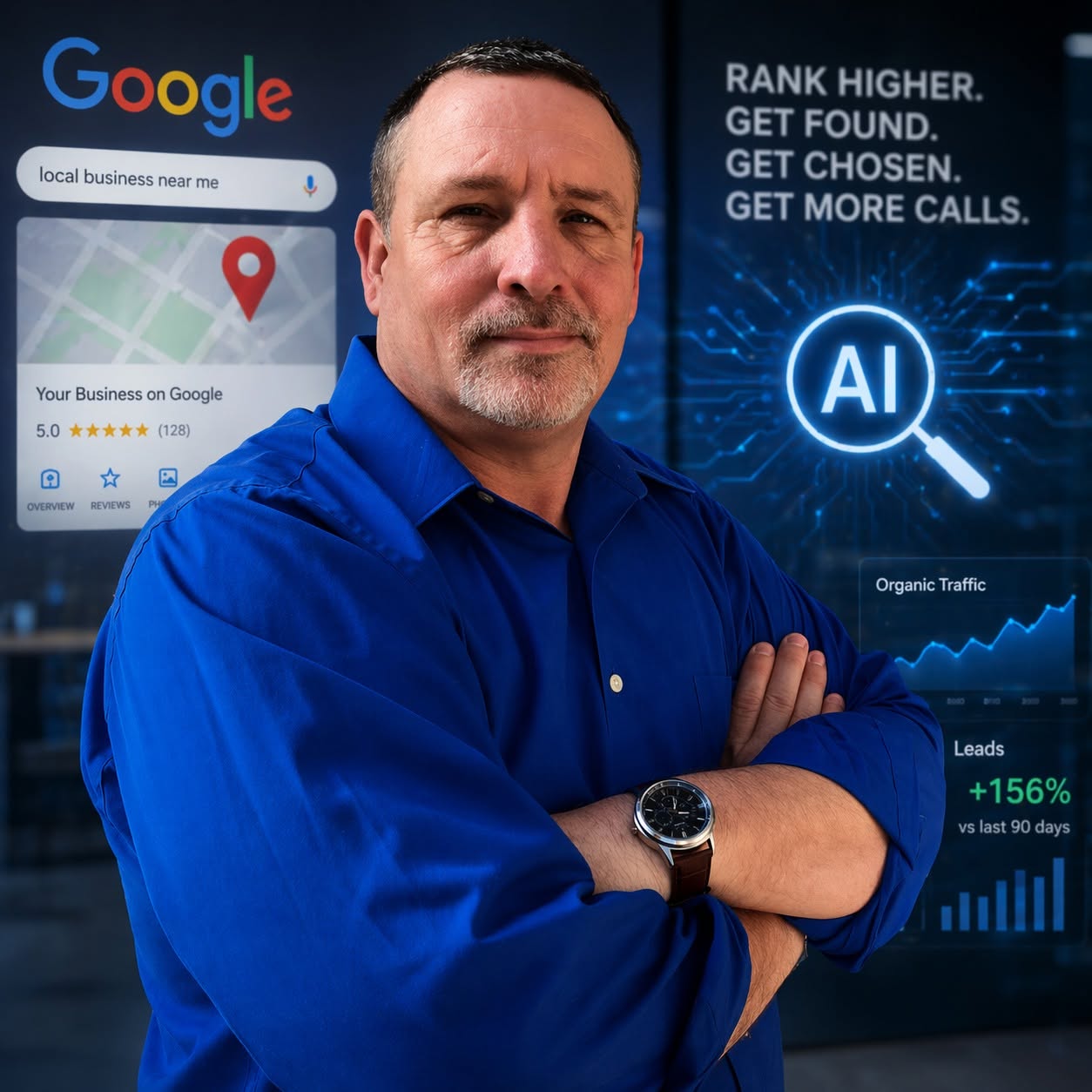
Today we’d like to introduce you to Mark Cass.
Hi Mark, can you briefly walk us through your story?
My entrepreneurial journey began in 2007 with a need to pay my rent, a pickup truck, and a load of scrap metal.
I had been running heavy equipment for a land developer in Southwest Florida when the recession hit and I was laid off. Weeks of job applications went nowhere. Rent was due, my gas tank was almost empty, and so was my refrigerator.
One morning, needing to generate some kind of income, I drove around looking for scrap metal to sell. By the end of the day, I had made a little over $50. It was enough to fill my gas tank and buy dinner.
It wasn’t much, but it was more than I had made all week, so I got up and did it again the next day, and the next.
Eventually, I had business cards made, then shirts, and turned my attempt at survival into a legitimate junk hauling business. The need to advertise without having an advertising budget is what pushed me into digital marketing.
I needed the phone to ring and couldn’t afford to hire anyone, so I spent my free time learning how to do it myself. I built my own website and dug into Google, SEO, advertising, and local search through books, blogs, YouTube, and a lot of trial and error.
Eventually, I got my business onto the first page of Google in my local market. Then I did it in the next city over, and eventually across larger areas.
Other business owners started asking whether I could do the same for them. Helping them on the side eventually led me to start my first marketing agency, Effective Marketing Solutions, in 2012.
In 2015, I took on a business partner, and we became Blue Grey Marketing. The company expanded into a two-state agency, with operations in Southwest Florida and North Texas. That chapter of my life ultimately led to my first feature in VoyageDallas in May 2019.
The year before that interview, I published my first digital marketing book, 3 Ways to Reach the Top of Google: The Quick Way, The Right Way, and The Expensive Way.
At the time, that was largely the game: rank your business on Google, get found, and get the call.
In 2020, however, I stepped away from Blue Grey Marketing, spent some time in Colorado, and worked independently as a freelancer through the pandemic.
By 2022, the digital landscape was beginning to change at breakneck speed. I had moved back to Florida and started another junk removal company, Florida Junk Removal & Hauling LLC, and at the same time ChatGPT was launched.
By 2023, people everywhere were beginning to use generative AI in their everyday lives, and that started changing the way people searched for information and businesses online.
People were no longer only typing questions into Google. Increasingly, they were asking AI platforms questions like, “Who is the best company for this near me?” and receiving direct recommendations instead of simply a page of links.
That left me thinking about a new question:
What makes an AI platform recommend one local business and ignore another? Once again, junk removal helped me find the answer.
I used Florida Junk Removal & Hauling as my own testing ground rather than experimenting on a client’s business. I could change something, watch what happened, measure the result, and adjust.
The company grew into a five-star operation with nearly 200 reviews across the web, strong local search rankings, and visibility across AI-driven search platforms. Everything I learned while building it became part of the methodology behind my current company, Rank Local Web Design & SEO.
The changes in digital marketing were significant enough that I realized one updated book would not cover them, so I began writing an entirely new series.
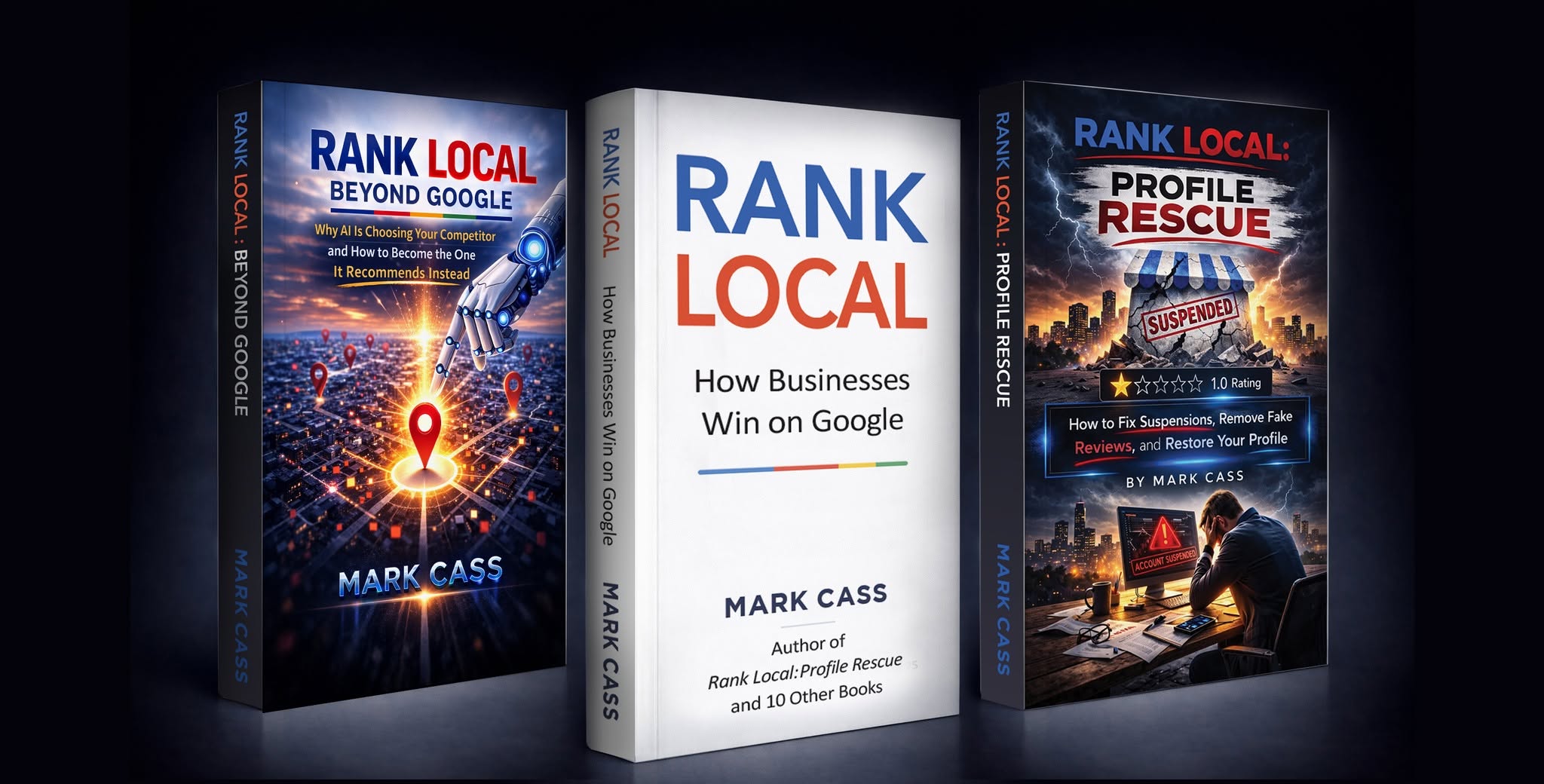
Rank Local: How Businesses Win on Google covers the modern foundation of local search. Profile Rescue focuses on Google Business Profiles and the often-overlooked problems that can quietly damage a company’s visibility. Beyond Google, which is coming next, focuses specifically on how businesses can become better understood, trusted, and recommended by AI platforms.
In 2018, I was writing about how to reach the top of Google. Now I am writing about what happens beyond it.
Today, Rank Local is based in Fort Myers, Florida, and we are expanding back into Texas with a physical presence in Pflugerville, in the Austin area.
That makes us a Florida-and-Texas company again, which feels very full circle.
A junk removal business taught me digital marketing in 2007, and almost twenty years and eleven books later, another junk removal business helped teach me the next generation of it.
I am still doing essentially the same thing I was doing back then: testing, learning, experimenting, and trying to figure out what comes next.
That’s probably why I still love it.
Has it been a smooth road? If not, what were some of the struggles along the way
It has absolutely not been a smooth road. Entrepreneurship gives you some of your highest highs and lowest lows, sometimes in the same month. There have been seasons of abundance and seasons that felt a lot closer to famine.
Over the years I have had clients breach contracts. I have paid vendors for work that never got finished. I had a business partner walk away once they realized entrepreneurship demanded more time and sacrifice than they were prepared to give. I have had to catch up on tax obligations, sit under real financial pressure, and eat the cost of failed ideas and bad decisions.
Some of the hardest lessons had nothing to do with marketing or strategy. They were about people, judgment, cash flow, and accountability, and about learning that a growing business can expose an owner’s weaknesses just as fast as it exposes opportunities in the market. Being good at what you do is only one part of running a company. You also have to manage money, pick the right people, spot a bad situation early, protect yourself legally, and make hard decisions when there is no perfect answer.
There were certainly moments when walking away would have been easier. But the one constant through all of it is that every time life knocked me down, I got back up. I have tried to take something useful from every setback, even the ones that were expensive or humbling, or that meant admitting I was the one who got it wrong.
Success is not a straight line, and resilience is not pretending the setbacks don’t hurt. It is learning from them, adjusting, and moving forward without letting one bad chapter become the end of the story. I would not choose to repeat many of those experiences, but I would not be the entrepreneur I am today without the lessons they taught me.
We’d love to learn more about your work. What do you do, what do you specialize in, what are you known for, etc. What are you most proud of? What sets you apart from others?
I do not really look at web design and SEO as work in the traditional sense. For me it is a creative outlet, a passion, and a personal challenge.
Very few things are as satisfying as taking a business that is virtually invisible online and moving it into a position where it is highly visible, highly trusted, and highly competitive. Seeing a company climb to the top of Google, or watching one that AI platforms used to overlook become a preferred recommendation in its niche, is what keeps me engaged.
I enjoy solving the puzzle. Every business has a different set of problems. Sometimes it is a weak website. Sometimes it is poor local SEO, an underdeveloped Google Business Profile, inconsistent information across directories, thin reviews, or a lack of the trust signals that search engines and AI systems increasingly rely on. I like finding those weak spots, rebuilding the foundation, and watching the results develop.
I enjoy the creative side too. There is something rewarding about starting with a blank page and building something that reflects the personality and professionalism of a business. In many cases that website is the first impression someone will ever have of the company, and I take that responsibility seriously.
One phrase I use often is that I do not sell services, I sell results. That philosophy is a big part of why I built Rank Local the way I did.
For nearly two decades I have watched business owners get frustrated with agencies that break digital marketing into a dozen separate products. The website is one fee. SEO is another. Google Business Profile management, reputation management, schema, content, citations, and reporting all become add-ons. The problem is that a local business does not experience those things separately. They all work together.
So instead of asking an owner to figure out which individual services they need, I built Rank Local to find what is actually keeping a business from being found and trusted, and then fix the entire digital foundation. It removes the pain points I have watched owners struggle with for years: confusing packages, endless add-ons, multiple vendors blaming one another, and paying for activity without knowing whether any of it produced a real result.
What sets me apart is that I have sat on both sides of the table. I have been the agency owner, but I have also been the local business owner wondering how to make the phone ring. I have built companies from the ground up, managed employees and vendors, and worried about cash flow, so I know what it feels like when marketing works and when it does not. That changes how I look at a client. I am not interested in just delivering a website or sending a monthly report full of rankings. I want to understand why a business is not being found and what has to change for it to become the obvious choice in its market.
What I am most proud of, though, is not any single ranking or website. It is that this work can genuinely change the trajectory of a small business. When an owner tells me the phone is ringing more, that new customers are finding them on Google, or that someone discovered them through an AI recommendation, that means more to me than any analytics report ever could.
At the end of the day, I get to combine creativity, problem solving, and entrepreneurship in a way that helps other business owners grow. That is probably why, even after all these years, it still rarely feels like work.
Where do you see your industry going over the next 5-10 years? Any big shifts, changes, trends, etc?
I see artificial intelligence becoming one of the dominant forces in search over the next five to ten years. As more people fold AI into their everyday lives, they will naturally use it to research businesses, compare options, and ask for recommendations. They are already getting used to asking a question and receiving one direct answer instead of sorting through pages of results.
For years, digital marketing was mostly about one question: can I get my business onto the first page of Google? That is changing. The next phase is going to be much more about trust, authority, and clarity. Businesses will need to prove, across a lot of different sources, that they are legitimate and credible enough for both search engines and AI platforms to recommend them with confidence.
Traditional SEO will still matter. Websites, Google Business Profiles, reviews, backlinks, citations, structured data, and good content will all still matter. But increasingly those pieces will work as evidence that helps a machine understand a business as a whole. The goal will no longer be simply to rank a webpage. It will be to build a presence that consistently answers three questions: who are you, what do you do, and why should anyone trust you?
That is where a lot of businesses are going to struggle. A company may have a beautiful website but an incomplete Google Business Profile, directory listings that conflict with each other, and reviews that never make clear what it does or where it operates. Humans will overlook those inconsistencies. Machines are far less forgiving. The businesses that win over the next decade will be the ones that build a strong, consistent, and verifiable identity across the entire web. I also believe the traditional lines between SEO, reputation management, web design, public relations, and content marketing are going to disappear. They have always been sold as separate services, but AI is making it obvious they are all part of the same ecosystem. A news mention builds authority, a review reinforces location and expertise, a directory confirms the basics, and a well-structured website helps machines understand what a company actually does. None of it exists in isolation anymore.
That is why I think the traditional agency model has to change too. Business owners are going to have less patience for buying ten disconnected services from multiple vendors. They will want someone who understands how the whole ecosystem fits together and focuses on the outcome rather than the individual deliverables.
I also expect measurement to get more complicated. For years, agencies could point to rankings, traffic, and clicks. But in an AI-driven world, someone can ask a platform for a recommendation, get a business name, and call that company without ever clicking a search result. Marketers are going to have to rethink what visibility even means.
I do not think Google is going away. The bigger change is that search itself is becoming decentralized. People will search through Google, AI assistants, social platforms, maps, voice assistants, and whatever comes next, and the winning businesses will be the ones whose identity is strong enough to be recognized and trusted wherever that search happens.
That is why I often say quality SEO used to be the ceiling, and now it is the floor. The businesses that understand that shift early are going to have an enormous advantage over the ones still marketing like it is 2018.
Contact Info:
- Website: https://ranklocalweb.com/ and https://floridajunkremoval239.com/
- Instagram: https://www.instagram.com/ranklocalweb/
- Facebook: https://www.facebook.com/RankLocalWeb
- LinkedIn: https://www.linkedin.com/in/mark-cass-6a592a43/
- Yelp: https://yelp.com/biz/rank-local-web-design-and-seo-north-fort-myers
- Other: https://www.amazon.com/stores/Mark-Cass/author/B0B649ZZSN