


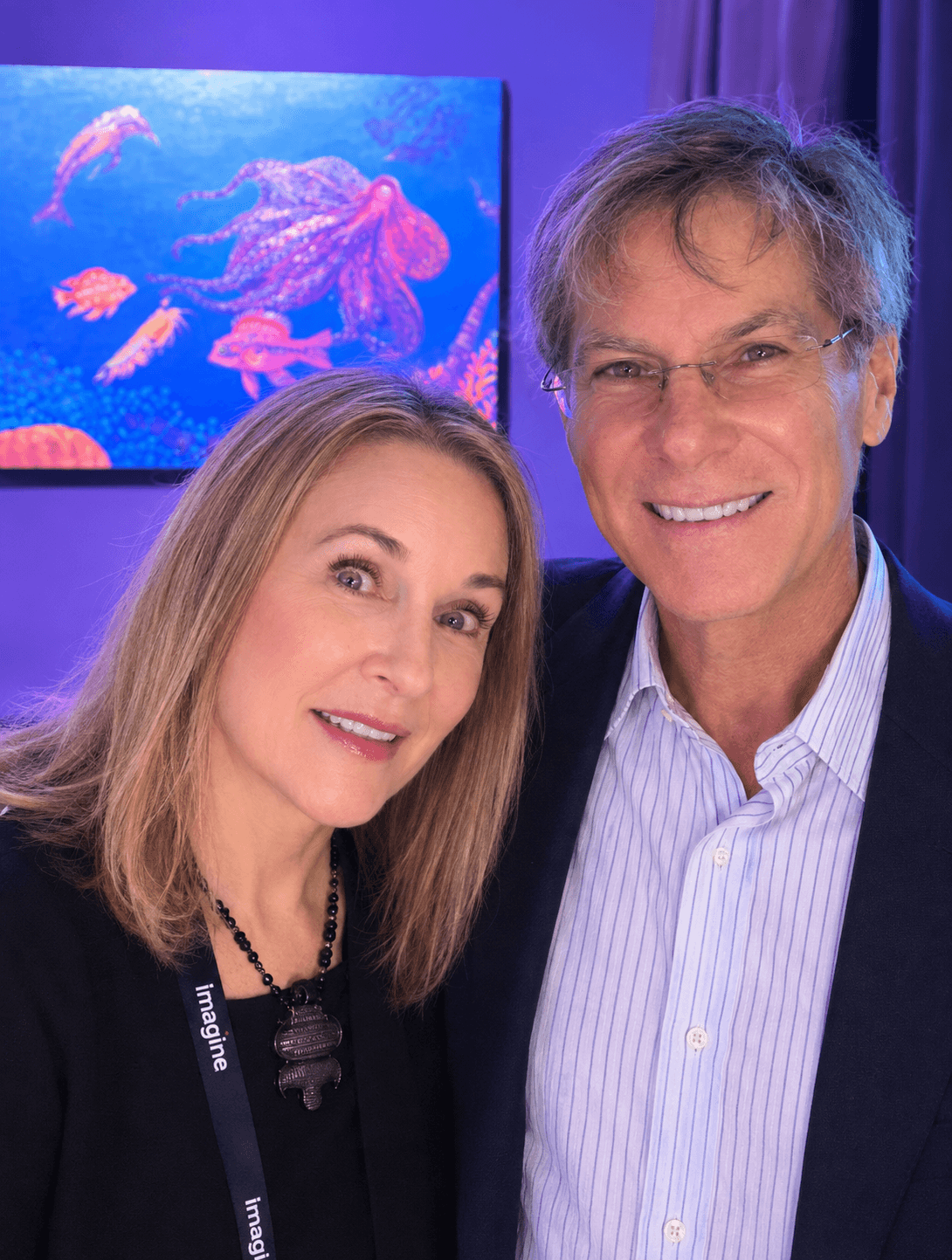
Today we’d like to introduce you to Penny Cagney.
Hi Penny, we’re thrilled to have a chance to learn your story today. So, before we get into specifics, maybe you can briefly walk us through how you got to where you are today?
I always wanted to be an artist. The funny thing is that it took me a very long time to actually become one.
My path was anything but direct. Some unexpected personal circumstances led me into arts administration, fundraising, museums, and education. I ended up building a decades-long career working with an extraordinary range of cultural organizations, from the Joffrey Ballet of Chicago to the National Cultural Center of Egypt.
In some ways, I think I had to be near art if I couldn’t make it myself.
But the desire to make my own work never went away. It was like a dog following me around, always worrying at my heels. I could put it aside for a while, but I couldn’t get rid of it. So, eventually,
I started making my way back to the studio. I earned my MFA from the School of the Art Institute of Chicago in 2021, and today I am working full-time as an artist. In retrospect, I don’t think all those years away from the studio were really wasted. My experiences in museums, education, fundraising, and arts administration gave me a much broader way of thinking about art and about how people encounter it.
Can you talk to us a bit about the challenges and lessons you’ve learned along the way. Looking back would you say it’s been easy or smooth in retrospect?
One of the biggest challenges has been giving myself permission to develop as an artist on my own timetable.
For many years, my professional life took me in unexpected directions. My own art sometimes had to take a back seat, but I never really stopped making things. The desire was always there.
And now that I am working full-time as an artist, I have discovered that there isn’t exactly a conventional career path for what I’m doing.
My work sits somewhere between art and science, and sometimes there isn’t an existing category for a project. That means I have to create my own opportunities, find scientists and other collaborators, learn new technologies, and sometimes explain the project before people quite know what to make of it.
But I actually enjoy that part.
I think art and science are often asking different versions of the same fundamental questions. Science helps us understand how the world works. Art can help us experience the questions that remain. Einstein said it best: “The most beautiful thing we can experience is the mysterious.”
That sense of wonder—and of curiosity—is what keeps me interested
Can you tell our readers more about what you do and what you think sets you apart from others?
My current work grew out of a question that completely captivated me: What if the world doesn’t actually look the way we think it does?
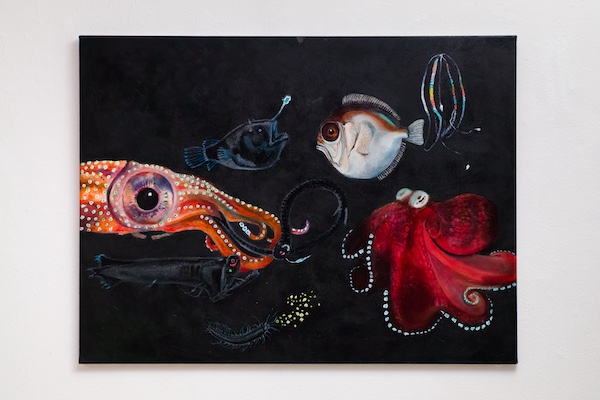
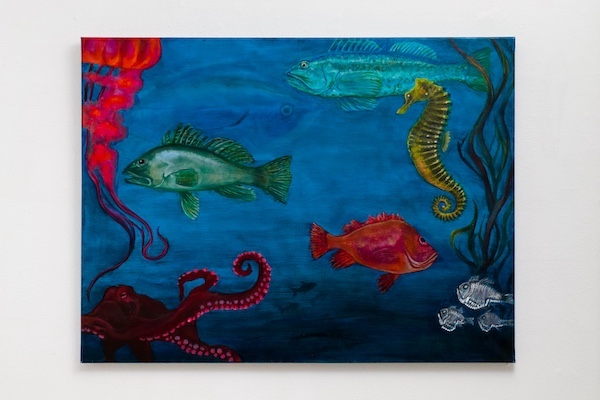
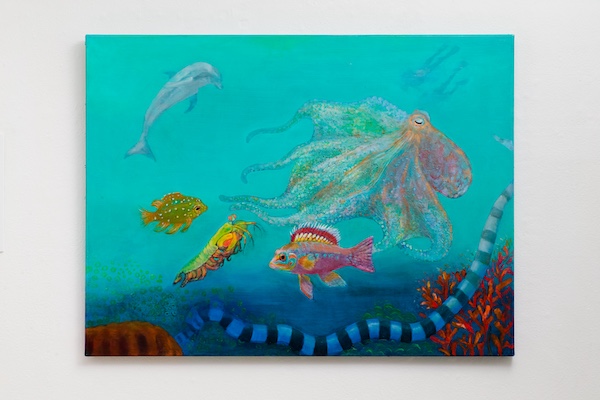
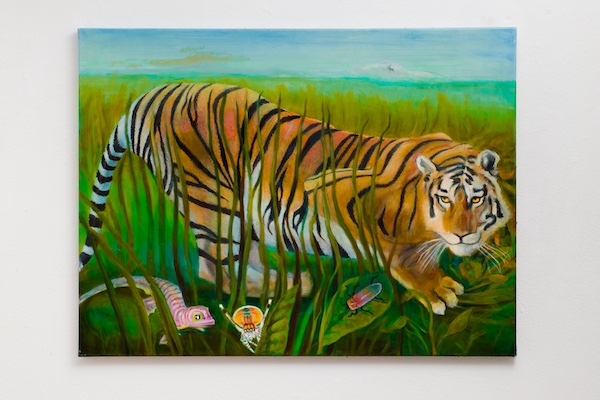
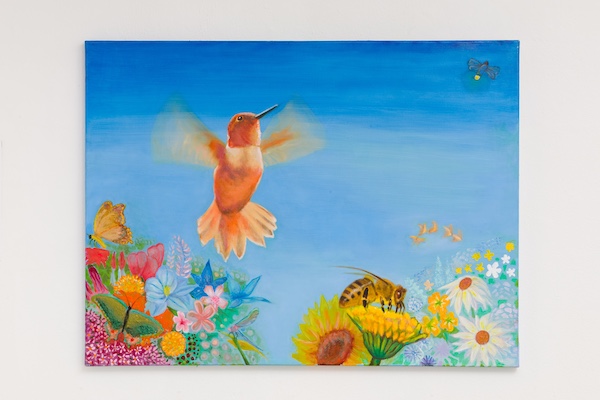
My current body of work, Invisible Palettes, explores how humans and other species experience color differently. It combines painting, light, and vision science to investigate the idea that color isn’t simply a fixed property of the world. Instead, it is an experience created through the interaction of light and the particular visual system doing the seeing.
I became fascinated by the fact that the same physical environment can produce radically different visual experiences depending on the eyes that are looking at it.
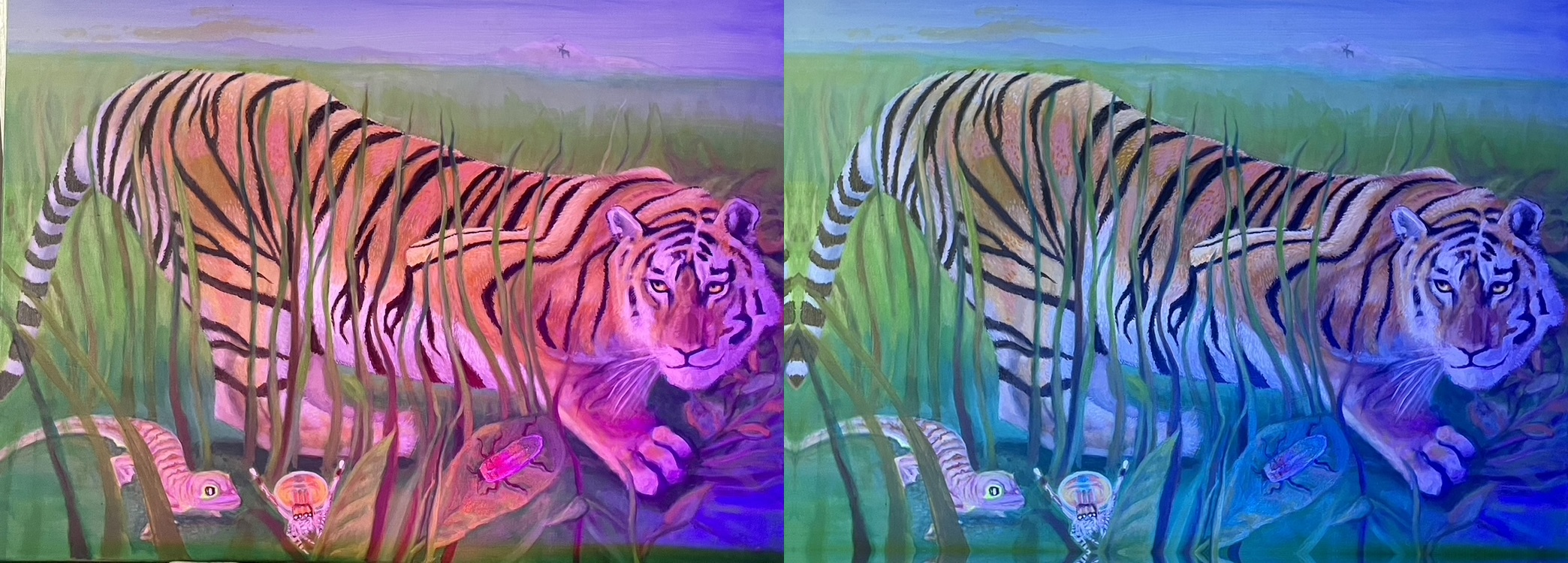
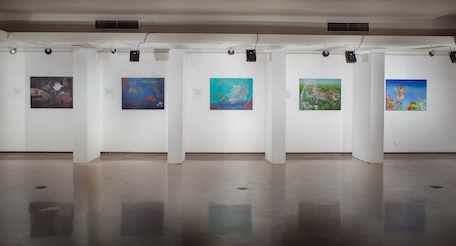
For Invisible Palettes, I create paintings using spectroscopically characterized paints selected for their measurable responses to particular wavelengths of light. The paintings are then illuminated by ten programmable monochromatic light beams.
Under ordinary gallery lighting, they appear to be relatively naturalistic paintings of animals in their environments. But when the light changes, the paintings change dramatically. Colors disappear, emerge, or transform. The sequences are designed to approximate aspects of how different species might experience the same environment—including animals such as bees and birds that can see ultraviolet wavelengths, or fish whose color vision is far better than ours.
So each painting exists in more than one state.
You can’t really understand the work by looking at a photograph of it or seeing it under only one kind of light. You have to experience the transformation.
That has become a larger question for me: How much of what we think of as reality is actually our own perception?
We tend to think of vision as objective—as though we simply open our eyes and see the world as it is. But vision is an extraordinarily personal experience. The physical world is one thing; the way an individual organism experiences that world is another.
I find that gap fascinating.
Do you have any memories from childhood that you can share with us?
One of my favorite childhood memories is going to the Art Institute of Chicago with my grandmother when I was about ten.
I was completely absorbed by what I encountered there. My grandmother noticed how fascinated I was and bought me a book about Michelangelo.
It was my first art book, and I still have it.
I remember going home and studying the photographs, amazed by what Michelangelo could do with paint and marble. But when I think about that day now, what stays with me isn’t really the book. It’s that my grandmother took my curiosity seriously.
She could have dismissed it as a child’s fascination. Instead, she recognized that something was happening and encouraged it.
I think that was important.
She didn’t tell me I had to become an artist. She simply showed me that being curious about art—and being deeply moved by it—was something worth paying attention to.
Looking back, I realize that I have been paying attention ever since.
Contact Info:
- Website: https://www.pennycagney.com
- Instagram: IG: pennycagney_art