



Today we’d like to introduce you to AJ Reyes.
Hi AJ, it’s an honor to have you on the platform. Thanks for taking the time to share your story with us – to start maybe you can share some of your backstory with our readers?
I’ve always liked attention. The first time I sang on stage was in a pre-k Thanksgiving concert. I remember hand-traced paper turkeys, construction paper-hats, and applause. When I was little-little I sang as much as a could, and did the most with everything. When I sang the alphabet, it was more of an R&B ballad. And I always loved to play pretend, but it was around fourth grade when I realized people could play pretend for a living. So by fifth grade it was decided. I’d be a singer/actor. Like Britney Spears!
I placed most of my focus on acting by my early-twenties (so, that was just, like, last year. I’m so young, y’all.). I still love to sing, and I’d almost always prefer a musical over a straight play. But as long as I’m creating a character and telling a story, I’m happy.
We all face challenges, but looking back would you describe it as a relatively smooth road?
It’s a smooth road if you’ve got a good shock system! Is that the thing on cars? I’ll drop this analogy. I don’t know enough about cars for it.
As an actor, your primary job is auditioning. And auditioning comes with a ton of rejection. It definitely took some adjusting and getting used to. As a kid I was sure I wanted to be an actor, but I think if I had tried acting professionally as a child I wouldn’t be doing it today. Little AJ couldn’t have handled it. Present AJ still has his moments, but after years of experience, and seeing smart, kind, talented, well-deserving people also get rejected, it’s hard not to see that it’s just part of the job.
Another thing I struggled with, related to rejection, was accepting that what I look like is a major factor in what jobs I’ll book. As someone born with a cleft lip, a cleft palate, and a bunch of other dental and nose issues, I have what some people in the biz like to call a “distinct look.” Don’t worry! I’ve also been called worse than “distinct.”
I’m great for “everyday person” roles in commercials or the quirky sidekick, but not often will people cast me in other roles. Downsides, I don’t get to stretch as many acting muscles as I’d like. Upsides, this means I know what parts I’m likely to get, and it helps narrow down projects I submit for. Knowing your type will save you time, energy, and money.
There are people who will cast actors for what they bring to the character, regardless of what the actor looks like. While plenty of the negative stereotypes about the entertainment business hold up, there’s definitely been some change. I think, and hope, more will come.
Thanks – so what else should our readers know about your work and what you’re currently focused on?
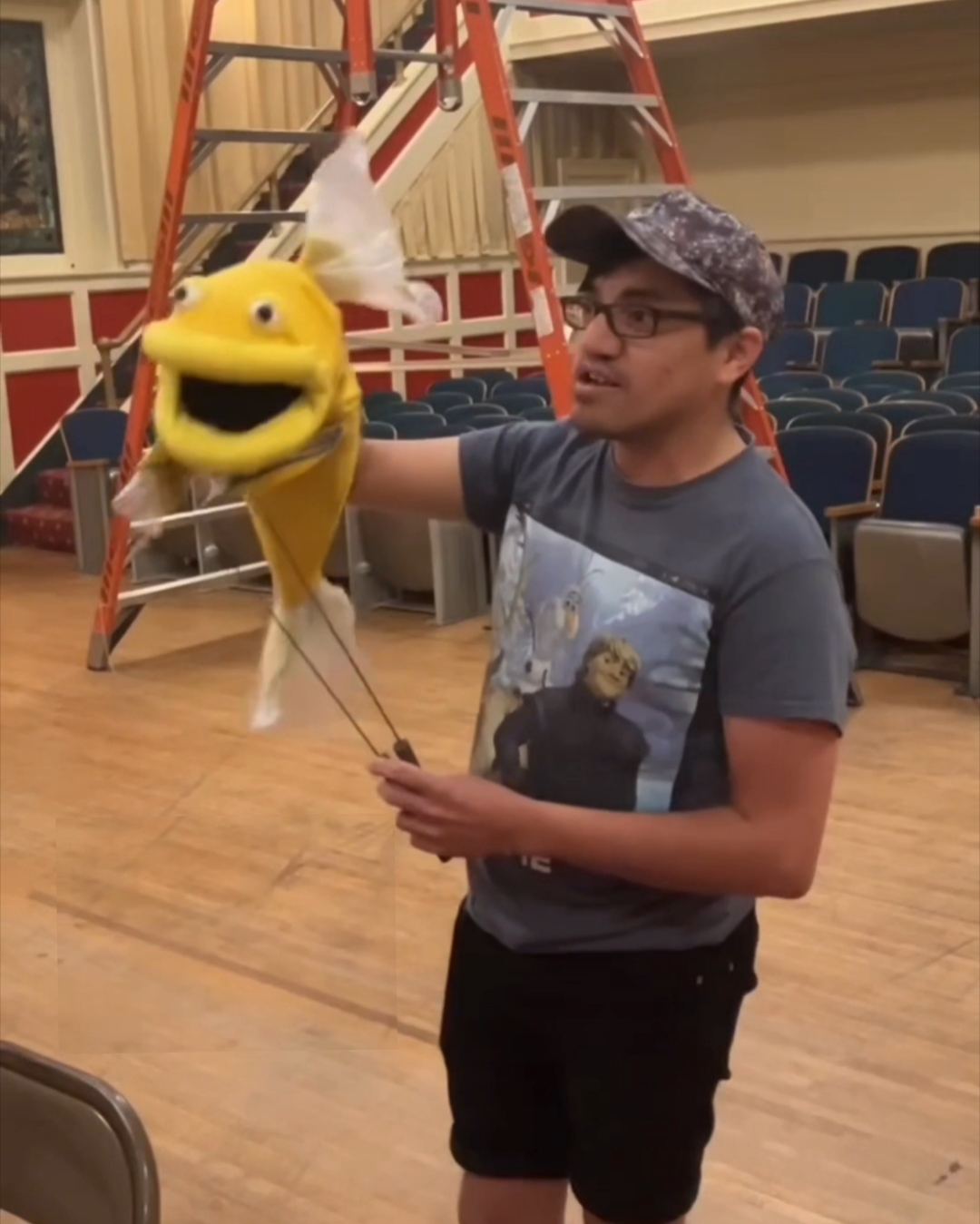
While I love working on camera, in the past few years I’ve become most known for my work in the Austin theatre community. Acting is what I NEED to do, but I also enjoy stage managing, and working backstage. I’m not a designer, but I love to help other people bring their vision to life and complete the day-to-day tasks. Also, last year I became the Marketing Director at Austin Scottish Rite Theater. We primarily produce shows for children.
Something I never would have guessed I’d end up doing is working in theatre for young audiences. I’ve worked on somewhere near 50 productions, and nearly half of them were shows for kids. I’m significantly younger than my siblings (as mentioned before, I’m just so young, y’all) and when I was a kid, I was surrounded by my screaming, crying, screech-laughing niblings (nieces and nephews). As a child, I decided I hated kids and wanted nothing to do with them. Away with the beasts! While I’m still certain I want none of my own, creating and performing theatre for children is easily one of the things I’m most proud of.
Too many actors, too many people, look down on TYA. They think it’s not as worthy of their time or talents, but it’s just as important as theatre for adults. I’d accept arguments that it’s more important than theatre for adults. Theatre is a great way to learn to process and regulate emotions. It teaches empathy, and critical thinking. And theatre gives kids something they can’t get from movies or TV shows. When they’re there in their seats, the kids get to see the story happen just a few feet away from them. They share the space. They get to feel the excitement or jealousy or curiosity or sadness that the characters are feeling in the room with them.
Most companies that produce theatre for young audiences have meet-and-greets after their show so the kids can meet the cast. While taking photos or signing autographs for them, kids are eager to share what they liked about a show, or questions about what didn’t make sense to them, or how they related to something in the show. It’s almost like they’re human beings, just smaller! Wild!
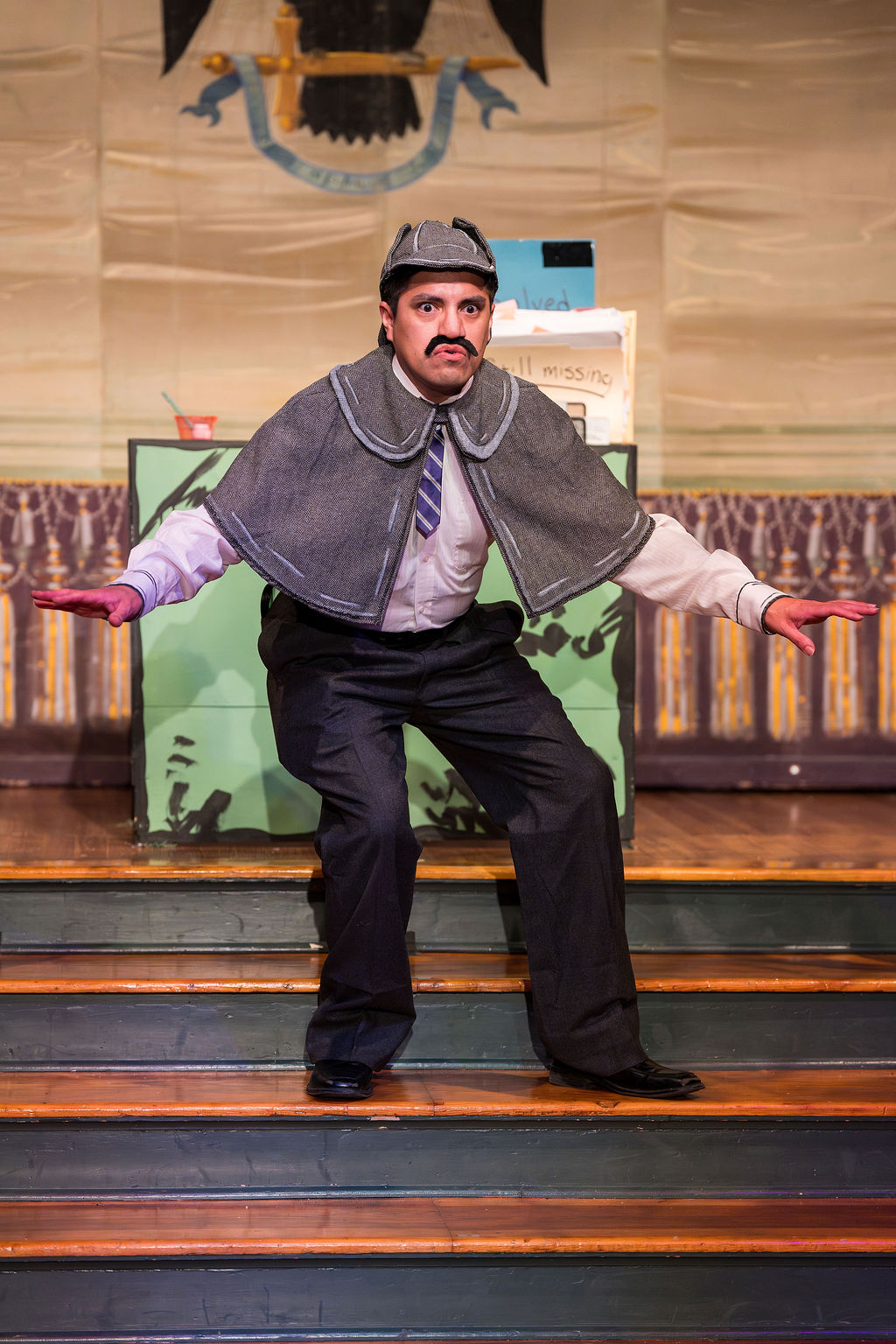
On the topic of speaking to people after the show, much like Disney movies and Cartoon Network, TYA is not just for YA. It’s also for OA. Wait. AA. Nope. GA! Grownup audiences! Last year I played a detective in “Miss Nelson is Missing” and after one performance a man in his 70s rushed over to me to tell me he had been a private detective for 46 years. He was excited to relate to something in the show. It was so cute! Before that, I played Memo in “Dulce,” a show about a boy who’s abuelita, his grandmother, has recently died. It explores family dynamics and how grief can manifest. Yes, it’s a kid’s show. So many kids said so many great things about the show, but it was the first production where I heard just as many things, if not more, from the adults in the audience. My character, Memo, tried to get his abuelita’s dulces (candy) down from the top of a wardrobe by swinging a t-shirt at them, hoping to knock them off. A grandmother in the audience told me she used to do that to her own grandmother’s candy when she was a girl. In Dulce, we also see what Luisa, Memo’s Mom, experienced when she moved to the US as a young, spanish-speaking girl. She was popular and happy at her school in Mexico, but she came to America and teachers treated her like she was stupid because she didn’t know English. A man told me that was his story. That was his experience. And he was glad his kids saw it on stage.
I’m proud to have created work that both adults and children can enjoy.
Networking and finding a mentor can have such a positive impact on one’s life and career. Any advice?
Step one of networking is to go where people are doing what you want to be doing. If you want to do theatre, go see theatre. Strike up conversations. If you speak to someone who worked on the show you just saw, tell them something specific you enjoyed about the production. Ask them how they came up with a certain idea. Please don’t compliment people just because you want something from them. That’s not cute. But if you can think of something genuine and kind to say, say it. Kindness is often met with kindness, and there’s plenty of kindness in Austin theatre.
Every person, every interaction, every relationship is different, but I don’t mind when strangers ask me questions or for advice. Again, as long as you’re kind, I’ll do what I can to help. I’ve encountered many people who think similarly. Plenty of people I’ve never met before have asked me after a performance how I heard about the audition for the show, or where I take acting classes, or what the experience working with the theatre company was like.
I know saying, “strike up a conversation,” might be easier to say than to do, but we have to do hard things. Hard things are inevitable. And talking to people is a necessary evil, y’all.
Contact Info:
- Instagram: https://www.instagram.com/ajreyesf13/
- Facebook: https://www.facebook.com/ajreyesf13/
- Youtube: https://www.youtube.com/ajreyesf13
- Other: https://www.tiktok.com/@ajreyesf13