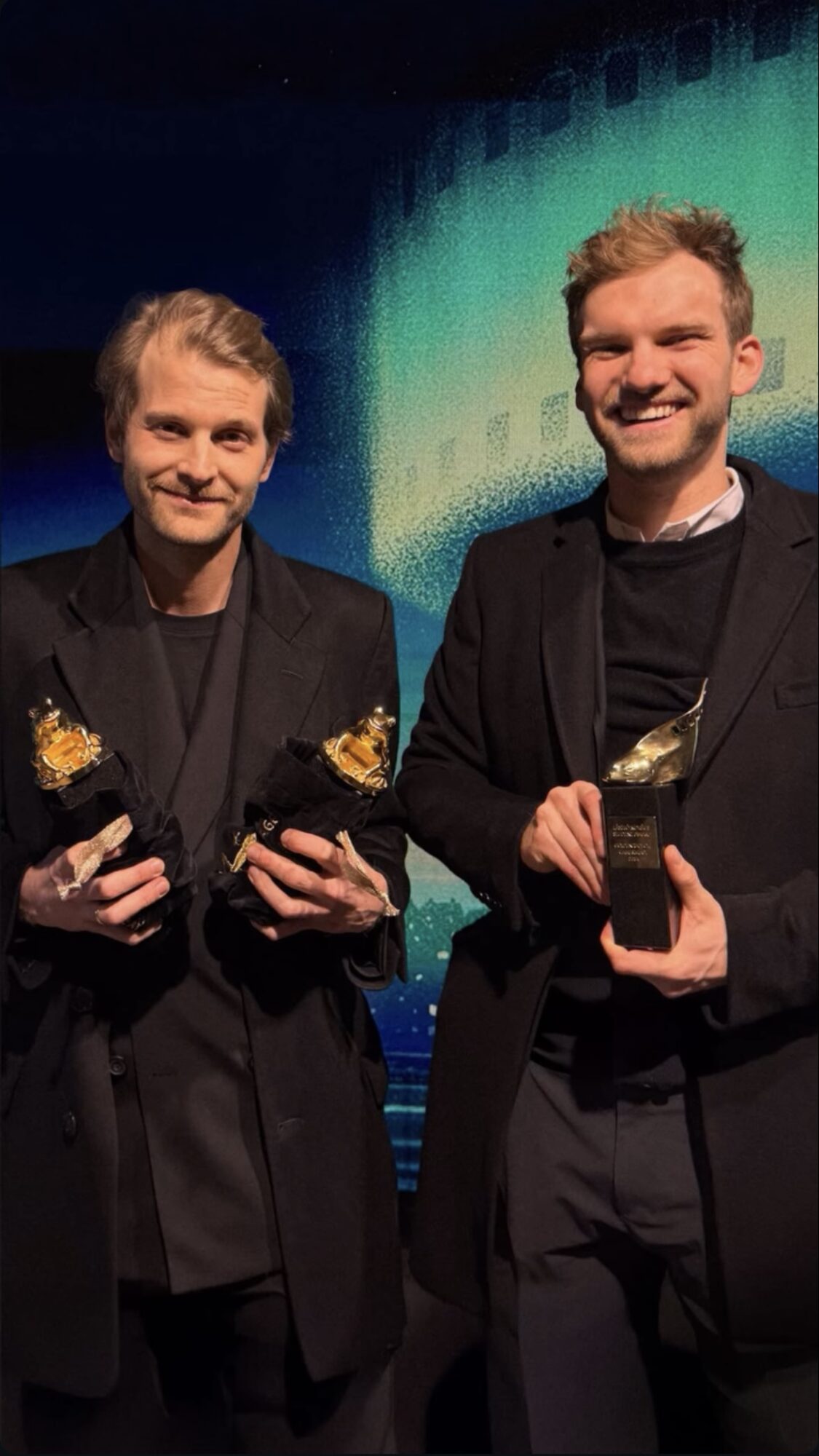



Today we’d like to introduce you to Tin Brendel.
Hi Tin, thanks for sharing your story with us. To start, maybe you can tell our readers some of your backstory.
Brendel didn’t set out to end up in film — it’s closer to something he backed into. His earlier short AIDA, about desire and love, went through several rounds of Germany’s DAFF Deutsche Filmfestspiele before winning outright, qualifying it to represent Germany at the World Movie Competition in the Netherlands.
Before any of that, Brendel worked as a camera assistant, then left to shoot White Spot, a 90-minute documentary that took him through eight South American countries — including a stretch through the Amazon where he slept in hammocks and on boats, and got unexpectedly good at changing tires.
That film helped get him into Łódź Film School in Poland where he studied for four years under Ryszard Lenczewski (Ida, Academy Award winner, 2015) and Paweł Edelman (The Pianist, Academy Award nominee, 2003). Łódź is known to be one of the hardest cinematography film schools in the world, with 23 Oscar nominations and 3 wins, it features alumni such as Hoyte van Hoytema (Oppenheimer, Academy Award winner, 2024) and Lukasz Zal (Cold War, Academy Award nominee, 2019).
Can you talk to us a bit about the challenges and lessons you’ve learned along the way. Looking back would you say it’s been easy or smooth in retrospect?
I think I’ve already answered that in the previous question.
Alright, so let’s switch gears a bit and talk business. What should we know about your work?
For cinematographer Tin Brendel, a film is a way of handing someone else’s experience to an audience that never lived it. That’s the thread running through most of Brendel’s work: using the camera to close the distance between how something looks from the outside and what it actually feels like from within. Equipment aside, Brendel is mostly interested in what happens on the other side of the lens. “I’m fighting to visually understand perspective. It’s easy to misjudge someone’s actions without knowing what led up to them — film can fill in some of that missing context.” Brendel shoots digitally as well as on black-and-white and color negative film in 16mm and 35mm, and has worked in drone and underwater cinematography, VFX, SFX, VR, and motion control. Across his career, his films have shown at more than 50 festivals and won over 25 international awards. Constant stayed the reason he picked up the camera in the first place: to make images that let people feel something of what someone else is going through.
Risk taking is a topic that people have widely differing views on – we’d love to hear your thoughts.
One of the bigger risks Brendel took was learning Polish specifically so he could go to Łódź Film School. Brendel had no prior knowledge of Polish, so he was committing hisself to moving to another country and applying for cinematography at one of the hardest film schools in the world, in a language he didn’t speak. It was a big decision and a real risk, but it became a very important part of his path.
Contact Info:
- Website: https://TinBrendel.com
- Instagram: tinbrendel