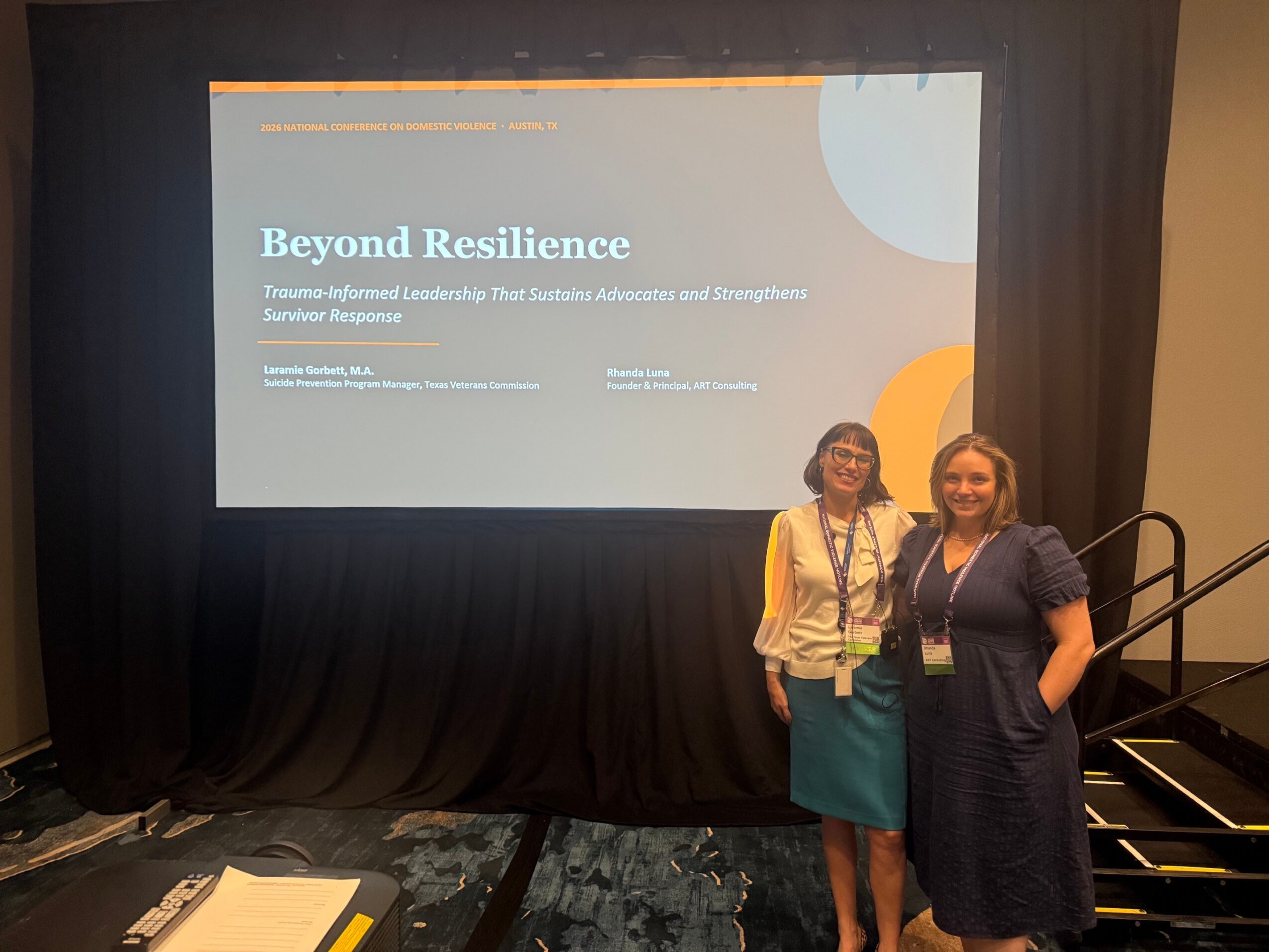



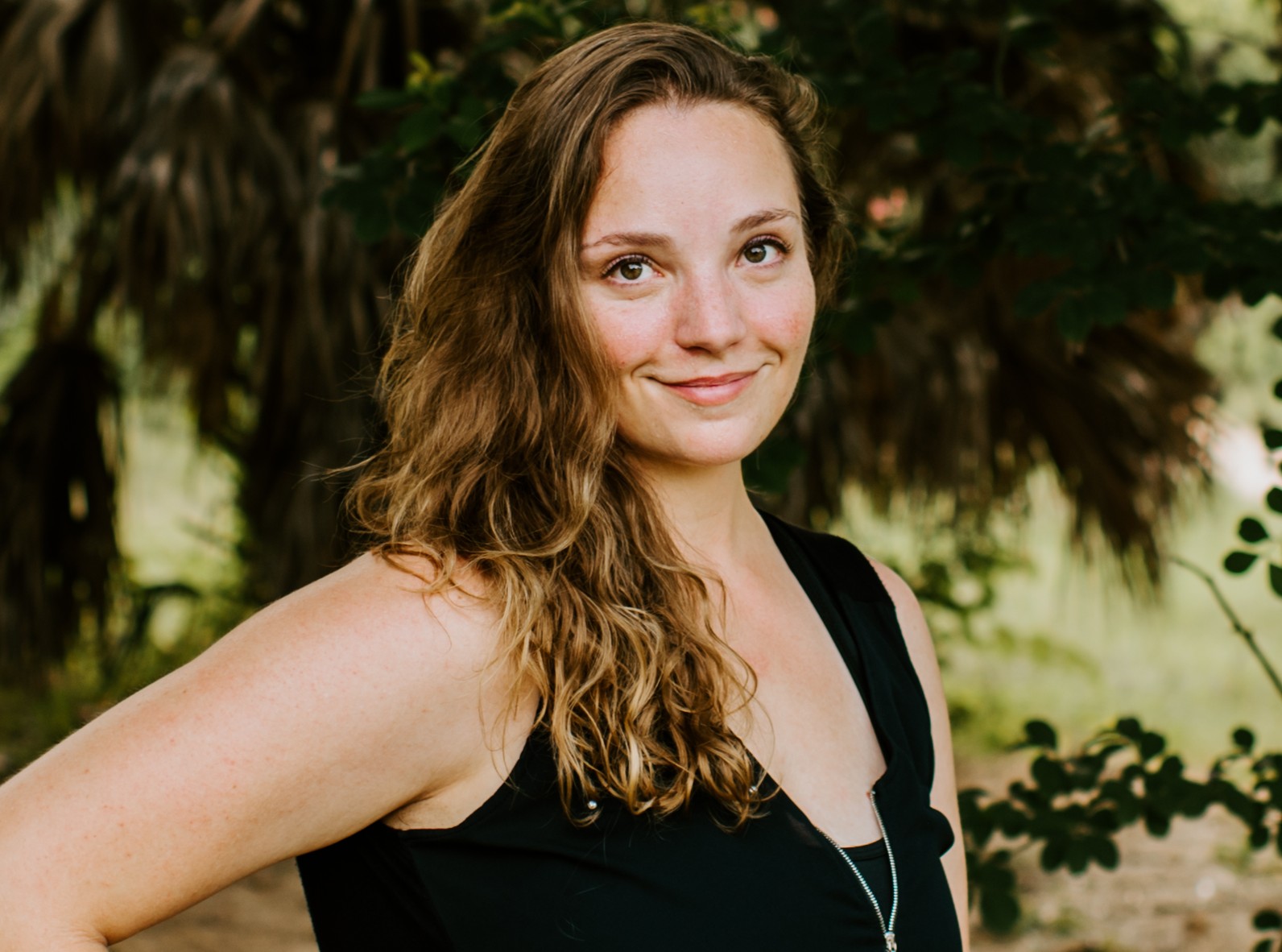
Today we’d like to introduce you to Rhanda.
Hi Rhanda, please kick things off for us with an introduction to yourself and your story.
I’ve spent nearly 20 years in the nonprofit sector, although I’m not sure I ever sat down and intentionally decided, “I’m going to build a career in nonprofits.” I was drawn to work that felt meaningful, and pretty quickly, I found fundraising somewhat by accident.
I was working at Amarillo Opera, stewarding donors and writing grants among all the other things that happen when you work for a small nonprofit. I wrote a grant and, much to my surprise, we got it. There was just one catch: the grant required the organization to have a Director of Education. So, I became the Director of Education. Apparently, accidentally winning a grant is one way to get promoted! What stuck with me, though, was realizing that I had helped bring in resources that made new work possible. I loved that connection between storytelling, strategy, relationships, and impact, so I kept fundraising too. That experience ended up shaping much of the direction my career took from there.
Over the years, my work has expanded far beyond fundraising. I’ve worked in organizational leadership, strategy, program development, corporate partnerships, major gifts, grants, board engagement, capacity building, communications, and a lot of the messy work that happens when organizations are growing or changing. I’ve helped raise significant funding, built systems and programs from the ground up, worked alongside boards and executive leaders, and spent a lot of time figuring out how organizations can turn big ideas into something sustainable and achievable.
And then, somewhere along the way, my questions started changing. I was increasingly interested in whether organizations were accomplishing their missions and, even more so, in what it was costing the people doing the work. The nonprofit sector is filled with extraordinarily committed people, and that commitment can make it surprisingly easy to normalize burnout, urgency, understaffing, poor boundaries, and unhealthy workplace dynamics in the name of the mission.
That curiosity eventually became part of my academic work. I’m currently pursuing a PhD in Organizational Leadership, where my research focuses on trauma-informed leadership and organizational culture in the nonprofit sector. I’m really interested in psychological safety, power, workplace harm, and what helps people remain healthy and effective while doing difficult, meaningful work.
It also shaped the business I’m building, ART Leadership & Strategy. ART stands for Advance. Revive. Thrive., which captures a lot of what I hope the work does. I work with businesses and organizations on leadership, strategy, organizational capacity, fundraising and development, board engagement, and healthier ways of working. Nonprofits are my specialty because that is the world I know best, but the underlying questions about people, systems, leadership, and sustainability apply far beyond the nonprofit sector.
I’ve realized that I’m happiest when I can step into a complicated situation, ask a ridiculous number of questions, connect dots that may not seem connected at first, and help people figure out what comes next.
My career has definitely not been a straight line. There have been organizations I loved, difficult experiences, unexpected transitions, risks that worked, risks that didn’t, and lessons I probably would have preferred to learn the easy way.
But if there is one phrase that probably describes my story, it’s “she persisted.” I keep coming back to something Ruth Bader Ginsburg said: “Fight for the things you care about, but do it in a way that will lead others to join you.” That idea has become increasingly important to me. I care deeply about creating change, but I also care about how we create it, whether people feel invited into the work, whether they are treated with dignity along the way, and whether the systems we build actually reflect the values we say we hold.
That has brought me to the question that drives my work today: How do we build organizations that accomplish meaningful things without sacrificing the human beings doing the work?
I explore that question now as a leader, consultant, researcher, speaker, fundraiser, and sometimes professional dot-connector. I suspect I’ll be exploring it for a long time.
Can you talk to us a bit about the challenges and lessons you’ve learned along the way. Looking back would you say it’s been easy or smooth in retrospect?
Not particularly. I’ve had a few seasons where life seemed determined to stack everything at once.
One of the biggest was becoming a single mom while also changing jobs, moving to a new city, and finishing my master’s degree. All during a period when I was navigating a months-long legal process to finalize my divorce. I was trying to build a new life while parenting, working, studying, and figuring out what stability was supposed to look like all over again.
Professionally, I’ve also had to let go of places and roles that mattered deeply to me. Leaving opera was hard because that industry gave me so much. It inspired me, trained me, and helped me discover the work I wanted to pursue. Walking away from it felt, for a while, like I was abandoning something that had helped shape me.
Later, I found an organization I cared about deeply and wanted very much to stay with, but the workplace itself became too unhealthy for me to remain. That was one of the experiences that pushed me to think much more seriously about organizational culture, psychological safety, and the difference between believing in a mission and feeling safe inside the organization carrying it out.
Then, after finally landing a leadership role I was incredibly excited about, it was decided only four months later to begin sunsetting the organization. So instead of getting the leadership experience I thought I was signing up for, I got a crash course in extreme change and transition management.
That experience taught me a lot about leadership under pressure. I learned how much uncertainty affects people, how important communication becomes when nobody has perfect answers, and how much care it takes to help people move through change without pretending everything is fine.
None of those experiences felt useful while I was in the middle of them, but they changed the questions I ask, the way I lead, and the kind of work I want to do now.
I’ve had to reinvent parts of my life and career more than once. I wouldn’t describe that as resilience so much as persistence. Quitting just doesn’t seem to work for me.
Great, so let’s talk business. Can you tell our readers more about what you do and what you think sets you apart from others?
The “art” in ART Leadership & Strategy stands for Advance. Revive. Thrive. That name reflects the kind of work I want to do with organizations: help them move forward, strengthen what is not working, and build systems that allow the organization and the people inside it to thrive.
I work with businesses and organizations on leadership, strategy, organizational capacity, culture, revenue, board engagement, and growth. Nonprofits are my specialty because I have spent nearly 20 years in that sector, but the challenges I help solve are not unique to nonprofits. Organizations of all kinds struggle with unclear roles, overwhelmed teams, leadership transitions, unhealthy urgency, growth that outpaces their systems, and good ideas that are difficult to turn into sustainable action.
What sets my work apart is that I tend to look at the whole system rather than one isolated problem. A fundraising challenge may actually be a messaging problem. A staff performance issue may be a workload or communication problem. I ask a lot of questions, look for the connections between people, strategy, structure, and culture, and then help organizations figure out what is actually getting in the way.
My work is also heavily influenced by my research in trauma-informed leadership. I think organizations can hold high expectations, have high accountability, and pursue ambitious goals while still being thoughtful about the human impact of the systems they create. Those things are not separate from performance. They are part of what makes sustainable performance possible.
I think what I am most proud of is that ART is not built around walking into an organization, handing people a report, and disappearing. I want the people I work with to leave with stronger systems, clearer thinking, practical tools, and a greater ability to solve the next problem without me.
Ultimately, I want ART Leadership & Strategy to be known for helping organizations do meaningful work more effectively, without losing sight of the people who make that work possible.
Networking and finding a mentor can have such a positive impact on one’s life and career. Any advice?
Most of the mentors in my life became mentors long before either of us called the relationship that. Some have been former bosses. Others have been board members or donors from organizations where I worked, vendors I hired for events, colleagues, and people I met through volunteer leadership. I think that has shaped the way I think about networking in general. I rarely walk into a room thinking, “Who here can help my career?” I’m much more interested in meeting interesting people, learning what they care about, and building genuine relationships. Sometimes those relationships grow into something much bigger years later.
One of the best examples is my friend and mentor Jim Eskin. We originally met because we served on a board together years ago. At the time, I had no idea that he would eventually become one of the people I call when I need advice, perspective, encouragement, or occasionally someone to tell me that my brilliant idea might need a little more thought.
Years later, when I was going through a point in my career where I genuinely needed help, I reached out to Jim somewhat out of the blue. He answered.
That sounds incredibly simple, but I think there is a lesson in it. Sometimes we spend so much time worrying about whether it is appropriate to contact someone, whether enough time has passed, or whether we have earned the right to ask for help that we never actually ask.
My advice for finding a mentor would be to stop looking so hard for someone with the title “mentor.” Pay attention to the people you respect. Notice who makes you think differently, who is generous with what they know, who asks good questions, and who seems invested in seeing other people succeed. Build relationships with those people without immediately asking the relationship to produce something for you. And when you genuinely need help, ask.
The worst thing that can happen is that someone is unable to respond. The best thing that can happen is that a person you met years ago answers the phone and becomes one of the most important relationships in your professional life.
Contact Info:
- Website: https://artleadershipstrategy.com
- Instagram: @artleadershipstrategy
- LinkedIn: https://www.linkedin.com/company/art-leadershipstrategy-tx/