


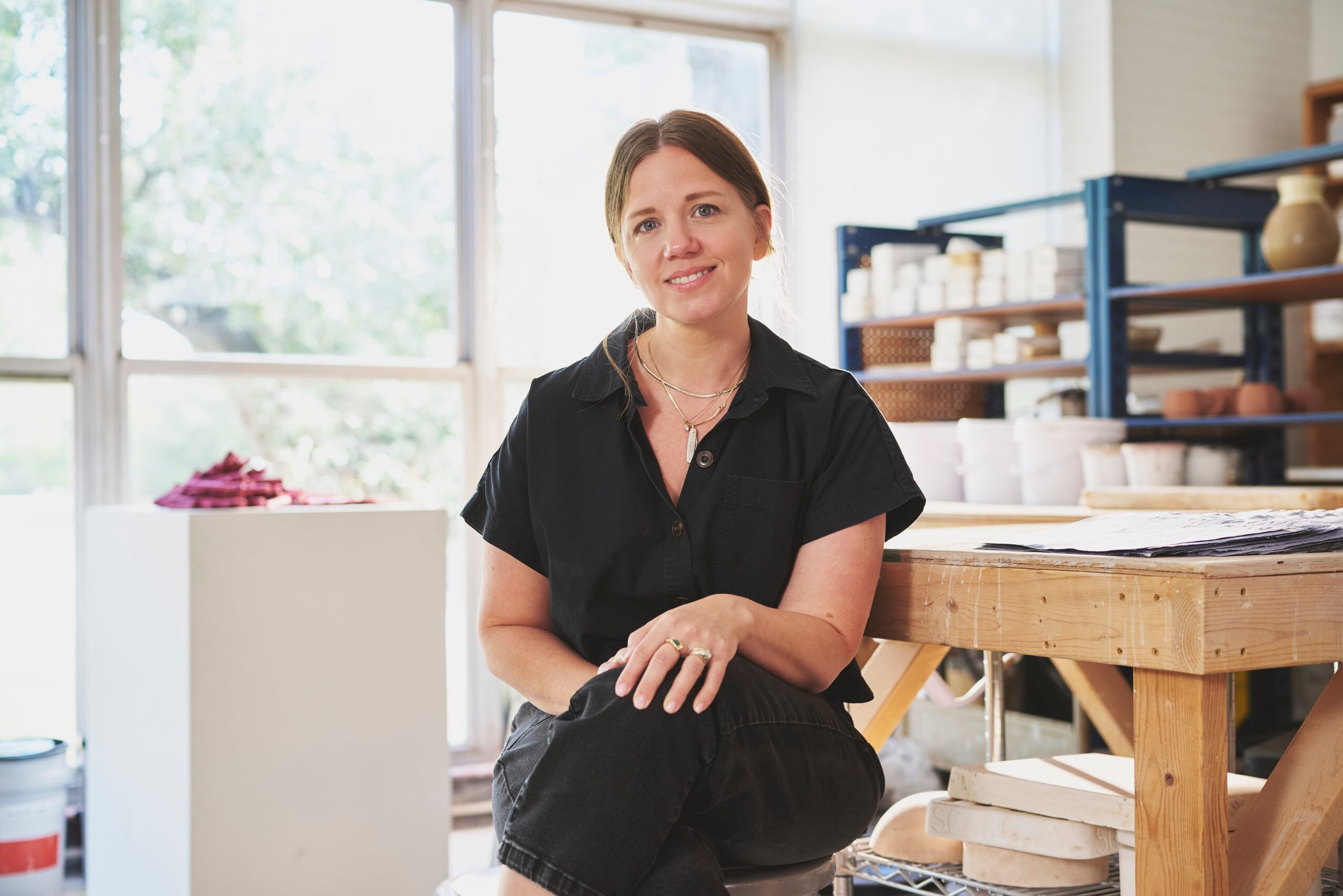
Today we’d like to introduce you to Jenn Hassin.
Hi Jenn, we’re thrilled to have a chance to learn your story today. So, before we get into specifics, maybe you can briefly walk us through how you got to where you are today?
I grew up in Eagle Lake, a small town in Texas, and my path to becoming an artist was anything but traditional. I served four years in the United States Air Force before pursuing my undergraduate degree in Studio Art at St. Edward’s University. My military service shaped so much of who I am, particularly my understanding of community, sacrifice, resilience, and the ways our experiences stay with us long after they have passed.
My artistic practice began with a curiosity about materials and their ability to hold stories. I started transforming military uniforms and other meaningful textiles into handmade paper, giving these materials a second life. What began as an exploration of my own experiences eventually grew into something much larger. One of my earliest big breaks was exhibiting my work at the Pentagon. That opportunity became a springboard for my career, opening doors and giving me the confidence to pursue art professionally. I had been considering graduate school since completing my undergraduate degree in 2012, but exhibiting at the Pentagon gave me the confidence to aim higher and apply to some of the most competitive MFA programs in the country.
For more than a decade, commissions have been an important part of sustaining my studio practice. I work with individuals, families, and organizations to transform their own meaningful materials into works of art. Whether it’s military uniforms, clothing belonging to a loved one, or textiles that carry personal histories, I get to help people preserve their stories in a completely different form. There is something incredibly intimate and rewarding about being trusted with these materials. This part of my practice has allowed me to build a sustainable career while remaining deeply connected to the people and communities behind the work.
In 2021, I earned my MFA from Columbia University, an experience that challenged me to think more expansively about my practice and the role of an artist in the world. Over the years, I’ve had the privilege of exhibiting at institutions including the Pentagon, The Contemporary Austin, Blue Star Contemporary, and the National Veterans Art Museum in Chicago, where I recently had a yearlong solo exhibition. Most recently, I opened Americana at Ivester Contemporary in Austin, a body of work exploring identity, belonging, motherhood, and the stories we share.
Today, I am an Assistant Professor of Ceramics and Sculpture at St. Edward’s University, the very place where my formal art education began. There is something meaningful about coming full circle and now having the opportunity to mentor emerging artists. I also serve on nonprofit boards, continue to build my studio practice, and am raising three children with my husband. Balancing motherhood, teaching, and an active exhibition schedule is certainly an adventure, but each part of my life informs the others.
I never imagined my career would unfold quite this way. I’ve learned that some of the most meaningful opportunities come from remaining curious, taking chances, and being willing to grow beyond what you originally imagined for yourself. At the heart of everything I do is a belief in transformation, not just through materials, but through the relationships, experiences, and communities that shape us.
Alright, so let’s dig a little deeper into the story – has it been an easy path overall and if not, what were the challenges you’ve had to overcome?
I don’t know many artists who would describe their journey as a smooth road. Building a sustainable career as an artist takes an enormous amount of work, and so much of that work happens behind the scenes. There have been plenty of moments of uncertainty, rejection, financial strain, and questioning whether I was making the right decisions. I’ve had to learn how to be an artist, a business owner, a manager, a marketer, and about a dozen other things that have very little to do with actually making art.
One of my biggest challenges has been learning how to sustain an ambitious studio practice while also being present for my family. I’m a mother of three, and for much of my career, I’ve been balancing motherhood with exhibitions, commissions, and now a full-time academic position. I love all of these parts of my life, but there are only so many hours in a day. I’ve missed things, I’ve worked incredibly long hours, and I’ve had to accept that I can’t always give 100 percent to everything at once. There is a lot of invisible labor involved in both motherhood and making art, and I think we don’t talk about that enough.
Financially, making art is also a tremendous investment. My work is incredibly labor-intensive, often requiring hundreds of hours and the help of studio assistants. There have been times when I’ve invested significant amounts of money into exhibitions without knowing whether a single piece would sell. That’s a vulnerable position to put yourself in, especially when you have a family depending on you. Commissioned work has helped me sustain my practice, but learning to price my work appropriately, hire help, and recognize the value of my own time has been an ongoing education.
I also think one of the harder lessons has been understanding that success doesn’t necessarily make things easier. Sometimes it just means the opportunities get bigger, the expectations grow, and you have to figure out how to keep up. I’ve learned that saying no can be just as important as saying yes, although I’m admittedly still working on that one! For example, I thought accepting a tenure-track position would make my life easier- but instead I just have two full time jobs now.
But I wouldn’t trade the journey. The challenges have made me more resourceful, more empathetic, and much more intentional about the opportunities I pursue. They’ve also shaped the way I mentor my students. I want them to understand that a creative career rarely follows a straight line, and that talent alone isn’t enough. You need curiosity, discipline, resilience, and a willingness to keep showing up, even when things don’t go according to plan.
As you know, we’re big fans of you and your work. For our readers who might not be as familiar what can you tell them about what you do?
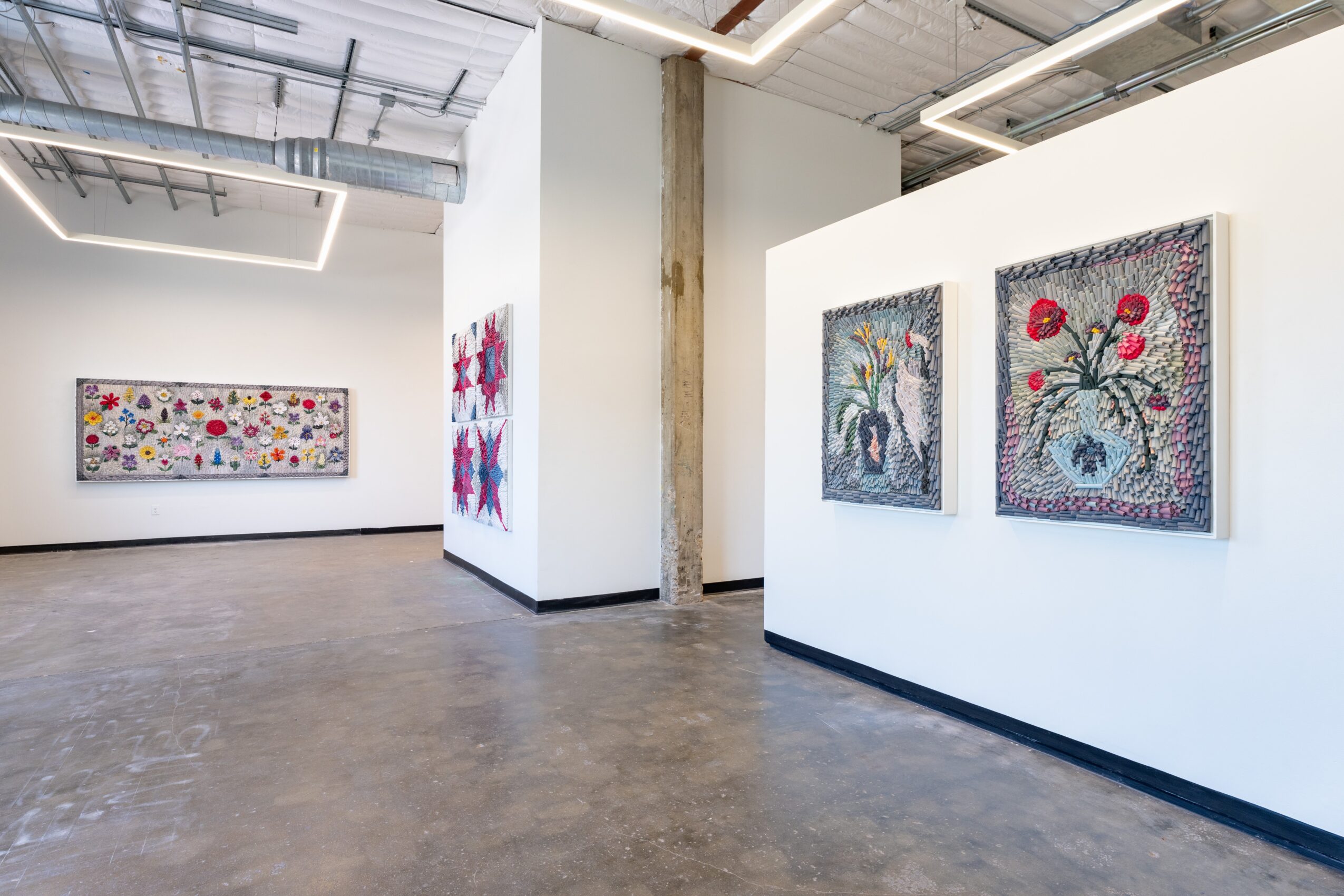
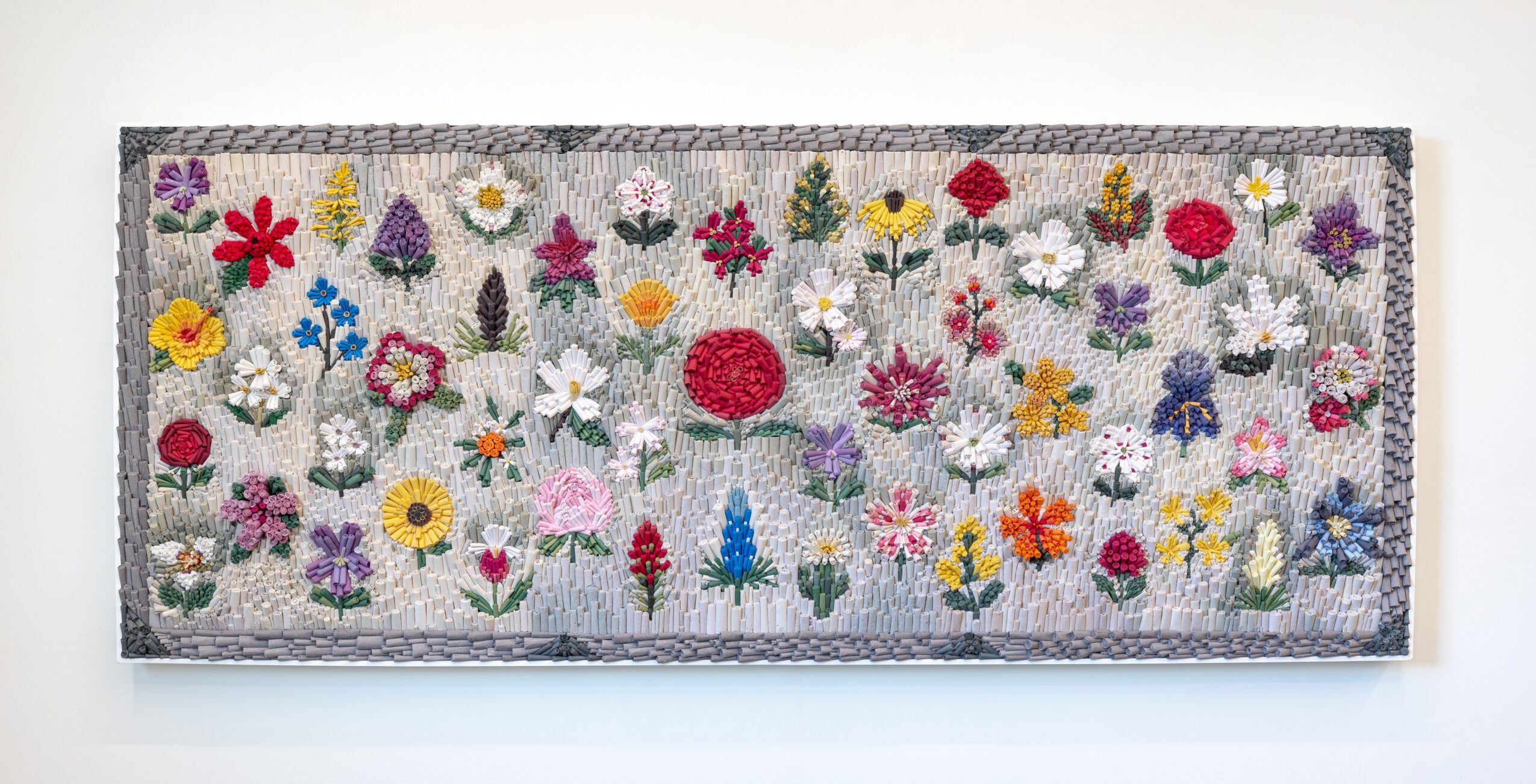
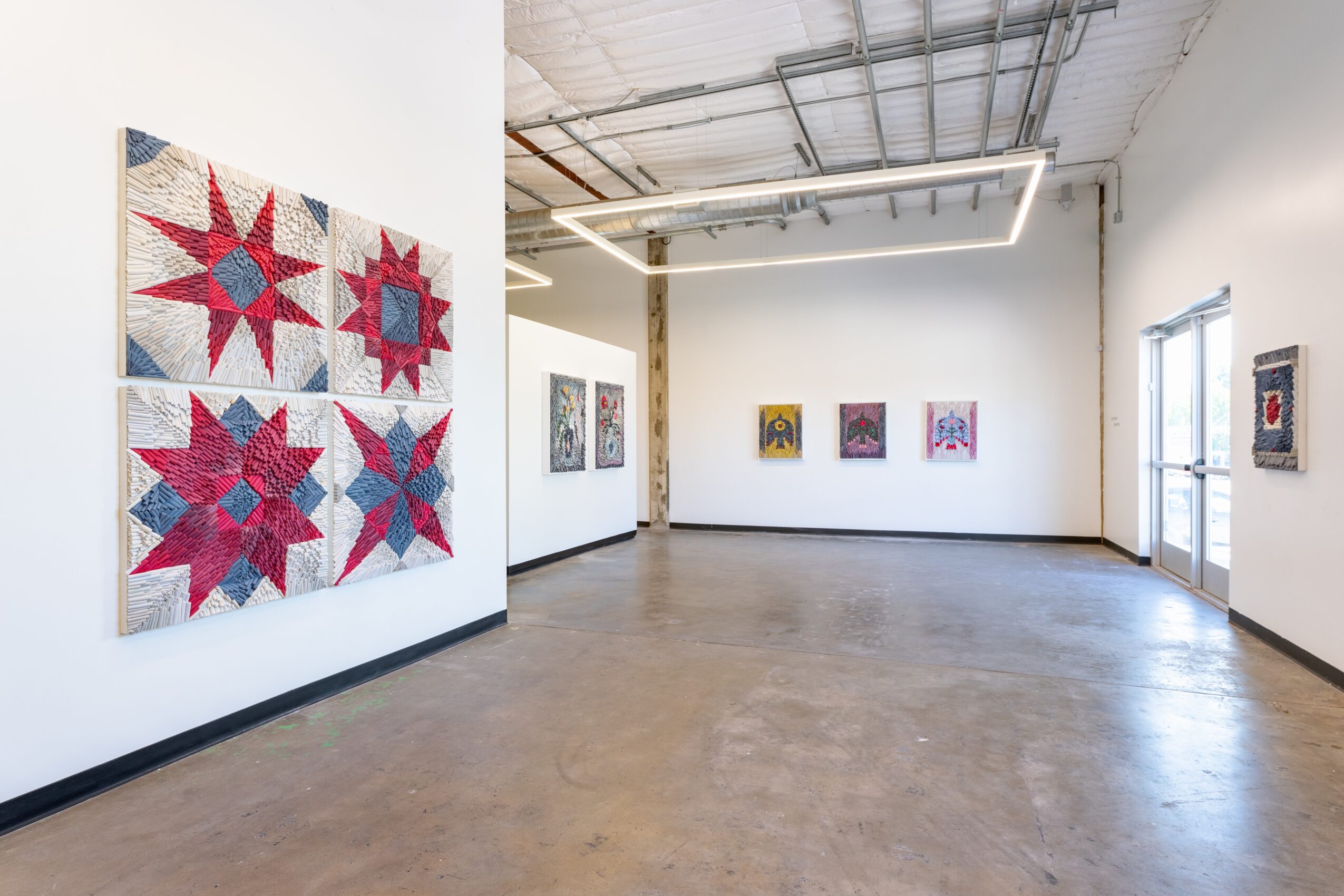
’m an interdisciplinary artist working primarily in handmade paper, sculpture, and ceramics. Much of my practice centers on transformation, both physically and conceptually. I’m probably best known for taking meaningful textiles, including military uniforms, medical scrubs, and clothing belonging to loved ones, and transforming them into intricate works of art. I break these materials down into pulp, make them into paper, and often roll that paper into thousands of individual forms that become part of larger sculptural compositions. It’s an incredibly labor-intensive process, but I love that something once worn, used, or lived in can take on an entirely new life while still carrying its original history.
My work explores themes of resilience, mortality, identity, connection, and the human experience. I’m especially interested in the ways we carry our histories and how art can help us process, preserve, or even release them. Sometimes that happens through deeply personal commissions, where clients entrust me with materials that hold enormous sentimental value. Other times, it happens through large-scale installations and community-based projects that invite people to participate in the making. I don’t believe trauma or personal experiences exist in a hierarchy, and I try to create work that makes room for many different stories to coexist.
What I think sets my practice apart is the relationship between material, labor, and participation. The process is just as important to me as the finished piece. I’ve had hundreds of people contribute to projects over the years, and I love the idea that their hands, time, and stories become embedded in the artwork. There is something powerful about creating an object that is not just about a community, but is quite literally made by one.
I’m particularly excited about my current solo exhibition, Americana, at Ivester Contemporary in Austin. In many ways, this exhibition represents a metamorphosis in my career. For years, much of my exhibited work centered on trauma, loss, sacrifice, and resilience. Those themes remain important to me, but I’ve reached a point where I want to explore what exists beyond them. Americana is an exploration of belonging, motherhood, collective identity, and the beauty of our shared experiences. The work incorporates familiar imagery, including quilts, flowers, and birds, while continuing to use the labor-intensive processes and transformed materials that have become central to my practice. It feels like a natural evolution, one where I’m allowing myself to make work that celebrates life just as much as it acknowledges its complexities.
I’m incredibly proud of the opportunities my work has created. Exhibiting at the Pentagon was an early turning point, and having my artwork featured as Google’s Veterans Day Doodle in 2020 was a surreal experience that allowed my work to reach an audience far beyond the traditional art world. More recently, having a yearlong solo exhibition at the National Veterans Art Museum in Chicago was another meaningful milestone. But I’m equally proud that I’ve sustained a professional studio practice for more than a decade, employed and mentored emerging artists, and built meaningful relationships with people through the work. Some of my most rewarding experiences have come from handing a finished commission to someone and seeing what it means to them.
Ultimately, I think what sets my work apart is that the materials, the process, and the people are all part of the story. I’m endlessly curious about what materials can become, but even more interested in what they can mean. And perhaps the biggest transformation happening in my practice right now is my own understanding that art doesn’t always have to emerge from something difficult to be meaningful. Sometimes it can simply be about finding beauty, celebrating connection, and recognizing the things that bring us together.
Can you tell us more about what you were like growing up?
I grew up in Eagle Lake, Texas, a small town where I learned pretty early on the value of hard work and independence\. I started working at a young age, babysitting and eventually waiting tables while I was still in junior high through high school\. I think having responsibilities so early shaped a lot of my personality\. I became resourceful, independent, and pretty comfortable figuring things out for myself\. I’ve always been curious, a little adventurous, and someone who doesn’t mind taking a chance on something unfamiliar\.
Growing up in a small town also made me curious about the world beyond it\. After September 11th, I felt a strong desire to serve my country, but I also recognized that the military could offer opportunities I might not otherwise have had\. I wanted to see the world, pursue an education, and have access to healthcare and other benefits that would help me build a stable future\. Joining the United States Air Force was both a patriotic and practical decision, and one that profoundly shaped the direction of my life\.
Looking back, I can see how much of that young girl is still part of who I am today\. I’ve always been willing to work hard, take risks, and create opportunities rather than wait for them to appear\. I think I’ve also always had a strong sense of responsibility to the people around me\. Whether it’s through my artwork, teaching, or community involvement, I genuinely enjoy bringing people together and finding ways to help others succeed\. And while my life looks very different from the one I imagined growing up in Eagle Lake, that curiosity, determination, and willingness to try something new have never really left me\.
Contact Info:
- Website: https://Jennhassin.com
- Instagram: @jennhassin
- Facebook: @jennhassin
- LinkedIn: @jennhassin