


Today we’d like to introduce you to Sarah Ross.
Hi Sarah, so excited to have you with us today. What can you tell us about your story?
I grew up in a cabin in the mountains of Northeastern Washington State, a very remote corner of the world. My father built the cabin with the help of a couple of neighbor friends. The closest neighbor was a mile away, as the crow flies. They cut down trees and made boards themselves, and they made a primitive road from the main road a mile down the hill up to our house. We did not have indoor plumbing or electricity but instead we lived with wood heat, a wood cooking stove, kerosene lamps, and an outhouse. We hauled water from the creek and heated it on the wood stove. There were six of us in my family: our parents, two sisters, a brother and I.
Our Cabin was nestled in a valley between two steep ridges, The pine forest, the sea of wildflowers covering those ridges and in the meadow beyond, the view of the lake and the world far below from on top of the cliffs just a hike from our house– these were the backdrop of my childhood. More significant than a backdrop actually; nature was a major character in my childhood, a family member, a teacher. I spent hours with my siblings and alone wandering those 80 acres of woods, picking bouquets of spring flowers for our mother, laying on my back in the meadow gazing up at the sky and listening to birds sing, getting low on the ground and looking closely into the magical world of wild plants. I didn’t know the wild plants by scientific name or by medicinal properties, I knew them as friends and teachers. They spoke to my senses, ignited my curiosity, sparked play and awareness of magic, and soothed and comforted me when I was in need. We spent afternoons in the very tops of pine trees, looking down far below to the ground and imagining we lived up there with the squirrels and birds.
We foraged for wild strawberries, service berries, crab apples, chamomile flowers. The plants of the wild woods nourished and nurtured me all along. So I grew up, graduated high school and went off to college in Western Washington… across the giant Cascades mountain range and in a different climate entirely. I decided that I wanted to help poor and disenfranchised people for a career, and I studied Sociology. After college I took a job in social services working to serve adults with developmental disabilities, then with homeless families, and then teen parents. We moved to Texas when my kids were babies, and I started to get to know the different native Texas plants, landscapes, and seasons. All along I had a passion for natural health and using medicinal herbs to support our health and wellbeing. When my kids were sick, I reached for herbal tinctures and teas. Then I took a job as a medical assistant in an integrative family medicine clinic in Austin because I wanted to learn more about medicine and was thinking I might want to become a nurse. I learned a lot in that job, and I enjoyed the connection with people, helping to care for them with kindness and attentive presence.
But I also figured out that I didn’t want to be a nurse! About that time, I started wanting to deepen my knowledge about herbal medicine, and I had dreams about Lemon Balm. It was like the Lemon Balm was reaching out to me, reminding me of her magic, bright energy, and my curiosity about healing with plant medicine. One day on my lunch break, I ran into Ginger Webb, a well-known and respected local plant medicine teacher. At the time, Ginger was my neighbor. We had lunch together that day and chatted. I told her I felt called to learn more about herbs. She told me about her Herbal Foundations program that was about to start that month, and I signed up. I just knew it’s what I needed to do. During Ginger’s eight month Herbal Foundations program, I felt a return to my childhood relationship to plants, a return to myself, a return to the nurturing teachings of nature. In her course, I learned to make plant medicine, to identify local wild plants, about human physiology, botany, and different categories of plants and how they work with our body systems to nurture and maintain wholeness and health. I thought, “I’ve arrived! This is what I want to do!” In my heart, I knew I had come home to the work I wanted to do. Since completing that program in 2014, I’ve been making herbal medicine and selling my herbal products at the Farmer’s Market as well as my online store. Lemon Tree Herbs is my small cottage apothecary, my passion, and my way of connecting with and helping people. The Lemon Tree is a symbol of joy, and I focus my work on herbs for cultivating self-compassion and nurturing emotional well-being as well as physical wellness.
We all face challenges, but looking back would you describe it as a relatively smooth road?
There has been a lot of joy, learning, and deepening of my relationship with plants. I love being part of our community as an herbalist at the Farmer’s Market. I love the farmers and buying our food from these local, hardworking people who are passionate about the work they do, just as I am. Over the six years I’ve been vending at the SFC Downtown Farmer’s Market, I’ve made good working relationships with the farmers, and several of them grow organic herbs for me and allow me to come out to their land and forage. The kindness, heart, and great depth of this community is absolutely something I treasure and am grateful to be part of. They are generous with me, and their fresh plants make vibrant, effective medicines.
Also, I’ve grown relationships with my customers who tell me their personal stories each week, trust me to offer them plant medicine, and support my business. I am so grateful to all of these good people, and I’m honored they put their trust in me as their community herbalist. Also there have been struggles, of course, as this is the way with life and with small business! My biggest struggle has been with my own self-esteem and believing that I can do this as a self-supporting business. Connecting with people, connecting with plants, and making plant medicine for people… these are the fun parts, the parts I love to work on, explore and grow. I feel truly, authentically myself when I’m connecting with people and making potions. The business sense and skills, however, are a different story! This is the part that doesn’t come naturally to me and intimidates me. I wish money didn’t play into it, and I could just give plant medicines away to everyone who wants and needs them. However, since I decided that I want to make plant potions as my livelihood, I have to deal with the money part.
So I am learning about that and slowly growing those skills. I am slowly growing Lemon Tree to be self-supporting. But it’s hard and it’s scary because I need to financially support my household and my family. I don’t have investors or family money. So this is where the rubber meets the road, and there’s a bottom line. I have had part-time jobs over the years to help us make our monthly finances. But since COVID hit, I’ve been solely doing Lemon Tree for employment. There isn’t security or stability. But there is freedom, meaningful work that I love, and a chance to help people in my community. It is a reciprocal relationship with the plants and with my community: we all help each other get what we need to live.
Can you tell our readers more about what you do and what you think sets you apart from others?
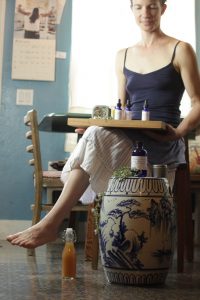
There are two things that I feel make my herbal products special and unique. The first is the “farm to apothecary” idea. I source herbs from local farms, my own garden, and ethically wild crafting. I tincture fresh locally grown and harvested plants in local spirits. This makes more vibrant, effective and better tasting tinctures and elixirs. You can feel and taste the good energy in these potions! Freshness is one of the reasons for this quality, but the other more important reason is relationship. Each ingredient and each part of the process is infused with care, love, intention and relationship.
The small local farmers have a relationship with the plants they grow… They put their heart and soul into growing these plants. I have a relationship with the farmers, and often I harvest the plants myself, or they give me starts, and I grow them in my garden. I have a relationship with the plants… I sit with the plants, learn from them, give them my respect, and make a commitment to harvest sustainably, mindfully and to give back to them. So with locally grown, loved, and harvested plants, I make each bottle of my potions by hand, in small batches, with love, intention and attention. I fully intend to keep my apothecary small, handmade, and personal because I believe in relationship as an important element of sustainability, happiness, and health. Secondly, my niche is making herbs for nurturing and nourishing the emotional and spiritual heart. In short, I make “Inspired Herbs for a Happy Heart”. In my work in social services and in health care, I have seen the negative impacts of stress, anxiety, trauma and depression on our physical health. We all experience a lot of stress in this life. I believe we need to cultivate self-compassion, softness, self-care in order to have better health and happiness. So I make herbal remedies that speak to the senses and nourish emotional well-being, provide stress support, calm and nurture the nervous system.
Also, I make my potions to be a pleasant experience so that even taking the tinctures becomes an enjoyable act of self-compassion. In addition to vending at the Saturday SFC Farmer’s Market and my online herb shop, I offer a seasonal herb box subscription or herb club. I love herb club because it is personal and builds relationship with the plant medicines as well as providing self-compassion practices. Each seasonal herb club box arrives near the equinox or solstice and includes five to seven potions to support emotional and physical health, and to delight the senses during that season. This year I’ve had it in my heart to foster collaboration with other wonderful women makers and farmers. So in the Spring Equinox box, I’m including a candle from Hamsa Heal, a beautiful tea blend from Herban Austin Farm, and a healing balm handmade by my good friend and local botany teacher. In addition to these collaborative gifts, the Spring box will include three tincture blends, an infused herbal vinegar, and an herbal hair rinse/bath vinegar made by Lemon Tree (me), Herb club is really special because I include a long letter about the plant medicines, how to use them, folk stories about them, and themes from my heart about living in this life with love, compassion, and a lot of realness! If you are interested in magic, beauty, and nurturing yourself with handmade plant medicines, you might enjoy treating yourself to an herb club membership!
Let’s talk about our city – what do you love? What do you not love?
I’ve lived in Austin for 12 years, and I consider myself to be a naturalized Austinite! Right away I loved Austin for it’s comfortable, relaxed, home town vibe and warm friendly people. The part I like least is having to rely on driving and dealing with traffic.
Pricing:
- Tinctures and elixirs are $15 for 1 oz, $20 for 2 oz.
- Elderberry Syrup is $20 for 8 0z
- Herb Club is $100 per season; discounted if you purchase all 4 seasons, and 10% discount if you purchase a box for a friend or family member
- Infused Vinegars are $15 for 8 oz.
Contact Info:
- Email: lemontreeherbs@gmail.com
- Website: lemontreeherbs.org
- Instagram: @lemontreeherbs


 Image Credits
Matthew Ross