


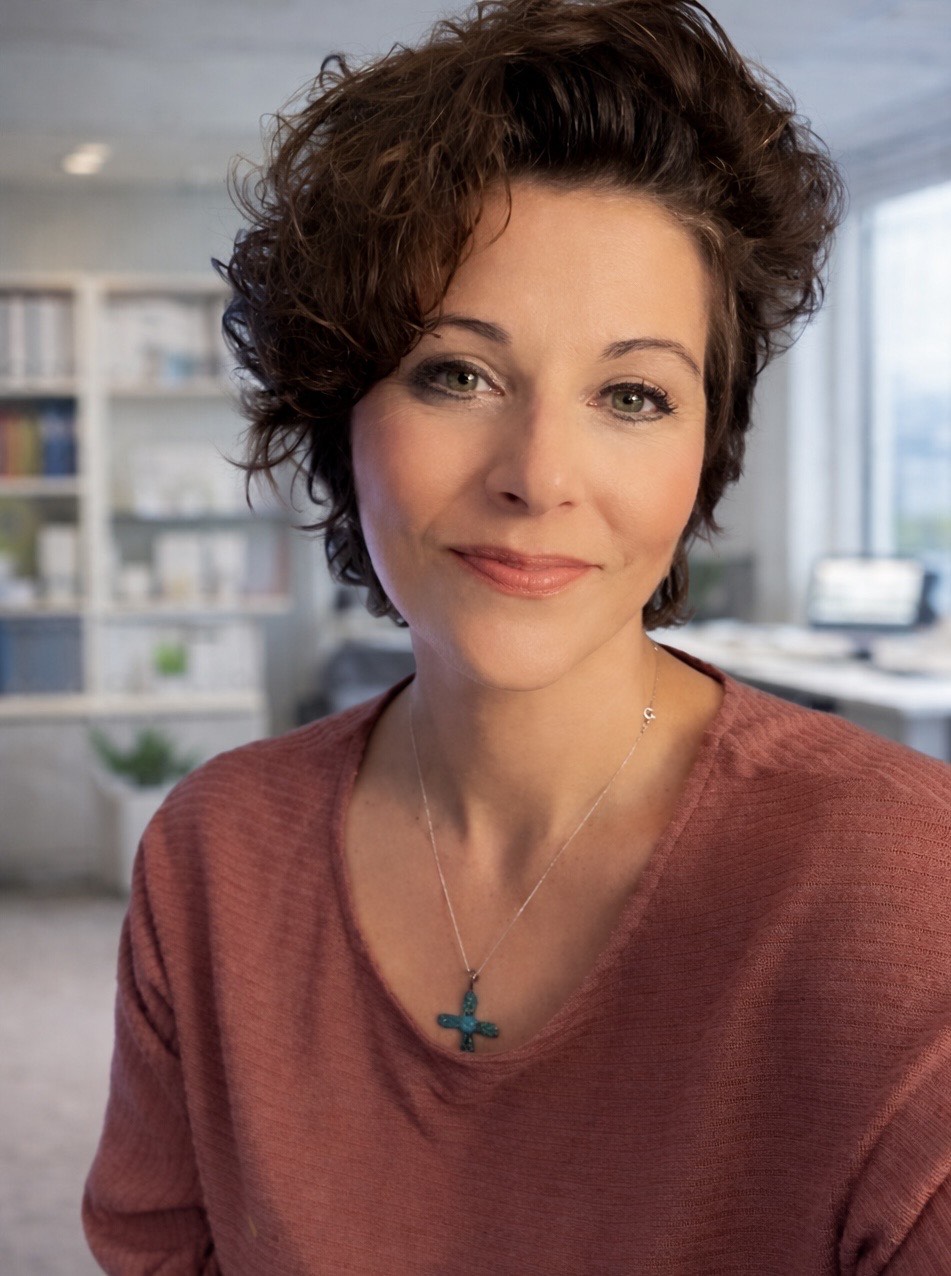
Today we’d like to introduce you to Tanya Stamos.
Hi Tanya, thanks for joining us today. We’d love for you to start by introducing yourself.
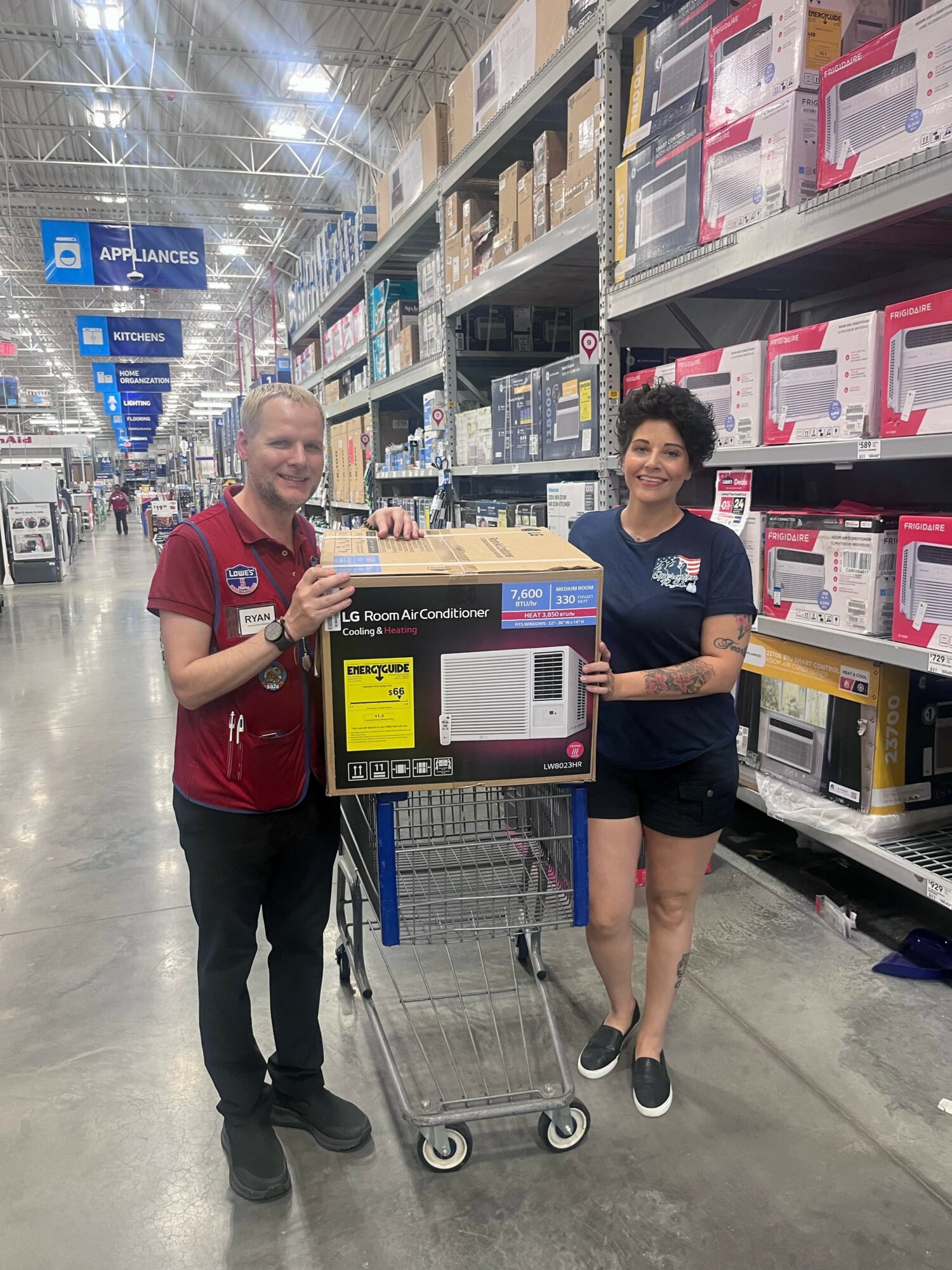
My life has always been built around two things: my kids and service—and I carry both with deep pride as a United States Navy combat veteran who served from 1998–2001.
For many years, it was just the three of us—me and my two children. I was a single mom doing whatever it took to create stability and opportunity for them. We’re all from California, and four years ago we took a leap of faith and moved to Texas to start a new chapter. My kids are now in their twenties, and when I look back, everything I’ve done—every late night, every risk, every degree—was to show them that resilience matters.
I put myself through college while working full time, earning my Bachelor’s in Healthcare Administration in 2020 and my MBA in 2022 from Grand Canyon University. Before moving to Texas, I spent nearly a decade with the California Department of Corrections (2013–2022), focused on compliance, healthcare operations, and improving systems for vulnerable populations. After relocating, I joined United Healthcare as a clinic administrator, continuing my commitment to accessible, compassionate care.
Today, I serve as the Quality and Patient Safety Director for Summit Behavioral Health at Great Oaks Recovery Center, a role I’ve held since December 2024. My work centers on protecting patients, strengthening clinical integrity, and ensuring that people in behavioral health receive care rooted in dignity and safety.
In 2023, life changed everything.
My father—my hero—was diagnosed with stage 4 lung cancer. He was a Vietnam combat veteran and VFW Post Commander who had spent his life serving others. I was there taking care of him through that journey—advocating for him, sitting beside him in hospitals, and seeing firsthand how difficult it can be for veterans to navigate systems meant to help them. I had already faced my own struggles with the VA, but it hit even harder watching my dad fight those battles while he was fighting for his life. On July 4, 2023, he passed away.
Out of that pain came purpose. I knew I wanted to dedicate my life to serving my brothers and sisters in arms—without delay in care. On my birthday, July 22, 2025, I founded Operation R.J.S. in his memory, turning grief into mission.
Operation R.J.S. was built differently on purpose. Everything we provide is free—no insurance, no VA claims, no payment of any kind. The only things veterans need is proof of service and a picture ID. Our mental health counseling is provided fully remote through telehealth, allowing veterans to receive support from their own homes, while peer support, food assistance, and critical home repairs meet them in real life where they are. I wanted to remove every barrier that keeps veterans from reaching out and asking for help.
Every chapter of my life—single motherhood, education, corrections, healthcare leadership, caregiving, and military service—has led me here. Service didn’t end when I left the Navy; it simply took a new mission.
This work is my promise to my father, to my children, and to every veteran who has ever felt unseen: you will not stand alone.
We all face challenges, but looking back would you describe it as a relatively smooth road?
It hasn’t been smooth—and I don’t think any life worth building ever is.
I was only 20 years old when I had my son. Today he’s 25, and my daughter is 21, but for most of their lives it was just the three of us. I raised them on my own, working two and sometimes three jobs to keep us afloat. I never received child support, so everything rested on my shoulders. There were years I lived on very little sleep, moving from one shift to the next, but my kids never missed what mattered. I showed up for every game, every school event, every moment I could—because I wanted them to know they were safe, loved, and never alone.
I wasn’t a perfect mother—I was a young mother learning in real time. I made mistakes, figured things out as I went, and grew alongside my kids. What they always had was love, consistency, and a mom who refused to quit on them.
Taking the chance to leave California and move to Texas was another leap of faith. We were starting over—new state, new jobs, no family nearby—and there were moments I wondered if I had done the right thing. That move ultimately became the foundation for the life and mission I’m building now. It gave us a new beginning and placed me exactly where I was meant to be.
Those seasons shaped who I became. They taught me discipline, resilience, and how to keep going even when I was exhausted or afraid. Those same lessons carried me through college, through my career, and later through the loss of my dad and the founding of Operation R.J.S.
Starting the nonprofit while grieving was one of the hardest things I’ve ever done. I wasn’t building it from inspiration alone—I was building it from heartbreak. I had to learn how to turn pain into purpose while navigating funding, licensing, and the realities of creating something from the ground up. I’ve invested in this mission personally, even covering the cost of our telehealth platform out of pocket while I continue working to secure long-term funding—because I wasn’t willing to let veterans wait for help while we figured out the financial side.
Balancing being a mom, a healthcare leader, and a founder hasn’t been easy either. There were many moments I questioned whether I was doing enough in any role. But I’ve learned that progress doesn’t look perfect—it looks like showing up anyway, the same way I always did for my kids.
The road hasn’t been smooth, but every struggle gave me the strength to do this work. And every veteran we reach reminds me why it was worth it.
Appreciate you sharing that. What should we know about Operation R.J.S.?
Operation R.J.S. was born from love, loss, and a promise I made to my father—a Vietnam combat veteran—that I would dedicate my life to serving my brothers and sisters in Arms.
I created this organization because too many veterans are lost in systems that move slowly and ask too much when they already feel overwhelmed. I didn’t want to build another program filled with forms and waiting lists. I wanted to create a place where a veteran could simply say, “I need help,” and be met with action.
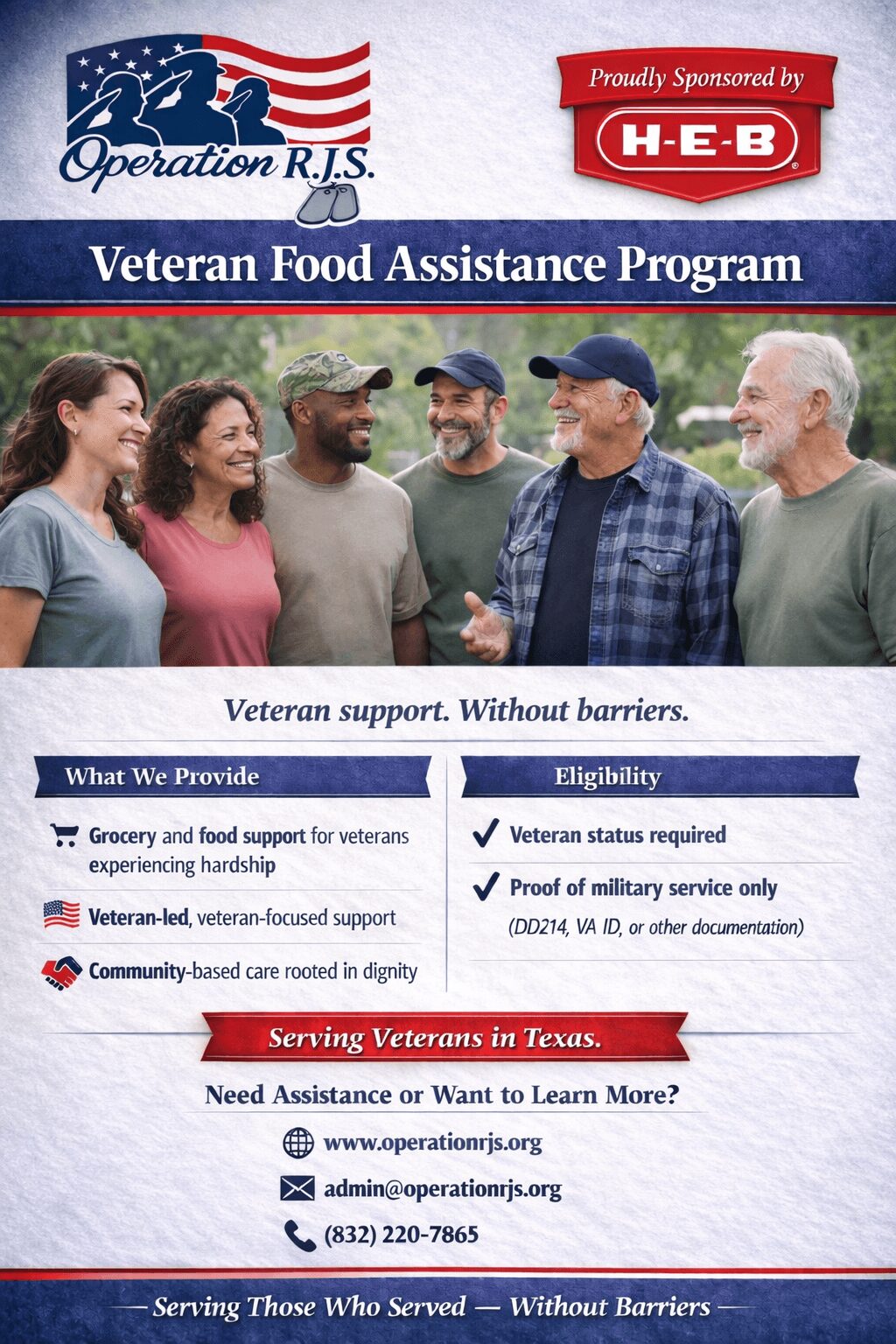
Everything we provide is completely free—no insurance, no VA claims, no payment of any kind. The only requirements are proof of service and a picture ID. That decision was intentional. I’ve seen veterans walk away when the process feels heavier than the pain, and I refuse to let paperwork be the reason someone doesn’t get care.
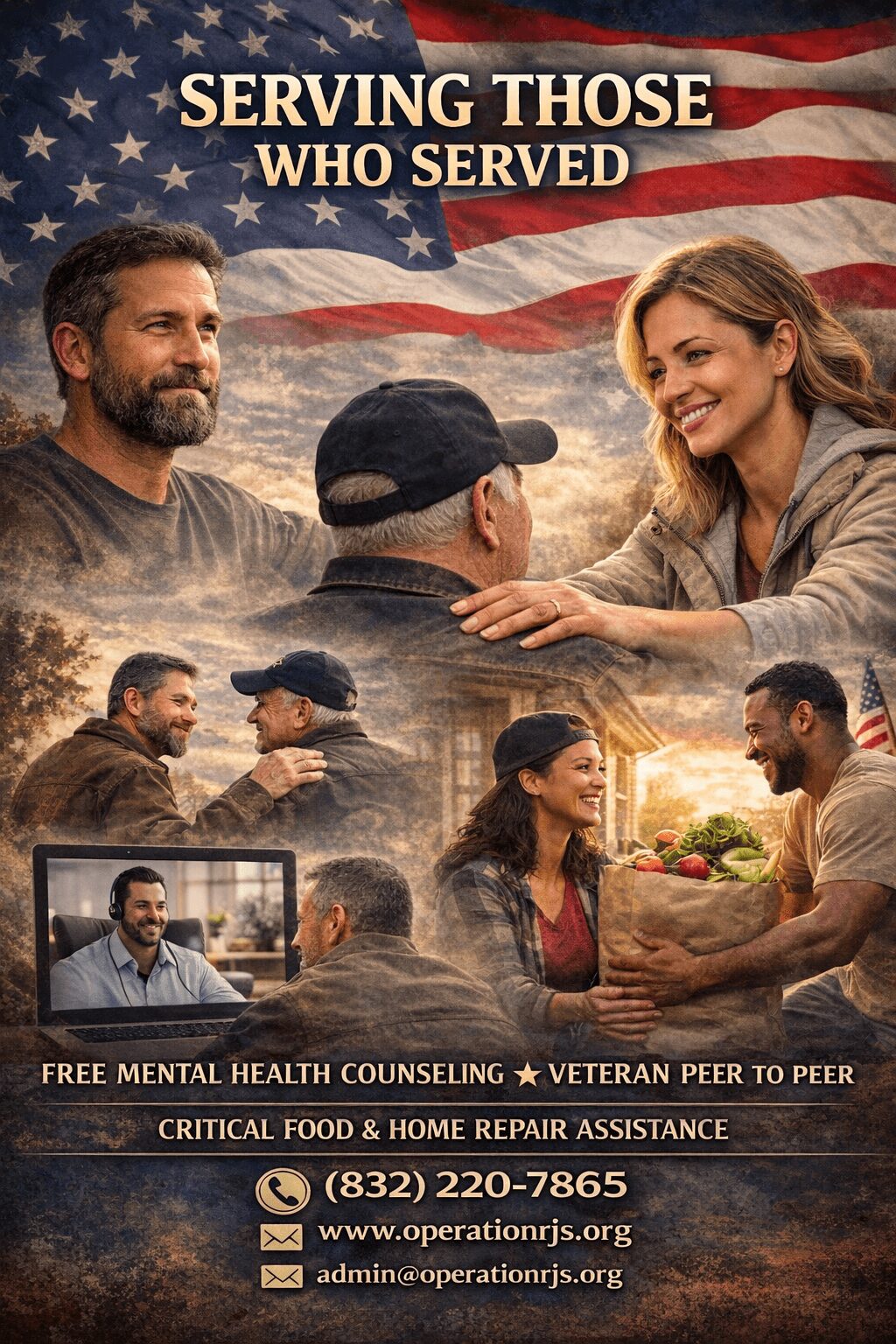
Our mental health counseling is delivered fully remote through telehealth, allowing veterans to receive confidential, professional support from their own homes. We also offer veteran-led peer support, critical food assistance, and emergency home repair assistance—meeting real needs in real time. Some days that looks like a therapy session. Other days it’s groceries on a kitchen table or helping stabilize a home in the Texas heat.
What sets Operation R.J.S. apart is how we show up. We don’t hand veterans a phone number and disappear—we walk beside them. This organization was built by veterans and military families, for veterans, with understanding that comes before paperwork.
While our services reach veterans wherever they are through telehealth, I see Austin as a community built on the same values we stand for—service, compassion, and taking care of neighbors. My goal is to grow relationships here so Central Texas veterans know there is a place they can turn without delay, without cost, and without judgment.
What I’m most proud of brand-wise is that Operation R.J.S. has heart. It isn’t about numbers—it’s about people—honoring my father’s legacy and every veteran who wonders if anyone still sees them.
Serving Those Who Served—Without Barriers. That isn’t just our tagline; it’s our promise.
Any advice for finding a mentor or networking in general?
I used to think networking was about knowing the right people. I’ve learned it’s really about being the right person.
The relationships that have shaped me didn’t come from business cards—they came from showing up consistently, doing what I said I would do, and caring about people beyond what they could offer me. The best mentors in my life weren’t the ones with the biggest titles; they were the ones who saw my potential before I fully saw it myself.
What has worked well for me is leading with honesty instead of performance. I don’t walk into rooms trying to impress—I walk in trying to learn. I ask questions, I listen more than I talk, and I’m not afraid to say, “I don’t know, but I want to understand.” People connect with realness far more than resumes.
I’ve also learned that mentorship isn’t always formal. Sometimes it’s the nurse who teaches you patience, the supervisor who models integrity, or another veteran who reminds you to keep going on hard days. I’ve found mentors by volunteering, by asking for guidance directly, and by simply staying in touch with people whose values I admire.
The biggest lesson for me has been this: don’t network only when you need something. Build relationships when things are quiet. Offer help before you ask for it. Be the kind of person others can rely on.
And if you’re looking for a mentor, don’t wait to feel “ready.” Reach out, be respectful of their time, and be honest about what you hope to learn. Most people who have walked hard roads are willing to help someone else navigate theirs.
Contact Info:
- Website: https://www.operationrjs.org
- Facebook: OperationRJS
- LinkedIn: https://www.linkedin.com/company/operation-r-j-s/?viewAsMember=true