


Today we’d like to introduce you to Greg Cantwell.
Hi Greg, so excited to have you on the platform. So before we get into questions about your work-life, maybe you can bring our readers up to speed on your story and how you got to where you are today?
My name is Greg Cantwell. I was born in Dusseldorf, Germany where I lived for the first 12 years of my life. Then moved to the States where we moved around for a few years then settled down in Potomac, Maryland where I went to high school. After high school I moved to Colorado for College and it was there I landed the job I had been dreaming about since I was a young boy, working in the Airline Industry. I moved around quite a bit again and moved my way up in the industry which took me to California, Colorado again, Virginia, Hawaii, Alaska briefly then back to Hawaii and then to Minnesota where my story starts.
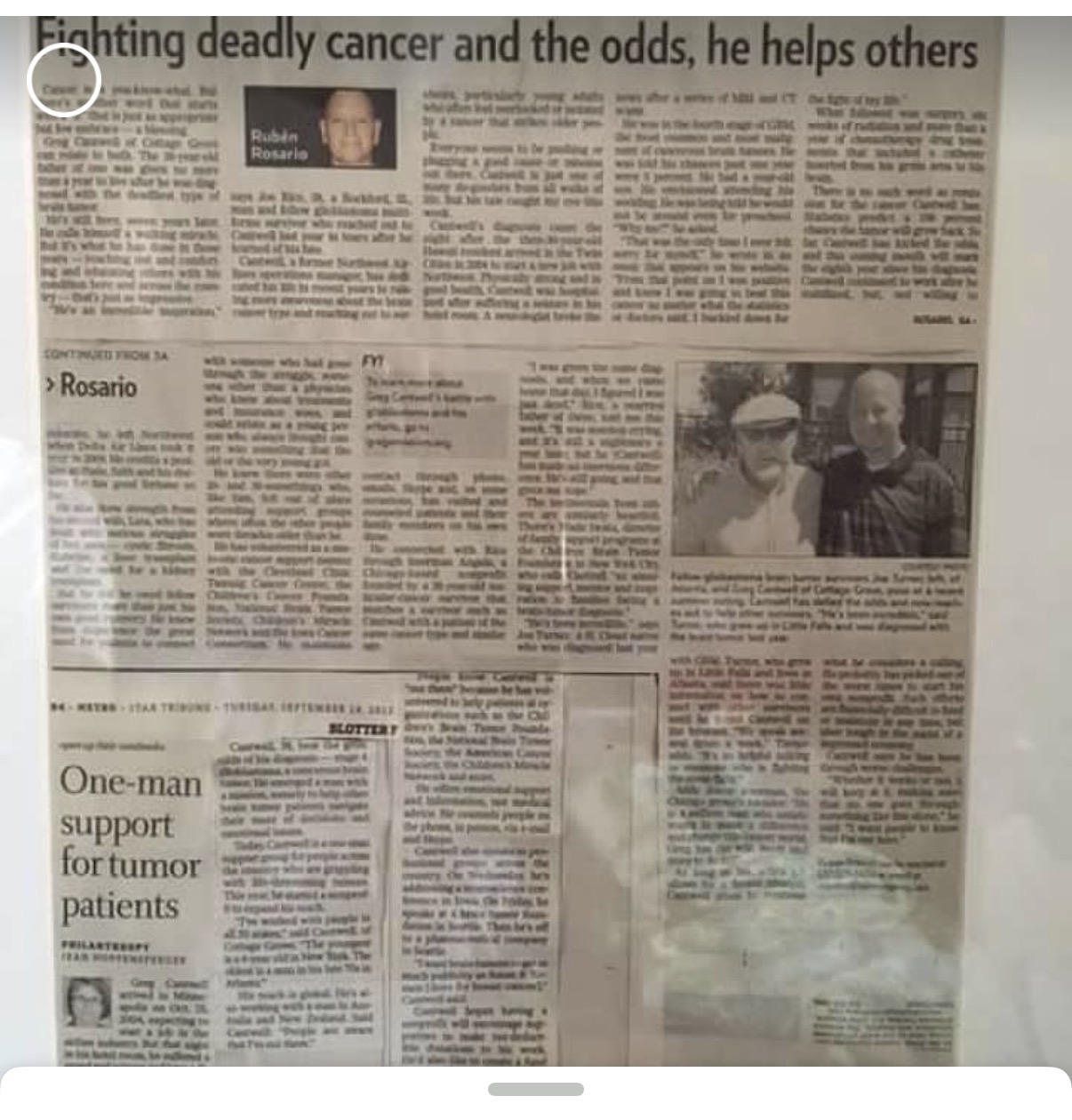
I was 30 years old living in Hawaii with no health issues when I was diagnosed with cancer. I was strong and in good mental and physical condition. On October 28, 2004, my plane had just arrived in Minneapolis, where I would begin my new job with Northwest airlines. I checked into my hotel, went out to eat and went to bed for what I thought would be a good night sleep.
At approximately 11:15pm from what I was told, I awoke, experiencing a grand mal seizure. I couldn’t talk, was barely able to breathe, and was conscious but very confused. I was rushed to the emergency room where the doctors asked me all sorts of questions. The questions were “easy” and I knew I knew the answers, but could not come up with them. I was scared. Why could I not answer these easy questions, but everyone else could? I was given a CT scan and next an MRI. Then they said the doctor was calling in a neurologist from home. I thought to myself, “Why?” “This can’t be that serious, or can it?”
The neurologist finally arrived and delivered the news no one wants to hear. “Greg you have a brain tumor.” Two days later I returned for a biopsy of the tumor. A few days after that, the results were in, it was a Stage IV Glioblastoma. I could tell in the neurologist’s eyes and tone of voice that the chances I would survive were extremely slim. I thought to myself, “Did I hear him right?” “I have a brain tumor?” “Why me?”
That was the only time I ever felt sorry for myself. From that point on I was positive and knew I was going to beat this cancer no matter what the statistics or doctors said. My son Joseph was one year old at the time. I thought to myself, “I have to be here for him.” “I want to see him go to school on his first day, play sports, have his first girlfriend, graduate from high school, get married, etc.” “I have to be here for all that and I am not going to die!” I buckled down for the fight of my life.
I met with my oncologist, who explained I had a 5% chance of surviving one year. He gave me three options for treatment.
1. Have surgery but do nothing to aggressively fight the cancer and enjoy the limited time I had left with minimal medical intervention.
2. Have surgery, do minimal radiation and chemotherapy to hopefully extend my life a year or two.
3. Have surgery and go all out to fight this cancer with everything that medicine had to offer. This option would make me the sickest, require many different treatments but would hopefully give me the best chance of long-term survival.
Given this information, I had a lot to think about. On the positive side, I was strong both mentally and physically and had the will to want to beat this. I decided that I would take option three and was scheduled for surgery two weeks later.
I was scared. I had never had any type of surgery before and now I was having a craniotomy. I had no clue what to expect. What would it feel like falling asleep? Would I have complications during surgery? How would I feel when I wake up? Would I remember anything? All these questions and uncertainties!
The big day finally arrived. Scared and with tears in my eyes, my parents and friends said that they would see me when I got out of surgery and I was wheeled down the hallway. I don’t even remember getting to the operating room. I was told afterward that the neurosurgeon told my family and friends that he didn’t know what to expect; meaning, would I be able to talk? Feed myself? Or even walk?
The first person I confided in was God. I prayed that he would give me the strength to beat this diagnosis. I was just starting a new job and had to tell them that I wouldn’t be able to work for at least a year. They were supportive and promised to keep my position open for me when I return and to just focus on my health. I told my family and friends about my diagnosis and I immediately received support. My family took turns flying in to help out. My brother Chris uprooted his family where they lived in Alexandria, VA and moved them to the Minneapolis area to be there for me. And my friend Jeff was always a support system and continues to be there for me when I need him.
I began the road to “Winning The Fight Of My Life” . I completed the six weeks of radiation in conjunction with oral Temodar. Let me back up for a second. At the time of surgery my neurosurgeon was proactive and inserted five Gliadel Wafers into the resected tumor site. These wafers were the size of a dime and are designed to provide direct chemotherapy to the site and dissolve over a two and a half week period. After a four week rest period I began an intense cocktail of chemotherapy which was administered inpatient over a three day period. The cocktail consisted of Cytoxin, Etoposide, and Intra Arterial Carboplatin. This treatment would be once a month for a twelve month period finishing in Feb. 2006. Since then I have had routine MRI’s ever three months and have had no recurrence. In 2014 I decided to do my MRI’s every 4 months. This will be the longest that I will consider going in between MRI’s just know what this beast has the potential to do.
I made it through the treatments to my surprise very well with very little side effects and didn’t lose any weight which I initially attributed to the steroids during the first month of so during radiation. I never lost my appetite however did lose my hair which to this day I keep short. I guess you could say that the look grew on me. In Feb. 2006 I went back to work full time until I had a seizure driving home from work in 2008. I immediately went in for an MRI, which showed no new tumor growth and my anti-seizure medications were increased. Since my career for the past 12 years has been in an airline management role, which required me to drive on a daily basis I was forced to resign .
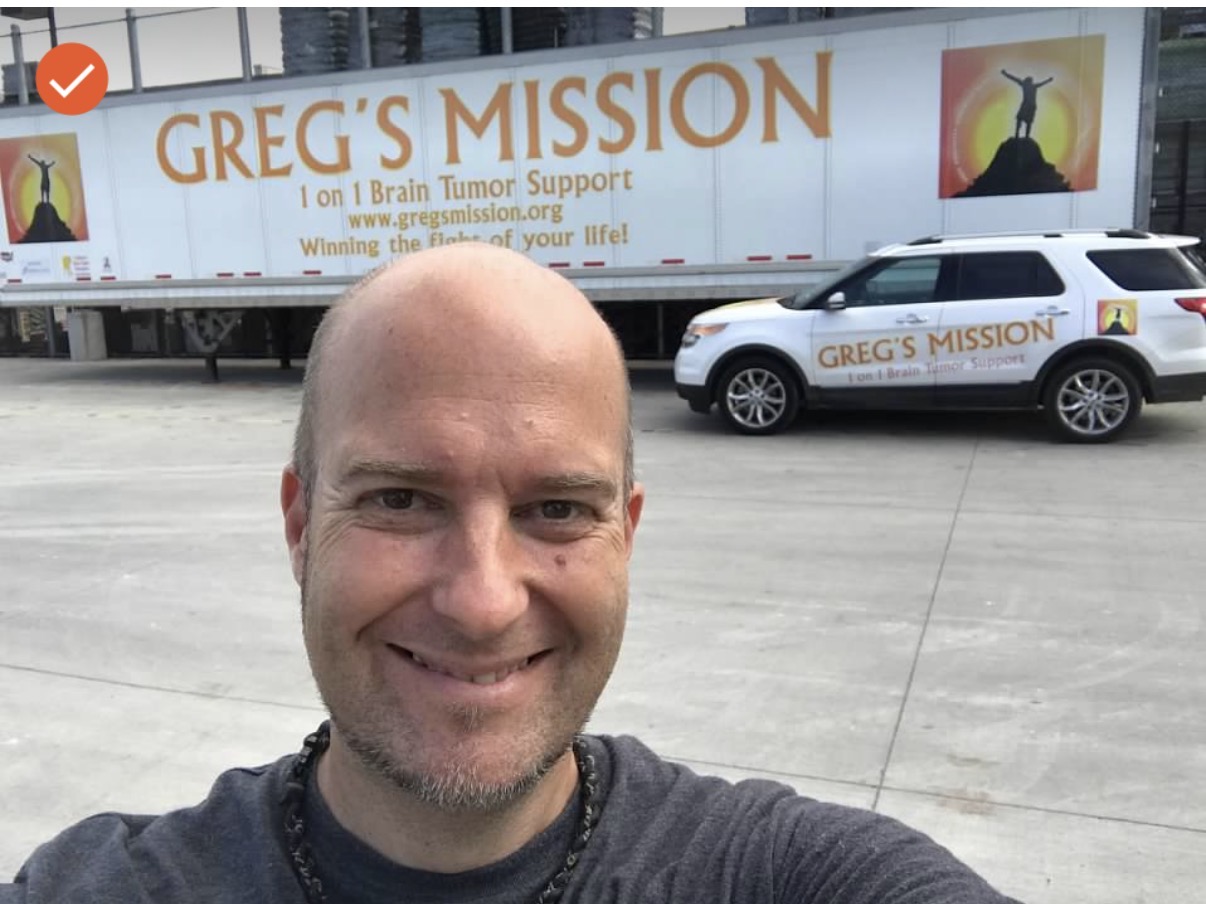
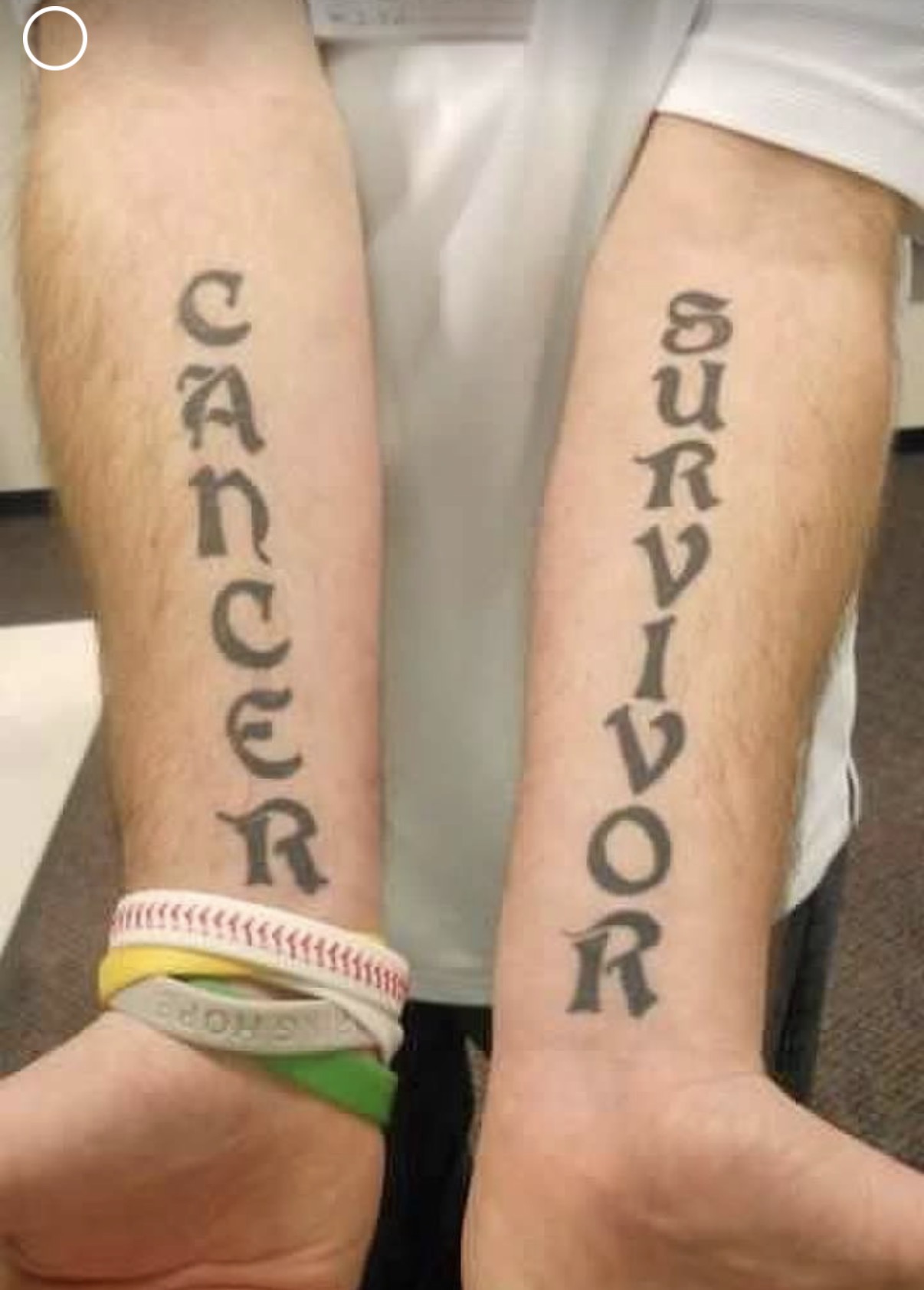
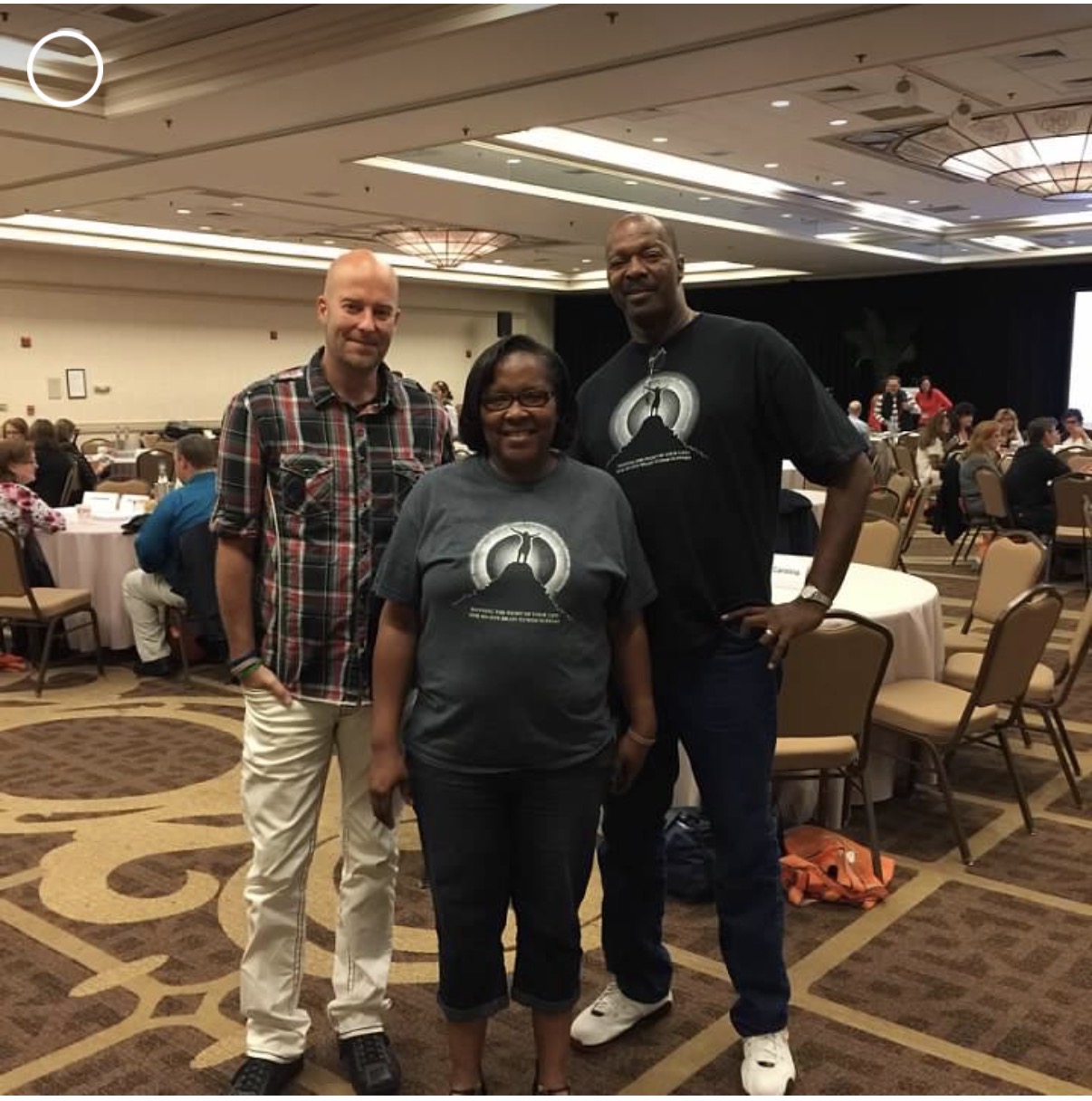
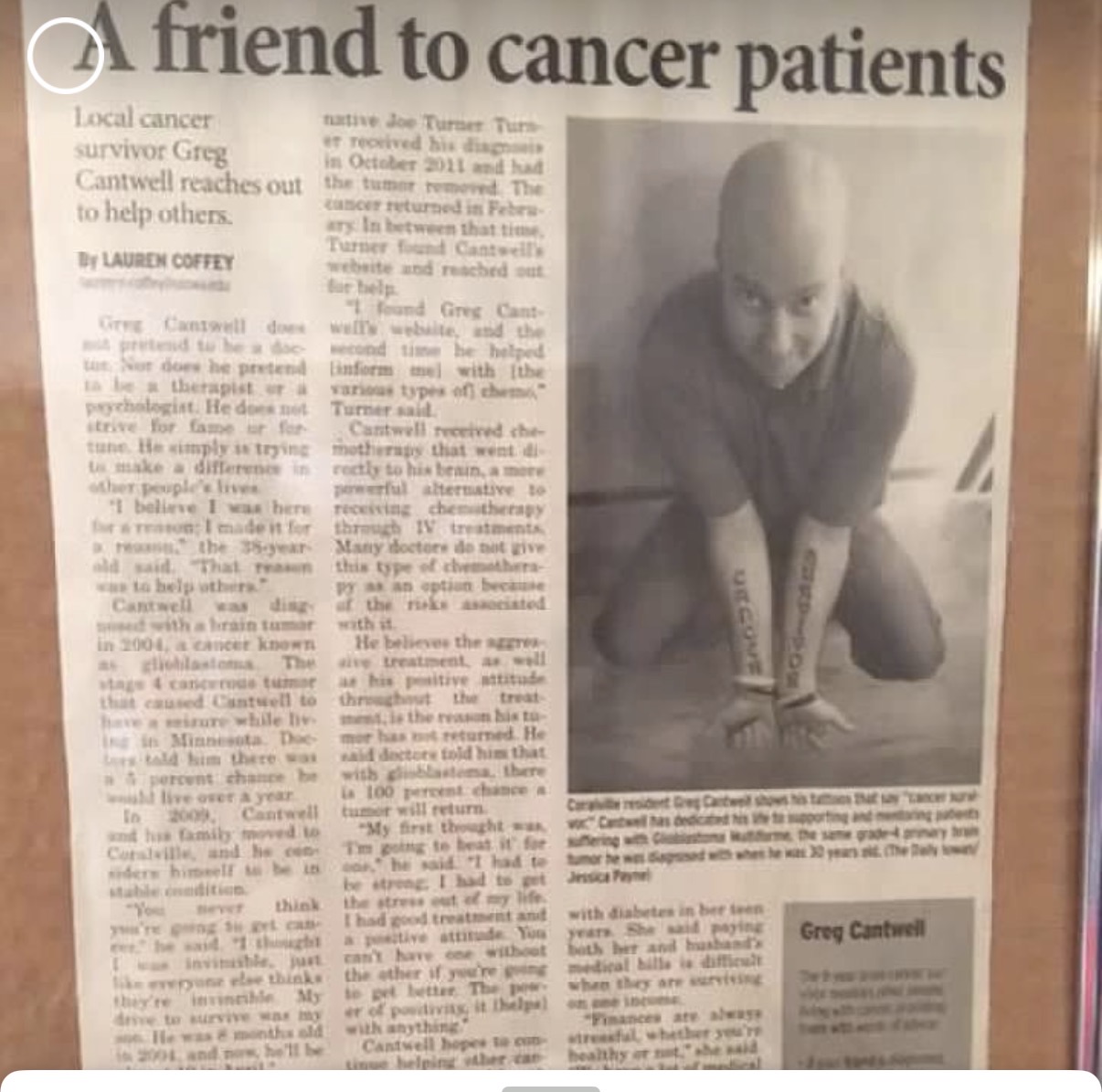
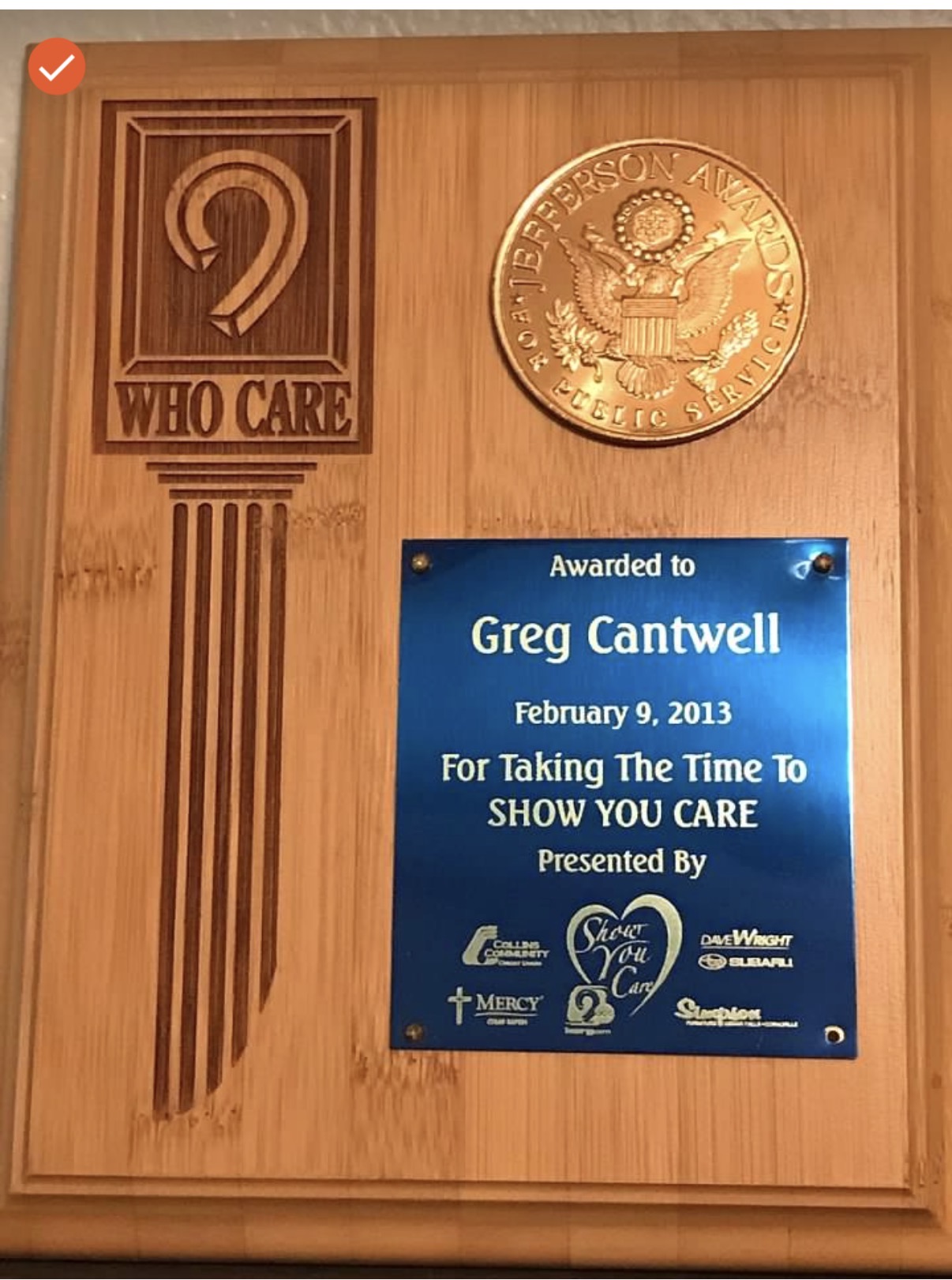
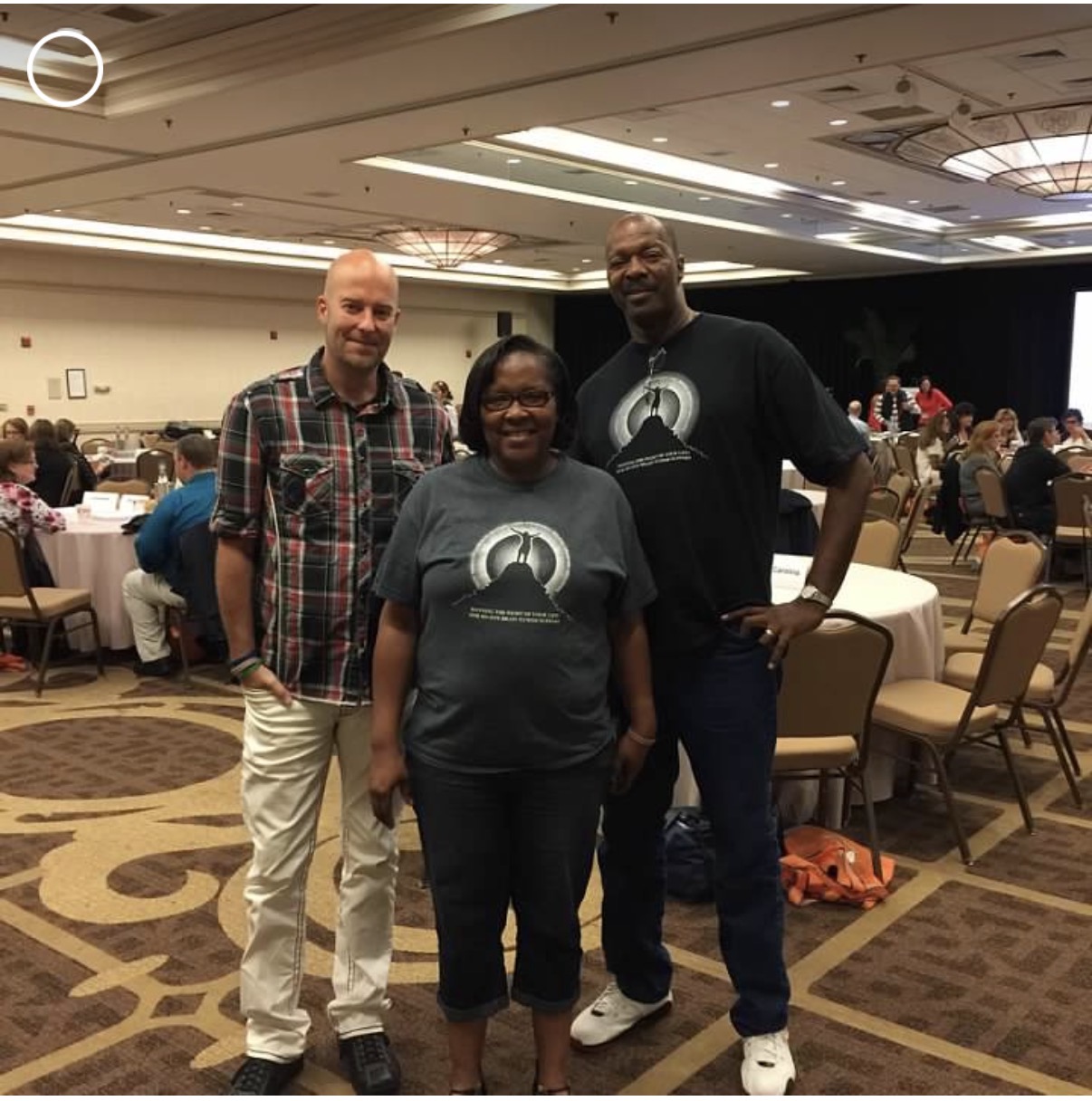
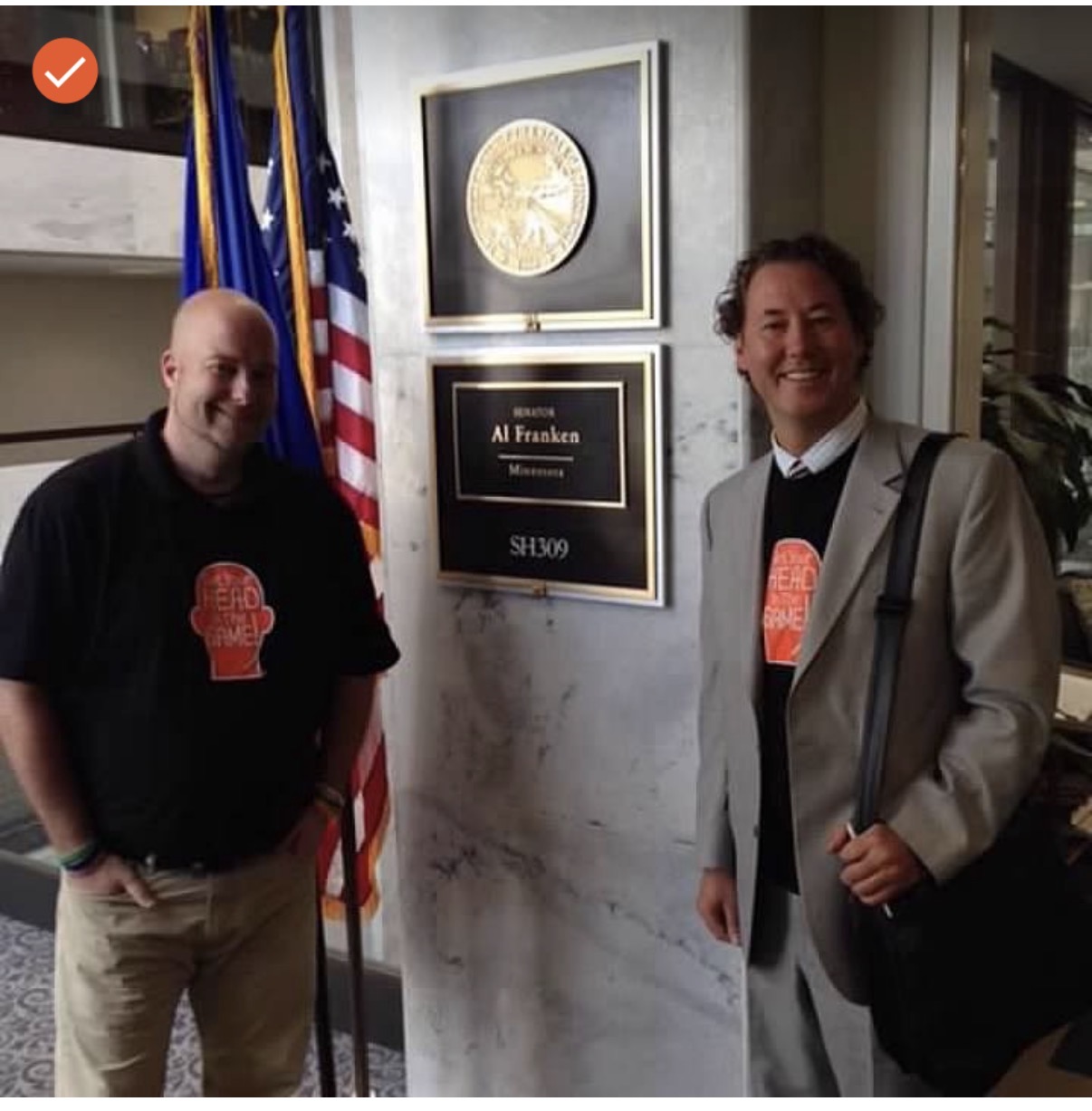
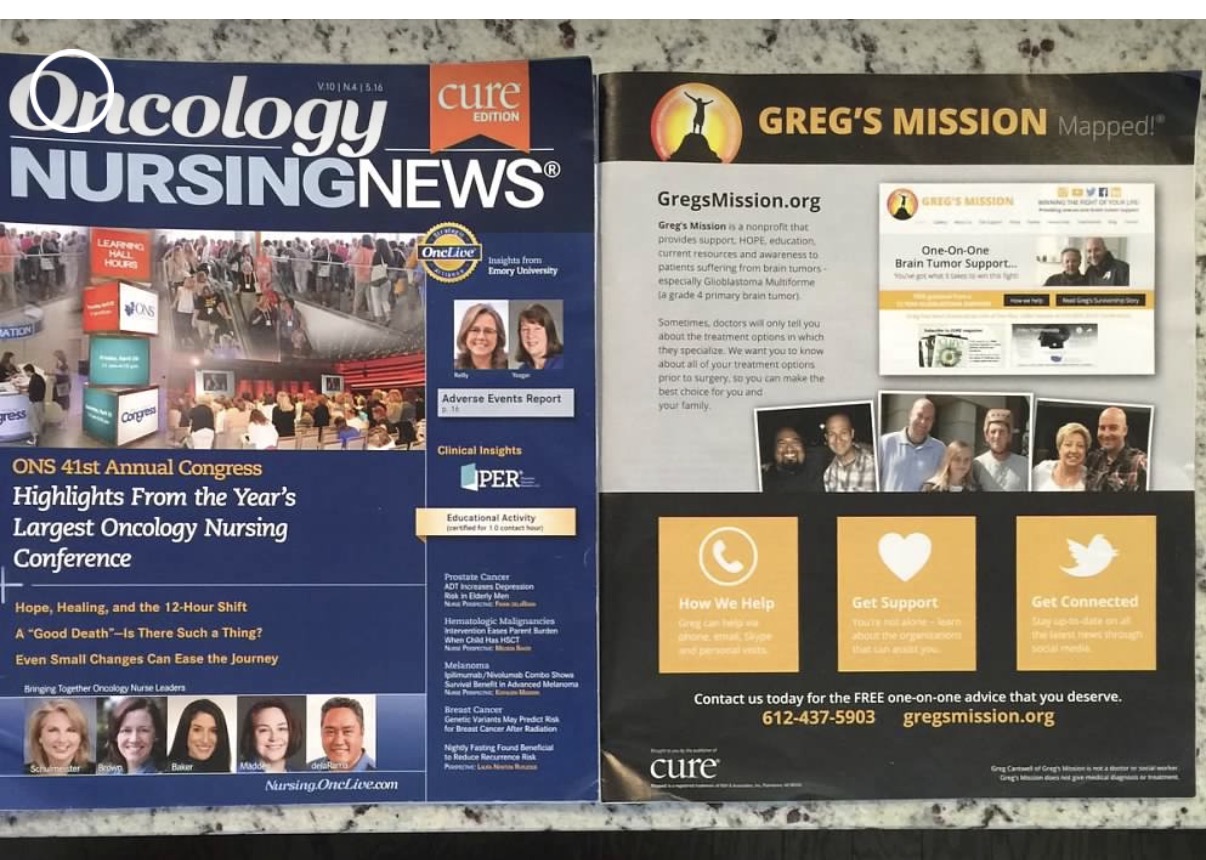
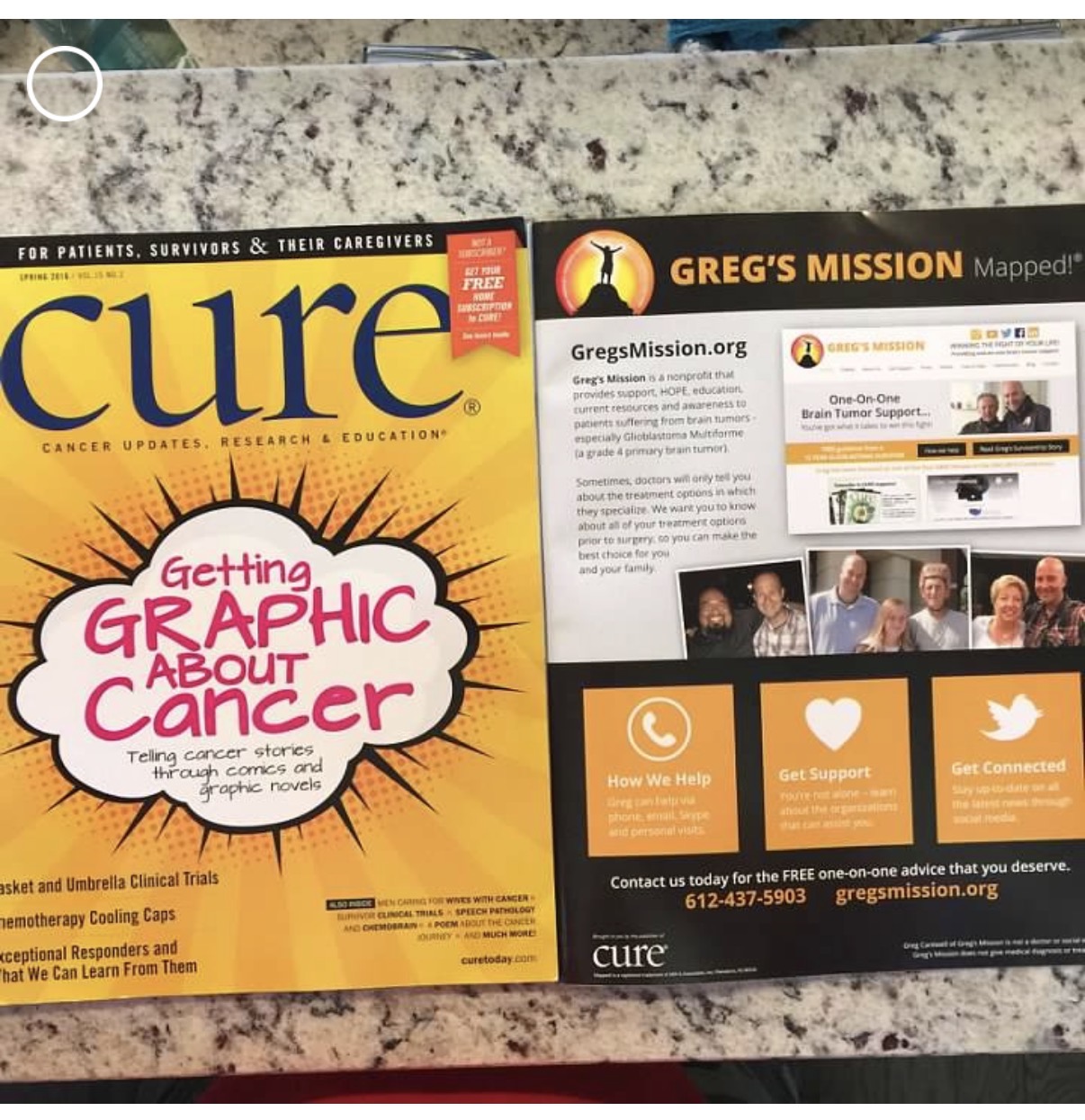
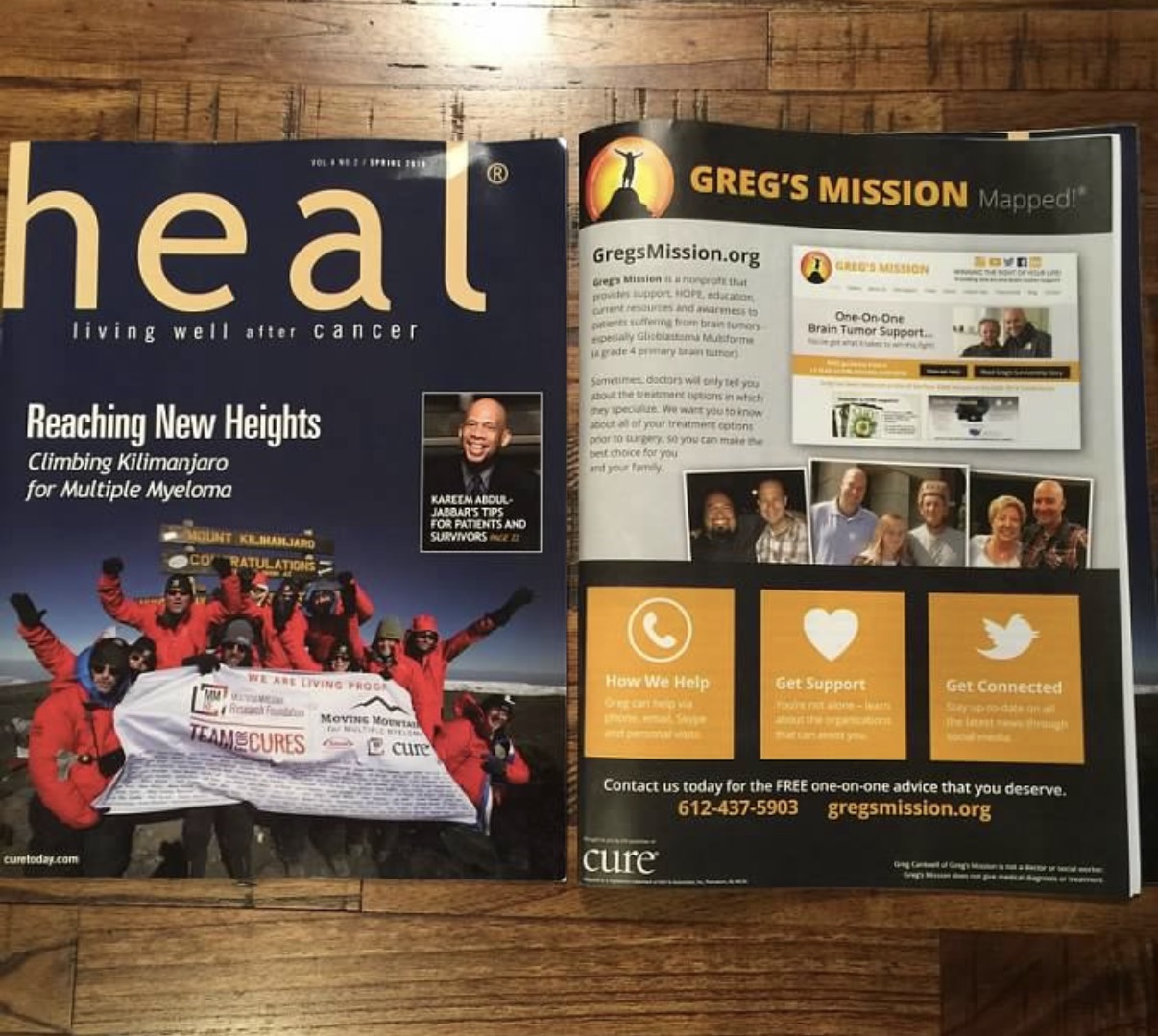
Losing my job was a blessing in disguise it gave me the opportunity to volunteer at cancer agencies throughout the United States providing One on One Brain cancer support. I even started my own website to provide help to those newly diagnosed their families and caregivers. I have had over 35,000 hits at me site and have been able to provide support through email, Skype, phone and in person to people from all over the world with nowhere else to turn. I also travel throughout the country and share my “cancer survivor-turned-caregiver” experience with various audiences.
As I think back over the years prior to my diagnosis I remember having migraines, which started in high school. They would only happen 2 or 3 times a year but were very severe. I could tell they were coming on because my tongue would go numb the starting with me fingertips then all the way up my arms. My sight would go blurry and I would be affected by the light. In order to feel better I would take a hot bath, but then I would get seasick and begin vomiting. I went to the doctor many times never once did he bring up an MRI. Knowing what I know now I would definitely advocate for myself and get an MRI.
When I had reached my 5 year survival mark I decided to see how many people out there were going without support from a long-term survivor. I did a lot of market research and found that nobody was providing this one on one support.. I started a website to track how many people around the world would be interested in a support. I had 60,000 hits within the first three months. That told me that this type of support was desperately needed.. I know what I didn’t have when I was diagnosed and that was another survivor to talk to, so I made it my mission to let everybody know that they are not alone, and I am available to talk to anybody diagnosed with a GBM.
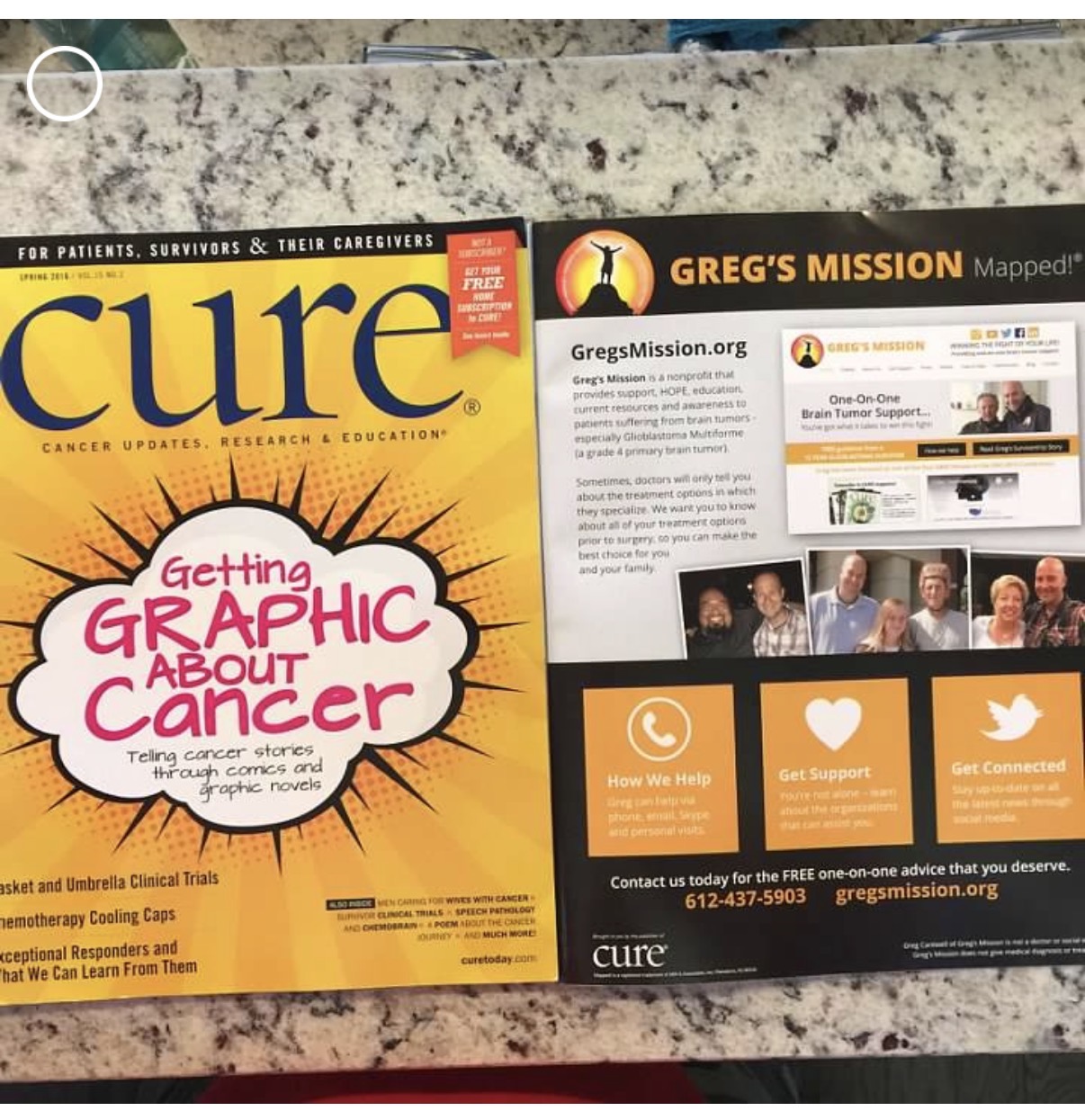
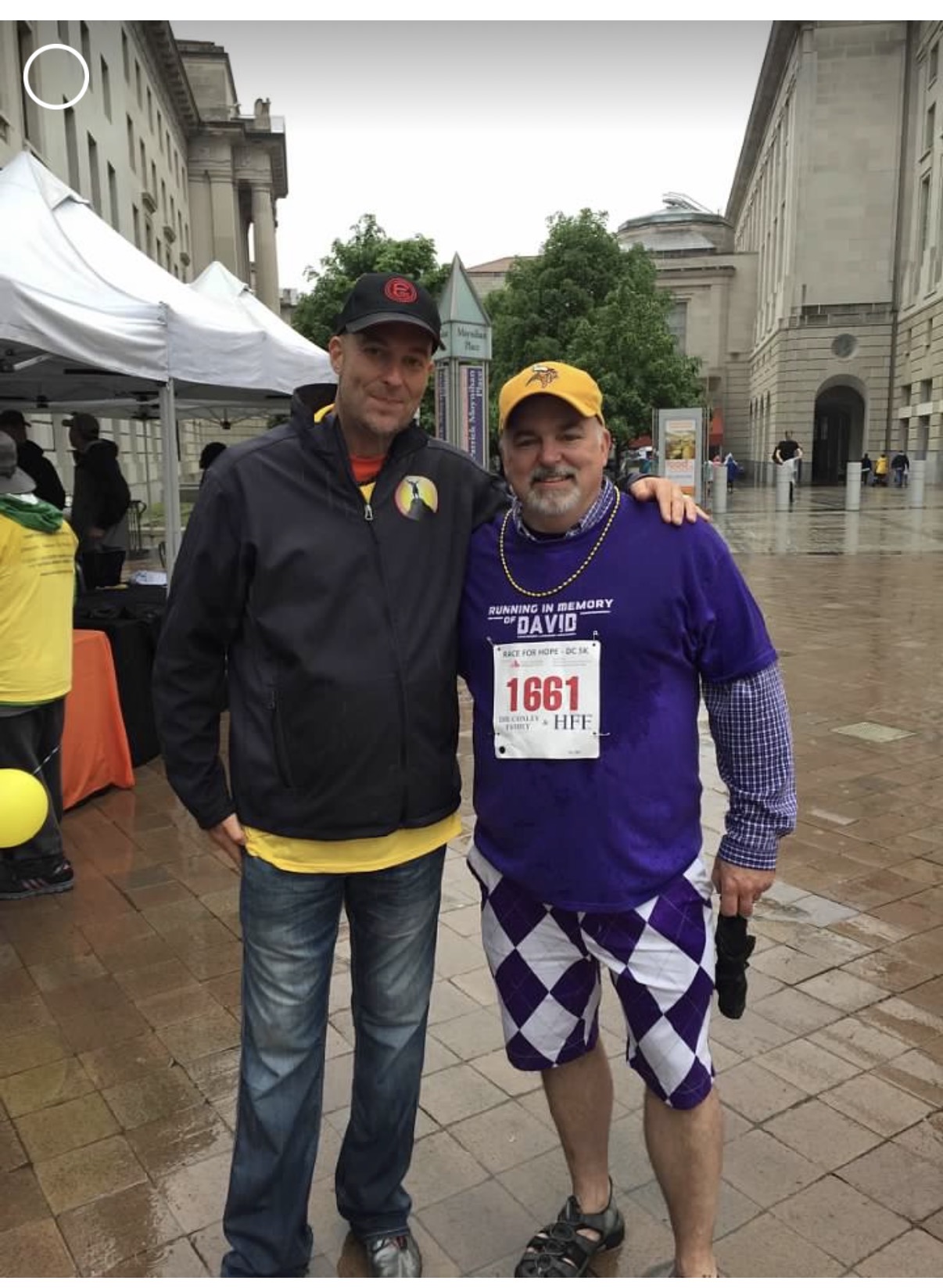
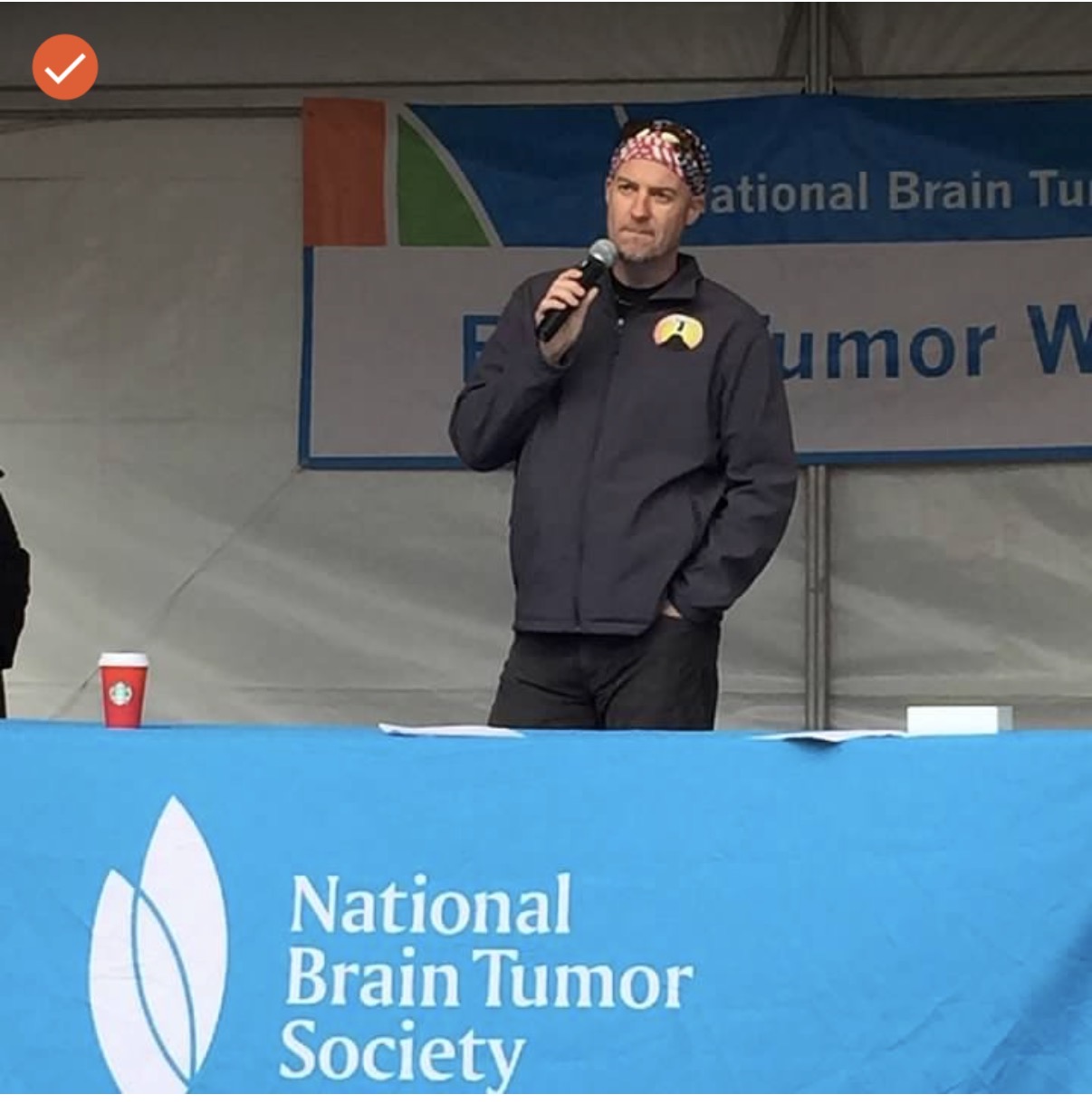
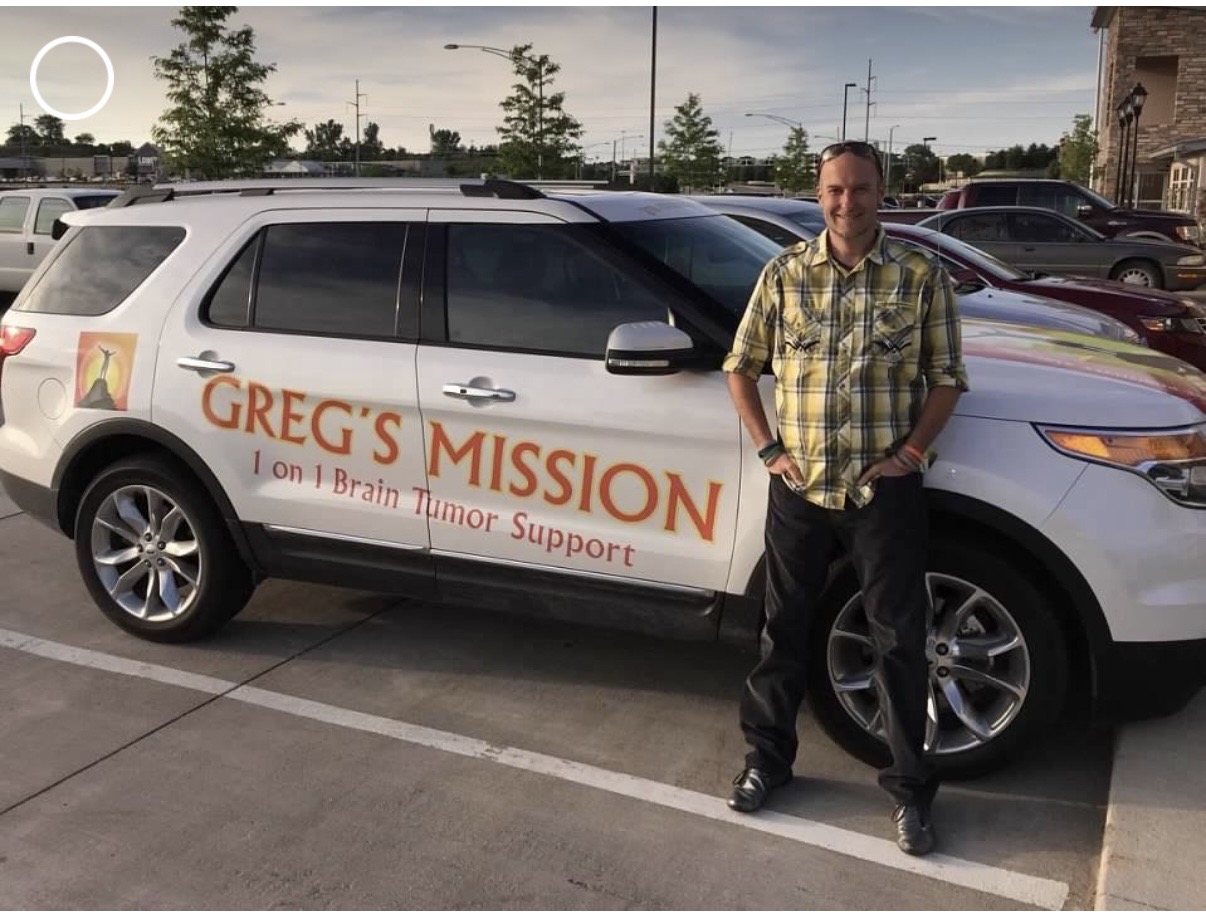
It has been 22 years since my diagnosis. My scans have showed no new tumor activity. I have dedicated my life to helping and educating those going through a similar diagnosis as well as their families and caregivers. There is so much that a person like myself can do to help. I volunteer at a number of cancer organizations and Hospital’s some of these are MD Anderson, Cleveland Clinic Taussig Cancer Center, The Children’s Brain Tumor Foundation, National Brain Tumor Society and Imerman Angels. I started my own website 17 years ago www.survivorandcaregiver.com which has now become a 501c3 non-profit called Greg’s Misson www.gregsmission.org I invite you all to take a look at it and forward it on to anyone you know. No one should be alone! To date I have helped almost 10,000 patients, families and caregivers.
Here is a quote which I came up with:
“Staying positive can be hard at times, but you have to focus on what you believe your outcome will be. I am going to kick cancer’s butt! Stay strong, get rest when you need it and call on your friends and family for support. To admit that you need help is not a sign of weakness. You are not a statistic! You should be treated as a person not as a diagnosis.”
Can you talk to us a bit about the challenges and lessons you’ve learned along the way. Looking back would you say it’s been easy or smooth in retrospect?
One of my biggest struggles and frustration is that my nonprofit Greg’s Mission has not been self sustaining. Many people or companies donate to research and development and forget about the patient who’s going through this terrible disease right now. I have been lucky to get a couple of grants over the years and donations from family members and friends to continue my passion of providing. The support that the patients families and caregivers need and are looking for.
Thanks for sharing that. So, maybe next you can tell us a bit more about your work?
My long-term career and a dream of mine was to be an airline management. I was lucky enough to have that career in the airline and cargo management industry for 27 years..
While working, I ran my nonprofit since its formation in 2012.
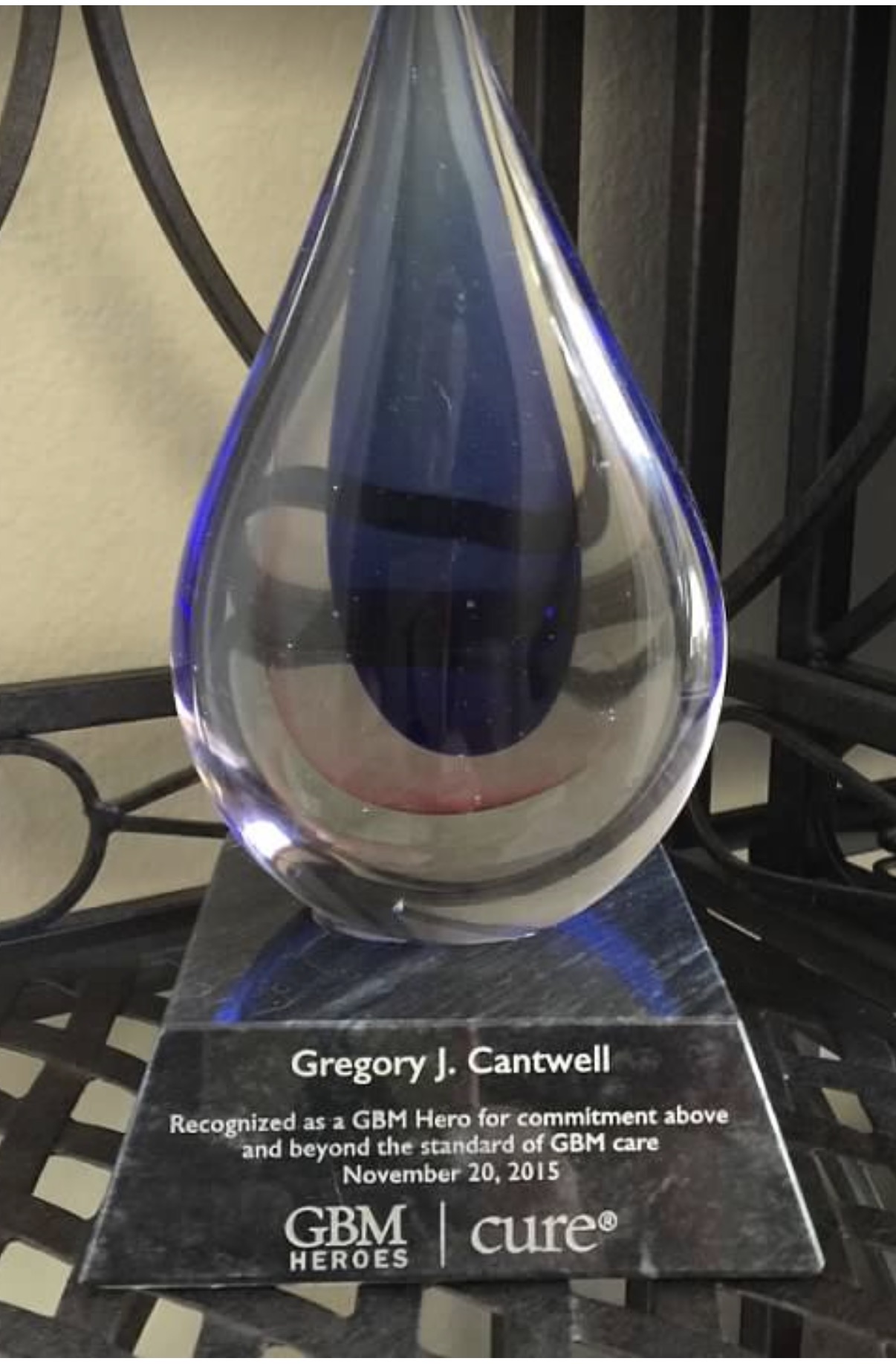
I am most proud of being able to support these patients, families and caregivers, being an inspirational speaker. And being a long-term survivor of a GBM stage four brain cancer, which only has a survival rate of 5% surviving 18 months. I believe I survived for a reason and I’m doing the work that God has wanted me to do..
If you had to, what characteristic of yours would you give the most credit to?
The most important qualities that I feel are most important to my success both in my career and being able to support patients are being positive, striving to do my best, being a go-getter and not accepting no for an answer, having been diagnosed with this disease allowed me to become “an expert” in providing support hope current resource resources, awareness, education, and advocacy for patient’s families and caregivers who are going through this disease now. Also overcoming my fear of speaking and becoming an inspirational speaker for universities Cancer center conferences, pharmaceutical companies, and support groups. Unless a doctor, nurse or social worker has been diagnosed with this before. I have a unique ability to talk to patients on a level of being a long-term survivor, knowing what going through surgery, radiation and treatment feel like even though everybody will have their own journey. I am able to walk along that journey with them.
Contact Info:
- Website: https://www.gregsmission.org
- Facebook: Greg’s Mission
- Youtube: https://youtube.com/@gregcantwell2583?si=IrpFjtNyqPWklSsc