


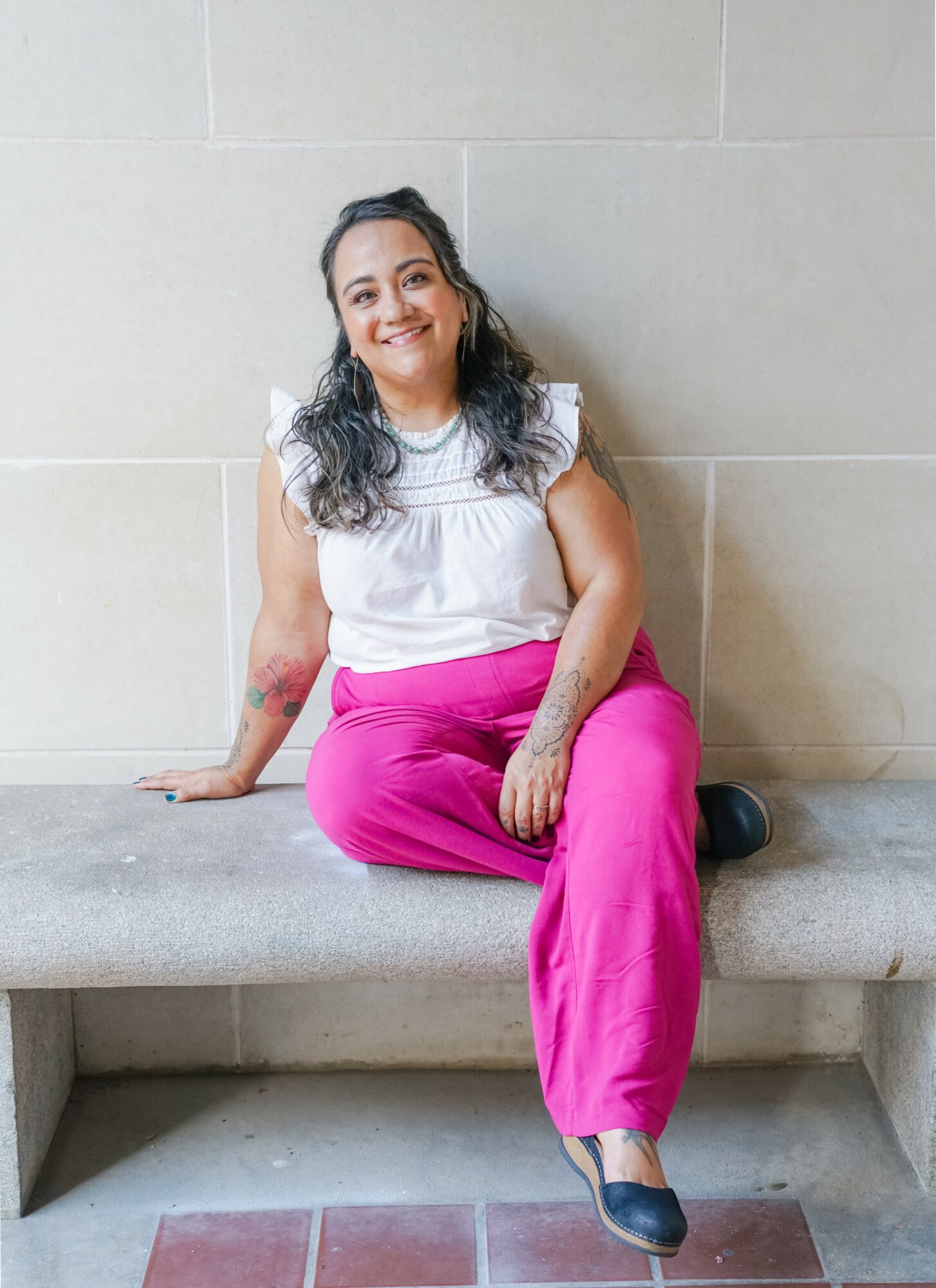
Today we’d like to introduce you to Monica Jurado Kelly.
Alright, so thank you so much for sharing your story and insight with our readers. To kick things off, can you tell us a bit about how you got started?
It took me about five years after high school to figure out what I wanted to study in college. Right after graduating, I enrolled as a vocal music performance major because I loved being surrounded by music. But after three semesters, I realized I wasn’t ready for college and didn’t have a clear sense of what career I wanted.
During that time, I worked in retail and later as an instructional assistant in schools. That job ended up being pivotal for me. I discovered how much I loved working with people—especially teenagers—and initially thought I might become a teacher, like my mom.
When I returned to school and took Psychology 101 at community college, something clicked. That class sparked a deep curiosity about how we function and why we struggle. At the same time, in my job at a charter school serving primarily lower-income students, I noticed how much was happening outside of school that deeply impacted students’ ability to succeed in the classroom. I became curious about how to address those larger systemic challenges, and that curiosity led me to social work.
Social work felt like the perfect blend of advocacy, community care, and direct support for people. In many ways, it was also part of my family legacy. My grandmother worked in social services in our small town in Kansas. She helped immigrants navigate residency and citizenship documentation while also helping establish a food and clothing bank and a clinic for uninsured community members. Watching her showed me what it looked like to care for people and communities in meaningful, practical ways.
I earned both my BSW and MSW from Arizona State University with the intention of working with children, youth, and families—particularly in foster care and adoption. My goal was to support foster and adoptive parents so they could provide stable, nurturing homes for the children in their care.
After moving to Texas, I realized clinical social work had a much larger presence in the job market than it had in Arizona. While working at a foster and adoption agency, I pursued my clinical license as another way to support families. But like many people working in social services, I eventually experienced significant burnout. The work was meaningful, but the combination of high demand, limited resources, and low pay made it difficult to sustain.
At one point, I seriously considered leaving the profession altogether. Around that time, I learned about an opening to become a school-based therapist with Leander ISD. That opportunity honestly saved my career. It allowed me to continue meaningful work with children and families while providing stability, work-life balance, and the chance to collaborate with an incredible team of clinical social workers.
I spent seven years there and grew tremendously as both a social worker and therapist. But over time, I realized I wanted to do deeper work with people than the school setting allowed. Just as therapy would begin to reach more meaningful layers, our time-limited services would end.
In 2019, I opened my private practice part-time, and in 2023 I transitioned to full-time private practice.
Today I primarily work with adults who are part of queer, BIPOC, and immigrant communities—often people who appear highly successful and put together on the outside but are struggling internally. Many of my clients have already done therapy or personal growth work but still find themselves stuck in patterns of burnout, over-functioning, and people-pleasing. I love helping people untangle those long-standing patterns so they can build lives that feel more sustainable, authentic, and fulfilling. In many ways, the work I do now reflects the same curiosity that first drew me to social work—understanding the larger forces that shape our lives and helping people find new ways forward.
I’m sure it wasn’t obstacle-free, but would you say the journey has been fairly smooth so far?
Not at all. One of my earliest struggles was realizing that I wasn’t ready for college when I first started. Growing up, I had always been told that college was the gateway to a successful life, so it felt like the only path available. When I stepped away after realizing I didn’t know what I wanted to do, it felt incredibly painful and disorienting.
School had always been a place where I excelled, so suddenly feeling lost and unsure of myself was difficult. For a long time, I carried a sense of being “behind” in life. I watched people who graduated on a traditional timeline move ahead in their careers and wondered if I had somehow failed.
Over time, I learned that there really is no such thing as being behind. We all arrive at different milestones in our own time. That lesson took years to fully internalize, but it’s one I now carry deeply.
Another major challenge was confronting the realities of working in social services. In school, we talk about burnout and compassion fatigue frequently, but the profession often frames low pay and difficult conditions as something that should be offset by the intrinsic rewards of the work.
The truth is that mindset can be harmful. It can become an excuse for underfunding social services and expecting providers to carry enormous emotional and professional burdens while being underpaid. Early in my career, I was making less than $40,000 a year despite having both undergraduate and graduate degrees.
That experience almost pushed me out of the field entirely. I had internalized the idea that asking for financial sustainability meant I wasn’t committed enough to the work. It took time to challenge that belief and realize that caring professionals deserve sustainable careers too.
Thanks – so what else should our readers know about your work and what you’re currently focused on?
I’m a clinical social worker and psychotherapist and the owner of a solo private practice. I love working with adults who are part of BIPOC, queer, and immigrant communities—often high achievers who look like they have everything together from the outside but are struggling internally.
Many of the people I work with carry deep patterns of people-pleasing, perfectionism, and burnout. They often feel guilt for wanting rest, struggle to set boundaries without feeling like they’re betraying their family’s sacrifices, and carry a deep fear of disappointing others.
My work goes beyond surface-level coping tools. I focus on helping people understand where these patterns came from and how they were shaped by family dynamics, cultural expectations, and systemic pressures. From there, we work together to untangle those patterns and create new ways of relating to themselves and their lives. Many of the people who find their way to my practice have already done therapy or a lot of personal growth work, but still feel like something isn’t fully shifting—and they’re ready to go deeper.
In addition to working with clients, I’m also a clinical supervisor for social workers who are working toward becoming licensed clinicians. I truly love mentoring early-career social workers and helping them build careers that are sustainable and aligned with their values.
In many ways, I try to be the kind of supervisor I wish I had earlier in my career—someone who helps new clinicians navigate the field with more support and guidance than many of us received.
I’m also proud of building a successful private practice, especially since entrepreneurship was never something I imagined for myself. Like many therapists, I had to learn business and marketing skills that were never taught in graduate school. I sought out values-aligned business education and support specifically for therapists and gradually built something that reflects both my professional values and the communities I care deeply about serving.
Clinically, I’m trained in EMDR and will complete my Level 1 training in Internal Family Systems (IFS) in 2026. My work is deeply trauma-conscious and systems-oriented, meaning I’m always looking at the broader contexts that shape our experiences.
Do you any memories from childhood that you can share with us?
One of them is performing in Ballet Folklórico. I loved dancing and performing in front of audiences, but even more than that, it connected me to my cultural roots and ancestry. It helped me develop confidence and courage at a young age.
I also loved riding my bike as a kid. I grew up in the 80s and 90s when kids had a lot of freedom to roam. I would ride all over the neighborhood imagining myself as characters from books and movies or dreaming about places I wanted to see one day. It gave me a strong sense of independence and possibility.
Some of my warmest memories are quieter ones with my grandmother. If I got sick at school, she would pick me up and settle me on the couch with 7-Up or tea while she worked at her typewriter in the kitchen with the radio playing. I remember grilled cheese and tomato soup, feeling cozy and cared for while she worked nearby.
I also loved Halloween. My mom and grandmother both loved the holiday, and our costumes were always homemade. My mom would spend weeks sewing and designing costumes for my sister and me while my grandmother decorated the house and prepared candy bags for trick-or-treaters. Those traditions are some of my happiest childhood memories.
Pricing:
- Individual Therapy 60-minute session: $180
- Individual Therapy 90-minute session: $270
- Therapy Intensives Half-day intensive: $1,450
- Therapy Intensives Full-day intensive: $2000
- Therapy Intensives Two-day intensive: $2350
Contact Info:
- Website: https://www.ascendcounselingwellness.com/
- Facebook: https://www.facebook.com/p/Ascend-Counseling-and-Wellness-100077356453249/
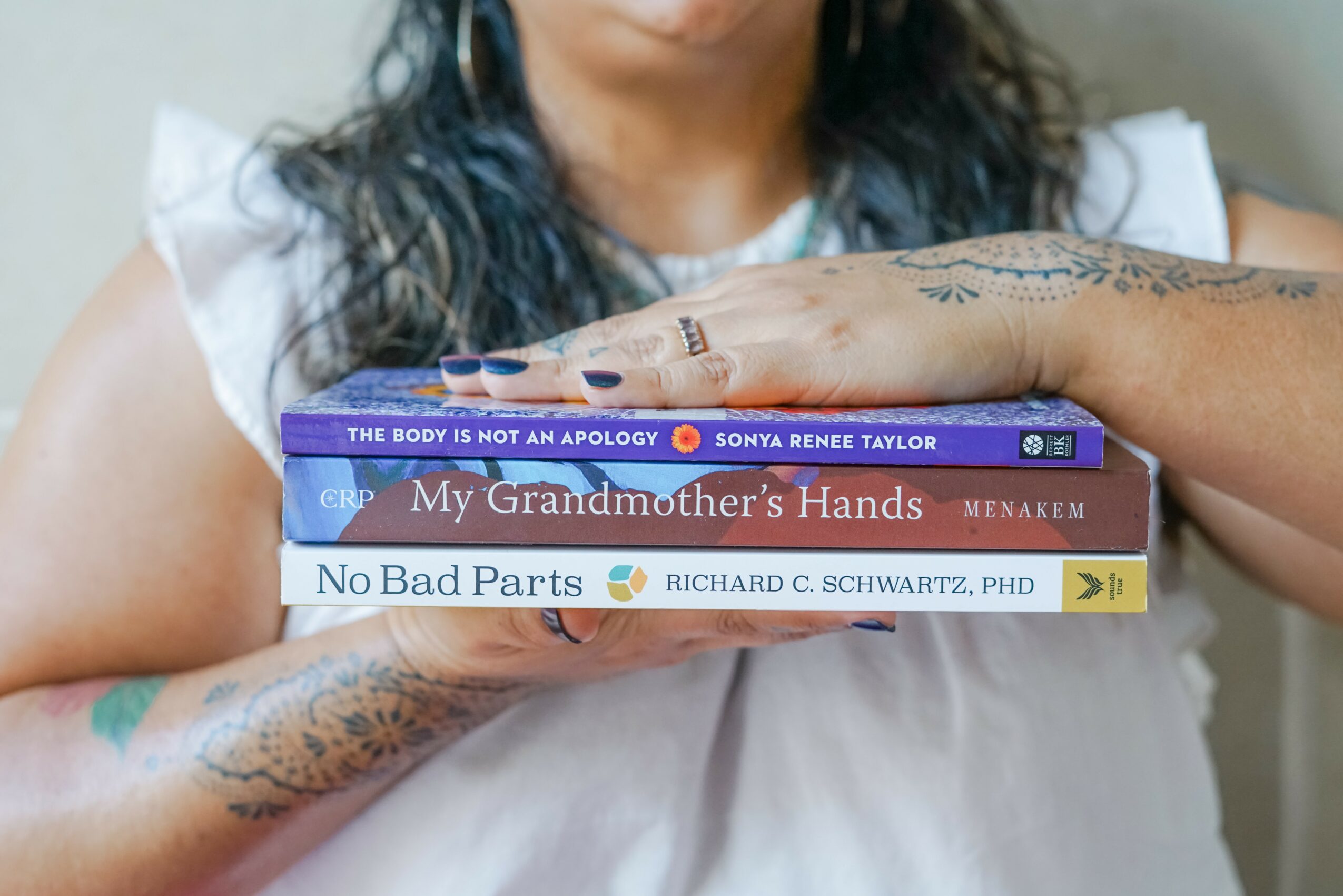


Image Credits
Headshot and photo of hands holding books: Sarah Byrd
All other photos taken & created by me.