



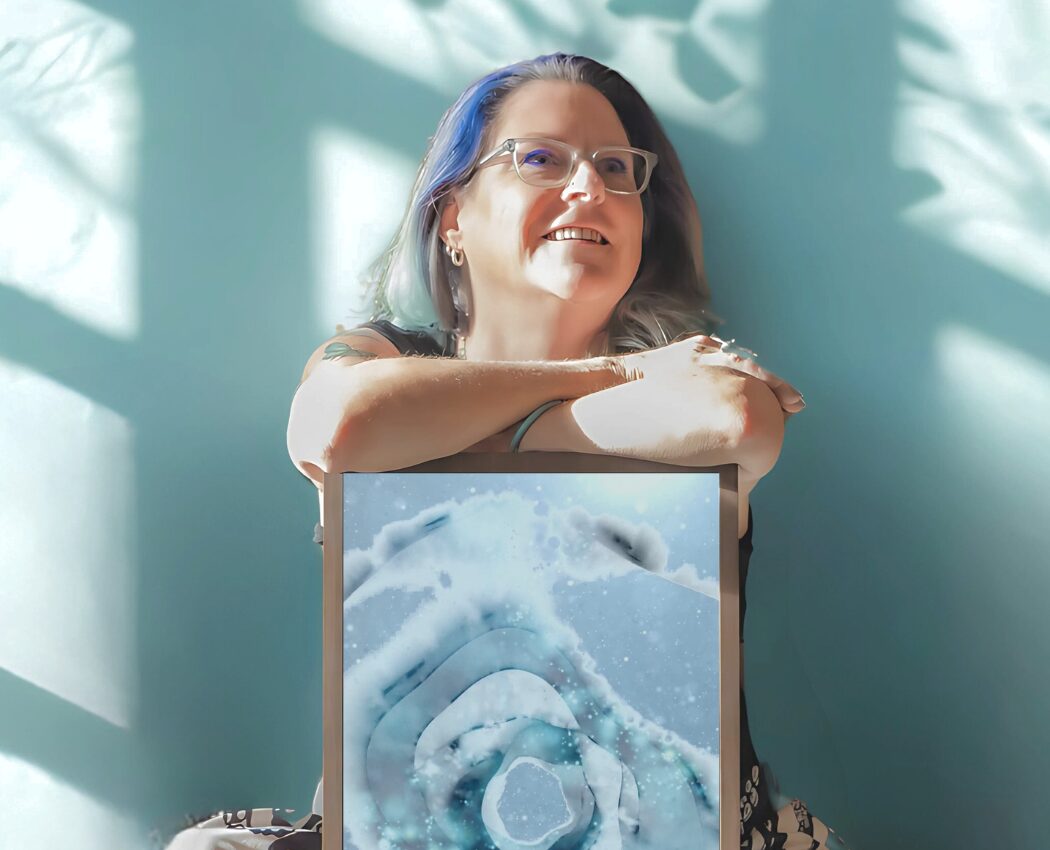
Today we’d like to introduce you to L. Dolphin Brown.
Hi L. Dolphin, so excited to have you with us today. What can you tell us about your story?
I didn’t set out to build a career in digital art — I signed up for a video elective in eighth grade and became fascinated by moving image and how color and motion could shift the emotional temperature of a room. That fascination never left.
I earned my BFA from SCAD and spent years in professional video production. The technical foundation was invaluable, but over time I felt disconnected from the pace of commercial media. Projects moved fast and disappeared just as quickly. I kept wondering what would happen if moving image were treated with the same permanence as painting.
The shift came when someone purchased one of my early works to live with in their home. Until then, I wasn’t sure whether people would see digital work as something lasting. That moment clarified everything. The work didn’t need mass distribution to have value — it could be placed, collected, and lived with.
Since then, the work has been exhibited internationally and placed in collector-driven and design-focused interiors. I release each piece in small, fixed editions — eight, plus two artist proofs — and retain archival masters so formats can evolve as technology changes. Longevity matters to me.
Visually, my work centers on slow, immersive movement — layered fields of color and motion that unfold gradually, often paired with subtle atmospheric sound. It isn’t designed to compete for attention; it’s meant to alter the atmosphere of a space over time.
What started as an elective became a practice — and that early fascination with movement and atmosphere is still the core of it. The only difference now is that the work doesn’t disappear. It stays.
We all face challenges, but looking back would you describe it as a relatively smooth road?
It hasn’t been a smooth road — largely because I stepped away from art for a long time.
After earning my BFA, I spent 25 years in corporate America. I built a career and developed discipline — but over time the structure became restrictive. I adapted to it so well that I stopped questioning it. Somewhere in those years, I lost touch with the fact that I was an artist. Not metaphorically — I genuinely stopped identifying that way.
Returning to art wasn’t a simple pivot. It was unsettling. It meant confronting how much of myself I had set aside and deciding whether I was willing to rebuild from that place. Re-entering the art world mid-career requires humility. You’re not emerging — you’re re-emerging. And there’s no guarantee anyone is waiting.
Once I committed, there was another decision to make. Video art has established routes — installation circuits, experimental film venues, traditional media art frameworks. I could have pursued those paths. Instead, I chose to define an edition structure that treats moving image as a limited-edition, architecturally integrated art form. There wasn’t a template for that. I had to determine the edition logic, the display standards, and the long-term technical considerations myself.
Digital work is still often misunderstood. Screens are common, but permanence is not assumed. There were slower stretches where progress felt uncertain and I questioned whether I was building something viable or simply resistant to convention.
What steadied me was the work itself. The visual language felt undeniable. The commitment to permanence felt necessary. Even when momentum was gradual, the direction was clear.
It hasn’t been smooth. It’s been a process of reclaiming, redefining, and building something that didn’t previously have a category.
Thanks for sharing that. So, maybe next you can tell us a bit more about your work?
I create limited-edition video and sound works that function as immersive abstract artworks within a space. Although the medium is digital, the foundation is rooted in abstract painting — composition, layering, rhythm, restraint. Instead of pigment on canvas, I work with moving image and atmospheric sound unfolding over time.
Precision underpins the work. The visuals evolve gradually, and the sound is composed to support the emotional arc. Together, they’re intended to transform a room — shifting its tone, softening its edges, deepening its presence. When installed thoughtfully, the work doesn’t simply occupy a wall; it changes how the space feels.
Every piece is released in small, fixed editions with defined display standards and archival masters. The atmosphere may feel intuitive, but the structure behind it is exact. Digital media evolves, but the artwork itself is meant to endure.
After stepping away from art for 25 years, returning required clarity. I chose not to pursue a conventional video art route. Instead, I built a practice that integrates abstraction, sound, and spatial awareness into work designed to live within architecture.
What I’m most proud of is building a practice that treats moving image with seriousness — not as content, not as background, but as something to live with.
What sets the work apart is that it operates like a painting in its intention, but like a film in its temporality. It holds attention quietly and reshapes atmosphere gradually. It’s not about filling a wall — it’s about changing the way a space is experienced over time.
What’s next?
Looking ahead, I see two clear directions for the work.
One is continuing to build an international presence through exhibitions that treat digital media with curatorial seriousness. Showing the work in different cultural contexts has reinforced something important for me — that abstraction and sound operate beyond language. I’m interested in deepening those dialogues and placing the work in environments where it’s experienced as fine art, not novelty.
The second is expanding the spatial scale of the practice. The work has always been about how moving image and sound transform a room. I’m now developing larger immersive commissions — projection-based and multi-surface installations that allow the abstraction to surround the viewer rather than exist within a single frame. It’s an evolution from object to environment, while maintaining the same commitment to structure and restraint.
The future of my work is about embedding video and sound into architecture so completely that they shape the atmosphere, not just the wall.
Contact Info:
- Website: https://www.DolphinBrown.art
- Instagram: https://www.instagram.com/dolphinbrown.art/
- LinkedIn: https://www.linkedin.com/in/dolphinbrown/
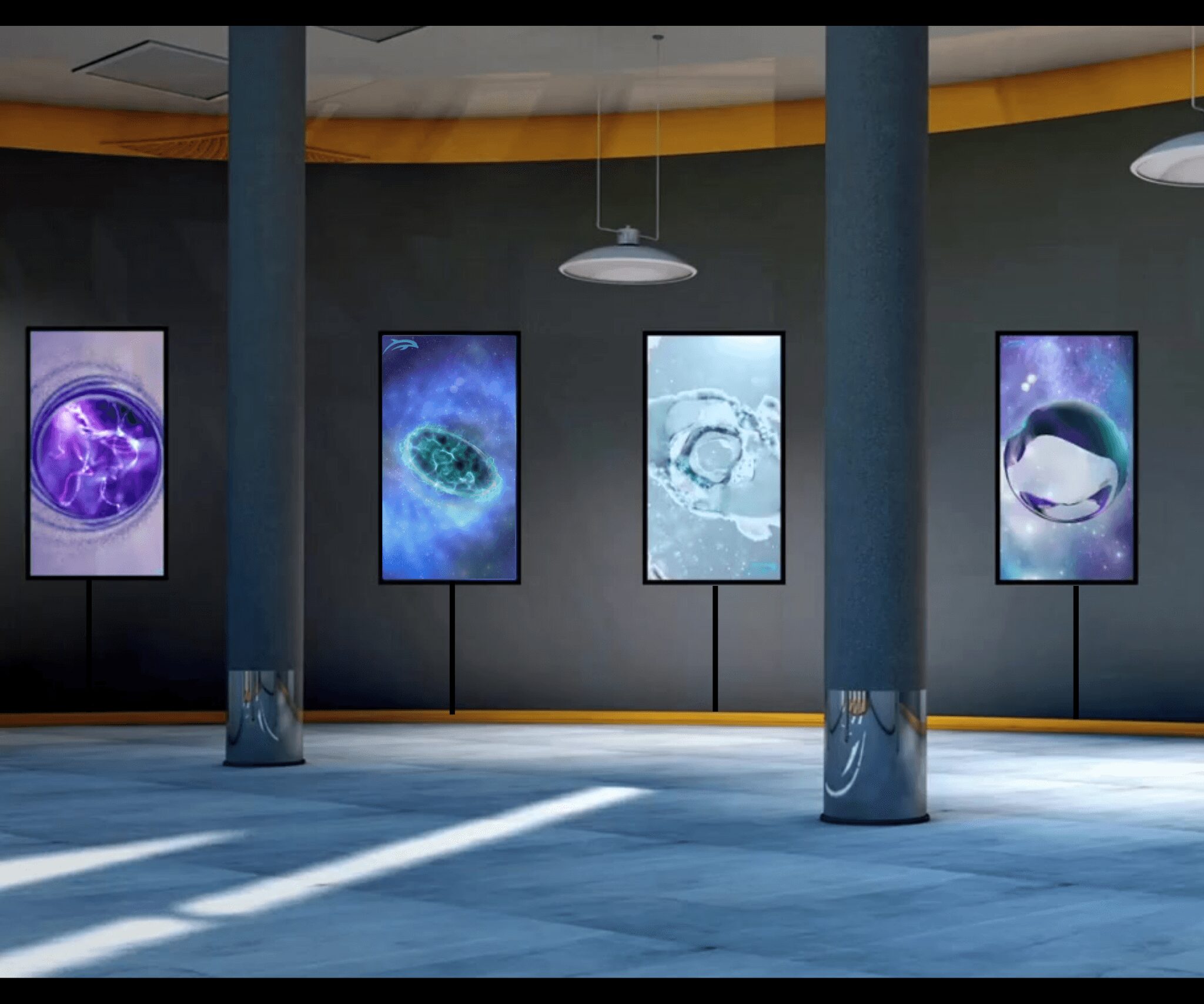
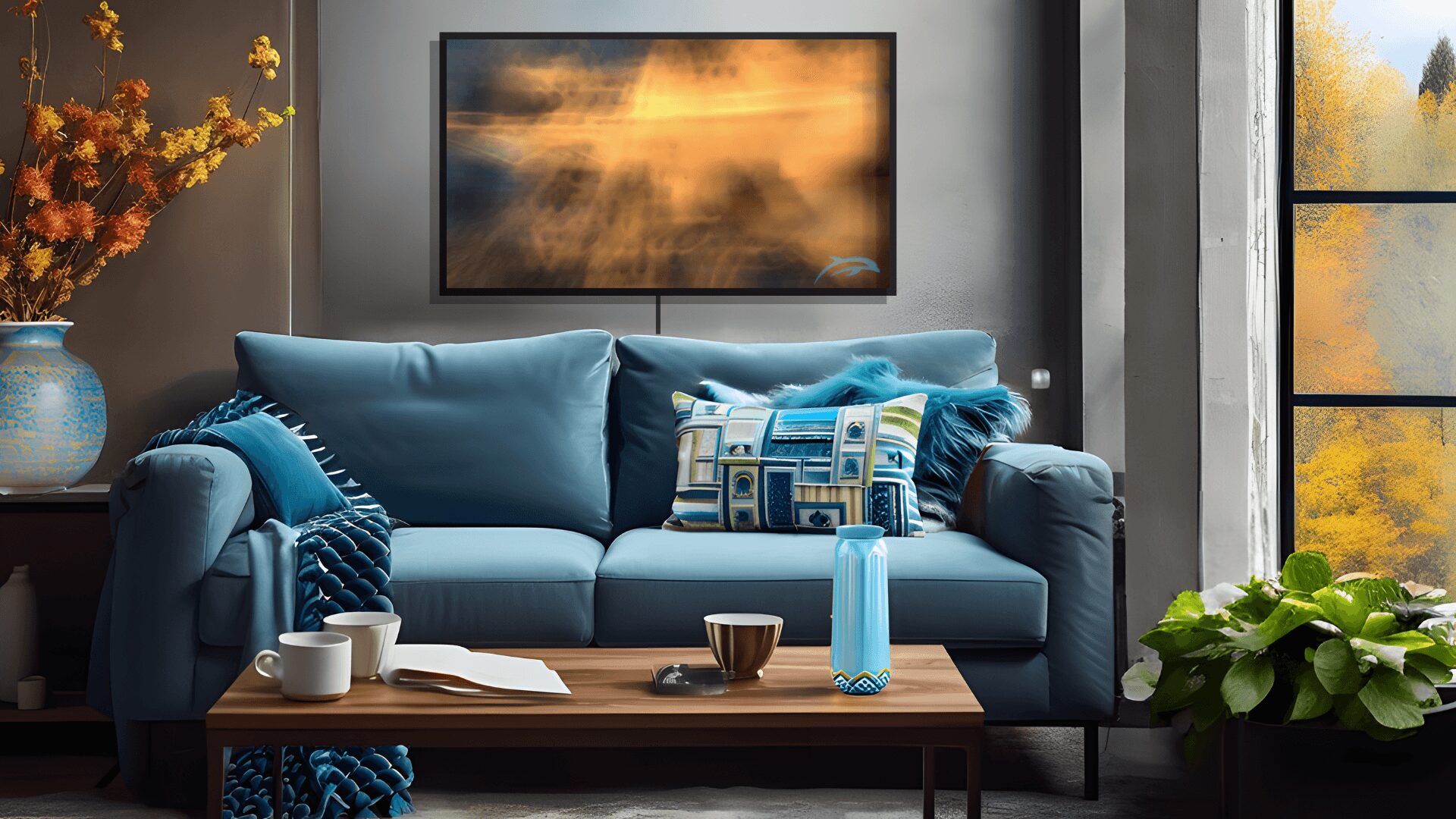
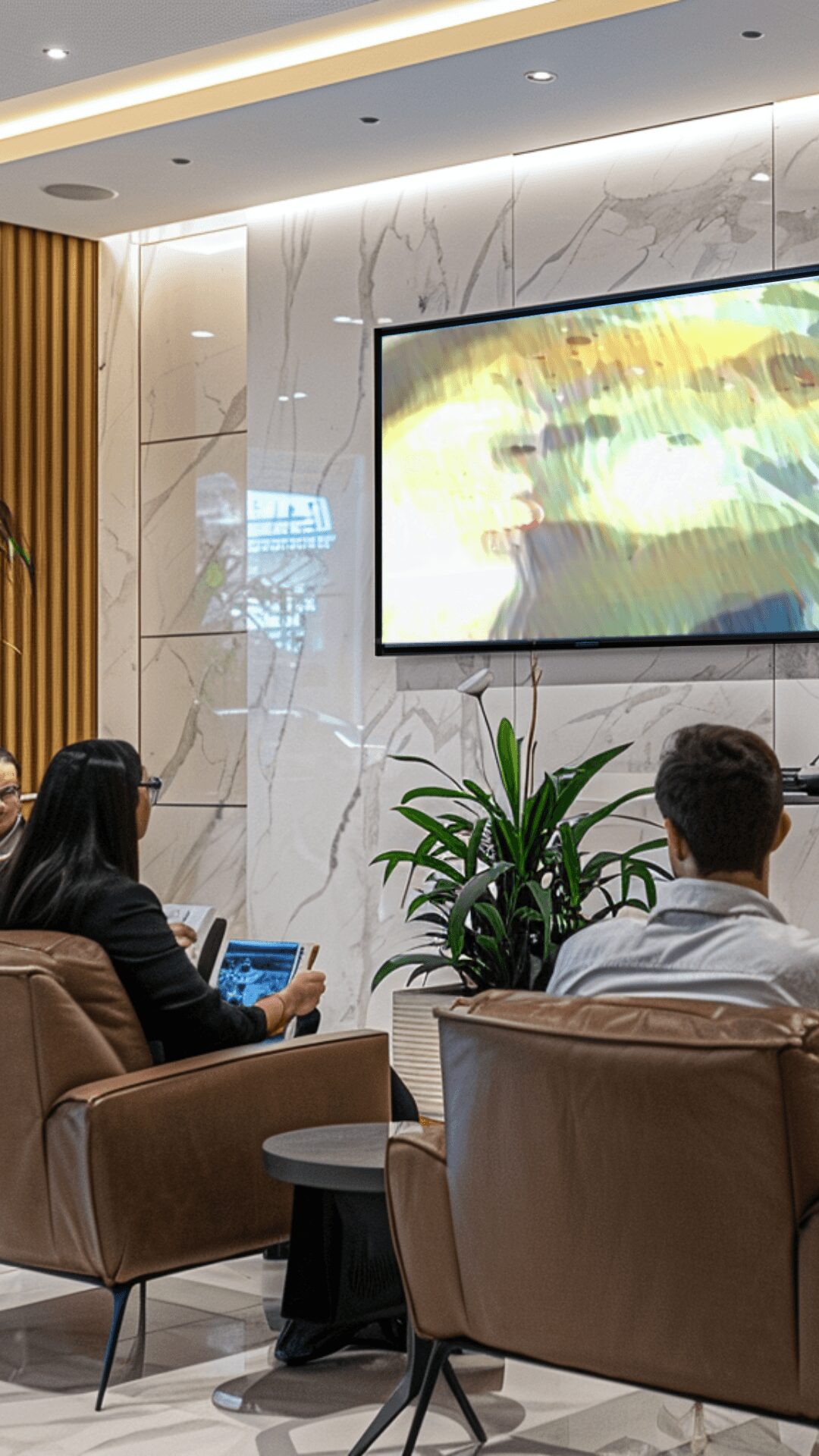
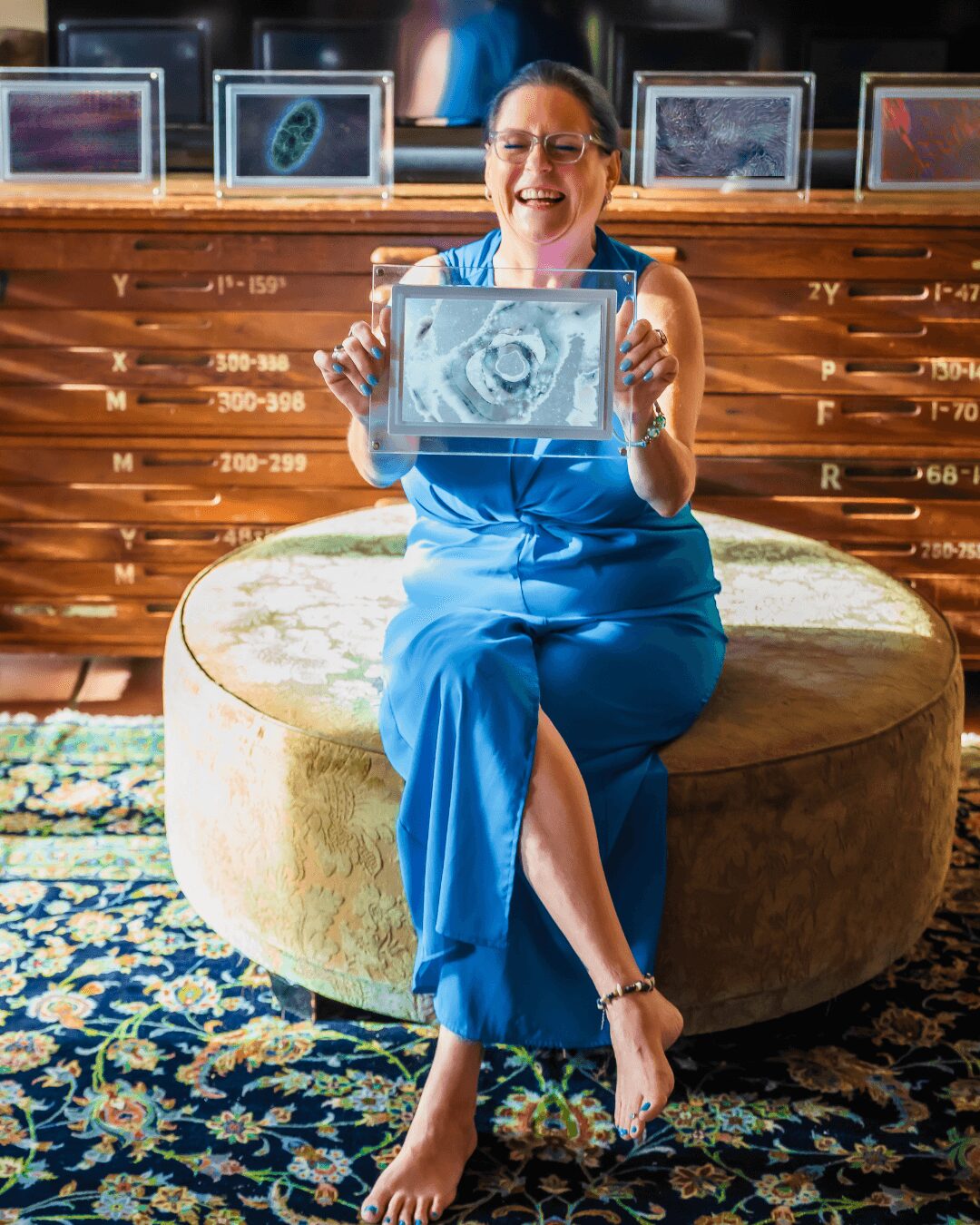
Image Credits
Aneta Hayne Photography