



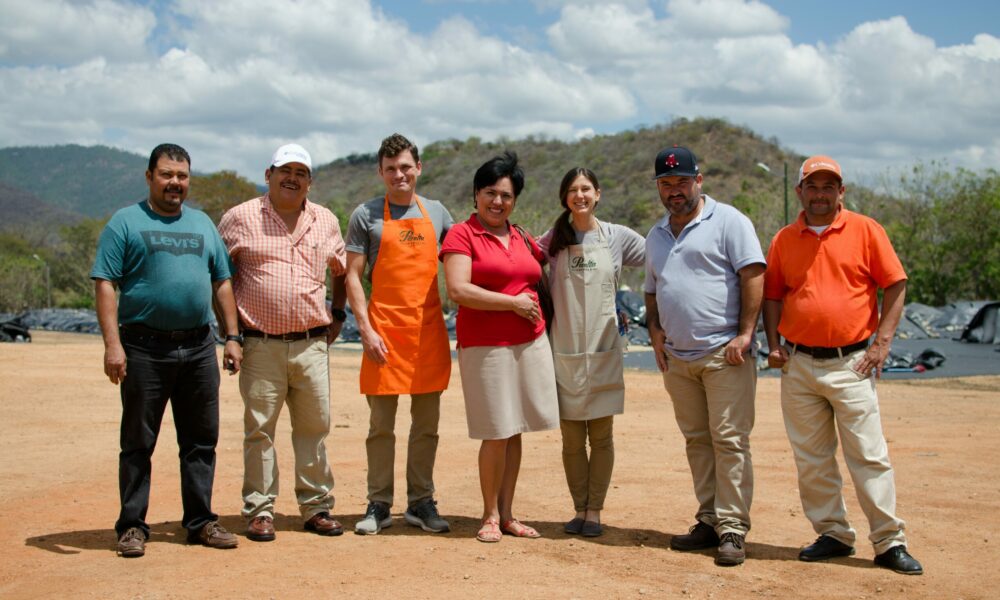
Today we’d like to introduce you to Helen Schafer. Them and their team share their story with us below:
Tiny House Coffee Roasters co-founders Helen and Blake got the idea behind Tiny House Coffee Roasters while living in Nicaragua as Peace Corps Volunteers. Seeing the tremendous hardships that the local coffee farmers were facing led them to make a commitment to help. After they returned to the US, they pooled their resources and kickstarted a small roasting operation in Austin, Texas, using a direct trade model that bypassed middlemen in order to give back more to the folks at origin. Launching into their sixth year, the team has grown along with their name in the specialty coffee industry. What had started with a handshake and a promise to friends in Nicaragua had grown to purchasing full containers and making a real difference in the lives and communities of small-scale coffee producers.
Would you say it’s been a smooth road, and if not what are some of the biggest challenges you’ve faced along the way?
Tiny House Coffee has made its mark on the Austin coffee scene with its whole bean and cold brew products. We’ve been particularly proud of our ability to get into the workspace scene, where we’ve been keeping gallons of delicious nitro cold brew on tap and hot coffee flowing for companies like Facebook, National Instruments, and FrontGate Tickets. However, when all of these companies went work-from-home during the COVID-19 pandemic, we had to pivot our business model to survive. We were able to get our cold brew and whole bean products in amazing retail partners such as HEB, Central Market, and Whole Foods. With all of the uncertainty in the world, we strive to stay true to our mission, providing small-scale coffee producers direct access to the US market, sharing more responsibilities and rewards.
Alright, so let’s switch gears a bit and talk business. What should we know?
Helen Schafer and Blake Thomas, co-founders of Tiny House Coffee, wanted to create a coffee company to help the coffee producers she worked alongside in her time as a Peace Corps Volunteer in Nicaragua. Tiny House’s business model increases economic stability for small-scale coffee farmers in developing countries. For these farmers, there was a lack of transparency in the supply chain, with little chance of direct access to the US market. On the consumer side, they knew businesses were an untapped market. Coffee in offices had a lackluster reputation, and there was a demand for better quality.
They created a business model that bypassed importers and exporters to purchase coffee directly from these small producer farmers. In doing so, they’re able to pay small-scale farmers double their fair trade price for their specialty coffee, who have in turn invested in their farms, families and communities. One farmer used the extra earnings from Tiny House Coffee to send his daughter to college, while another installed solar panels on his farm for sustainable energy.
They import this specialty coffee and roast it in micro-batches in their own roasting facility. They offer whole bean coffees in 12 oz and 5-pound bags. They also create blends of this coffee to brew delicious nitro cold brew, which they offer in 5 to 20-gallon kegs for local Austin restaurants, shops and workspaces. You can find their coffee at HEB, Whole Foods, and Central Market, or visit their website to read about all their coffees and order it to be shipped to your house!
Before we go, is there anything else you can share with us?
Please visit our website or visit us on social media (IG @tinyhousecoffeeroasters, FB: Tiny House Coffee Roasters, or Twitter @tinyhousecoffee).
Contact Info:
- Email: info@tinyhousecoffeeroasters.com
- Website: tinyhousecoffeeroasters.com
- Instagram: https://www.instagram.com/tinyhousecoffeeroasters/
- Facebook: https://www.facebook.com/TinyHouseCoffeeRoasters
- Twitter: https://twitter.com/tinyhousecoffee


 Image Credits
Adam Sarceno, Tania Cuadra