



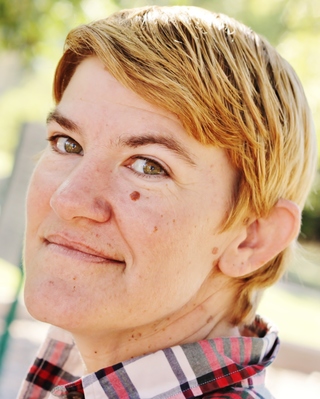
Today we’d like to introduce you to Amber Baldwin.
Hi Amber, thanks for joining us today. We’d love for you to start by introducing yourself.
I’ve wanted to be a therapist from the age of 12 years old. I had my own struggles at that age, and my own experience with therapy was transformative. I felt giving back what I received would be my career choice, and I have always focused my education and expertise in working with marginalized communities. Since that time, I have been on the path to where I am today. I began my career working at the non-profit Waterloo Counseling Center part time as a contract therapist for 7 years (2007-2014). Waterloo was a sliding scale counseling center focusing on the queer community. I also worked full-time with the City of Austin health dept for 6 years (2008-2014) providing free counseling to individuals in the various communities at high risk for HIV. STDs, and HEP C transmission before PreP was really a preventative treatment option. The populations included people of color, immigrants, Queer folks, houseless peeps, paid sex workers, and IV drug users. Then in Oct. 2014 I finally put in my notice at the city and was working solely in my private practice, and have been ever since.
Alright, so let’s dig a little deeper into the story – has it been an easy path overall and if not, what were the challenges you’ve had to overcome?
I wouldn’t say I’ve had a smooth road, but I’m not sure many people can. Some of the struggles along the way were being the full-time caregiver for my grandmother while going back to school to complete my undergraduate and graduate degrees in Social Work. The other challenge was trying to build a full time private practice while working full time at the City, having a toddler and infant at that time, while being the medical power of attorney for and trying to navigate the medical industrial complex with a houseless friend I made through Occupy Austin who was dying of breast cancer while still houseless.
I didn’t realize or recognize my physical and mental limits at the time, and it took a toll on my health. Luckily, My wife of now (if it were legal then) 33 years insisted I get all my medical appointments done before quitting the City and giving up my health insurance. A thyroid surgery, existential crisis, and brain surgery later I returned to the City job from medical leave to put in my notice and officially be in my full-time psychotherapy practice starting in Oct. of 2014.
Great, so let’s talk business. Can you tell our readers more about what you do and what you think sets you apart from others?
Dynamic Community Therapy is my private psychotherapy practice. I specialize in working with folx people presenting with a gamete of concerns including depression, anxiety, mood issues, relationship issues, and concerns with their relationship with themselves. Additionally, I work with many people managing various challenges of life and or transitions in life they want support through. The majority of my clients are members of a marginalized group. I also often see clients who aren’t members of marginalized groups themselves but value my profile’s openness about systemic oppression often leading to mental health concerns and difficulties finding trust and connections in relationships that are looking for a therapist with those shared values.
What might stand out about my practice, is my specialization in Group psychotherapy and my community justice framework for my sliding scale fee structure. Through my study and personal experience in therapeutic community I learned the powerful ameliorating effect of group therapy. Group therapy is able to directly address many struggles folks have in self-awareness, trust, vulnerability, family of origin issues, and a sense of belonging that is often affected by the experiences of simply belonging in marginalized communities. Additionally, I practice my values through my community justice fee scale structure that is based on income. What does that mean? Well, my sliding scale goes down based on income, and it goes up, voluntarily, based on income as well. So, when my clients have the financial ability to contribute more than my standard fee that additional fee goes towards my sliding scale fund that allows me to serve more people whose income would not otherwise allow them to access my services. Of course, that can be limited at times based on the current balance, or contributions, in my sliding scale fund.
My theoretical framework is psychodynamic, primarily relational cultural, with a womanist lens. I believe the relationship and therapeutic alliance developed between myself and my client is a first priority. My approach in therapy is as diverse as my client population and develops as the influencing factors and relevant goals and needs of each client are developed throughout the treatment.
Is there a quality that you most attribute to your success?
Passion. I am a very passionate person, and I believe I try to bring that quality into all I do. Whether it’s my work, my relationships, my self-care, my politics, coaching my daughter’s soccer team, or learning about my son’s current favorite war hammer army, I believe bringing my passion into all I do helps contribute to my success.
Pricing:
- My standard individual fee is $175 per 45 minute session
- My Standard group fee is $60 or $75 depending on the length of the group
- My sliding scale has gone down to $15 per session for those who qualify
- My sliding scale has gone up to $300 for those willing to contribute to the community justice principle of my practice
Contact Info:
- Website: https://www.dynamiccommunitytherapy.org/
- Other: https://www.psychologytoday.com/us/therapists/amber-baldwin-austin-tx/176564