


Today we’d like to introduce you to Lindsay Legé.
Hi Lindsay, can you start by introducing yourself? We’d love to learn more about how you got to where you are today?
I took a circuitous route to becoming a therapist. I attended the University of Florida and first majored in photography but ended up getting an undergraduate degree in sociology. What the heck do you do with an undergraduate degree in sociology? Everything! I was a server, a bike mechanic, a volunteer coordinator for the Office of Greenways and Trails (what if I’d kept that job?), a real estate agent, and a substitute teacher! I spent my 20s trying to find myself and my path. At 27, a lot shifted for me. My pawpaw (who was like a father to me) was diagnosed with multiple myeloma and died only two months later. His death really woke me up to the temporality of life and my own mortality. This got me to think more deeply about how I wanted to spend my time. I was engaged to a man who wasn’t healthy for me and I finally began to acknowledge that I was queer. It’s not something I’d ever allowed myself to think about before. I grew up in the panhandle of Florida in the 80s and 90s, not exactly a queer mecca. Heterosexuality was just assumed and so I assumed it about myself. Finally, I woke up to a part of myself that had long been asleep. I canceled my wedding and came out. I’m 40 now and when I think of my 27 years old self, I feel so damn proud that she had the courage to do what it took to be more fully herself. I’ve been trying to live up to the example she set ever since.
Around that time, I got a job as a full-time teacher at the PACE Center for Girls in Gainesville, Florida. I stopped bouncing from job to job and began to lean into what I was meant to do. From there, I made my way to Pittsburgh for my master’s in social work and eventually to Austin to become a therapist.
Can you talk to us a bit about the challenges and lessons you’ve learned along the way. Looking back would you say it’s been easy or smooth in retrospect?
There have certainly been personal and professional challenges, but I would say it’s been an interesting road! One challenge that stands out happened when I was in supervision working toward my clinical license. Supervisees spend 3000 hours (usually about two years) working under a supervisor before they can practice on their own. One year into my supervision, I found out that my whole first year didn’t count toward my hours – I basically had to start over! This meant an extra year working under someone else and another year until I could start my own practice. I was extremely disappointed and frustrated. As I sat with it longer, I realized I could use the extra time as an opportunity to get clear about the kind of business I wanted to create. As much as people may not want to think about it, therapists are business owners too. In the end, that extra year helped me step into my own practice with the confidence and knowledge that I could do it. Now, I’m an LCSW supervisor myself and plan to create the kind of supportive structure for clinicians I needed at that time.
Thanks for sharing that. So, maybe next you can tell us a bit more about your business?
One of my aims is to help my clients become more fully themselves. I’m a gender therapist who loves working with issues around significant life transitions, coming out in later life, relationships, and sexuality. I enjoy working with folks who are in consensual nonmonogamous (CNM) relationships or anyone thinking about being open. Additionally, I have a passion for providing quality trainings to therapists and other professionals on working with consensual nonmonogamy, gender, and sexuality.
My theoretical orientation is based on a combination of interpersonal neurobiology, emotion theory, developmental sciences, and attachment theory (thank you, Candyce Ossefort-Russell!). I take a relational approach in the room by being present and feeling with clients. Because of my background as a macro social worker, I also pay attention to how the intersections of race, gender, and sex factor into the struggles my clients bring to the room. Many of my clients are hurt deeply by homophobia, transphobia, racism, and classism (not an exhaustive list). With this in mind, my goal is to create a reparative space for clients to feel a sense of belonging and begin to heal those wounds. There’s a Jeannette Winterson quote I’ve held close as I worked with clients through the turbulence of the last few years: “To be ill adjusted to a deranged world is not a breakdown.”
Contact Info:
- Website: www.lindsaylege.com


Image Credits
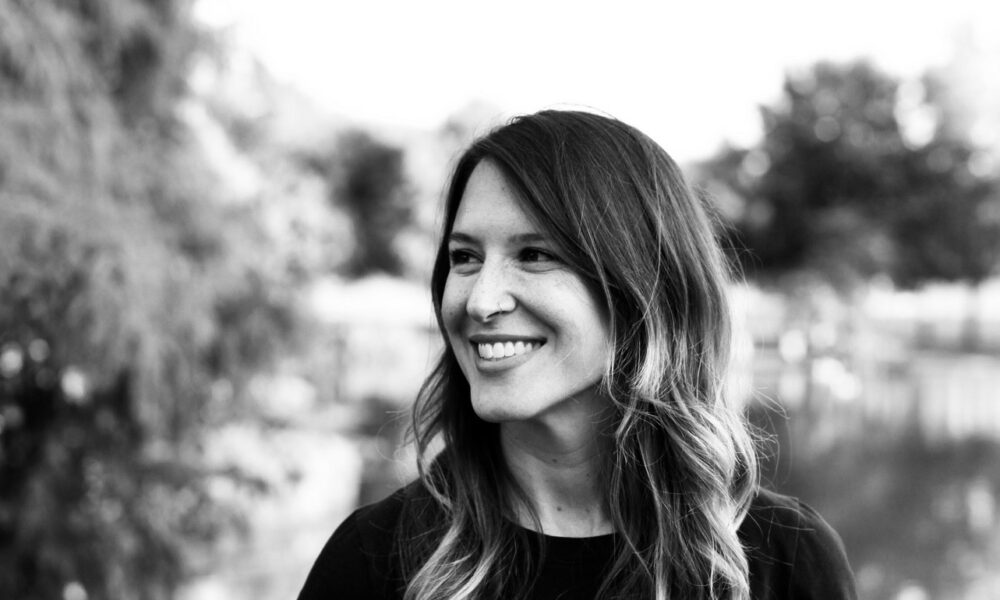
Chrissie Smolders (main photo and color photo)