


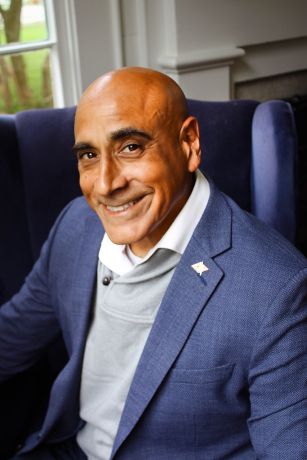
Today we’d like to introduce you to Scott Hyderkhan.
Alright, so thank you so much for sharing your story and insight with our readers. To kick things off, can you tell us a bit about how you got started?
I am a retired Master Sergeant of the United States Army, where I spent 20 years as a US Army Ranger, with the vast majority of that service in the 2nd Battalion 75th Ranger Regiment at Fort Lewis, WA. After retiring from the Army in 2001, I entered the profession of law enforcement and spent 19 years as a police officer for the city of Mercer Island, Washington, in the Seattle Metropolitan area. In 2008 as a police officer I vested a lot of my energy in developing training in the response to active shooter incidents. I was both my agency’s lead instructor, and a member of the Seattle regional instructor group on active shooter response.
By 2011 I started a small business (Kinetic Tactical Training Solutions LLC) in Washington State and wrote my first book on the subject of tactical response to active shooters which was published by CRC Press/Taylor & Francis Group (The Active Shooter Response Training Manual, Scott M. Hyderkhan 2013). The manual was a combination of my military and law enforcement experience, emphasizing squad tactics in both natural and man-made terrain (Close Quarter Battle CQB), and training management, which introduced law enforcement to principles in training, and micro-task learning in collective and individual tasks.
From 2013-2020, I continued to study incidents in active shooter, and also in Complex Coordinated Terror Attacks (CCTAs). My assessment was that our current tactics, techniques and procedures in response lacked strategic guidance, and operational organization. Also, I believed that the response to both traditional US active shooter incidents and CCTAs had to be linked by strategy and operational organization.
This led to my development of the Active Shooter Small Unit Doctrine. This doctrine outlines the strategy and operational organization we should employ, and the unit tactics, techniques, and procedures that should be utilized in the execution of operations. The doctrine tied and expressed in terms of intent and concept how operations from solo officer, to small squad employment against active shooter incidents, to complex coordinated terror attacks are exercised. After retiring from law enforcement in 2020 and moving my family to Central Texas, in Salado, I registered Kinetic Tactical Training Solutions LLC (KTTS), as a Texas small business. My 2nd book published in 2021, Active Shooter Response Training: Lone Wolf to Coordinated Attacks, 2nd Edition Scott M. Hyderkhan Routledge/Taylor & Francis Group 2021), expressed my development in Active Shooter Small Unit Doctrine (ASSUD). It further included a deep dive in casualty collection and evacuation, with detailed organization, and operational planning, that included joint operations with fire and Emergency medical Service assets. Small unit to joint exercise training were addressed, along with breaching operations, combatives, communication planning, and risk management.
In 2021, I reached out to Chris Grollnek of the Active Shooter Prevention Project (ASPP). Chris is an Internationally recognized active shooter expert and is the chairman of ASPP LLC. KTTS has been a member of the Active Shooter Prevention Project since that time. ASPP is setting the National Standard in Active Shooter Prevention, Preparation, Response, and Recovery (aspppro.com).
After retirement, I continued to use my 39 years of combined experience in the US Army and law enforcement to further study active shooter and CCTA incidents. From 2021 through 2023 I developed Active Shooter/Hostile Event Response (ASHER) 360 Doctrine. Through the failures of large incidents, such as The Pulse Night Club, Orlando Attack, the Parkland Marjory Stoneman Douglas High School Shooting, the Uvalde Robb Elementary School Shooting, and others, I concluded that multiple repeating factors were in play.
• Absence of strong centralized vision using mission orders, and training subordinates to exercise problem solving and decision making.
• Inexperienced law enforcement, security, and EMS in operating decentralized, and exercising disciplined initiative, and prudent risk taking.
• Inexperience in command and control over large dynamic incidents.
• The current organizational structure and operational command and control under the guise of mutual aid agreements is not functional in large dynamic incidents.
• In common planning doctrine across disciplines (law enforcement, fire agencies, EMS, hospitals, school districts, commercial businesses do not exist.
• A shared training management system across these same disciplines does not exist.
From late 2021 through 2022 I developed ASHER 360 Doctrine, a doctrine that comprises a multi-discipline, and institutional doctrine in four-principles:
Mission Command- Leadership doctrine emphasizing mission orders, with decentralized execution by subordinates.
Operational Doctrine- Organizational and operational structure, to include the planning process and dissemination of the operational plans.
Tactical Doctrine- How its developed in the operational planning process.
Training Management- Training management system and how it is used in the operational and tactical planning process to develop, record, and execute both micro learning, and operational coordination, in the same system.
In tandem with the ASHER 360 Doctrine effort, my wife (Kellie Ann Chainier) and myself established the ASHER 360 non-profit in 2021, which now works in conjunction, as part of the Active Shooter Prevention Project. ASHER 360 non-profit utilizes the 4 ASHER doctrines to enhance active shooter prevention, preparation, response, and recovery in schools, universities, hospitals, and houses of worship. Our services to these institutions are free of charge, we are a 501( c ) 3, who are funded through private donations, and grants. Our many programs include the School Ranger Program, the Helping Hand Rally Point System, the Community Report Writing Station, and teaming with Founder & CEO at Givspire and her Violence Prevention Hotline (888 664-6652). Please go to www.asher360.com to read more about our efforts and how you can help.
I completed my book Active Shooter-Hostile Event Response (ASHER): Doctrine in Prevention and Response in January 2024, and it has been in editing for the past year, it publishes in March of 2026 through Routledge/Taylor & Francis Group. “It’s a call to action. Every community leader, responder, and policymaker committed to true readiness when it comes to active shooter and hostile events should read it – and apply it” Dan Knight, Lieutenant Colonel (Retired) US Army Ranger/Special Forces
The book is culmination of my work that started in 2008, and continues beyond the publication of this book.
Can you talk to us a bit about the challenges and lessons you’ve learned along the way. Looking back would you say it’s been easy or smooth in retrospect?
Joining the US Army right out of high school, then spending 20 years of your life in that lifestyle, and serving a larger purpose than yourself, and in the manner you do in the Ranger Regiment is seductive, and your entire existence and purpose is being a Ranger. It’s a way of life, and it follows you out the door in retirement. Exiting the service at 39 years old, with a lot of thread left on me was hard. I did so out of the reality, that at some point this dream job ends. You don’t get to Ranger for an entire lifetime. I still had a good 10 year of Army career left in me when I retired. I had the desire to continue on, but I was looking beyond 49 years old, when I would still have to be financially viable. My ability to start a 2nd productive career at 39, instead of 49 would be far easier.
So, I bit that bullet, applied for law enforcement positions and dropped my retirement paperwork. My transition was flawless as far as financial status is concerned. I started the Basic Law Enforcement Academy (BLEA) Washington State Criminal Justice Training Commission, while still in the Army, but on terminal leave. I was still collecting a paycheck from Uncle Sam, while attending the Academy and collecting a salary from my new employer, the City of Mercer Island, WA. Can’t exist an easier transition than that. Once I retired from the Army, just before graduating from BLEA, I started collecting my Department of Defense pension. This sounds great, right? When people say, it’s not about money, most people say you have to have money to think that way. That might be true, but it doesn’t make that belief any less factual. It took me well over 3 years to get over buyers remorse on making the transition earlier than I had too. Although the financial numbers point to a no brainer decision in transitioning to a new career, I felt I had cut my Rangering days way too short. This feeling lingered for years, and it still sticks in my craw to this day, although it somewhat tempered by moving onto the next Ranger objective.
I defeated my transition blues, not with time, but with purpose. I repurposed myself by embracing my law enforcement career, and using what the US Army and the Ranger Regiment gave me to bring that mindset to my law enforcement career.
When I transitioned from law enforcement to semi-retirement, and using my experiences in my two previous careers to assist in the quest for way forward in developing ASHER Doctrine, my transition was easier. Although I miss my law enforcement career, I was able to better grasp what my new purpose is. In our Non-profit, ASHER 360, we strive to assist both schools K-12 and transitioning veterans from all Department of Defense services.
This is done through the School Ranger Program, which embeds a team of service members in three distinct positions, that provide safety services to schools. We have a field grade officer position as a director of school safety, a senior non-commissioned officer (NCO) position, as the Master School Ranger, a direct subordinate to the director, and a Junior NCO as the subordinate safety specialist within the schools. We vet, train, and evaluate these individuals, who are hired by the school districts and work in dual roles. For example, a director of school safety/Rangers, would also serve in an additional administrative role. The program piggybacks on the school marshal program, and utilizes the training from TCOLE to support their qualifications. We also further give them training called ASHER 360 qualification. This is an enhancer, which brings the four doctrines of Mission Command, Operational, Tactical and Training Management through the school system, and also influences local law enforcement. This is a bottom-up approach.
ASHER 360 provides this service to school districts and veterans at no cost to them. If I can give back to our community and country by helping veterans traverse the emotional and financial transition, while embedding safety professionals within school districts, it’s a win, win, win situation. The school district and community wins, the veteran wins, and I of course win by continuing to carry on and through the Ranger objective.
Alright, so let’s switch gears a bit and talk business. What should we know?
These are two separate companies. KTTS is a company I use to create and present all of my doctrine writing, and development of mirco learning tools, such as the video training library. I then use the doctrine from KTTS in the non-profit ASHER 360. ASHER 360 does not pay KTTS for the use of the doctrine, nor, do I or the board of ASHER 360 receive compensation. There is only one paid individual in ASHER 360, that is our very own part time administrator, Chelsea Jacbosen, who we at some point will make a fulltime employee.
KTTS also directly sells services, manuals, and the video training library to law enforcement agencies, officers, security agencies and officers. This is accomplished through our website at www.KTTS275.com
Is there a quality that you most attribute to your success?
I try to live by the Ranger Creed and use it as a guide in all my endeavors. When I fail, I Identify my short comings and attempt to correct what I’ve failed to do. Rangering is perseverance. Perseverance is a learned skill that is perishable if not exercised regularly. Quitting is habitual, and can only be broken by exercising perseverance.
Contact Info:
- Website: www.ktts275.com and www.asher360.com
- Instagram: https://www.instagram.com/asher360.np
- LinkedIn: https://www.linkedin.com/in/scott-hyderkhan-36ba3552 and https://www.linkedin.com/company/asher-360/posts/
- Other: https://www.routledge.com/Active-Shooter-Response-Training-Lone-Wolf-to-Coordinated-Attacks/Hyderkhan/p/book/9780367243869 and https://www.routledge.com/Active-Shooter-Hostile-Event-Response-ASHER-Doctrine-in-Prevention-and-Response/Hyderkhan/p/book/9781032823218