


Today we’d like to introduce you to Bob Peck.
Hi Bob, it’s an honor to have you on the platform. Thanks for taking the time to share your story with us – to start maybe you can share some of your backstory with our readers?
In a way, my story begins with loss. When I was around 10-12 years old, I lost two grandparents, my dad’s fiancée, and a cousin—all within about two years. That kind of proximity to death at a young age sent me searching for answers. While other kids were reading Harry Potter, I was reading Thich Nhat Hanh. I picked up “Living Buddha, Living Christ” at 13 or 14 and was captivated by the parallels between traditions—the interfaith connectivity rather than the distinctions.
I wasn’t born here, but my family has been in Austin since at least the 1930s and I moved here when I was ten. I’m so grateful that this city gave me the space to explore. It’s Willie Nelson’s city—creatives, weirdos, and spiritually open-minded people. I went to UT and got a bachelor’s in Religious Studies with a specialty in the New Testament, alongside Radio-TV-Film. I studied everything that called to me: Indian philosophy, Sufism, Shamanism, in addition to that loving master from Nazareth.
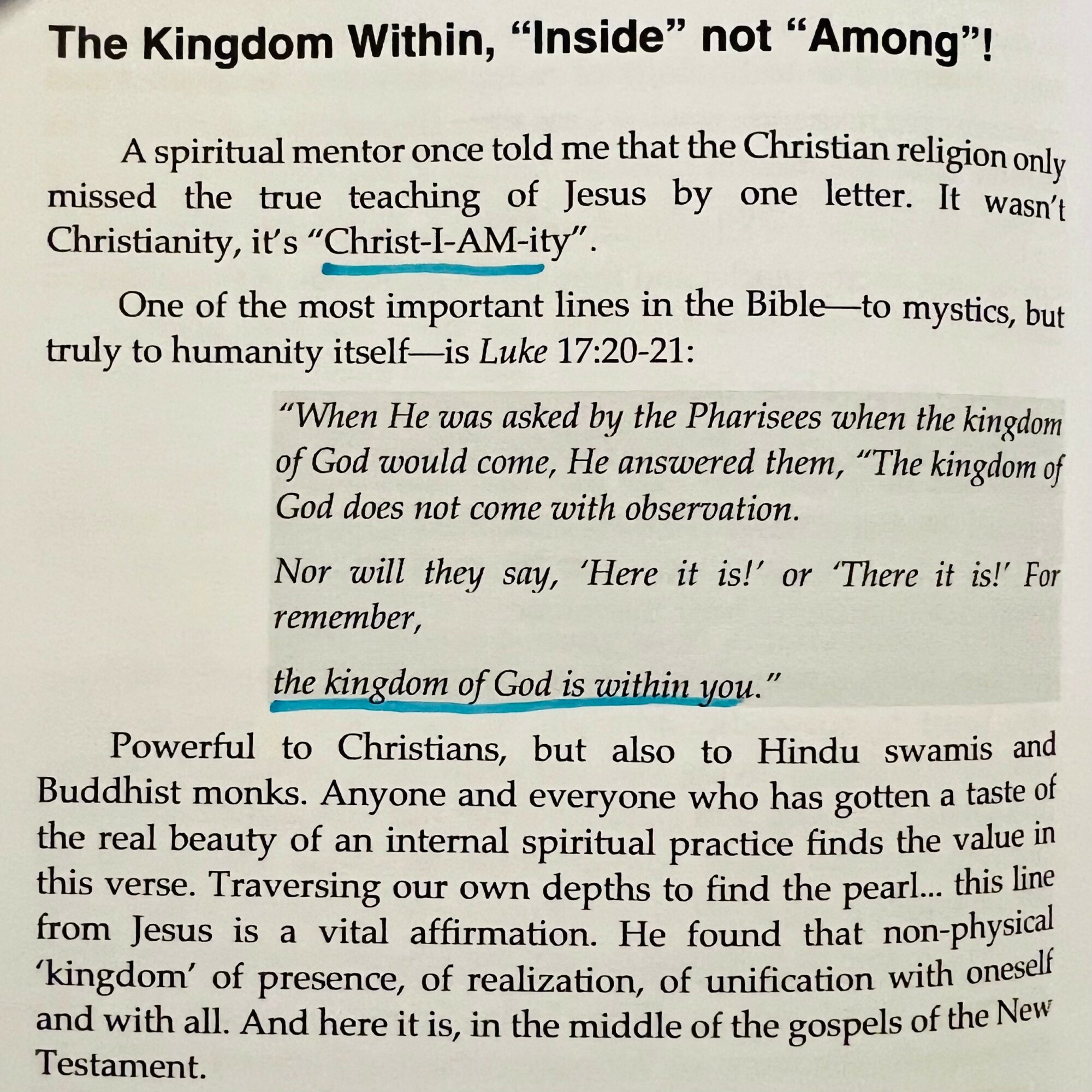
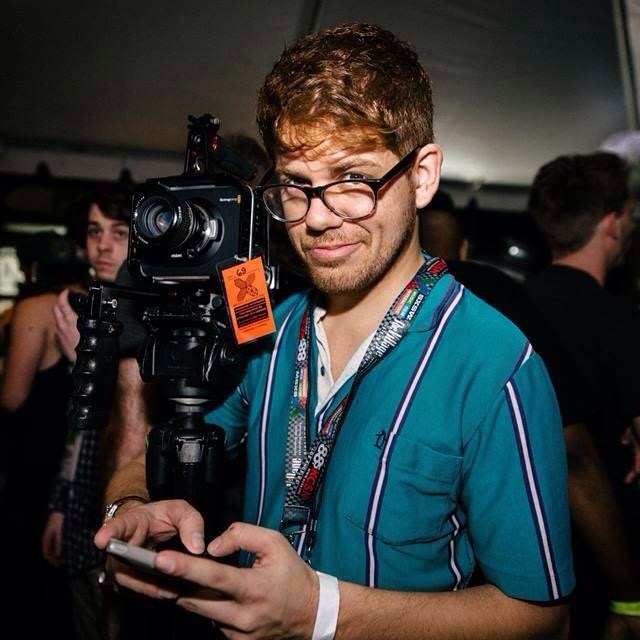
After graduating in 2011, I spent about a decade as a “starving artist” making conscious documentaries about spirituality and religion. My film “The Kingdom Within”—about the intersection of yoga and Christianity—involved interviewing 18 people for an hour or more each, from pastors and swamis to evangelical preachers. I didn’t realize nobody would want to watch religious documentaries made by a 23-year-old trying to channel Ken Burns, but those years became my extended education in these traditions. And they still hold up, okay?
Eventually I needed to pay rent, so I transitioned into the tech world. I’m at TikTok since early 2025, and the previous seven years at Meta, where I stumbled into being one of the global co-leads of their internal mindfulness program—bringing meditation to people drowning in notifications and emails.
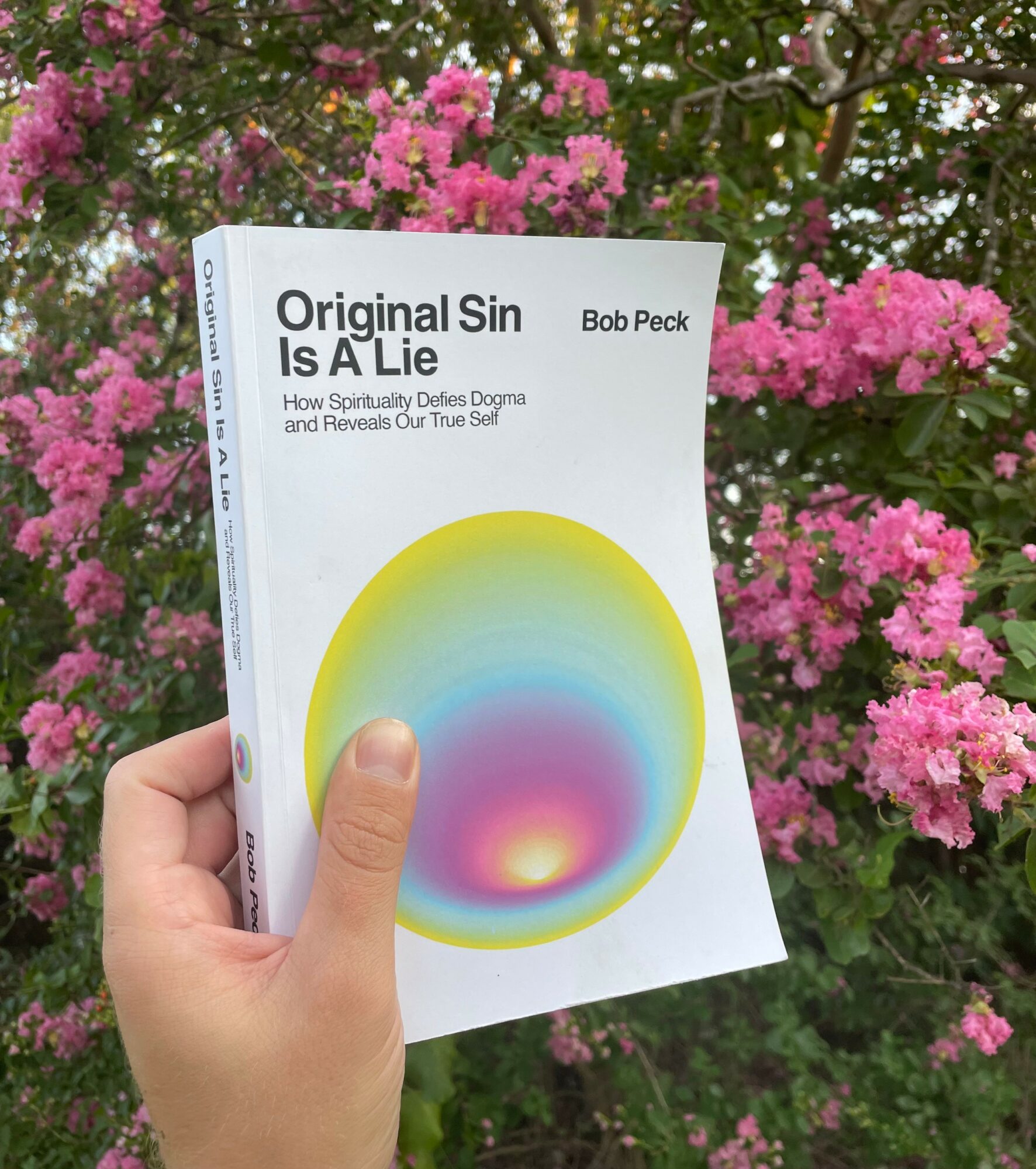
In 2022 I published my book, “Original Sin Is a Lie”, which is, as of this moment, my life’s work. It’s an introduction to mystic spirituality that argues that we’re not inherently fallen, but inherently good and divine. I’m currently working on a few things including a mindfulness & spirituality education company focusing on schools, companies, and correctional facilities.
I’m not slowing down—I’m just getting started.
Can you talk to us a bit about the challenges and lessons you’ve learned along the way. Looking back would you say it’s been easy or smooth in retrospect?
Well the starving artist period was certainly challenging. Pushing through and finishing work you’re proud of and then not being able to make a living doing that is not just financial, it’s psychoemotional too. And what you learn is essentially every creative throughout history has had to deal with this aspect, at least for certain periods… moments which often helped to generate the great human whose work we so deeply admire now.
The book itself took five years to write. It’s everything I wanted to put out into the world condensed into a few hundred pages. I sent an early draft to a writer friend, and he told me it was good but needed restructuring. The first version had about 40 pages of an introduction about me because I falsely believed nobody would care what I had to say unless I explained myself first. That was not true. His notes were extremely helpful and helped me make it a highly-reviewed piece of work.
Then there’s the public reception. Most of my audience nowadays is grateful mystics, but I’ve certainly gotten vitriol on Instagram and TikTok. The angry comments are from conservative Christians who feel threatened by the title, and all of that comes from a place of fear and suffering. This is the understanding which helps me transmute it. But it surprised me a little. I’ve also received messages from people saying things like, “I was suicidal because of my religious upbringing, and your work was a key step in my healing.” When you get a message like that, what else is there to do? I’ll make a thousand TikToks after a message like that.
Broadly the spiritual path itself has been gradual for me, not dramatic. Some mystics have spontaneous awakenings—satori, samadhi—but that’s not how it’s worked for me. It’s much more incremental. I’ll have an experience, and afterward I’m in seventh grade instead of sixth. I can feel it working, but slowly. And that requires patience with yourself.
Finally, there’s the challenge of staying grounded while doing this work publicly. There’s no shortage of ego in the spiritual world—the worst of it shows up in cults and charismatic leaders who exploit people. I try to be vulnerable about my own flaws & my own opportunities to grow. If I’m going to talk about spiritual philosophy, I have to shine the light on my own aspects of egoic shadow… that’s how it all starts to dissolve.
Appreciate you sharing that. What else should we know about what you do?
My work lives at the intersection of spirituality, storytelling, and practical application. I’m an author, award-winning filmmaker, and certified mindfulness teacher. What I specialize in is what’s called the “perennial philosophy”—the cohesive thread of mystical wisdom that runs through all the world’s great faith traditions.
As mentioned, my book is “Original Sin Is a Lie: How Spirituality Defies Dogma and Reveals Our True Self”, which serves as an introduction to mystic philosophy. The provocative title is good marketing, but it’s also true—the mystics across traditions teach that we’re inherently good, inherently divine, not condemned to suffer for all eternity. I also narrated the audiobook myself, which was an interesting challenge.
What might set me apart is my approach: I’m not trying to convert anyone or debate anyone. I like to think of myself as a billboard, pointing people toward the masters and masterpieces—Yogananda and Indian philosophy, “A Course in Miracles”, Rumi, the Christian contemplatives. My creative work is really just the residue of the inner work I do on myself. It spills out as writing and sharing.
There’s also an interesting area somewhere in between scholarship and mysticism. It seems like there are a few mystical minds online that are doing good work but some of whom could be benefitted from more study; while there are plenty of great academics who would be well-served to eat a mushroom. Spirituality is not all in the text, you have to hear the wind blowing through the leaves from time to time! So I try to occupy that middle ground between those two valuable paths in this space.
What I’m most proud of is the feedback I get from readers and listeners who tell me the book opened doors for them—that it helped them reconcile their spiritual intuitions against what they’d been taught growing up, or that it pointed them toward teachers like Ramana Maharshi or Byron Katie and that changed their lives. If all I am is a commercial for the great mystics, I’m doing my job.
What matters most to you? Why?
What matters most to me is helping people remember their own beauty—their own inherent value.
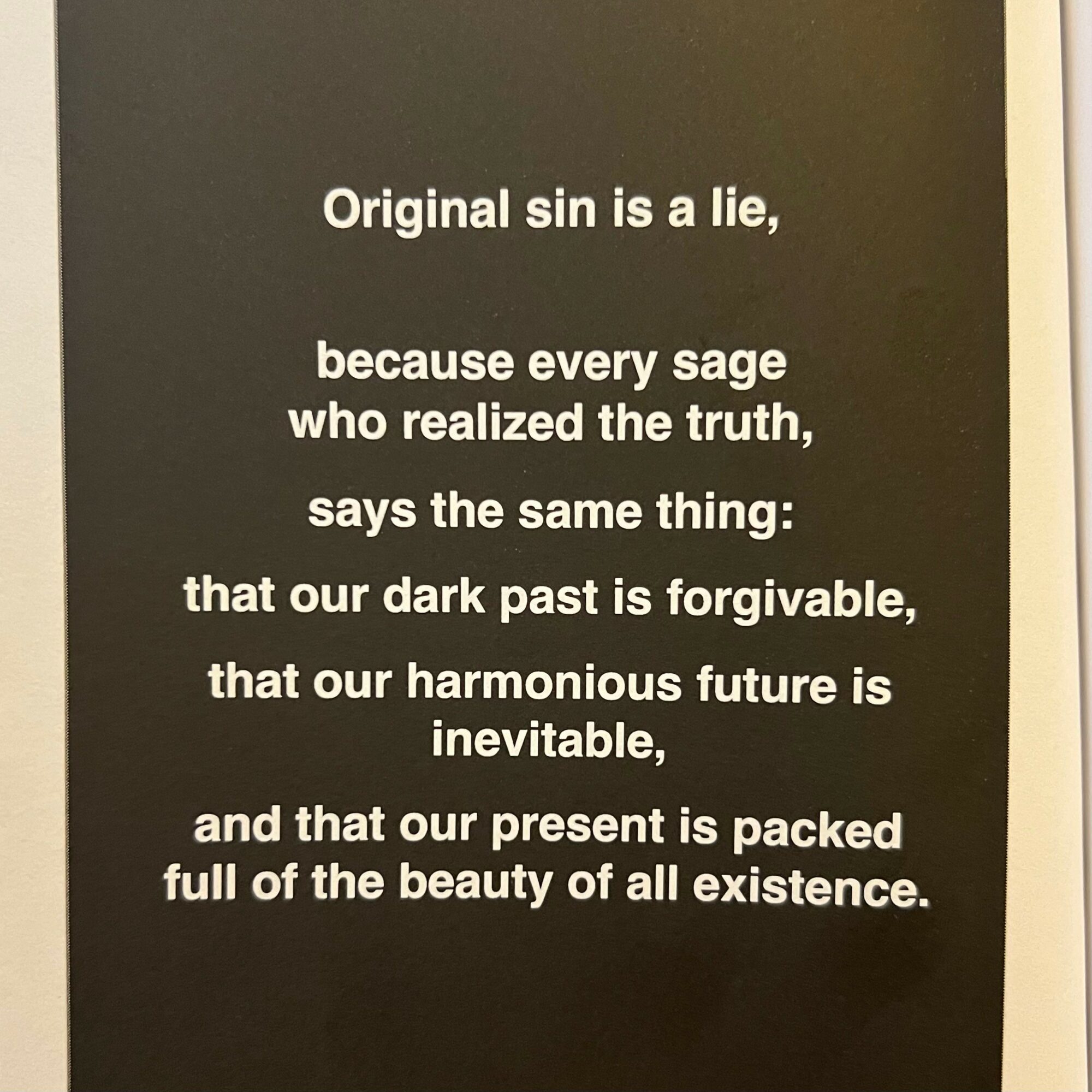
People ask me what “original sin is a lie” means, and I tell them: it just means you’re not dirty. That’s it. That’s the whole thing. I’m not trying to be controversial for its own sake. I’m just trying to say that the doctrine of original sin—this idea that we’re born fallen, condemned, filthy with guilt and shame—doesn’t come from Jesus. It comes from a monk named Augustine of Hippo, centuries later. And it’s the complete 180-degree opposite of what the mystics across every tradition actually teach.
The mystics say we’re inherently good. We’re inherently divine. The Hindus have a beautiful way of putting it: we’re not originally sinful, we’re merely ignorant of our true self. We’ve just temporarily forgotten who we are. Vivekananda said, “It is we who put our hands over our eyes and cry that it is dark.”
That matters to me because I’ve seen what the opposite belief does to people. When you grow up believing you’re fundamentally broken, that you deserve nothing and can do nothing to help yourself, that shapes everything—your relationship with yourself, with other people, with the sacred. It’s the root of so much unnecessary suffering.
My only enemy, really, is exclusivity. If you think your path is the only path, if you think your people are the chosen people—I hate to break it to you, but you’re wrong, because we’re all chosen. We’re all children of the Creator. You are chosen, yes. But so is everyone.
What I want my work to do—whether it’s the book, the films, the podcasts, or just a conversation—is help people remember that they can’t escape the love of the divine, no matter how hard they try. The kingdom is within (Luke 17:21). And when you understand your own self-compassion, your own connection to the divine, that generates compassion for others. Compassion inspires action to help relieve suffering. It’s all connected.
May our work help folks remember their own beauty, their own inherent value. That’s what it’s all about.
Contact Info:
- Website: bobpeck.io
- Instagram: instagram.com/bobpeck
- Linkedin: https://www.linkedin.com/in/bobpeckiv/
- Youtube: https://www.youtube.com/@iambobpeck