



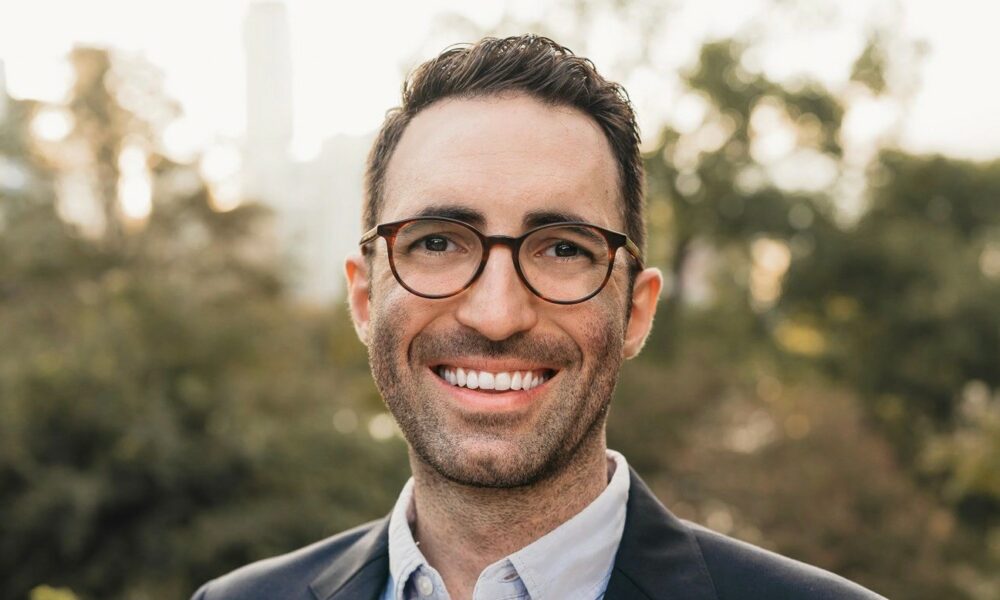
Today we’d like to introduce you to Brian Anderson.
Hi Brian, we’d love for you to start by introducing yourself.
I don’t know if it’s because I grew up repressed in my sexuality, due to religious zeal for justice (be it a form of penance), or if it’s because I’m an Aquarius, but I’ve always had a heart for justice and equality, which naturally lead me to an interest in politics. My undergraduate days at Texas Tech University were varied. I began as an Architecture student, and did quite well, but changed to business and political science in my sophomore year after one of my History of Architecture professors advised me to go into policy if I really wanted to be an urban planner that enacts change – urban planners are at the whim of policymakers.
Learning probability and my hormones calming down (is that essential wisdom, hormones calming down?) have taken me away from a belief in fate. But I do wonder if probability and fate are simply descriptive expressions of the same phenomenon. Whatever the cause, it felt pivotal and seismic when I landed an internship in Congress after graduating from undergrad. This set me on the course to stay in Washington, DC for ten years, mostly working at the International Monetary Fund (IMF) as a Research & Data Analyst and then as an Information Systems Analyst. After the IMF, I worked for a research consulting firm called Gartner for two years before leaving that job, just one month before COVID became a global pandemic. I moved back to Texas and stayed on my family’s ranch in Bastrop, Texas, and began grad school in a one-year executive master’s program from the Johns Hopkins University School of Advanced International Studies (SAIS). I graduated in May 2021 with a master’s in international public policy. =
Since graduating, I have been a barista at Medici Roasting and was promoted to General Manager while I continued looking for my next corporate job. I had multiple round interviews at close to a dozen Fortune 300s but was never offered a full-time position that aligned with what I wanted. During this time, I heavily debated running for office but was not sure if it was time. To be honest, I have always wanted to go into politics out of my love for helping people and policy but did not want to take the leap without being partnered/married. But after the Dobbs case and the botched response to the Monkeypox outbreak by the federal government, I decided it was time to offer up my talents and abilities for service. I knew I had a lot to offer but I have never run for public office before.
I’m sure you wouldn’t say it’s been obstacle free, but so far would you say the journey has been a fairly smooth road?
Absolutely it has – not. Haha! My parents didn’t go to college and had rarely been out of the state of Texas before their kids grew up. As a first-generation college graduate, I did not naturally graft into the halls of power in Washington or the steep climb of corporate America’s ladder. Both have similar unspoken rules and tricky office politics that must be learned through experience or a family member’s counsel. While I had a professional network to tap into, my default has often been too direct for the tight-lipped and deferential worlds of diplomacy and Fortune-500s. How do you tell a boss their research is wrong? What do you do when they’re lying about data? Or what to do when they just don’t like you?
My campaign for public office has been similarly challenging. I naively thought local politics would be a race of leading with ideas, experience, and a capacity to reflect back to the community a vision for our future. I talked to multiple people who ran for elected office in the last couple of years, including women that ran for state senate and the U.S. House of Representatives – both warned me about not kissing the ring of local political players. They were right. I have also learned how much currency exists in a political race in having a spouse, supportive family (morally and financially), jobs that allow you to step away from work to work on the campaign – or just having a lot of money. These are all advantages I lack. But what smooth road ever evolved us into a better version of ourselves?
Can you tell our readers more about what you do and what you think sets you apart from others?
The first internship I had out of college was with a mortgage servicer in Dallas that was owned by Morgan Stanley. I was in the office of the COO working on a firmwide capacity development planning tool to aid the executive team in matching their priorities and projects with resources across the company. They offered me a job at the end of the internship but I was already promised to and excited about an internship in Congress in Washington, DC. But I’ll never forget my mentee’s review of my work and time there, noting that “Brian is a macro-level thinker…is talented at understanding business strategy and tying pieces together to form a whole picture.” It’s a bit shocking when someone sees your skills plainly and articulates them clearly.
Over the years, I’ve applied this macro-level thinking to granular challenges in operations and strategy, be it in a data reporting tool using behavioral economics to game countries into submitting more timely and complete data to the International Monetary Fund or siphoning patterns and methodology out of business processes that evolved unnoticed by their users. I excel more than most in connecting the big picture to nuts and bolts on the ground – and building something new.
Do you have any advice for those just starting out?
My advice will be best suited for people like me, so I will speak to young gay or queer people, be they closeted and from an oppressive upbringing or out and proud with a generally supportive family. Shop around for a good therapist and go to therapy; go to the same person and go regularly and go for at least two years. It was in therapy that I saw my faults and flaws across all areas of my life: family, friends, colleagues, and dating. As humans, we are primitively relational beings, and it’s easy to think education, institutions, and technology do anything to change that in ourselves – or that maybe other people are like that, but I am a rational and reasonable person. The only way to stay completely rational and reasonable is to keep other people at an arm’s length away. But no one helps you up a career ladder, comforts you in times of distress, or lends a helping hand if you remain at arm’s length. The faster you figure out how you relate with others in the world, the more successful you’ll be in all areas of your life. But fair warning – doing this kind of work on yourself will make things (temporarily) worse before making things better.
Pricing:
- $15 Campaign Donation (Donate a Yard Sign!)
- $25 Campaign Donation
- $50 Campaign Donation
- $100 Campaign Donation
- $400 Campaign Donation (Max)
Contact Info:
- Website: https://www.andersonforaustin.com/
- Instagram: https://www.instagram.com/andersonforaustin/
- Twitter: https://twitter.com/brianandersonII


Image Credits
Chad Stone Photography