


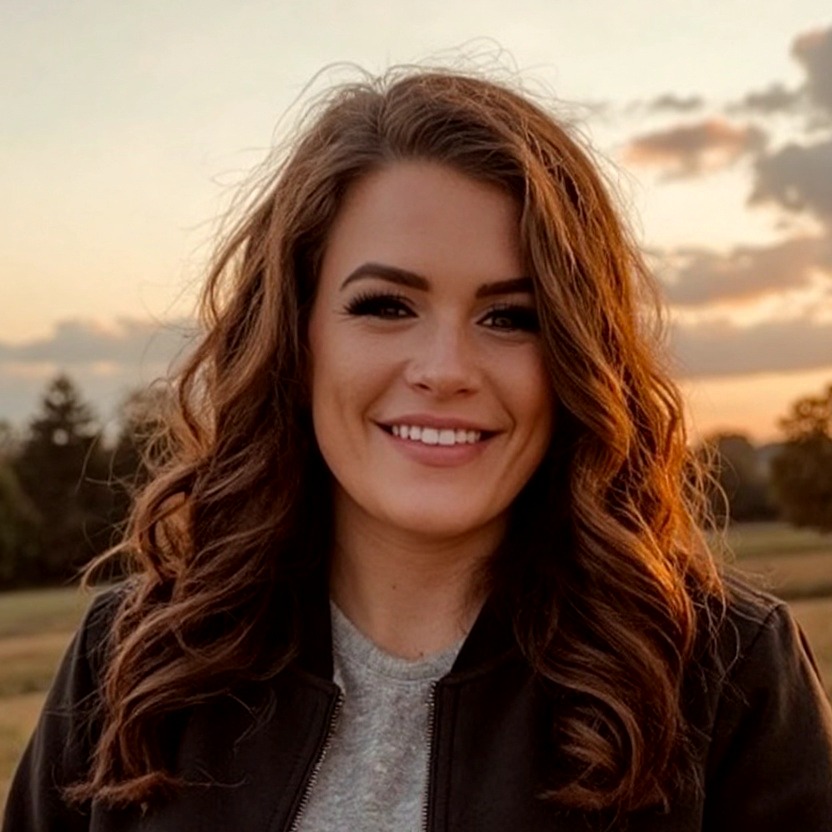
Today we’d like to introduce you to Britnia Weicht.
Hi Britnia, can you start by introducing yourself? We’d love to learn more about how you got to where you are today?
My name is Britnia Weicht, and I am the Founder and CEO of GTC United — a faith-driven, veteran-led nonprofit mobilizing disaster response and year-round support for military families, veterans, and communities facing crisis across Central Texas. The name GTC stands for God, Teamwork, and Community — United Together as One, which reflects the foundation on which the organization was built and the values that guide everything we do.
But beyond any title, I am a wife, a mother, a military spouse, and a woman whose life has been deeply shaped by faith and service.
My faith in Jesus is not simply something I believe — it is the lens through which I see people, hardship, and responsibility. Loving others well is not optional in my life; it is something I strive to live out daily, wherever the Lord places me. I did not grow up aspiring to start a nonprofit. There was no defining moment where I knew this would become my life’s work. Instead, it unfolded slowly — through hardship, service, and a burden I could not ignore.
Being part of a military family has given me a front-row seat to both the strength and the silent struggles of active-duty service members, veterans, and their families. Behind the resilience and discipline are very real hardships — financial strain, emotional exhaustion, trauma, addiction, and isolation — many of which go unseen and unspoken. Long before GTC United ever existed, that reality shaped my heart.
Much of my compassion was forged not only through personal loss, but through profound pain that marked the earliest chapters of my life. The most defining of those losses was my father. He died by suicide — a tragedy that shook the foundation of my world and forever altered the way I understood mental health, silence, and suffering. Losing him was not just grief; it was confusion, heartbreak, and questions that never fully resolve when someone you love leaves that way.
In the years that followed, suicide continued to touch my life. I have lost several loved ones the same way. I later lost my younger brother to an intentional drug overdose after addiction overtook him and he grew weary of fighting a cycle that left him feeling defeated. I witnessed addiction ripple through people I loved and saw firsthand how silently mental health struggles can devastate families.
My childhood was marked by instability. I endured abuse in my childhood and often lived in environments that were unsafe and unpredictable. My parents also went through a long and painful divorce, which added to the emotional turmoil and constant change. Life could shift drastically from one moment to the next, and I learned early that there are some things you cannot control or prevent.
As a teenager, my family lost everything in a house fire. In the blink of an eye, the life we knew was reduced to ashes. It was another moment where everything shifted without warning, and we were forced to start over once again.
Growing up in Missouri — in what is often considered part of Tornado Alley — I witnessed and directly saw the impact of multiple tornadoes on surrounding communities. I saw firsthand how quickly normal life can unravel — how in a matter of minutes, homes are gone and everything you thought was solid no longer is.
For a long time, I did not understand why so much hardship marked my story. But over time, I began to see that while God did not waste the pain, He also did not leave me in it. He allowed it to refine me. The very experiences that once felt crushing became fuel — shaping my compassion, strengthening my resolve, and igniting a fierce commitment to use my story to bring hope to others.
Because I know what overwhelming pain feels like — the fear of the unknown, the lingering trauma, the exhaustion of rebuilding — I cannot look away when someone else is walking through it. I have always felt drawn to connect with others, to offer kindness and understanding, and to love people the way Christ loves us. I am a strong advocate for mental health awareness, suicide prevention, and greater understanding of PTSD and trauma following crisis events.
Looking back, each of these experiences — loss, instability, disaster, rebuilding — forged something in me. They taught me that crisis does not discriminate. They taught me how fragile stability can be. And they planted in me a deep conviction that when everything shifts without warning, people need someone steady to stand beside them.
As part of a military family, we later relocated to Fort Hood, Texas when my husband received orders there. We had only been in Texas a little over a year and were still building our own sense of home when the next storm struck.
On May 23, 2024, two tornadoes — an EF-1 and an EF-2 — touched down just miles from our home, devastating parts of Belton and Temple. When we first heard about the damage, we drove out simply to assess how severe it was and determine whether there was anything we could possibly do. We initially planned to assess the damages and develop a plan for the following day.
Nothing prepared us for what we saw.
Entire neighborhoods were shattered within minutes. Roads were blocked by massive trees tangled in power lines. Homes were split open or reduced to piles of rubble. Vehicles were overturned or crushed beneath debris. In some areas, it was difficult to tell where one property ended and another began.
Standing there in the middle of that devastation, my heart shattered. I felt deeply convicted to stay and help. We originally planned to only assess the damages and determine what might be needed the following day — but in that moment, leaving as if nothing had happened was not an option.
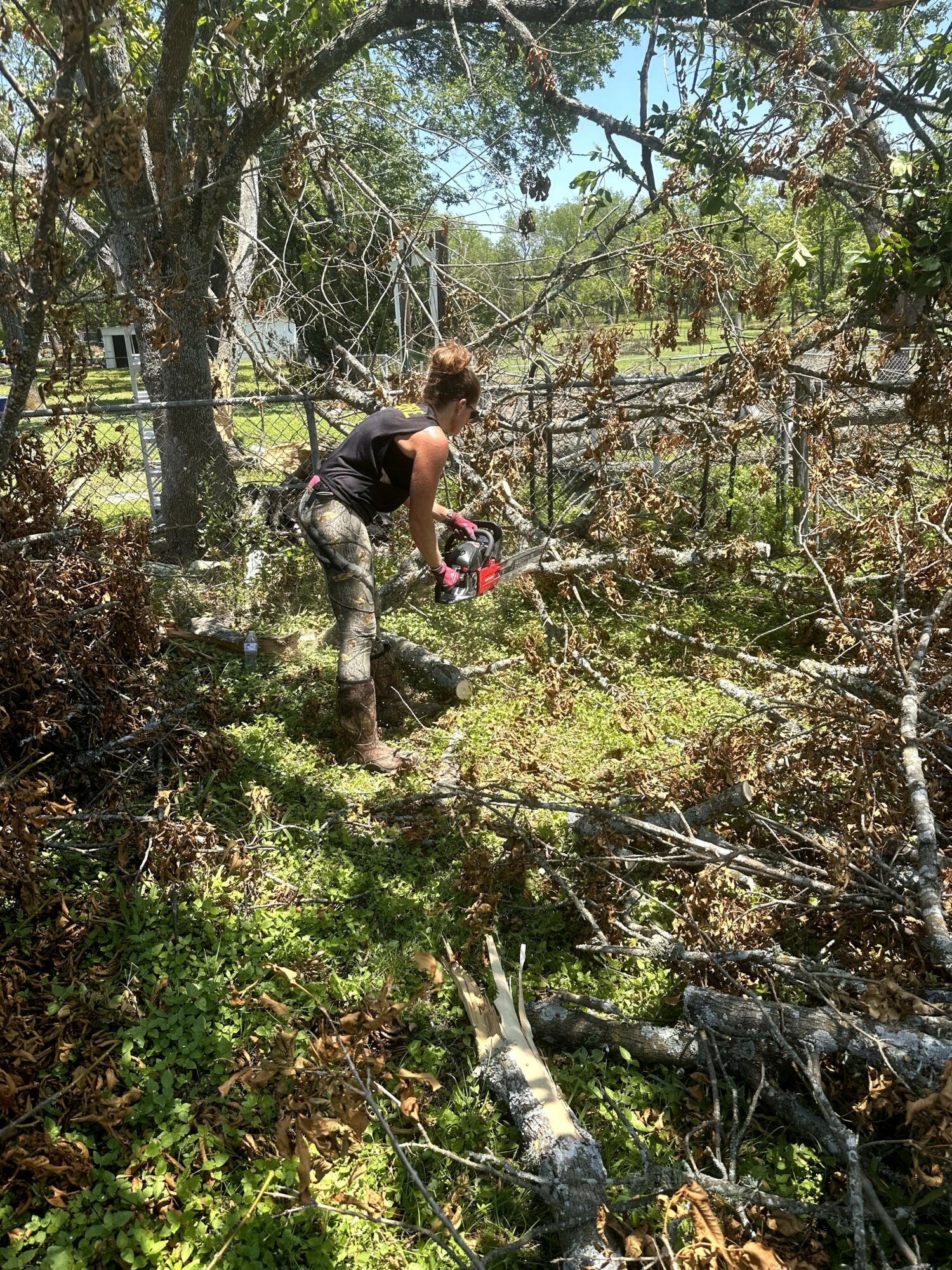
Before doing anything else, we made sure the residents in the immediate area were accounted for and safe — confirming no one was trapped, injured, or missing. Once we knew everyone nearby was out and okay, we walked back to our truck, unloaded our chainsaws and tools, and began moving toward the homes that were completely blocked in.
We started by clearing access routes so families could safely enter and exit their properties and so emergency and utility crews could reach areas that were inaccessible. From there, we went door to door — checking on residents, asking what they needed most, and helping remove massive trees that had fallen through roofs, across driveways, and onto vehicles.
We worked until we physically couldn’t anymore. It wasn’t until we were heading home late that evening — covered in debris and exhausted — that we began reaching out to others. The need was far greater than what two people could sustain alone.
The next day, more soldiers began showing up. The growth wasn’t the result of a formal announcement — it was relational. The families we helped began telling others. They would share addresses of neighbors or friends who were in critical need, or pass along our contact information so those families could reach out directly. Sometimes we would leave our information and ask them to connect us with anyone they knew who might still be trapped behind debris or unable to manage the cleanup alone.
At the same time, I began posting in local community pages and neighborhood groups, offering help wherever it was needed. Families we had assisted shared their gratitude publicly, and those posts began circulating. Comments would appear with new addresses. Messages would come in late at night. The requests multiplied quickly.
What started as helping one home at a time became a steady stream of calls, messages, and referrals. As the need expanded, I began tracking addresses, organizing priorities, and coordinating volunteers based on urgency and vulnerability — focusing first on elderly residents, individuals with disabilities, veterans, and single parents who had no immediate support.
Very quickly, it became clear this was bigger than us. The volume of need far exceeded what two people could carry alone. And yet, despite the scale, there was an unmistakable sense that we were exactly where we were meant to be. In the middle of chaos, there was clarity. We had not planned for this — but we were positioned for it.
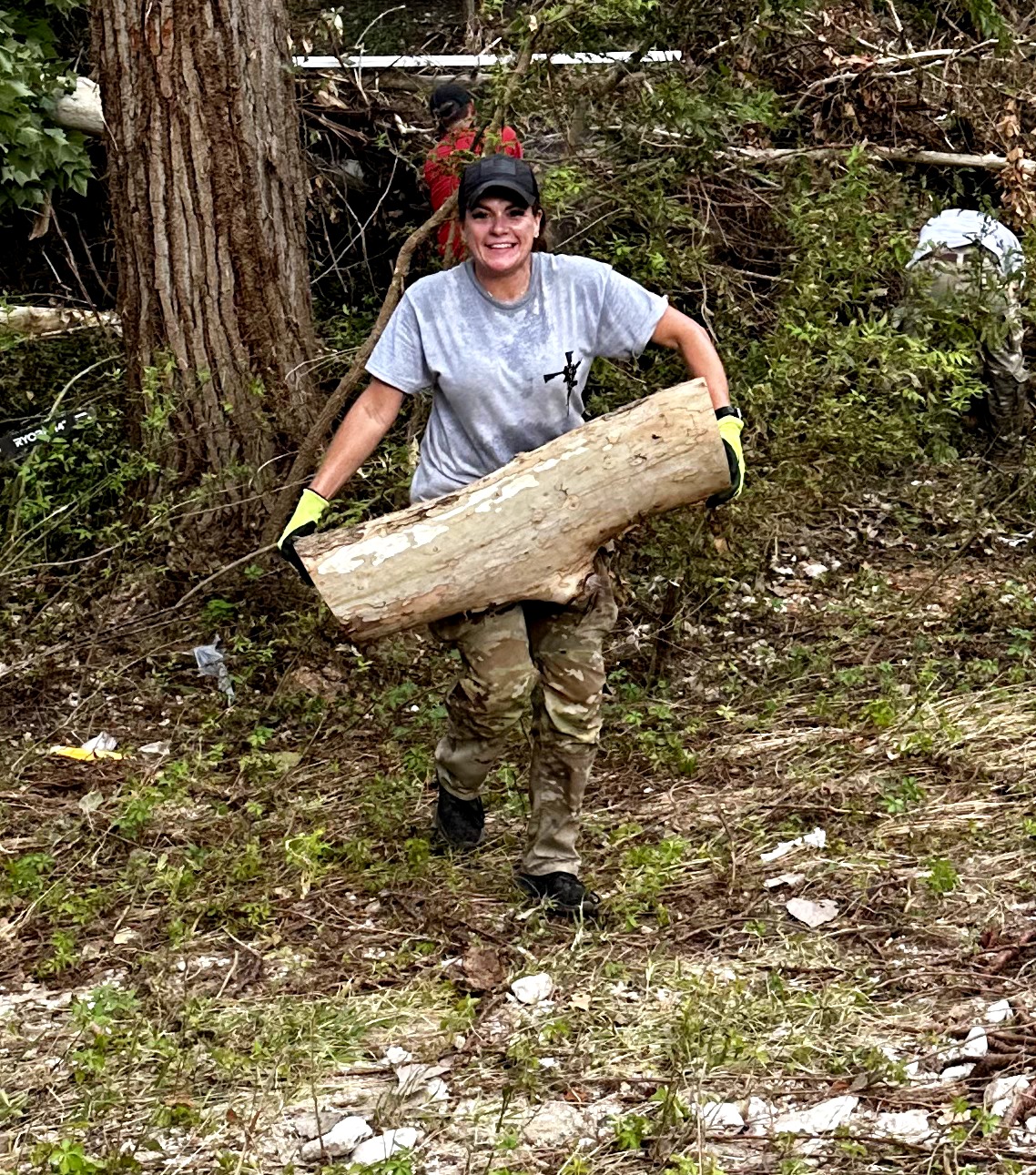
For weeks, the work did not slow down. We operated in 100+ degree Texas heat, moving from address to address, often long before the sun was fully up and staying until we could no longer see clearly. Chainsaws ran for hours at a time. Volunteers battled dehydration, heat exhaustion, and the strain that comes from lifting and dragging debris far heavier than it looks.
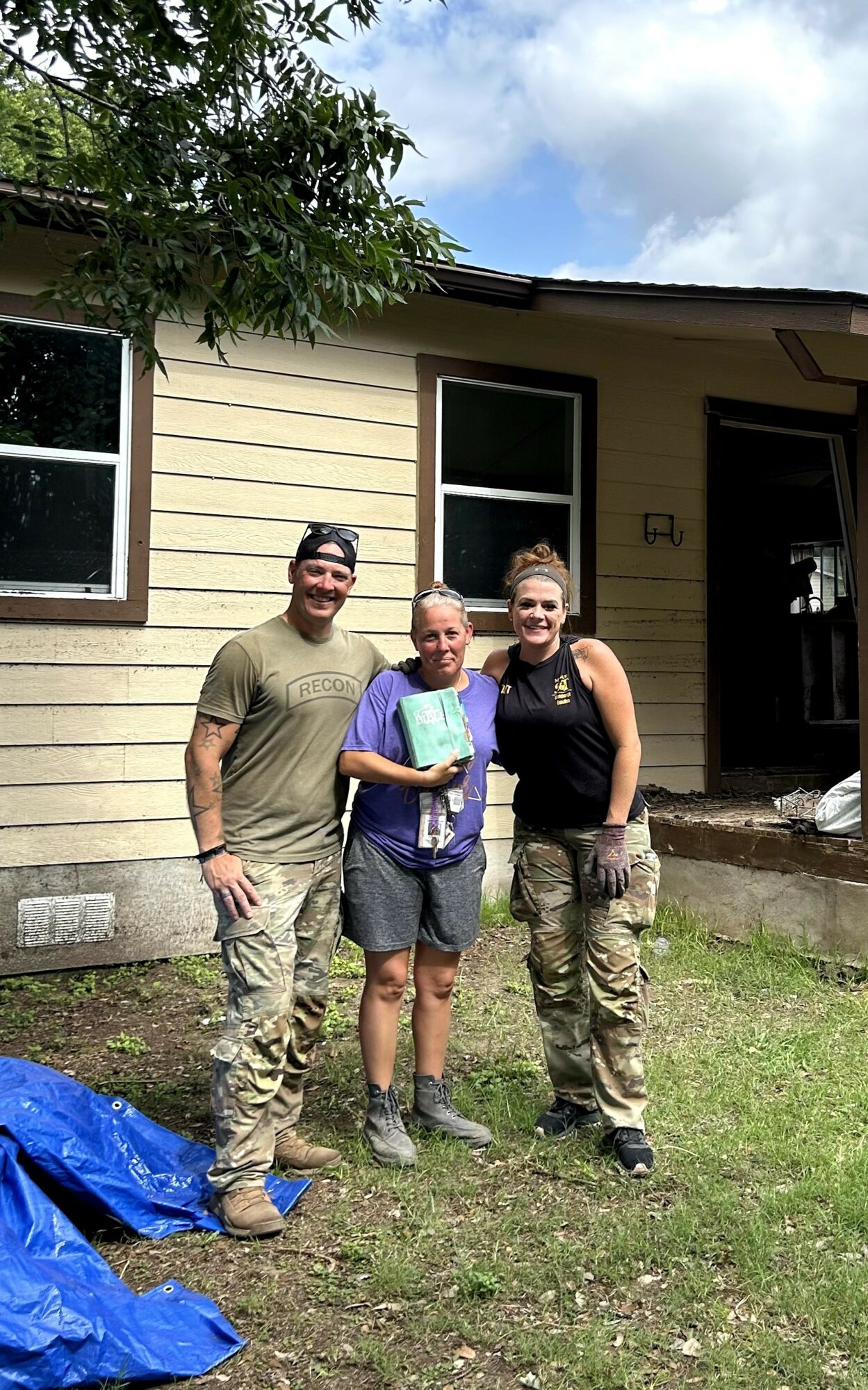
The physical toll was real. But the emotional weight was just as heavy. Some families had lost their vehicles, their businesses, and nearly all of their homes as well. Others were facing such overwhelming debris and structural damage that they needed help simply sorting through it all to determine whether anything at all could be salvaged. Every driveway told a story. Every conversation carried shock, exhaustion, and uncertainty about what came next.
There were nights my body ached so deeply I questioned how I would physically lead the next morning. But each evening, I would go home exhausted, covered in dust and sawdust, and pray — for strength, for protection over every volunteer, for wisdom to prioritize well, and for the right people to show up the following day. And somehow, they did. Day after day, more volunteers stepped forward. More addresses were completed. More families were reached.
By the end of August, we had assisted 197 families and helped a local children’s gym reopen its doors. What began as a decision to stay for one evening had become a sustained, boots-on-the-ground relief effort built on faith, grit, and unity.
That season changed the trajectory of my life.
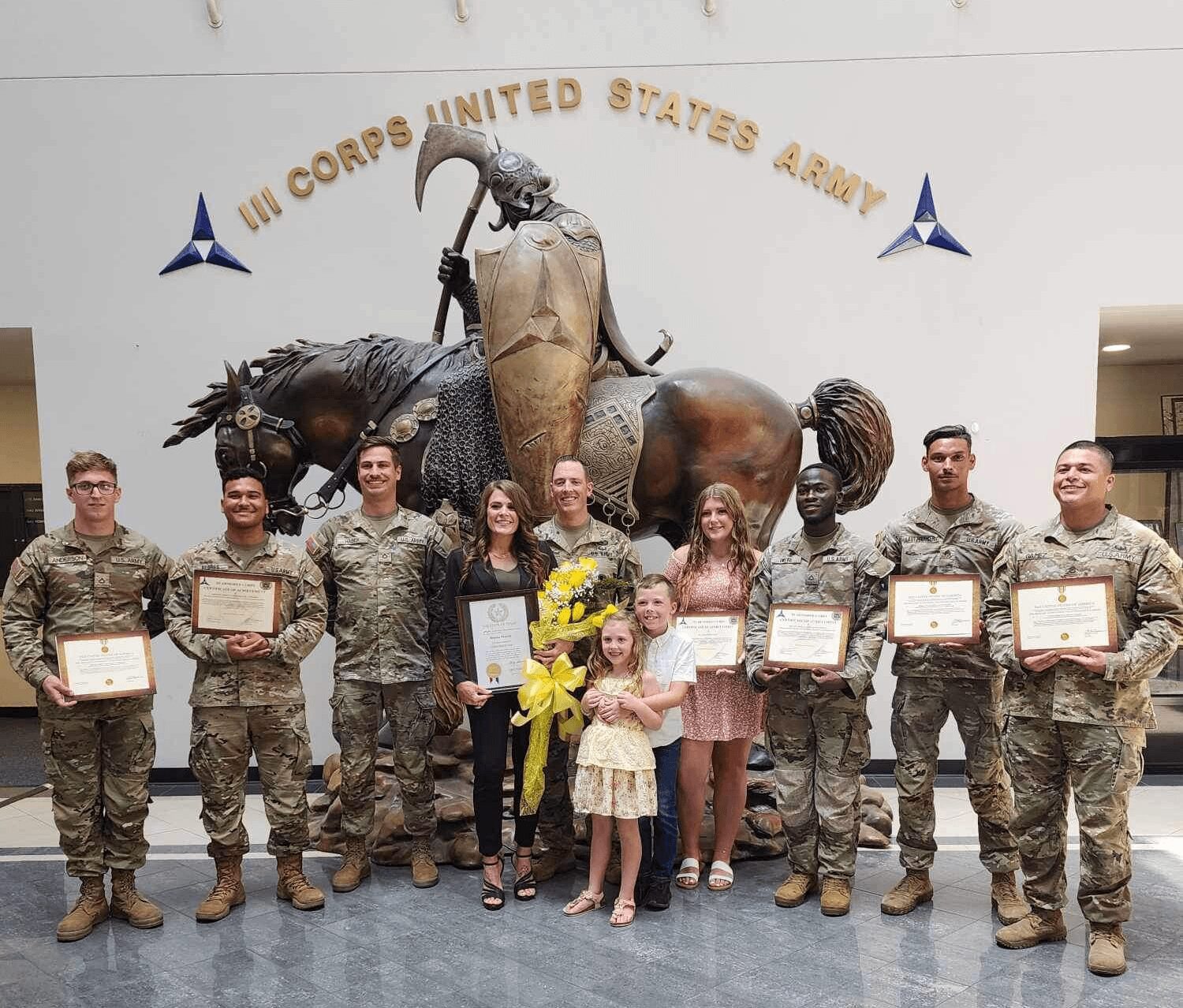
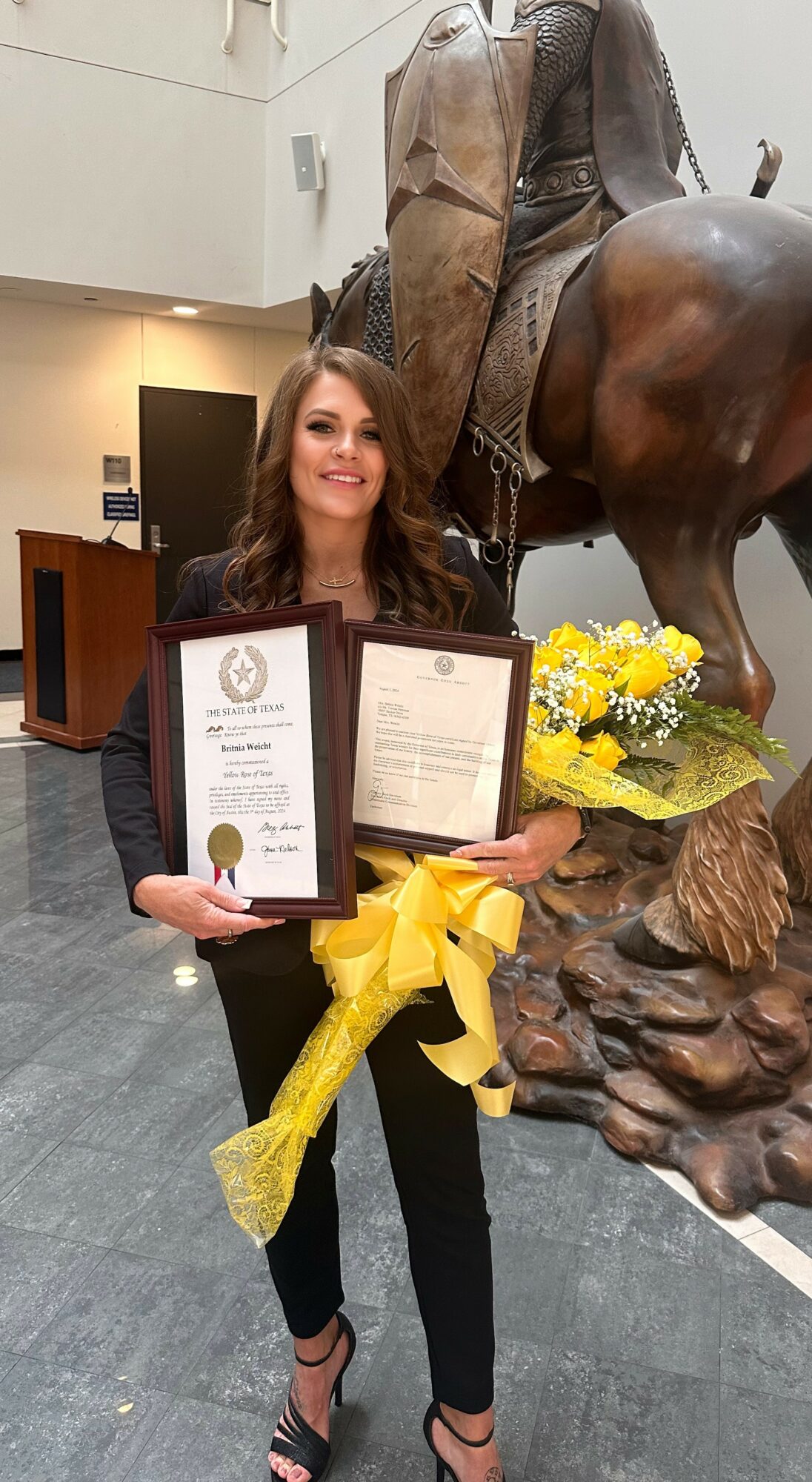
On August 5, 2024, I was commissioned as a Yellow Rose of Texas by Governor Greg Abbott in recognition of our disaster relief efforts. During that season, I personally volunteered more than 1,000 hours in response and recovery work. Our family was also formally recognized alongside the soldiers who served — many of whom worked directly with and under my husband, who serves as a First Sergeant.
These were not ceremonial moments. These were service members who had already completed long military duty days and then chose to continue showing up in the evenings and on weekends to help families in crisis. They sacrificed personal time, rest, and comfort to serve their local community — not because they had to, but because they wanted to. They were not there as uniforms or policies. They were neighbors. They were men and women using their strength, discipline, and teamwork to give back to the community they live in.
Our teenage daughter chose to give up her entire summer to serve alongside us. Our younger children frequently helped where they could. In the middle of devastation, we were able to teach them firsthand the power of serving others in their time of need — that leadership is not about rank or recognition, but about action.
While the honors were deeply meaningful, what mattered most was what they represented. It was unity. It was community. It was people choosing to serve when it would have been easier not to. For me, being commissioned was less about personal recognition and more about confirmation — confirmation that what we stepped into in faith was making a meaningful and lasting impact.
Shortly after that ceremony, my focus shifted to the military families around us. Some I knew personally were quietly struggling. Others had just spent weeks serving their community without hesitation. These families had given so much of themselves to help others, and I felt a strong desire to give something back — to create a way to say, “Thank you for what you’ve done. Now let us serve your family.”
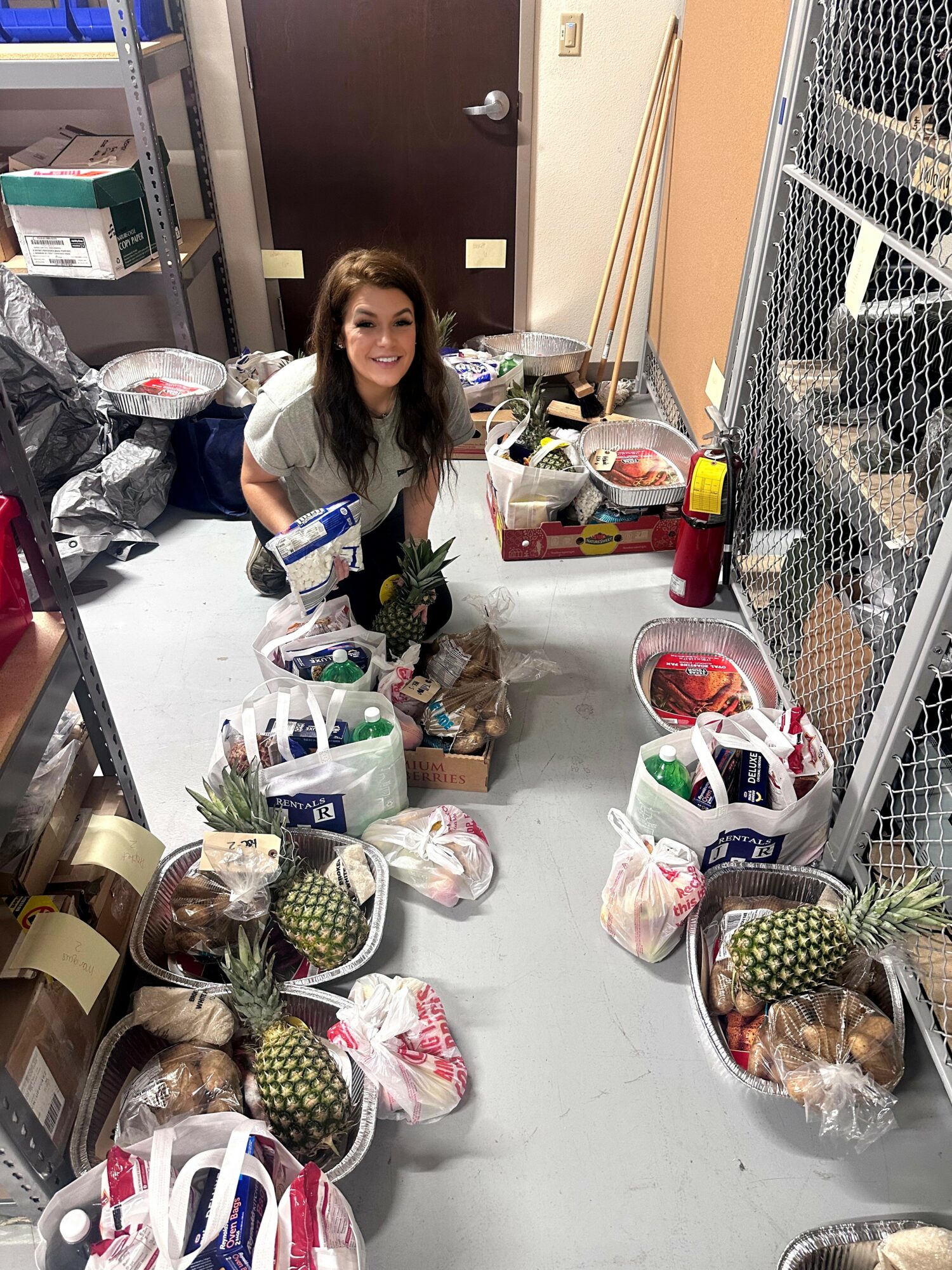
That fall, we launched our Salute to Service Thanksgiving Meal Kit Giveaway. We provided complete Thanksgiving meal kits so families could prepare and enjoy a traditional holiday meal with their loved ones as they normally would. It was not about charity — it was about gratitude. It was the first time I wasn’t responding to destruction. I was building something intentionally.
As Christmas approached, the need became even more visible. More families were struggling than I had initially realized. The financial strain of the season weighed heavily, especially on lower-enlisted service members trying to provide for their children. We expanded our efforts to include Christmas meal kits and personalized gift assistance for military children.
These holiday initiatives became a defining moment for me personally. I was still asking whether this season of service was temporary — or whether it was something I was meant to continue building. I prayed often for clarity.
What stood out most was not only the need, but the response. Even without being formally established, the community showed up. Donations came in. Families expressed deep gratitude. I could see the relief in their faces — the kind that comes when someone feels seen and supported during a difficult season.
During that time, something shifted in me. This no longer felt like responding to isolated moments of crisis. It began to feel like direction. I sensed that God was not simply asking me to step in occasionally, but to build something sustainable — something that would continue serving families beyond one disaster or one holiday season. The idea of formalizing the work felt significant. It meant responsibility, structure, and long-term commitment. But it also meant creating stability and consistency for the families we hoped to support.
After months of prayer and research, I began the legal process of establishing GTC United as a 501(c)(3) nonprofit organization. What had started as immediate, boots-on-the-ground response was becoming intentional and structured. While the formal recognition would not come until October, the foundation work had already begun.
In the months that followed, I focused on building that foundation — forming a board, filing the necessary paperwork, and creating systems that would allow the mission to grow responsibly and endure beyond a single season. But in the middle of that season of building, the next major event unfolded — and this time, it brought unmistakable clarity.
In the early hours of July 4, 2025, historic rainfall caused levees to break across Central Texas. In the Leander area — just an hour from where we lived — eighteen people were initially reported missing, with hundreds unaccounted for across the broader region. Sandy Creek was nearly wiped out without warning. What had been a dry creek bed for years became a violent surge of water, swallowing homes and overtaking entire neighborhoods.
As the magnitude of what was unfolding became clear, so did the urgency. Families were searching for loved ones. Entire streets had been overtaken. The turmoil was immediate and overwhelming. Knowing this was happening so close to home, there was no hesitation. My husband and I mobilized immediately, and members of our team began preparing to follow.
Even before we arrived, I knew. The same conviction I had felt during the tornadoes returned — only this time it carried certainty. The clarity I had been praying for was no longer abstract. It was unmistakable. This was not a coincidence of circumstances. This was my calling.
By the following morning, we arrived in Sandy Creek. The devastation was unlike anything I had seen. Debris fields stretched for miles — twisted vehicles, splintered lumber, boats lodged in trees, and fragments of entire homes tangled together in layers of wreckage. Personal belongings — photographs, furniture, children’s toys — were scattered and buried beneath mud and debris, pieces of people’s lives displaced in an instant.
In some areas, the destruction was so complete that residents could not identify where their homes had once stood. Others searched along their property lines, unable to find a single board from what had been their house just days before. The entire community was still searching. Family members moved through debris calling out names, hoping for answers.
Federal support was limited in those early stages, and the scale of the area far exceeded the responders available. Certain sections remained inaccessible as floodwaters blocked EMS and fire department entry points, isolating parts of the community and slowing response efforts. It was not just destruction. It was shock. It was uncertainty. It was heartbreak unfolding in real time.
Our mission immediately centered on assisting with search efforts. Communication was nearly nonexistent — cell service was down, and information traveled primarily by word of mouth in the midst of chaos. As hours passed and the reality became clearer, the mission shifted to search and recovery. That transition carried a weight far beyond physical exhaustion.
We worked alongside emergency responders, families, friends, and neighbors, focusing on the most difficult terrain where debris had settled and access was limited. We walked unstable riverbanks, crossed to search the opposite side, navigated strong currents, and carefully documented vehicles and areas of concern to assist law enforcement in accounting for the missing.
As the days progressed, the environment grew increasingly difficult. Insects swarmed. Mold and mildew spread quickly in the heavy humidity. Displaced animals wandered through debris fields. The air felt thick, and conditions became hazardous — both physically and emotionally. What we were witnessing carried a different kind of weight than the tornadoes. The grief here was layered with loss of life.
After nearly two weeks, the final missing individual was recovered. Nine lives were lost in that area.
As recovery operations continued, our efforts transitioned into debris removal and stabilization. Fuel quickly became one of our largest operational expenses as we made repeated trips between Belton and Leander to serve residents in Sandy Creek. While many volunteers covered their own travel costs, my husband and I provided fuel, chainsaw supplies, hydration packs, electrolyte replacement, first aid materials, safety equipment, and other essentials to support our team. Community food donations allowed us to concentrate our resources on protective gear and recovery tools. But beyond the physical work, we listened.
As we connected with residents — offering emotional support and sharing counseling and therapy resources — we began hearing the stories many had carried quietly since the flood. It became clear that this tragedy would mark their lives long after the debris was cleared. The trauma was deep — especially for the children — and long-term healing would be essential.
Before the school year began, we hosted a family-centered event specifically for the children of Sandy Creek. While parents navigated displacement, insurance claims, and FEMA processes — often unsure what would be covered or when help would arrive — we wanted to create a space where children could simply be children again. In partnership with the local fire station, who generously hosted the event, families gathered for lunch, bounce houses, school supplies, toys, and fire truck tours. For a few hours, laughter replaced anxiety. Smiles returned. It was powerful to witness joy breaking through in the middle of grief.
Through a partnership with the YMCA, we were also able to provide children with access to youth sports programs at no cost. What began as a single event grew into something more meaningful — rebuilding trust, strengthening relationships between residents and first responders, and restoring a sense of connection after unimaginable loss.
At that time, we had not yet been formally recognized as a nonprofit organization — that recognition would not come until October. The lack of formal status created additional challenges in securing supplies and structured support. The community was also facing instances of looting, and some donated shipments were stolen before reaching families in need. Even in the middle of tragedy, brokenness revealed itself in unexpected ways. But it did not deter us.
Throughout the Sandy Creek response, we directly assisted approximately 80 families through search support, debris removal, stabilization efforts, emergency aid, grocery assistance, donation coordination, and emotional care. We secured food and essential supplies by locating donations within surrounding communities, coordinating pickups, and delivering items directly to displaced families who had lost nearly everything. We also walked families through FEMA applications, assisted with grant filings, and connected them with additional resources to help stabilize their next steps.
Beyond the physical labor, we sat with people in their grief. We listened. We stood in silence when there were no words to offer. And our support did not end when the debris was cleared. We continue to walk alongside Sandy Creek residents in Phase 2 of recovery, providing ongoing stabilization, resource coordination, and emotional support as families rebuild.
In total, we were honored to serve those same 80+ flood-impacted families again during our Christmas Assistance Initiative. Over the 2025 holiday season, we also carried forward our established programs — Salute to Service Thanksgiving and Operation Christmas Joy — providing Thanksgiving meal kits, Christmas meal support, and personalized gift assistance for military children. These initiatives have become a consistent and ongoing part of our mission, ensuring that families are supported not only in moments of disaster, but also during the seasons when stability, dignity, and hope matter most.
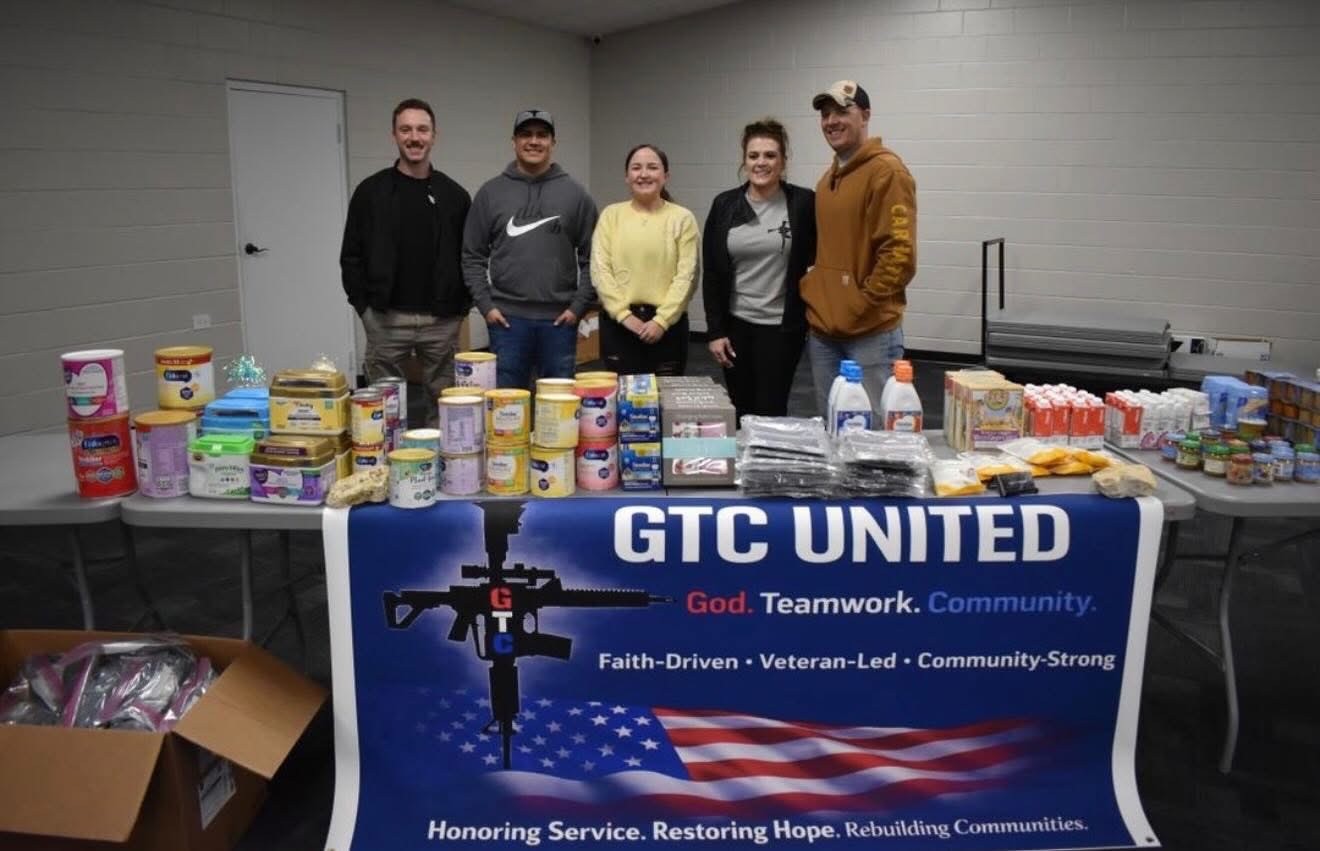
As the work continued to grow, so did our programs and outreach. From the beginning, the vision for GTC United extended beyond emergency response. It was about creating year-round stability for anyone in the community facing hardship. One of the ways we have done that is through Market with a Mission — a partnership-led food and essentials drive coordinated alongside multiple local veteran-led partners. Together, local businesses, volunteers, and community leaders create a space centered on connection, support, and celebrating the hard work and heart that keep our community strong.
This program provides food and essential household assistance to anyone in need — without excessive red tape, tracking systems, or burdensome paperwork. We understand that hardship can impact anyone, often unexpectedly. Sometimes families simply need help bridging a temporary gap, and we believe that support should be accessible with dignity.
During our most recent four-month cycle, which concluded in January, Market with a Mission distributed more than 58,000 pounds of food and thousands of essential household items into our local community. The impact was especially significant following the government shutdown and during the Christmas season, when many families — both military and non-military — were navigating financial strain. By removing barriers and offering essential groceries and household items freely, the program helped stabilize households during a vulnerable time.
In addition, we established the Medical Supply & Equipment Access Program to provide essential medical supplies and temporary medical equipment to individuals and families who need immediate support. This program was specifically designed to stand in the gap for those waiting on insurance approvals or without coverage, ensuring they do not have to delay receiving the items necessary for daily living.
Whether someone is awaiting authorization for mobility equipment or requires short-term use of essential medical supplies, the goal is to provide immediate access without unnecessary delay — helping preserve safety, independence, and stability while longer-term solutions are secured.
What began as stepping into moments of crisis has grown into a structured, faith-driven organization committed to strengthening families year-round — in disaster, in hardship, and in the quiet seasons in between. Yet even as the organization has grown, I often reflect on how this journey began.
During those early efforts, I did not recognize it as a calling. I simply felt compelled to be present where the hurt was. I did not carry a powerful title. I was just a woman who felt led to show up. It wasn’t until later — after months of serving, praying, and seeking God for direction — that He began making it clear this wasn’t random. This wasn’t just a moment. It was the beginning of something He had been preparing me for long before I understood it.
For a long time, I did not understand why so much hardship marked my story. But over time, I began to see that while God did not waste the pain, He also did not leave me in it. He used it to refine me — transforming my painful experiences into purpose and passion. What could have broken me instead became fuel — shaping my compassion, strengthening my resolve, and igniting a deep commitment to use my story to bring hope to others.
There have been long nights and personal sacrifices. Seasons of exhaustion. Moments of uncertainty. Times of stretching beyond what felt comfortable. And yet, time and again, He provided — through volunteers, unexpected resources, open doors, and divine connections that could not have been orchestrated by human effort alone.
What began as simply responding to need deepened into something far greater: a calling to stand in the gap for military families, veterans, disaster survivors, and neighbors facing hardship.
It was a profound honor to receive the Order of St. Joan D’Arc Award, bestowed by the United States Army in recognition of significant voluntary contributions to the morale, spirit, and welfare of the Armor and Cavalry communities. To be acknowledged in this way is both humbling and deeply meaningful.
I received this recognition with sincere gratitude, not as a personal achievement alone, but as affirmation of the very purpose behind why I founded GTC United. Serving soldiers and military families has never been a programmatic objective — it has been a calling. As a veteran-led organization, my entire team and I share that conviction. Supporting the morale, spirit, and welfare of those who serve is woven into the very foundation of who we are.
Among the soldiers and their families, I’m often called “First Mom,” and at times “Mrs. Top” when a firm reminder is necessary. Both titles are names of endearment that reflect trust, relationship, and care — and I hold them close to my heart. To stand beside those who serve, to support their families, and to be welcomed into their lives in that way is the true honor.
Today, GTC United continues to evolve — with expanding programs, stronger operational systems, and a growing footprint across Central Texas. What began as immediate response efforts has matured into sustainable initiatives serving military families, veterans, and communities impacted by crisis throughout the year.
As we strengthen our foundation, we are actively developing additional programs designed to further support families across our region. Pending partnerships, funding, and community support, we hope to soon implement new initiatives — including one specifically focused on serving active-duty military members, veterans, and their families, and another designed to benefit our broader local and surrounding communities. These programs will allow us to expand our reach throughout Bell County and neighboring areas while ensuring sustainable, long-term impact.
If this journey has taught me anything, it is that you do not need a title to make an impact. You need a willing heart — and the resolve to keep going when it would be easier to stop. Purpose does not always arrive as a clear assignment. Sometimes it begins as a burden you cannot ignore — a quiet conviction that refuses to let you walk away. When you choose to step forward in faith, even imperfectly, God meets you there and does what you could never accomplish on your own.
Every person matters. Every soul carries value — regardless of who they are or what they have done. And when we allow our own pain to be refined into strength, we gain the ability to help others walk through theirs.
Alright, so let’s dig a little deeper into the story – has it been an easy path overall and if not, what were the challenges you’ve had to overcome?
No — it certainly hasn’t been a smooth road. From the very beginning, we’ve faced constant obstacles and unexpected challenges. Some seasons have been incredibly difficult, but those challenges have also played a significant role in shaping both me and GTC United into what we are becoming.
When the tornadoes hit Temple and Belton in 2024, GTC United didn’t formally exist. There was no nonprofit structure, no funding model, and no operational blueprint. My husband and I simply showed up because we couldn’t ignore the devastation. What began as helping a few families quickly expanded into serving nearly 200 households. We were coordinating volunteers, managing logistics, navigating compliance questions, and stewarding resources in real time — often late at night after full days of debris removal in extreme Texas heat.
One of the greatest ongoing challenges has been building infrastructure and long-term sustainability. We are still in the early stages of establishing consistent funding streams and strengthening the internal framework that allows the organization to grow responsibly. Much of our support has come through event-based sponsors and program-specific partnerships rather than recurring operational funding.
When we formally established GTC United in 2025, my husband and I made significant founder investments to ensure the mission could move forward without interruption. There were immediate needs — filing fees, compliance costs, supply purchases, fuel, equipment, and administrative setup — and delaying action while waiting for funding would have meant delaying support to families who needed help in real time. We chose to invest personally to protect the momentum and integrity of the work, trusting that sustainable partnerships and long-term support would be built through consistency and stewardship. At the same time, we relied heavily on in-kind donations and volunteers who often covered their own fuel, equipment, and supplies.
Behind every public initiative is a substantial amount of unseen work — developing policies, ensuring compliance, documenting impact, strengthening governance, and building administrative systems that create accountability and transparency. Growth requires more than momentum; it requires structure.
Today we are actively working to secure office space, identify storage solutions for disaster relief supplies, formalize governance policies, and build scalable systems that allow us to expand responsibly. We are also cultivating strategic partnerships and developing relationships with recurring donors who can help sustain the infrastructure behind the mission. Even for organizations that demonstrate strong impact early on, building trusted partnerships and long-term funding relationships takes time. Trust is earned through consistency, and sustainability is built through patience and stewardship.
We are also navigating the compliance and operational planning required to establish a food and essentials drive on base at Fort Hood — a process that requires coordination, approvals, and collaboration across multiple levels.
Another challenge has been the emotional weight of the work itself. Disaster relief and military family support place you face-to-face with real hardship — families rebuilding after catastrophic floods, service members navigating financial strain, and veterans carrying invisible wounds. Leadership in this space is not just strategic; it is deeply personal. You don’t leave it at the office. You carry those stories home with you.
There have been moments of exhaustion and uncertainty — moments when the path forward wasn’t entirely clear. But through every obstacle, clarity has grown stronger.
What began as responding to one storm has grown into a long-term commitment to building something sustainable — faith-driven, veteran-led, and community-strong. The road hasn’t been easy, and much of the foundation is still being laid. But every challenge has strengthened our resolve, sharpened our leadership, and deepened our commitment to stand in the gap for families when they need hope most.
We are still growing. Still establishing. Still building.
And that process — though not smooth — has been purposeful.
Thanks for sharing that. So, maybe next you can tell us a bit more about your work?
While GTC United represents a collective effort, what people often recognize about me is a strong work ethic and a willingness to lead from the frontlines. I believe deeply in leading by example. I would never ask someone to carry a responsibility that I am unwilling to carry myself. Whether the work is visible or happening quietly behind the scenes, it all matters.
My faith is inseparable from who I am, and that is something people quickly notice. My relationship with Jesus Christ anchors everything I do. Over time, I have learned that our greatest misery can often become the foundation for our ministry. I understand the cost of pain, and I understand the weight of carrying that pain alone, ignored, or in silence. In seasons of crisis, despair, and uncertainty, people are often at their most vulnerable.
That understanding fuels my advocacy for mental health awareness and suicide prevention. When I share parts of my story, I do so humbly in hopes that someone else realizes they are not alone on the battlefield. Sometimes all a person needs is someone willing to be a light in a dark moment and offer enough encouragement to help them take one more step forward.
Connection has always mattered deeply to me. I want people to feel seen and understood. Whether sitting quietly with a grieving family, consoling someone in tears, helping someone navigate local resources, or strengthening partnerships within the community, relationship always comes first.
I have often been told that one of the things that sets me apart is my grit — the determination to fight for what I believe in while still wearing my heart on my sleeve. My husband often tells me that my most unique quality is my ability to truly understand people individually and recognize how they are feeling. He says I have a profound ability to respond with care and compassion, especially when it matters most.
Empathy has always been at the center of how I lead. I do not approach people with judgment or a desire to “fix” them. Instead, I try to walk alongside them while offering support, resources, and encouragement in a way that builds trust and creates space for hope and healing.
I have also been told that I am known for a compassionate and nurturing presence — the kind that keeps going even when situations are messy, exhausting, or uncertain. My past experiences have shaped me, but I do not allow them to define me. Instead, they have deepened my compassion and strengthened my resolve. Because I understand hardship personally, I am able to serve others with authenticity and determination.
I believe compassion and capability can coexist. Strength and softness are not opposites. I have been blessed with the ability to operate in many different spaces, and I am always committed to learning. Whether I am building policies and managing administrative infrastructure or out clearing debris, running chainsaws, dragging trees, or operating heavy equipment, I am willing to do whatever the work requires.
This is why I speak openly about mental health, suicide prevention, PTSD, addiction, and crisis recovery — conversations many people avoid but that are deeply necessary. Advocacy is personal for me.
Looking back, I can clearly see God’s hand guiding every step of my journey. Even during seasons when I did not understand where my path was leading, He was there. The tragedies and layers of trauma I endured were not random chapters of pain without purpose. While there are still parts of my story I have not yet shared — because my testimony is vast and still unfolding — I know I never walked through those fires alone.
What I am most proud of is not my own effort, but my family and our team, and the meaningful impact we have been able to build together even while still in the early stages of infrastructure. They have embraced this mission wholeheartedly. They show up to serve others regardless of their own challenges, living a life that chases Jesus and seeks to bless others. They strengthen me just as much as I strive to strengthen others, and I am deeply grateful for the village that stands beside me with unity, discipline, and love.
At the core of everything I believe is this: every person has a story, and every person carries the deep desire to be seen, understood, and loved. Loving others well — especially in their darkest moments — is who we are called to be. It means reminding people that their life matters, that they have purpose, and that they are wonderfully and fearfully made.
We may not be able to change the world for everyone, but we can change the world for someone.
We’d be interested to hear your thoughts on luck and what role, if any, you feel it’s played for you?
I don’t personally view much of what has happened in my life or in building GTC United as luck — good or bad. I tend to see it more as providence and preparation.
There have certainly been moments that could look like “good luck” from the outside — the right volunteer showing up at the right time, an unexpected donation arriving when resources were running low, or an opportunity opening just as we were stepping into something new. But I don’t believe those moments were random. I believe they were blessings — the result of prayer, persistence, and simply being willing to move when the path became clear.
At the same time, there have been circumstances others might label “bad luck” — vehicle breakdowns during active disaster response, funding gaps while building infrastructure, or the emotional weight that comes from carrying the stories of people who are hurting. Yet even those moments shaped the organization in meaningful ways. They forced us to strengthen our systems, refine our mission, build better structure, and rely on faith rather than comfort.
Building a nonprofit in its early stages requires resilience. You often have to step forward before everything feels secure. If I had waited for certainty, GTC United likely would not exist. What sustained us wasn’t luck — it was conviction.
As a faith-driven organization, I believe God opens doors, closes others, and uses both progress and pressure to refine purpose. The challenges have strengthened our foundation just as much as the victories.
So while others may call certain moments lucky or unlucky, I tend to see them as part of a larger journey shaped by faith, perseverance, and a willingness to keep serving — even when the path forward isn’t easy.
Contact Info:
- Website: https://gtcunited.org/
- Instagram: https://www.instagram.com/gtc_united1/
- Facebook: https://www.facebook.com/GTCunited1/
- Linkedin: https://www.linkedin.com/in/britnia-weicht/
- Youtube: https://www.youtube.com/@GTCUnitedReliefMission