



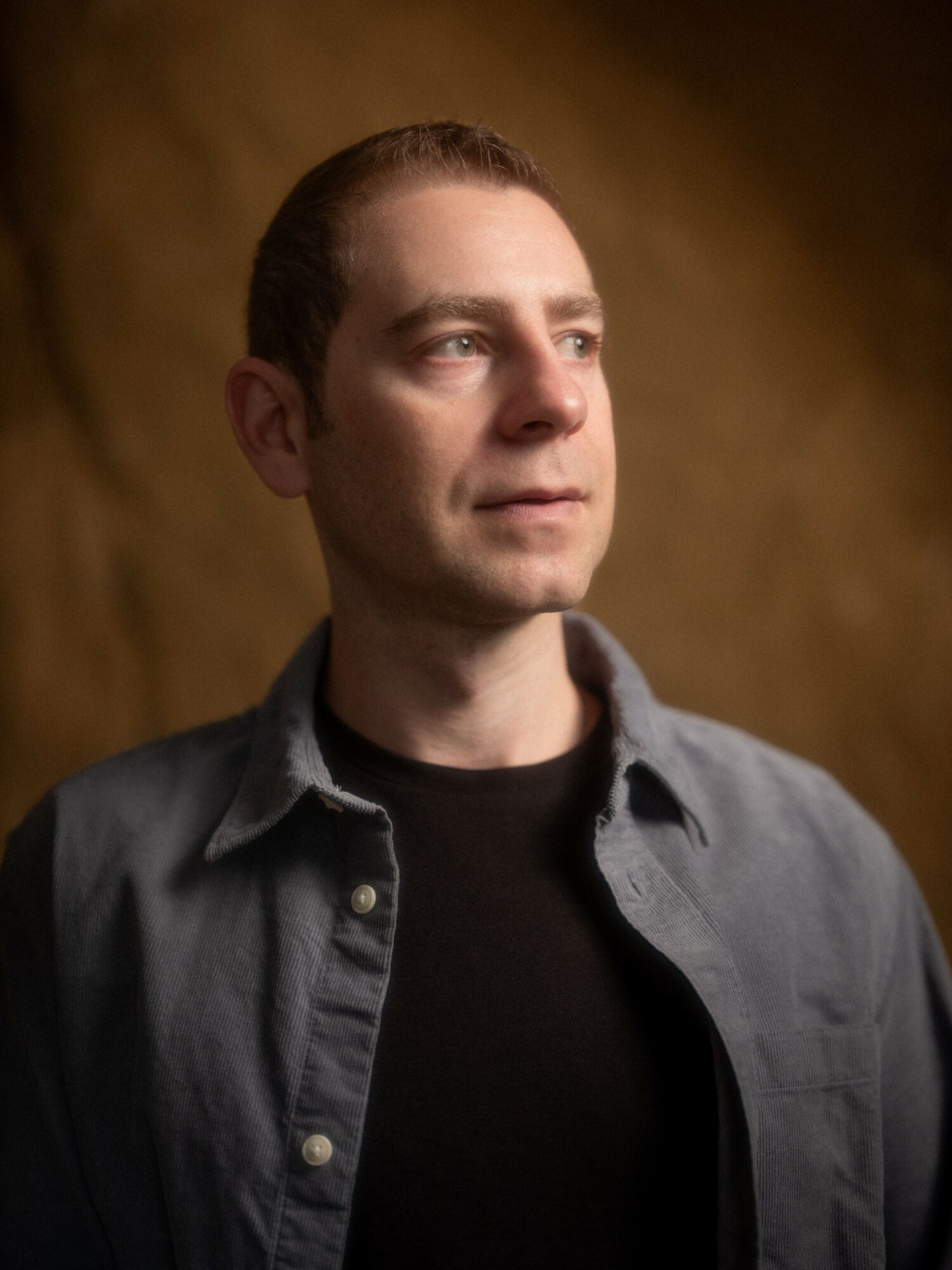
Today we’d like to introduce you to Mike Bass.
Hi Mike, so excited to have you with us today. What can you tell us about your story?
I began learning the guitar at 12 years old, and songwriting shortly after that. Diving into guitar was a key factor in helping me through the loss of my grandfather while navigating high school. I quickly figured out that I could channel my emotions through music, and it became a form of therapy.
We all experience pivotal moments, when we know there is a before & after version of us, whether in pursuing a craft or anything else. One of those moments for me was in college when I went to a concert that had four musicians on stage who incorporated percussion on the guitar while playing (also referred to as finger-style guitar). Witnessing this absolutely floored me, and I knew I wanted to include it in my own music. The musicians I heard were mainly instrumental artists, but I wanted to blend the percussion into my own indie-folk style.
I had to take a language as a requirement in college for my major, I noticed the Japanese department looked great, so I decided to try it. I fell in LOVE with the language from the first class and became obsessed with studying it. I took it for two years, and then did a two-month home-stay program Hakodate, Hokkaido that my professors were involved in. It was a full immersion experience — learning Japanese language and culture during the day and staying with a family who doesn’t speak English. After the two months, I knew I wanted to find a way back to Japan, so applied to the JET Program and got placed in my hometown’s sister city, Ostu-shi, which is about 10 minutes outside of Kyoto. (My hometown is Lansing, Michigan).
I taught English as a second language in public junior high schools for three years, while continuously working on my Japanese skills, and having monthly gigs in British and Irish pubs in Kyoto. It was during this time that I started adding Japanese lyrics to my music.
A common class activity was to take a popular song, like Stand By Me or Take Me Home, Country Roads, print out the lyrics, omit some of them, play the song in class, and have the students listen and fill in the blanks that they hear. It was a great activity, but I noticed that it didn’t really pertain to vocabulary my students were learning at the time. So I took their English textbook, and for each chapter wrote an original song that used all of the vocabulary from that chapter. We then did the same activity in class, and it got a great response because the songs contained all of the vocabulary they were actually learning at that time. I turned that project into an interactive CD called The Moon Through My Window (named after the title of the first song I wrote for the project), where the worksheets and answer sheets were embedded in the CD and would automatically open when it was inserted into a computer/laptop. At least for a time, English teachers around Shiga Prefecture began using it as a class activity. It was fun to make. 🙂
I moved back to Lansing, Michigan, and eventually began working for my family’s company, Friedland Industries, Inc. Friedland is a scrap-recycling company that processes primarily metals and paper, as well as some plastics and electronics, so they can be re-melted (or re-pulped in the case of paper) at mills, foundries, and refineries. From there, they are made into new sheets or rolls of metal/paper that manufacturers can then buy to make new products. It’s an exciting industry that plays an important role in society, so I’m proud to have grown up in it and knowledgable of it, but I knew I wanted to pursue music. I was still gigging on the side and always writing, but it was hard to put more of my focus on it.
It was also during this time that an unlikely, beautiful thing was created — ScrapFest.
A local videographer, David Such, came to my dad and said he had an idea for a scrap metal sculpture competition, and wanted to know if Friedland would be willing to host it. Coming from a family of artists who value art, my dad said “Of course.” I was still living in Japan for the first year, but quickly got on the committee that was putting ScrapFest on from its second year. I took over as director in 2018, and have been co-directing it with my friend, Heather Muylle-Mossing ever since. Here’s how it works…
Teams get an hour to pick up to 500 lbs of scrap metal (or 250 lbs for the Small Category) from Friedland Industries in early May. They then get one month to make a sculpture. Then in mid July, we shut down the main street in Old Town Lansing, and line the street with all of the sculptures. The sculptures are juried (1st, 2nd, 3rd, and People’s Choice) and they are also sold via silent auction.
We are now in our 16th year, and ScrapFest has grown from a simple scrap metal sculpture competition into a full festival that people come from all over (even internationally) to see the competition, along with booth artists that focus on reusing materials to make their art, live music, a ReFashion Show that focuses on making garments using scrap fabric, family activities, and a live demonstration area where people can try welding. We’ve also started a documentary series featuring the artists who participate in the competition, focusing on them as people — their ups and downs, and obstacles they’ve overcome — while following along as they build their ScrapFest sculpture.
It was around the time that I took over as director of ScrapFest that I took my dad out to lunch and told him I wasn’t happy, and that I still want to direct ScrapFest, but if I don’t pursue music for real now, I don’t know if it will ever happen. I’ve been very lucky that both he and my mom were supportive of me making the change (and they still are!).
So while still working on ScrapFest, I began gigging around Michigan as much as I could. I was about a year in when the pandemic happened. When all of my gigs got canceled, I found Twitch and saw musicians on there earning an income, so I gave it a shot. As people started discovering my channel, it was the first time I had people requesting my original music again and again. This was another pivotal moment for me — realizing that pursuing music can mean a lot of different things. For example, I like to do private house concerts, and to this day, most of the house concerts I’ve done have been a direct result of the hosts first becoming part of my Twitch community.
It was also around this time that I met one of my best friends in Austin, Taylor Alexander. Along with Twitch, Twitter was another place that was fun during the pandemic, particularly the audio side of it called Twitter Spaces at the time. You could request to go on “stage” and you could unmute your mic and play for hundreds of people. There were a lot of musicians doing this, and that’s how Taylor and I met.
As venues began opening back up, Taylor and I were performing at the same festival, and I told him I had been thinking about moving to Austin. He told me to come visit, stay at his place, sit in on his gigs and play during his breaks to see how I felt about the scene. I was deciding between Austin and Nashville, both of which are great cities, but Austin fit my personality more, and the musicians I met while visiting Austin were incredibly welcoming. Plus, I couldn’t get over the paid-gig opportunity here. Within a 10-minute radius of downtown, seven days per week there’s live music. After visiting Austin for a month and getting a great introduction to the scene from Taylor, I knew I wanted to make the move within the year.
ScrapFest takes year-round planning, but my team and I have gotten it to a point where most of the planning can be done remotely during the off-season. I moved to Austin in October 2024, and have hit the ground running through a mixture of performing with Taylor and other friends, my own solo gigs, and working on ScrapFest.
Taylor and I have also created a show called Song Swap ATX. It’s a songwriter’s round-style show, where there’s three or four songwriters on stage, going several rounds of playing their original songs. The Austin twist to it is that instead of remaining quiet, the other musicians are encouraged to jam along with the person leading the song. In doing this, we get a chance to showcase musicians who are doing the thing — they’ve already put the 10,000 hours in and/or are clearly pursuing the craft and know how to elegantly share the stage with others. We also record it and put it out as a podcast, so people outside of Austin can see/hear the kind of music Austin has to offer. Our goal is to have people, when asking their friends what they should do when they visit Austin, get a response like “You HAVE to go see a Song Swap ATX show!”
So I’ve been here for a little over a year, and I’m grateful every day to have made the move to Austin. Just having friends who inspire me, who I get to gig with regularly, has already pushed me to become a better musician. And that’s what I want to continue to focus on — constantly improving at the craft.
Would you say it’s been a smooth road, and if not what are some of the biggest challenges you’ve faced along the way?
Oh my bad I think I put much of the obstacles/challenges in the last question. There’s definitely been bumps along the way…
One thing that I didn’t mention in the last question that has been an ongoing obstacle for me has been imposter syndrome and confidence. Moving to Austin and being around the right group of friends has helped me overcome that in myriad ways. What helps is knowing that we each have strengths that inspire each other. When you have friends who have a skillset you don’t have yet, and they help explain the steps they took to get great at it, you realize that just like everything else, it’s simply reps. After a few basic pointers, just keep putting the reps in on the thing you feel least confident in, and watch yourself improve over time.
Thanks for sharing that. So, maybe next you can tell us a bit more about your work?
Again my apologies, I wrote about much of this in the Story section, but here’s one thing I didn’t mention that is the case for both music and anything else.
I think one thing that sets me apart from others is that I know how to take a project from idea to reality. Whether it’s something we’re trying to implement for ScrapFest, or for Song Swap ATX, or anything else, I know how to break things down into actionable steps.
We’d be interested to hear your thoughts on luck and what role, if any, you feel it’s played for you?
I’m not the first person to express this, but I feel that luck is where hard work meets opportunity. Luck can happen, but it’s all of the reps that you put in prior to that that allow you to show up when an opportunity presents itself. There are just as many times when I’ve been grateful that a stroke of “luck” didn’t happen until it did, otherwise I wouldn’t have been ready for it.
Contact Info:
- Website: https://mikebassmusic.com
- Instagram: https://instagram.com/mikebassmusic
- Facebook: https://facebook.com/mikebassmusic
- LinkedIn: https://www.linkedin.com/in/mikebassmusic/
- Twitter: https://x.com/mikebassmusic
- Youtube: https://youtube.com/@basumaiku
- Other: https://open.spotify.com/artist/05RnSx9RxqQcxcVxniQiLH?si=7lKT5gJjSuiRKFPqfivAMQ
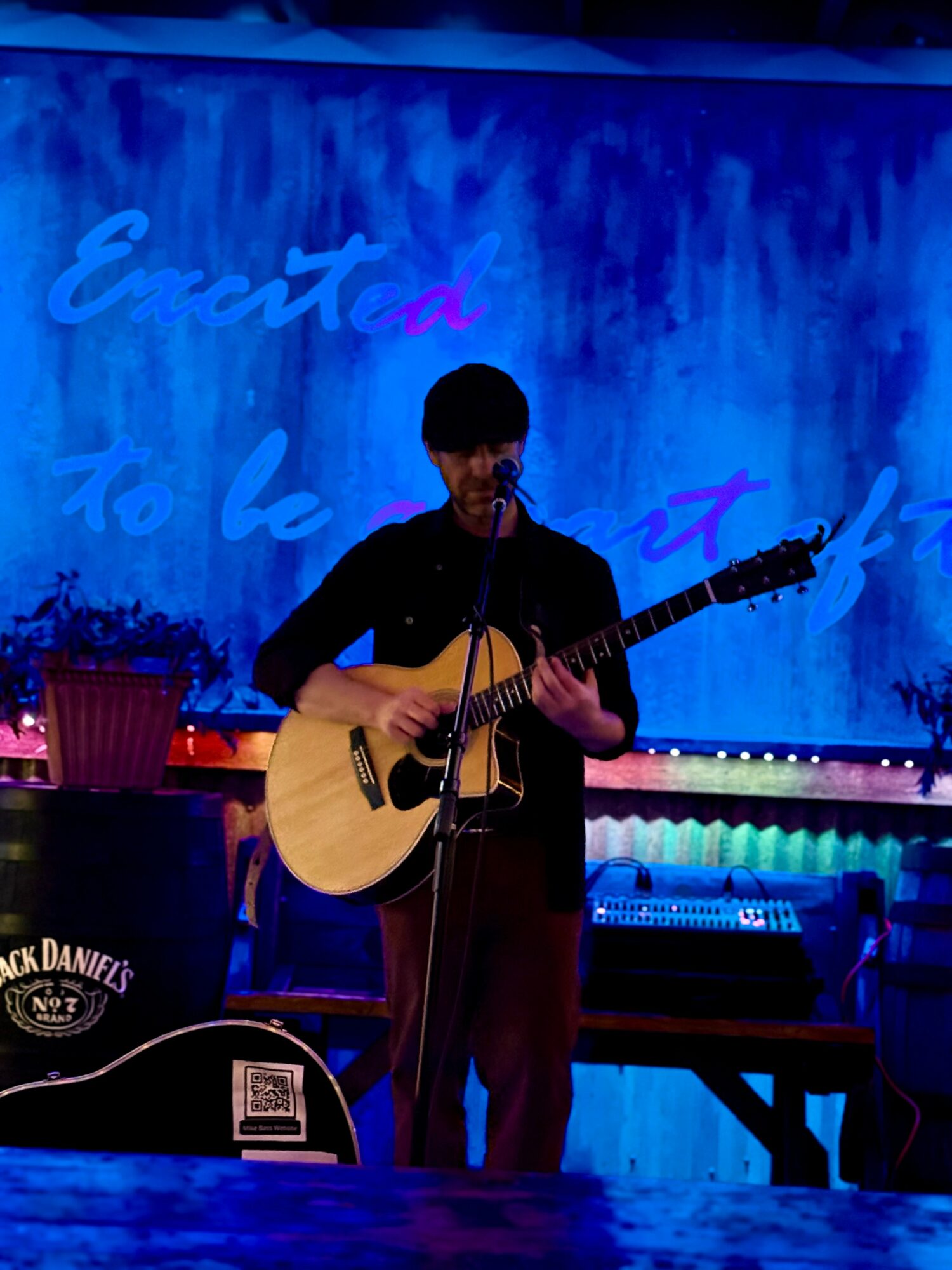
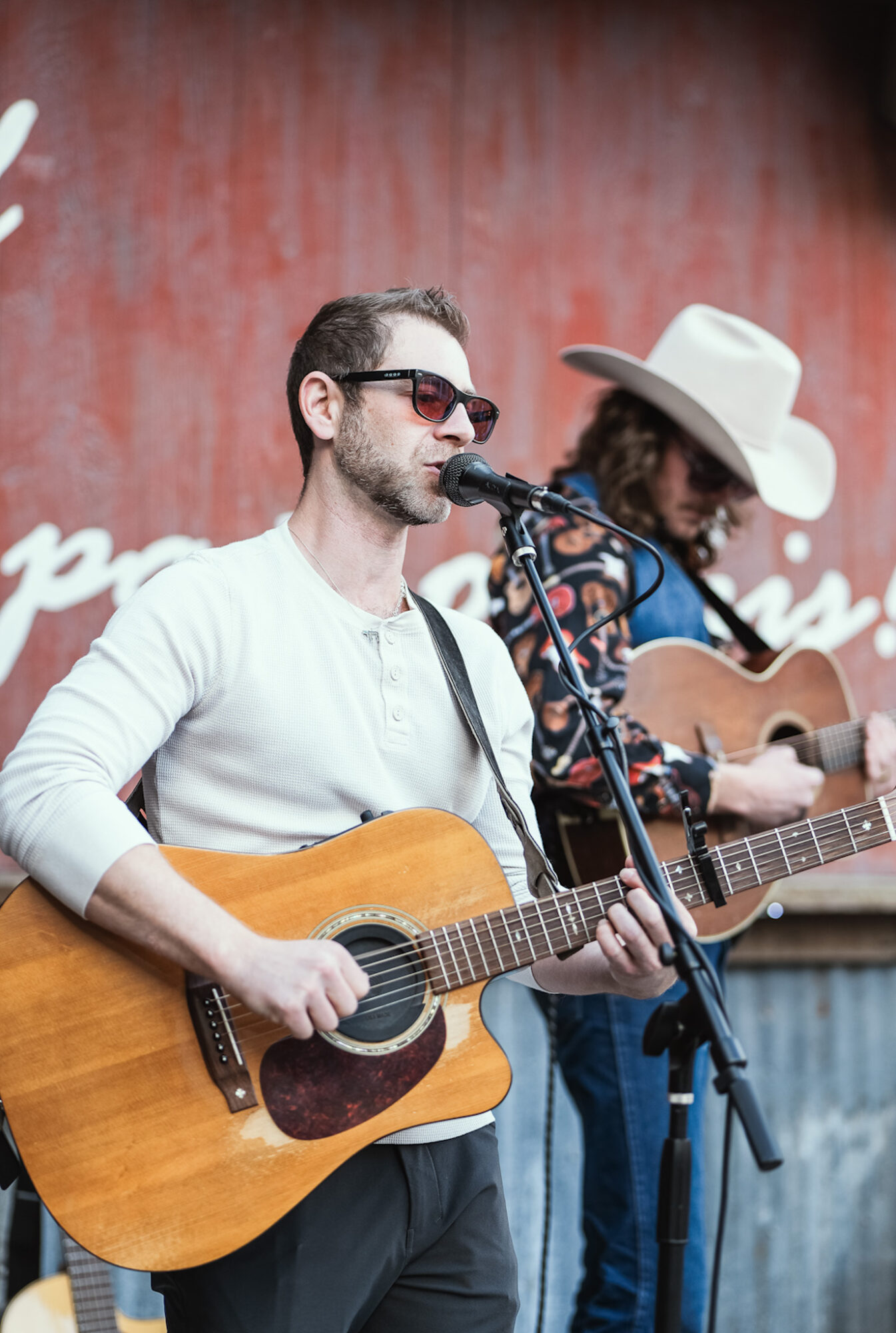
Image Credits
Steven Glynn
Laurie Bass
McKenna Cleck