


Today we’d like to introduce you to Meam Hartshorn.
Hi Meam, it’s an honor to have you on the platform. Thanks for taking the time to share your story with us – to start maybe you can share some of your backstory with our readers?
I’ve been creating ever since I was a little kid. Drawing, painting, writing, and music were my outlets for as long as I can remember, and I was lucky to have a family that encouraged my exploration of them. As I got older, I found myself going through periods of life where I focused on a specific creative medium. I spent several years as a teenager exploring creative writing, then I moved into music, and I finally found myself painting. While painting is my focus now, writing and music still inform much of my work. I think art has its own kind of language and spirit, and sometimes I need to dabble in a different medium for a bit so that I can eventually express it in paint. I grew up in a rural part of Western Colorado, where I spent a lot of time outside. Nature and landscapes are essential to my work. Like art, I think nature also has a kind of spirit and story that we can practice understanding. There is so much history in the land we live on, from geologic evolution to geopolitical change. I was very fortunate to be surrounded by so much beautiful space growing up, and it has since inspired a lot of my paintings.
When I began school at Kenyon College, I didn’t think I would study studio art, but after going to a senior exhibition in the winter of my freshman year, I was inspired by the skill, creativity, and intention going into all the work the seniors had made. After that experience, I knew I couldn’t leave school not having explored my own art. In addition, I majored in psychology. I loved the combination of the two, and I often found psychology and art to be examining the same concepts in refreshingly different ways. During undergrad, I explored several artistic mediums and even illustrated for two books. I always came back to painting though, and in 2020 I began to practice more professionally. I exhibited work, started taking commissions, and began researching the business of art more seriously. I graduated with distinction in both studio art and psychology in the spring of 2021. Shortly after, I moved to Austin, Texas to work for an AmeriCorps organization called Literacy First, where I work as a reading interventionist for kids in Title I schools. Alongside this work, I continue painting and building my practice. I am very grateful to have space and time to work on my art, and I am working towards making it into a full-time profession.
Would you say it’s been a smooth road, and if not what are some of the biggest challenges you’ve faced along the way?
Yes and no! I have been privileged to many things in my life…an education, a supportive family, and good health. These things have certainly enabled me to get to where I am today, but no one’s road is very smooth is it? The challenges and hardships that I have faced were the catalysts for a lot of my artwork. To me, making art-making is part of a healing and evolving process from life’s experiences. In the spring of my junior year, COVID-19 became a global pandemic and everyone’s life changed. School became remote, I was living back at home, and I was forced to abandon many of my expectations and goals. While this was a stressful time, I’m grateful that I had a safe place to live and work, and my perspective shifted in an ultimately positive way. I had to release a lot of control I was imposing on my work, my relationships, and my life in general. We were all forced to practice resilience and patience during this time. We were asked to hope, which feels easy when life is stable, but was incredibly difficult in the face of so much fear and uncertainty. I began to make art in a much more intentional way, not just to create something for a class, but to heal, grow, and explore.
It was at this point that opportunities began to open up to me, or I was beginning to open up to them. I spent the last year and a half of my undergraduate education dedicated to painting. The summer between my junior and senior year, which I had hoped would be spent doing some kind of internship, was suddenly open. I set up a studio space in my parent’s shed and began painting a collection of pieces about being back home, enveloped by memories and confronted by the boarder between childhood and adulthood. I also worked in an antique Western artifacts store, where I could reconnect with a community I had been distanced from to a long time. I began to identify more as an artist than I ever did at school, and with that intention to create, the more comfortable I became sharing my work. I sold pieces, exhibited in galleries, and worked as an illustrator. In a time of so much uncertainty, I found myself painting without expectation and control. The style of my paintings shifted from representational to more abstract. Painting became a way for me to release and explore emotions and memories. My process became about meaning making instead of trying to impose a certain framework or story upon my work.
Thanks – so what else should our readers know about your work and what you’re currently focused on?
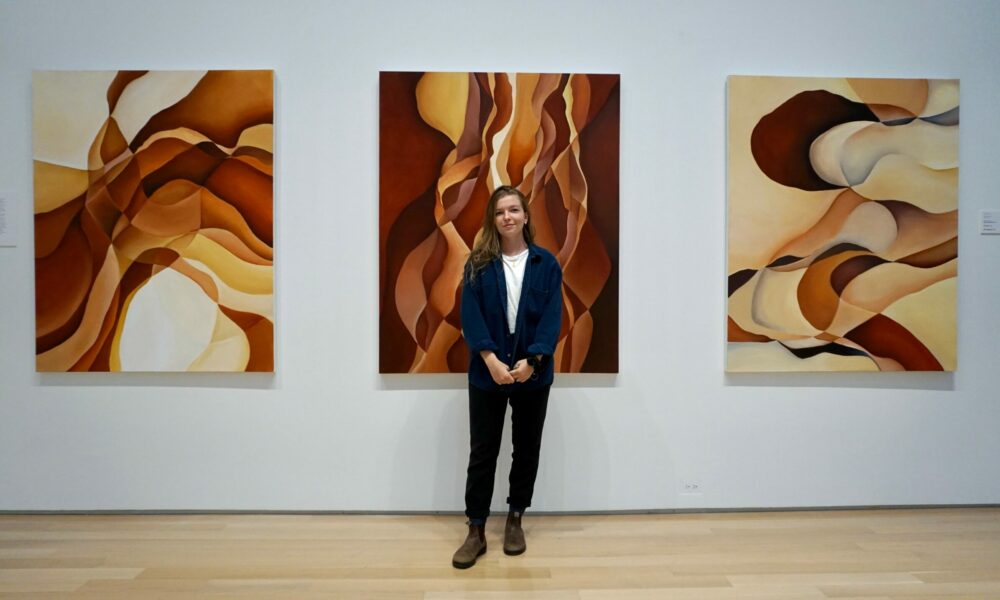
I work primarily in painting and my work comprises of mostly semi-abstracted landscapes. Much of my work is informed by nature and explores the relationship between natural phenomena and our own human experiences. My paintings reference places, emotions, and memories, creating an ensemble that explores a sense of place and self. Currently, my paintings are taking an even more abstracted direction. I use jagged, undulating, and overlapping line work that gives a sense of movement and evolution taking place. My color palette right now consists of a lot of rusty oranges and deep blues. These colors are both pulled from nature, like sandstone and the ocean, but they are opposites and provide a lot of energy when interacting together on a surface. My paintings need to have energy, they need to feel alive and moving. No matter what concepts I’m trying to articulate in a piece, my goal is always to make a painting feel like it’s breathing. I am most proud when someone connects with a painting, and I love getting to hear people’s individual experiences and interpretations of a piece. Sometimes I make a piece that I don’t find compelling, but someone else loves it and is able to share with me so much more insight that they had. Art can seem like it’s just a relationship between artist and artwork, but everyone interacting with that piece is involved. I love it when a painting I made is transformed by someone else’s interpretation of it. That’s language, that’s connection.
It’s taken a lot of time and work to feel like I am my own artist, separate from others. If I’m honest, I’m still exploring and discovering that. There is so much to learn from other artist’s work, but at the end of the day though, every artist has their own mind and hands. No one makes the same line or mixes the same color. My paintings are intuitive and evolving. I don’t think I could predict them if I tried, and if I did they would lose that kind of life that comes from surrender and spontaneity.
Are there any important lessons you’ve learned that you can share with us?
A lot of lessons I’ve learned I am still continuing to learn and practice. My work in education has taught me that learning isn’t linear. One of my biggest lessons right now is practicing patience and acceptance and understanding that I still have a lot to discover. There are days when this is liberating to remember and other days when it’s terrifying. Things are always uncertain, but it’s how I embrace that uncertainty that dictates my experience. I’ve learned that it’s actually not very hard to be an artist. You just are one, and then you spend your life putting all the pieces in place to allow you the freedom to create. I value that freedom, and I am grateful to have both the time and passion to paint. I’ve learned that I have to work hard and practice resilience in the face of rejection, but most importantly, I just have to keep making art.
Contact Info:
- Email: meamhartshorn@gmail.com
- Website: meamhartshorn.com
- Instagram: studio_meam
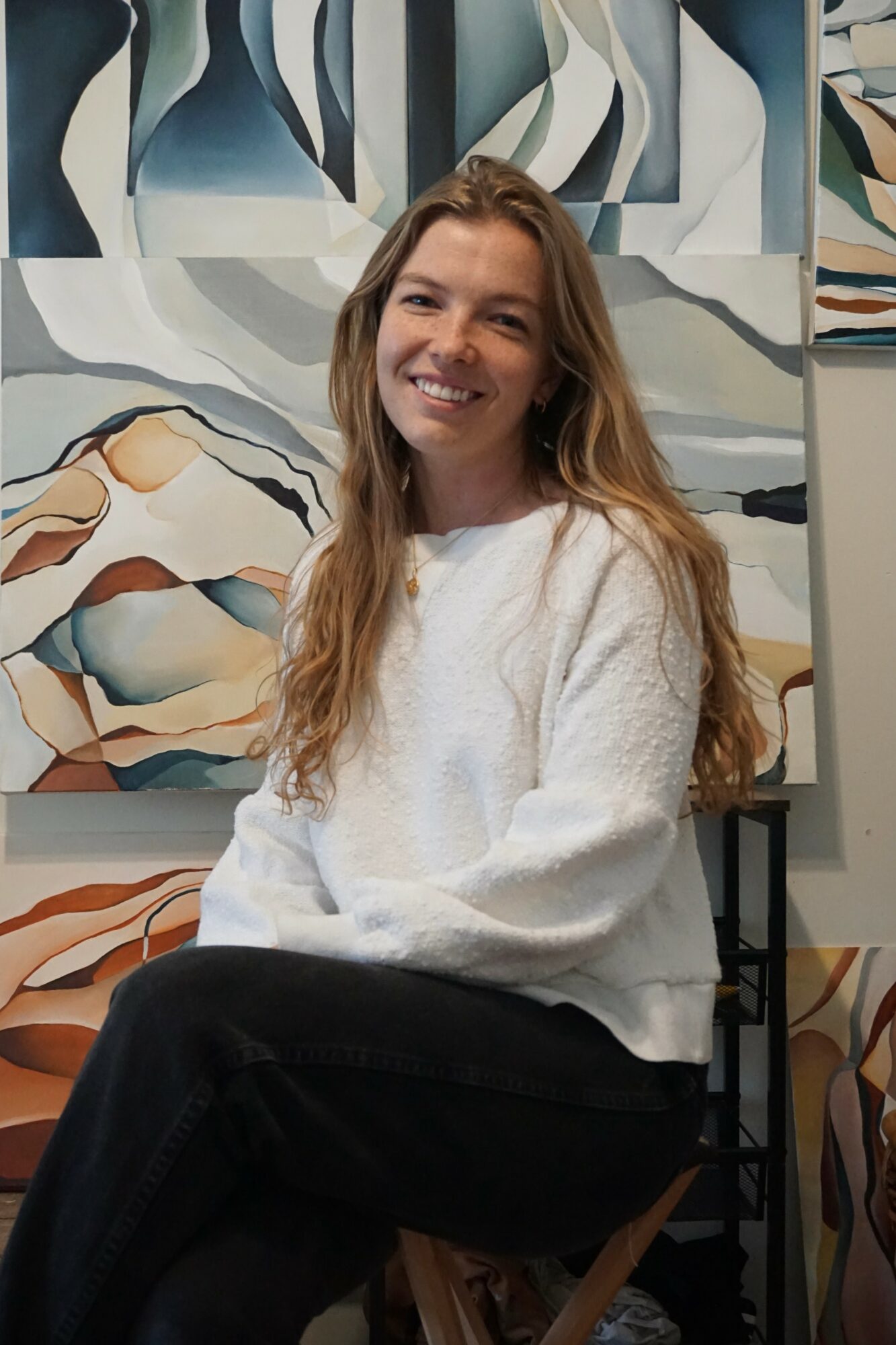
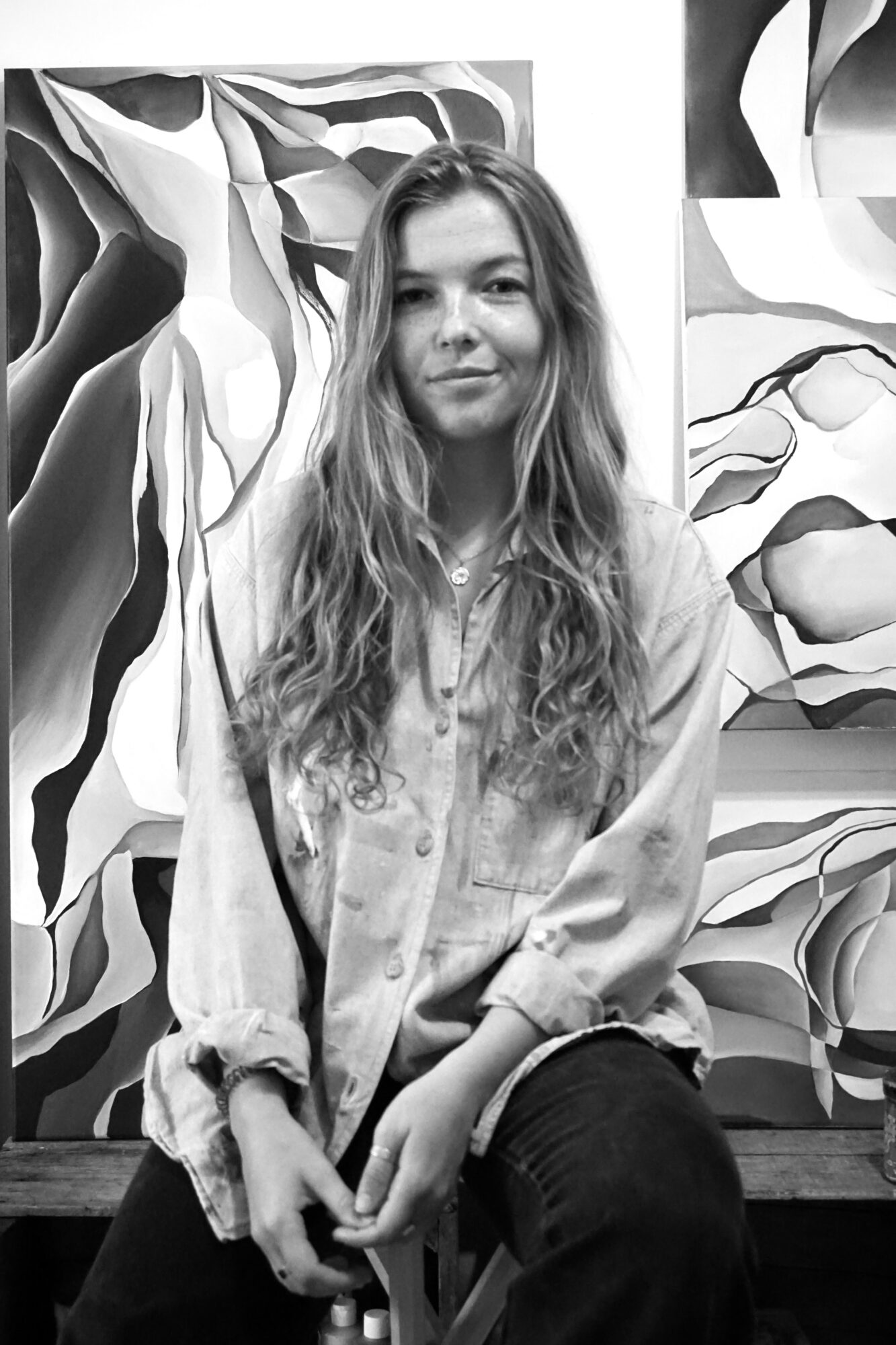
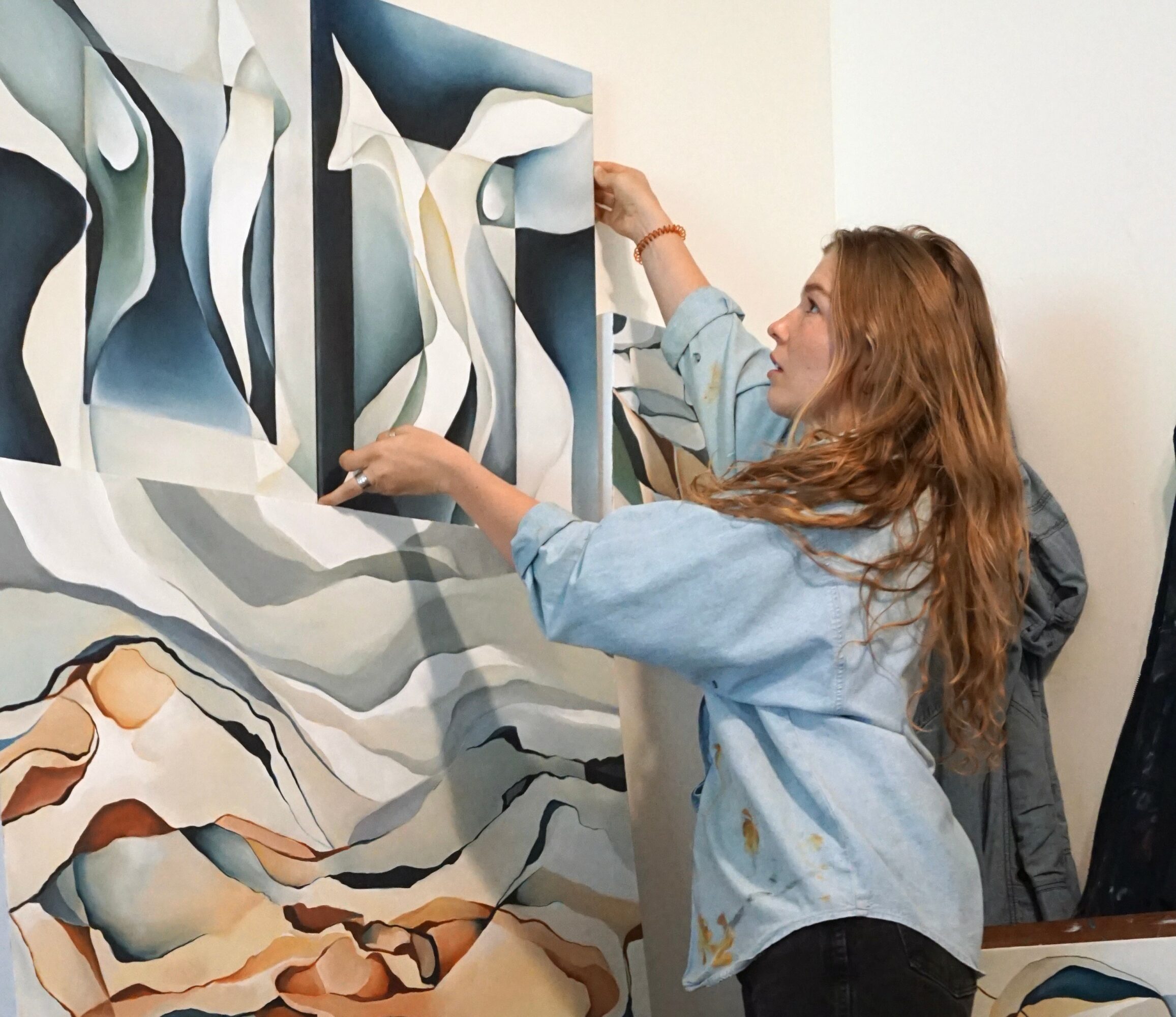
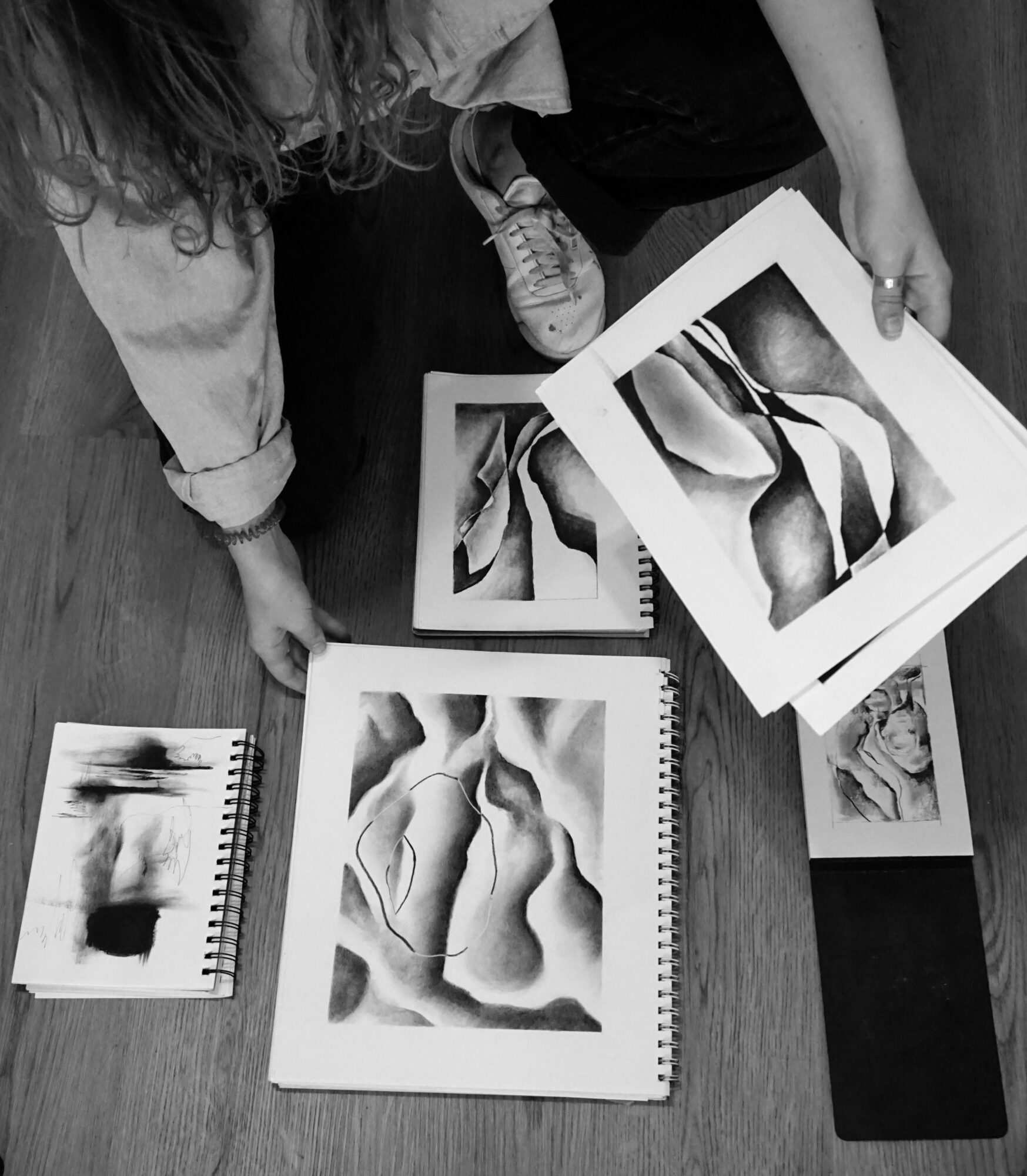
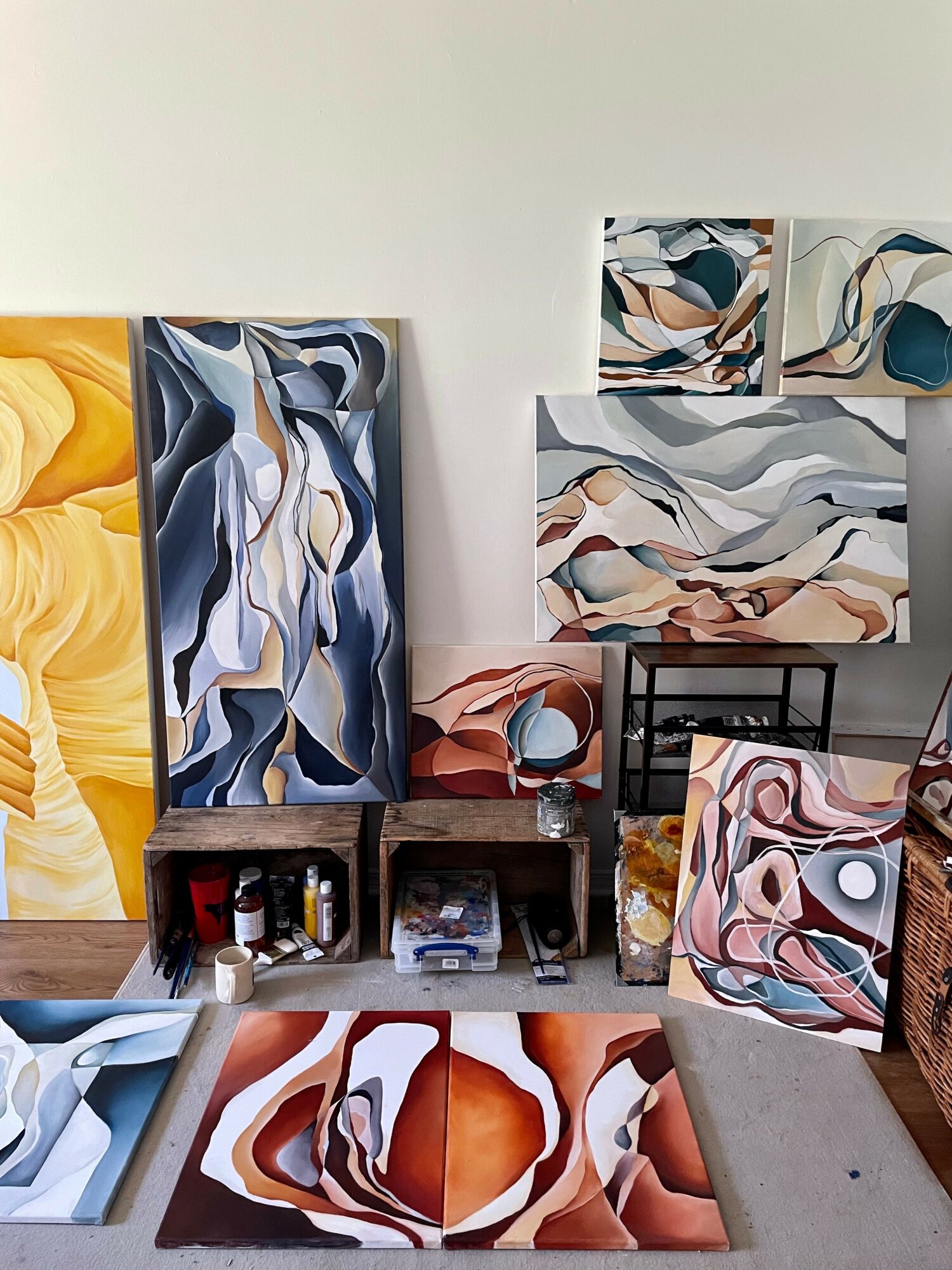
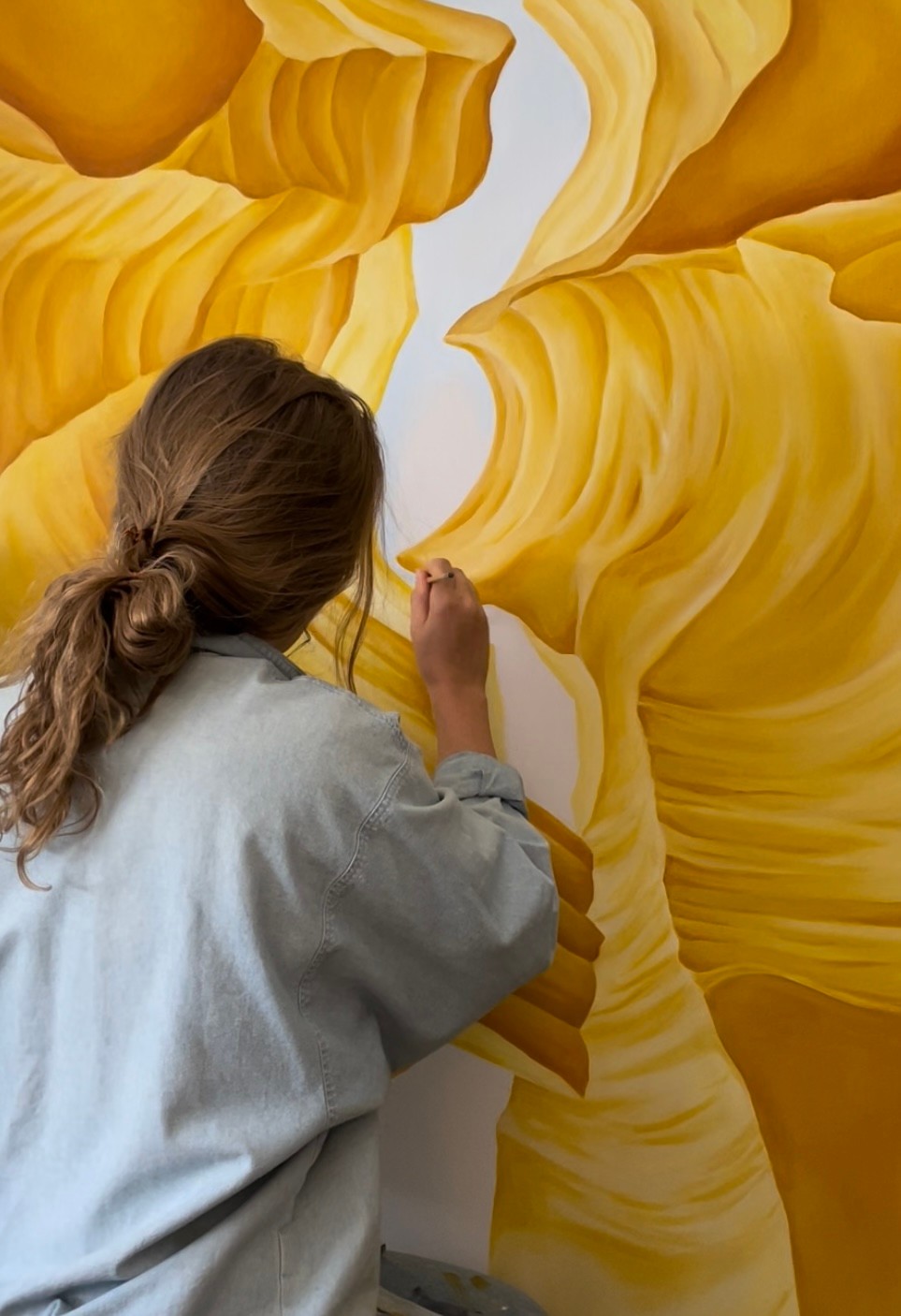
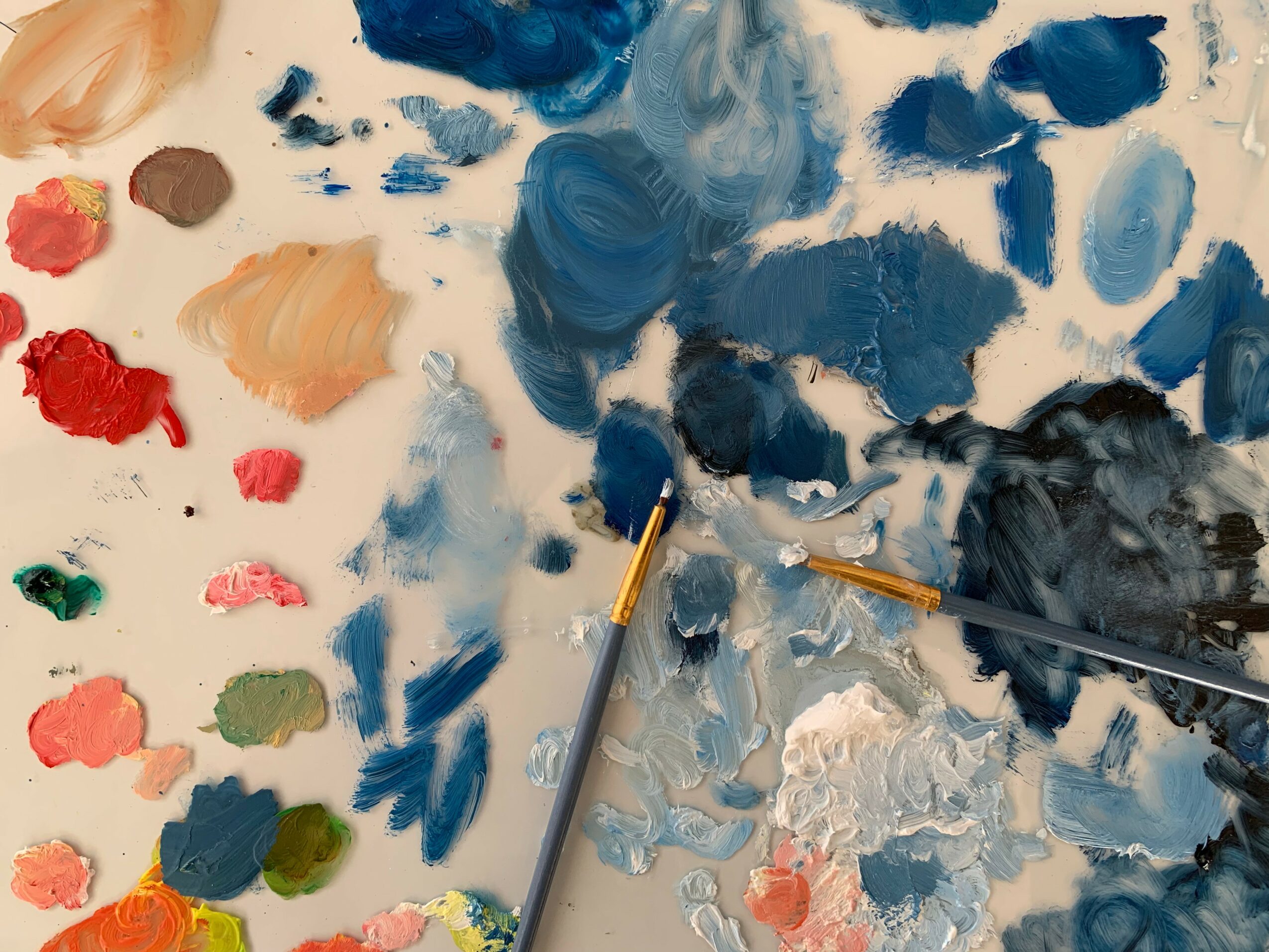
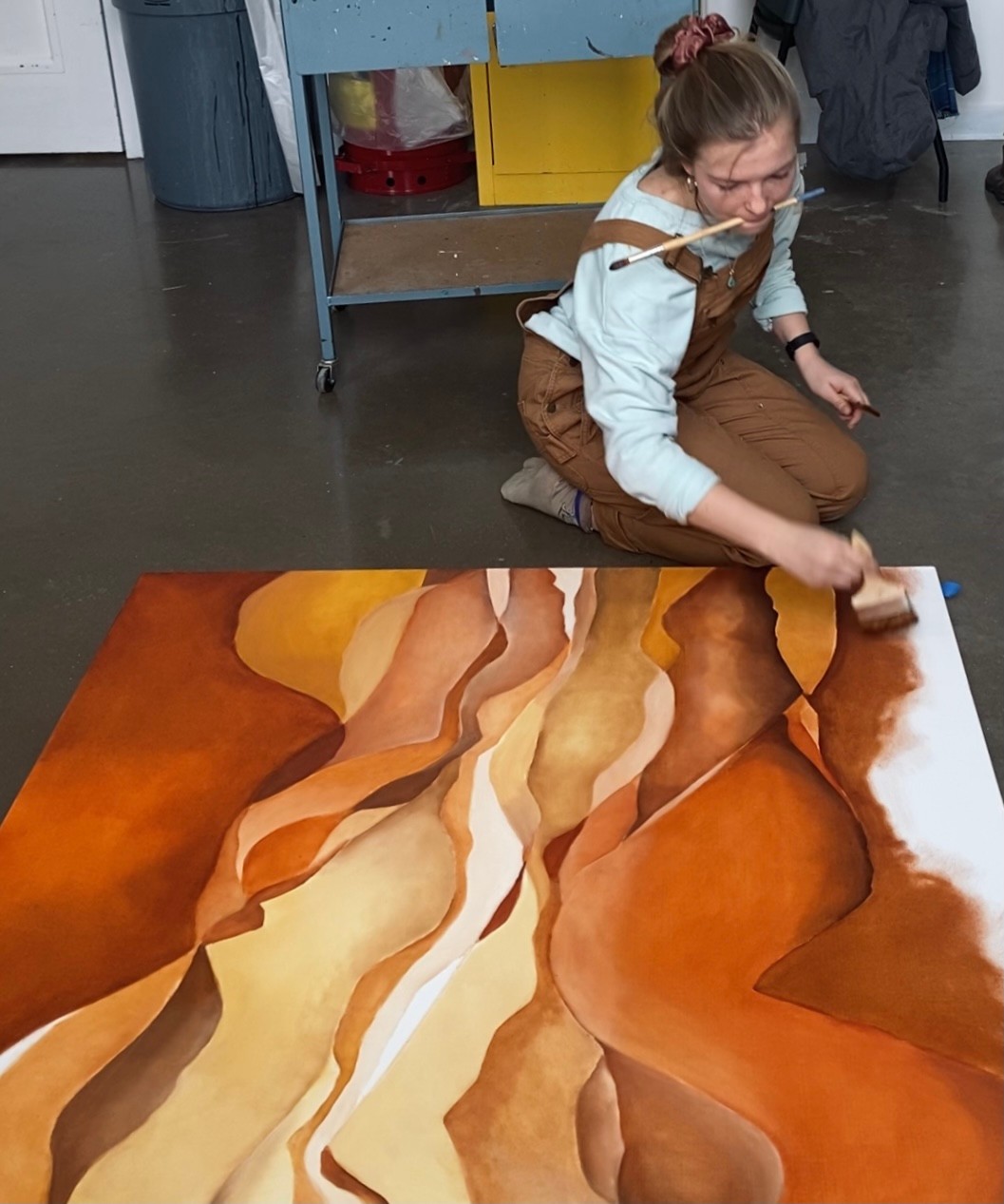
Image Credits
Meam Hartshorn