


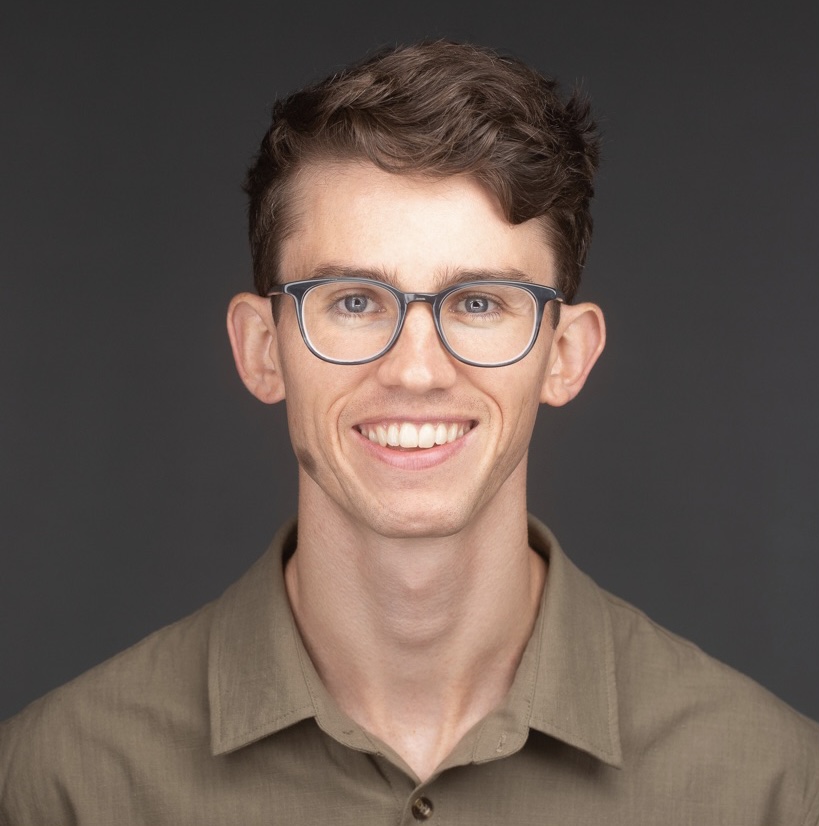
Today we’d like to introduce you to Tzvi Prochnik
Tzvi, we appreciate you taking the time to share your story with us today. Where does your story begin?
I had a roundabout route to becoming a psychotherapist. I always knew I wanted to help people in some capacity but for most of my young adult life I was unsure what my career would be. I studied psychology with a minor in Latin American studies for my BA from Lewis and Clark college and graduated in 2013. After college I spent time traveling in Latin America for close to 2 years. Along the way, I volunteered cultivating coffee at an organic coffee farm in Colombia, as well as taught English in a middle school and private language school for business professionals in Mexico. In order to fund some of my traveling I spent 2 summers working at a salmon fishery in Alaska which was one of the most intense experiences of my life, and left a lasting impression on me in terms of seeing how our food industry operates. We worked 16 hour days 7 days a week for about 2 months during the height of the salmon season.
I eventually decided to come out to Austin, TX in 2015 because I got into an Americorps program for bilingual early literacy tutoring at a local elementary school. I loved working with the kids, but I realized along the way that teaching wasn’t for me. After having some conversations with my father and my aunt (who is actually also a social worker in New York City), they suggested I look into social work because it aligned with my passion for helping people in a multisystemic way. Interestingly, my family has a rich history of people being involved in therapeutic professions. My great great grandfather, James Jackson Putnam, was a physician in Boston who was instrumental in helping bring Freud to America and connect him with the Boston psychoanalytic scene in the early 1900s. In 2016, I applied to the UT Austin School of Social Work and spent the next 2 years getting my MSSW. After graduating in 2018, I worked for 3 years as a social worker in an inpatient psychiatric hospital here in Austin, and from there applied to get my clinical license so that I could become a psychotherapist.
Alright, so let’s dig a little deeper into the story – has it been an easy path overall and if not, what were the challenges you’ve had to overcome?
One of the biggest challenges since starting work as a social worker was realizing how many barriers to accessing quality healthcare there are for the majority of Texans. While Austin does have more progressive policies than the rest of Texas in terms of mental health, overall Texas ranks the lowest for mental health services in the entire US. As a social worker, you’re really on the front lines in terms of seeing the effects this has on individuals where someone is having to choose between buying groceries for the month or paying for psychiatric medications/therapy. Outside of the financial barriers there continues to be a great deal of stigma around seeking mental health services, although I would say that with many of the younger individuals that I work with there is a lot more acceptance and encouragement of accessing mental health care. On an individual/personal level, while the work is immensely rewarding it is also challenging emotionally and mentally at times and so it is very important for me to maintain healthy boundaries between my personal and professional life, engage in active self care and consultation with colleagues.
Thanks for sharing that. So, maybe next you can tell us a bit more about your work?
I’m a licensed clinical social worker (LCSW) and I see individual adults (18+) for psychotherapy sessions with Enteave Counseling. I consider myself a generalist and I enjoy working with individuals from all walks of life and with a variety of different presenting issues. I have training in eye-movement desensitization and reprocessing (EMDR) which I have found incredibly useful in working with clients dealing with traumatic memories and PTSD. For trauma work it is important not to just focus on what happened on a cognitive level, but to address the way the trauma is being stored in the body. Interestingly, it can also be helpful for working through negative core beliefs that the majority of individuals with or without trauma deal with.
I’m most proud of the ways that I continue to push myself to learn and grow as a psychotherapist. I am constantly reading research and clinical literature to improve my practice. I recently got interested in motivational interviewing and am using techniques from that to help clients with addiction and a number of other issues. I have realized that I resonate most with a client-centered approach which means that rather than telling my clients what to do, I help guide them to their own conclusions and making their own decisions. I’ve found that the individuals I work with are incredibly perceptive and resilient given the right conditions, and if I can provide them with a setting where they feel safe to explore their issues then I am doing my job well.
Is there something surprising that you feel even people who know you might not know about?
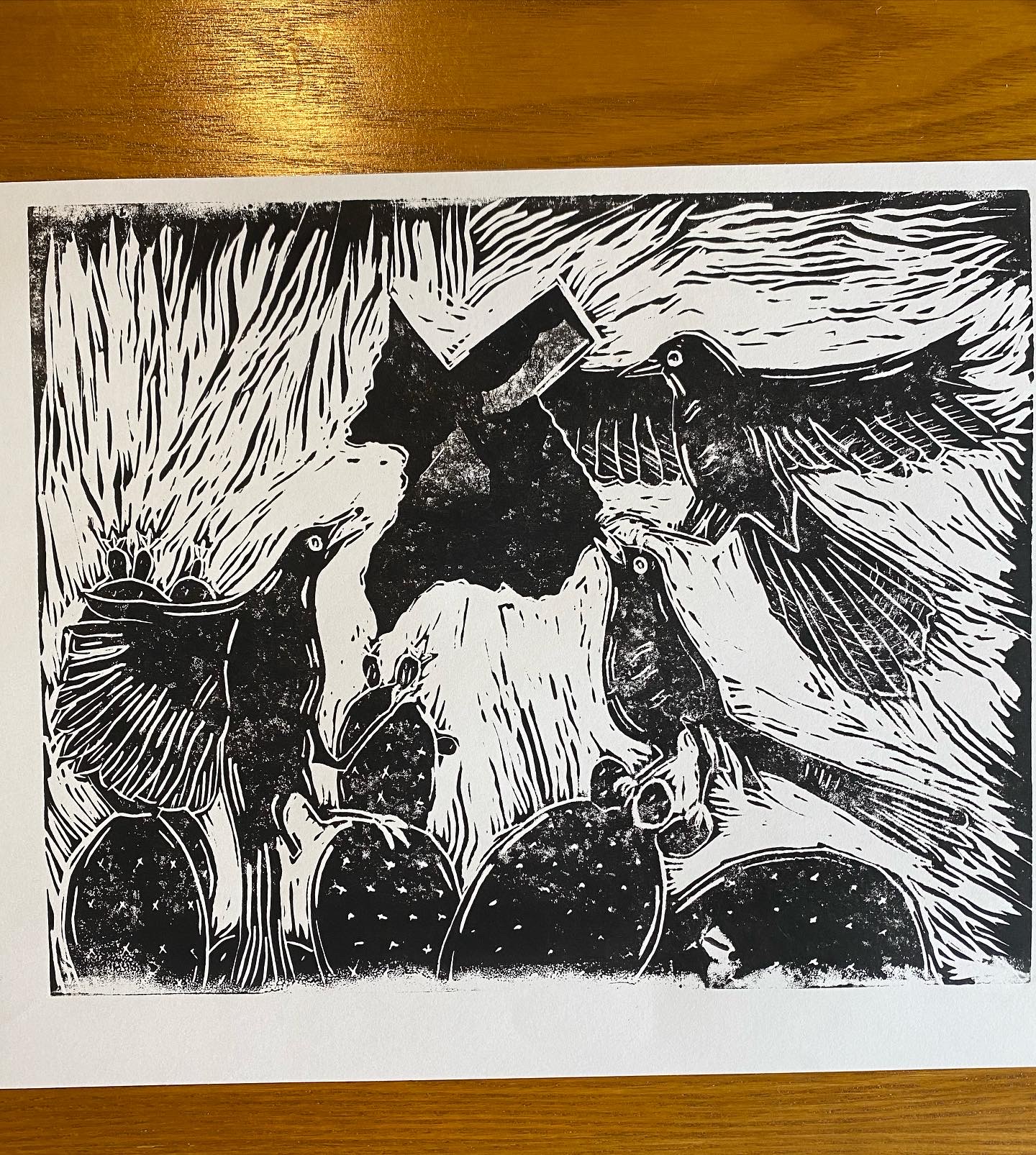
Something that is kind of surprising about me is that over the pandemic I got into linoleum printmaking. My mother is a visual artist and so I’ve always been encouraged to explore my artistic side, but I never really found a medium that I was passionate about. During the pandemic, I found myself with more time to explore hobbies and I got inspired to try my hand at printmaking. I’ve had a lot of fun making prints for my friends and family, and to decorate my house with.
Contact Info:
- Website: https://enteave.com/tzvi-prochnik