



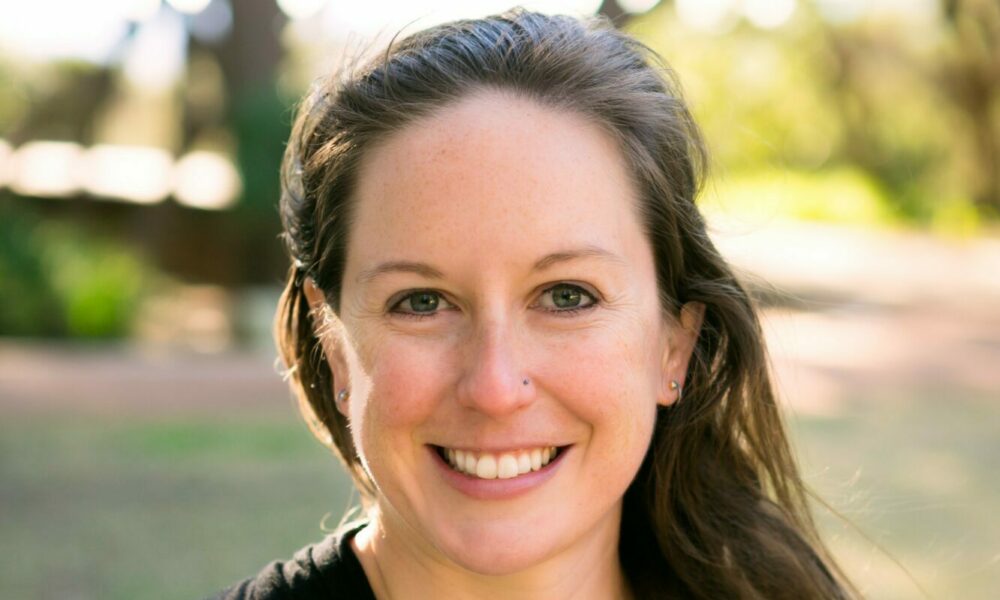
Today we’d like to introduce you to Ciji Wagner.
Hi Ciji, thanks for sharing your story with us. To start, maybe you can tell our readers some of your backstory.
I’ve had quite the eclectic path that led me to where I am today. I was born and raised in rural Pennsylvania and knew at the age of eight that I wanted to be a chef. Following this conviction, I went to school at the Culinary Institute of America and graduated with a degree in Baking and Pastry Arts. After graduating, I worked at a mix of bakery and restaurant gigs over the years, doing a little bit of anything and everything – which unfortunately includes contributing to the great cupcake craze of the early 2010’s.
After years of working in the for-profit side of industry, I started feeling a deep desire to use my skill-set to help people and became the executive chef for a nonprofit feeding people experiencing chronic homelessness. At this job, I began to see the need in approaching trauma from a holistic standpoint, even if my part of it then was simply creating nourishing meals. It was during this time that I really began my own healing journey as well.
I moved to Austin with a plan to start a company focused on reducing food waste, but life had a different plan in store for me. Prior to leaving the East Coast, several people had recommended Eye Movement Desensitization and Reprocessing (EMDR) therapy to me, but I decided to wait until I landed in my new home. Within a few weeks of being here, I jumped at the opportunity for a fresh start and began EMDR.
Louder Than Silence (LTS) unexpectedly began when I was driving home from an EMDR therapy appointment one day, contemplating how life-changing the whole experience had been for me. Out of nowhere, a life-altering thought hit me – “Why am I paying to undo the damage of someone else’s choices? Why does any survivor of abuse have to pay? Haven’t we already paid enough?” From there, LTS was born to provide EMDR therapy to survivors of sexual violence at no cost.
We all face challenges, but looking back would you describe it as a relatively smooth road?
Ha! Not even close.
I am a survivor of sexual violence and abuse, having dealt with the crimes and attrocities committed against me by multiple men in my life. The very real day in, day out struggle to reclaim my health and find my voice has been nothing short of a grind. There were years of my life when it felt like my primary job was simply to survive and to continue living through the aftermath of abuse. It is a full-time commitment and takes its toll beyond what most non-survivors can fathom.
At the launch of a nonprofit, people want to know that it is viable and functionally able to help people before they donate their money, and rightly so. The catch 22 is that having a new nonprofit meant we needed people to believe in it enough to take the risk so that I could prove that there is a real need and that I knew how to actually get it done. I’ve joked many times that not only was I bootstrapping, but I was making the boots too.
Louder Than Silence received our official 501(c)3 designation in December 2019, and despite the additional hurdles of launching just a few months before the pandemic, we’ve been growing ever since!
Thanks for sharing that. So, maybe next you can tell us a bit more about your work?
Louder Than Silence exists to empower survivors to take the next step in their healing journey and all programs are offered at no cost. As I’ve mentioned, we first started by sponsoring EMDR therapy but have grown significantly from there. All clients in EMDR get paired with a mentor, who has already graduated from the program, to provide peer support, since many people are unfamiliar with how it works.
The EMDR protocol has been in practice for 35 years now and is designed to address trauma’s effect on the brain. The very simplified explanation is that it allows a survivor’s brain to process through the traumatic memory in a way that the brain finally recognizes it as a past experience instead of a current-day threat. This means that a survivor no longer lives in fight, flight, or freeze mode and can live fully in the present moment, which tangibly means no more flashbacks, nightmares, generalized trauma responses, etc. It truly changes lives.
As we’ve grown, we’ve added several more support options. We now host workshops where cohorts of survivors have deep discussions about their healing, their struggles, their triumphs, and more. We provide ongoing support through monthly self-care meetings, in which we incorporate all types of healing practices. We also hold annual retreats so the LTS community can connect and experience true rest.
One of the things I really love about what we do is that the thread of building community runs through it all. I deeply desire for all survivors to feel like they’re never alone in their healing–which is something I hear so often from people before they become clients. Being in a space where people just get it, without having to find the right words or comfort people who don’t know how to cope with hearing our pain, is truly life-changing. We can feel normal in our struggles in a world that tells us we’re “crazy” for having trauma responses after having lived through horribly traumatic experiences.
As an organization, LTS is designed to be the last and ongoing step in the continuum of care. We aren’t seeking to intervene in crisis situations–there are so many fantastic organizations who provide amazing support in those moments. We are here to continue supporting survivors once they reach the point of being able to take those long-term healing steps, which is something that was really lacking in my own healing journey and is so vital to shifting from surviving to thriving.
What sort of changes are you expecting over the next 5-10 years?
We know that the pre-pandemic stats on sexual violence were alarmingly high. After the pandemic, we can’t even quantify yet how many people were affected. The next steps are simply taking stock of what’s happened over the past few years and preparing for the upcoming needs.
That said, LTS and other organizations are going to continue to provide support in whatever their particular area of expertise is. For LTS, we are committed to using innovative modalities like EMDR, connecting survivors within local communities, and further expanding our programs to reach underserved populations.
As a whole, the nonprofit world is making a shift toward trauma-informed responses and the understanding that vitality encompasses all aspects of life. We are excited to be on the forefront of this model as we continue to build out programs to support every area of health and wellbeing while expanding the reach of what we currently offer.
We are hopeful that, by working together, we can see a world where all survivors have access to the resources they need to truly thrive.
Contact Info:
- Website: www.louderthansilence.org
- Instagram: @louderthansilenceorg
- Facebook: @louderthansilence
- Other: https://anchor.fm/louder-than-silence