


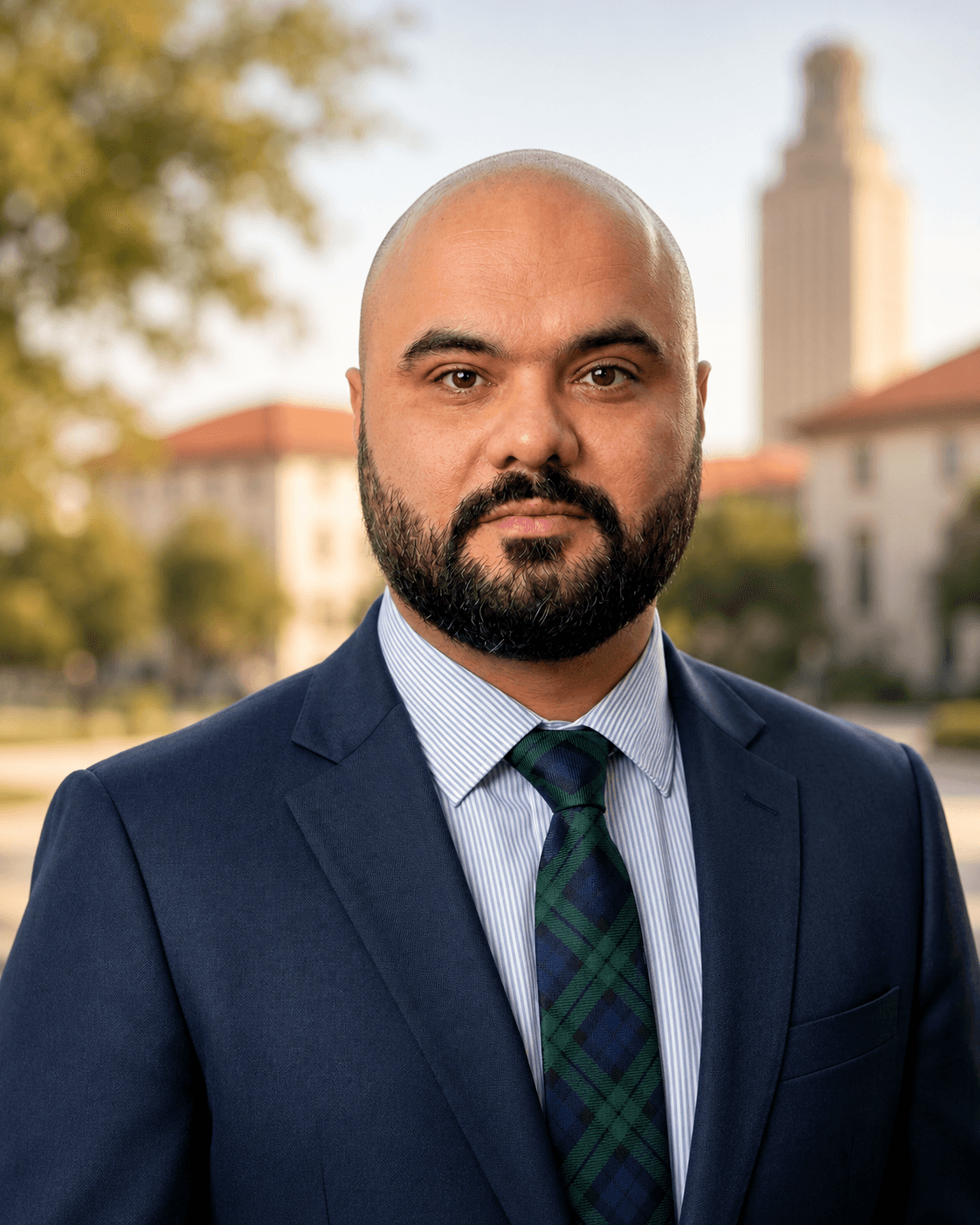
Today we’d like to introduce you to Ahmed Hassan.
Hi Ahmed , thanks for joining us today. We’d love for you to start by introducing yourself.
My story began in science, before I understood that science was also teaching me how to see. I am an artist of Iraqi origin based in the UAE. I graduated with honors in Petroleum Geosciences from Khalifa University, then pursued advanced doctoral research and teaching in Geological Sciences at the University of Texas at Austin. While studying carbonate rocks and reservoir systems, I became fascinated by a paradox: what appears chaotic at one scale can reveal an intricate order at another.
In 2012, I lost my youngest sister, Ola, to an aggressive brain tumor when she was seventeen. I continued along the academic path, but grief, depression, and an increasingly pressured relationship with research changed me deeply. In 2016, I reached a profound personal and spiritual turning point and stepped away from the doctoral path. Drawing did not begin as a career plan, it arrived as a language for experiences I could no longer contain in words.
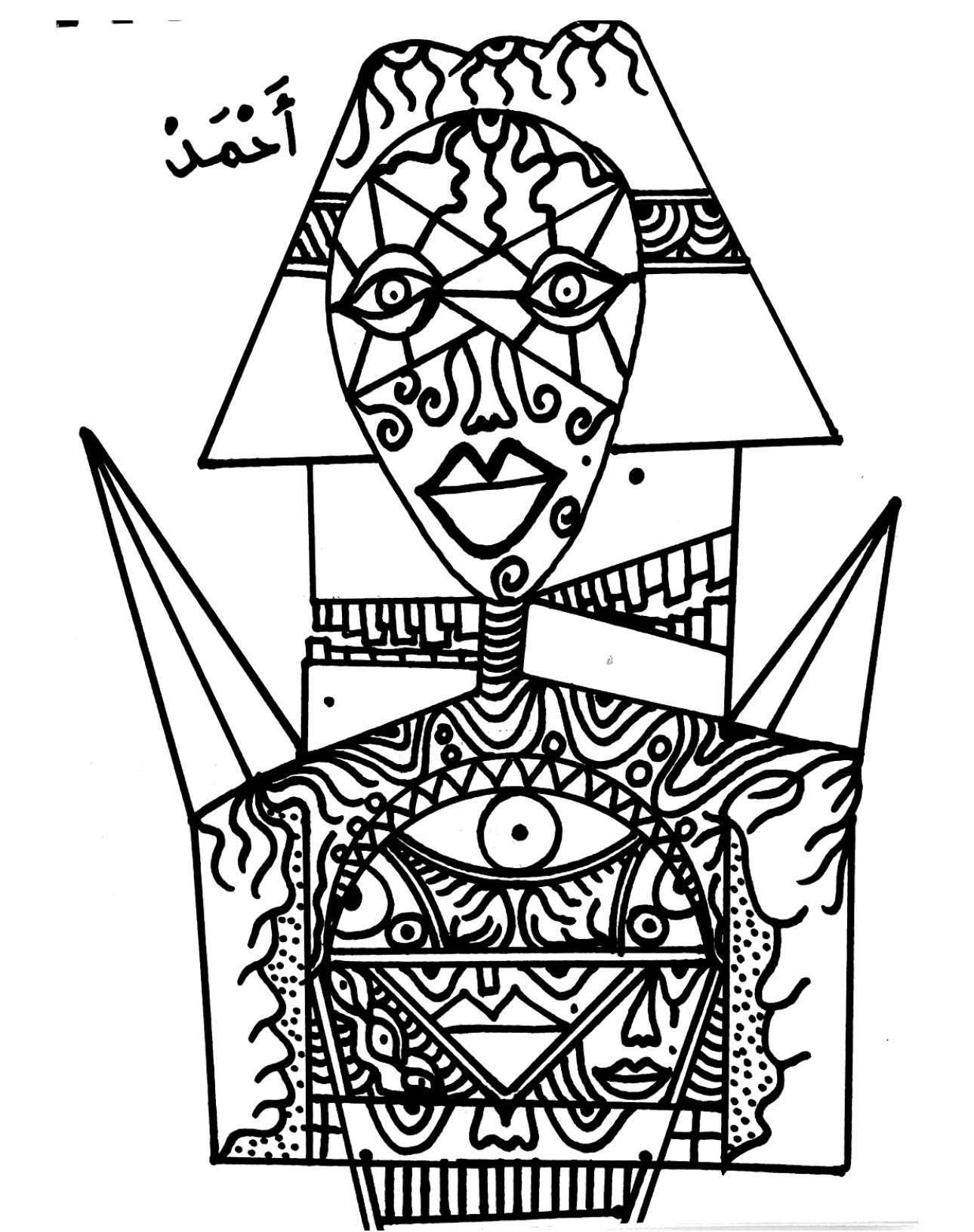
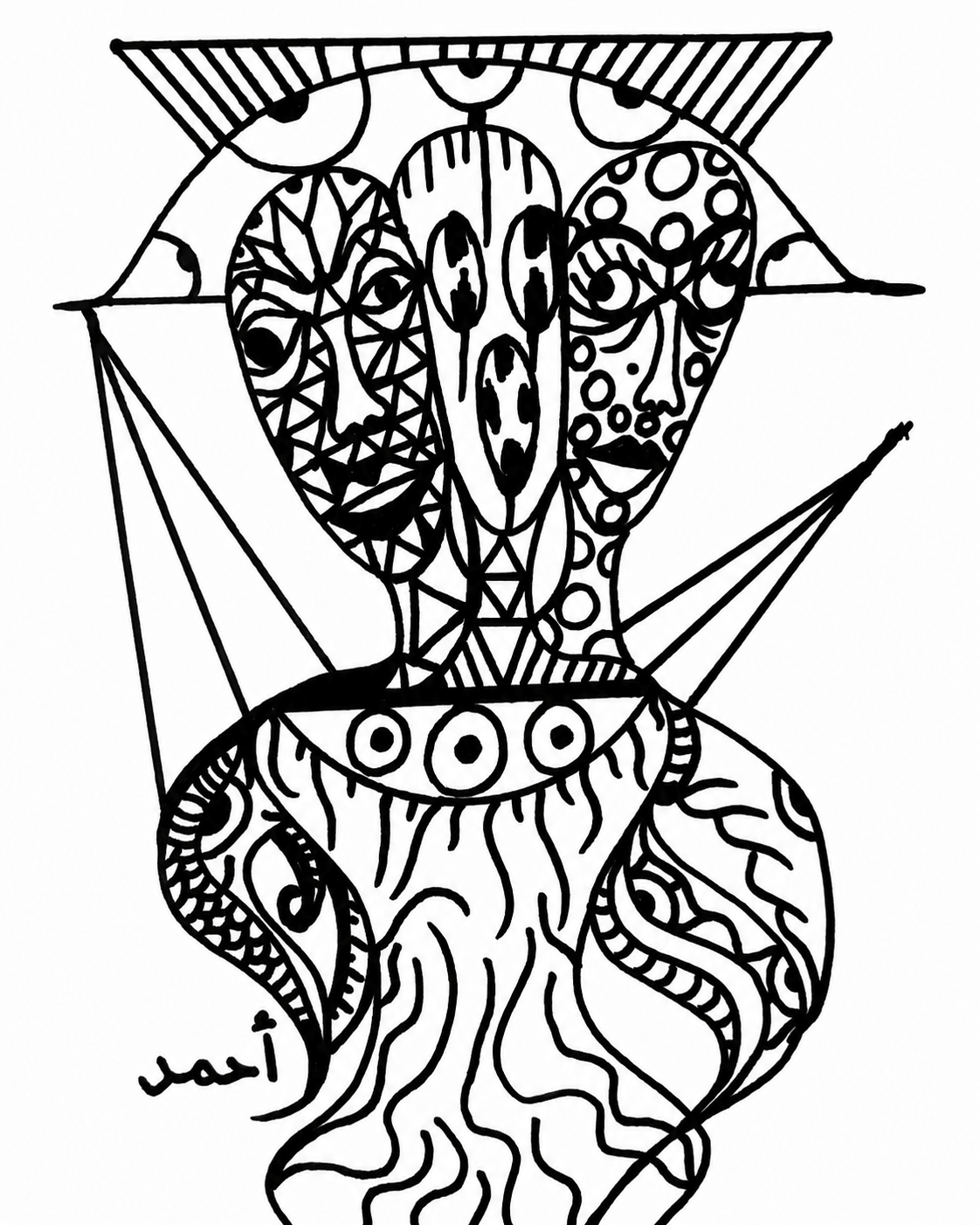
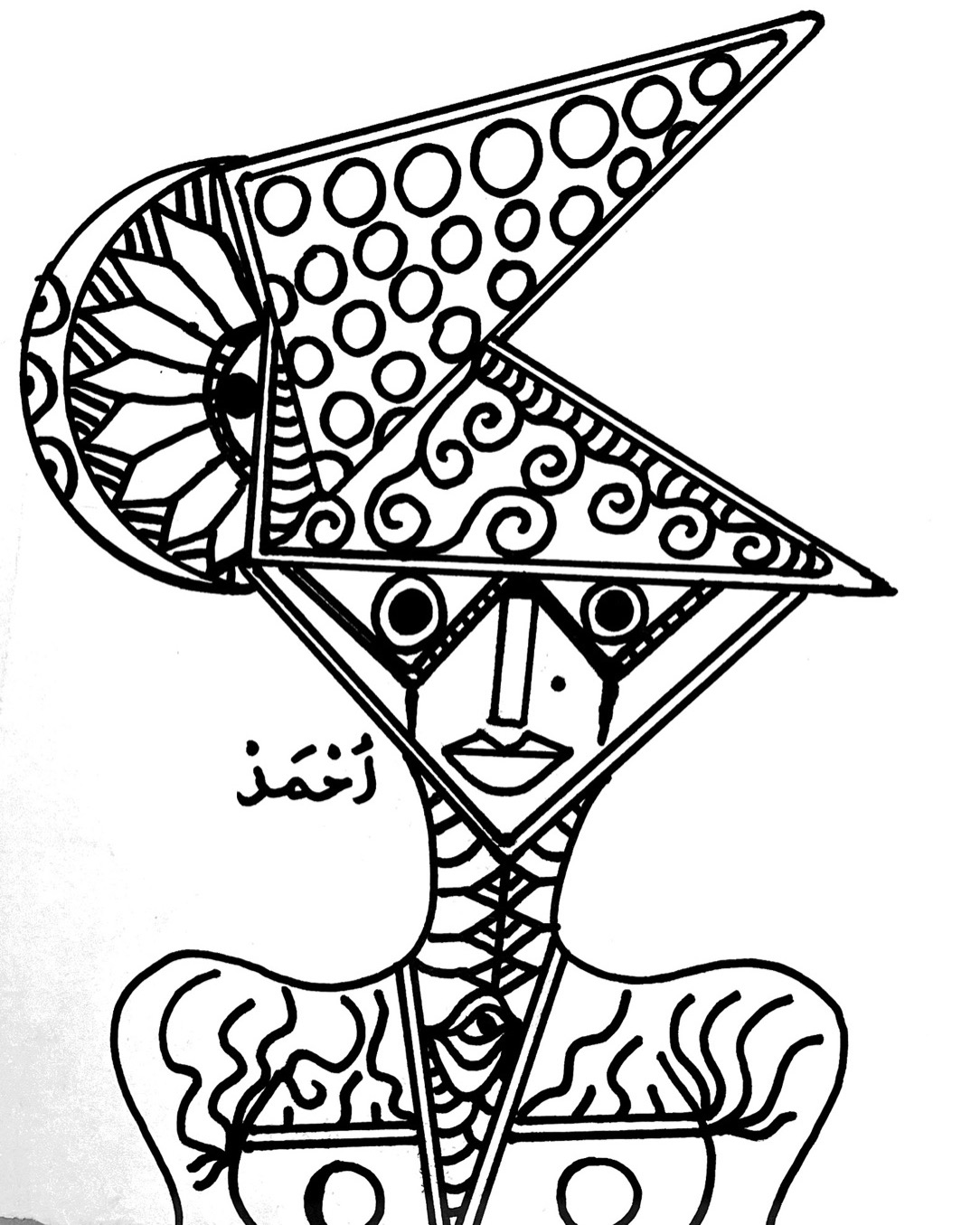
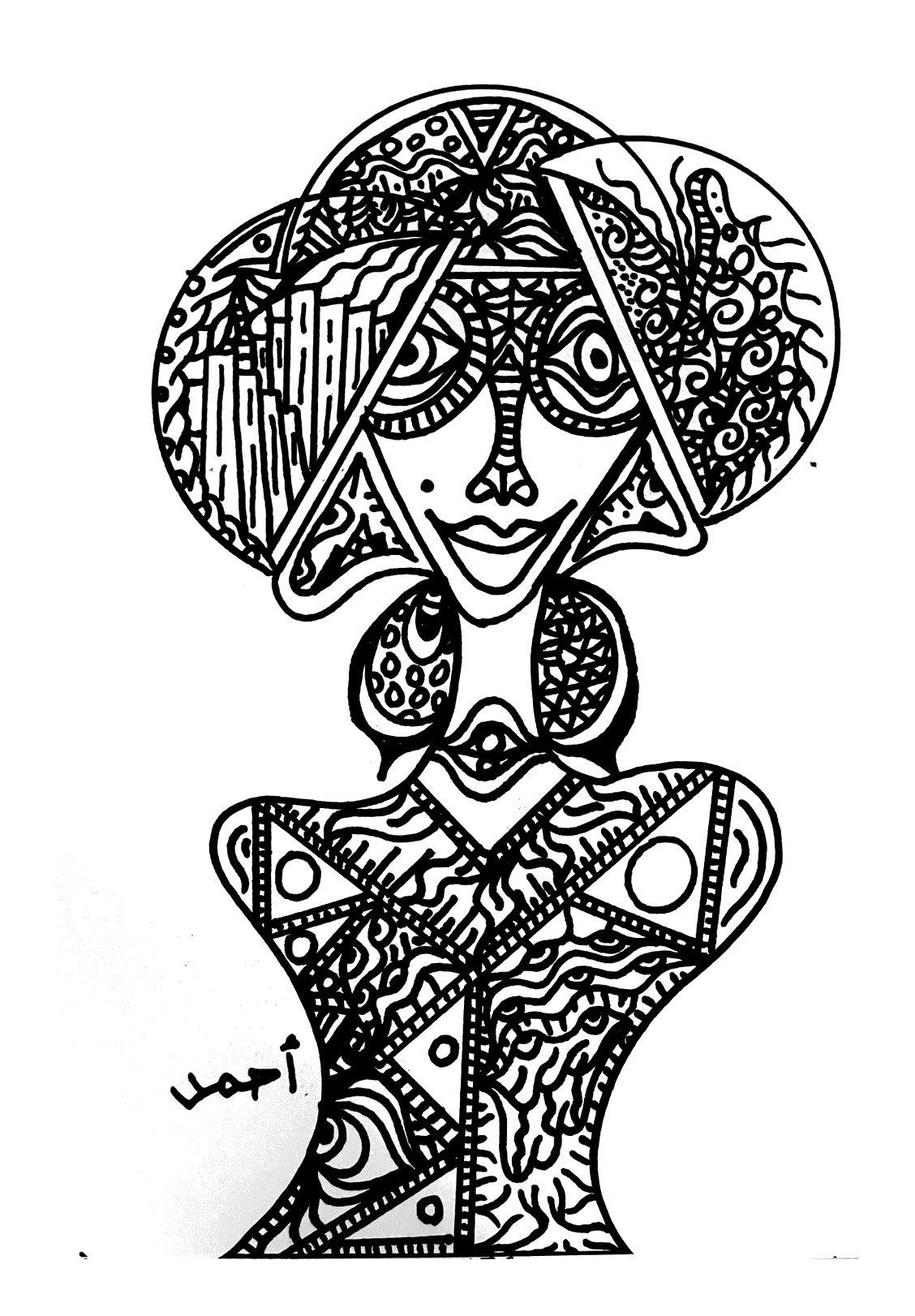
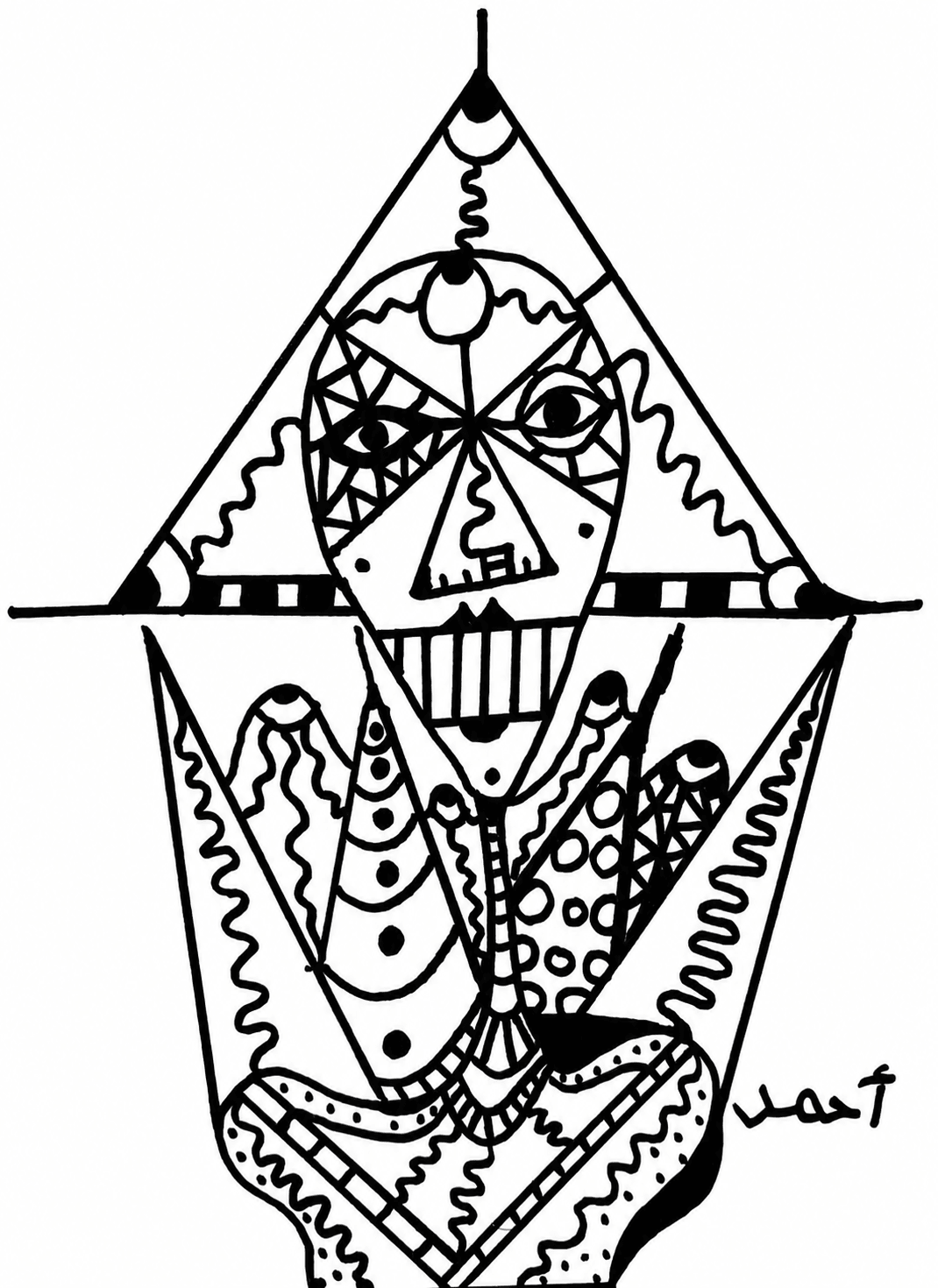
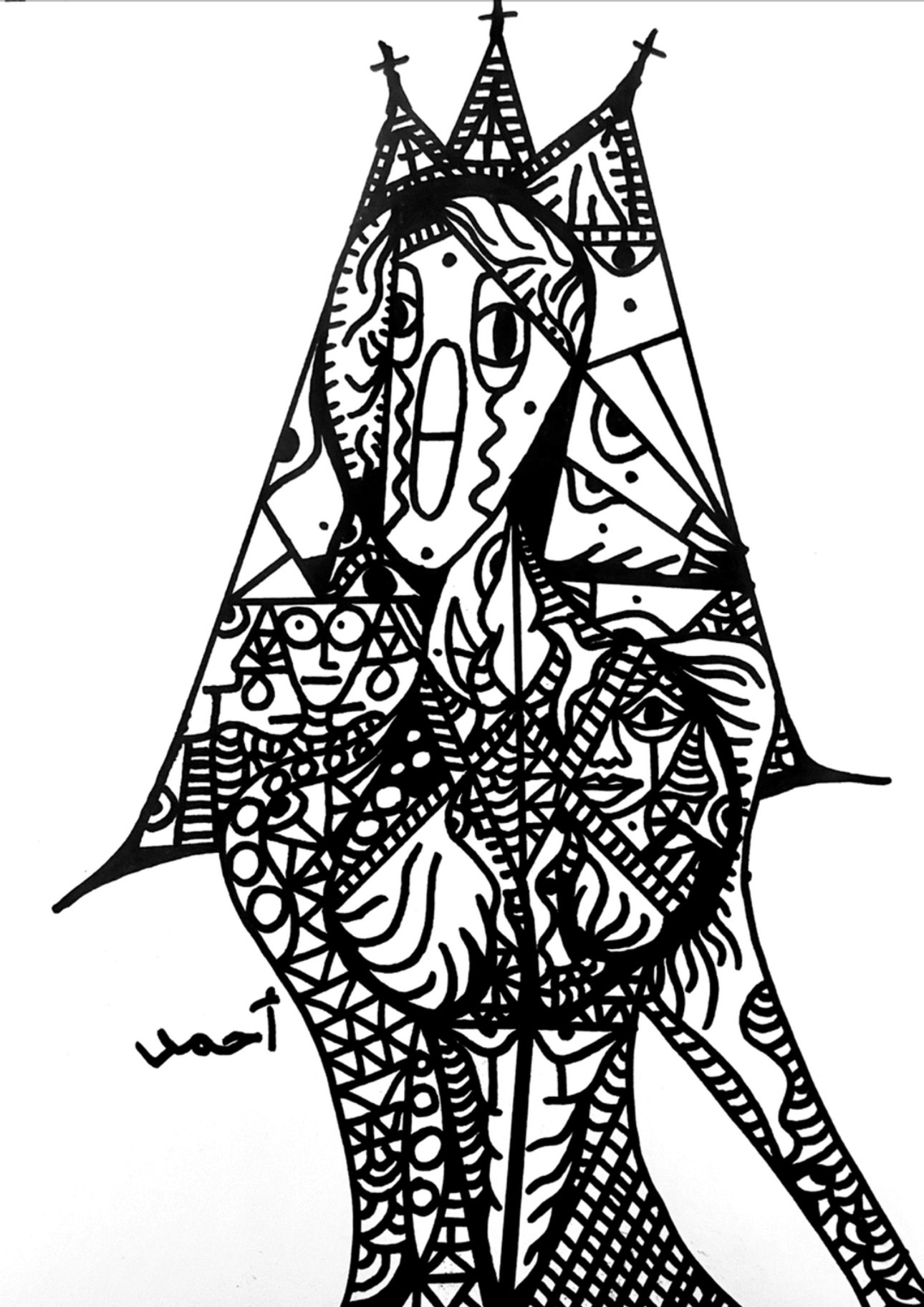
I am entirely self-taught. I work primarily with black ink and permanent marker on A4 paper, drawing spontaneously and intuitively, often in one concentrated session. I begin without a fixed image and follow the line wherever it leads. Because the marks are irreversible and I cannot recreate a finished work, every drawing becomes the record of a singular psychological state.
Eventually, I realized that I had not abandoned science; I had transformed it. Geological strata became layers of memory, fractures became emotional ruptures, porosity became a language of absence, and cross-sections became ways of looking inside the psyche. The scientist in me observes; the artist excavates.
Since 2016, I have created more than 1,000 handmade works. Fragmented faces, eyes, masks, crowns, ritual machines, and impossible architectures recur throughout my visual language. Recent bodies of work, including *Ritual Machines*, *The Fractured Persona*, and *Architecture of Constructed Identity”, explore grief, mental health, identity, power, technology, and the systems that quietly construct us.
Today, I am entering a new chapter in the UAE through gallery representation, exhibitions, and workshops connecting geology with intuitive art. I do not see my journey as leaving science for art. It is the continuation of the same search through a different language: finding hidden order within chaos and making visible what has been buried beneath the surface.
Can you talk to us a bit about the challenges and lessons you’ve learned along the way. Looking back would you say it’s been easy or smooth in retrospect?
No, it has not been a smooth road. My greatest obstacle was not simply moving from science into art; it was learning to live between two definitions of reality. One was measurable and socially understood: completing my PhD, building a financially secure career, and carrying the professional status attached to that path. The other was private, uncertain, and urgent: a world of images, symbols, and imagined structures that I felt compelled to follow. Leaving the PhD path in 2016 to become a self-taught artist meant surrendering not only security, but also a version of myself that society already knew how to value.
I did not leave because I lacked love for science. My scientific life was built on passion, curiosity, and close observation, the same forces that now drive my art. But I could no longer live entirely within a definition of success that had been constructed for me. I had to trust an artistic vision that was vivid inside me long before it was visible or credible to anyone else. Bridging that distance between inner conviction and external proof has been one of the most difficult and loneliest parts of the journey.
Since then, I have lived in a constant negotiation between fantasy and reality. For me, fantasy is not an escape from life; it is a space where new possibilities can survive before reality is ready to receive them. At the same time, art must coexist with financial uncertainty, responsibility, social expectations, and the need to build a balanced life. I have learned that reality without imagination can become a prison, while imagination without grounding can become isolation. My challenge has been to build a bridge between the two—and to keep crossing it.
I have also had to confront anxiety, grief, and persistent internal noise telling me that I am not good enough or intelligent enough to succeed in the art world. At times, that doubt became its own architecture around me. Persistence did not mean silencing it completely; it meant continuing to draw while it was still speaking.
That mental strain inevitably entered my work. The fractured faces, compressed layers, impossible architectures, and half-organic, half-mechanical forms carry the tension between control and collapse, ambition and doubt, fantasy and fact. My drawings are not simply illustrations of anxiety; they are records of a mind negotiating with it. Automatic drawing became a form of inner excavation, a way of uncovering what discipline, fear, grief, and survival had buried.
I am still learning how to sustain both the artist and the person, so I would not pretend these challenges are entirely behind me. What has changed is my relationship with them. Science taught me how pressure, fracture, layers, and time transform matter; art taught me how those same forces transform a human being. Every drawing I complete is evidence that the world I imagined survived its encounter with reality, and has slowly begun to reshape it.
Thanks – so what else should our readers know about your work and what you’re currently focused on?
I am a UAE-based contemporary artist of Iraqi origin and a geoscientist by training. Since 2016, I have created more than 1,000 hand-drawn works, primarily using black ink and marker on paper. My practice explores the hidden architecture of human experience, how grief, memory, anxiety, power, technology and social expectations construct, fracture and reshape identity.
My drawings are not simply illustrations; they are excavations. I usually begin without a predetermined image and work intuitively in concentrated, often single sessions. Fragmented faces, impossible buildings, geological layers, ritual crowns, psychological diagrams and imagined machines gradually emerge. Each work captures a specific state of consciousness and cannot be reproduced, even by me.
My scientific background remains fundamental to this process. Geology taught me to read fractures, strata, porosity and concealed systems, to move between vast landscapes and microscopic structures and discover order within apparent chaos. When I stepped away from the promised security and status of a doctoral career, I did not abandon that way of seeing; I carried it into art. The page became another site of investigation, but the material I was examining was no longer rock, it was the human psyche.
I am most proud of sustaining an honest artistic practice through uncertainty, grief and the pressure to choose a safer, more socially accepted life. Art enabled me to transform experiences that once felt impossible to articulate, including the loss of my youngest sister and my own psychological struggles, into forms through which others may encounter their own memories. I do not try merely to illustrate pain; I create structures capable of holding it.
What sets my work apart is this collision between scientific observation and subconscious freedom, geological time and immediate gesture, reality and fantasy, control and surrender. My recent bodies of work, including Ritual Machines, The Fractured Persona and Architectures of Obedience and Constructed Identity, extend this visual language into questions of sovereignty, constructed identity and the invisible systems that govern us.
Ultimately, I want each drawing to feel both ancient and futuristic, intimate and architectural, as though the viewer has discovered a map of somewhere inside themselves that they have always inhabited but never had the language to name.
Are there any important lessons you’ve learned that you can share with us?
The most important lesson I have learned is that an artist’s deepest responsibility is not to applause, but to inner truth. My journey, from the structured certainty of science to the unpredictable path of art, taught me how easily creativity can be weakened when we ask the outside world for permission to believe in our own vision.
For a long time, I thought confidence would arrive after recognition. Instead, I discovered the opposite: meaningful work begins when we learn to trust the voice within us before anyone else understands it. I welcome dialogue and criticism, but I no longer confuse feedback with permission. Applause may affirm the work, but it cannot author it.
Being in tune with my imagination is not an escape from reality; it is how I confront and transform it. My drawings emerge from intuition, grief, anxiety, scientific memory, and the tension between structure and chaos. If I created only what was already accepted, easily understood, or externally rewarded, I would silence the very part of myself that makes the work necessary and uniquely mine.
I have therefore learned to protect the forces that keep creativity alive: hope when results are uncertain, confidence when doubt becomes loud, joy when circumstances feel heavy, and freedom when society offers a safer script. External recognition may open doors, but it cannot be the engine of creation. That engine must come from within.
Ultimately, courage in art is not the absence of fear, it is continuing to create without waiting for permission. The more faithfully I listen inward, the more honestly my work can reach outward.
Contact Info:
- Instagram: @ahmedcontrolledchaos