



Today we’d like to introduce you to Jessica Bahr.
Hi Jessica, can you start by introducing yourself? We’d love to learn more about how you got to where you are today?
If you’d asked me as a child what I’d be when I grew up, I never would have pictured myself in the tech industry. I always preferred fine arts and the humanities, and in college, I studied Psychology and Religion, so it’s fair to say that a “computer job” was not on my list of future careers to pursue. I left college after 4.5 years to move closer to my grandmother in Austin, and by my mid-20s, I had worked my way up to be the Assistant General Manager of a nationwide hotel chain. Toward the end, I suffered an anxiety attack that lasted several days, and I realized the 24/7 life of a hotel manager was not for me.
A friend referred me to her company as a technical support analyst, so I worked in a cubicle next to product teams and stayed at that software company for 11 years. I bonded with coworkers (many of whom are still wonderful tech industry connections), lead initiatives, presented to leaders, filmed training videos, and planned value-add programs and events. It was a magical time, but over time, I began to feel complacent, unhappy and intimidated about making my next career step. I needed to plan my next move, and I had a friend who’d recently received the training, so I took a Certified Scrum Master (CSM) course and received my credential. I used this education to gain unofficial experience practicing Scrum with my team and landed my first role as a Scrum Master for another company. I stayed with that company for a year, taking on extra projects, running Agile POCs with teams (in addition to coaching my own), giving a planning and metrics perspective that helped them make better forecasting decisions, and talking with my manager about a Senior role. Well, one became available in my current company and when I received the offer, I jumped into it!
I gained experience and strengthened my acumen, so I began mentoring other Scrum Masters and development leads. Working with people, helping them improve and step into the best versions of themselves, that’s me living my best life!
Would you say it’s been a smooth road, and if not what are some of the biggest challenges you’ve faced along the way?
My struggles include impostor syndrome and lack of a college degree, and these are common to many. Working with software engineers, architects, and MBAs who are all highly trained, stepping into their area of expertise and trying to help them find better ways to work together, that can ruffle feathers and requires serious self-mastery. After all, it’s hard to be a servant leader for those who may not always appreciate your efforts.
Another challenge many Scrum Masters face is that companies want to move faster and have more business agility so they won’t be the disrupted Blockbuster to someone else’s Netflix, but change requires that people learn to flex different muscles and adjust their mindsets. That can cause identity and culture issues within an organization and its leaders. These are very difficult but very important waters to navigate, and facing these headwind issues is tiring, even for the strongest of us.
So no, not a smooth road, but if it was easy, would it be worth it?
Alright, so let’s switch gears a bit and talk business. What should we know about your work?
Right now, I’m a Senior Scrum Master in a globally recognized fintech firm, and that pays my bills. In my free time, I run a blog on my website AgileBesties.com, and I mentor aspiring Scrum Masters and team leaders who want help improving the effectiveness of their teams. My favorite topics to discuss are psychological safety, being human, vulnerability as a strength, and the Shu Ha Ri model of skill mastery. I’m also actively involved in two nonprofits: Agile Austin, where I co-host a Scrum Master special interest group, and Friends of the Forest, a nonprofit raising money for other nonprofits and for which I sit on the Board of Directors.
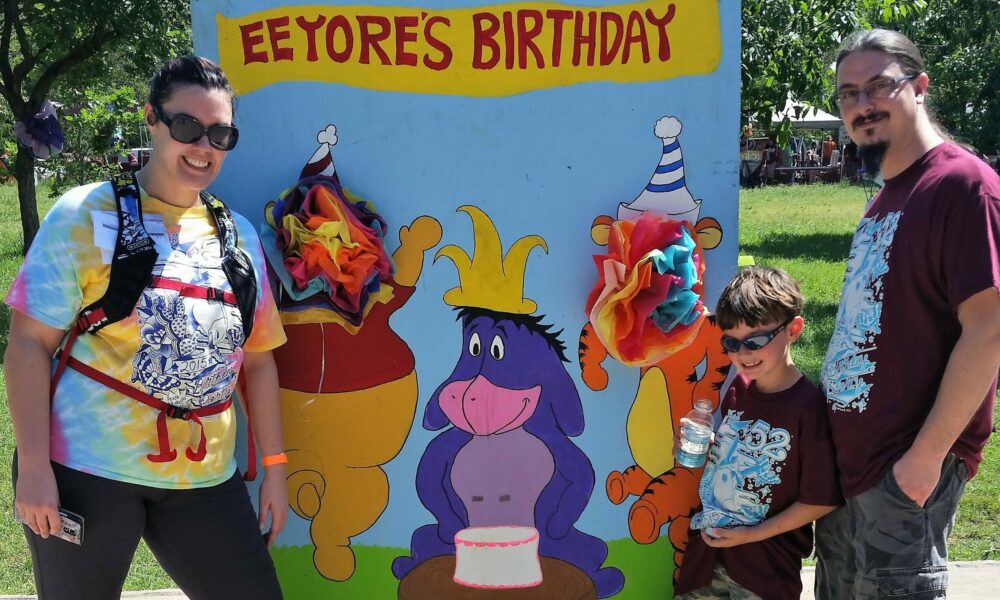
However, what I am MOST proud of is the strong bond I have with my family and how much we’ve weathered and persevered during the pandemic while continuing to support each other. My son is a beautiful young man about to start high school, and my husband is learning to be an entrepreneur with his mad grillin’ skills. Without their support, I couldn’t do what I do.
How do you think about luck?
This is a question I’ve thought more about as an adult, and especially in the social climate of our times. I think it’s less luck and more privilege. I don’t deny that my intelligence and ambition have driven me into many places and caused me to exceed the expectations of my employers, but I am a straight, white, cis-gendered female, and while you could say that women still suffer under patriarchy, white women have it particularly good, comparatively speaking. I also was raised in a middle-class home to conservative parents who did everything they could to ensure my quality education and future success, sacrificing to send me to private schools and encouraging me to go to University. I had a safe, secure, privileged upbringing that was the foundation for all the choices I made and opportunities I recognized from then on. I am smart, but I was raised to expect that from myself and encouraged to pursue greatness. This is not something I worked for, but definitely something I benefit from every day.
Therefore, it is my heart’s desire to work with others to help them unlock their own potential and become the best versions of themselves. I want to give what I have to others so that my neighbors in this life have a fairer chance to live their best lives, too.
Contact Info:
- Email: jessicabahr@agilebesties.com
- Website: www.agilebesties.com