


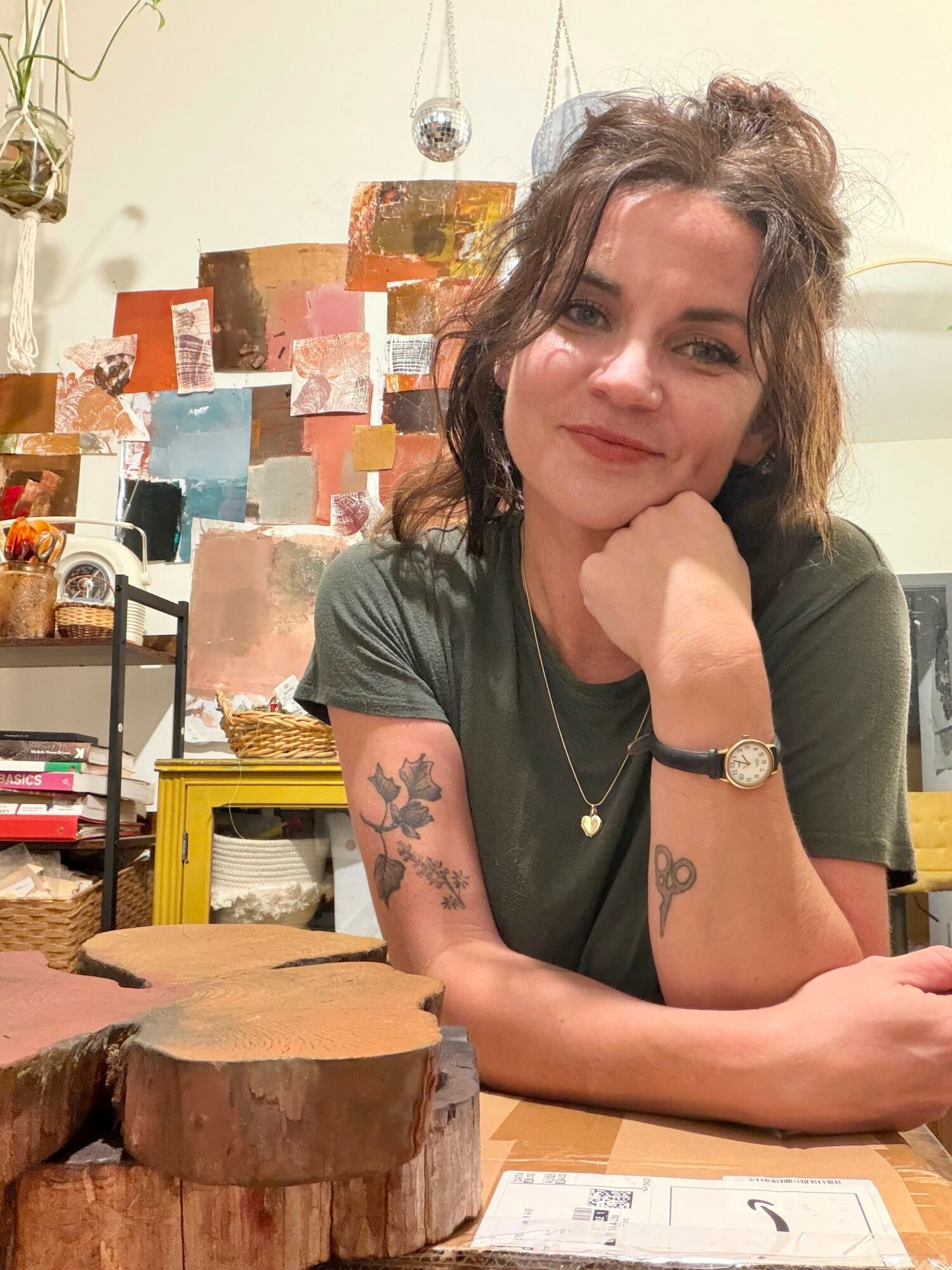
Today we’d like to introduce you to Lindsay Dahlin.
Hi Lindsay, thanks for sharing your story with us. To start, maybe you can tell our readers some of your backstory.
My path to this type of artistry hasn’t exactly been linear. I have been a studio art student since I was 5- both of my parents are artists as well. In an attempt to satisfy my parent’s “how are you going to make money?” question- I studied apparel and textile design in college, which landed me working in fashion and visual display. Later, I earned a master’s in early childhood education, and spent years teaching and working with children. The classroom became my creative space and that bled into lesson planning.
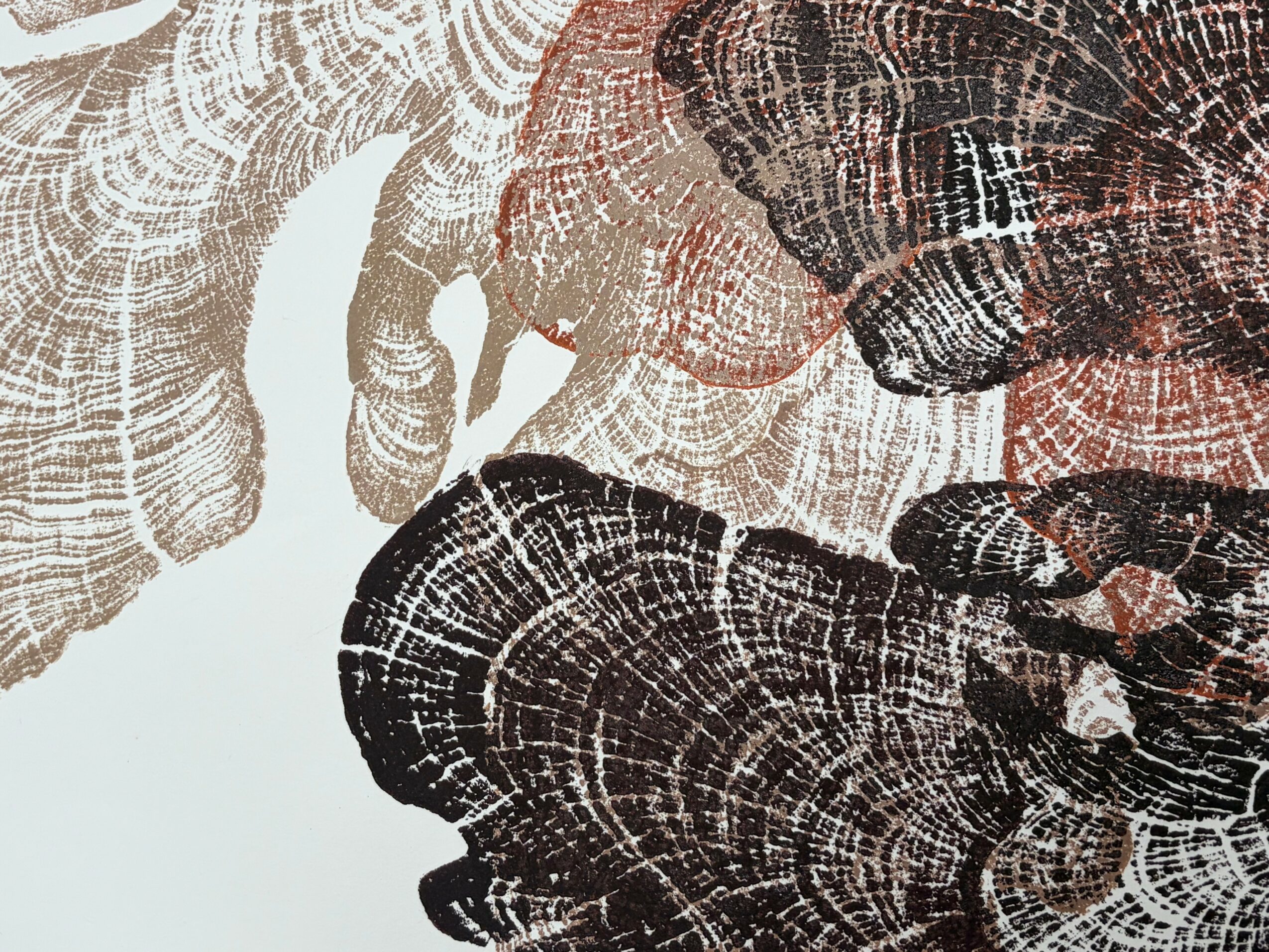
My current work began almost by accident when two large trees were removed from my daughter’s elementary schoolyard. I had an immediate impulse to save sections of them, without really knowing what I would do next. I taught myself how to turn the actual cross-sections into relief printing blocks—planing, sanding, burning, cleaning, inking, and pulling their rings onto paper by hand. I was in a transitional place in my life and desperate to get back to creating again. Printing has never been on my radar for my creative outlet, but I have really enjoyed challenging myself in a new skill.
Soon after, we learned the school itself would be closing after nearly a century in the Austin community. The prints suddenly became more than an experiment; they were a physical record of a place that was disappearing. That idea—preserving place through the trees that witnessed it—became the foundation of my practice.
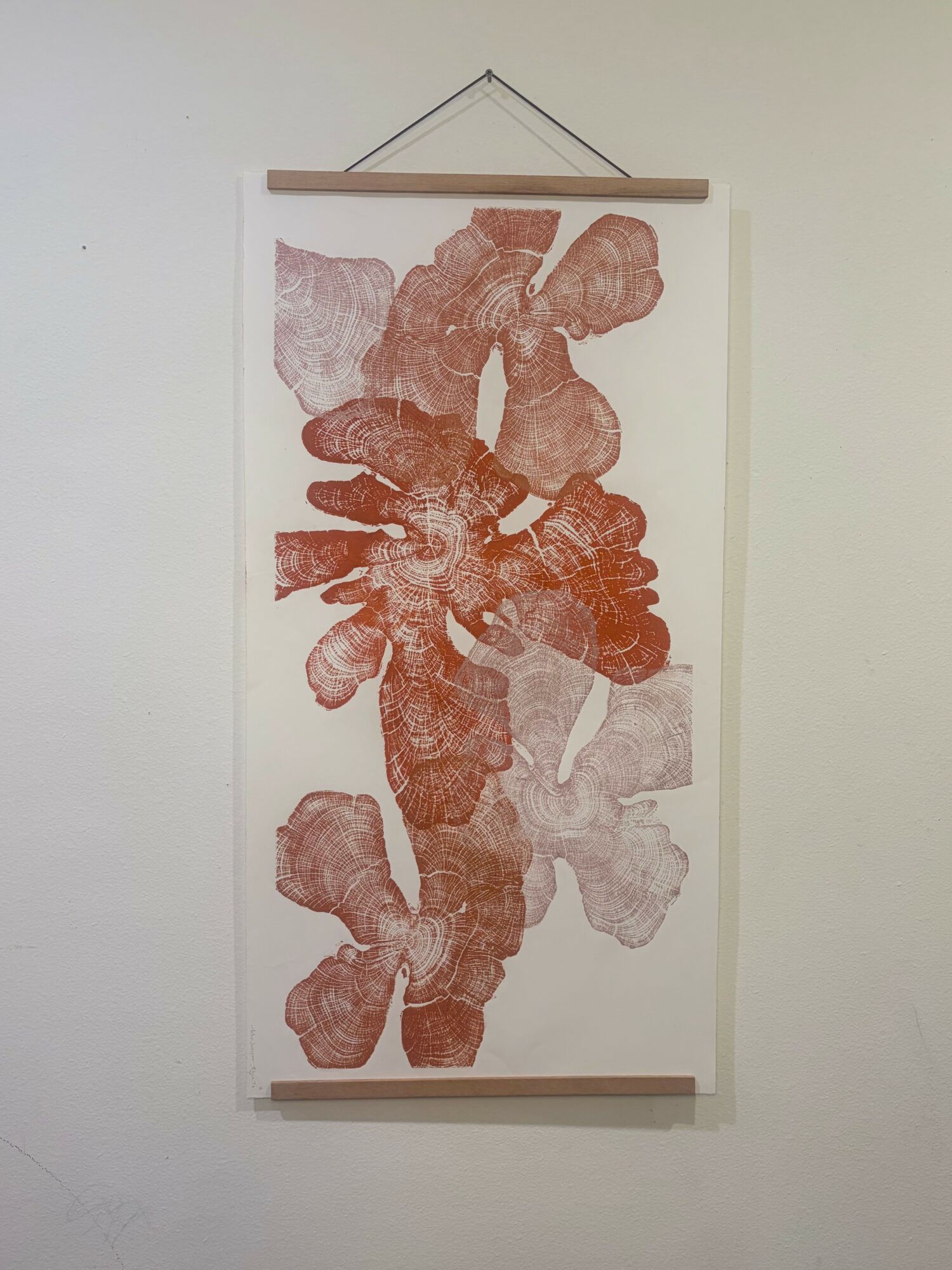
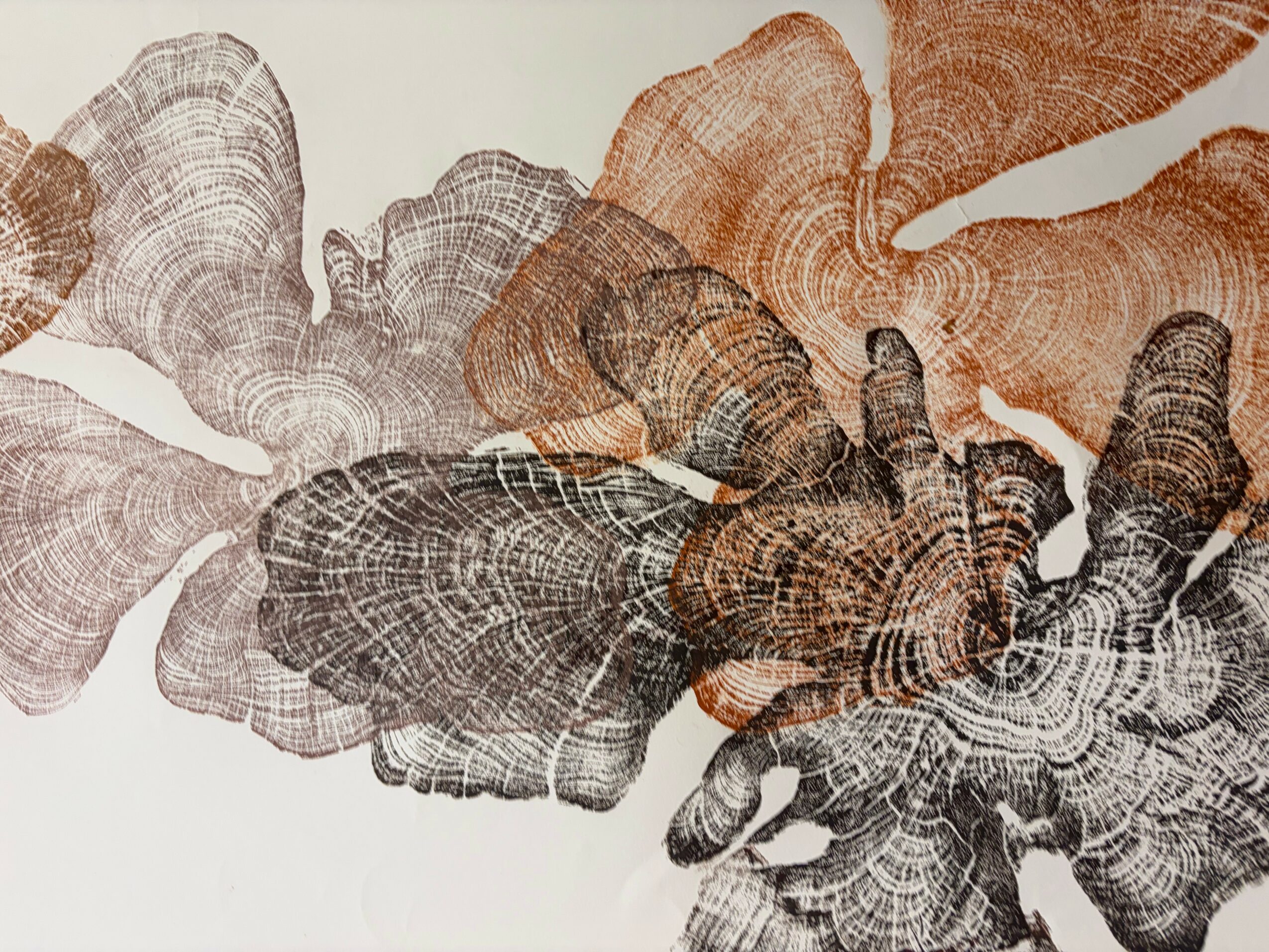
Since then, I’ve continued working with locally fallen Texas trees, creating both individual and layered relief prints that preserve their rings, scars, decay, and irregularities. What started with two pieces of a schoolyard tree has grown into exhibitions, commissions, community collaborations, and upcoming the 2026 Austin Studio Tour. At its core, the idea remains pretty simple: take something that was going to disappear and find a way to let it leave a mark for Austin’s natural history.
We all face challenges, but looking back would you describe it as a relatively smooth road?
It definitely hasn’t been a smooth or particularly straight road. However, creativity is my foundation in my life as a whole. I came back to making art seriously during a period of major transition in my life, while also raising my daughter and figuring out what I wanted the next version of my career to look like. There’s been a lot of learning to trust myself again—and accepting that there isn’t always a clear roadmap for building a creative practice.
The work itself has required that same persistence. Printing directly from trees involves a lot of experimentation (aka copious amounts of space for error) physical labor, failed prints, and problem-solving; every species and every piece of wood behaves differently. I’ve had to get comfortable with not knowing exactly what I’m doing until I do it—which, as a recovering perfectionist, has probably been as important as anything I’ve learned technically.
I think the biggest shift has been realizing that uncertainty doesn’t necessarily mean I’m on the wrong path. Sometimes it just means I’m making one.
As you know, we’re big fans of you and your work. For our readers who might not be as familiar what can you tell them about what you do?
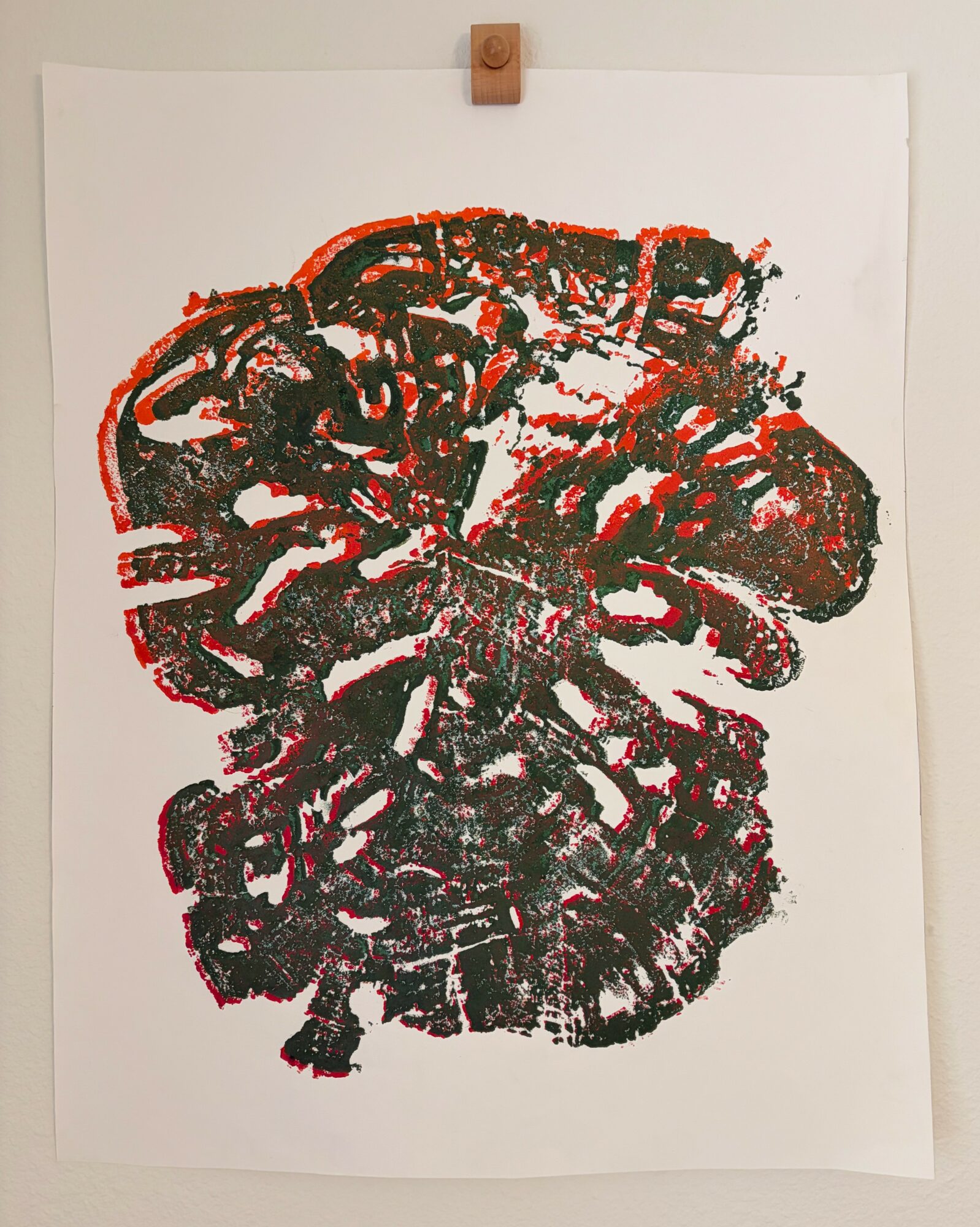
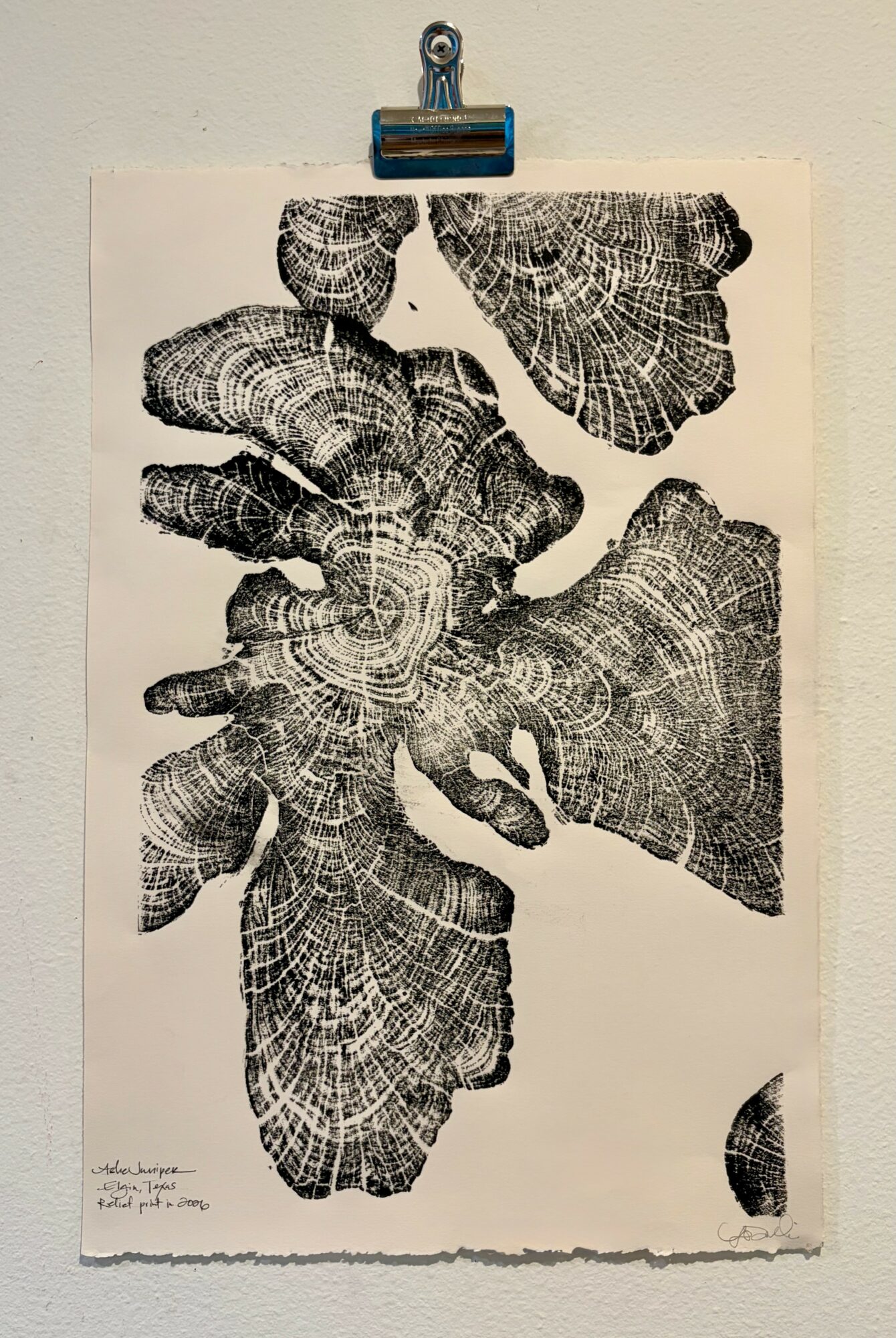
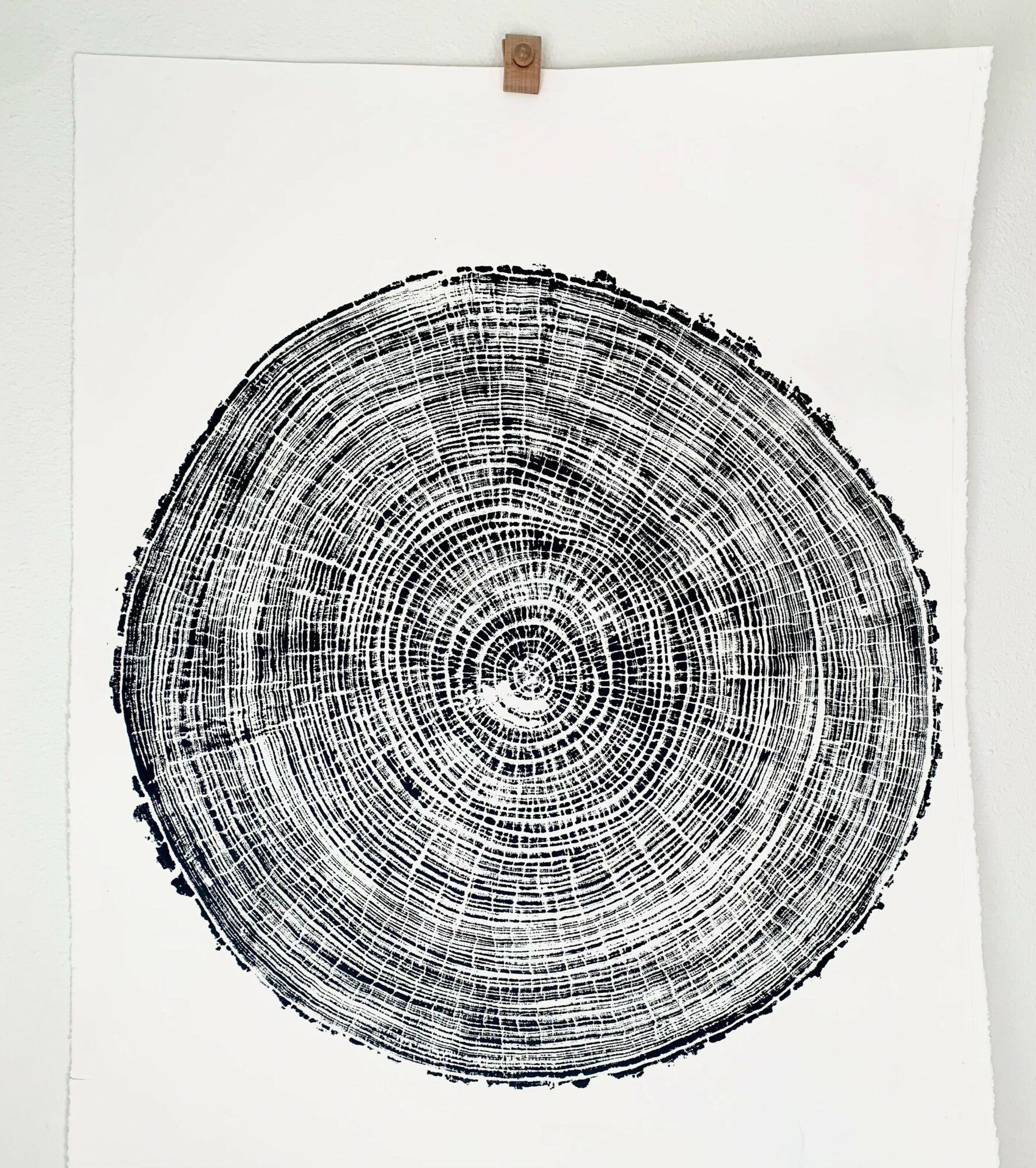
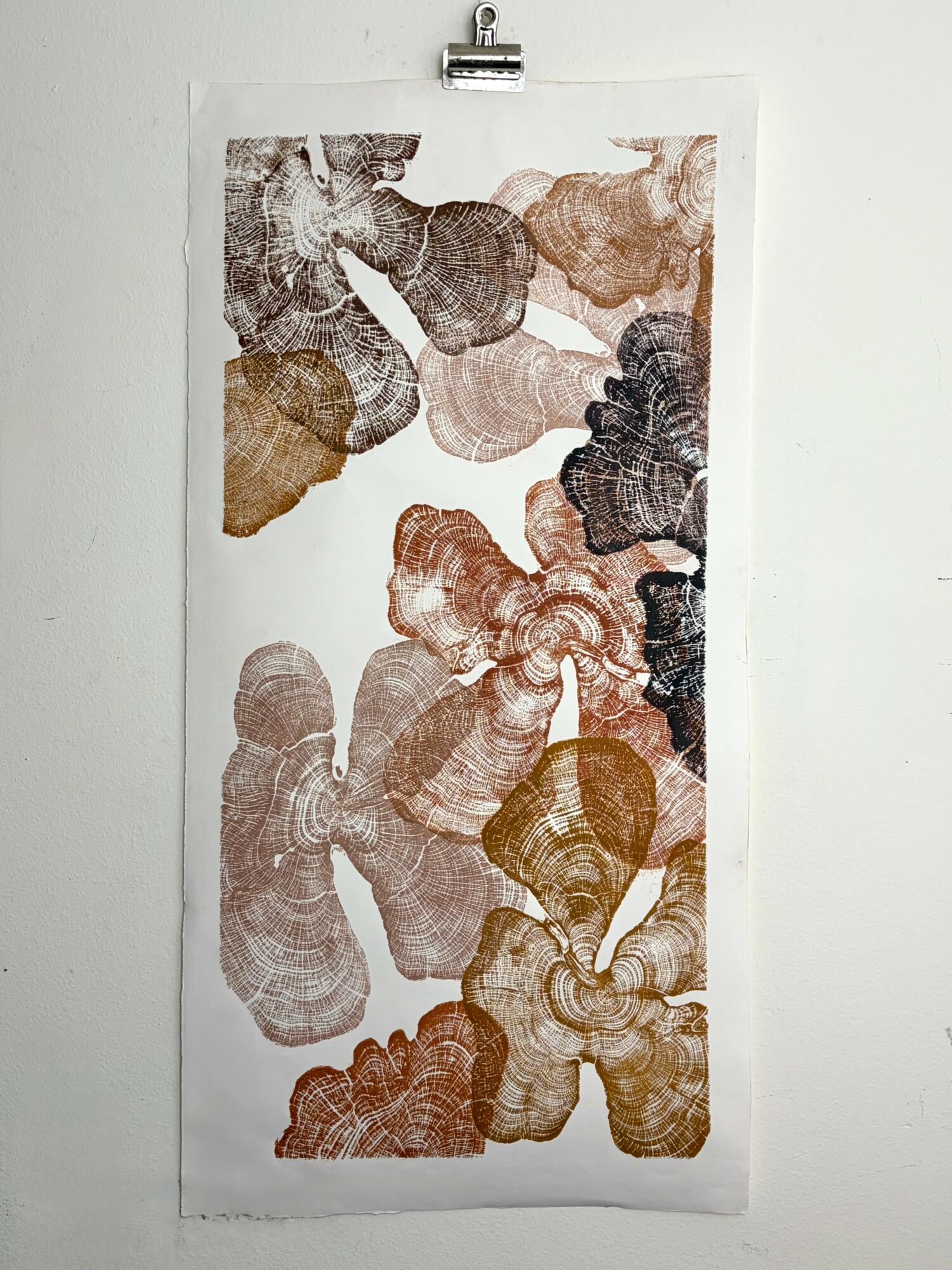
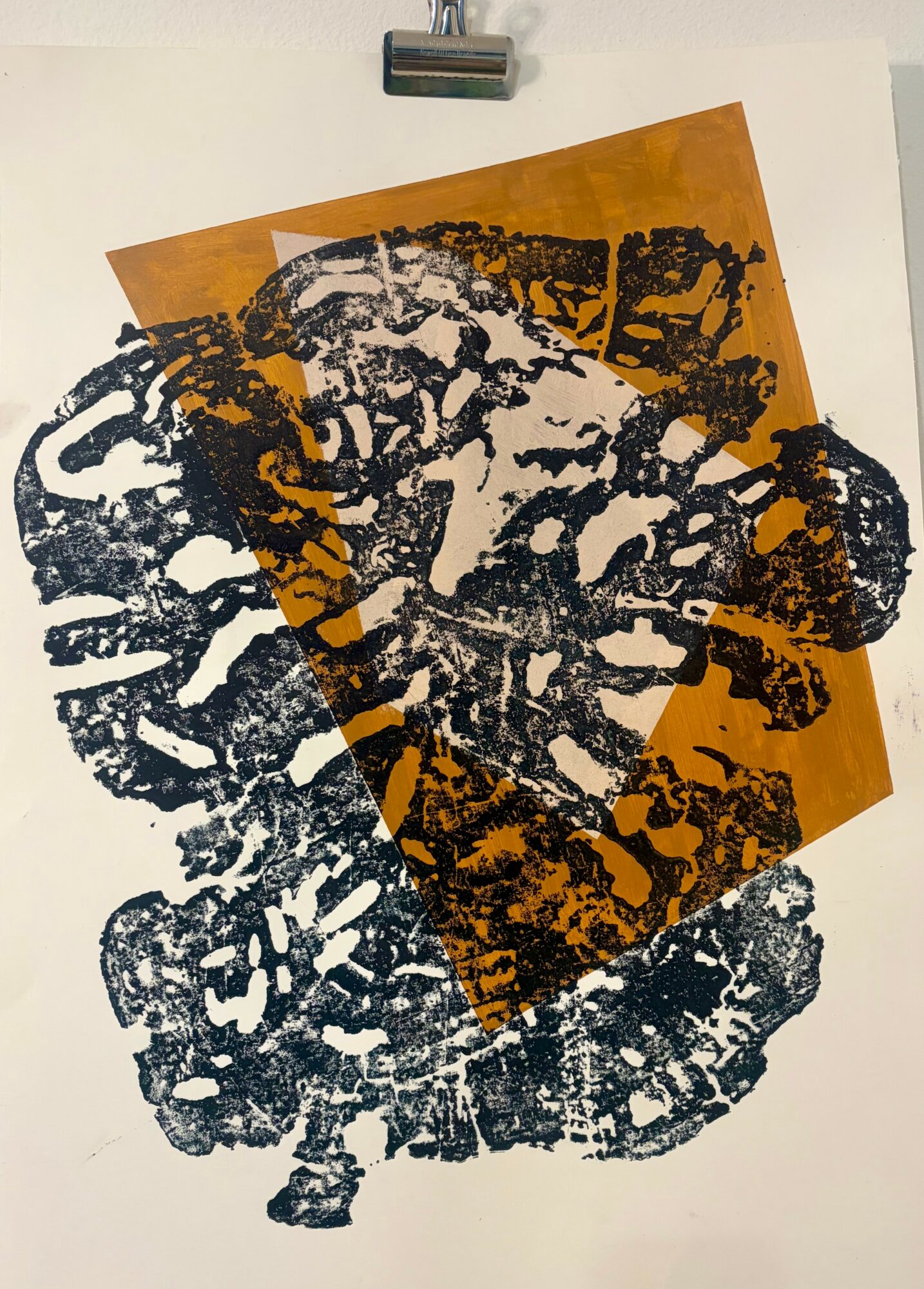
I create original relief prints directly from locally fallen Texas trees. Each piece begins with preparing the wood itself—planing, sanding, burning, cleaning and sealing the surface before applying ink and pulling the impression by hand. The process captures details unique to each tree: growth rings, scars, decay, knots and other evidence of its history.
My work ranges from large-scale single impressions to layered compositions that combine multiple trees, species and colors. What sets the work apart for me is that the tree isn’t simply the subject—it is the printing block, so every mark in the finished piece was physically made by the tree itself.
I’m most proud that the work has begun to move beyond my own studio through exhibitions, commissions and collaborations. With organizations such as TedX, UT Austin and as a featured Artist for the 2026 Austin Studio Tour feels especially meaningful as I continue building a practice centered around preservation, place and the natural history held within our communities.
Can you talk to us a bit about happiness and what makes you happy?
Happiness, to me, is connection—and authentic connection at that. My people are what make my life feel so incredibly abundant. So perhaps it’s no surprise that I gravitated toward a new art practice centered around growth and preservation.
Contact Info:
- Instagram: ldahlin.prints