



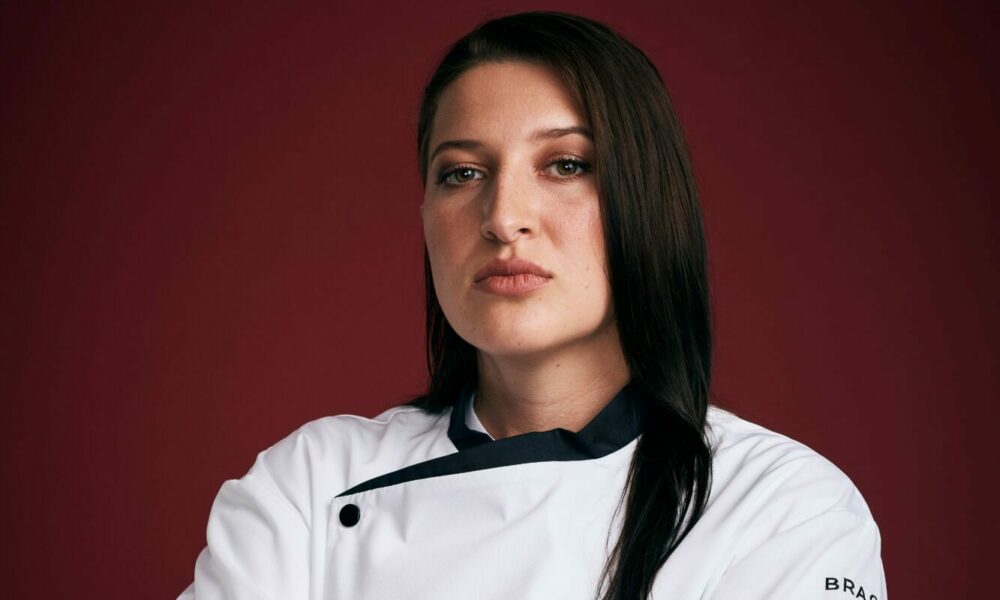
Today we’d like to introduce you to Chef Josie Clemens.
Hi Chef Josie, so excited to have you with us today. What can you tell us about your story?
Since the second grade, I knew I wanted to be a chef. I didn’t really know where it came from, but my inner critic spoke loudly about my distaste for fried and processed foods since preschool, but I ate everything happily, without mentioning my preferences. The summer after my freshman year of high school, my mom told me not to come home until I had a job. I remember thinking she was going to regret those words because they felt like a one-way ticket to freedom. Without warning, I hopped into my car and sped off. I recalled my friend saying he worked at the most luxurious banquet hall in the Greater Detroit area as a server, so I drove over and parked in the back of the building, hoping to find and speak with the chef. I just remember flooring it the whole way, angsty and supercharged.
The parking lot of the banquet hall was crowded with high school and college kids, probably 50 of them, all dressed in a tuxedo-like uniform, clearly on a staff break. The double doors were wide open, and you could hear the bands inside blasting away, performing sound checks. Florists were wheeling massive vases and the most exotic flowers in and out of vans and into the hall. A baker had arrived with all of his sheet cakes on trolleys. I was hooked on the whole experience, the casual orchestration of what was obviously a very important and crucial time. I found the chef. He was easy to identify by the way he stood over his papers in the kitchen. I introduced myself with charisma and professionalism and asked for a job. He just looked at me, appearing angry, and told me no. It wasn’t until later that I understood the pressure of timing four 5-course dinners scheduled to fly out of the kitchen all at once that was running through his mind, and I also wasn’t aware of the hours he and his team had already put in that day. Once I became part of this war machine, I realized I also would have bitten someone’s head off, thinking they had no idea what they were asking if they had approached me at that kind of time.
I walked through the banquet hall and found my way to the admin office hidden in the front, where the owners were laughing and drinking. I asked for a kitchen job and they gave me a job as a server on the spot, where to buy my uniform and to impress the chef. Serving was a cakewalk. I loved seeing the kitchen angst and hearing the screaming coming from the owner through the closed double doors. It seemed obscene to me that adults could become so aggressive over their job, and that’s why I was most interested in getting in there. What could all the screaming be about? Can I dismantle it? What could possibly be happening every single day when the food comes out perfect? Didn’t they know that everyone was incredibly happy with the food and having the most amazing time at this $500,000 event? I didn’t understand the pressure that a human could place on themselves. I didn’t understand how very well aware they were of these facts.
After three months of 60-hour work weeks in my tuxedo uniform, I was finally in the kitchen, peeling potatoes as fast as I could, pre-scooping perfectly shaped ice cream, and washing several crates of produce in ice cold water at my little prep station far away from the action, and not allowed to even think about picking up a knife. I was ecstatic and scared shitless. I was observing the absolute insanity that came out of people’s mouths in contrast to how well-orchestrated each course was flown out to the ballrooms for service. The kitchen shapeshifted around different stations, pumping out three different 5-course set menus for 1200 people every night. I would think to myself, wow, what is the need for all of this verbal abuse and substance abuse when clearly they have the structure nailed down? They were tough, and I realized that in order to be accepted, I needed to show them my tough side, too. I turned off my curiosity and drew out my inner angst.
After a few months, I was finally able to join the team. My workload became more intense, my training became more detailed, and I was crying in the walk-in cooler to release stress nearly every day for the first month. I became incredibly disciplined and structured with my work, but I was most efficient at managing everyone else’s mood. I learned enough about service to run the line myself and begin prep for the next day, sending Chef home early. The job became easy as I became more positive; food production became muscle memory, and all that was left was emotional maintenance. I learned that people management is an essential skill to curate in order to go places and to give people what they lack: loving structure and the confidence that enough skill is present among a team to meet the demands of the day.
I learned that distrust and care are a lethal combination that existed not only in the kitchen but at home, amongst teachers and students, and drivers on the road…it existed everywhere, in every system, including my own nervous system from living in such a high volume, high-pressure kitchen. Wherever excess aggression lies, distrust and care are guaranteed to be at an all-time high. This became something I thrived on. It was easy to access inside of me. It became a tool to get me through 18-hour shifts seven days a week during our busy season. Seriousness became an outpouring of passion and increased communication amongst the team. Fear became a driving force for me to command and demand more from my body when I felt as though I wasn’t going to make it. These benefits of aggression helped me understand and normalize the culture of the hospitality industry.
As time went on, I realized this isn’t a sustainable way to live, and it’s not a sustainable way to expand or grow your income. I was in the kitchen for the passion and for the food, but I also had the beginning stages of carpal tunnel. I knew there was no way I was going to be able to spend my whole life working and producing at my current rate. Hearing about everyone’s surgeries or surgery plans after bringing up the pain in my own wrist during our “break” was crazy to me. This was an industry standard, something the people around me were willing to accept as part of life. It was in this moment I decided the physical demand required to “make it nice” was unjust. I became angry with my job. Resentful, one day I texted the chef to let him know I wouldn’t be coming in anymore. It felt right, but a part of me felt weak like perhaps I wasn’t cut out for the industry, but I remained determined to find a way to be part of it. I moved to Colorado and worked as a sous chef at a French catering company, and found more of the same mentality, but with about half the work ethic/passion and double the substance abuse. I was stunned and discouraged.
I found outlets to place my fire into. I became the production manager of a construction company for a little while, the marketing director of a tile manufacturing company, and finally, for Tesla. These jobs fit like a glove to me because everything was recognizable: the structure, the planning, the scheduling, the recording of orders, the number crunching, the intensity, the grit. I was able to sharpen and deepen my skills in a workflow that was unfamiliar to me and further develop my knowledge of what it takes to conduct business in highly emotional situations and get people together to collaborate. These positions helped shape me into a businesswoman and a human being with boundaries that can remain neutral in emotionally grueling situations. I became generously comfortable with dismissing my unmet needs for the needs of the moment to achieve a performance-based goal. It felt good to wear a suit and earn a nice salary, but it also came with a cost.
This break from the hospitality industry was when I became vegan; I needed to live in a meaningful way. I was on a quest to embody my higher ideals and manifest them into physical form. Veganism became a home where creativity, acceptance, my emotionality, my growth, and structured routines could all coexist with ease. Embracing veganism in every facet of my life was the hardest thing for me to do because it meant that I had to make an internal confession to myself that my past ways of being were unjust. I had to address the conditioning of this world and label it as something dangerous in order to cling to what I felt was safe.
Living in congruence with veganism meant I was no longer willing to adapt to my environment and drain my energy due to pressure and suppression for the sake of success. This lifestyle transformation was an acknowledgment and commitment to understanding that I have more to learn, that I was ready to grow deeper roots and expand into a new perspective where joy lives. Veganism asked me to be willing to re-establish the tastes and flavors I know and love, not only as a chef but as an expressive human being. It gave me the freedom to make new choices and construct an identity that serves the most joyful version of myself that I want to bring into this life. On the weekends when I wasn’t working at Tesla, I started consulting vegan and non-vegan restaurants, making menus and addressing key execution errors in their food production protocols. I felt alive. I felt like I was doing something really important for the first time in my life.
This newfound freedom taught me there must also be acceptance of the things that caused me to feel dissatisfaction and heartbreak because it gave me the hunger to seek understanding. To me, this is the artistry I connect with as a chef; the beauty that lies in the process of not only recognizing and fully feeling your emotions but creating a life that preserves your highest expression and therefore, your peace. I seek to understand how to sustain the emotionality and physicality of human life in the hospitality industry, to create so many systems and processes upfront that the workload becomes peaceful. The hospitality industry can be renewed. Every industry can be renewed.
Deciding to be on Hell’s Kitchen was difficult for me. I didn’t apply… the casting director found me on Facebook. When she asked me if I would be willing to market myself on Hell’s Kitchen as the vegan chef that I am and still cook meat, I told her no thank you and the call ended shortly after that, but she sent me her phone number. Two weeks after that, I was bothered. I started thinking…perhaps it wouldn’t be such a terrible thing to expose the viewers of this carnivorous show to veganism. Perhaps it would be a platform for me to be seen in an unnatural way, a route leading to me propagating positive perspectives people could really benefit from. Two weeks later, I messaged the casting director and asked her if it was too late to change my mind. She slid me into the final interviews. I made it onto the show. We filmed. Two years later, the show aired. The vegan community rallied behind me. Hell’s Kitchen die-hard fans rallied behind me. I went on tour as the show was airing. I spoke at vegan festivals, on podcasts, and radio talk shows all over the world. I don’t know how many people listened but I had hoped it was a lot. The truth is…even if it were a few thousand, it wasn’t enough for me.
Even if it were ten thousand, I wanted bigger audiences, bigger stages… but for what? To preach a message about listening to your internal guidance? Everything started to feel uninspiring. I started to feel like I needed to be a chef again and just focus on using my hands to get grounded and do meaningful work with people I love. That life really could be that simple. I left a project I was working on in Mexico and moved to Las Vegas. It dawned on me for maybe the seventh time in my life that perhaps the mentality of thinking something is “wrong” is the only problem that exists in my life, that maybe I just needed to fixate more upon who and what I want to work with and where rather than compartmentalizing things as dangerous or safe as the ultimate excuse to not do what I would really like to do. The world is a playground, and maybe instead of preaching that message on big stages with lots of followers, I just needed to live it FULLY. So here I am, in Las Vegas, consulting vegan restaurants and working with vegan business owners, getting back to the root and heart of what I love to do; to be of service.
Alright, so let’s dig a little deeper into the story – has it been an easy path overall and if not, what were the challenges you’ve had to overcome?
It’s been incredibly rewarding, inside and out, pursuing this journey. The only struggles are self-imposed ones from my mind…but once I chose that I wanted a breakthrough, the breakthrough would happen. Repeating this process over and over has just created emotional strength.
Alright, so let’s switch gears a bit and talk business. What should we know about your work?
I’m most proud of the messages behind my food, illustrating them with the intentionality behind the ingredients I choose for each plate, how I prepare the components, what I want them to look like, and what flavors or cuisine I fuse to bring a story to life.
More often than not, the upscale dining experiences I execute at my events around the world are messages about connecting to home, or the planets needs, or the emotional needs unmet of ourselves and our loved ones. These are the stitches in the fabric of life that are most important and easily forgotten in the culture of achievement.
Can you talk to us a bit about happiness and what makes you happy?
The bold expression of others makes me happy…whether it’s a conditioned or authentic response…happy or sad…it doesn’t matter. Expression gives me life and reminds me not to hold back, for better or for worse. The effects that others have on me clearly demonstrate to me how essential it is to find my most authentic expression and to spend time nurturing it, allowing it not to be muted by the noise around me.
Contact Info:
- Instagram: Veganchefjosie
- Twitter: Veganchefjosie


Image Credits
Jonathan Roskos