


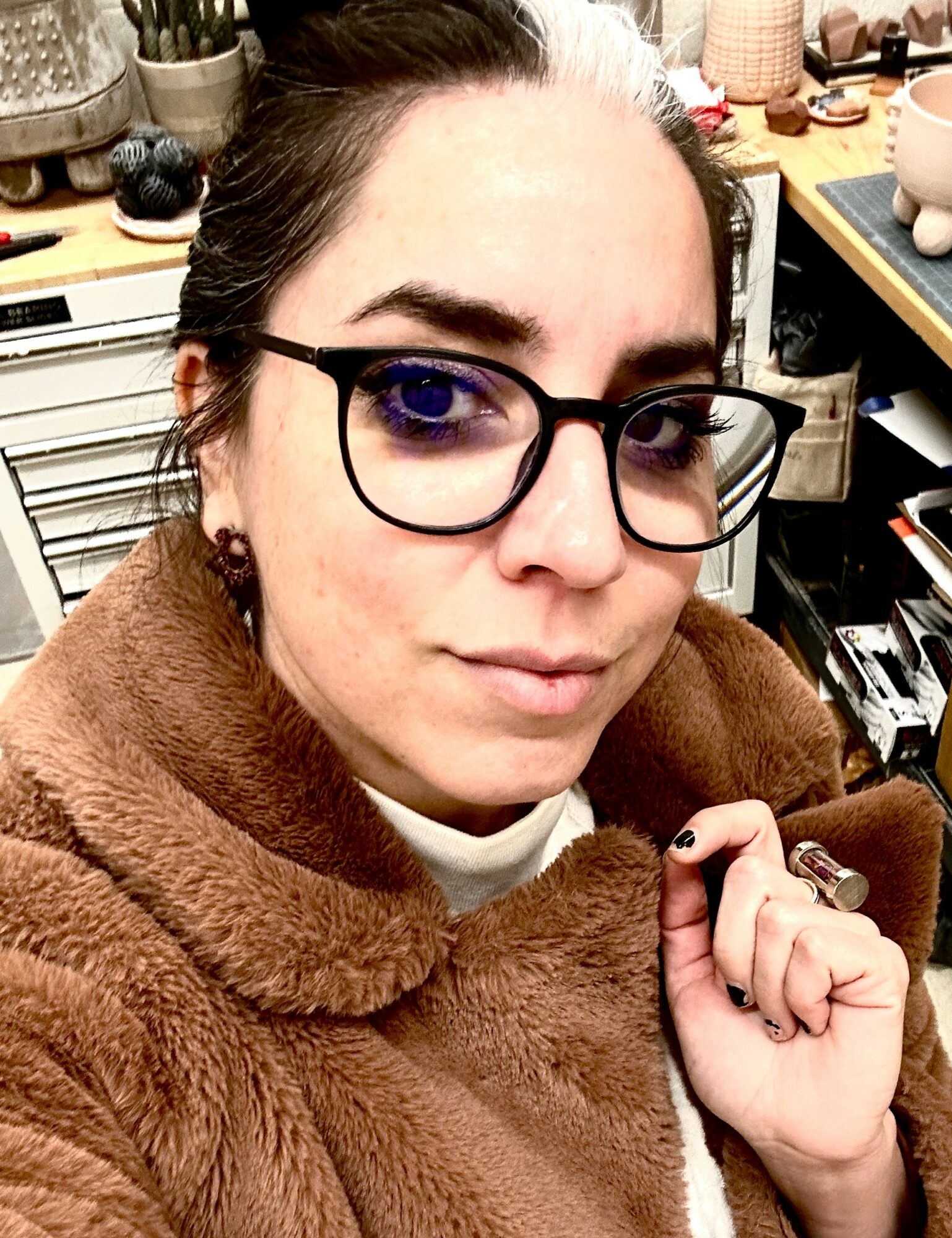
Today we’d like to introduce you to Dina Perlasca.
Hi Dina, it’s an honor to have you on the platform. Thanks for taking the time to share your story with us – to start maybe you can share some of your backstory with our readers?
I feel incredibly fortunate that art has always been part of my life. I grew up between El Paso, Texas and Ciudad Juárez, Chihuahua, in a family that deeply valued Mexican art, design, and craftsmanship. My grandparents especially had a huge influence on me. Their home was filled with beautiful Mexican furniture, folk art, ceramics, and decorative objects, and from an early age I became fascinated with the way objects could hold memory, beauty, and emotion. Traveling with them through cities like Zacatecas, Querétaro, Puebla, and other regions of central Mexico exposed me to rich artistic traditions, markets, architecture, and domestic interiors that continue to shape my visual language today. My grandmother also taught me how to thoughtfully arrange and care for domestic spaces, which later became an important conceptual foundation in my work.
Although I always felt I was born an artist, I began seriously studying art at The University of Texas at El Paso, the university located in the borderland where I was raised. It was there that I fell in love with clay and sculpture and began to understand ceramics as a powerful vehicle for storytelling, memory, and emotional experience. During my undergraduate years, I also discovered a passion for teaching and realized that I wanted to dedicate my life both to being a professional artist and to supporting future generations of artists.
I later went on to earn my MFA from New Mexico State University, where I further developed my installation-based practice and deepened my research into ceramics, domesticity, border culture, and psychological space. After graduating, I returned to UTEP as an adjunct instructor, and several years later I was honored to be offered a tenure-track position. I feel profoundly grateful to teach and mentor students from the Borderlands because I see so much of myself in them. Supporting students from communities like the one I come from and helping them recognize the value of their voices and experiences is one of the most meaningful parts of my career.
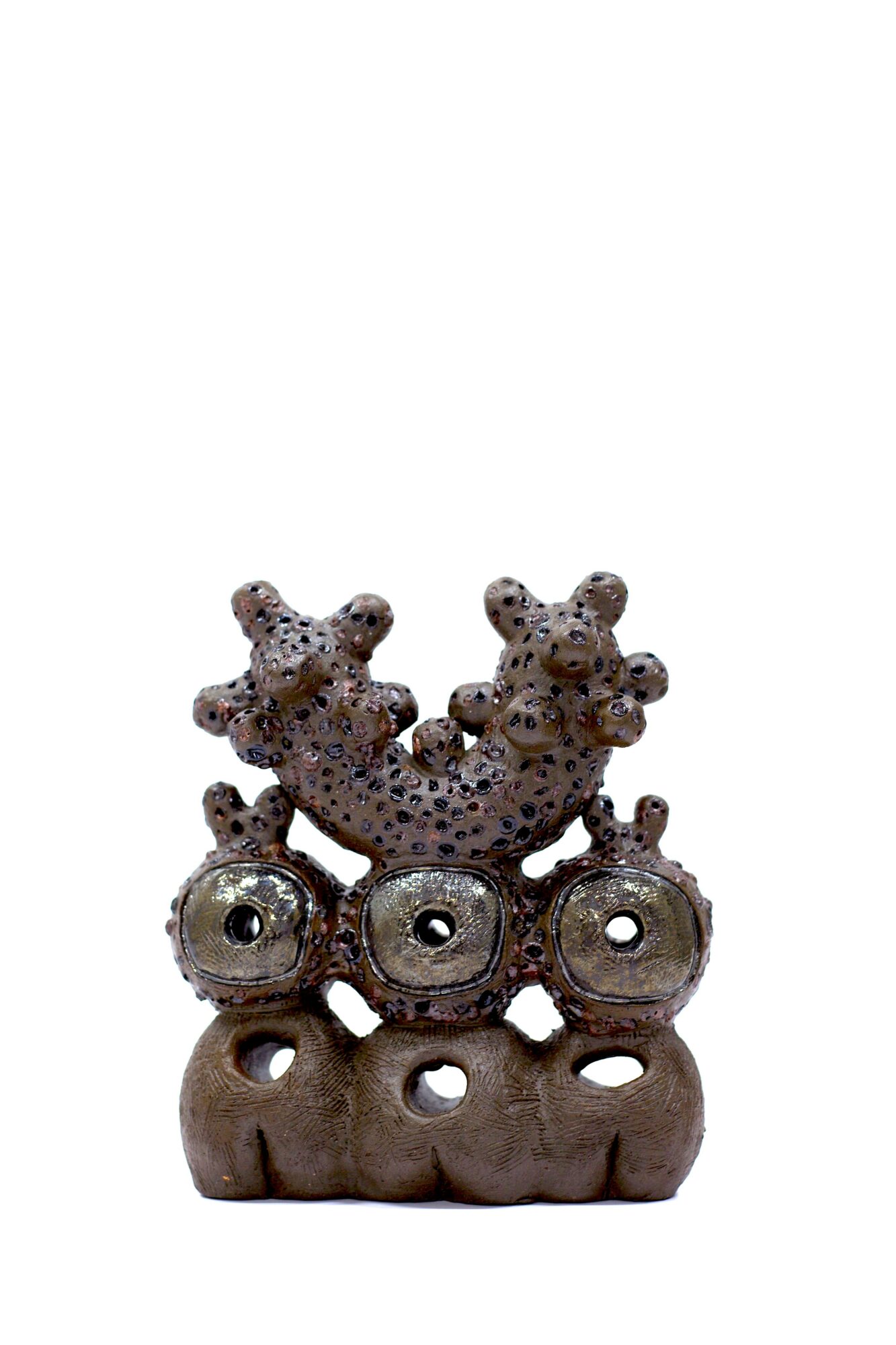
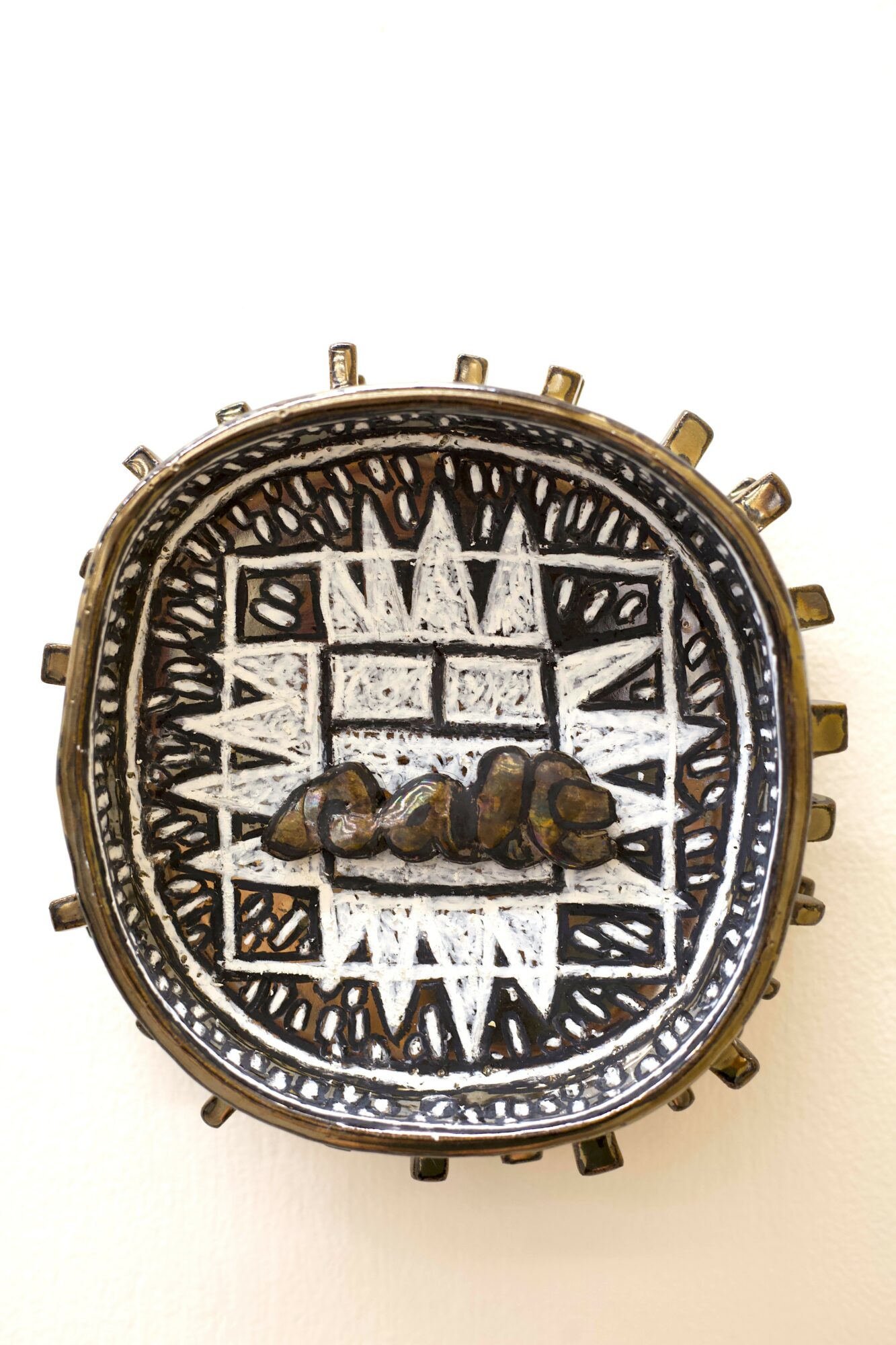
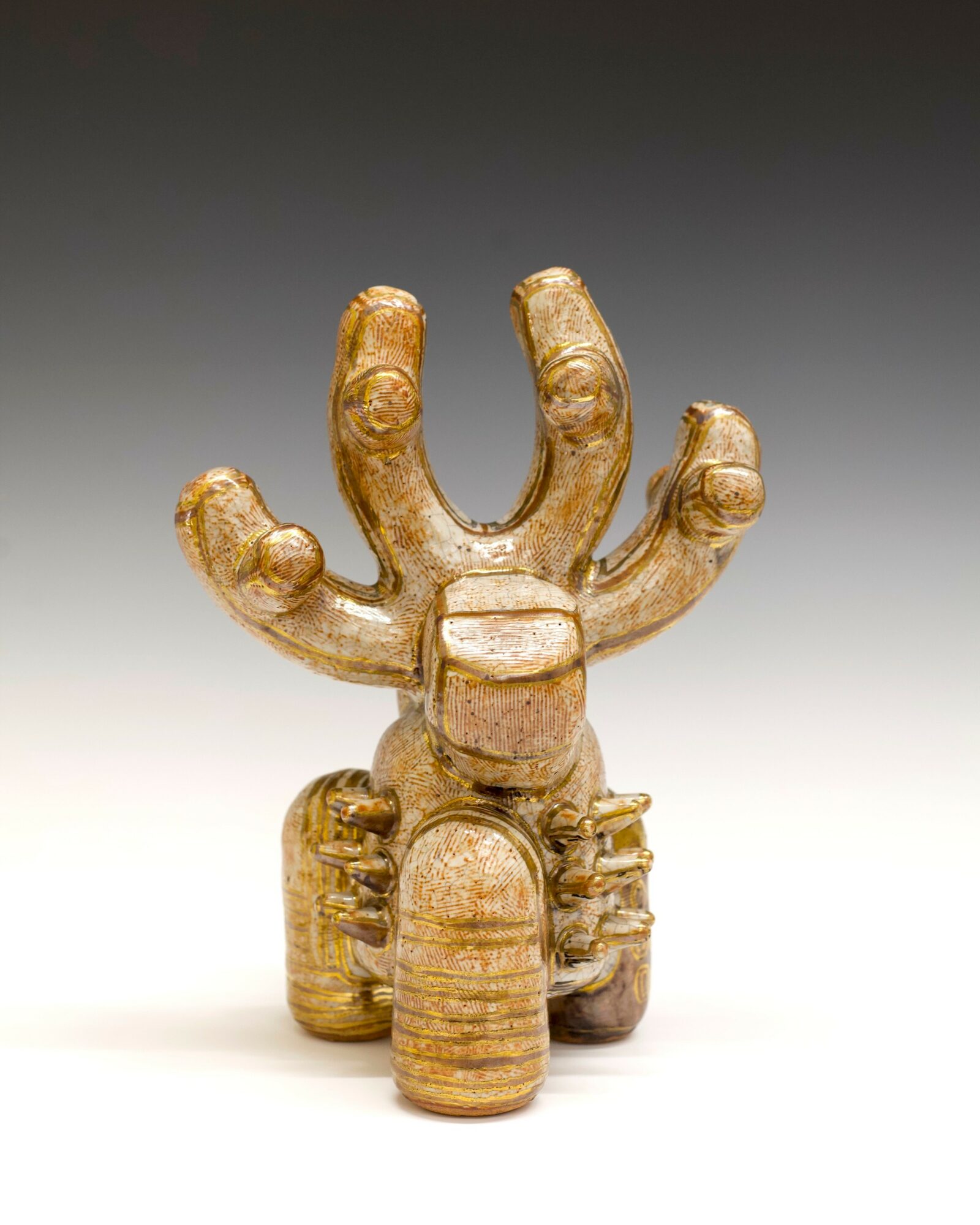
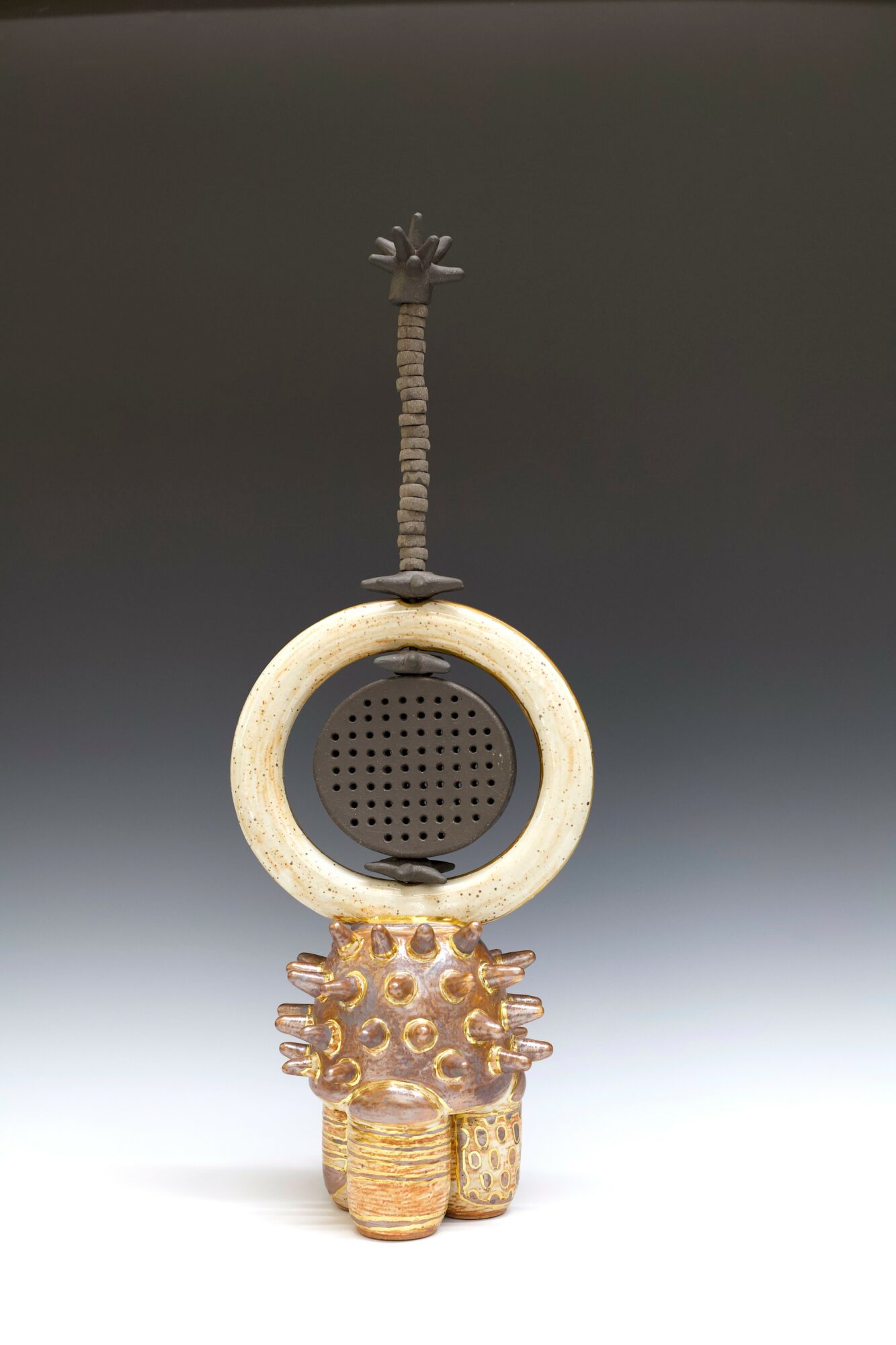
Alongside teaching, I have continued developing large-scale installations and exhibiting my work throughout the United States and Mexico. My work explores the complexities of life, memory, identity, family history, dreams, and emotional inheritance through immersive installations and ceramic artifacts that function as psychological and symbolic spaces. Influenced by Mexican folk art, Fronterizo domestic aesthetics, and the surreal nature of border life, my installations often combine sculptural furniture, ceramic figures, wall pieces, tiles, tapestries, drawings, and mixed media elements to create environments that feel both familiar and uncanny.
At its core, my work is deeply personal. It is grounded in my family history, my upbringing on the border, and my desire to preserve emotional and cultural narratives for future generations. Art has become both a way for me to navigate life and a way to create spaces where others may also find recognition, comfort, and connection.
Would you say it’s been a smooth road, and if not what are some of the biggest challenges you’ve faced along the way?
It definitely has not been a smooth road. As a Mexican woman raised in the Borderlands, where expectations for women can often be very traditional and limiting, pursuing a career as a professional artist and educator came with many challenges. I have been working nonstop since I was 18 years old, and throughout much of my undergraduate and graduate education I was also raising three children as a single mother. There was never really a “plan B” for me — only a deep belief, faith, and intuition that if I continued following what my heart was telling me to do, I would eventually find my place.
There were many moments where the path felt uncertain. Financial struggles, balancing motherhood with school and work, and navigating higher education while trying to support a family were all incredibly demanding. At one point, after a serious car accident that caused me to lose my job, I had to leave and move to my grandfather’s ranch in the jungle region of Hidalgo, Mexico. That period of my life forced me to slow down, reflect, and rebuild. Eventually, I returned to the United States determined to finish my degree and continue pursuing the life I had envisioned for myself and my children.
Looking back, I realize that I would not have made it this far without the support of mentors, family members, friends, and especially my children, who went through every stage of this journey with me and believed in me even during the hardest times. Their support gave me strength to continue moving forward.
Today, becoming a professor and professional artist feels incredibly meaningful because I understand firsthand how difficult access to these spaces can be for many people, especially for students from communities like mine. At the same time, I still feel very much in the middle of the journey. It continues to be challenging balancing teaching, motherhood, art-making, and life, but I keep going because I believe deeply in the importance of the work and in creating opportunities for future generations of artists from the Borderlands.
Can you tell our readers more about what you do and what you think sets you apart from others?
I am a ceramic artist, sculptor, and educator whose work centers around large-scale installations that explore memory, family history, emotional inheritance, domestic space, and the psychological complexities of life on the U.S.–Mexico border. My practice combines ceramics with sculptural furniture, architectural elements, tapestries, wall pieces, drawings, found objects, and mixed media materials to create immersive environments that feel both intimate and surreal.
I specialize in creating narrative-based installations that blur the line between functional object, artifact, and sculpture. Much of my work is deeply influenced by Mexican folk art traditions, Fronterizo aesthetics, domestic interiors, spiritual symbolism, and the emotional language of home spaces. I am especially interested in how objects can carry emotional residue and how environments can embody memory, desire, care, loss, ritual, and transformation. My ceramic figures and installations often exist in an in-between space — somewhere between reality and dream, comfort and discomfort, familiarity and unease.
Because I grew up between El Paso and Ciudad Juárez, the experience of living between cultures, languages, expectations, and identities naturally informs everything I create. I think this border experience gives my work a layered emotional and visual vocabulary that feels very specific to this region while also speaking to broader human experiences of belonging, family, longing, resilience, and survival.
Alongside my studio practice, I am deeply committed to teaching and mentorship. As a professor at The University of Texas at El Paso, one of the things I am most proud of is being able to support students from the Borderlands and help them understand that their stories, histories, and perspectives deserve space within contemporary art conversations. I know how transformative access to education and mentorship can be because it changed my own life.
What sets my work apart is the way I merge highly personal narratives with immersive environments that invite viewers into psychologically charged spaces. My installations are not simply displays of objects; they function almost like emotional landscapes or living archives where ceramics, architecture, memory, and storytelling coexist. I also think my perspective as a Mexican woman, mother, Borderlands artist, and educator brings a level of emotional depth and lived experience that is inseparable from the work itself.
What I am most proud of is that despite many personal and structural challenges, I have been able to build a life where teaching, motherhood, community, and artistic practice all exist together. I am proud that my work continues to grow while remaining deeply connected to where I come from and to the people and experiences that shaped me.
So, before we go, how can our readers or others connect or collaborate with you? How can they support you?
I am always excited to connect with artists, curators, galleries, museums, universities, and cultural organizations that are interested in meaningful collaboration and dialogue around contemporary ceramics, installation, Borderlands culture, and interdisciplinary art practices.
People can support my work by inviting me to participate in curated exhibitions, artist talks, residencies, workshops, lectures, visiting artist opportunities, and collaborative cultural projects. As both an artist and educator, I deeply value opportunities that create community, expand access to the arts, and foster conversations across disciplines and cultures.
I currently exhibit my work throughout the United States and Mexico and am especially interested in collaborations with museums, galleries, academic institutions, and alternative art spaces that engage with themes related to identity, domesticity, memory, Mexican and Borderlands culture, and contemporary installation practices. I welcome opportunities to continue expanding these connections internationally while engaging with diverse artistic communities.
In addition to exhibitions and collaborations, I also sell selected artworks and ceramic pieces. Anyone interested in my work can learn more through my website and social media platforms.
Website: dinaperlasca.com
Instagram: @dinaperlasca
Email: [dinaperlasca@gmail.com](mailto:dinaperlasca@gmail.com)
I am always grateful for opportunities that allow my work to continue growing while connecting with communities and audiences in meaningful ways.
Contact Info:
- Website: https://dinaperlasca.com
- Instagram: @dinaperalsca