


Today we’d like to introduce you to Ladi Loera.
Hi Ladi, can you start by introducing yourself? We’d love to learn more about how you got to where you are today?
For about 25 years, I made my living as an artist. I built my own business from scratch, and about five years in, my partner at the time quit his job to join me. And honestly, it was wonderful—because he took over the one part of the job I absolutely hated: talking to people.
Give me a quiet studio, a paintbrush, and a blank canvas, and I’m in heaven. But talking to customers? Trying to explain who I am or what my art means? I would rather rip out all my teeth. And I like my teeth.
Chris handled all of that. He was great at it. And business thrived. But when he passed away, I knew I had to learn to do the thing I’d been avoiding. So I joined a well‑known public speaking group. I found a mentor. I learned to talk to people—not comfortably, but at least without emotional whiplash. I even won awards.
I was competing with a story about resilience—about learning to keep going when life feels impossible. The “problem,” according to them, was that I’m a gay man, and the story was about losing my partner. I was told the voting members would never choose a “gay story.” I didn’t believe it at first. I’m from Texas—we talk a big game about personal freedom. But I’d been out since I was 19, and sometimes I forget that simply being gay is reason enough for people to push you aside.
Then a speech coach I admired told me, “Some people are bigots. You can’t talk about Chris like that. You’ll have to change him from your partner to your brother.”
I was heartbroken. Chris wasn’t my brother. Our relationship was built on choosing each other. That mattered. And I wasn’t going to rewrite my life to make it more palatable.
So I told my story exactly as it was. I didn’t win. I didn’t even place. And afterward, that coach wouldn’t even look at me.
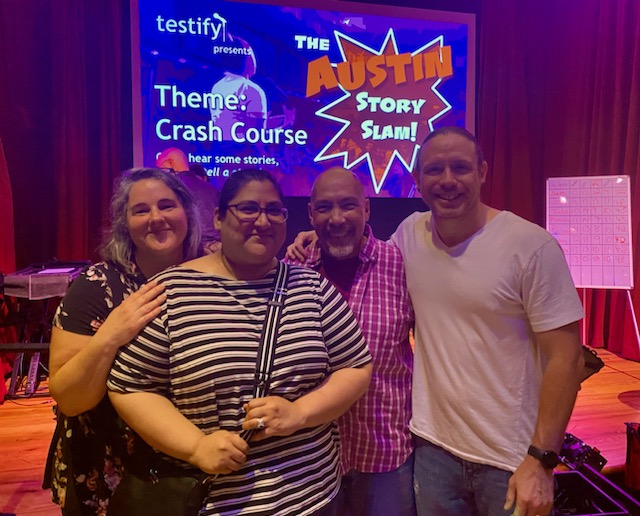
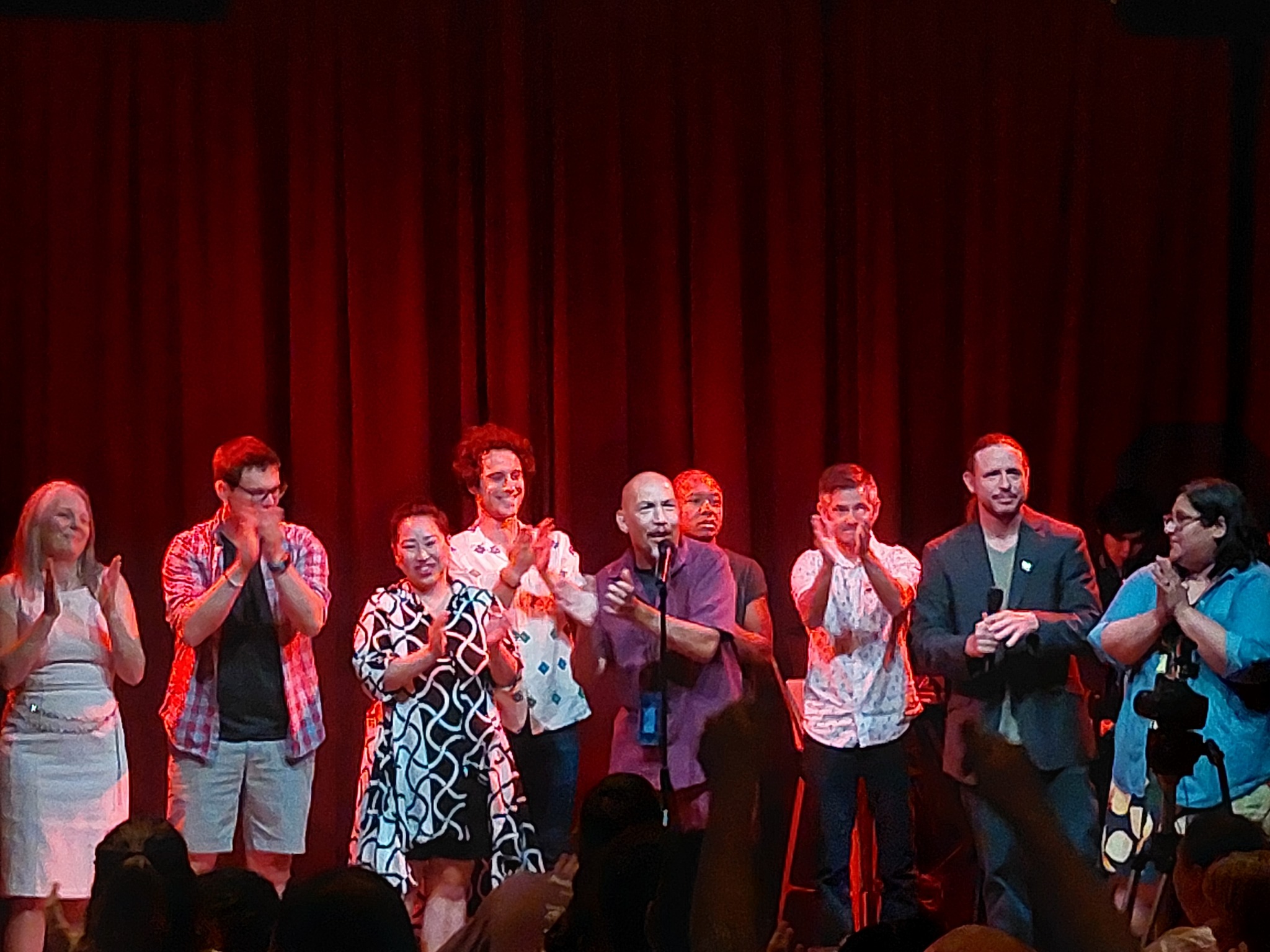
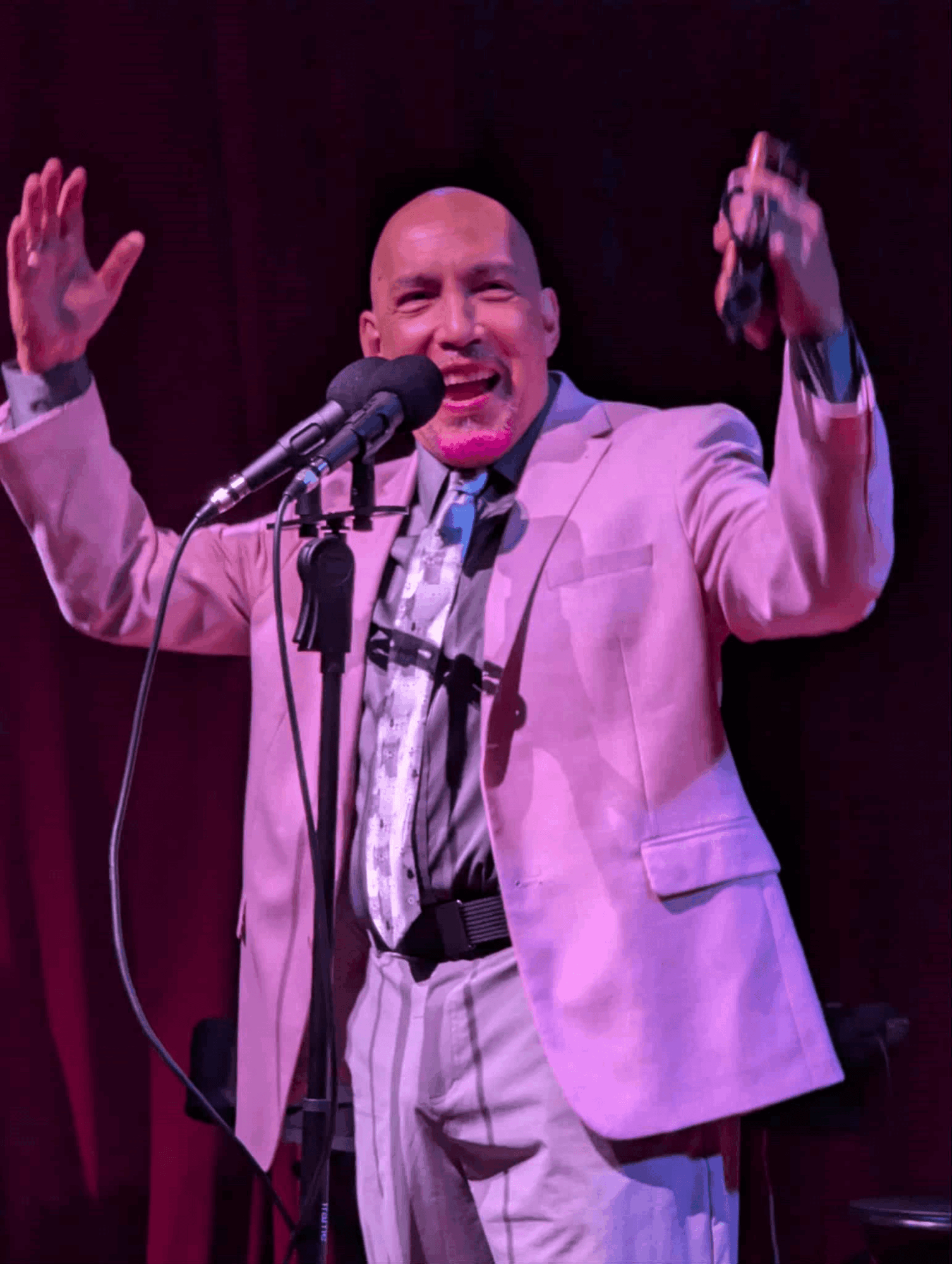
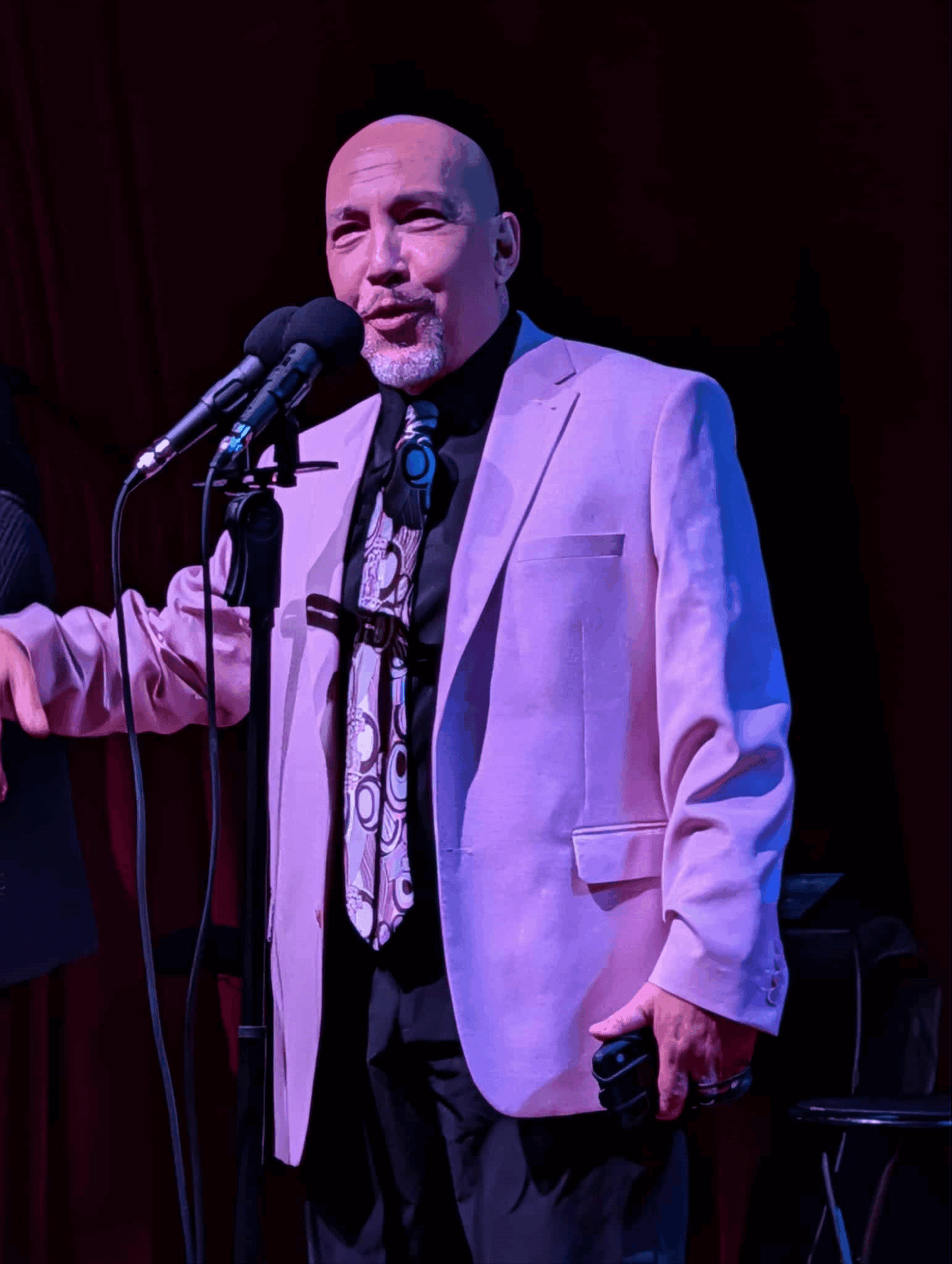
But then a friend told me about a show called Testify. I submitted my story, got selected, and what happened next changed everything. I met with the producers, and they gave me feedback. I got to tell my story honestly—no edits, no euphemisms, no pretending. And the audience was incredible. They gasped, they laughed, they leaned in. Afterward, thirty people came up to talk to me about their own experiences with grief.
I was hooked.
I went to every show I could. I told a story whenever they’d let me. And a couple years in, Kate Caldwell—the founder—asked me to become a producer. I said yes immediately. I didnd’t even have to think about it.
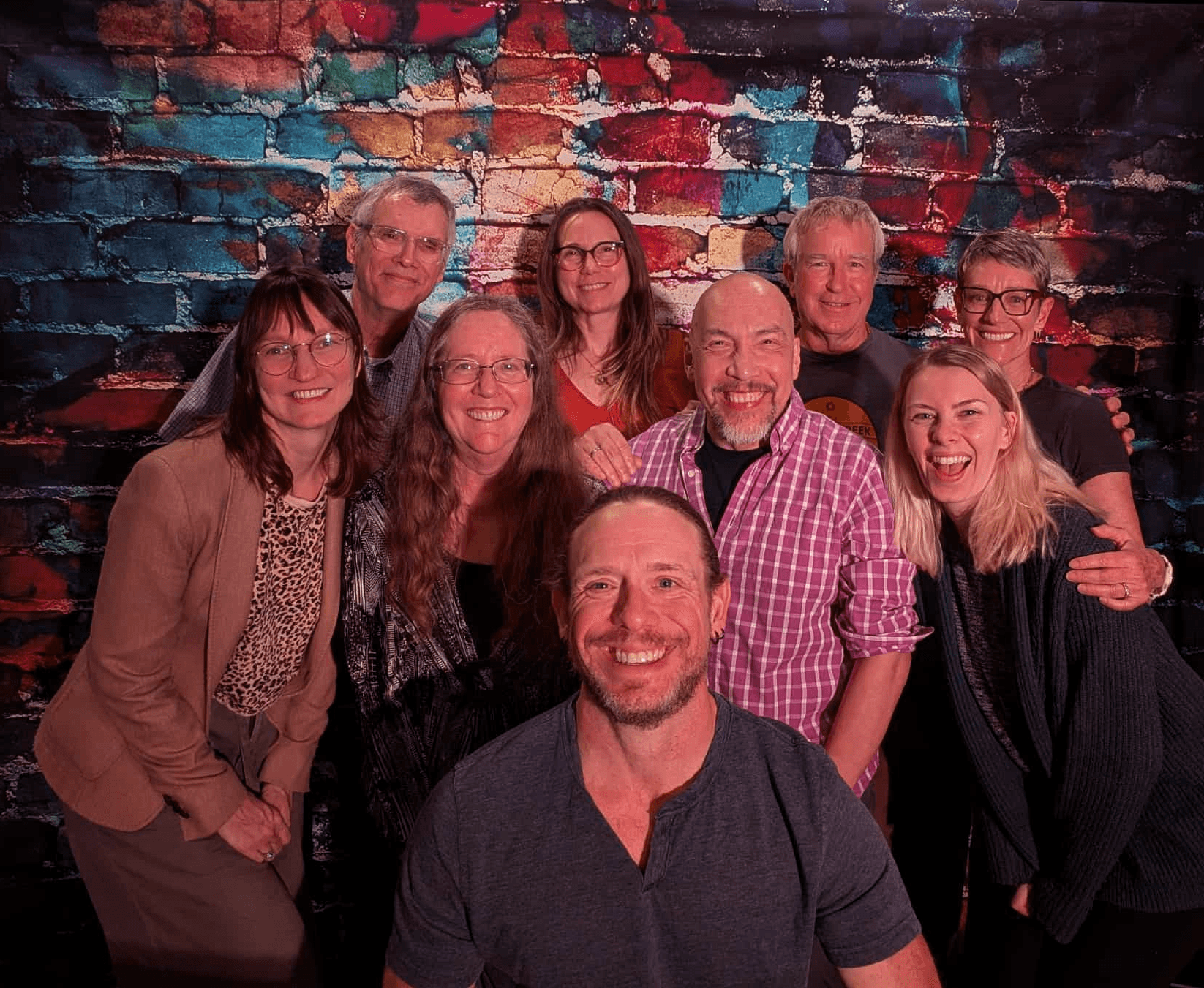
Eventually, Kate needed to step away. She had a baby, a family, a full life. And I begged her to let me take Testify on, because this show had given me a place to belong. I didn’t want it to disappear. With her blessing, I built the business around it. I invited Angela Maldonado, who first onboarded me. Then Mark Gifford, who quickly became one of my best friends. Later, Gloria Rabel joined us too.
Sure, we could’ve created a brand‑new show. And it would’ve been good—because Angela, Mark, and Gloria are brilliant. But I didn’t want to lose the spark that Testify gave me: total acceptance. A place where you don’t have to change who you are to be heard.
Would you say it’s been a smooth road, and if not what are some of the biggest challenges you’ve faced along the way?
I write with a very specific goal: to find out what is wrong with me. I don’t know if this is growing up brown in a white city like Houston, growing up gay in a mostly straight world, or if it’s just the coin toss of life that always left me feeling out of the loop, like I didn’t and couldn’t ever really belong.
I believe there are hidden clues in the stories I tell. In both those that are true, and those that are fiction. Even in the made-up stories, you can find a piece of me there. I keep asking what is wrong with me, but I think the real question is: what happened to me, why did it happen, and what have I created because of that. I’m always looking for proof that belonging is possible.
When I wonder what my voice sounds like, it’s not hard for me to hear it. I walk dogs part-time, mostly for exercise, and also because I love dogs. I have conversations with these dogs every time we’re out. Literal out loud conversations, where we speak back and forth, and I provide both voices. The dogs always sound like Rick, and I always sound like Morty. That’s what my writing sounds like. Rick and Morty battling it out. Trying to figure out who is smarter, and never really being sure.
One is a jaded genius, the other an anxious kid. Rick is a cynic, with good reason, the world is difficult for those who don’t know how to fit in. Rick always claims not to want to fit in, but his truth is that he doesn’t want to want it. He does really want to belong. Morty is scared, cynical like his grandfather, earnest, and still, he believes things might turn out just fine.
My past self didn’t think belonging was a real thing. I think if he could see my writing now, he would wonder if it’s true that I found a safe space. He spent a long time thinking the world could not possibly get better. My parents taught me love was not a given, it had to be earned daily and could be withheld for any reason.
In my first long term relationship, my partner was the gay version of my parents. He didn’t like me, but that felt similar to what my parents taught me, so I classified it as love. It took me six years to leave a relationship I knew was bad after six months. I had to unlearn the lesson my parents taught me.
Can you tell our readers more about what you do and what you think sets you apart from others?
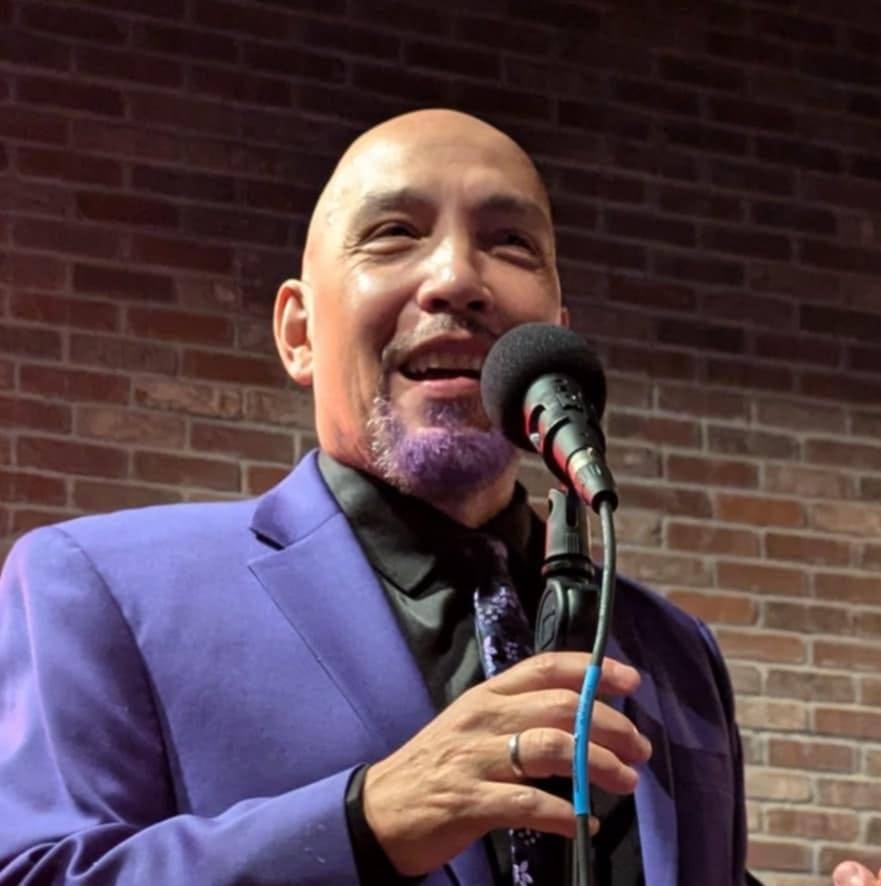
I’m a storyteller, writer, editor, and educator who helps people turn lived experience into clear, and compelling narratives. I specialize in personal storytelling as well as teaching writers and performers how to shape true stories with emotional honesty.
I’m most proud of helping people recognize that their lives contain stories worth telling. Many people arrive with the belief that they are not interesting enough to have a story. I love helping them discover the details, tensions, humor, vulnerability, and perspective that make their own stories unmistakably theirs.
I’m known for being both encouraging and exacting. I care about authenticity, but I also care about craft: structure, pacing, scene, stakes, language, and the choices that make an audience lean in. I do my best to give writers/storytellers practical tools without flattening their individuality.
What sets me apart is that I work at the intersection of art and instruction. I understand storytelling not only as something to admire, but as something people can learn to do. My approach is grounded in careful listening, a respect for the teller’s voice, and the belief that a well=told personal story can entertain, create empathy, preserve memory and change the way people see themselves and one another.
In terms of your work and the industry, what are some of the changes you are expecting to see over the next five to ten years?
I think with the advent of AI and the believability of the pictures they create, the stories they tell, and the films they show, true personal storytelling will become more popular and necessary to connect humanity to each other.
We can be moved by an imaginary experience, watch any zombie movie and you’ll see that they can make you feel fear, love stories can create joy. But there is a difference between a work of pure fiction and a lived experience from someone’s own life.
Humans can find lessons anywhere, but when you are learning because of someone else’s lived history, that adds a level to a story that AI can’t compete with.
Pricing:
- We teach a storytelling class several times a year, that class is $225.
- We do 2 hour workshops on storytelling and those can run from $1200 on up depending on the size of the crowd.
- I also do story coaching for $45 per hour.
Contact Info:
- Website: https://www.ladiloera.com/
- Instagram: https://www.instagram.com/ladislaoloera/
- Facebook: https://www.facebook.com/ladislaoloera
- Other: https://www.testifyatx.com/