


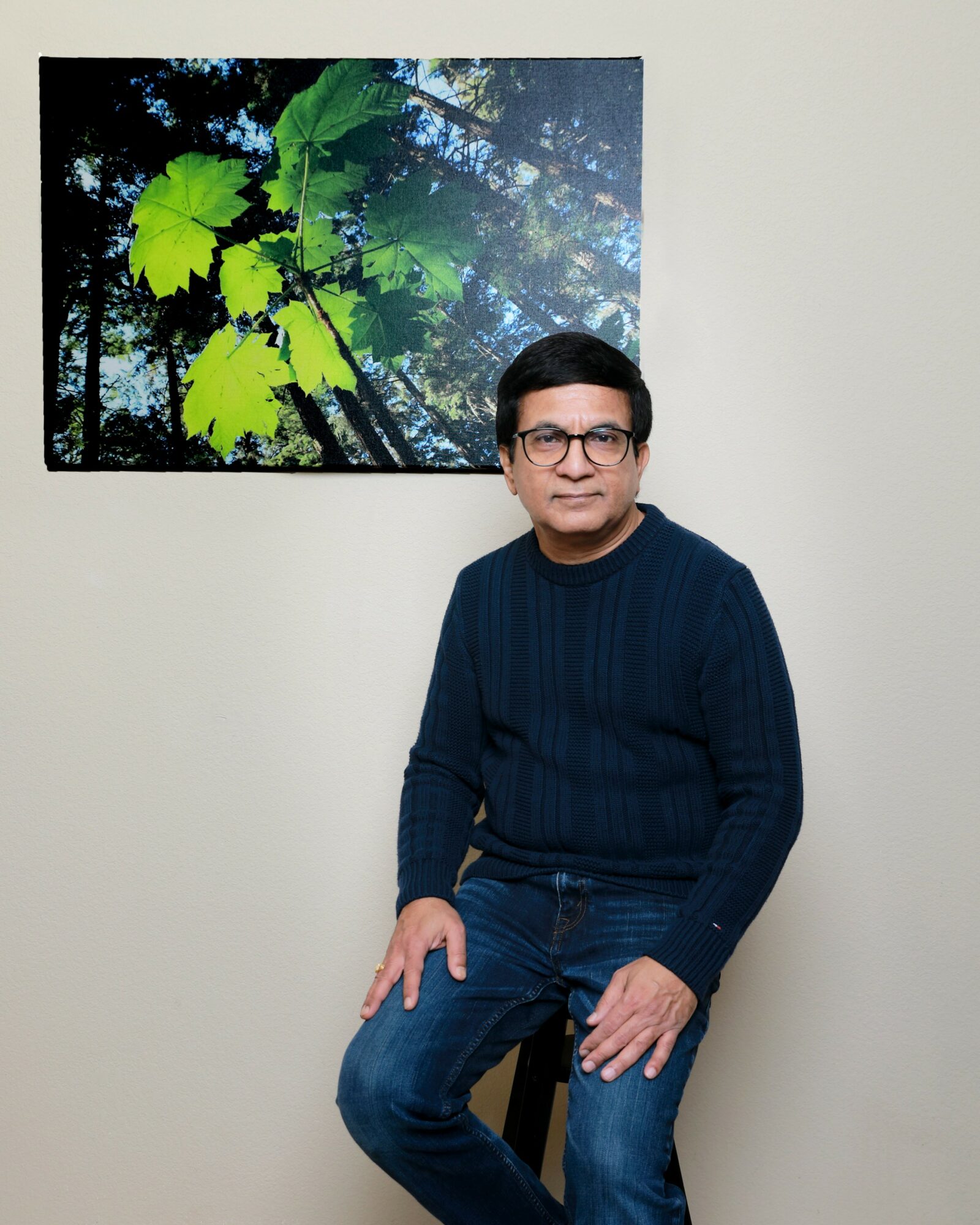
Today we’d like to introduce you to Ravi Pothukuchy.
Hi Ravi, thanks for joining us today. We’d love for you to start by introducing yourself.
Looking back at my life, I realize that my journey has never followed a straight line. At several points, I stood at crossroads where the conventional choice seemed obvious—and yet I chose a different road.
My first major detour came during my PhD in Biochemistry in India. At the time, choosing a subject such as Biotechnology would have been the natural choice. Instead, I registered for Computer Programming.
I was drawn to the logic and creativity of programming. Even after completing my PhD and beginning my career as a scientist in Biochemistry, that fascination never disappeared.
Eventually, I decided to listen to that inner voice. While working as a scientist, I began taking evening classes to learn more about programming. Then came a decision that shocked many of my colleagues and disturbed my parents: I left a safe government job and joined an information technology company—even though I had to accept a lower salary. In India at that time, changing careers so dramatically was almost unheard of. And it was an extremely risky decision since it was a point of no return.
That decision opened an entirely new chapter. My work took me to Qatar for a nine-month assignment implementing a major project. Soon afterward, another opportunity led me to the United States.
In October 2000, I joined Dell as a programmer. What began as a career change eventually became a remarkable journey. I progressed from programming to architecture and ultimately to a Director-level position in IT, leading global teams and working on complex initiatives across the organization.
For nearly 20 years, Dell was an important part of my professional life. Yet, once again, I eventually found myself standing at a crossroads. In September 2020, I volunteered to be part of a workforce reduction program and left Dell.
By then, I had spent decades building a successful career in IT. It would have been easy—and perhaps expected—to find another IT position and continue along the same path. I did receive job offers and opportunities. But this time, I did not want to go back. I declined the opportunities and gave myself permission to pause.
For a few months, I stepped away from the professional world and began thinking about what I wanted the next chapter of my life to look like. My wife was instrumental during this period, reminding me that a break was fine—but staying idle indefinitely was not.
Then, almost by chance, I discovered the profession of financial planning.
Once again, curiosity took over. I completed the required education, prepared for the Certified Financial Planner® examination, and passed it on my first attempt. I was ready to begin a new career.
But the next challenge was waiting. Despite reaching out to numerous financial planners, I could not find a position. Sometimes, when a door does not open, you have to build your own. So, I established my own financial planning practice, Arka Financial Services LLC.
And then there is photography—a passion that entered my life through yet another unexpected turn. Around 2009, I became a semi-professional photographer, almost by accident. Interestingly, I had taken a photography course during my PhD years. At the time, I certainly could not have imagined that photography would eventually become an important part of my life.
Perhaps that is how many meaningful things begin. We do not always recognize their significance when they first appear. A casual interest can become a passion. A passing curiosity can become a career. An unexpected detour can become the road itself.
My journey from Biochemistry to Information Technology, from corporate leadership to financial planning, and from science to photography was never part of a grand master plan. Each transition emerged from a willingness to recognize when something no longer fulfilled me—and the courage to explore what might.
I have to credit my wife Arti who supported me throughout my career, though it has not been an easy course.
I’m sure it wasn’t obstacle-free, but would you say the journey has been fairly smooth so far?
Two experiences, years apart, fundamentally changed the direction of my career.
The first occurred when I was working as a scientist in India, Once, I was sent, along with two colleagues, to represent our organization at a national exhibition. In the process of transporting and handing off our display materials through several people, some of the material was lost.
I reported the loss honestly in my trip report. It triggered an inquiry into the three of us for what was deemed irresponsible behavior. The inquiry resulted in disciplinary action that, we were told, would remain in our personnel records throughout our careers.
The experience shattered my morale. Although the disciplinary action was revoked a few days later, the damage to my confidence had already been done. It also prompted me to take my interest in computer programming more seriously. Within a few months, I left my position as a scientist and embarked on an entirely new career as a software programmer.
Years later, another defining moment came during my first management role at Dell.
Our organization was undertaking a major transformation based on a technology platform that was still immature and largely unproven at global scale. The implementation timeline was also highly aggressive.
As the manager responsible for the architects and engineers, I had firsthand visibility into the risks my team was encountering. I didn’t hesitate to bring those concerns to senior management. However, the organization chose to proceed. I was subsequently removed from my management position, with the explanation that I was not aligned with the organizational direction and was being uncooperative.
The experience deeply affected me. For years, I struggled with its impact on my confidence and professional identity. Eventually, the project was abandoned after millions of dollars had been invested, and several of the key people involved were let go. Being proven right offered little consolation. By then, the experience had already taken its toll.
Yet once again, something unexpected emerged. Around the same period, photography entered my life. What started as an interest became an important source of balance, fulfillment, and purpose.
Looking back, I see both experiences as moments of redirection. The first moved me from science into software. The second opened the door to photography and a dimension of my life I might otherwise never have discovered.
Neither transformation was planned. Both emerged from circumstances I would not have chosen.
Alright, so let’s switch gears a bit and talk business. What should we know about your work?
Some of the most consequential journeys in life begin without a destination.
In 2007, I bought myself a DSLR camera for my birthday. I simply wanted to explore the possibilities of a new camera. I carried it to friends’ parties, experimented with it, and took photographs whenever the opportunity arose.
I had no idea then that this modest purchase would eventually take me into the world of Indian classical dance and music, introduce me to some of India’s most celebrated artists, bring me recognition from National Geographic, and, most significantly, give me an opportunity to document moments in the presence of my spiritual master, Sri M.
The first unexpected opportunity came through a friend who asked me to photograph her son playing tennis. I accepted, treating it simply as another chance to experiment with my new camera. The photographs caught the attention of his tennis coach, who asked whether I would photograph some of her other students. This time, it was for a fee. I photographed the young players, provided them with printed copies, and charged $10 per person. Yet that small assignment was, in retrospect, my first professional engagement as a photographer.
At the time, however, I was still very much an amateur. Despite owning a DSLR, I relied almost entirely on its automatic settings. A photographer in India noticed this and encouraged me to learn to use the camera manually—to understand exposure, aperture, shutter speed and the many other controls that distinguish photography as a craft from simply pressing a shutter button.
I enrolled in evening photography classes offered by the University of Texas and attended studio-lighting workshops conducted by a professional photographer. Slowly, I began to understand not merely how to operate a camera, but how to see.
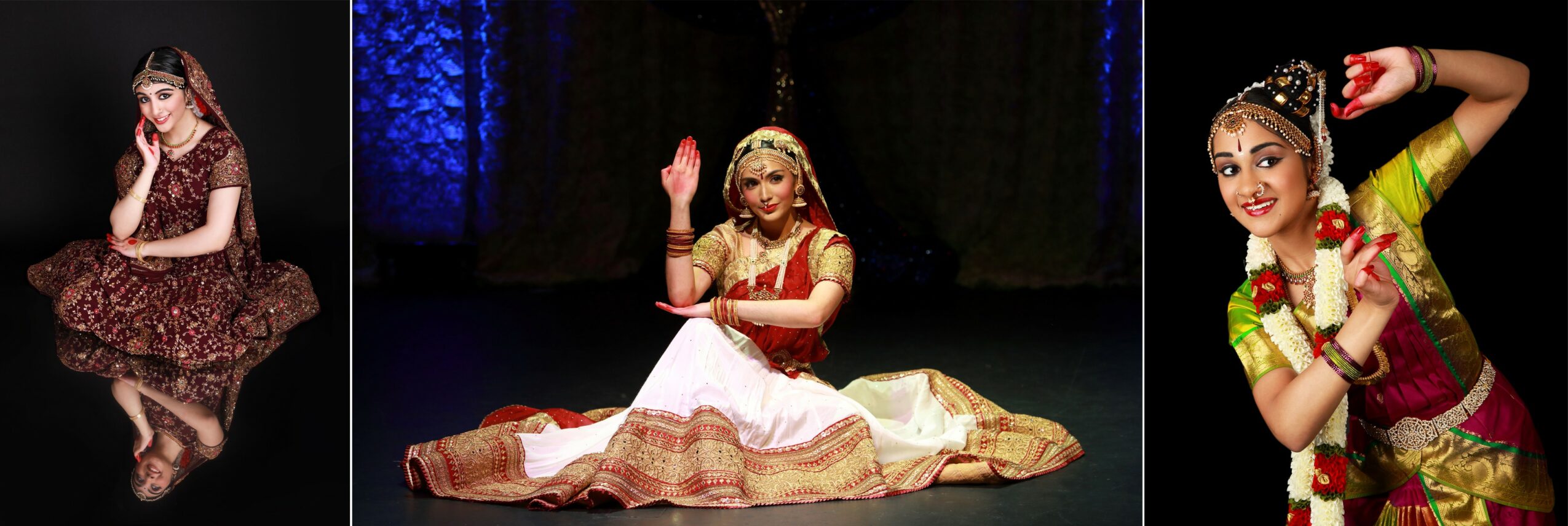
The defining moment in my journey came two years later, in 2009. A friend, Nalini Rao, asked me to photograph her daughter’s Arangetram, the traditional debut solo performance of a classical Indian dancer. I had never attended an Arangetram before. I certainly had no experience photographing one. Still, I accepted. The photographs resonated not only with her but also with her daughter’s dance teacher, Vinitha Subramanian of Natyalaya School of Dance. Nalini began telling others about my work. Vinitha ji, in turn, trusted me with opportunities to photograph her students.
The Indian classical dance community in Austin is close-knit, and word of mouth can travel farther than any advertisement. Gradually, other parents and dance teachers began approaching me. Over the years, I found myself photographing debut performances at dance schools across the Austin area. What began as an unpaid favor for a friend eventually became a niche for which I became known.
To date, I have photographed 138 Arangetrams. Though the number itself is gratifying, what matters more to me is what lies behind it: so many young dancers standing at the threshold of a new chapter in their artistic lives, and the privilege of preserving that moment for them and their families.
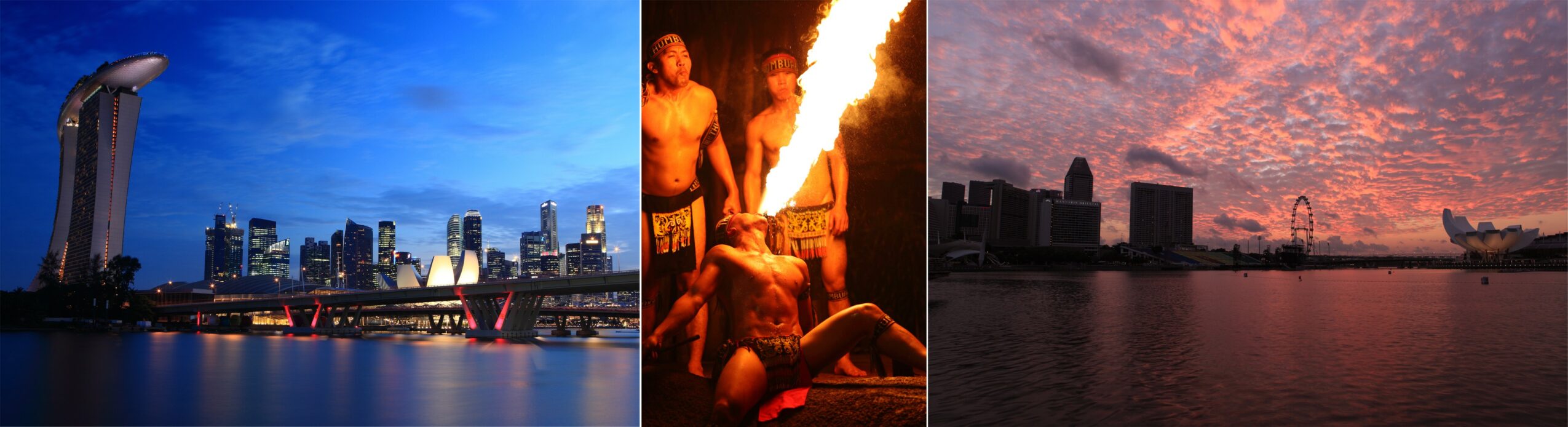
As photography became an increasingly important part of my life, I carried my camera wherever I traveled. During a business trip to Singapore, I photographed scenes at late night and early morning, in spite of severe personal discomfit. Later, three of those photographs were accepted by National Geographic as stock images. One even earned a small royalty. For a photographer, recognition from National Geographic carries a special significance.
Photography also became my way of participating in Austin’s Indian cultural community. I volunteered my services to several local nonprofit organizations, including Hindu Charities for America (HC4A), India Fine Arts (IFA), the Indian Classical Music Circle of Austin (ICMCA), Shankara Eye Foundation (SEF), and few others.
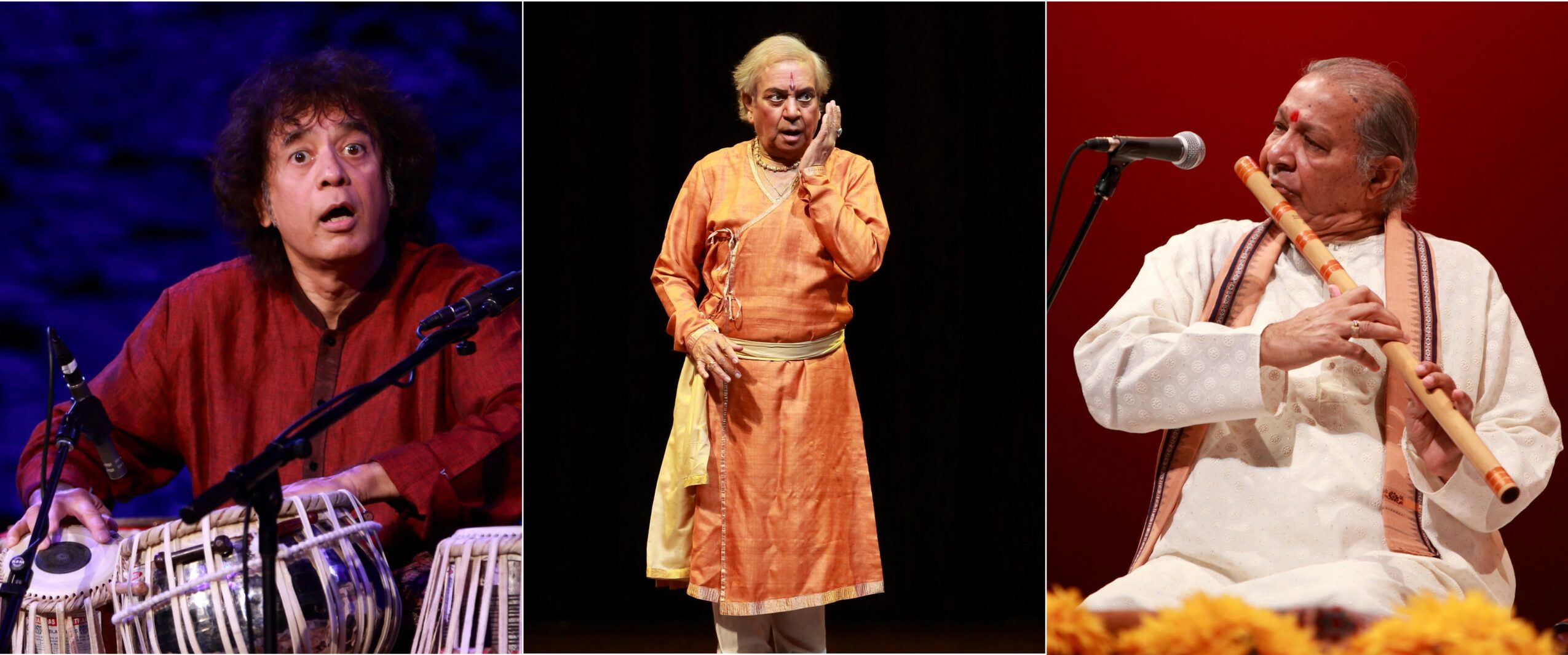
My involvement with ICMCA eventually led to my joining its board in 2016. Through ICMCA and other cultural organizations, I had the privilege of photographing performances by some of India’s most distinguished artists—people whose names had long been associated with the highest traditions of Indian classical music and dance.
Among them were Ustad Zakir Hussain, Pandit Shiv Kumar Sharma, Pandit Hariprasad Chaurasia, Pandit Birju Maharaj, Pandit Jasraj, Dr. M. Balamurali Krishna and Dr. L. Subramaniam. To photograph such artists is not merely to document a performance. It is to witness artistry at a level that few people have the opportunity to experience up close. The camera gave me a reason to watch closely, anticipate a gesture, wait for a fleeting expression—and preserve, in a fraction of a second, something that otherwise would exist only in memory.
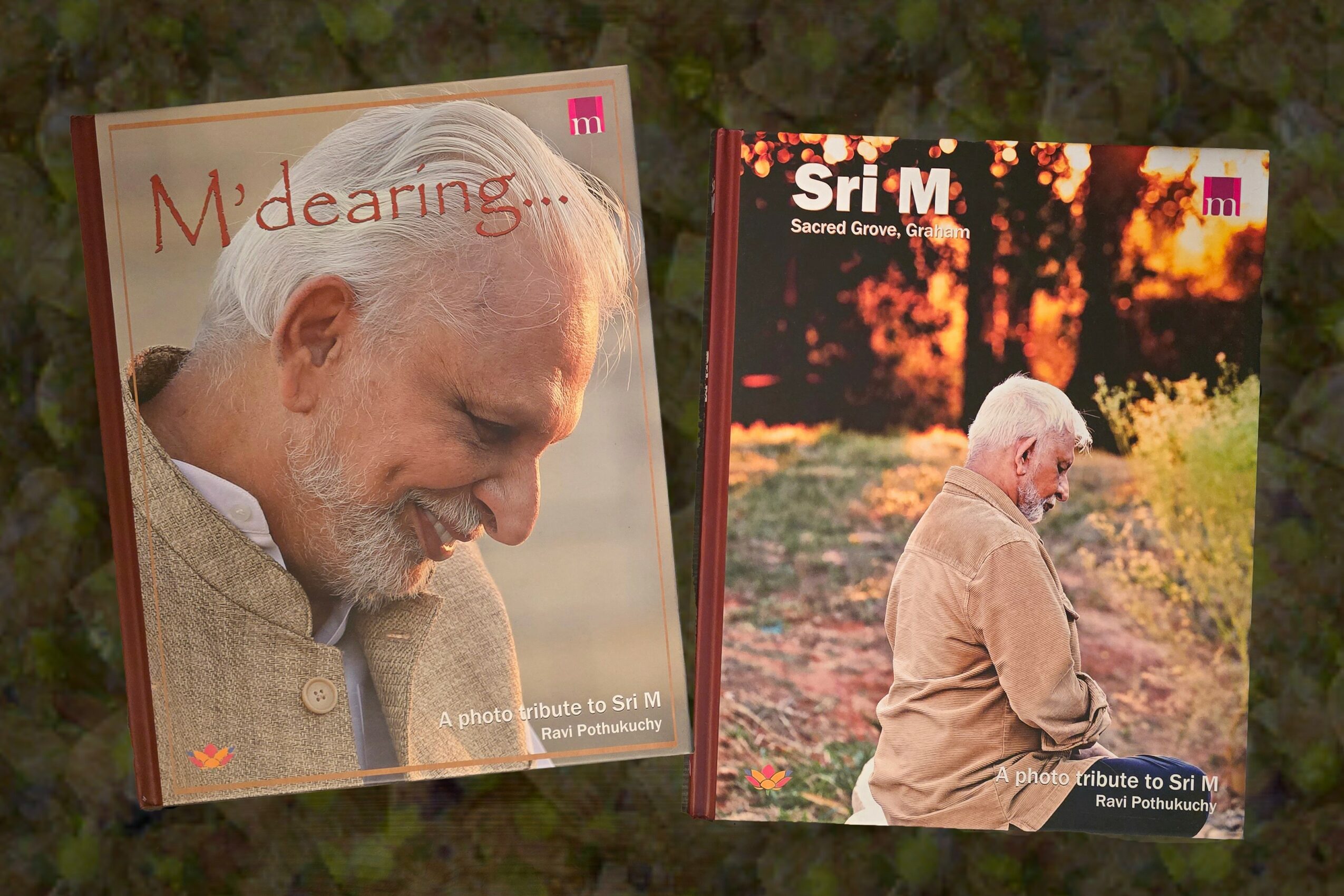
The most meaningful chapter of my photographic journey, however, did not take place on a concert stage. It began at spiritual retreats conducted by my spiritual master, Sri M. Photography gave me the opportunity to document his lectures and activities during the retreats he conducts each spring and fall. Over the course of two or three years, I accumulated a substantial collection of his photographs.
Eventually, an idea occurred to me: why not bring some of these photographs together in an album? In April 2025, I had the privilege of presenting Sri M with a copy of the first album. For me, that moment represented something far beyond photography. Probably, the highest point in my life. A few months later, I produced a second album. Both albums were subsequently published in India as coffee-table books and released by Sri M in February 2026. I could not have asked photography to give me anything more.
During the early years, I photographed almost everything that came my way: birthday parties, weddings, social gatherings and other celebrations. Eventually, I realized that not every kind of photography spoke to me. I gradually stopped accepting those assignments and began concentrating on live performances. I was drawn not only to Arangetrams and debut performances, but also to established professionals—artists whose mastery had been refined over decades.
There was something about live performance that continually fascinated me. A dancer’s gesture, a musician’s expression, a fleeting interaction between the artists and between an artist and the audience—all disappear almost as soon as they occur. Photography offers a way to hold on to those moments. Perhaps that is what ultimately drew me to it.
I have never considered photography my profession in the conventional sense. It has never been my full-time career, and financially, it has never provided me with any meaningful income. Yet it has been one of the most rewarding pursuits of my life. It became one of the most meaningful threads running through my life.
If we knew you growing up, how would we have described you?
Ironically, my childhood interests and aspirations bear little resemblance to the path my adult life eventually took.
Growing up, I wanted to become a doctor. When the time came to choose between Biology and Mathematics, I chose Biology—much to my mother’s disappointment. She believed I had a natural aptitude for mathematics. I remained determined to pursue medicine and, almost until the end of my undergraduate years, prepared myself for medical school. When that path did not work out, I found myself moving in an entirely different direction, eventually pursuing a PhD in Biochemistry.
I also began learning classical vocal music, but I did not stay with it long enough to become a musician of any consequence.
Photography, however, seems to have been different. Looking back, I wonder if I had an innate aptitude for it.
I never owned a camera when I was growing up, and I had only a few opportunities to handle one during my college years. Yet, even with a simple point-and-shoot camera, I instinctively experimented with photography. I would take a series of overlapping photographs of a landscape, intending to piece them together into a panorama—decades before I knew that panoramic photography was an established technique.
On another occasion, I was handed an SLR camera and asked to photograph a small wedding ceremony. I had never used an SLR before. Nevertheless, I was told that the photographs turned out surprisingly well. In fact, a few people assumed I was a professional photographer.
Perhaps some interests find us long before we recognize them ourselves.
Contact Info:
- Website: https://www.ravipothukuchy.com
- LinkedIn: https://www.linkedin.com/in/ravi-pothukuchy
- Other: https://www.arkafinserv.com