


Today we’d like to introduce you to Ethan Stafford.
Ethan, we appreciate you taking the time to share your story with us today. Where does your story begin?
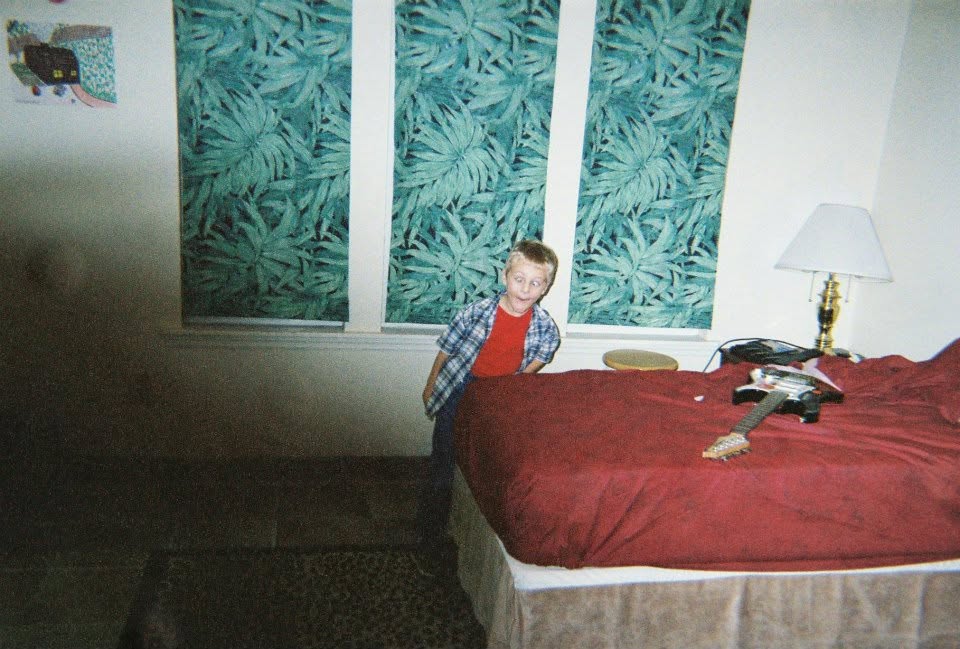
I was born in 2000, which is still a weird thing for me to really process because when I look back at the world I grew up in, it feels like a completely different country, almost a different planet. I was born during the George W. Bush era, so I was alive for the Iraq War, I was alive when Saddam Hussein’s statue was pulled down in Baghdad, and I was eight years old when Barack Obama was elected. Obviously I was too young to understand the politics of all of that at the time, but those images were part of the visual background of my childhood. I grew up with cable news playing in the background, with all of this stuff happening in the world while I was just a kid trying to figure out what I was interested in. My cousin was in the Army Reserves and was deployed to the middle east in 2009. I didn’t see him for years afterwards, and my uncle was so young, he was like an older brother to me. Seeing those two move on to college and the military left me alone to my own devices once 2010 came.
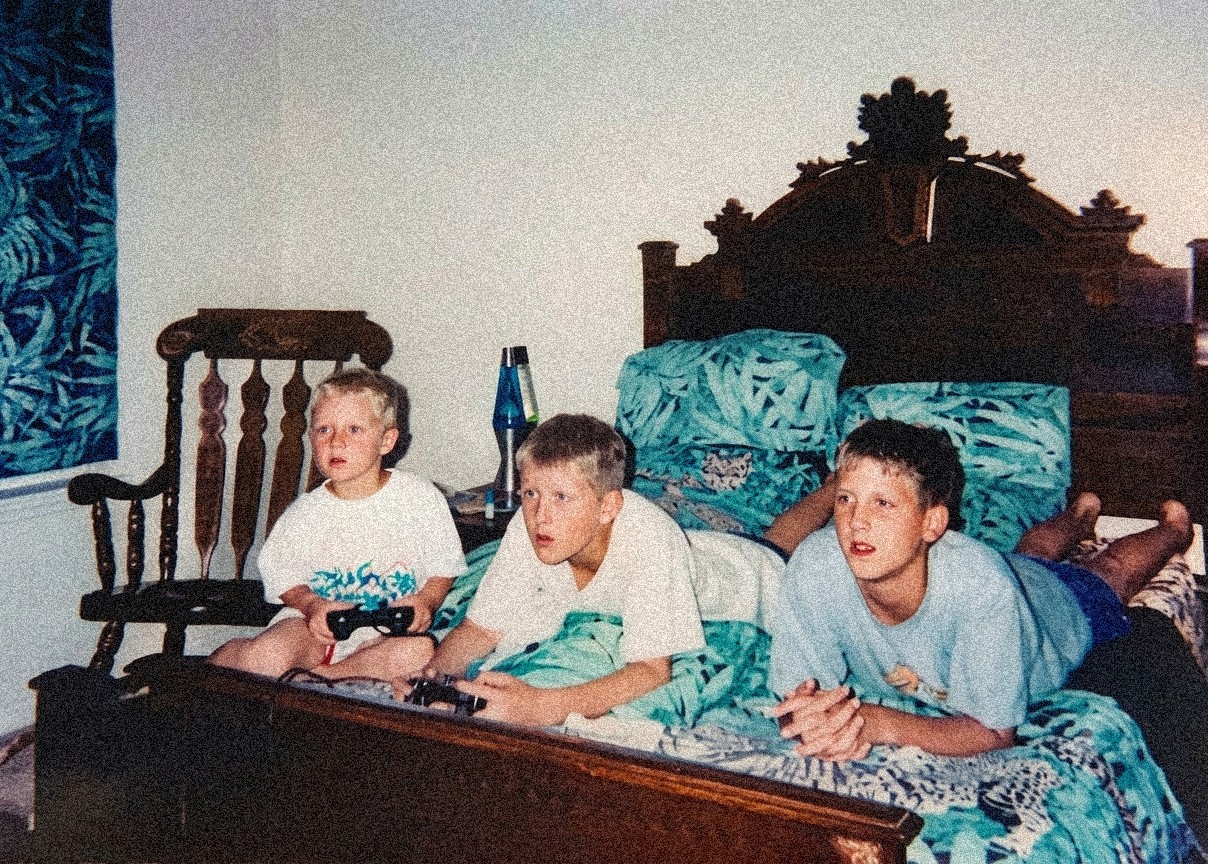
My childhood was also right at the tail end of this very physical, very grimy version of American culture. I remember early PlayStation 2, CRT televisions, DVDs, physical CDs, and those big Magnavox televisions with that strange glow they had. I remember staying up and watching late-night music videos on television and seeing Interpol’s “Evil” come on. I remember Queens of the Stone Age’s “No One Knows” hammering through the television, and Nine Inch Nails “I’m Afraid of Americans” with David Bowie being played on rotation being another huge reference point for me. There was something about that era of music and imagery that felt much more physical. Everything had texture. The television had a texture, the camera had a texture, the recordings had a texture. You could see the limitations of the equipment and somehow that made everything feel more real.
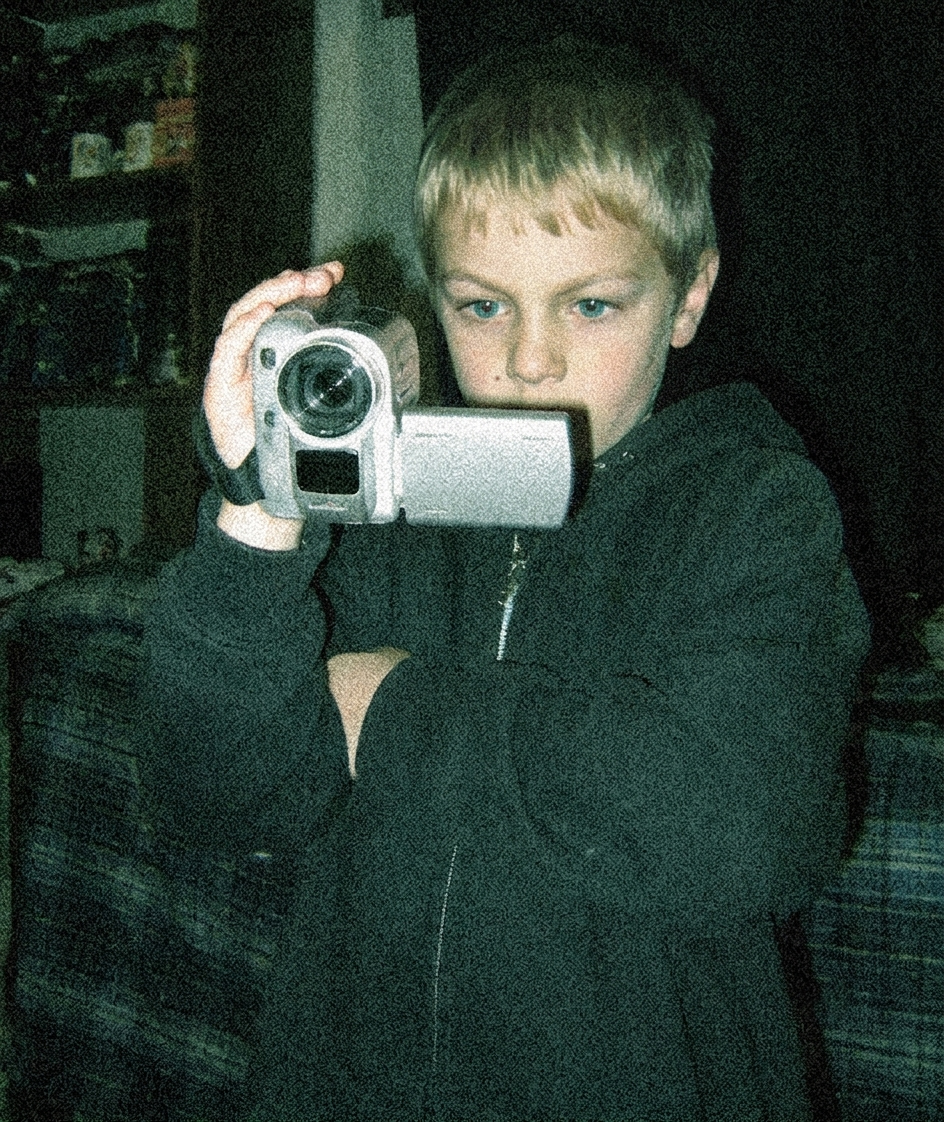
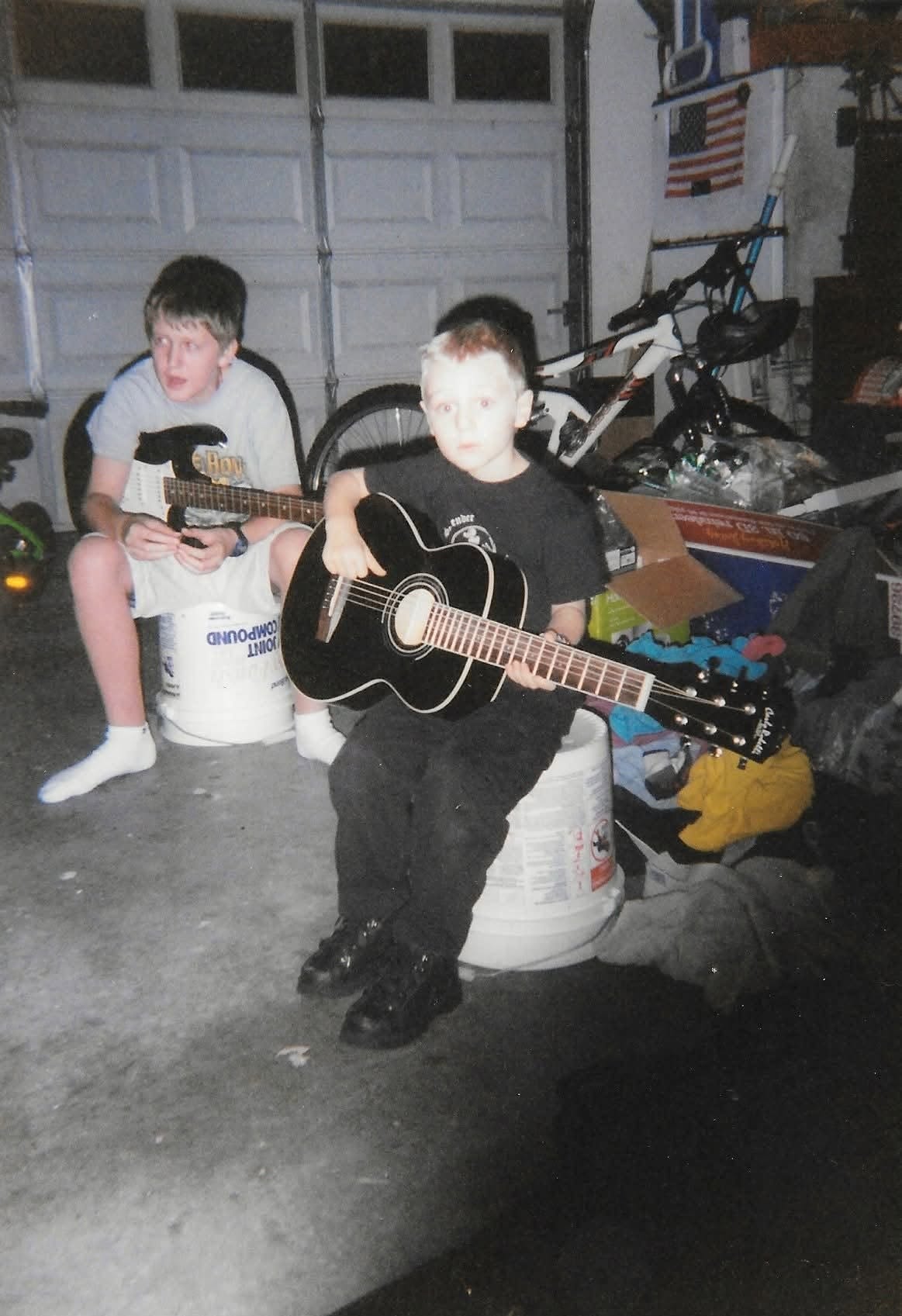
What really gets me now is that I wasn’t just consuming that stuff. I was already trying to make things. I was using a Panasonic SDR camcorder in 2008 when I was eight years old. I was making home movies and experimenting with recording things before I really had any concept of filmmaking as a career. I wasn’t sitting there thinking, “I’m going to become a director someday.” I just liked having a camera and figuring out how to capture things. Looking back, that was probably one of the earliest signs that I was always going to be interested in creating worlds rather than just watching other people create them.
Then I started getting deeper into music. I picked up guitar around fourteen and started writing and recording. I got obsessed with learning how things worked, whether it was guitar, bass, recording, songwriting, production or eventually film. I was never really satisfied with just being a listener. If I heard something I liked, I wanted to understand how it was made. If I saw a movie that affected me, I wanted to know how they created that atmosphere. If I heard a guitar tone that sounded incredible, I wanted to figure out what was happening in the signal chain. That curiosity followed me into everything.
And the political and cultural world I was growing up in definitely affected me, even before I had the vocabulary to understand it. I went from the Bush years into the Obama years, then watched the financial crisis and Occupy Wall Street happen while I was growing up. I was watching the internet completely change at the same time. You went from a world where you could basically disappear when you left the house to a world where everyone was suddenly connected all the time. Smartphones, social media, YouTube, streaming, all of that became normal while I was still a teenager. So I think I’ve always had this weird perspective of remembering the physical world before everything became completely digital while also being young enough to grow up inside the digital transition.
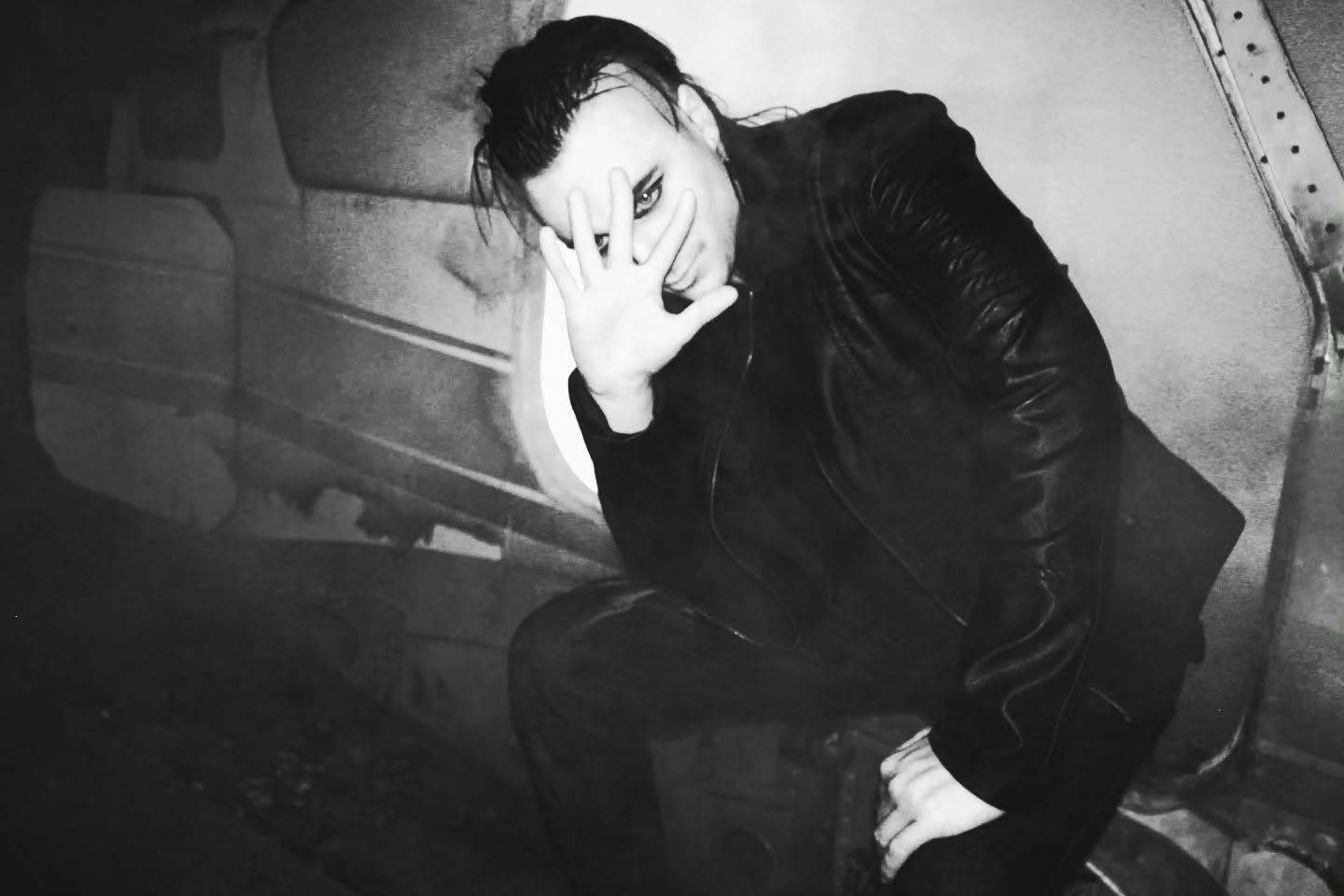
That’s probably part of why the visual side of my music is so important to me now. Film and music never really felt separate. I started with a camcorder, then I started playing guitar, then I started recording, then I went to school for film, then I started directing and editing music videos, and eventually those things just started collapsing into each other. When I’m making Sinclair Noire, I don’t just think about what a song sounds like. I think about what the song looks like, where it exists, what kind of lighting is around it, what kind of environment it belongs in, and what story it’s telling.
I think that’s also why I’m drawn to older visual textures without wanting to simply recreate the past. I remember what it felt like when everything wasn’t perfectly polished. A fluorescent light could look ugly. A camera could make an image look strange. A recording could have imperfections. A rehearsal space could look completely beat to hell. Nobody had to artificially add grain to make something feel real because the world already had grain. I don’t want to make something that feels like a museum piece from the early 2000s, but I do want to preserve some of that physicality in what I make now.
When I look at Sinclair Noire, Most Modern, TH3 L3P3RS and the film work, I don’t really see them as completely separate things. They’re different outlets for the same obsession. I’ve always been interested in atmosphere, darkness, technology, alienation, beauty, decay and the way people interact with the systems around them. The music lets me explore that through sound. Film lets me explore it visually. The goal is always to create a world that somebody can actually step into.
The funny thing is that I’m now approaching thirty, which is bizarre because part of me still remembers being that eight-year-old kid with a Panasonic camcorder and a CRT television in the room. I remember the Bush years. I remember the transition into the Obama years. I remember when PlayStation 2 was current. I remember when music videos were something you could stumble across on television. I remember staying up late and seeing Interpol’s “Evil” on TV. I remember when having a cell phone wasn’t synonymous with being connected to the entire world. And now I’m making music about surveillance, technology, isolation and the consequences of living in a completely connected society.
So I think my work is ultimately a product of that transition. I grew up watching one world disappear and another one take its place. I just happened to be the kid carrying a camera while it was happening. The old world institutions had certain channels you had to go through – submitting demo CDs to a label, hoping to get phone calls back from venue promoters, and show bookings were done entirely through early email or phone calls. What a shift in time it has been. Young people now have all the digital tools at their disposal to be their own marketing team.
I’m sure it wasn’t obstacle-free, but would you say the journey has been fairly smooth so far?
No, not at all. I think from the outside it can look like everything happened pretty naturally because I’ve been doing music and film for so long, but there have been a lot of periods where I genuinely didn’t know if any of it was going to work. I’ve had to learn almost everything through trial and error, and there were plenty of times where I was making things with whatever equipment I could afford, working with almost no budget, teaching myself production, editing, recording, filmmaking, booking shows, promoting myself and trying to figure out how to actually make a living from any of it. The creative part has always come naturally to me, but turning creativity into something sustainable is a completely different challenge.
There were also periods where I had to take jobs that had nothing to do with what I wanted to do creatively just to keep myself moving. That’s probably one of the hardest parts of being an independent artist. You can spend all night working on a song or editing a video and then wake up the next morning and have to worry about rent, bills, equipment, transportation, debt, or whatever else is happening in your life. There’s no clean separation between being an artist and being a person trying to survive. Sometimes you have to put the art down for a minute and deal with reality, then find your way back to it.
Another struggle has been figuring out how to stay authentic in an environment where everything is increasingly driven by algorithms and attention. I’m not really interested in becoming an influencer or making music just because something is currently performing well online. I’ve always been much more interested in building something that feels like it has its own identity. That can be frustrating because the things that matter to me aren’t always the things that get the quickest reaction. You can spend months making a record, a video or a body of work and watch some completely disposable piece of content get ten times the attention in a few hours. You have to develop a pretty strong internal compass or that can eat you alive.
I’ve also had to learn that doing everything yourself doesn’t necessarily mean doing everything alone. Early on, I thought being DIY meant I had to figure out every single part of the process myself. Over time I’ve realized that it’s actually about maintaining ownership of your vision while being willing to learn from people who are better than you at certain things. Working with producers, engineers, musicians and filmmakers who challenge me has probably taught me more than trying to stubbornly control every detail ever could.
The biggest struggle, though, has probably been patience. I’ve been doing this since I was a kid, so sometimes it’s easy to look at how long I’ve been working and think I should be further along than I am. Then I have to remind myself that I’m still building something. I’m not interested in having one viral moment and disappearing. I want to make a body of work that actually lasts. That takes time, and sometimes the slow periods are just as important as the exciting ones.
So no, it hasn’t been a smooth road. It’s been pretty messy, honestly. But I’ve never really considered stopping. Even during periods where I wasn’t sure where the next opportunity was coming from, I was still writing something, recording something, filming something, learning something or thinking about the next project. Creating has been the constant. The circumstances around it have changed a lot, but that part hasn’t. Whether it was the kid in 2004 playing with early digital camcorders or the man in 2026 using film equipment to create music videos, the experimentation process hasn’t changed too much.
Thanks – so what else should our readers know about your work and what you’re currently focused on?
I do a lot of things creatively, but the easiest way I can describe it is that I’m a filmmaker and musician who likes building entire worlds around an idea. I’m a songwriter, vocalist, guitarist, producer, filmmaker, editor and visual artist, and most of the time those things overlap. I have a BFA in Film and Television Production from Western Carolina University, where I graduated cum laude, and my film work has taken me through directing, editing, production, sound, grip and gaffing. I’ve always wanted to understand the entire process rather than only one piece of it.
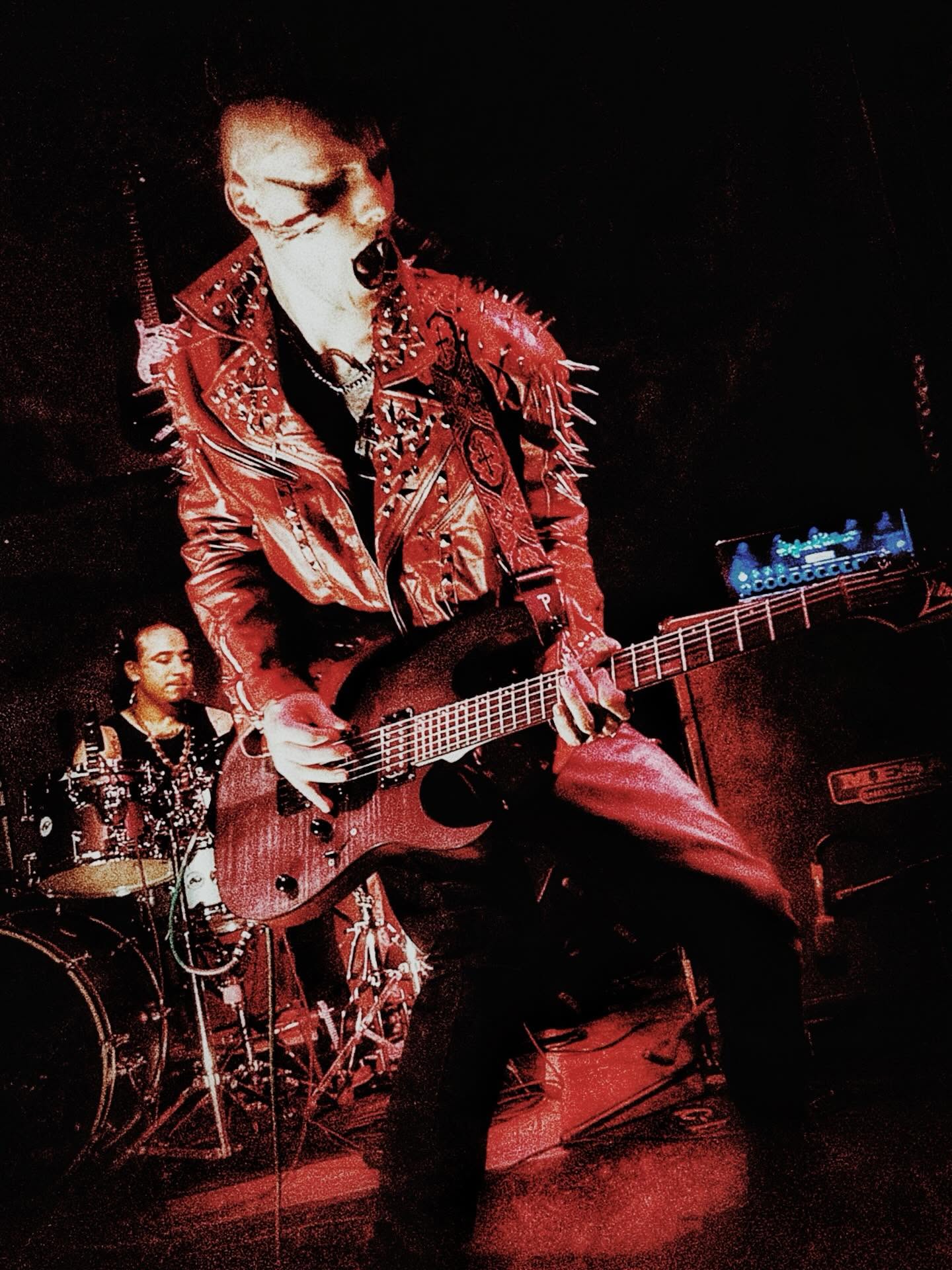
Music has become a huge part of that. I’m the primary songwriter and vocalist behind Sinclair Noire, and I’ve also worked through projects like Most Modern and TH3 L3P3RS. I started playing guitar when I was fourteen, and that eventually expanded into bass, songwriting, recording and production.
On the film side, I’ve directed and worked on narrative projects, including my 2021 horror short In the Woods Somewhere, which screened at the Dickens Horror Film Festival and Western Carolina Controlled Chaos Film Festival. I also directed and edited Aeon Rings’ “Fully Operational,” which was my first real music-video directorial project.
What I’m probably most proud of is that I’ve been able to keep that creative instinct alive from childhood into adulthood. I was making home movies with a camcorder when I was eight years old, and I was writing and recording music as a teenager. So there is a pretty direct line between the kid who wanted to film everything and the person who is now making records, directing videos and building visual identities around music. I didn’t really have to manufacture an artistic identity later in life. I’ve just spent years figuring out how to give that instinct better tools.
I think what sets me apart is that I’m not particularly interested in being only one thing. I don’t want to just write a song and hand it off to somebody else to decide what it looks like. I don’t want to just direct a video without understanding the music underneath it. I want to understand the entire chain from the initial idea to the finished piece. Sometimes that means I’m writing a song, sometimes I’m behind a camera, sometimes I’m editing at three in the morning, sometimes I’m figuring out an arrangement or a guitar tone. To me, they’re all different parts of the same creative process.
I’m also very attached to having an actual point of view. There’s so much pressure now to make everything optimized for an algorithm or whatever happens to be popular that I think it’s easy for artists to lose the strange little things that made them want to create in the first place. I’ve always been more interested in atmosphere, identity, texture and storytelling. I want something I make to feel like it could only have come from me, even if it isn’t immediately easy to categorize.
Ultimately, I’m most proud of the fact that I’ve never really stopped learning. I went from a kid with a camcorder, to a teenager learning guitar, to studying film, to working on productions, to directing, recording, performing and building my own projects. I’m still doing the same fundamental thing I was doing back then: seeing something in my head and trying to figure out how to make it exist in the real world. The tools have gotten better, but that part hasn’t changed.
We love surprises, fun facts and unexpected stories. Is there something you can share that might surprise us?
While most people know me for the music I make with Sinclair Noire and the dark, post-punk aesthetic on stage, they might be surprised by how deeply rooted my creative process is in film and physical craftsmanship. Before I ever write a guitar riff or structure a song, I tend to look at music through a directorial lens. My background in filmmaking heavily shapes how I compose; I don’t just hear a track, I visual-scout its environment, light, and narrative arc, treating every album like a scoring project for a film that exists only in my head. I can’t believe I’ve been sketching ideas, lyrics, and short films in my head since I was a child in the early aughts. It’s been over twenty years of this now. Your life unfolds in such unexpected ways as time changes through the eras.
Beyond the cinematic side, people are often surprised by how tactile and analog my workflow is behind the scenes. In a digital-first world where so much is built inside software, I insist on building our sound through hands-on physical gear tweaking, raw analog experimentation, and notebooks filled with handwritten lyrics and visual sketches. For me, the creative spark comes from getting away from screens, whether that means evaluating physical architecture to capture a specific mood or spending hours getting a specific texture out of hardware. That deliberate, traditional approach to building an atmosphere is what actually drives everything people hear on record.
Another element that catches people off guard is how much my time on the road directly feeds my songwriting. Driving long stretches across the country gives me a unique, almost cinematic vantage point on the world. Instead of writing lyrics in a vacuum or sitting at a desk, a lot of my ideas start taking shape while observing the changing landscapes, industrial backdrops, and late-night architecture between cities. I treat those long hours like a continuous reel of mood research, capturing atmospheric details and subtle shifts in tone that eventually find their way directly into the narrative rhythm of our tracks.
Finally, there is a very deliberate focus on physical media and tangible presentation that goes into everything I create. Long before a project ever reaches digital streaming platforms, I am fully immersed in the physical reality of the release, from the weight and color variant of the vinyl pressings to the exact layout of the physical sleeve artwork. I care deeply about the tactile experience of music, making sure that when someone holds an LP or looks at our visual identity, they are experiencing a cohesive, hands-on artistic object rather than just a collection of digital audio files.
Contact Info:
- Website: https://sinclairnoire.bandcamp.com/
- Instagram: https://www.instagram.com/sinclairnoire/
- Facebook: https://www.facebook.com/ethan.stafford.756
- Youtube: https://www.youtube.com/channel/UC3_ijDxv_m8WBoM5MRqKzeA