


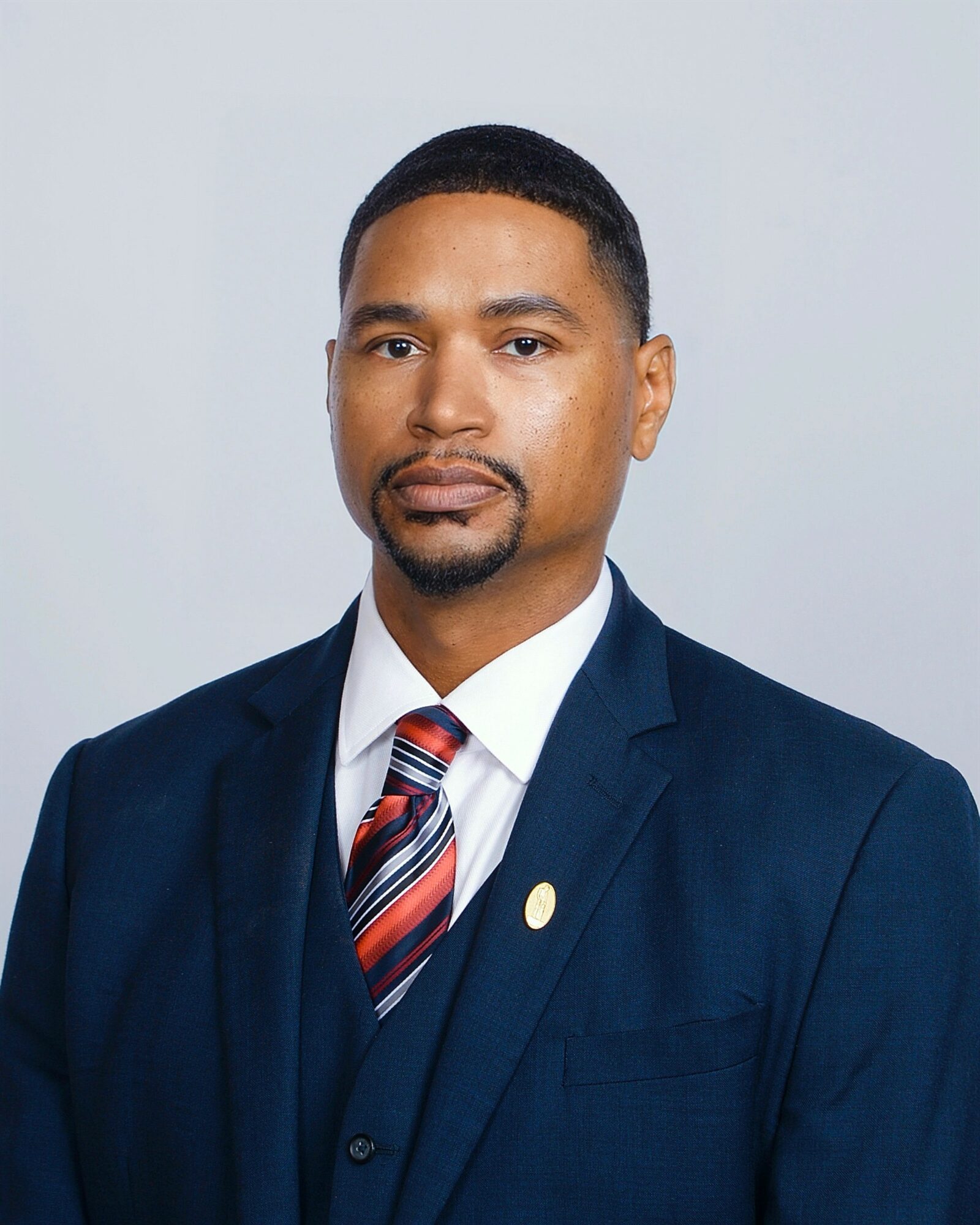
Today we’d like to introduce you to Steven Brown.
Hi Steven, it’s an honor to have you on the platform. Thanks for taking the time to share your story with us – to start maybe you can share some of your backstory with our readers?
My name is Steven Brown, and I am a lifelong East Austin resident. I was born and raised here, starting out on Ninth Street and living throughout the East Side, from the Sam Houston neighborhood to University Hills. This community is not simply where I live — it is where my family put down roots, where I went to school, where I raised my children, and where I learned what it means to look out for your neighbors.
I attended G.W. Norman Elementary School, which is now Norman-Sims Elementary School, then Kealing Middle School, and I played varsity football all four years at Lyndon B. Johnson Early College High School. I was raised by two loving parents who are still married and still live in East Austin today, along with my great-grandmother. She is laid to rest at Evergreen Cemetery, and that connection to our ancestors has always been deeply personal to me. When Evergreen Cemetery was vandalized in 2020, I helped organize a community response because I believe our history, our ancestors, and the places that connect us to them deserve to be protected and treated with dignity.
I have also raised my two sons in East Austin. They are now 23 and 21 years old. Everything I have done throughout my adult life has ultimately been about protecting and providing for my children — and about making sure the next generation of children in our community has opportunities to build a good life here.
My professional life has been rooted in serving this community as well. I have worked in healthcare for more than 20 years. For the first 10 years, I worked as an anesthesia technician at Heart Hospital of Austin, including in the open-heart surgical environment. During that period, I continued my education, earning an associate degree from Austin Community College and an associate degree from Huston-Tillotson University here in Austin. Huston-Tillotson continues to offer associate-level programs today. I then went on to earn both my bachelor’s and master’s degrees from Texas State University. For the last decade, I have worked in the medical device industry.
But my professional career is only part of my story. I have always believed that if you see something wrong in your community, you have a responsibility to stand up and do something about it.
In 2012, I initiated an EEOC complaint concerning the City of Austin’s firefighter hiring practices. That action ultimately contributed to a federal enforcement process and consent decree requiring Austin to change its selection practices, pay $780,000 in back pay to eligible applicants who were harmed by the challenged 2012 practices, and establish a pathway for priority appointments for eligible African American and Hispanic applicants. My goal was simple: I wanted the City to have fairer and more accountable hiring practices.
During COVID-19, I continued that same kind of advocacy. I worked with the City to establish an Austin Public Health neighborhood COVID-19 testing site at Givens District Park, bringing testing closer to East Austin families who needed access to it. I also fought for something that should never have been controversial: functioning, dignified bathrooms at Givens Park. When the park’s restrooms were out of service, I spoke publicly about why a historically Black community should not have to accept inadequate facilities.
Givens Park means a great deal to me because it represents more than a park. It represents generations of East Austin families and the history and culture that have grown around it. I helped establish the Givens Park Advisory Board and have continued advocating for improvements that serve the community while respecting the character and history of the neighborhood. The City has since completed major improvements, including a new accessible restroom and improvements to the pool and recreation facilities.
More recently, I have become increasingly focused on affordability and the ability of working families to remain in Austin. I opposed Proposition Q because I believe Austin can provide excellent city services without continually asking working families to absorb higher taxes and costs. During that debate, I argued that we need to find more efficient and fiscally responsible ways to operate City government rather than simply putting additional costs on taxpayers.
That is really the thread that connects everything I have done: I want to keep taxes low and opportunities high.
I want Austin to remain a place where a person who grew up here can afford to stay here. I want families to be able to buy or keep a home, raise their children, care for their parents and grandparents, and remain connected to the neighborhoods, churches, schools, parks, businesses, cemeteries and community institutions that helped shape them.
My vision is an Austin where multi-generational families can continue to exist here and reap the benefits of what their families and communities have built over generations. Growth should create opportunity, not make it impossible for the people who built Austin to remain here.
I am not coming to this conversation as someone who discovered Austin recently. I am coming as someone whose roots are here — someone who has lived here, worked here, raised children here, buried family here, served patients here, gone to school here, and spent years standing up for this community.
For me, this has never been about politics for politics’ sake. It has always been about people: protecting our history, expanding opportunity, keeping families together, and making sure the next generation has a reason to call Austin home.
That is the Austin I want to help build — an Austin where taxes are responsible, opportunities are abundant, neighborhoods have a future, and the people who have deep roots here can afford to remain rooted here.
Would you say it’s been a smooth road, and if not what are some of the biggest challenges you’ve faced along the way?
Growing up in historically underserved East Austin neighborhoods.
Seeing environmental and infrastructure inequities affect predominantly Black and minority communities.
Watching longtime families face increasing property taxes and the rising cost of living.
Seeing the affordability of homeownership become increasingly difficult for working families.
Experiencing the reality that educational and career opportunities do not always come equally or easily to everyone.
Seeing disparities in access to quality public facilities and basic neighborhood services.
Watching historic Black institutions, neighborhoods, and cultural spaces face the pressures of development and displacement.
Seeing the underrepresentation of African Americans in institutions that should reflect the communities they serve.
Balancing work, family responsibilities, and higher education over many years rather than having a straightforward path through college and graduate school.
Having to continuously advocate for basic services and dignified treatment in neighborhoods that have historically had to fight to be heard.
Watching the people who helped build Austin struggle to afford to remain in the city they helped build.
Thanks – so what else should our readers know about your work and what you’re currently focused on?
have spent more than 20 years working in healthcare, building a career that has taken me from the operating room to the forefront of advanced medical technology.
For the first 10 years of my career, I worked as a Certified Anesthesia Technician, primarily supporting open-heart surgery. Working in the operating room taught me the importance of precision, teamwork, preparation, and remaining calm in high-pressure situations where every decision can have a direct impact on a patient’s life.
For the past 10 years, I have worked in neurosurgery medical devices as a Clinical Consultant, primarily specializing in surgical navigation and robotic technologies. In this role, I work closely with neurosurgeons and surgical teams to support the use of advanced technology during complex procedures, helping ensure that these systems are used effectively and safely in the operating room.
My career in healthcare has given me a firsthand understanding of the importance of innovation, access, accountability, and excellence in healthcare. It has also taught me how technology can improve patient care when it is paired with skilled professionals and responsible decision-making.
From open-heart surgery to neurosurgical navigation and robotics, my professional life has been centered on one thing: helping healthcare professionals provide the best possible care for their patients.
We’d love to hear about any fond memories you have from when you were growing up?
Some of my favorite memories growing up in East Austin are the simple ones—the days when we didn’t need much to have a great time. Growing up on Ninth Street, the community felt like a village. Everybody knew everybody, and there was always a parent, grandparent, aunt, uncle, or neighbor nearby looking out for you.
A lot of my childhood revolved around sports, recreation, and being outside with friends. We spent countless hours playing at Givens Park and other recreation centers throughout East Austin. We would swim at Givens, Bartholomew, Rosewood, and Zaragoza, spending entire summer days in the water and outside with our friends. We played until we were exhausted, and then we’d find somewhere to sit down, eat, and do it all over again the next day.
I remember eating sandwiches on the front porches of my friends’ houses after playing outside all day. Sometimes we would eat at my house, and sometimes half the neighborhood seemed to end up at someone else’s house. There was a sense that we belonged to one another. Our parents knew each other, our families knew each other, and we looked out for each other’s children. You could walk down the street and know that somebody would make sure you were okay.
We played football, basketball, baseball, and whatever else we could organize. We skated, rode our bikes, and spent hours just being kids. Those experiences taught me something that I still carry with me today: community is built through relationships.
I also have great memories of going to the Dollar Movie Theater with friends and family. It didn’t take much money to create a memory that lasted a lifetime. We found ways to have fun, support one another, and enjoy what our neighborhood had to offer.
Football became an especially important part of my life. I played football at Lyndon B. Johnson High School for all four years, and some of my strongest memories came from being part of that team. Football taught me discipline, teamwork, accountability, and how much stronger you can be when everyone is working toward the same goal.
When I think back on growing up on Ninth Street, what stands out most isn’t any one particular place. It’s the people.
It was the friends who became like family. It was the parents who looked after all of us. It was eating at each other’s houses, playing outside until the sun went down, swimming all summer, skating, playing football, and knowing that there was always somebody close by.
We didn’t have everything, but we had each other.
That sense of community is one of the greatest gifts East Austin gave me. It is also one of the reasons I care so deeply about making sure today’s children have the opportunity to experience that same sense of belonging—that feeling that your neighborhood is not just where you live, but a place where people know you, care about you, and look out for you.
Those childhood memories are a big part of who I am today. They remind me of what East Austin was, what it has given to generations of families, and what I believe it can continue to be for generations to come.
Contact Info:
- Website: https://brownforaustind1.com/