



Today we’d like to introduce you to Sonja Corbin King.
Hi Sonja , we’re thrilled to have a chance to learn your story today. So, before we get into specifics, maybe you can briefly walk us through how you got to where you are today?
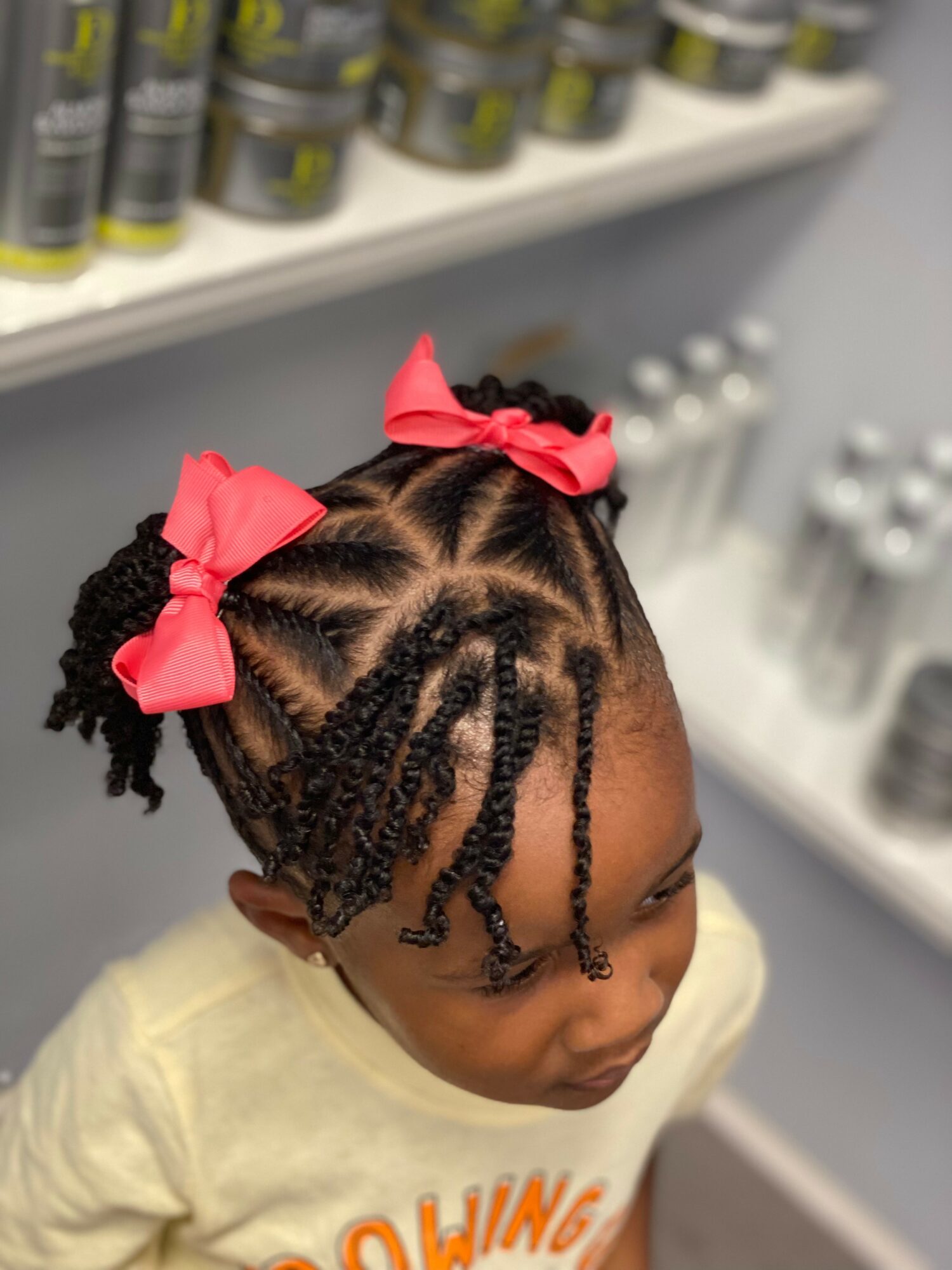
Honestly? I became Austin’s children’s hair lady by accident. I’ve been doing hair in Central Texas for over twenty years — up and down 35 — and the kids’ chair was the chair nobody fought over. A curly-headed four-year-old would walk in with her mom, and suddenly every other stylist remembered they had to restock something in the back. So I’d take the appointment. And the next one. And eventually, I was just the kid stylist. I used to complain about it constantly.
Then one day it clicked: the chair nobody wanted was the chair nobody understood. Curly hair, coily hair, tender heads, scared kids, parents who didn’t grow up with this hair on their own head, and had no idea what to do with their daughters’. There wasn’t a shortage of kids who needed help — there was a shortage of stylists who actually wanted to be in that chair. So I stopped complaining and opened Sc4kids.
And here’s the part most people don’t know: I didn’t build the salon on East 11th. I was handed it. Mrs. Augustine Williams ran Style Rite on East 11th for over fifty years. She retired at ninety-two — and she chose me to carry it forward. So when I say Heritage District, I don’t just mean six blocks of African American history a few steps from a HBCU and the State Capitol — Victory Grill, the Cultural Heritage Facility, the murals, the whole story. I mean a literal handoff from a ninety-two-year-old elder who’d been doing hair in East Austin longer than I’d been alive. Those are big shoes. That wasn’t branding. That was a calling.
What it turned into surprised me. I thought I was opening a children’s hair salon. What I actually built is closer to hair therapy — that’s literally the motto, Healthy. Happy. Hair Therapy. I have foster moms who walk in on high alert because their daughter has trauma around her hair from somewhere else, and they leave with a kid who’s excited to come back. I have transracial adoptive parents doing their best who just need somebody to coach them, not shame them. I have neurodivergent kids who need a sensory-aware setup to even sit through a wash. We do all of it. The hair is honestly the smallest part of the job — the relationship is the whole thing.
I’ll be honest with you: about two years ago, I was close to closing the doors. This kind of work is heavy. You’re holding a lot of trust. And I had a moment of, “Is this even worth it anymore?” What pulled me back was getting really clear about what this place is actually for — and realizing nobody else in Austin is doing it the way we are. Once that clicked, everything changed.
Now there are two brands under one roof. Sc4kids serves ages two through eighteen, plus a few college students who refuse to graduate from us. Gro Culture is for ages 10 and up — same care, a more grown-up service menu; teens and adults welcome. I’m also working toward my mortuary license, because — funny enough — I run a children’s salon and a funeral home, and both of them are built on the same thing: people trusting you with what matters most. The hair is just where I happen to start.
Would you say it’s been a smooth road, and if not what are some of the biggest challenges you’ve faced along the way?
Honestly? No. The road got rerouted by COVID.
When the pandemic hit, the salon shut down. I went from busy to nothing overnight — no plan, no income, no chair, no kids to fix up. It was the first time in over 10 years that I had nowhere to work. That’s a scary feeling when your whole identity is wrapped up in being the woman who shows up for these families.
My husband, Stuart King, the baby of the King family, looked at me one day and said, “Come work with me at King-Tears.” King-Tears Mortuary. East 12th Street, one block from the salon. Founded in 1901, believed to be the first African American-owned funeral home in Texas. His grandmother, Alice King, is part of that lineage — the Kings have stewarded it since 1955. So when Stuart said, “Come work with me,” he wasn’t offering me a job. He was inviting me into 124 years of family work.
I walked in, and I was like, whaaaaat? Is this a My Girl scene from the nineties? Am I about to live above a funeral home now? I did not have this in my career plan.
But here’s what nobody warns you about: a funeral home is just another place where people are trusting you with what matters most. The cosmetology side of my brain still worked. The business side of my brain still worked. And the two businesses I now run started to make a different kind of sense. Beginning of life. End of life. Same skill set, same kind of grace, different chair. So I enrolled in mortuary school — the closest program is at San Antonio College, which has meant months of driving down I-35 after running the salon all day. The legacy I’m stepping into isn’t something I want to dabble in. I want to be credentialed and ready to carry it.
I won’t lie — learning the family business while keeping Sc4kids and Gro Culture running has been rough. Add the moment two years ago when I was close to closing the salon doors, and the road has been anything but smooth. But Stuart is my best friend, my co-worker, and my business partner. COVID took the salon. King-Tears showed me what I was actually here for. Mortuary school is showing me what’s required to honor it. And we’re still here.
As you know, we’re big fans of Sc4kids/GroCulture. For our readers who might not be as familiar what can you tell them about the brand?
What excites me most is the time.
I run two brands under one roof — Sc4kids for ages two through eighteen, and GroCulture for ages ten and teens welcome. We specialize in textured children’s hair: curls, coils, locs, braids, washes, and the full care lifecycle. But honestly? That’s the service menu. The actual work is something different.
What gets me out of bed is watching the same little girls walk through that door for ten, twelve, fifteen years. I have two-year-olds who are now nine. Nine-year-olds who are now fifteen. Girls who started in my chair, scared and tender-headed, are now applying to college. No other Austin salon can tell you that. Time is the thing.
And then there’s the second part. Some of those same families come back through King-Tears years later, one block over. They started with me when their daughter was a toddler, and now their grandmother is being laid to rest a block away. The arc of a Black family in East Austin can pass through both of my doors. I didn’t plan that. It just turns out you can’t fake what generational continuity feels like.
So what I’ve come to understand is I’m not just a hair stylist running a kids’ salon. I’m part of a village. Austin’s Black girls — and their biracial sisters, their transracial-adoptive siblings, their foster cousins, the neurodivergent kids other salons turn away — they’re being raised by a lot of hands, and mine is one of them.
And the village is real. I see those girls everywhere I go — at their church, at the Bass Concert Hall, in line at the grocery store. They run up to me. They want me to meet their friends. It’s Sesame Street up in here: “who are the people in your neighborhood?” That’s not a marketing line. That’s just the truth.
Here’s something I think about all the time: adults get to claim Austin. The food, the music, the venues, the streets — “city living” is built for grown-ups. But why should the kids be left out? Why shouldn’t a six-year-old in pigtails feel like she belongs downtown, in her own beautiful place, in her own beautiful chair, having her hair done by someone who looks like her? Children deserve a piece of the Austin experience. Not the leftovers from one designed for adults.
That’s the whole idea behind Sc4kids. It’s not a haircut — it’s a cultural experience. A rite of passage. A code. A creed. A vibe. It’s where a Black girl in East Austin learns that her hair is healthy, her hair is happy, and her hair is hers. And every kind of girl whose family has been told no by other salons. If you’ve ever felt out of your depth on your daughter’s hair, you belong here.
And honestly? The thing I’m proudest of isn’t a service, a press hit, or even the legacy I was handed. It’s the fifteen-year-old applying to college who’s still climbing into my chair. That’s the whole brand. That’s the only metric that matters.
Is there any advice you’d like to share with our readers who might just be starting out?
The biggest thing I wish I knew? Don’t run from the work nobody else wants to do.
I spent years complaining about the kids’ chair. It was the chair nobody fought over, and I kept getting stuck with it. Now over twenty years in, that “stuck” chair is my whole life — and one of two whole businesses I get to run. The thing other stylists avoided turned out to be the thing I was built for. So if you’re early in your career and you keep finding yourself doing the work nobody else wants to do — pay close attention. That might not be a punishment. That might be your assignment.
Here’s the rest of what I wish someone had told me:
1. Specialize harder than feels comfortable.
When you’re starting out, you think narrowing your offer will shrink your business. The opposite is true. The deeper you go on one specific group of people, the more they tell their friends. I went all in on textured children’s hair, and now we have multi-year client families who’d never trust anyone else with their kids.
2. Pick your location like it’s a marriage.
Don’t choose the cheapest space — choose the meaningful one. I planted Sc4kids in the African American Cultural Heritage District on purpose, on a block where Mrs. Augustine Williams had run her own salon, Style Rite, for over fifty years. That decision has done more for my brand than any marketing spend ever could.
3. Almost quitting will probably happen. Let it clarify you.
About two years ago, I was close to closing the doors. I’m grateful for that moment now — not because the heaviness was good, but because what I rebuilt after almost walking away was so much clearer than what came before. The breakdown was the breakthrough.
4. You don’t have to plan the whole thing.
I didn’t plan to inherit Style Rite. I didn’t plan to walk into King-Tears during COVID. I didn’t plan to be working toward a mortuary license at San Antonio College. I planned the first thing, and then I said yes to the next door, and then the next one. Trust the doors.
5. Surround yourself with people who’d run the business with you for free.
My husband Stuart is my best friend, my co-worker, and my business partner. None of this works without him. Pick your inner circle like the business depends on it. Because it does.
And one last thing — for the Black girls and women out there wondering if it’s okay to claim what’s yours: it is. Put the names in the conversation. Say where you came from. Honor the elder who handed you the keys. Pull up to the city you’re building space in. The legacy is the marketing.
Contact Info:
- Website: https://www.sc4kids.salon/
- Instagram: https://www.instagram.com/sc4kids/
- Facebook: https://www.facebook.com/healthyhappyhairtherapy/
- Youtube: https://www.youtube.com/@SonjaCorbin