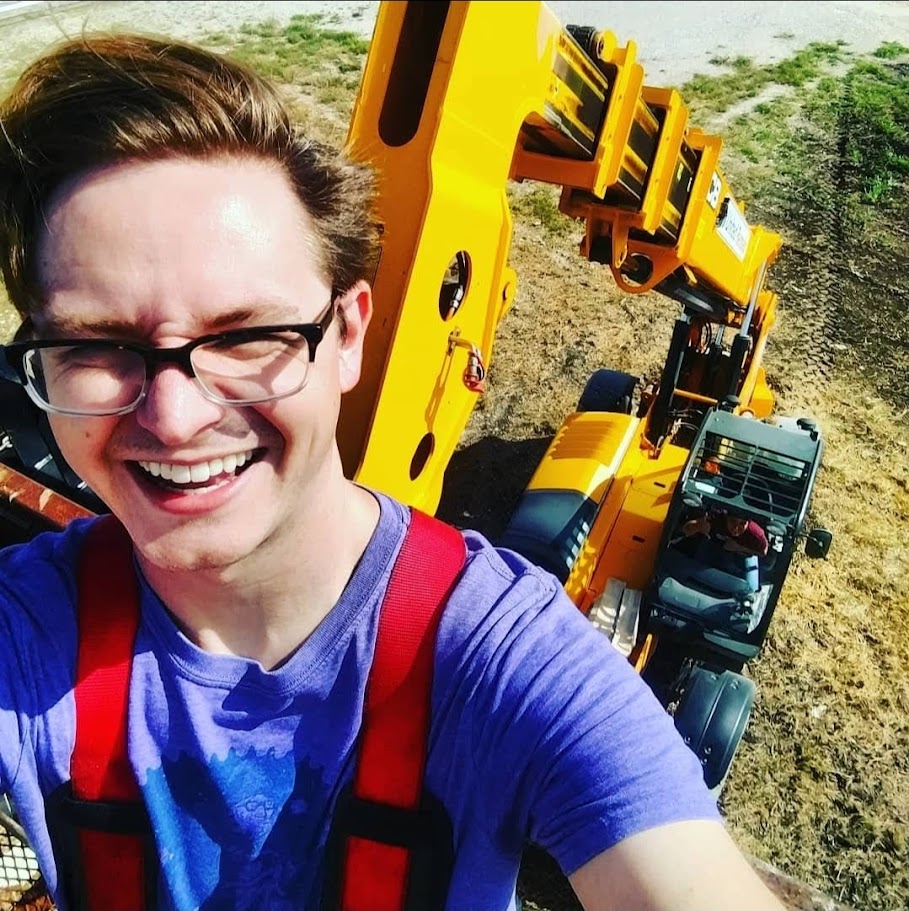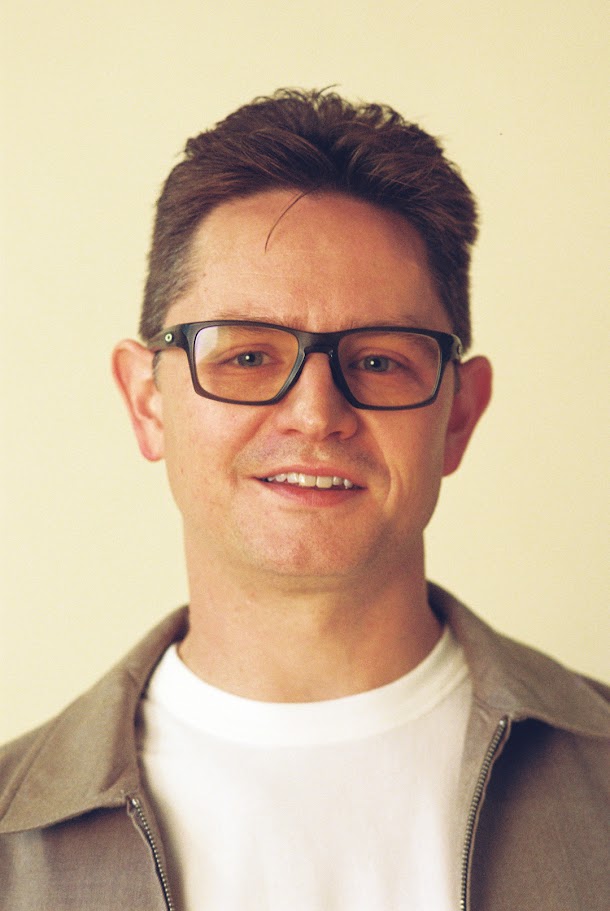



Today we’d like to introduce you to Tucker Cullum.
Alright, so thank you so much for sharing your story and insight with our readers. To kick things off, can you tell us a bit about how you got started?
I’ve always been a systems person. I’m naturally drawn to figuring out how things work, where the friction is, and what change will have the biggest effect on everything downstream.
I got into IT professionally in my twenties, and one of the most formative experiences of my career was joining Firefly Aerospace very early on. I spent a little over four years there helping build the company from the ground up. In that kind of environment, there isn’t always a procedure or even a precedent for the problem in front of you. You have to understand the system, experiment, and figure out what actually works. I loved that.
After Firefly, I worked in more traditional corporate IT environments while also doing independent IT work around Austin. Over time I realized how many small businesses have surprisingly complex technology but nobody dedicated to taking care of it. I kept finding myself helping those businesses, and eventually I realized there was a company hiding in what I was already doing. That became Tucker’s Help Desk.
Somewhere along the way, I also started looking at myself as a system. I became a certified fitness instructor and nutrition coach and got much more intentional about how I eat, exercise, sleep, manage stress, and take care of my mind and body. I realized that I’m the most important system I maintain. When that system is working well, I have more energy, more creativity, more patience, and a much greater capacity for solving difficult problems.
That changed the way I think about my work, too. Whether I’m looking at a computer network, a business, or my own health, I’m usually asking the same questions: Where is the friction? What’s causing it? What can I change that will have the greatest positive effect on the rest of the system?
Today, that philosophy is at the center of what I’m building with Tucker’s Help Desk. I get to help Austin businesses solve real problems, and I get to do it in a way that feels much more like an expression of how my brain naturally works than simply a job.
Alright, so let’s dig a little deeper into the story – has it been an easy path overall and if not, what were the challenges you’ve had to overcome?
It definitely hasn’t been a smooth road. Some of my biggest setbacks have actually been physical.
For years I had sciatica running from my hips down my legs. I spent most of my working life sitting at a desk eight hours a day because that was considered normal. Eventually I started lifting weights and rebuilding my glutes and posterior chain, and my body began to change. That was one of the first times I really understood that the way I was working wasn’t sustainable for me.
Later, chronic stress caught up with me in a much scarier way. I developed shingles along the trigeminal nerve on the left side of my face, close enough to my eye that there was a real risk to my vision. I had experienced shingles elsewhere before without realizing what it was, but that episode forced me to pay attention.
It became part of a much bigger realization: I had spent years treating myself like an appliance instead of a living thing.
I need healthy food. I need sunshine. I need to move throughout the day. I need exercise, sleep, time outside, and people around me who actually care about my wellbeing. I can’t just feed myself enough calories, sit in a chair all day, push through stress and expect the machine to keep running.
I also had to look at the people and environments I was choosing. I had become accustomed to relationships where I was chronically stressed or on guard, and because some of those patterns were familiar to me, I didn’t always recognize how much they were costing me.
I’ve become much more intentional about that now. I want relationships built around reciprocity, joy, safety and actually caring about one another. I’m much less interested in giving access to people who primarily want influence or control.
In a strange way, all of this made me better at what I do. The systems thinking I had always applied to technology eventually turned inward. I started asking: What conditions does this human system actually need to function well?
That’s changed the way I work and the way I live. I don’t believe success is worth much if achieving it requires slowly destroying the person who’s supposed to enjoy it.
We’ve been impressed with Tucker’s Help Desk, but for folks who might not be as familiar, what can you share with them about what you do and what sets you apart from others?
Tucker’s Help Desk provides IT support for small businesses around Austin. I built it around a simple idea: a small business can have serious technology needs without needing a full-time IT department or an expensive, complicated IT contract.
I work directly with business owners and their teams on everything from everyday computer problems to networking, Wi-Fi, cabling, Microsoft 365, cloud storage, new employee setups, hardware failures, office moves and larger infrastructure projects. I especially enjoy working with medical offices, professional practices, construction companies, machine shops, fabricators and other businesses where technology supports people doing real, specialized work.
What sets Tucker’s Help Desk apart is that I try to understand the whole environment, not just the ticket in front of me. If someone calls because the internet keeps dropping, I don’t want to simply get it working again and leave. I want to understand why it failed, what else depends on it, whether there’s a single point of failure, and what we can change so I’m less likely to get that same phone call again.
I’m also deliberately hands-on. When you call Tucker’s Help Desk, you get Tucker. I learn how your business works, which systems are critical, what the weird workarounds are, and what problems your employees have quietly learned to tolerate. Sometimes the solution is sophisticated. Sometimes it’s surprisingly simple. I don’t believe in selling technology just for the sake of selling technology.
My favorite clients are small businesses that have reached the point where saying, “we don’t really have an IT person” is starting to become expensive. I can step into that gap without requiring them to build an entire IT department.
What I’m most proud of is that the business reflects the way I naturally solve problems: look at the whole system, find the biggest source of friction, fix it properly, then zoom back out and see what became clearer.
Ultimately, I want technology to become something my clients barely have to think about. They should be able to focus on whatever they’re great at and know that when something does go wrong, they have someone they trust who already understands their business.
Can you talk to us about how you think about risk?
My relationship with risk has changed a lot. I used to think the safe path was having a traditional job, a predictable paycheck and doing what you’re supposed to do. What I’ve learned is that there is no risk-free path. You only get to choose which risks you’re willing to take.
Staying somewhere that isn’t working is a risk. Spending years doing work that drains you is a risk. Ignoring your health because you’re afraid to disrupt your career is a risk. And building your entire life around security can become its own kind of insecurity if you eventually realize you’ve built something you don’t actually want.
Starting Tucker’s Help Desk has meant accepting a different kind of uncertainty. I don’t always know where the next client is coming from. I have to walk into businesses, introduce myself, make calls, send emails, show people what I can do and trust that consistently doing good work will create more opportunities.
That’s uncomfortable sometimes, but I prefer that risk because I have agency over it.
I’ve also learned to distinguish between risk and recklessness. I don’t think courage means ignoring consequences. My systems brain actually makes me want to understand them. What’s the downside? Can I recover from it? What do I learn if this doesn’t work? Is the potential upside worth the exposure?
These days, one of the questions I ask myself is: What’s the risk of doing nothing?
Sometimes that’s much larger than the risk of making a change.
Contact Info:
- Website: https://tuckershelpdesk.com/
- Instagram: https://www.instagram.com/tuckershelpdesk
- Facebook: https://www.facebook.com/profile.php?id=61578185879487
- LinkedIn: https://www.linkedin.com/in/roberttcullum/