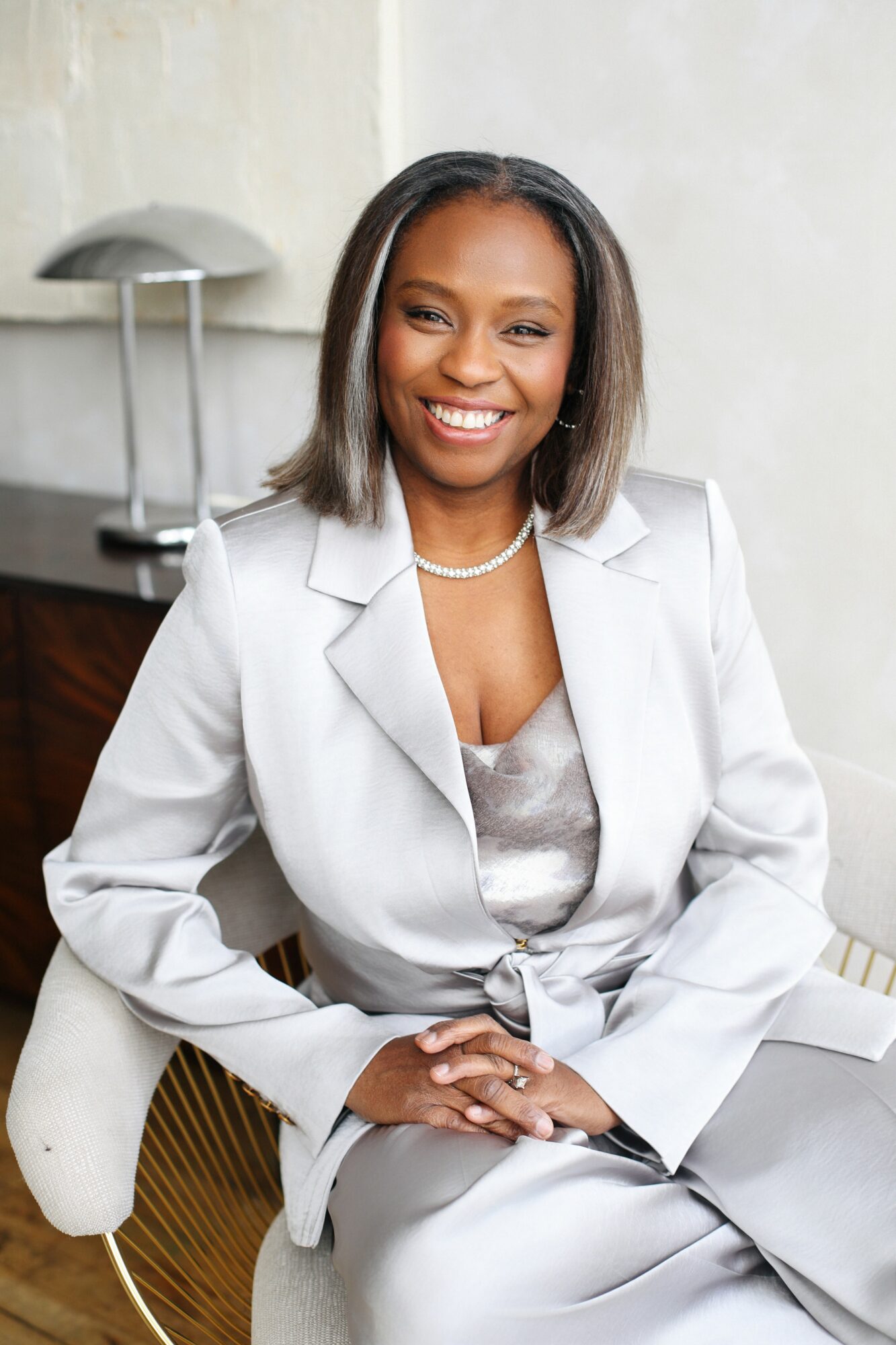



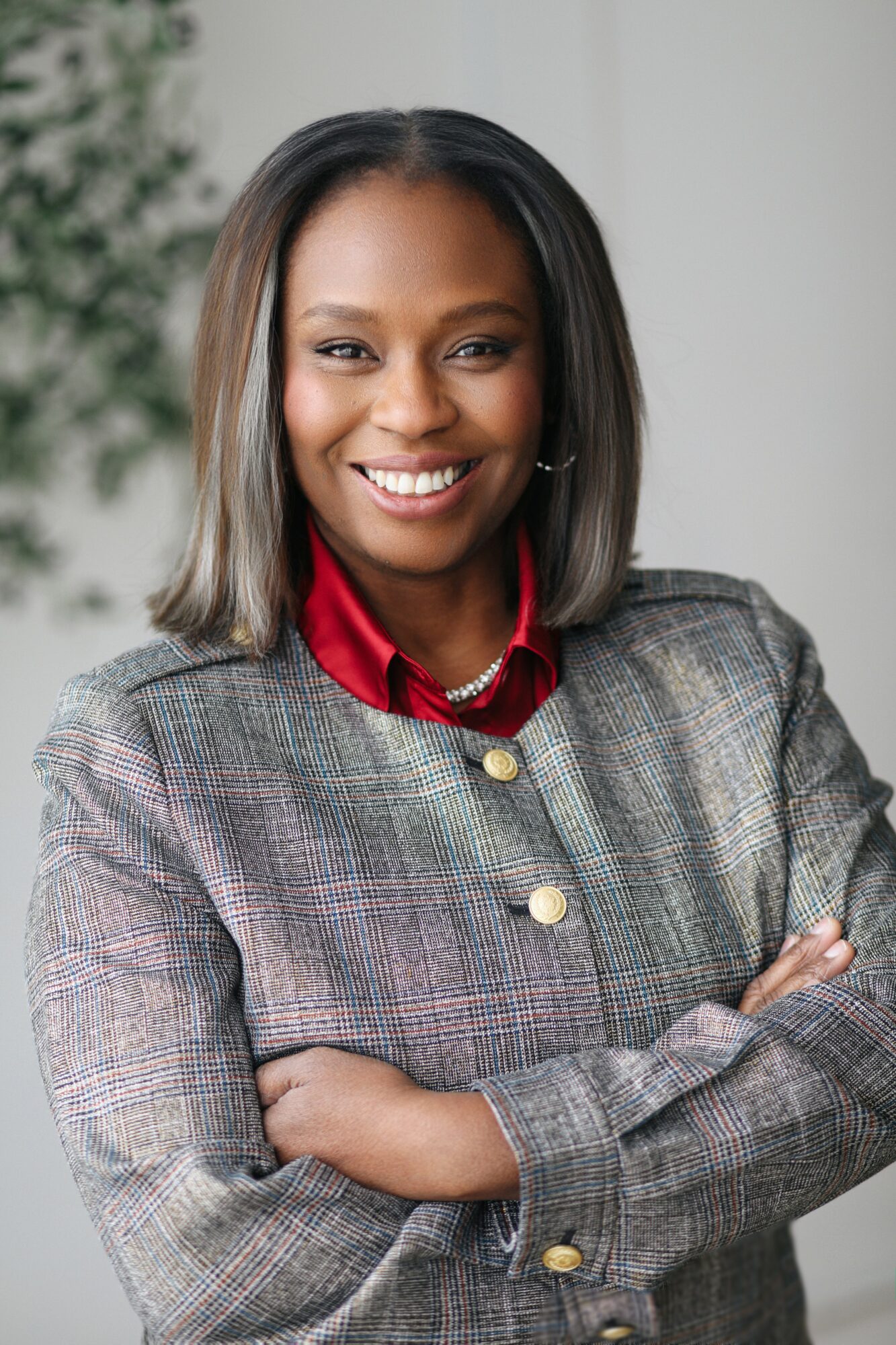
Today we’d like to introduce you to Shawn Bostic.
Hi Shawn, it’s an honor to have you on the platform. Thanks for taking the time to share your story with us – to start maybe you can share some of your backstory with our readers?
My journey into financial services began in 1991, but financial services was never part of my original plan. I earned a Bachelor of Science in Mathematics because I wanted to become an engineer for a major defense contractor and aerospace firm specializing in electronic warfare and intelligence systems. I imagined applying mathematics to complex technical problems in a world of engineering, defense, and advanced technology. Instead, I found myself beginning my career as a margin clerk in the securities industry—a considerable shift from the future I had envisioned.
What I did not know then was that financial services would offer its own complex systems to understand. It had numbers, risk, interconnected structures, and problems that demanded careful analysis, but it also had something I had not anticipated: deeply human consequences. The decisions made within financial institutions could affect whether someone retired with security, sent a child to college, protected a family after a death, or recovered from a financial setback. I became fascinated by how the industry worked and determined to learn as much as I could.
I asked questions, listened closely, and tried to understand not only the mechanics of the business, but also the responsibilities that came with handling another person’s financial future. I wanted to know why particular rules existed, what risks they were intended to address, and what happened when the trust placed in financial professionals was not handled with care.
For a brief period, I worked as a financial adviser. That experience taught me something important about myself: I was much better at providing regulatory guidance than I was at selling financial products. While others could become enthusiastic about the investment itself, my mind naturally moved toward the recommendation surrounding it. Had the product been adequately explained? Did the client understand the risks? Was the recommendation consistent with the client’s needs and financial circumstances? Had the financial professional documented the reasoning behind it?
I eventually realized that my contribution to the industry would not be convincing people to purchase financial products. My contribution would be helping the people who offered those products understand their responsibilities and helping firms build systems that supported responsible conduct.
One of the defining moments in my career occurred when I became Chief Compliance Officer of a small independent broker-dealer in downtown Dallas. It was my first CCO position, and it introduced me to the enormous responsibility that accompanies those three letters. I had to interpret regulations, communicate difficult conclusions, supervise activity, and protect the integrity of the organization. The decisions were not always easy or popular, and the answer was not always plainly written in a rulebook.
That position also gave me a much deeper appreciation for financial professionals themselves. Compliance can sometimes become so focused on identifying violations and controlling risk that we lose sight of the people working on the other side of the process. I learned the importance of connecting with financial professionals, listening to them, and understanding the work they were trying to accomplish. There are some truly remarkable people in this industry who care deeply about their clients and who help families pursue their financial dreams. They guide people through retirement, education planning, illness, loss, uncertainty, and major life transitions.
My first experience as a CCO taught me that effective compliance is not built by treating every financial professional as a potential problem. It is built through relationships, credibility, clear expectations, and a shared commitment to serving investors well. The best financial professionals do not view compliance as an enemy, and the best compliance professionals do not forget the legitimate and valuable work being performed by advisers. When the relationship is grounded in mutual respect, compliance becomes more than enforcement—it becomes a partner in protecting trust.
Years later, a former FINRA examiner who had become president of a broker-dealer personally called and asked me to serve as the CCO of her firm. That invitation meant a great deal because it came from someone who understood regulatory expectations firsthand and who believed in the quality of my work. My first consulting opportunity similarly came from a former SEC enforcement attorney.
I remain deeply grateful to the regulators and former regulators who trusted my judgment, respected my work, and believed I could carry significant responsibilities. Their confidence reinforced a lesson that has followed me throughout my career: credibility is built quietly over time through preparation, consistency, fairness, and a willingness to do the work correctly even when no one is offering immediate recognition.
My path, however, was not without complications. I was an African American woman with a doctorate in management whose research concentrated on organizational behavior, working in a field in which leadership had historically been dominated by men. I discovered that qualifications do not always feel like assets in every room. There were times when my education, directness, or expertise appeared to make others uncomfortable rather than confident. There were moments when I questioned whether my ideas were being evaluated on their merits or interpreted through assumptions about who people believed I should be.
I also sat through leadership training that continued to promote dated management styles—approaches rooted in hierarchy, control, conformity, and the belief that leadership flows in only one direction. Those methods could create greater dysfunction even when employees had taken the right steps, exercised sound judgment, or raised legitimate concerns. They often rewarded silence over constructive disagreement and obedience over thoughtful leadership.
Organizations could delay change for a time, but the next generation was watching. Employees entering the workplace with different expectations about transparency, dignity, inclusion, and purpose could see the distance between what organizations said and how their leaders behaved. Leadership strategies designed for a different era no longer matched a society increasingly shaped by authenticity, innovation, rapid change, and the expectation that people should be able to contribute without first surrendering their identity.
These experiences strengthened my belief that leadership cannot be reduced to authority, position, or a collection of management techniques. Leadership is revealed in what happens when someone raises a difficult question, challenges a comfortable assumption, or brings forward information that an organization would prefer not to confront. It is also revealed in whether the person who speaks is respected for exercising judgment or punished for interrupting the appearance of harmony.
My education helped me understand these experiences more clearly. After earning my bachelor’s degree in mathematics, I earned a Master of Public Administration and later a Doctorate of Management in Organizational Leadership, with research grounded in organizational behavior. My dissertation, “Compliance with the Financial Industry Regulatory Authority Regulations,” is now on file with the United States Library of Congress.
My doctoral research examined the human experience surrounding regulatory compliance and confirmed something that years of conducting investigations had already begun to show me: people do not experience an investigation as a purely technical exercise. Perception, fear, organizational power, assumptions, and human bias can affect how individuals investigated for financial misconduct are viewed and treated, sometimes before all the facts have been fully understood.
That insight became the foundation for what I now call the Human Edge. Rules, surveillance systems, and technology are necessary, and artificial intelligence can make many processes faster and more efficient. But neither a rulebook nor an algorithm can replace the judgment required to understand context, distinguish error from intent, recognize unfairness, and treat people with dignity.
Behind every investigation is a human being. Behind every investor complaint is a person who may feel frightened, betrayed, confused, or unheard. Behind every compliance decision is another professional trying to balance regulatory obligations, organizational pressures, and the effect that a decision may have on someone’s livelihood and reputation.
One of the most humbling experiences of my academic journey occurred when I traveled to England to present my dissertation proposal at Cambridge University. I understood that I was standing within the intellectual tradition of an institution associated with some of humanity’s most consequential discoveries and ideas.
Cambridge was home to Isaac Newton, whose work produced the laws of motion and universal gravitation and helped develop calculus. Paul Dirac’s work contributed to the prediction of antimatter. Charles Darwin’s time at Cambridge helped shape the intellectual path that ultimately led to the theory of evolution. Francis Crick helped uncover the double-helix structure of DNA. Stephen Hawking transformed our understanding of black holes and thermodynamics. Alan Turing’s formalization of algorithms and computation helped establish the foundations of modern computing and, ultimately, artificial intelligence.
To present my research within that tradition was profoundly humbling. I was not comparing my work to those discoveries. I was recognizing the magnitude of being allowed to bring my own questions into a place where generations of scholars had challenged accepted thinking and expanded what humanity understood about the world.
Standing there, I thought about how far I had traveled—not only geographically, but personally. I had begun as a young woman with a mathematics degree who expected to work in aerospace and defense. I entered financial services as a margin clerk in 1991 without knowing that the industry would become my life’s work. Decades later, I was discussing securities regulation and organizational behavior at Cambridge. That experience reminded me that no honest beginning is too small and that curiosity, sustained over many years, can carry us into rooms we never imagined entering.
I remain unapologetically fascinated by the people, history, and personalities of financial services. I once had the opportunity to speak with Jordan Belfort’s former executive assistant, and I freely admit that my inner compliance nerd emerged. I become fascinated when speaking with people who have been close to consequential or notorious moments in the industry because I want to know what they observed, what they learned, and what the familiar public account may have missed. Regulations and enforcement records tell us what happened formally, but people’s experiences often help us understand why it happened and what it felt like to live through it.
My interest in the human experience has become stronger as I have watched investors, financial professionals, and compliance professionals struggle to be heard. I have seen investors treated as though their concerns were inconveniences. I have also seen compliance professionals carry the emotional weight of difficult ethical decisions while feeling unable to speak candidly within their organizations. Those observations made me want to give something back to the community that has given so much to me.
That desire led me to establish Bostic Principled Solutions and become a safe space open to frank questions and conversations about compliance, ethical dilemmas, difficult workplace relationships, and the gray areas that do not always have simple answers. It is a place where people can leave their concerns, examine what is troubling them, hear another perspective, and feel less alone while getting the compliance support they need.
At this stage of my life, I am meeting some of the most remarkable people I have encountered during my career. I want to form lasting relationships, listen to people’s experiences, and allow the wisdom within those experiences—shared responsibly and with care—to help others through career consultation, AI compliance research, and connecting through shared insights.
None of this journey has been mine alone. My mother and brother instilled integrity in me long before I understood that it would become the organizing principle of my professional life. My mother often said, “It’s not what you said; it was how you said it.” That lesson may sound simple, but it contains a profound truth about leadership and human relationships. Being correct does not give us permission to disregard another person’s humanity. How we communicate a conclusion, conduct an investigation, correct a mistake, or exercise authority can determine whether another person leaves the encounter with dignity or humiliation.
That lesson remains at the center of how I think about ethical leadership and the Human Edge: people should be treated as people, even when the conversation is difficult and especially when one person holds power over another.
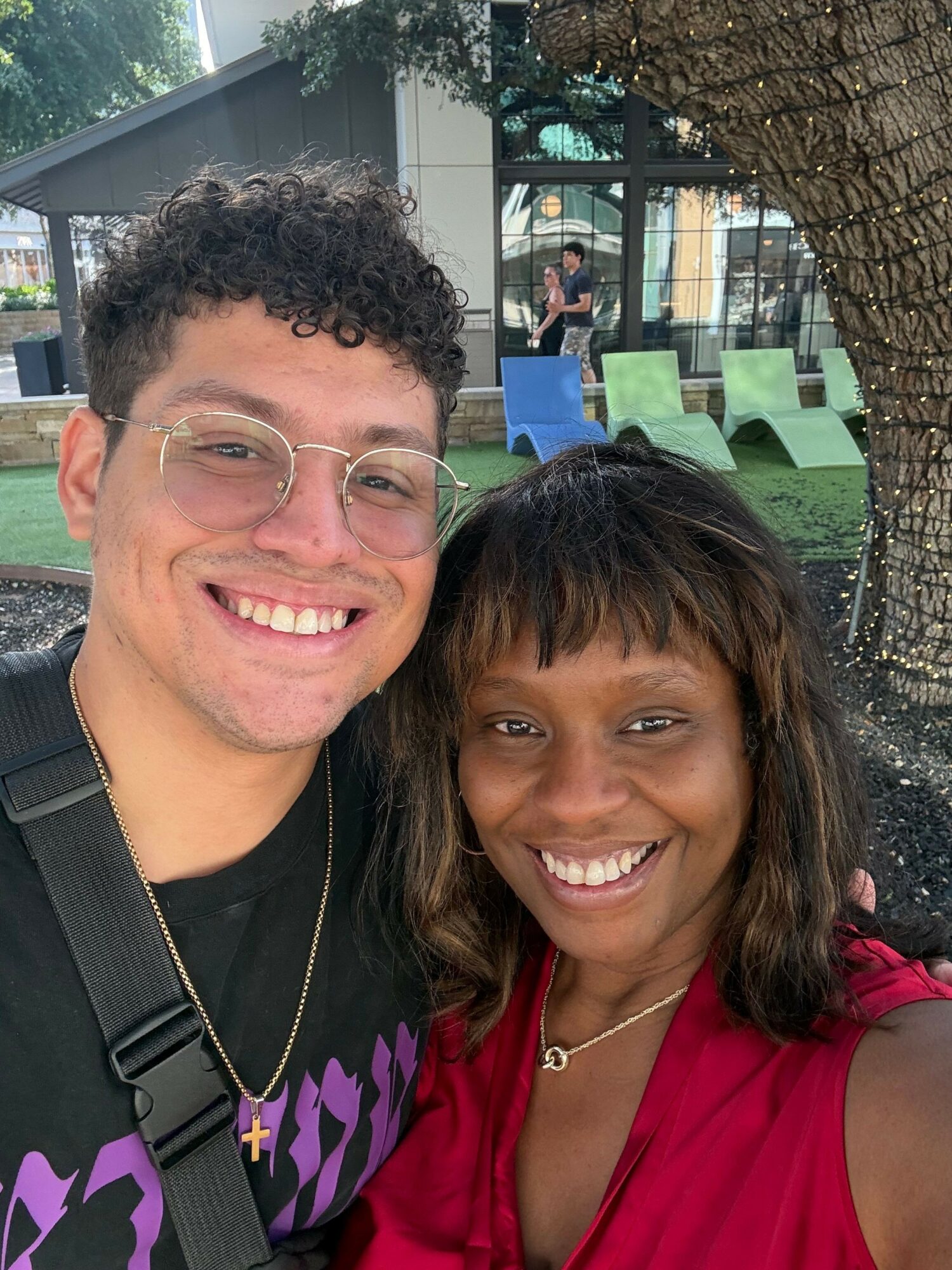
My son has always stood by his mother, and I never want to let him down. I feel the same responsibility toward my niece. I want them to see that integrity may make the journey more difficult at times, but it also makes success more meaningful. I want them to know that a person can experience disappointment without becoming bitter, encounter unfairness without surrendering her values, and begin again without pretending that the earlier chapters did not hurt.
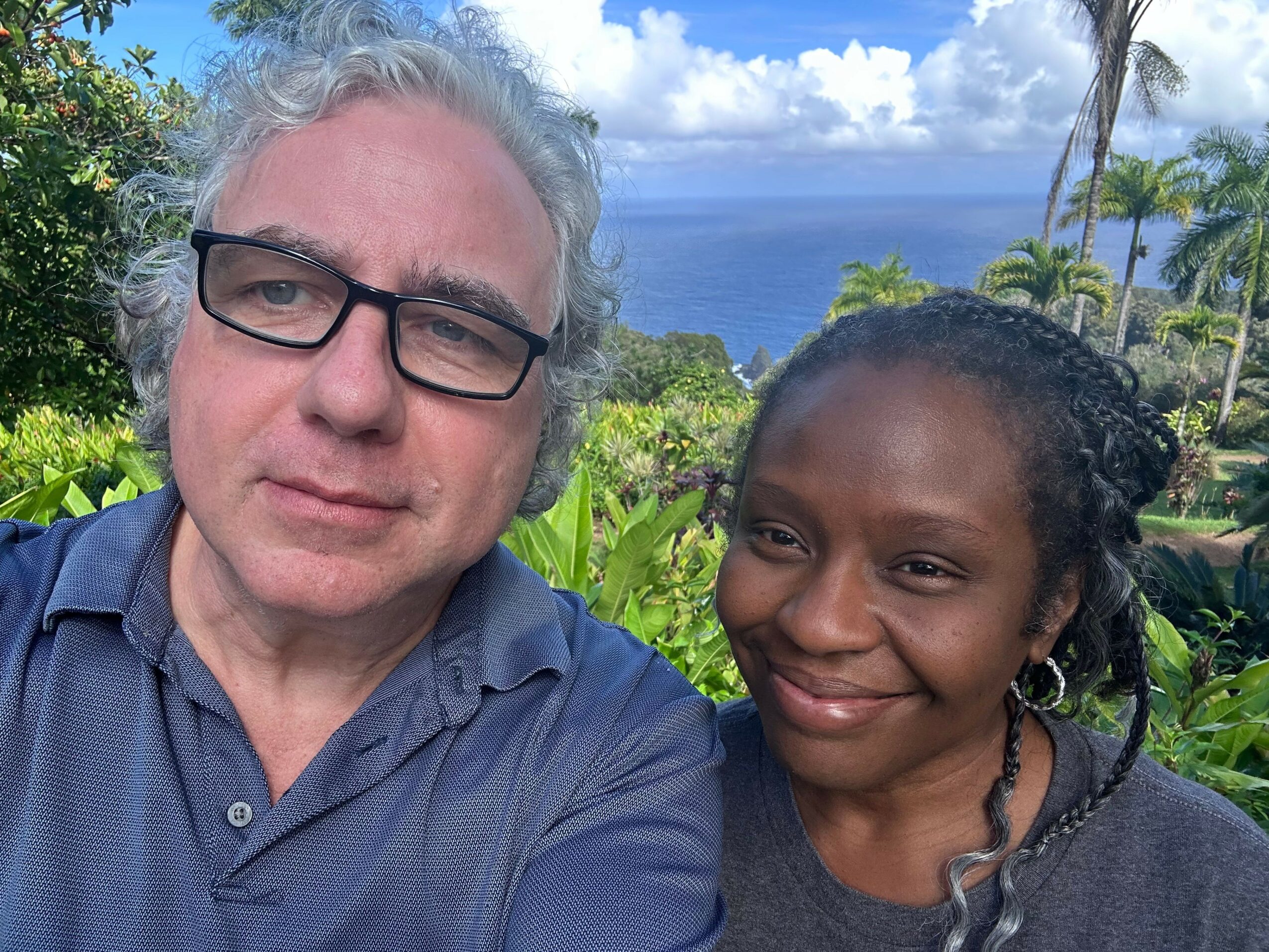
Then there is my husband, Chris—the love of my life—who patiently lets me rattle on about securities regulations, organizational behavior, compliance failures, and whatever industry issue has captured my attention that day. After listening, he will sometimes ask what he should do about a stock in his portfolio, and I have to explain to him, once again, that I am not a stockbroker. His love gives me a place where I do not have to prove my credentials, defend my ambition, or explain why this work matters so much to me. I can simply be Shawn.
Our corgi provides another kind of support. I love that the corgi is known as “the Queen’s dog,” although in our home I suspect he believes he is the queen. He does not care about titles, regulations, investigations, presentations, or professional recognition. Sometimes, after a difficult day, the reassurance I need arrives when he climbs close and licks my face.
I am profoundly grateful for an industry I never knew I wanted to enter. Financial services challenged me, educated me, tested me, and gave me opportunities to serve. It introduced me to people who believed in me, sometimes during seasons when I found it difficult to believe fully in myself. It also showed me where our systems can become more humane and where experienced professionals have a responsibility to teach, speak honestly, and make room for others.
After more than three decades of learning how institutions operate, I now have the freedom to decide how I want to contribute to them. I am building a consulting practice, writing, researching, teaching, speaking, and creating conversations around ethics, behavioral compliance, human judgment, and the future of work. For the first time, the many parts of my experience no longer feel separate. Mathematics taught me to think systematically. Compliance taught me to evaluate risk. Investigations taught me to search for context. Organizational research taught me to examine power and behavior. My family taught me integrity. Life taught me empathy.
When I look back—from beginning as a margin clerk in 1991, to becoming a Chief Compliance Officer, earning my doctorate, presenting my research at Cambridge, and founding a business grounded in integrity—I do not see a disconnected collection of jobs, accomplishments, disappointments, and transitions. I see preparation.
Every experience was preparing me for the freedom I have now: the freedom to use what I have learned in service of other people, to build something aligned with my values, and to speak honestly about the human experience inside highly regulated organizations.
I am looking toward the future with gratitude, curiosity, and hope. I want to continue listening to people’s stories, building meaningful relationships, and reminding professionals that their humanity is not an obstacle to sound judgment. Very often, it is the source of it.
The road that brought me here was long and not always easy, but it has been deeply fulfilling. I believe the next chapter will do more than reward the work I have already completed. It will finally allow that work—and me—to become what we were always meant to be.
Can you talk to us a bit about the challenges and lessons you’ve learned along the way. Looking back would you say it’s been easy or smooth in retrospect?
No, my journey has not been a smooth road. Some of the difficulties were the visible ones: building a career as an African American woman in a male-dominated industry, working to have my expertise recognized, and discovering that even a doctorate, decades of experience, and a record of strong performance would not always protect me from being underestimated or misunderstood.
Other struggles were more personal and took me much longer to recognize. I have always believed that people can become more than the expectations they hold for themselves. That belief has been one of my greatest strengths, but it has also created some of my deepest disappointments. I sometimes remained committed to people, professional relationships, and organizational environments because I could see what they might become. I believed that if I offered enough encouragement, loyalty, patience, or wisdom, they might recognize their own capacity for growth.
Eventually, I had to accept that believing in someone’s potential is not the same as witnessing their willingness to transform. We can encourage people, support them, and remind them of what is possible, but we cannot do the work of change for them. Misery often seeks company, and it can be heartbreaking to step away from people who are drowning in patterns of fear, resentment, or self-destruction. However, remaining in the water with them does not save them; sometimes it only causes us to lose ourselves.
One of my hardest lessons was learning the difference between helping someone who genuinely wants transformation and exhausting myself trying to rescue someone who remains committed to resisting it. Letting go did not mean that I stopped caring. It meant that I learned to direct my time, knowledge, and compassion toward people who were prepared to participate in their own growth.
Professionally, I also struggled inside environments that relied upon dated ideas about leadership—systems built around hierarchy, control, conformity, and silence. I saw situations in which people could take the appropriate steps, exercise sound judgment, and still be treated as though the disruption they caused by speaking honestly was worse than the problem they had identified. As someone whose doctoral work focused on management and organizational behavior, it was difficult to watch outdated leadership practices create more dysfunction while newer generations were asking for authenticity, transparency, innovation, and meaningful change.
There were moments when I had to decide whether belonging to an organization was worth becoming less of myself. I had to learn that perseverance does not always mean remaining in the same place. Sometimes perseverance means having the courage to leave a place that no longer allows you to grow, protect your integrity, and begin again without knowing exactly what comes next.
The road was not smooth, but I do not view the difficult portions as wasted years. They taught me discernment. They helped me understand the difference between loyalty and self-abandonment, between supporting people and carrying them, and between waiting patiently for change and postponing my own life.
Today, I still believe deeply in human potential. The difference is that I no longer believe I must sacrifice myself to prove that someone else can change. I want to invest in people who are ready to ask difficult questions, confront unproductive patterns, and participate honestly in their own transformation. That lesson has given me the freedom to build relationships and create work grounded not merely in what people could become, but in what they are genuinely prepared to become.
As you know, we’re big fans of Bostic Principled Solutions, LLC. For our readers who might not be as familiar what can you tell them about the brand?
What I would most like potential clients and readers to know about Bostic Principled Solutions is that my work is grounded in both technical expertise and the human side of compliance.
I have spent more than three decades in financial services, including serving as a Chief Compliance Officer and working extensively with broker-dealers and investment advisers on regulatory examinations, supervisory reviews, investigations, risk assessments, policies and procedures, training, and regulatory responses. Today, I help firms prepare for regulatory scrutiny, strengthen their compliance programs, evaluate risk, conduct mock and supervisory examinations, and think through difficult compliance questions before they become larger problems.
But I also believe compliance consulting should be approachable.
Clients should be able to call their consultant and say, “Something about this does not feel right,” even before they know exactly how to articulate the regulatory issue. Some of the most important compliance conversations begin there. My role is not simply to identify what is wrong. I want to help people understand the risk, determine what the rules and their own policies require, evaluate reasonable alternatives, and develop a practical path forward.
That philosophy also shapes the professional-development side of my work. Compliance professionals are frequently expected to exercise judgment in situations where the answer is not obvious. They may understand the regulation but still need help navigating organizational pressure, difficult personalities, career decisions, ethical concerns, or the confidence required to challenge a business decision appropriately. I want my work to help develop professionals who can do more than identify a rule. I want them to understand how to think, communicate, exercise judgment, and grow into trusted advisers within their organizations.
I am particularly proud that my brand has become associated with being knowledgeable without being intimidating. Compliance can be a serious profession without requiring us to become inaccessible or overly rigid. I want clients and compliance professionals to know that they can bring me complicated questions, uncomfortable questions, and sometimes even questions they are afraid might sound basic. My goal is to create an environment where we can examine the issue thoughtfully and get to the right answer together.
Another important part of my work is helping organizations preserve human judgment as technology and artificial intelligence become more deeply integrated into financial services. AI can make compliance functions faster and more efficient, but someone still has to determine whether the information is accurate, whether the context is appropriate, and whether the ultimate decision makes sense. That intersection between technology, human judgment, ethical leadership, and regulatory responsibility is becoming an increasingly important part of my practice.
Ultimately, Bostic Principled Solutions is built around a simple idea: good compliance is not just about preventing something from happening. It is about helping organizations and professionals make better decisions.
I want clients to leave an engagement with more than a report identifying deficiencies. I want them to understand their risks better, strengthen their processes, develop their people, and feel more confident about what comes next. And I want individual compliance professionals who encounter my work to feel that there is a place in this profession for thoughtful judgment, curiosity, empathy, and humanity.
That is the brand I am building—credible enough for the boardroom, practical enough for the compliance desk, and approachable enough that someone feels comfortable picking up the phone before a small concern becomes a significant problem.
Before we go, is there anything else you can share with us?
Success, to me, is not simply measured by revenue or the number of clients I serve. It is reflected in the trust people place in me, the confidence they gain after working with me, and the stronger decisions they are able to make as a result. If a firm is better prepared for regulatory scrutiny, if a compliance professional feels more confident using their judgment, or if someone leaves a difficult situation with greater clarity about what to do next, I consider that success. My goal is to build a business that creates lasting value while helping people and organizations operate with greater confidence, integrity, and purpose.
Contact Info:
- Website: https://www.bosticprincipledsolutions.com
- LinkedIn: https://www.linkedin.com/in/dr-shawn-bostic/
- Twitter: https://x.com/DrShawnBostic