


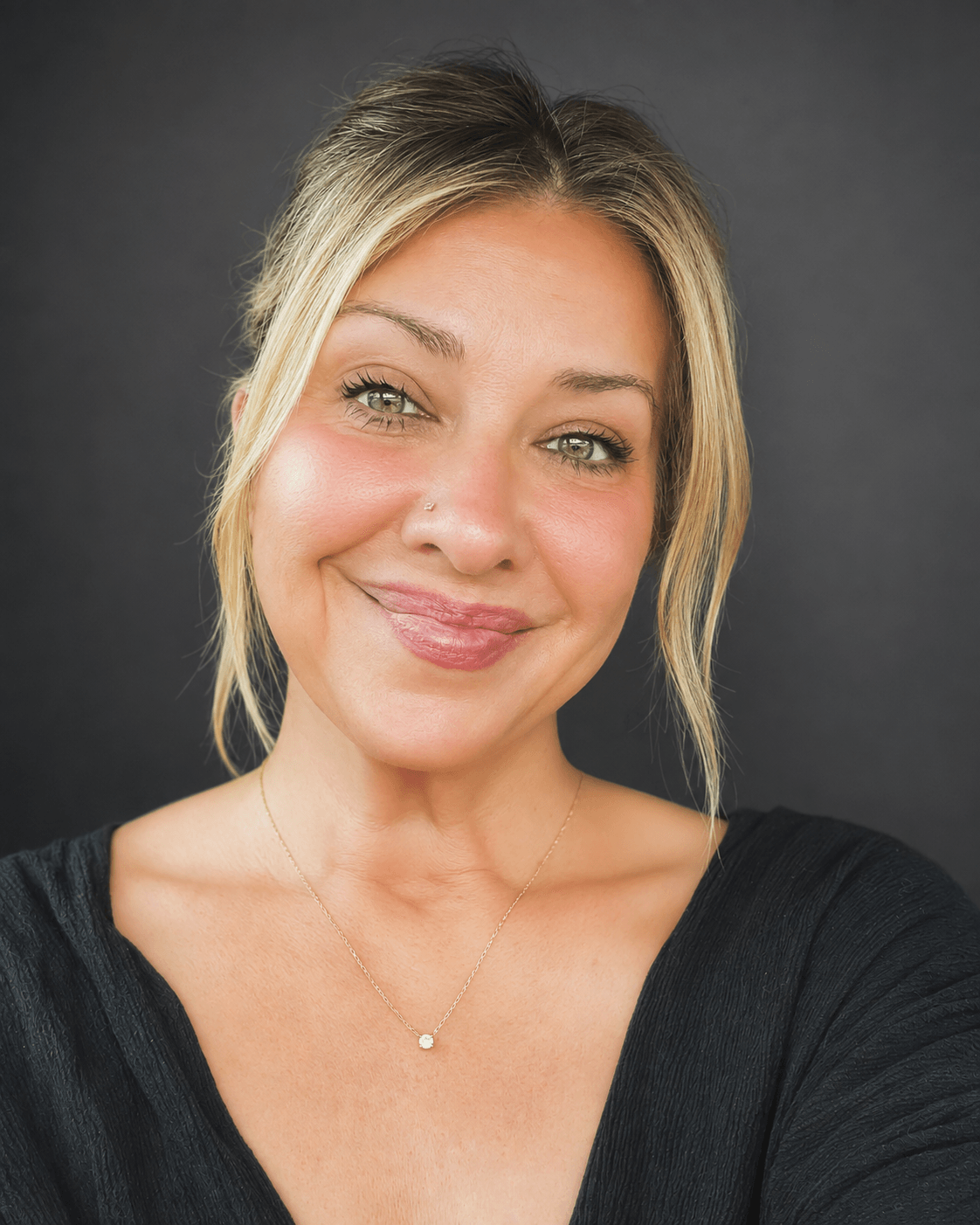
Today we’d like to introduce you to Paige Charlebois.
Hi Paige, thanks for joining us today. We’d love for you to start by introducing yourself.
Before founding The GoodDog, I spent about 15 years building and leading sales organizations. I helped grow one company from essentially zero to approximately $20 million in revenue and a team of nearly 120 people, and I worked with venture-backed companies through rapid growth, fundraising, and acquisition. I knew how to bring something to market. What I did not know was whether I had the courage to build something of my own, especially during what was arguably the most difficult period of my life.
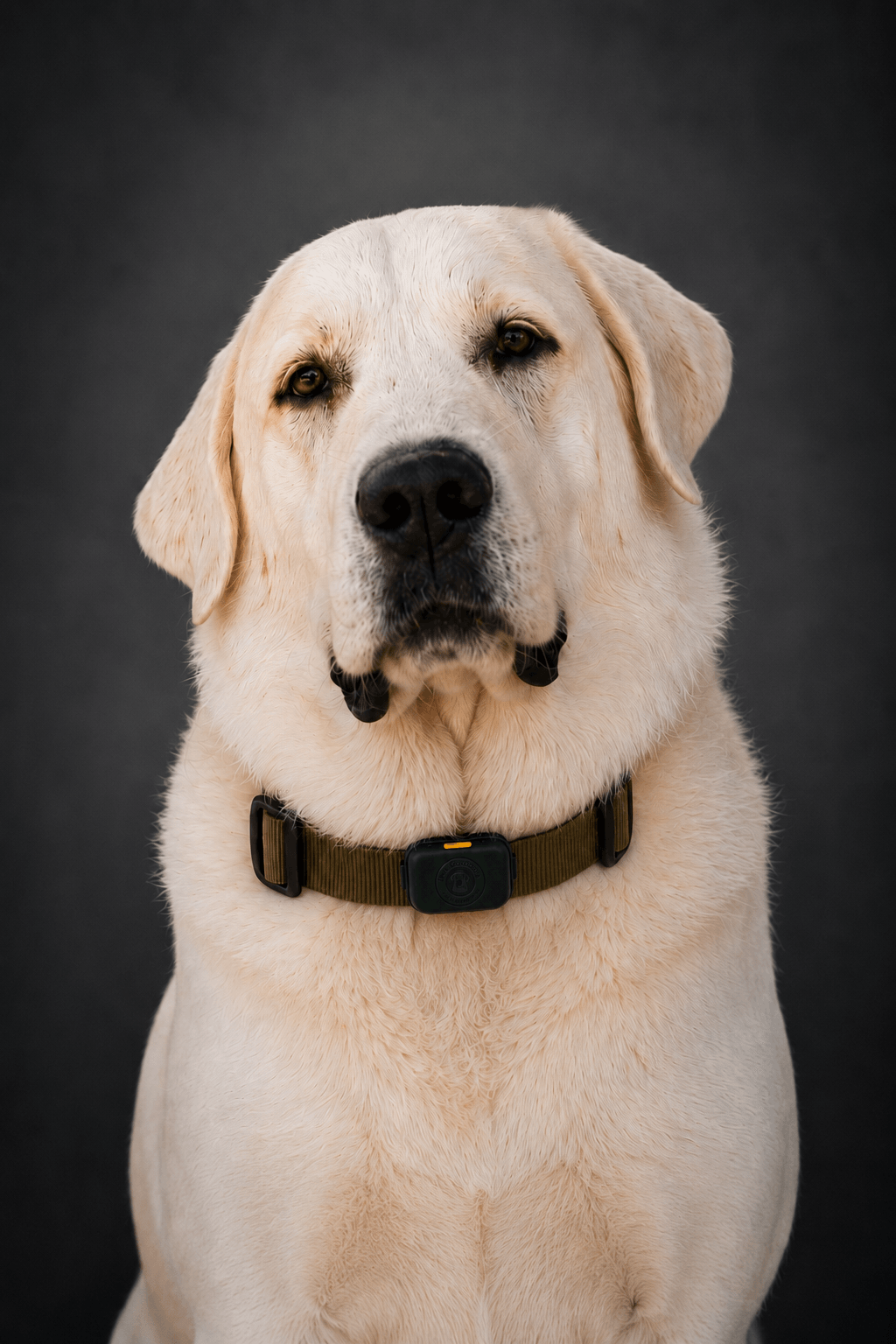
The idea for The GoodDog came after I fell from a ladder while working alone in my home. I hit my head and back, and for several frightening moments, I did not know whether I could move. My phone was charging in another room. The one who came was Sasha, my dog, who stayed beside me.
Lying there, afraid, I actually looked at my dog, Sasha and said, “I am too young, too vain, to wear a Life Alert.,but why aren’t you?” That moment gave me the product insight: a simple personal-safety device worn by the dog, activated by the person, that can reach trusted contacts when the person cannot reach a phone.
I immediately took the idea to people I trusted, including friends, mentors, advisors, and people with deep startup experience. One of my longtime mentors responded, “I’ll be your first investor.” Another’s response was, “I need this now. How long will it take you?” She, was on a transplant list with a Diabetic Alert Dog, and a history that would terrify the average bear.
The people around me could see the opportunity, but I still spent weeks trying to convince myself that I was capable of building it. My memory continued to a flashback. Me, with my dad, watching Gunsmoke when suddenly a commercial with a vulnerable older woman on the floor feebly calling out “Help! I’ve fallen and I can’t get up!”
I understood the commercial path. I’d brought disruptive products to market. But, what I lacked was the courage to accept what pursuing it might require of me.
Then I had a dream that changed everything.
I woke up understanding something I have never been able to forget: sometimes even the bravest among us need someone else to make the call. And still, that didn’t erase the fear, in fact I spent the next two weeks crying.
I am a woman of faith, and I do not know how to tell my founder story honestly without saying that I felt called to build The GoodDog. I also understood that saying yes could cost me nearly everything. I was already navigating profound personal upheaval, grief, financial uncertainty, and the work of rebuilding my own life. This has not been a story of overcoming hardship and then, from the safety of the other side, starting a company. I have built this company while still walking through it.
Today, I joke I “fell” into my life’s work. The GoodDog is becoming a behavior-first personal-safety platform designed around the trusted relationship people already have with their dogs. We are beginning with veterans and the organizations that already serve them, with a broader vision of supporting people with disabilities, older adults living independently, survivors of violence, and others who may need help but cannot or will not use a traditional medical-alert device.
I also decided to focus on our Veteran community because we currently lose between 17-22 to suicide Every.Single.Day. My work now puts me in touch with those I humbly believe are doing the hard work, and we are going to market in a way that supports these initiatives.
The ladder fall showed me the product. The dream showed me the mission. Everything since has required me to decide, again and again, whether I believe the lives this could reach are worth the personal risk of building it.
I do.
Can you talk to us a bit about the challenges and lessons you’ve learned along the way. Looking back would you say it’s been easy or smooth in retrospect?
Let me take a moment, or an hour, or possibly a week, to laugh at the question of whether there were obstacles and challenges, or whether it has been a smooth road. How much time do we have?
No, it has not been smooth. I have been building a hardware and technology company as a first-time founder in a space where failure has human consequences. That means navigating product development, manufacturing, software, privacy, fundraising, partnerships, and the responsibility of earning trust from communities that have very good reasons to be skeptical.
Hardware alone is humbling. Everything takes longer and costs more than you think it will. A prototype can prove the idea without being ready to manufacture. A technically possible feature may not yet be commercially practical. Every answer seems to produce three better questions. I have had to learn when to push forward, when to pause, and when changing the path is not failure but responsible leadership.
Raising capital has brought its own lessons. I came from a successful career and knew how to build revenue, teams, and go-to-market strategies, but fundraising requires a different kind of endurance. There have been people who immediately understood the scale of the opportunity, and others who could not see beyond the absence of revenue in a company still developing its product. I have learned that being early does not mean being wrong, but it does mean carrying the vision long before everyone else can see it.
The hardest part has been building a company intended to become a lifeline for others while parts of my own life were coming apart. I have navigated grief, family crises, profound financial uncertainty, and a years-long lawsuit that I ultimately prevailed in, but not before it carried enormous personal and financial consequences. I have done all of this while trying to lead a company whose entire purpose is helping people through moments when they feel alone.
There have been days when I have moved from a painful personal conversation directly into a partner or investor meeting and had to speak clearly about hope, scale, and the future. There have been moments when continuing meant risking my own security. I have questioned my judgment, my timing, and whether I was strong enough to carry the responsibility I had accepted.
But each day, I remember the purpose. If there is a blessing in this part of my story, it is knowing that help is on the way and that I have been entrusted with helping to bring it. Becoming a provider of that hope has also become part of my own healing.
The struggle has shaped the company. It has made me unwilling to build from assumption or ego. It has taught me to listen carefully to the people we hope to serve and to the organizations that have already earned their trust. It is why our go-to-market strategy is built around partnership rather than simply placing a product on a store shelf. It is why dignity, privacy, and human behavior are not marketing language for us. They are product requirements.
I wish I could say the road became smooth once I knew I was called to it. It did not. Faith has not removed the obstacles. It has given me a reason to keep walking through them.
I am still building. I am still healing. Some days I am doing both beautifully, and some days I am doing both five minutes at a time. But I have learned that courage is not feeling certain or unafraid. Sometimes courage is simply refusing to abandon something important because the road became harder than you imagined.
As you know, we’re big fans of The GoodDog. For our readers who might not be as familiar what can you tell them about the brand?
The GoodDog is a behavior-first personal-safety company built around a simple truth: the best safety device is the one that is actually there when you need it.
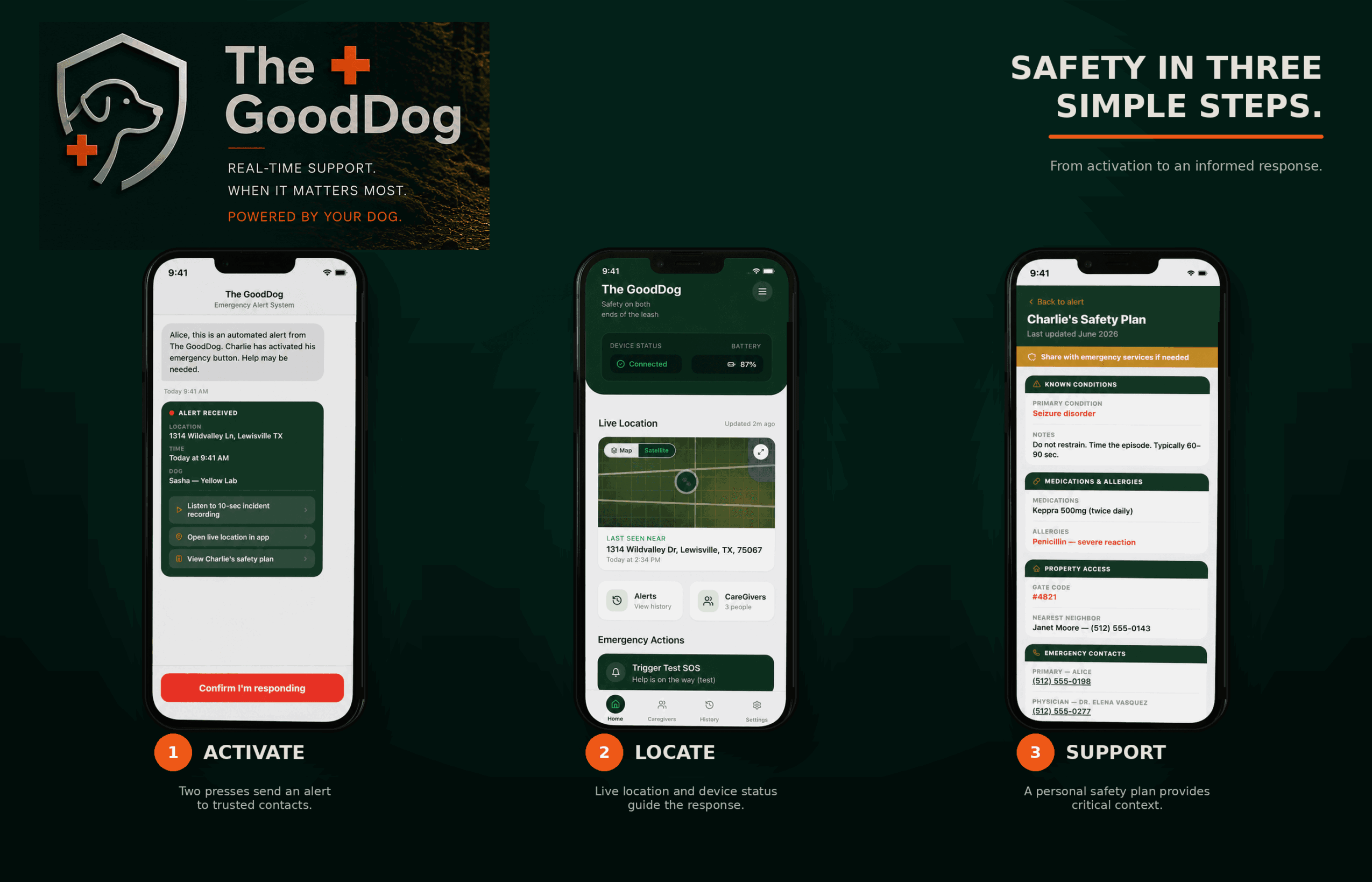
We are developing a personal-safety device worn by a person’s dog and activated by the person. With two intentional presses, it can alert trusted contacts, share location information, and provide critical context when someone cannot reach a phone or communicate what is happening. The dog is not expected to detect an emergency, make a decision, or perform a trained task. The technology simply places access to help on the companion already beside the person.
That distinction matters. The GoodDog is not a pet tracker, a medical-alert pendant, or a monitoring service built around a call center. It is a new approach to personal safety designed around real human behavior, existing relationships, dignity, and trust.
We are beginning with veterans, particularly those living with PTSD, traumatic brain injury, disability, isolation, or an elevated risk of crisis. Many traditional safety products require someone to adopt an identity they may reject, remember another wearable, or route a deeply personal moment through a stranger. Veterans have also been studied, marketed to, and promised solutions many times. We do not believe trust can be claimed simply because we built something with good intentions. It has to be earned.
That belief shapes how we are bringing The GoodDog to market. We are building alongside organizations that already serve veterans and understand their communities. Our partners are not being treated as promotional channels. They help us listen, learn, test our assumptions, reach people responsibly, and build something worthy of the trust they have spent years earning. They also participate financially when their communities support the product.
Our launch will begin with veterans, but the need is much broader. The GoodDog has the potential to support older adults who want to remain independent, people with disabilities, survivors of violence, people at elevated personal-safety risk, and anyone whose dog may be closer than their phone during a critical moment.
What sets us apart is that we are not beginning with technology and then searching for a problem it can solve. We are beginning with the moments in which people are most vulnerable and asking what would make help genuinely reachable. That means privacy, dignity, ownership, and human behavior are not features we plan to add later. They are foundational product requirements.
One of the things I am proudest of is that The GoodDog does not speak about vulnerable communities as if vulnerability is an identity. A person can be strong, capable, independent, and still experience a moment when they need someone else to make the call. Needing help does not diminish bravery. Sometimes asking for it is the bravest thing a person can do, and sometimes even that is not possible.
Our brand is rooted in the belief that trust is our distribution strategy. We want to shine a light on the organizations and people already doing good work, create value for the communities we enter, and build with them rather than around them. The GoodDog should never feel clinical, fear-based, or like a symbol of frailty. It should feel like what our dogs already represent to so many of us: loyalty, connection, protection, and the certainty that we are not alone.
We are still early. We are developing the product, deepening our partner network, preparing for pilot testing, and building toward manufacturing and a coordinated launch. But I am incredibly proud that this is already becoming larger than a device. It is becoming a coalition of people and organizations who believe safety can be more human, help can be more reachable, and technology can strengthen trusted relationships rather than replace them.
Ultimately, we are not asking a dog to save a person. We are creating a way for the bond they already share to help bring someone home.
Do you have any advice for those looking to network or find a mentor?
One of my earliest mentors was my great-aunt Kitty. She was a suffragette and the first woman to vote in her city. She shared with me the trials she endured, the change she hoped to create, and the dreams she carried for women who would come after her.
Her path was not metaphorically difficult. She was pelted with rotten food and human waste for insisting that women deserved a voice. As messy as my own experience has been, I can at least say no one has thrown human waste at me yet. Perspective is a wonderful thing.
I have a formal education in leadership and leadership development, but some of the most important lessons of my life have come from people who were willing to share what experience taught them. Seeking experts, listening to those who have walked the path before me, and allowing their wisdom to challenge my assumptions are essential to how I lead.
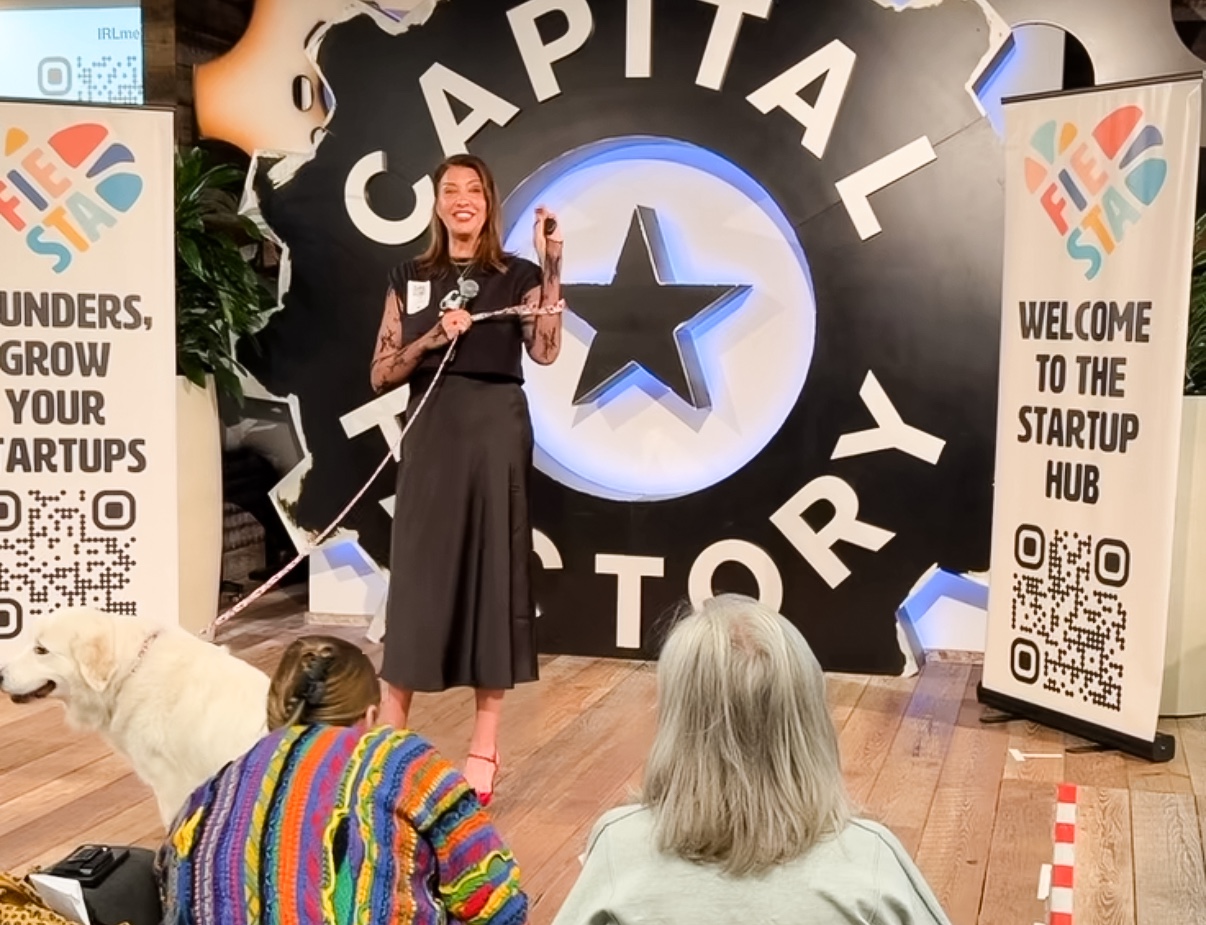
I could not imagine bringing The GoodDog to market without mentors and strategic advisors. Here in Austin, our team is surrounded and supported by people who have built unicorn companies, scaled organizations, raised capital, developed technology, served veterans, and navigated challenges I am encountering for the first time. They have been extraordinarily generous about opening their doors. At least once a week, I find myself looking around a room and thinking, “How the heck did I get invited in here?”
My advice for finding a mentor is to stop beginning with the question, “What can this person do for me?” Begin with genuine curiosity. Learn about the person, understand what they have built, and ask thoughtful, specific questions. Do not ask someone to download an entire career’s worth of wisdom over coffee and call it mentorship. Ask for perspective on something they are uniquely qualified to understand.
Then listen. Take notes. Apply what is useful. Follow up and tell them what happened. Nothing communicates respect more clearly than showing someone that you valued the time and thought they gave you.
I also believe the best mentoring relationships are reciprocal, even when the experience levels are very different. Reciprocity does not mean you have equal access, influence, or expertise. It means you look for ways to contribute. You make an introduction, support their work, share something useful, or simply become someone who follows through. Do not enter relationships transactionally, but do enter them prepared to give.
Networking has worked best for me when I have treated it as relationship building rather than contact collecting. I am willing to reach out to people I do not know, but I approach them honestly. I tell them why their work matters to me, what I am trying to build, and why I believe there may be alignment. Not everyone responds, and not every conversation becomes something. That is okay. The goal is not to extract value from every interaction. The goal is to find the people with whom trust, purpose, and possibility overlap.
Mentorship also requires humility. If every advisor agrees with you, you probably have an audience, not advisors. I want people around me who believe in the mission but are willing to question the method. Their role is not to make every decision for me. Their role is to help me see more clearly so I can make better ones.
If I could, I would write an entire piece about every mentor and strategic advisor supporting this company. The GoodDog may have begun with one woman, one fall, and one dog, but it is reaching the market because remarkable people have been willing to say, “I know something that may help. Let me share it with you.”
I believe wisdom carries an obligation. When someone lowers a ladder for you, you should turn around and lower it for someone else.
Pricing:
- $150
- $12-15 monthly subscription
Contact Info:
- Website: https://The-GoodDog.co
- Instagram: https://www.instagram.com/thegooddogalert/
- Facebook: https://www.facebook.com/hey.the.gooddog/
- LinkedIn: https://www.linkedin.com/in/paige-drews/