


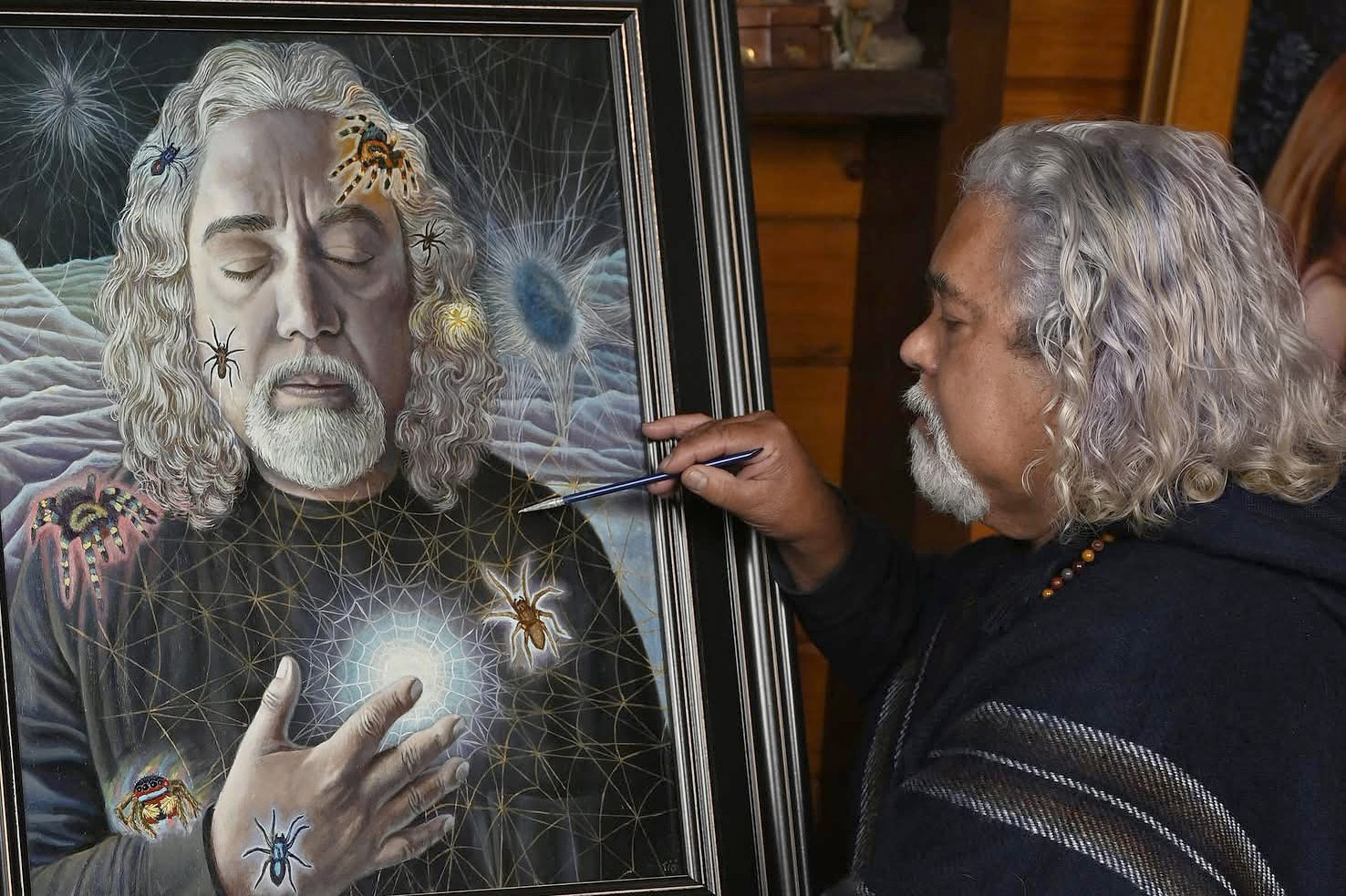
Today we’d like to introduce you to Miguel Tio.
Hi Miguel, we’re thrilled to have a chance to learn your story today. So, before we get into specifics, maybe you can briefly walk us through how you got to where you are today?
I began my painting studies with artist Elías Delgado while attending the School of Fine Arts in Santo Domingo, Dominican Republic where I was born. I later studied Publicity and Graphic Design at the Universidad Autónoma de Santo Domingo.
I worked as an in-house draftsman and sketch artist for Teleantillas TV and as an illustrator for the Dominican Department of Education. In 1994, I moved to New York City, where I worked as a painter and silk screener at Izquierdo Studio on feature films including Spider-Man 1 & 2 and The Woods, Broadway productions such as Beauty and the Beast, Rent, and Miss Saigon, operas, commercials, and major window-display projects. I also worked as a head painter and craft specialist for Warner Bros. and other New York design companies.
In 2006, I studied the Renaissance-based Mische Technique with Brigid Marlin, founder of the Society for Art of the Imagination. From 2005 to 2021, I taught art through Studio in a School and the New York school system while continuing my own artistic practice.
My work has been exhibited in solo and group exhibitions in the Dominican Republic, the United States, Mexico, England, Denmark, Germany, Italy, Cyprus, India, and Japan. I have participated in international workshops, exhibitions, and art symposiums in Cyprus and India, including invitations from the Municipality of Kyrenia and the TellUsArt organization.
In 2010, I was selected as a recipient of the EL Awards, recognizing outstanding Latino men in the New York tri-state area.
After retiring from teaching, I moved permanently to Pennsylvania, where I now dedicate myself full-time to painting.
Most recently, I presented a retrospective exhibition at the National Gallery of the Palace of Fine Arts in Santo Domingo, Dominican Republic.
I’m sure it wasn’t obstacle-free, but would you say the journey has been fairly smooth so far?
All beginnings are generally rough, especially when you are a young painter. For me, it began with my family, who did not like the idea of me becoming an artist. Then came the long struggle of finding a gallery willing to exhibit my work. I learned to live with many rejections, always hoping that one day I would find the right gallery and finally have the opportunity to exhibit my paintings.
When an artist is unable to sell his work, he often has to find other ways to pay the bills. I was fortunate to always find art-related jobs, and I truly enjoyed all of them because they exposed me to different materials and allowed me to learn new things. And whenever art was involved, there was always some fun in it.
For me, however, the hardest struggle was finding my own voice as a painter. In the Dominican Republic, I soon learned that if I wanted to sell my work, I had to create what I would call “people-pleasing paintings,” such as sunflowers. I actually painted many of them, but they were not what I truly wanted to paint. This was one of the reasons I decided to move to New York. I wanted to create paintings with deeper meanings.
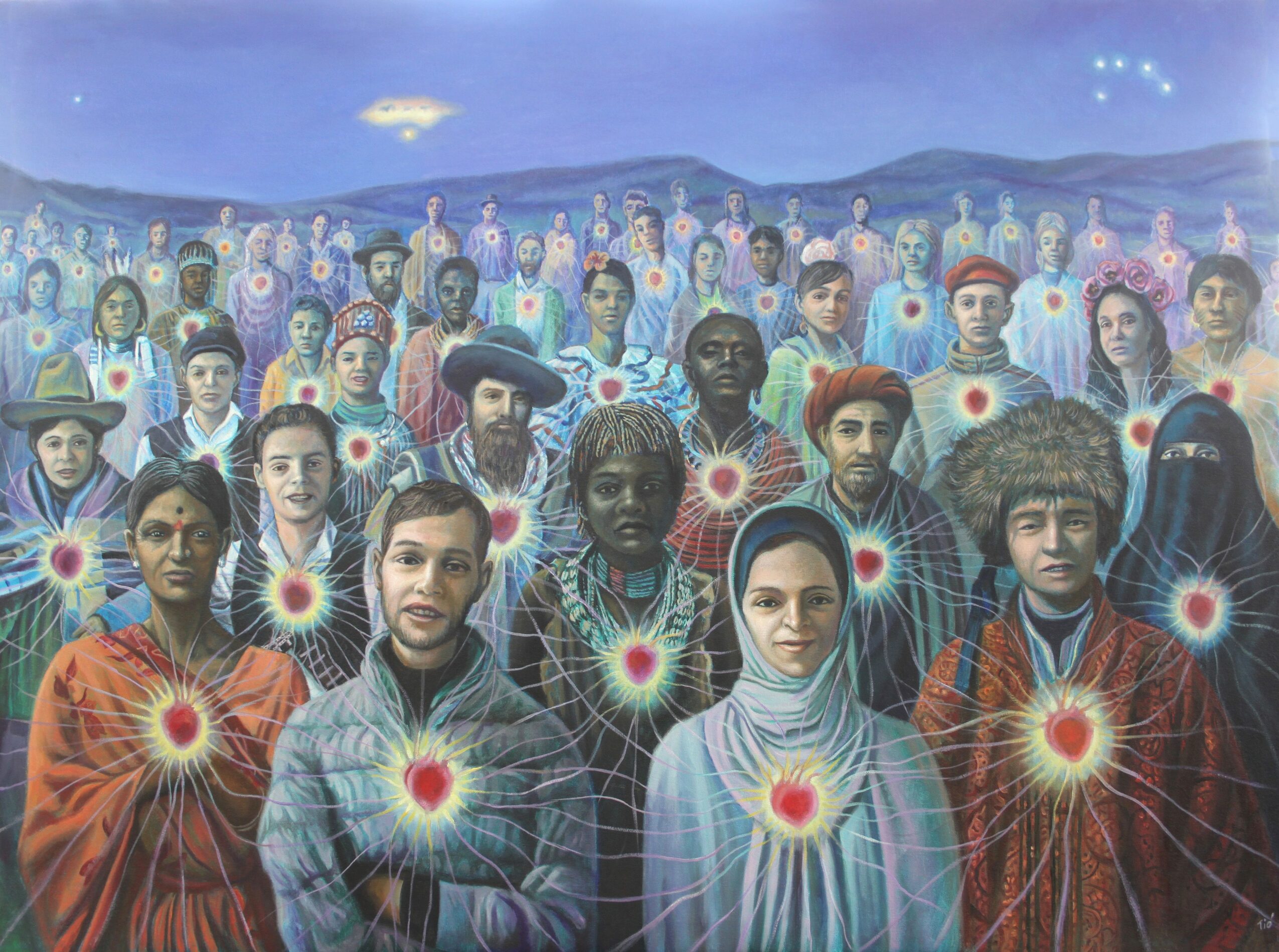
I decided that I would never compromise my art by creating something I did not feel connected to. I wanted to be honest with myself and with my work. This led me to explore, through my paintings, what people could not see to connect with the spiritual world and with realities beyond the physical.
When I got my first computer, I began searching the internet for spiritual art. It was amazing to discover that there were artists around the world creating work that resonated with my own. Thanks to the internet, we were beginning to find and connect with one another, gradually forming what is now known as the Visionary Art Movement. For me, it was like a door opening into an entirely new dimension.
But this discovery brought another struggle. At the time, there were almost no galleries in New York willing to exhibit visionary art and fantastic realism.
Then I joined the Society for Art of Imagination, and things began to change. I learned the Mische technique from Brigid Marlin, the founder of the Society. She told me that to truly understand the possibilities the Mische technique could offer, it would take about four years of constant work. She was right. The quality of my work rose to another level.
Through the Society, I began exhibiting in Europe and meeting some of the most important artists in the visionary and fantastic realism world, such as Professor Ernst Fuchs, De Es, Alex Grey, and many others. My work began to be featured in books and publications. It opened doors I had been searching for and connected me with a much larger artistic community.
Alright, so let’s switch gears a bit and talk business. What should we know about your work?
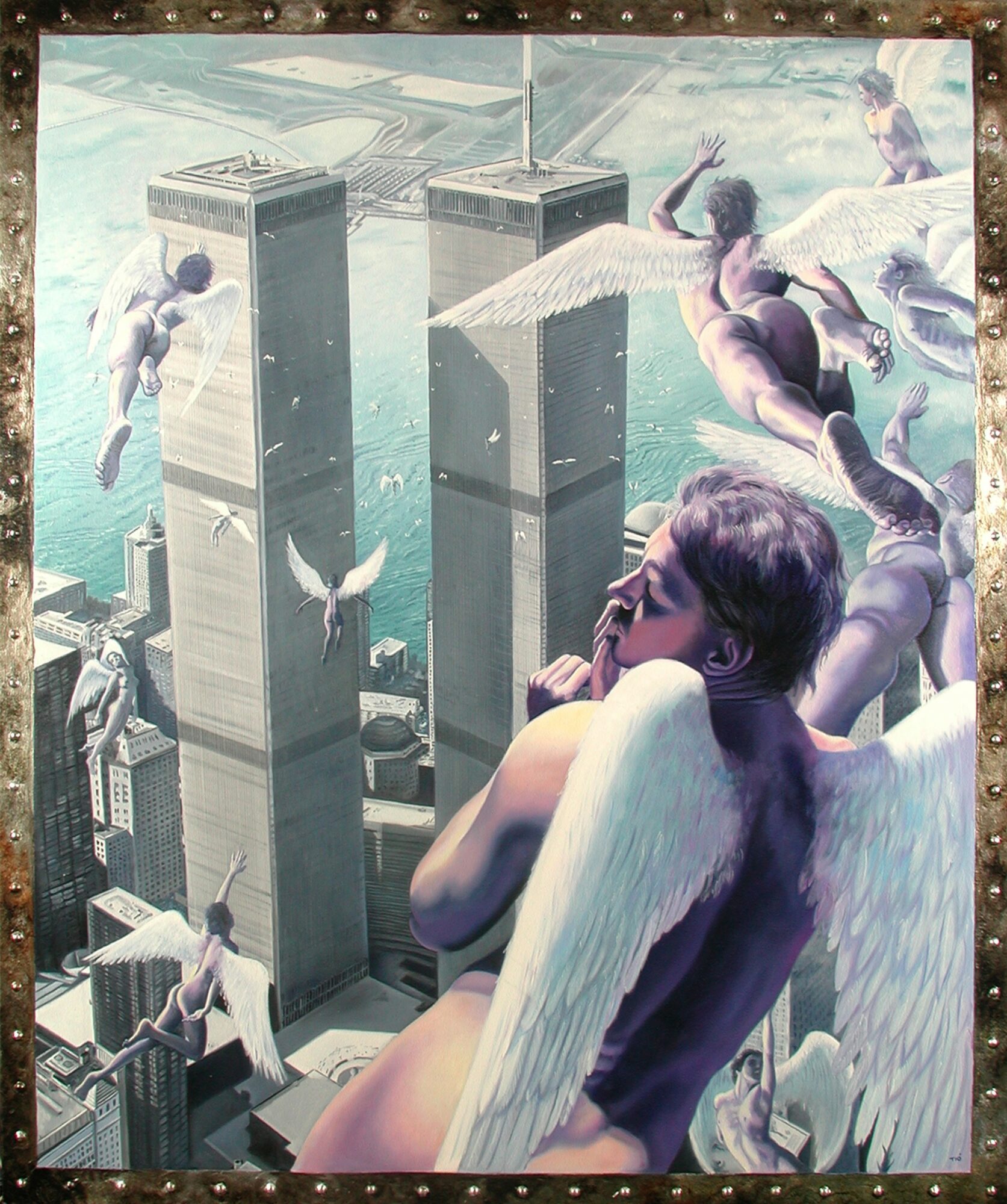
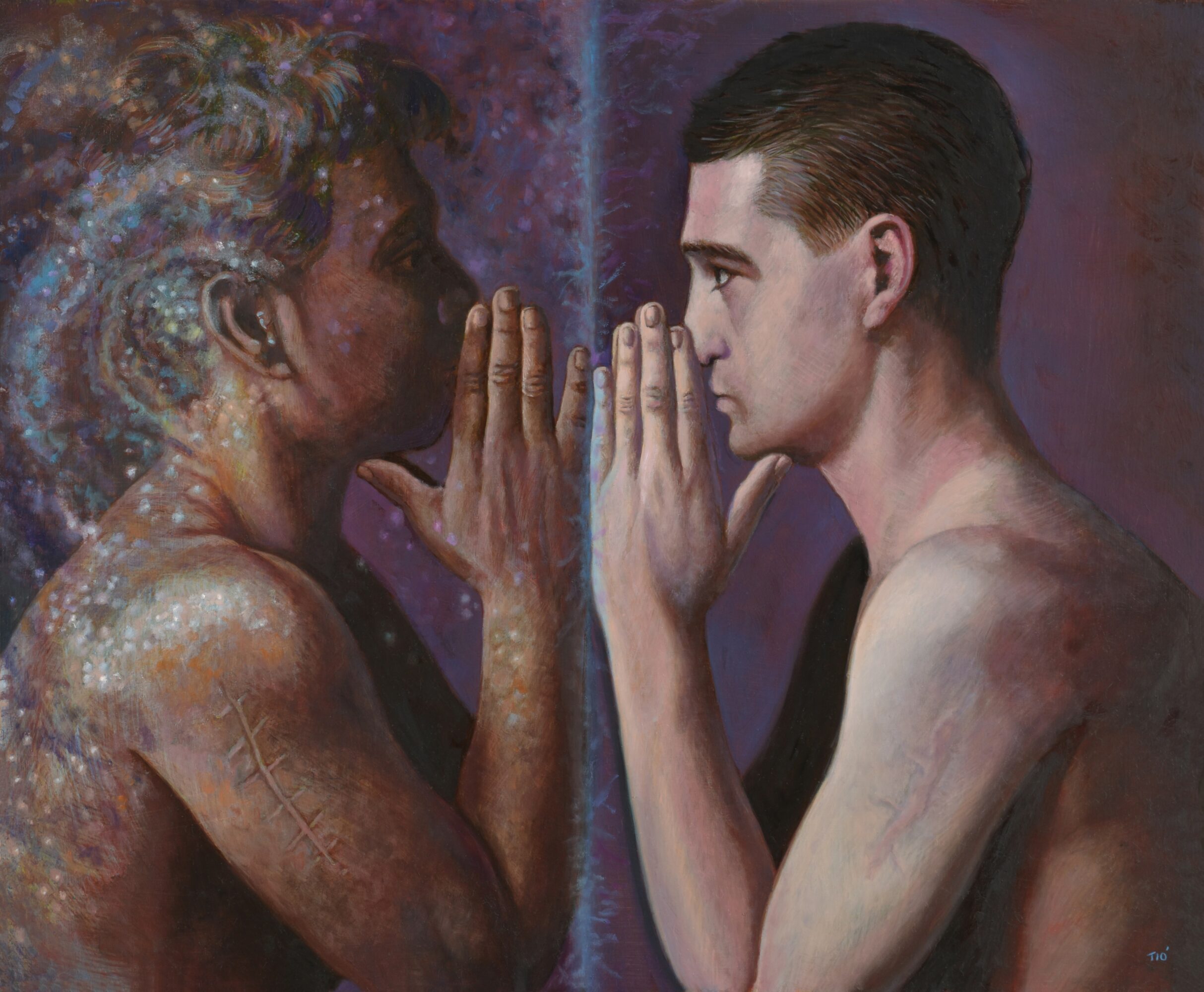
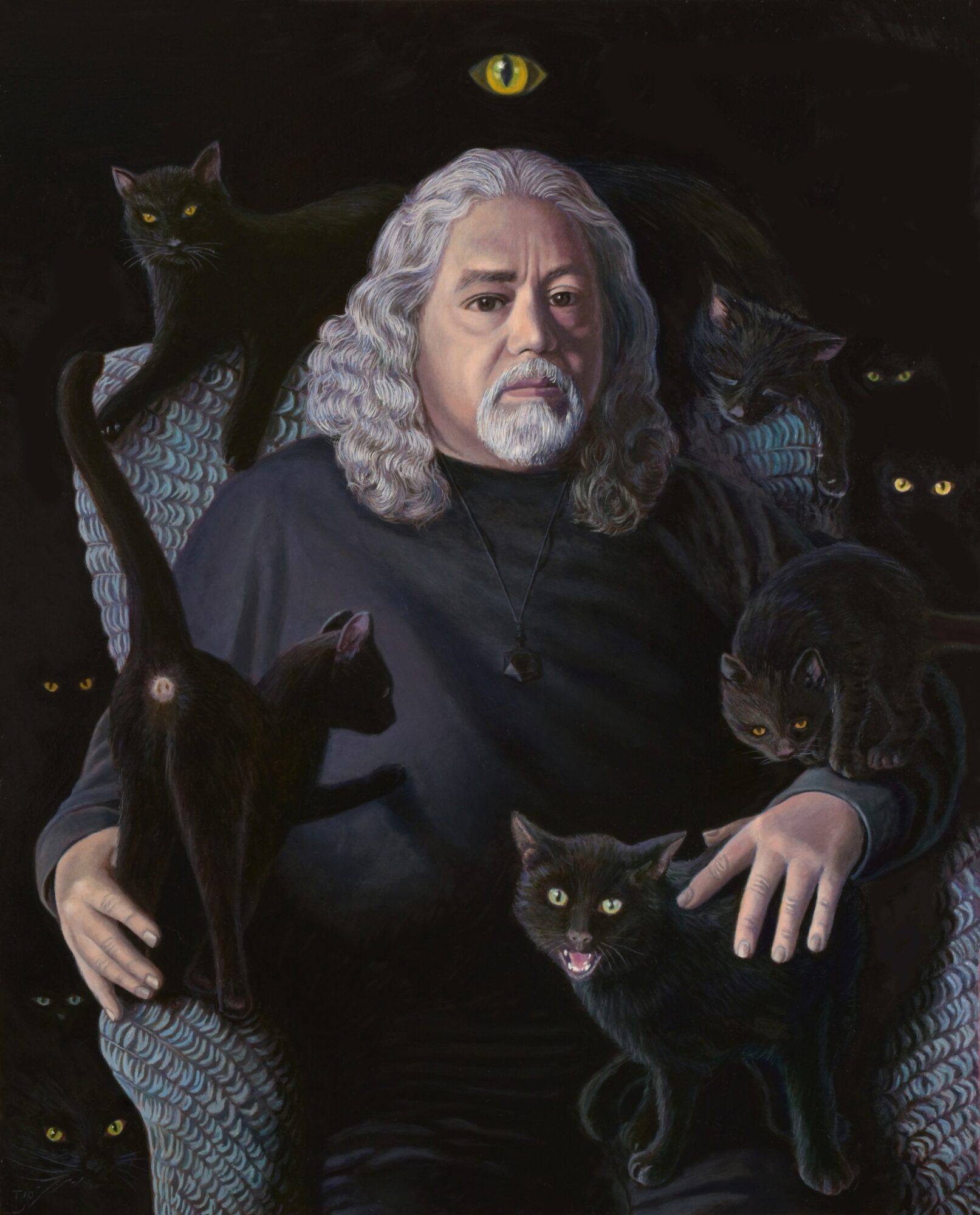
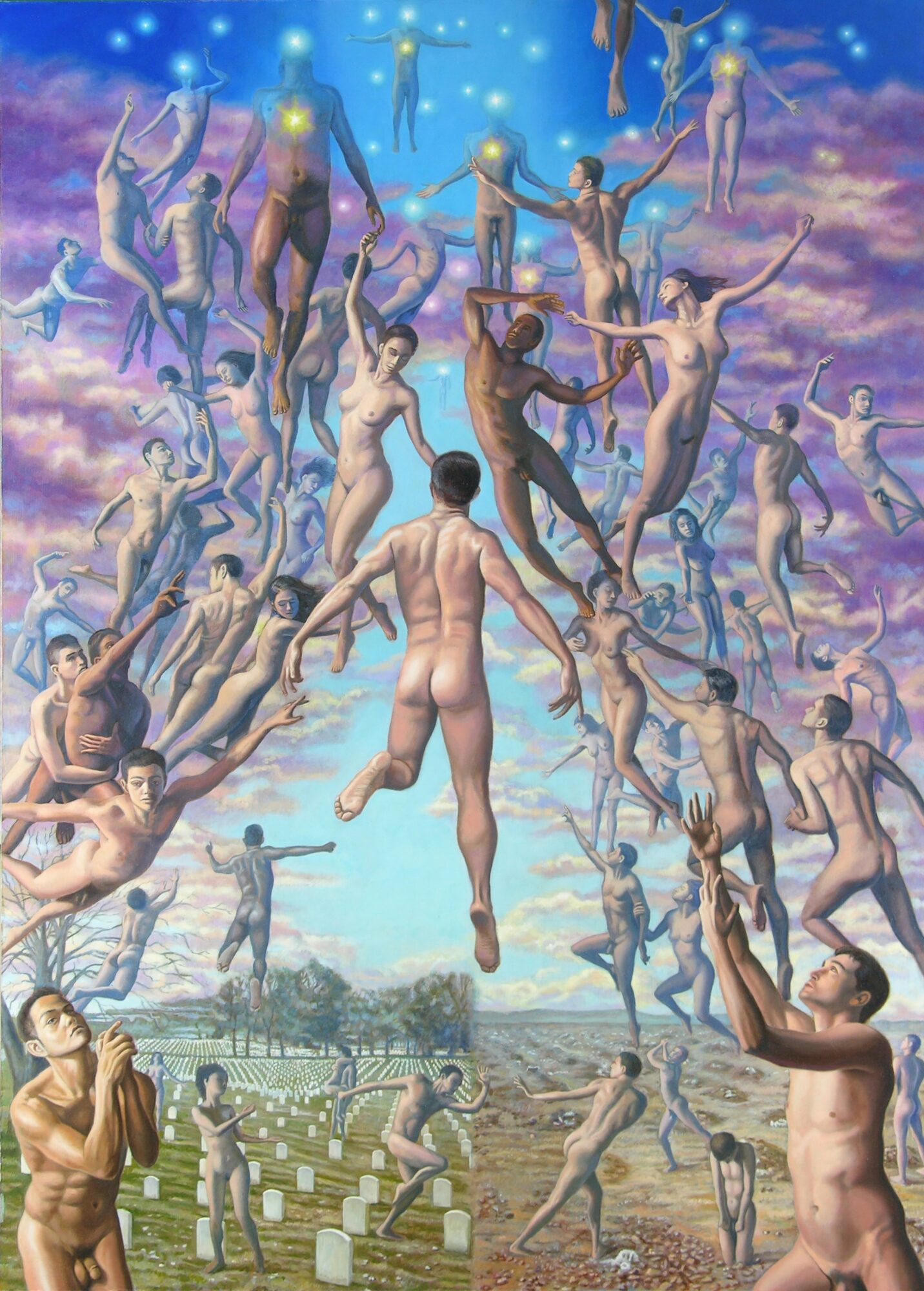
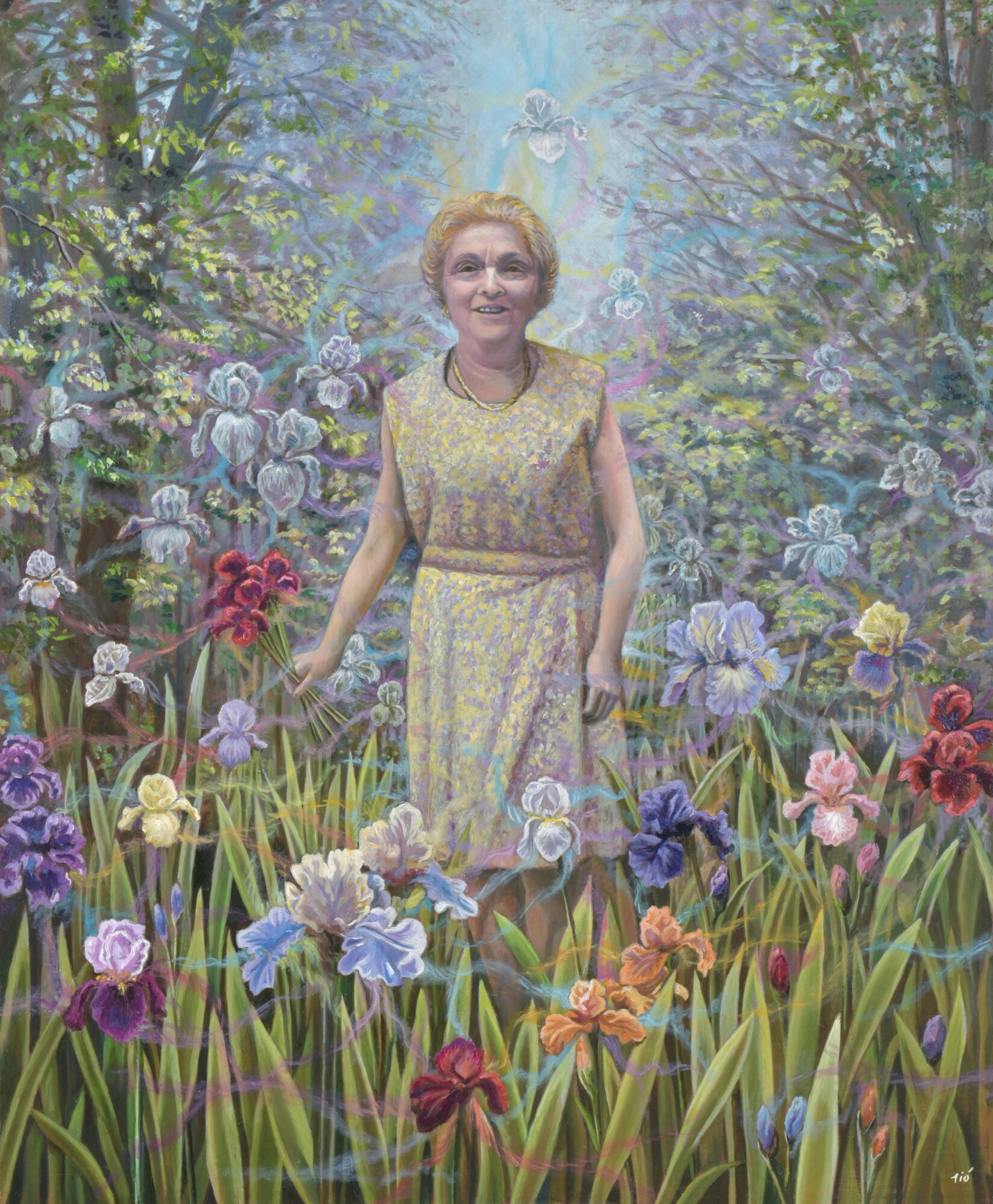
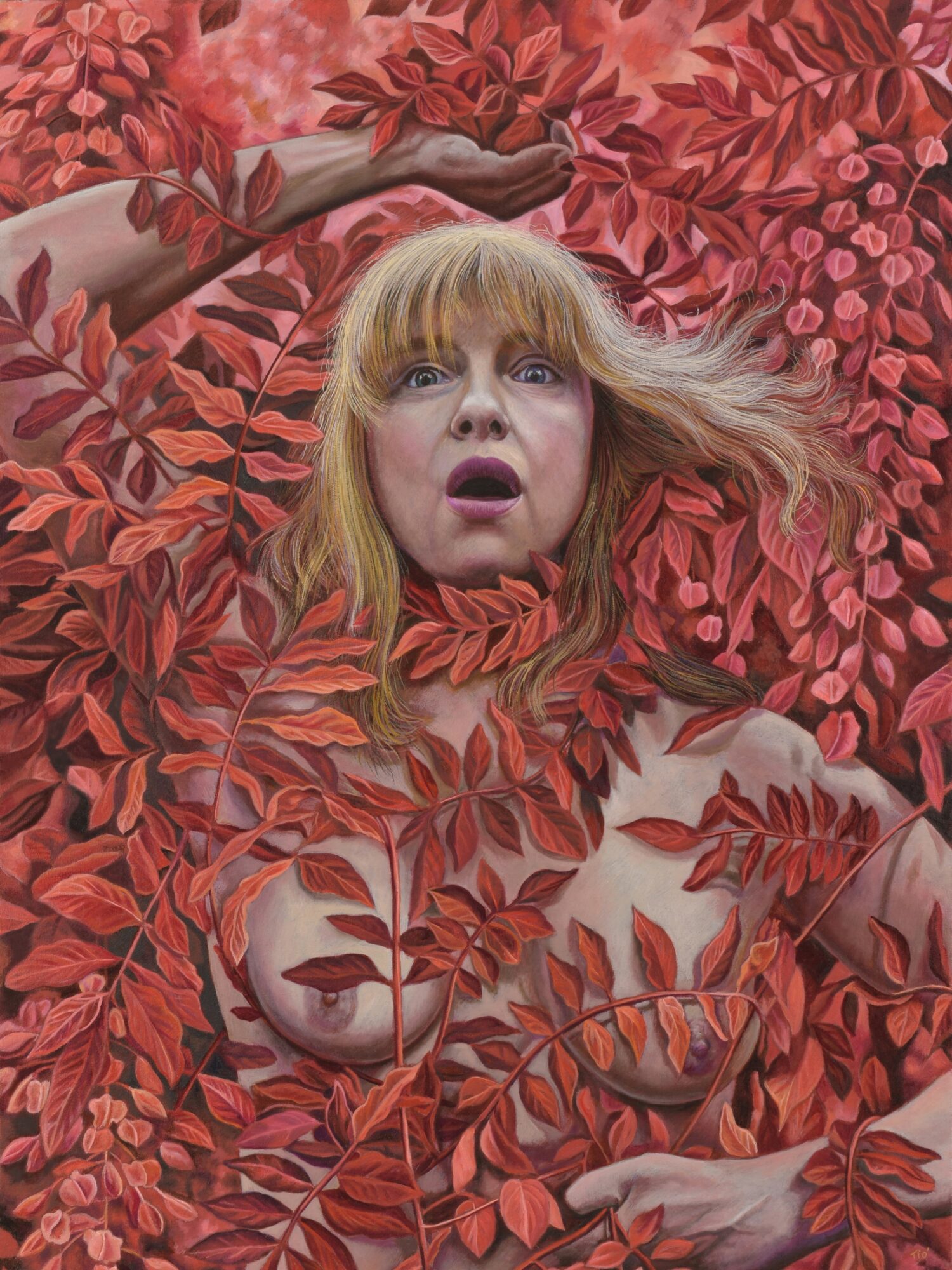
For many years now, I have felt that painting is a way of looking beyond what the eyes can see. As a visionary artist, I try to give form to the unseen to images, feelings, and experiences that come from a deeper place within me.
Many of my paintings begin before I ever touch a brush. I have experienced images of them in dreams, meditation, and altered states of consciousness, sometimes seeing a painting almost as if it already exists and I am simply being asked to bring it into the physical world. Yet once I begin painting, something unexpected often happens. The original vision can change completely, as though the painting begins to reveal its own path. I have learned to trust that process and allow the work to evolve.
I also feel that I draw from something larger than myself, a kind of collective consciousness that connects us all. The emotions and feelings I experience while creating a painting are just as important to me as the image itself. I believe that what we feel during the conception and creation of a work becomes embedded in it, leaving an energetic imprint that the viewer can sense, even without knowing the story behind the painting.
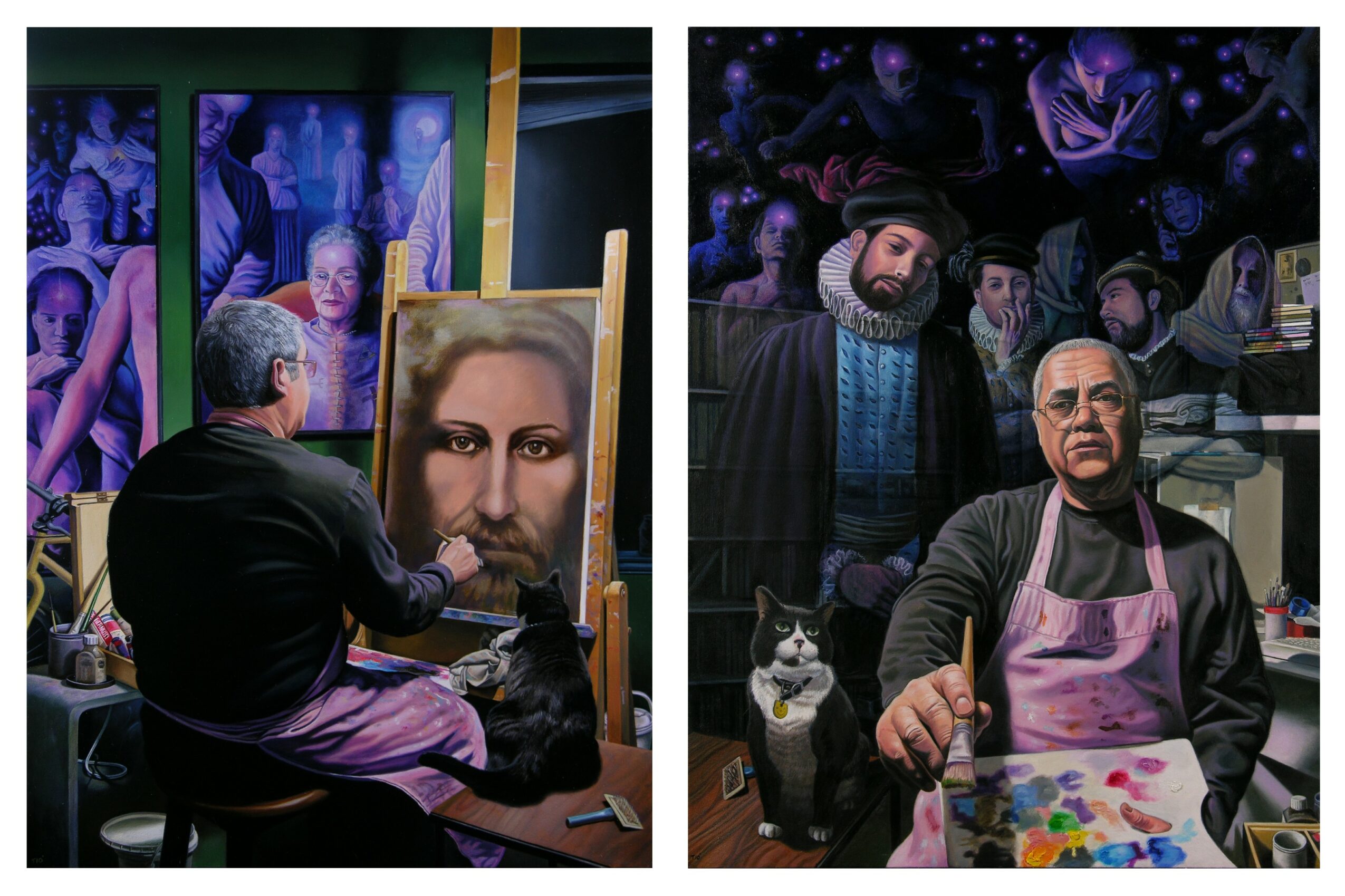
For me, vision and craftsmanship are inseparable. The vision may come from the spirit, the subconscious, or somewhere beyond our understanding, but it is through years of discipline, patience, and mastery of the craft that I can give that vision a physical form. The technique is deliberately slow and demanding, allowing me to build the painting through many layers and create the luminous quality that is characteristic of my work.
What I am most proud of is that I have remained true to my vision throughout my artistic journey. I have never wanted to simply paint what was expected of me or what I thought would sell. I have tried to follow my own path, even when that path was difficult or when there was little recognition for the kind of work I wanted to create.
What I believe distinguishes my work is its humanistic dimension. I aim to bring together visionary imagery, Old Master craftsmanship, and deeply personal experience. Rather than focusing only on imagined or spiritual worlds, my paintings often connect the unseen with the realities of human life and the world around us. Ultimately, I want my paintings to create a bridge between the visible and the invisible to invite the viewer to look beyond what is immediately seen and perhaps discover something within themselves.
Networking and finding a mentor can have such a positive impact on one’s life and career. Any advice?
It is difficult to give specific advice on finding a mentor, because I believe that the right mentor sometimes appears when you least expect it. My advice would be to exhibit your work as much as you can, meet other artists, attend exhibitions, and put your work out into the world. If you need a mentor, I believe the right person will eventually come into your life. Trust the process and what fate brings your way.
In my case, I found a wonderful mentor in Brigid Marlin. I always remember something she once told me, and I often repeat it to young artists: “There is one thing that is common among many successful artists throughout history: they have had patrons who supported them by buying their work and becoming their collectors.”
That idea has stayed with me. Building relationships is an important part of an artist’s career, not only with galleries and collectors, but also with other artists who can open doors, share knowledge, and become part of your artistic community.
I also believe that social media has become very important for artists because networking is essential for finding exhibition opportunities and connecting with other artists, galleries, and potential buyers. I mainly use Facebook and Instagram for networking, and Fine Art America to sell prints of my work. For my books, I use my website, which allows me to sell them directly and keep the prices as affordable as possible.
I have accounts on several other platforms, but I do not actively follow or maintain all of them. I have learned that it is better for me to focus my energy on a few places where I can genuinely connect with people rather than trying to be everywhere.
Contact Info:
- Website: https://www.migueltio.com
- Instagram: @artmigueltio
- Facebook: https://www.facebook.com/migueltio
- Twitter: https://x.com/artmigueltio
- Youtube: https://www.youtube.com/@migueltio4060
- Other: https://miguel-tio.pixels.com/