


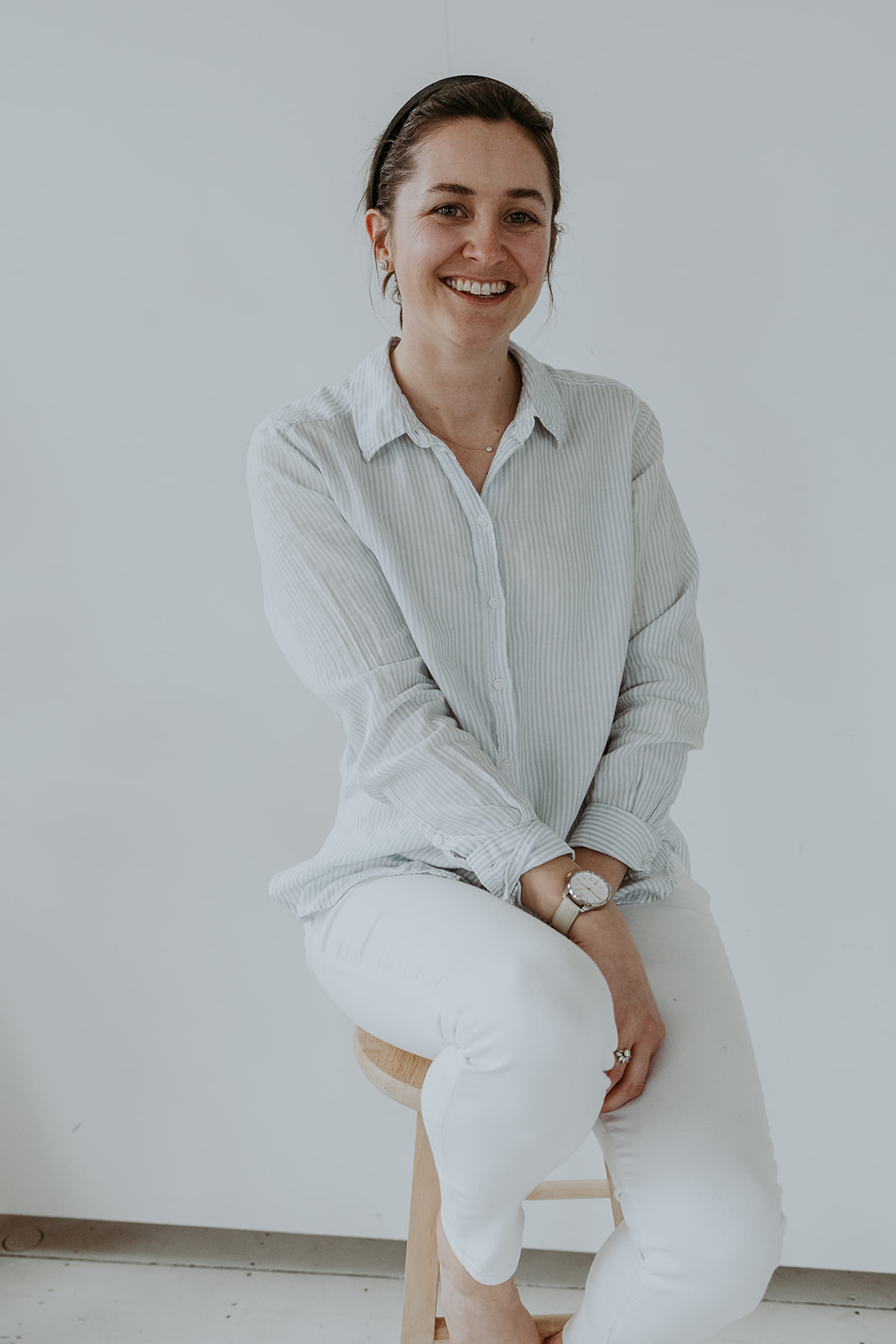
Today we’d like to introduce you to Addie Kiely.
Alright, so thank you so much for sharing your story and insight with our readers. To kick things off, can you tell us a bit about how you got started?
Growing up in rural Maine in the 1990s, my siblings and I had to get creative with how we spent our time. Endless hours were spent outside, making pinecone potions and building forts in the woods. But on rainy days, I’d often turn to my family and ask, “What should I draw now?”
Luckily, I had an incredible high school art teacher who encouraged me to keep creating. By the time I graduated, I’d taken every art class in the school catalog. During my first winter break home from college, I was watercoloring at the kitchen table when I decided to turn it into a mockup for a wedding invitation suite (growing up with 35 older cousins, weddings had always been a big part of my life). On a whim, I posted a photo of it online, jokingly offering to help with anyone’s invitations. To my surprise, one of my cousin’s fiancées replied, “Me!!” and Little Ivy Paper Goods was born.
At the time, I was studying at Bates College, often referred to as a “Little Ivy” school, which gave my fledgling business its name. For the next three years, I ran the company out of my dorm room—squeezing in projects between classes, practices, and cross country meets.
Once I neared graduation, the idea of working for myself, of creating for a living—just made sense. At the time, Portland, Maine was still a fairly affordable place to live, giving me the breathing room I needed to take a risk. I made just enough in my first year to cover my living expenses, but I quickly realized that the old adage couldn’t be more true: Find a job you love, and you’ll never work a day in your life. Almost a decade later, I haven’t looked back.
Alright, so let’s dig a little deeper into the story – has it been an easy path overall and if not, what were the challenges you’ve had to overcome?
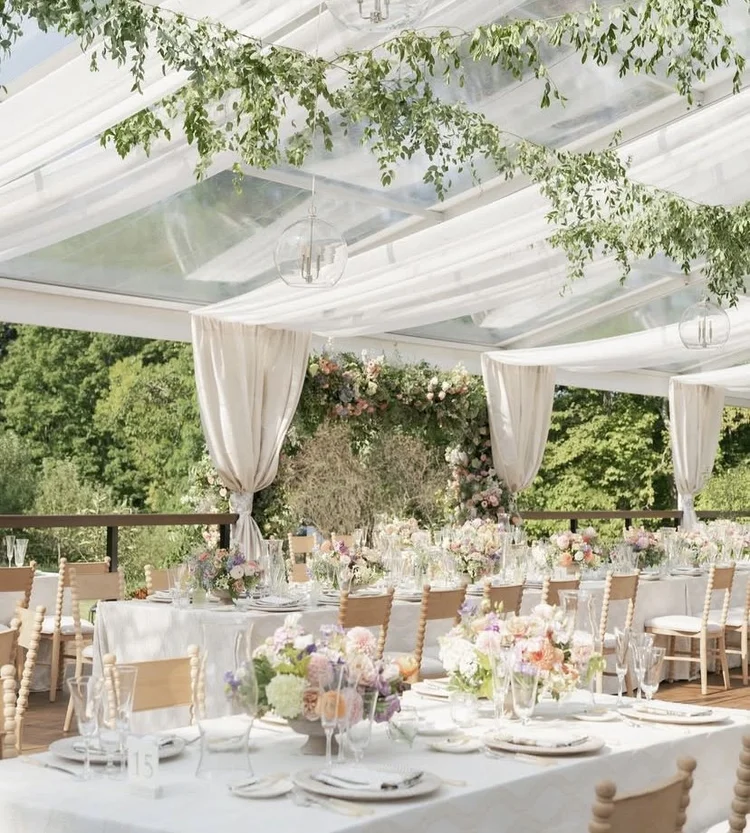
One challenge has been balancing wedding trends with my own artistic style, especially with the rise of Instagram and Pinterest. When I first started, the idea of incorporating custom watercolor into an invitation suite felt groundbreaking—most guests had never received anything like it. Back in 2012, a photo booth or a popcorn machine was considered a revolutionary addition to a reception. Now, couples are thinking on a much grander scale, designing elaborate seating chart installations and custom dance floors inside fully built-out reception tents. Even with smaller details like printing methods—only offering digital (flat) printing doesn’t cut it anymore, as more and more couples are opting for letterpress, foil, or embossing.
Another potential challenge is the increasing saturation of the industry, especially post–COVID. With a relatively low barrier to entry, many new businesses emerge after couples design their own wedding stationery and decide to take the same leap of faith I did after college. But personally, I think that’s a wonderful thing. I believe in fostering a community where knowledge is shared, not gate kept. There’s always more to gain from collaboration.
Thanks for sharing that. So, maybe next you can tell us a bit more about your work?
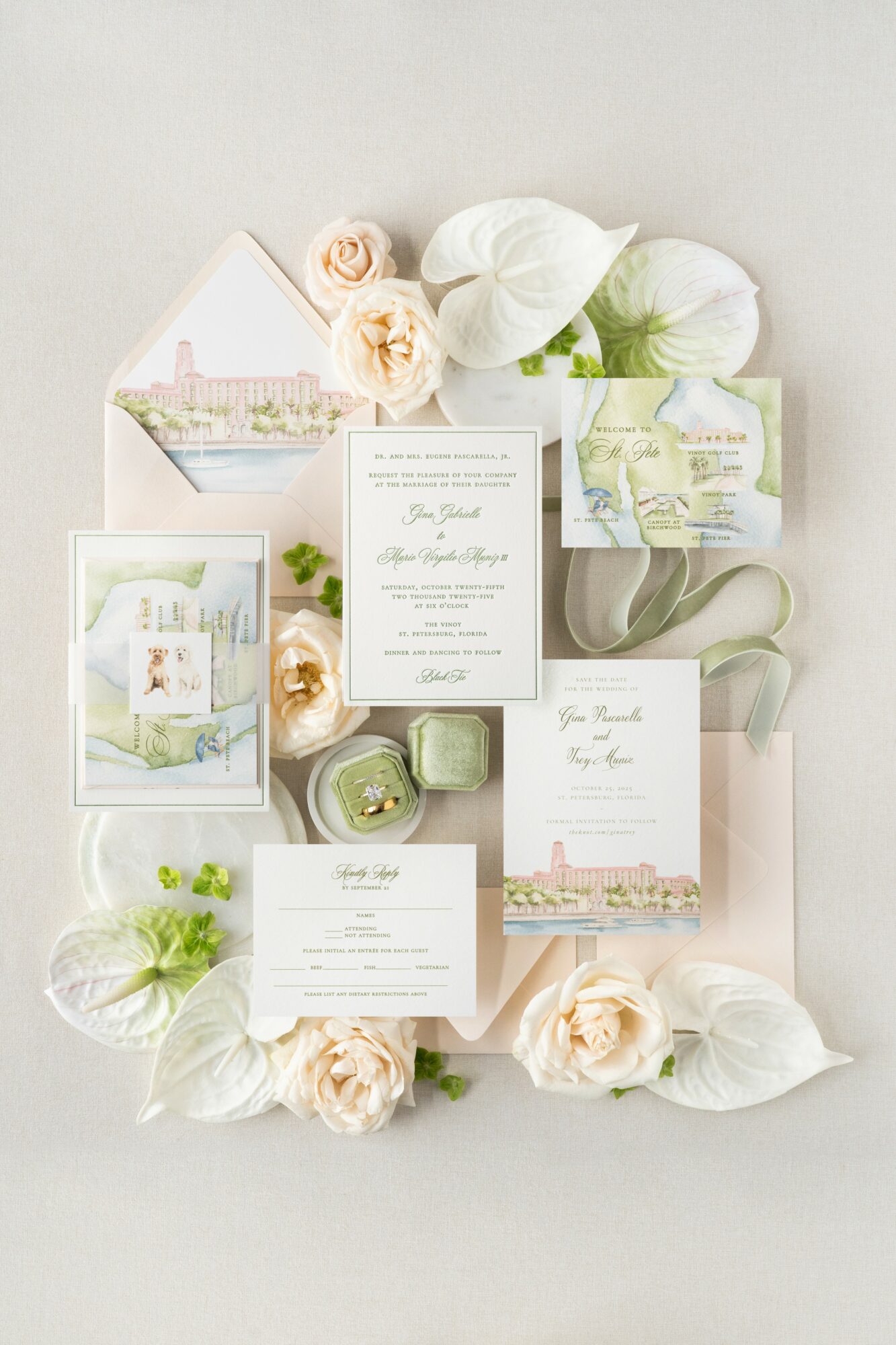
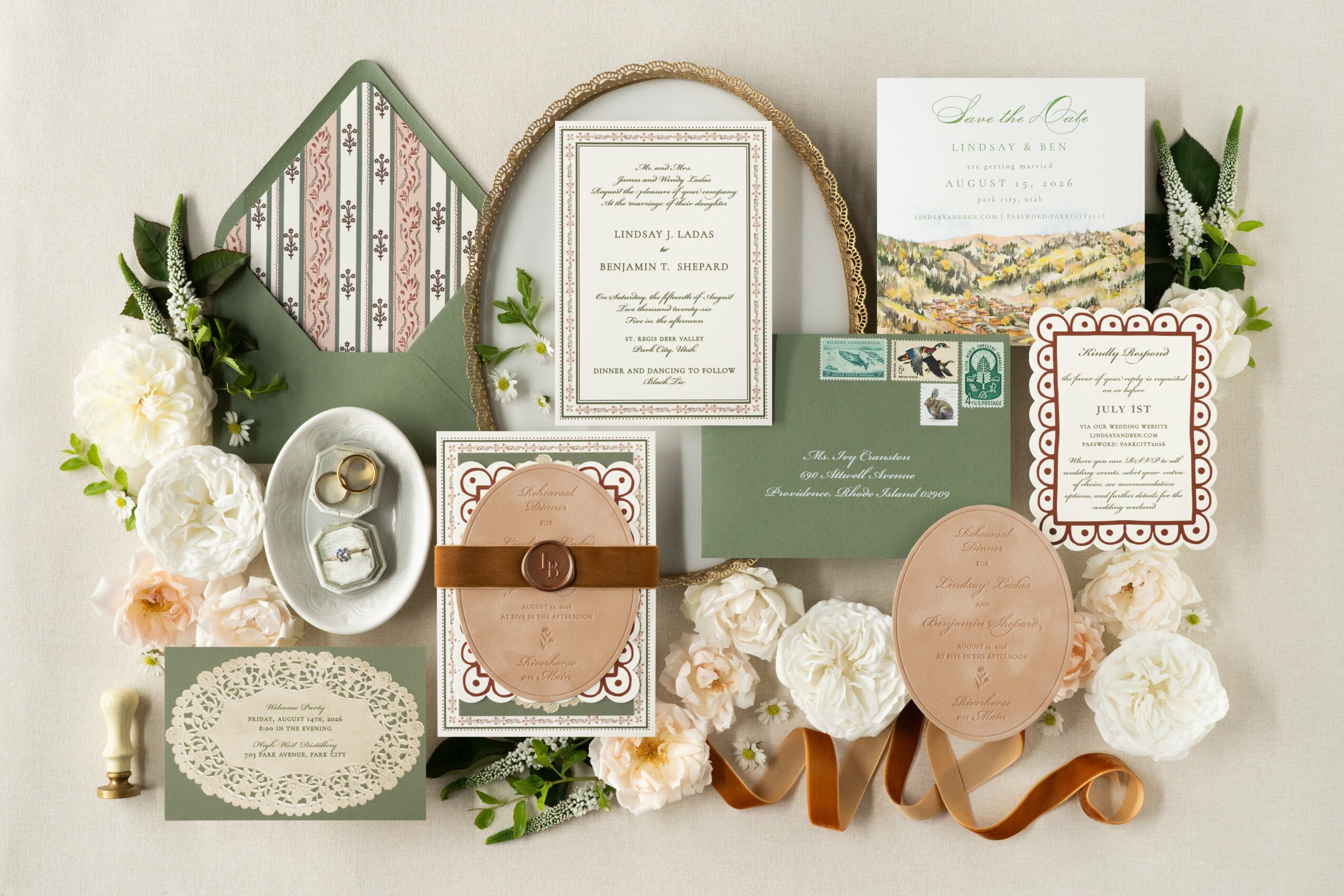
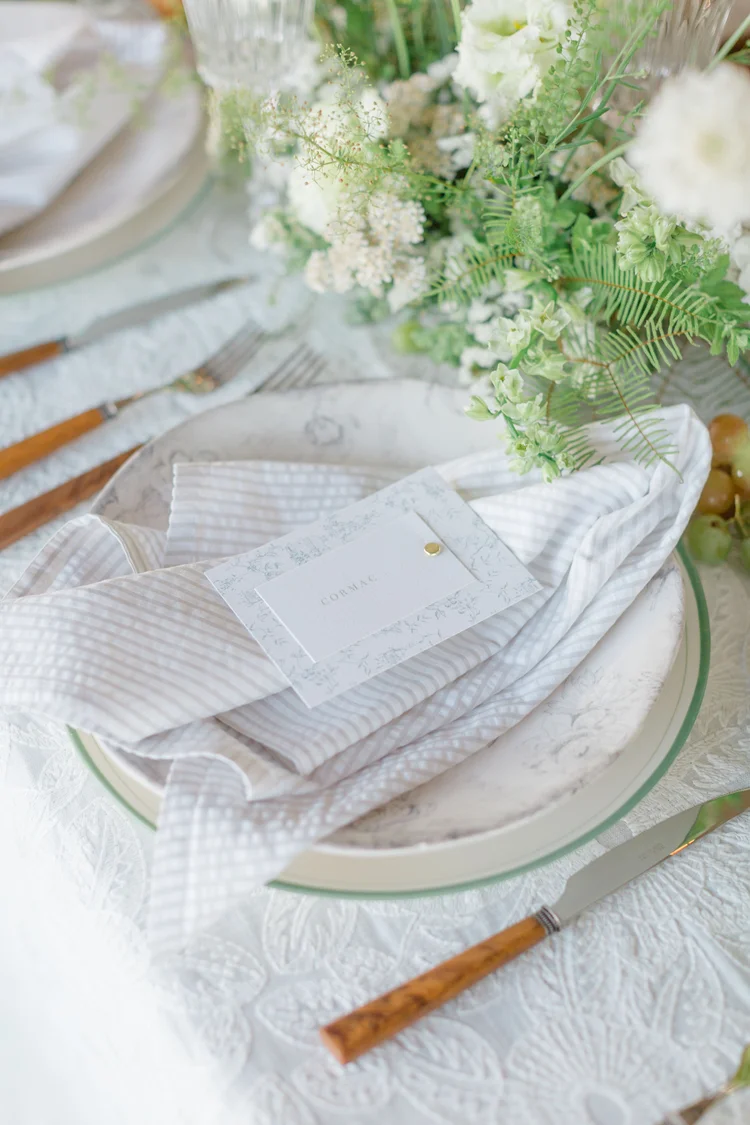
I specialize in custom wedding stationery, often incorporating hand-painted watercolor artwork and details inspired by the setting of each celebration. There can be a fine line between creating a strong sense of place and crossing into “kitschy” territory, and I often hear from couples that they’re drawn to how my work feels clean and refined while still being incredibly detail-oriented. That balance is something I’m especially proud of.
My husband and I travel often, which has helped me develop an eye for what defines a place at its core. Whether it’s the intricate tile patterns of a Portuguese courtyard or the way light filters through the trees in the Italian countryside, I’m always noticing the smaller details that give a location its distinct character. I love translating those observations into stationery in ways that feel lively and textural.
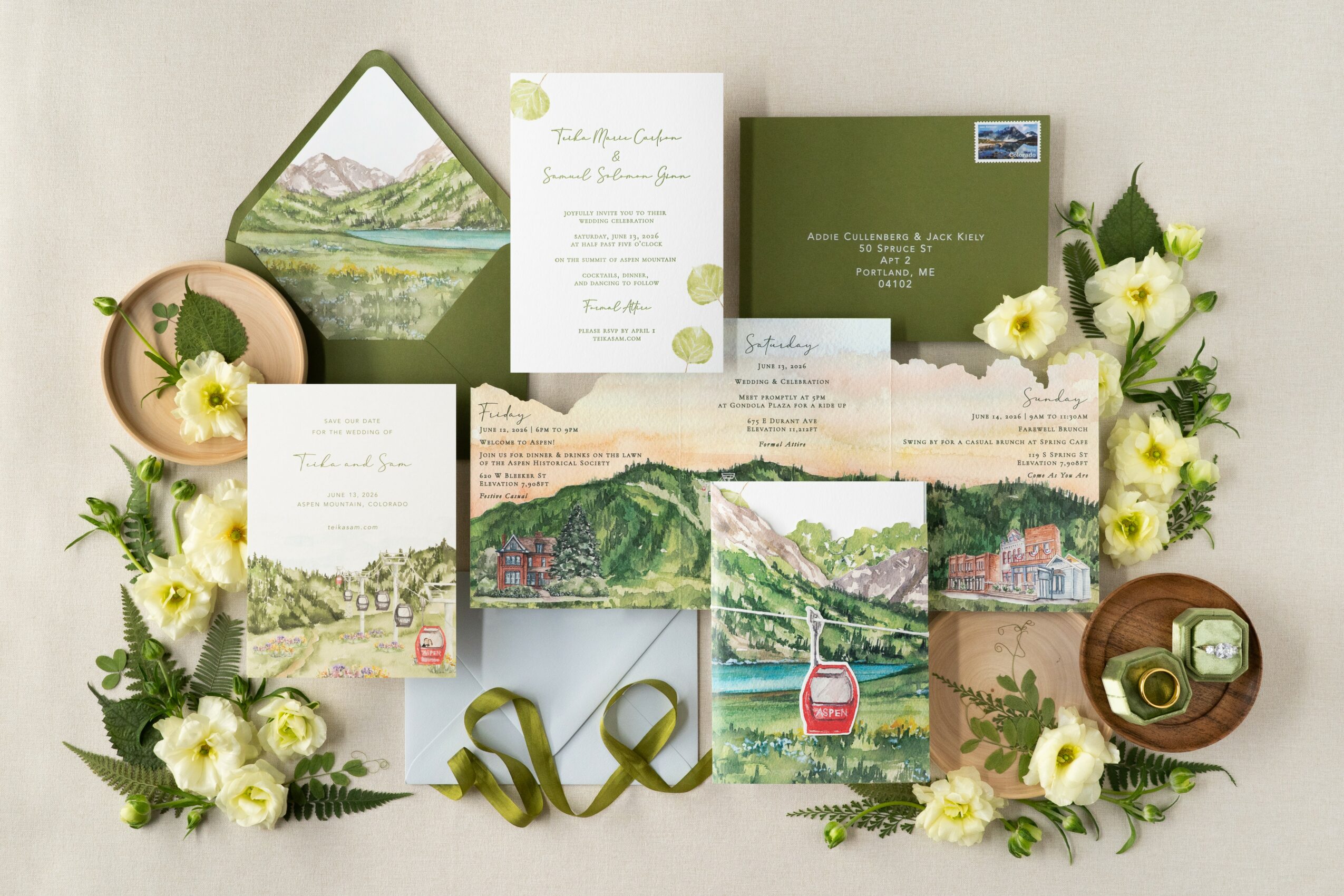
I’m drawn to layering patterns, unexpected shapes, and illustrated moments—a die-cut trout for a Montana wedding, a mountain and aspen grove trifold for a mountaintop celebration in Aspen, or a martini glass welcome party card for a Manhattan wedding. I think what sets my work apart is finding those details that feel unmistakably connected to a couple and their setting, then refining them into a stationery suite that still feels timeless and elevated.
What’s next?
I’ve always been fascinated by textile design, and I especially love painting monochromatic watercolor motifs and turning them into repeating patterns. So much of what I enjoy about stationery—layering pattern, color, and illustration—translates naturally into textiles. I think exploring that world could be a really interesting side journey for me, whether through fabric, wallpaper, or other home goods.
Pricing:
- Semi-Custom Wedding Stationery: No Package Minimum
- Custom Wedding Stationery: Packages start at $5,500
Contact Info:
- Website: https://www.littleivypapergoods.com/
- Instagram: https://www.instagram.com/littleivypapergoods/